SECTION 05 · 297 GUIDES
Work & Skills
The skills knowledge work never teaches you: deep focus, clear writing, hard conversations, and leading people. Evidence-based, with the exact words to use.
EVERY WORK & SKILLS GUIDE GIVES YOU
- 01The evidenceWhat the research actually supports, rated
- 02The scriptWords you can say tomorrow, not principles
- 03The templateA document you can copy and fill in
- 04The trade-offWhat you give up by doing it this way
Browse by topic
11 TOPICS · SORTED BY SIZE
- Career GrowthCareer growth strategies: advancement, professional development, skill-building, and navigating the modern job market142 GUIDES
- Productivity & TimeTime management systems, productivity frameworks, focus techniques, and how to get more done with less friction33 GUIDES
- Communication at WorkWorkplace communication, presentations, difficult conversations, and the interpersonal skills that drive careers31 GUIDES
- Project ManagementProject management methods, tools, and the skills for planning, executing, and delivering projects on time15 GUIDES
- Management & LeadershipTeam management, leadership principles, people management, and what actually separates effective leaders14 GUIDES
- Sales & PersuasionSelling skills, persuasion techniques, and the psychology of influence in sales conversations14 GUIDES
- Writing & DocumentationProfessional writing, technical documentation, clear communication, and the craft of writing that gets read13 GUIDES
- Critical ThinkingAnalytical thinking, structured problem-solving frameworks, and the reasoning skills that separate good from great decisions12 GUIDES
- Teamwork & CollaborationHow teams collaborate effectively, especially across remote and distributed work environments12 GUIDES
- Professional ToolsTools for knowledge work, productivity software, and professional platforms reviewed for real-world usefulness10 GUIDES
- LeadershipLeadership principles, behaviors, and impact1 GUIDES
Paths by career stage
THREE SEQUENCES · FOUR GUIDES EACH
PATH 01
First role
PATH 02
Leading a team
PATH 03
Job search
Scripts library
COMMUNICATION AT WORK · SAY THIS, NOT THAT
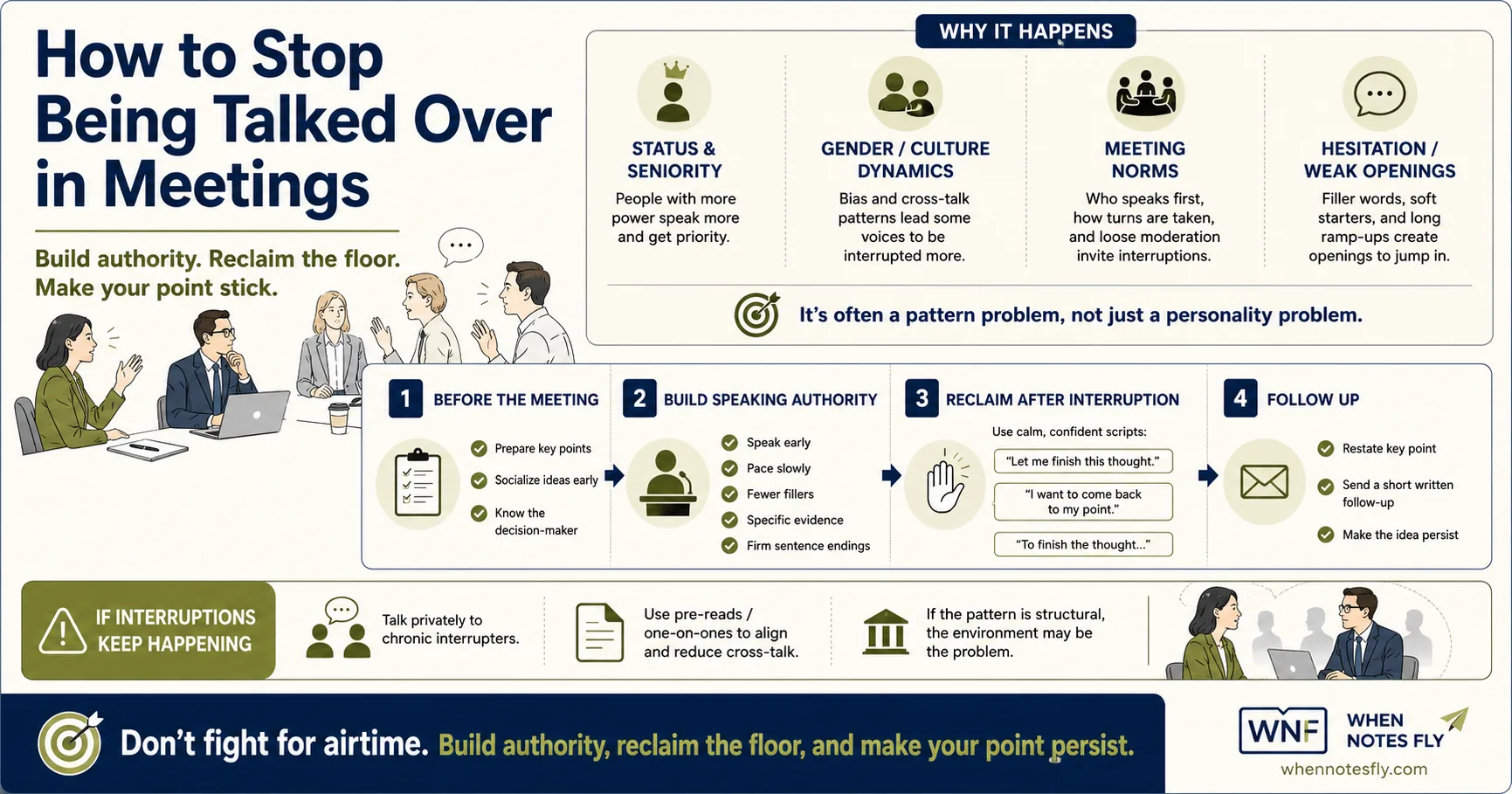
- WHEN · BEING TALKED OVER"I'd like to finish my point, it's two sentences." Then finish it, then hand back.From: How to Stop Being Talked Over in Meetings
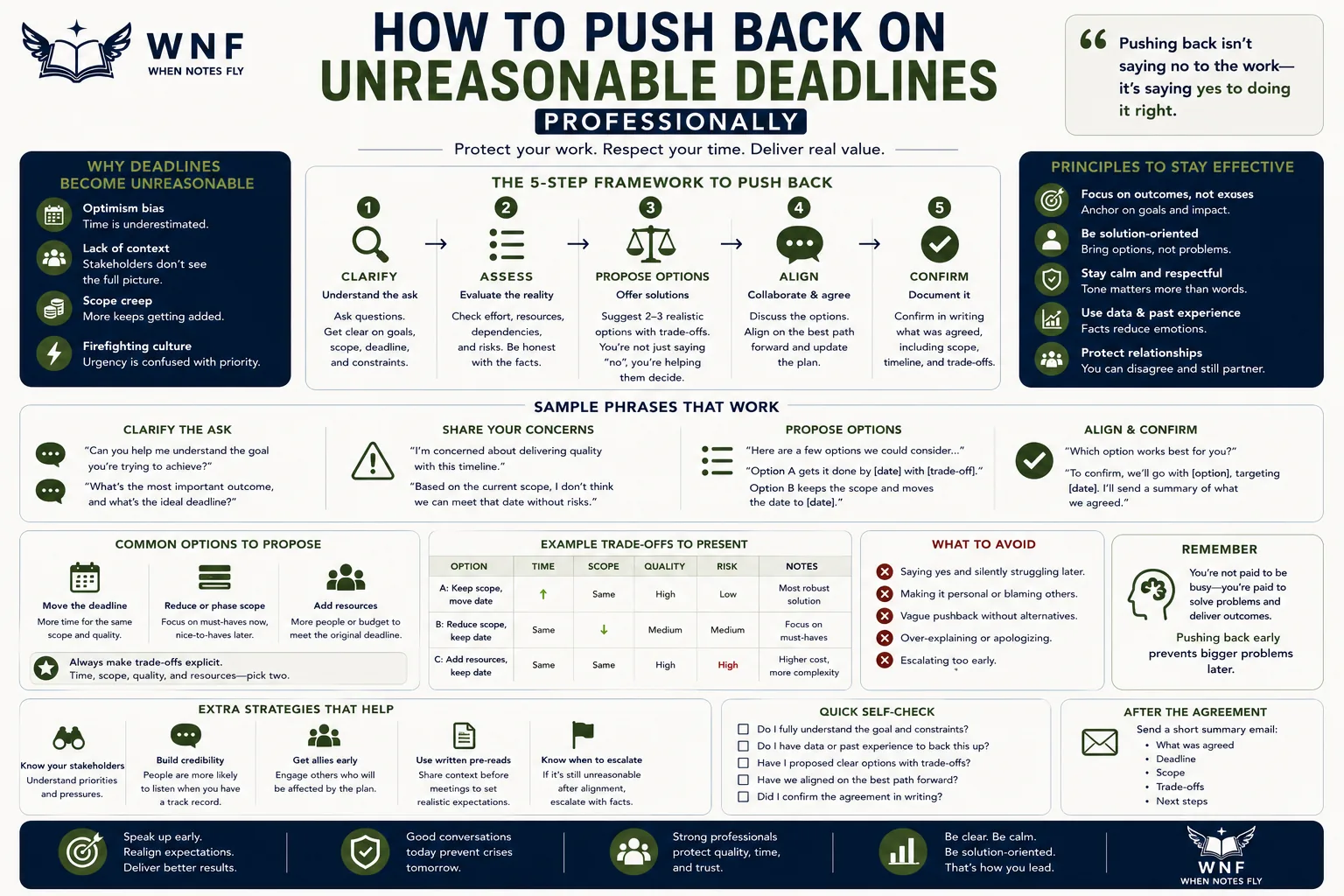
- WHEN · AN UNREASONABLE DEADLINE"I can deliver X by Friday or the full scope by Wednesday week. Which matters more to you?"From: How to Push Back on Unreasonable Deadlines
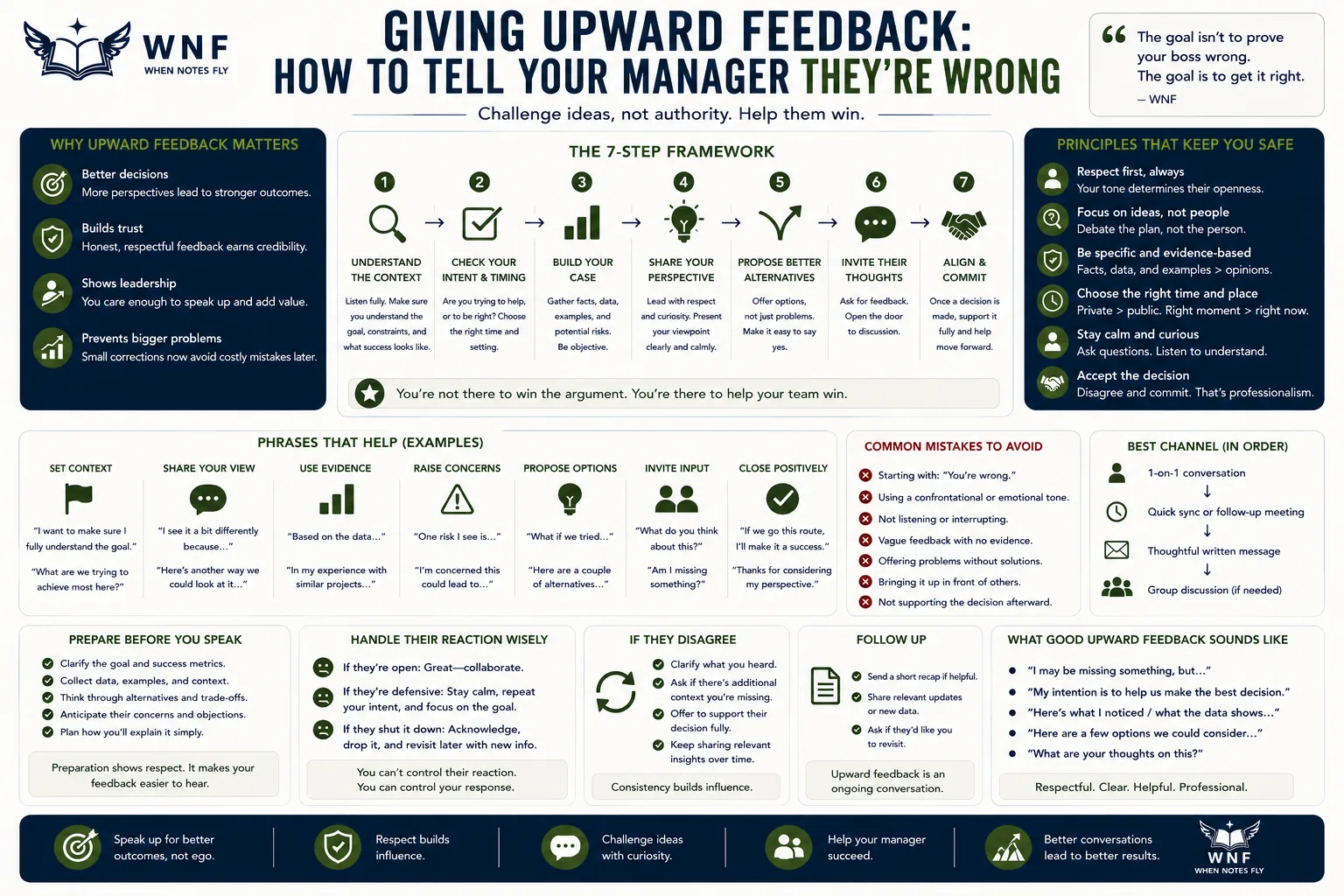
- WHEN · DISAGREEING WITH YOUR BOSS"I'm aligned on the goal. I see a risk in the route, can I lay it out in three minutes?"From: How to Effectively Disagree With Your Boss
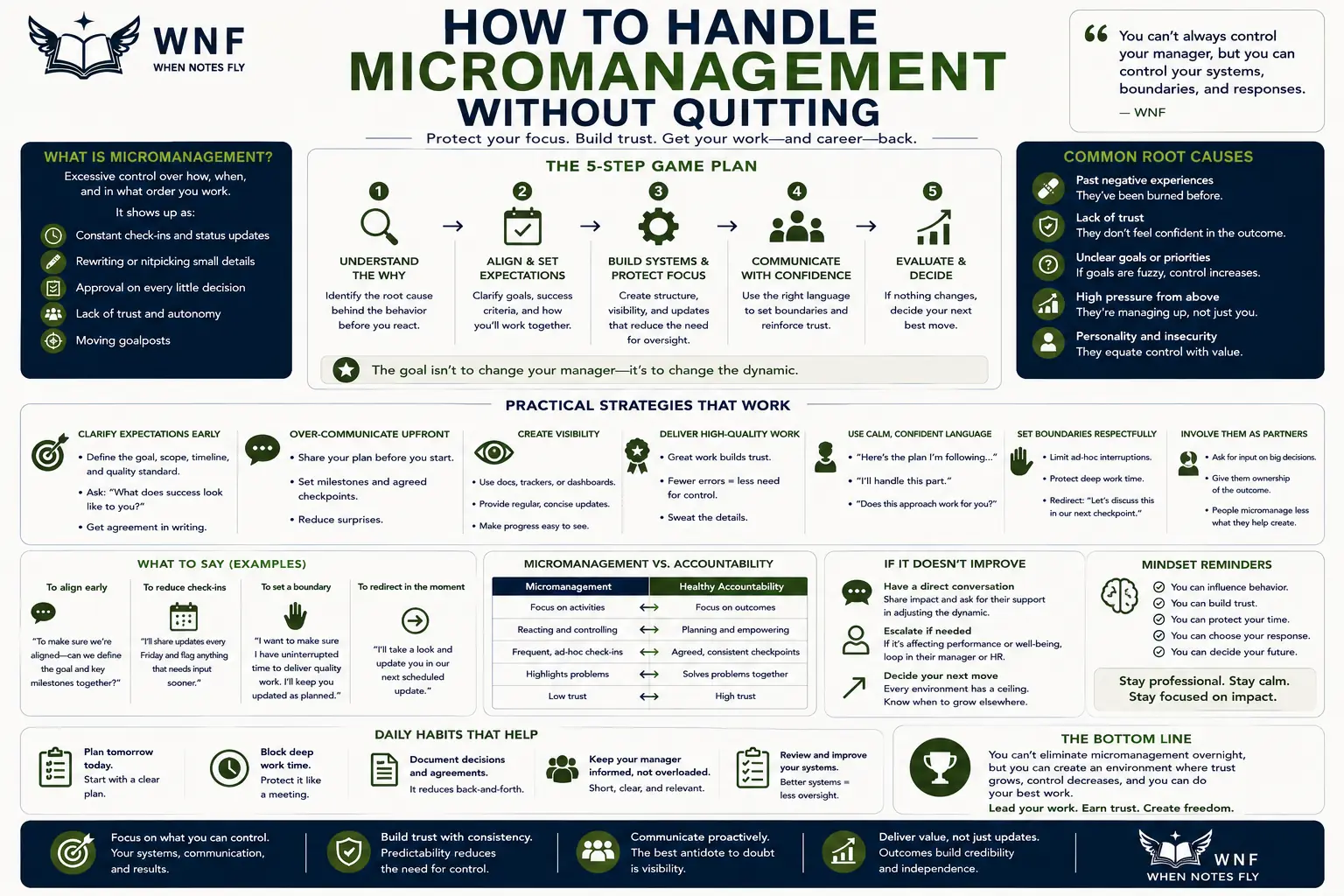
- WHEN · A MICROMANAGING CHECK-IN"Would a written Friday summary cover what you need? I'll flag anything urgent the same day."From: Navigating Micromanagement
- WHEN · UPWARD FEEDBACK"Something in yesterday's meeting landed differently than I think you intended, can I share how?"From: Giving Upward Feedback
- WHEN · DECLINING SCOPE POLITELY"Happy to take that on. What should I drop to make room, or should it wait for the next sprint?"From: Productivity Evidence Map
CHECKLISTS & FRAMEWORKS
Checklists and frameworks
The step lists and decision frameworks our guides are built on, grouped by the job they do. Each entry opens the guide that explains every line and why it is there.
DECIDING
PLANNING
COMMUNICATING
WORKING
Latest in Work & Skills
GUIDES · NEWEST FIRST