
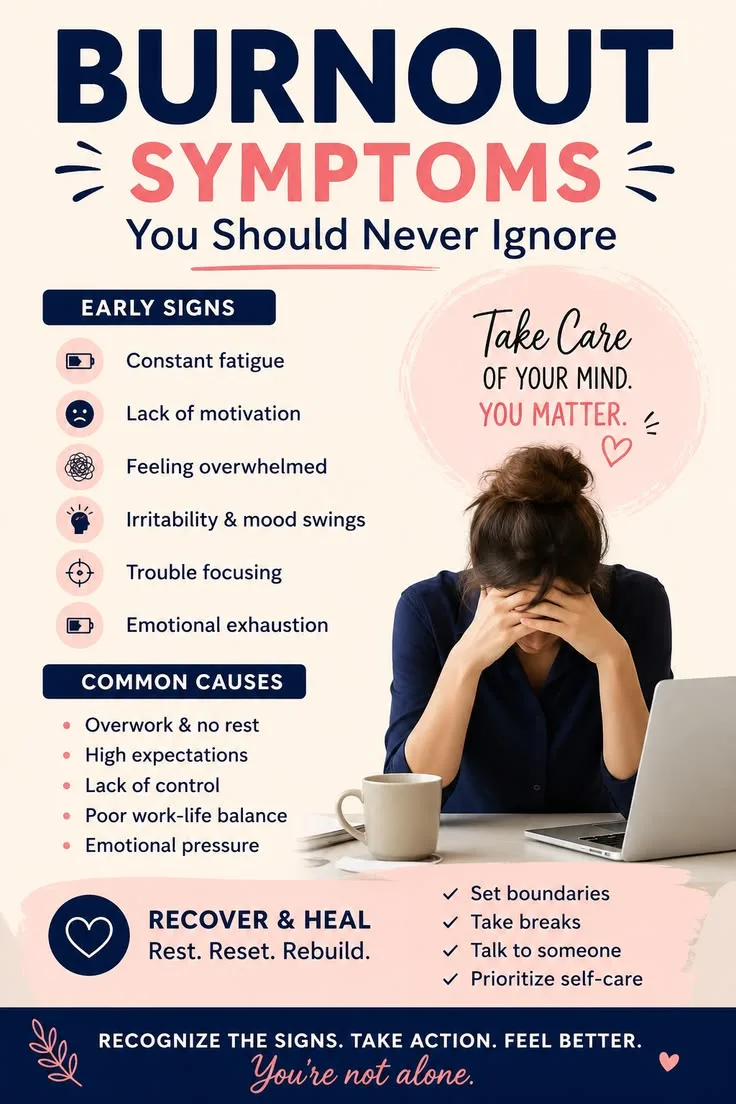
What Is Burnout?
Burnout is a syndrome of chronic workplace stress comprising three dimensions: emotional exhaustion (depletion of psychological resources), depersonalization or cynicism (defensive detachment from work and colleagues), and reduced personal accomplishment (collapse of one's sense of effectiveness).
Defined by psychologist Christina Maslach and recognized by the World Health Organization in ICD-11 as an occupational phenomenon, burnout is not ordinary fatigue - it is a sustained state of depletion that impairs cognitive function, decision-making, and motivation, with measurable consequences for individual and organizational productivity.
In 2019, the World Health Organization officially classified burnout as an "occupational phenomenon" in its International Classification of Diseases.[2]
In 2018, a Gallup study of nearly 7,500 full-time employees found that 23% reported feeling burned out at work very often or always, while an additional 44% reported feeling burned out sometimes.[3] The numbers have only worsened since.
Yet most organizations still treat burnout as an individual weakness rather than a systemic failure. They offer yoga classes and meditation apps while maintaining the exact conditions that cause burnout in the first place. The result is a productivity paradox: the harder organizations push for output, the less they ultimately get.
This article examines how burnout develops, why it destroys productivity far more thoroughly than most people realize, and what actually works to prevent and recover from it.
"Burnout is not a badge of honor. It is not evidence of dedication or commitment. It is evidence of a mismatch between the demands placed on a person and the resources available to meet them.
Treating burnout as a personal failing rather than a systemic problem guarantees it will recur." - Christina Maslach, University of California Berkeley
| Burnout Stage | Primary Symptoms | Productivity Impact | Intervention Required |
|---|---|---|---|
| Stage 1: Stress Arousal | Irritability, sleep disruption, physical tension | Masked: effort compensates for reduced efficiency | Recognition; reduce chronic stressors |
| Stage 2: Energy Conservation | Social withdrawal, increased illness, cynicism | Declining: starts affecting output quality | Deliberate recovery; workload audit |
| Stage 3: Exhaustion | Emotional flatness, cognitive impairment, hopelessness | Severe: meaningful work impossible | Recovery period; possible medical support |
The Clinical Reality of Burnout
Burnout is not simply being tired. The psychologist Christina Maslach, whose research at the University of California, Berkeley in the 1980s established the foundational framework, defined burnout through three specific dimensions:[1]
- Emotional exhaustion - feeling drained, depleted, and unable to recover
- Depersonalization (cynicism) - developing a detached, negative attitude toward work and colleagues
- Reduced personal accomplishment - feeling incompetent and unproductive despite effort
All three dimensions must be present for clinical burnout. Someone who is exhausted but still engaged and effective is stressed, not burned out. Someone who is cynical but energetic may be disenchanted, not burned out. The combination of all three creates a distinct syndrome that fundamentally impairs a person's ability to function.
Example: Arianna Huffington, founder of The Huffington Post, collapsed from exhaustion in 2007, hitting her head on her desk and breaking her cheekbone.[9] She had been working 18-hour days for years, building her media empire.
Her collapse became a turning point that led her to write Thrive and eventually found Thrive Global, a company focused on ending the burnout epidemic. Her story illustrates how burnout can strike even the most apparently successful people.
How Burnout Develops: The Three-Stage Progression
Stage 1: Stress Arousal (The Early Warning Phase)
Most people miss this stage entirely because it feels like normal work stress. The symptoms are subtle and easily rationalized:
- Persistent irritability that seems disproportionate to triggers
- Forgetfulness and concentration lapses during routine tasks
- Sleep disruption - particularly early morning waking or difficulty falling asleep despite exhaustion
- Physical symptoms: recurring headaches, muscle tension in shoulders and jaw, stomach discomfort
- Elevated heart rate and blood pressure even during rest
The productivity impact at Stage 1 is deceptive. Output may actually appear normal or even elevated because the person is compensating through increased effort. But the effort-to-output ratio has shifted dramatically - tasks that once felt easy now require conscious willpower.
Example: A senior engineer at Basecamp described this phase in a 2020 blog post: "I was still shipping features on time, but I'd started needing three cups of coffee before I could focus, and I was snapping at my kids every evening. I told myself it was just a busy quarter."
Key indicator: Work that used to be easy now feels hard.
Why people ignore it: The symptoms overlap with ordinary stress, and our culture normalizes pushing through discomfort. Many workplaces reward "grinding it out," making early burnout symptoms look like dedication.
Stage 2: Energy Conservation (The Defensive Phase)
If Stage 1 continues without intervention, the body and mind begin conserving resources through withdrawal:
- Chronic fatigue that sleep does not relieve
- Increasing procrastination on tasks that once felt engaging
- Habitual lateness to meetings and deadlines
- Social withdrawal from colleagues, friends, and family
- Growing cynicism about the value and purpose of work
- Increased substance reliance - more caffeine, more alcohol, possibly sleep aids
- Emotional detachment - going through motions without genuine engagement
- Feeling trapped - wanting to leave but unable to see alternatives
The productivity collapse becomes visible at Stage 2. Quality of output drops noticeably. The person takes longer to complete routine work. Deadlines slip. Avoidance behaviors emerge - checking email instead of doing substantive work, attending unnecessary meetings to feel busy without facing difficult tasks.
Example: Marissa Mayer, during her tenure as CEO of Yahoo from 2012 to 2017, famously described working 130-hour weeks at Google earlier in her career.
While she framed this as a badge of honor, Stanford economist John Pencavel found that productivity per hour declines sharply after 50 hours per week and falls off a cliff after 55 hours.[4] Beyond that, you are generating negative productivity through errors, poor decisions, and rework.
Key indicator: You no longer care about work that previously mattered to you.
Stage 3: Exhaustion (The Burnout Crisis)
This is the stage most people associate with burnout, but by the time it arrives, enormous damage has already been done:
- Complete physical and emotional exhaustion that persists through weekends and vacations
- Chronic sadness or depression that extends beyond work
- Persistent physical illness - weakened immune system leading to frequent infections
- Chronic digestive problems and unexplained physical pain
- Sense of total failure and profound self-doubt
- Feeling helpless - unable to change the situation or even imagine improvement
At Stage 3, productivity has effectively ceased. The person may be physically present but is mentally absent. Basic tasks feel insurmountable. Decision-making is severely impaired. Creative thinking has disappeared entirely.
Example: In 2021, Simone Biles withdrew from several events at the Tokyo Olympics, citing mental health concerns.
While her situation involved more than workplace burnout, her withdrawal illustrated a critical principle: continuing to perform under severe mental strain does not produce good outcomes - it produces dangerous ones.
In high-stakes environments, burnout does not just reduce output; it creates catastrophic risk.
The Productivity Collapse Pattern
Burnout does not reduce productivity linearly. It follows a characteristic pattern that makes it particularly destructive:
Phase 1 - Pre-Burnout Acceleration:
- Output appears normal or even elevated
- Long hours create an illusion of extraordinary dedication
- The person is investing unsustainable effort that feels like choice
Phase 2 - Invisible Deterioration:
- Effort increases while output stays flat
- Quality begins to slip in ways that are not immediately obvious
- The person starts "borrowing from recovery" - sacrificing sleep, exercise, relationships
Phase 3 - Visible Decline:
- Output drops noticeably
- Mistakes multiply and become harder to hide
- More hours produce less actual work
- Colleagues begin compensating, spreading the burden
Phase 4 - Collapse:
- Productivity effectively reaches zero
- The person may be unable to work at all
- Recovery now requires weeks to months, not days
The total productivity cost is staggering. According to research published by Harvard Business Review in 2017, the annual cost of burnout to the U.S.[10] economy was estimated at $125 to $190 billion in healthcare spending alone, not counting lost productivity, turnover costs, and reduced organizational effectiveness.
The Seven Root Causes of Burnout
Christina Maslach and Michael Leiter, in their research, identified six primary areas of work-life mismatch that drive burnout. A seventh has emerged from more recent research:
1. Chronic Overwork (Workload Mismatch)
The most obvious cause, but not always the primary one. Sustained long hours without adequate recovery time deplete physical and mental resources faster than they can be restored.
- Working consistently beyond 50 hours per week
- No genuine recovery time - evenings and weekends consumed by work
- Treating a career-length endeavor as a sprint
Example: Goldman Sachs faced public backlash in March 2021 when a leaked internal survey from first-year analysts revealed average work weeks of 95 hours, with respondents rating their mental health at 2.8 out of 10. The bank subsequently introduced policies to limit weekend work, though enforcement remained inconsistent.
2. Lack of Control (Autonomy Mismatch)
When people have no influence over their tasks, schedule, or working conditions, helplessness accelerates burnout:
- Micromanagement that removes decision-making authority
- Inability to influence how work gets done
- No voice in decisions that directly affect daily experience
- Rigid processes that prevent adaptation to individual working styles
Research by Edward Deci and Richard Ryan at the University of Rochester, through their Self-Determination Theory, demonstrated that autonomy is a fundamental psychological need.[8] When it is denied, motivation and well-being deteriorate rapidly.
3. Insufficient Recognition
Sustained effort without acknowledgment erodes motivation:
- Hard work that goes unnoticed by management
- Credit taken by others for individual contributions
- Compensation that does not reflect contribution
- Absence of meaningful feedback - positive or constructive
4. Toxic Relationships at Work
The quality of workplace relationships is one of the strongest predictors of burnout:
- Abusive or incompetent management that creates daily stress
- Interpersonal conflict without resolution mechanisms
- Isolation - particularly in remote work environments
- Lack of psychological safety where admitting struggle invites punishment
5. Values Misalignment
When work conflicts with personal values, cognitive dissonance creates chronic stress:
- Being asked to do work you consider unethical or harmful
- Organizational values that are stated but not practiced
- Work that feels meaningless or disconnected from any larger purpose
Example: In 2018, thousands of Google employees signed a letter protesting the company's involvement in Project Maven, a Pentagon program using AI for drone surveillance analysis. Several employees resigned, citing the misalignment between Google's stated values and its military contracts.
Values misalignment is not about preference - it is about fundamental conflict between what you believe and what you are asked to do.
6. Unclear Expectations
Ambiguity about what is expected creates chronic anxiety:
- Vague job descriptions and shifting responsibilities
- Conflicting demands from different stakeholders
- Goals that change before they can be achieved
- Success criteria that are undefined or constantly moving
7. Resource-Demand Mismatch
Being set up to fail is one of the most demoralizing experiences in work:
- Insufficient staff, budget, or tools to meet expectations
- Unrealistic deadlines imposed without input
- Responsibilities that exceed training or capability without support
Why You Cannot Work Through Burnout
The most dangerous misconception about burnout is that it can be solved through willpower. "I'll rest when this project is done" is the mantra that turns Stage 1 burnout into Stage 3 collapse.
The physiology is unambiguous. Chronic stress elevates cortisol levels, which over time:
- Impairs prefrontal cortex function - reducing executive function, planning, and decision-making
- Shrinks the hippocampus - degrading memory formation and recall
- Amplifies amygdala reactivity - increasing emotional responses and anxiety
- Suppresses the immune system - making the body vulnerable to illness
- Disrupts sleep architecture - preventing restorative deep sleep even when time permits
These are physiological changes that cannot be overcome through determination. Working through burnout is like running on a broken leg - the injury worsens with every step.
Research by Sabine Sonnentag at the University of Mannheim has consistently shown that recovery from work stress requires psychological detachment - genuinely disengaging from work, not just being physically away from the office while mentally processing tasks.[5]
Recovery Timelines and Requirements
The math of burnout recovery is brutal:
Early burnout (Stage 1):
- Reduce workload by 20-30%
- Improve sleep hygiene
- Add recovery activities (exercise, hobbies, social connection)
- Recovery timeline: days to weeks
Mid-stage burnout (Stage 2):
- Extended break of several weeks minimum
- Professional support (therapy, coaching)
- Significant changes to work conditions
- Recovery timeline: weeks to months
Severe burnout (Stage 3):
- Extended medical leave, often months
- Psychological or psychiatric intervention
- Fundamental career or life changes may be necessary
- Recovery timeline: months to a year or more
Example: Sheryl Sandberg, in her book Option B co-authored with psychologist Adam Grant, described the long, non-linear process of rebuilding resilience after the sudden death of her husband - a process that took far longer than she initially expected and required sustained, deliberate effort rather than a quick return to normal functioning. The same principle extends to burnout recovery: recovery is not a weekend - it is a process.
Prevention: Building Sustainable Productivity
Prevention is not just easier than recovery - it produces dramatically better outcomes over a career. The sustainable productivity model demonstrates this clearly.
The Unsustainable Pattern
High output -> Burnout -> Collapse -> Extended recovery -> Starting over at reduced capacity
The Sustainable Pattern
Moderate consistent output -> Regular recovery -> Compounding skill and reputation -> Long-term high performance
Over a 30-year career, the sustainable approach wins by an enormous margin.
Strategy 1: Maintain a Sustainable Pace
- Cap sustained work at 40-50 hours per week. Sprints of 60+ hours are acceptable for genuine emergencies but must be followed by genuine recovery.
- Take all allocated vacation. Research from Project: Time Off (U.S. Travel Association) found that 52% of American workers did not use all their vacation days in 2018.
- Protect weekends. At minimum, one full day per week with zero work activity.
- Take actual breaks during the day. The Draugiem Group study using DeskTime software found that the most productive 10% of workers took 17-minute breaks for every 52 minutes of focused work.
Strategy 2: Manage Energy, Not Just Time
Not all hours are equal. Match work to your natural energy patterns:
- Peak energy hours (for most people, morning to late morning): strategic thinking, creative work, complex problem-solving
- Moderate energy periods: meetings, collaborative work, routine decisions
- Low energy periods (often post-lunch): email, administrative tasks, organizing
This approach aligns with research on circadian rhythms by Daniel Pink, documented in his book When: The Scientific Secrets of Perfect Timing.[7]
Strategy 3: Enforce Boundaries
- Define clear work hours and communicate them
- No work email or messages after hours except genuine emergencies
- Learn to say no to commitments that exceed capacity
- Negotiate realistic deadlines rather than accepting impossible ones
For more on protecting focused work time, see deep work explained.
Strategy 4: Prioritize Recovery Activities
Recovery is not passive - it requires active investment:
- Sleep 7-9 hours consistently. Research by Matthew Walker at UC Berkeley, detailed in Why We Sleep, demonstrates that sleep deprivation impairs cognitive function as severely as alcohol intoxication.[6]
- Exercise regularly. Even 30 minutes of moderate exercise three times per week significantly reduces stress hormones.
- Maintain hobbies and interests outside work. These provide identity diversity that buffers against work-related stress.
- Invest in social connections. Isolation amplifies burnout; connection mitigates it.
Strategy 5: Ensure Values Alignment
- Regularly assess whether your work aligns with what you consider meaningful
- If misalignment is chronic and unresolvable, plan a transition rather than enduring indefinitely
- Seek roles where your contribution feels connected to outcomes you care about
Strategy 6: Maintain Autonomy and Control
- Negotiate for flexibility in how you accomplish objectives
- Push back on micromanagement constructively
- Where you cannot change the environment, change your relationship to it - or change environments
Strategy 7: Build Support Systems
- Cultivate at least one trusted relationship at work where you can be honest about struggle
- Consider professional coaching or therapy as maintenance, not crisis intervention
- Join peer groups or communities outside your immediate work team
Strategy 8: Conduct Regular Self-Assessments
Ask yourself monthly:
- Am I enjoying work most days?
- Am I exhausted on a consistent basis?
- Do I dread Monday mornings?
- Am I relying on substances to manage my energy or mood?
- Are physical symptoms appearing or worsening?
- Have I withdrawn from people or activities I usually enjoy?
Course-correct at the first signs. Early intervention is 100 times easier than crisis recovery.
When to Seek Professional Help
Do not delay seeking professional support if you experience:
- Symptoms lasting six or more weeks without improvement
- Effects spreading to multiple areas of life (relationships, health, daily functioning)
- Physical health declining without clear medical cause
- Thoughts of self-harm or hopelessness
- Inability to function at work despite genuine effort
- Developing dependence on alcohol, caffeine, or other substances to cope
Earlier intervention means faster recovery. There is no medal for suffering longer.
The Organizational Responsibility
While individuals can take steps to prevent burnout, the primary responsibility lies with organizations that create the conditions for it. Offering wellness programs while maintaining cultures of overwork, unclear expectations, and insufficient resources is like handing out umbrellas while flooding the building.
Example: Microsoft Japan ran a four-day work week experiment in August 2019 and reported a 39.9% increase in sales per employee.[11] The experiment demonstrated that reducing hours while maintaining expectations for output can actually improve results by forcing better prioritization and reducing waste.
Similarly, Perpetual Guardian, a New Zealand estate management company, permanently adopted a four-day work week in 2018 after a trial showed maintained productivity with significant improvements in employee well-being and engagement.
Organizations that take burnout seriously address systemic causes:
- Realistic workload expectations based on actual capacity
- Genuine autonomy over how work gets accomplished
- Transparent and consistent recognition for contributions
- Psychological safety where admitting struggle is not punished
- Clear expectations with stable success criteria
- Adequate resources to meet demands
The Long View: Burnout and Career Trajectories
Burnout does not just affect the present - it shapes entire careers. People who experience severe burnout often:
- Leave their field entirely, losing years of accumulated expertise
- Develop chronic health conditions that persist long after the work situation changes
- Carry psychological scars that affect their relationship with work permanently
- Take significant pay cuts to find less demanding roles
The person who maintains sustainable productivity for 30 years will outperform the person who burns bright for 5 years and then flames out. This is not a close comparison. Career strategy must account for sustainability as a core principle, not an afterthought.
Recognizing Burnout in Others
If you manage people, your responsibility extends to recognizing burnout in your team:
- Performance changes: previously reliable people missing deadlines or producing lower-quality work
- Behavioral shifts: withdrawal from team activities, increased irritability, reduced communication
- Physical indicators: frequent illness, visible fatigue, neglected appearance
- Expressed cynicism: comments about work being pointless, disengagement from discussions about future plans
The appropriate response is not to demand improvement but to create conditions for recovery. Ask what is going on. Reduce workload. Provide flexibility. Connect them with resources. And examine whether the conditions you control are contributing to the problem.
What Sustainable Productivity Actually Looks Like
Sustainable productivity is not about working less. It is about working in a way that can be maintained indefinitely while producing consistently excellent output. The key characteristics:
- Consistent output rather than dramatic peaks followed by crashes
- Quality that holds steady rather than degrading under pressure
- Energy that renews through adequate recovery rather than depleting continuously
- Engagement that persists rather than being replaced by cynicism
- Growth that compounds because learning requires cognitive surplus that burnout eliminates
For a deeper exploration of this principle, see sustainable productivity.
Sources & Further Reading
Maslach, C. & Leiter, M. P. "The Truth About Burnout: How Organizations Cause Personal Stress and What to Do About It." Jossey-Bass, 1997.
World Health Organization. "Burn-out an 'occupational phenomenon': International Classification of Diseases." WHO, 2019. View source
Gallup. "Employee Burnout, Part 1: The 5 Main Causes." Gallup Workplace, 2020. View source
Pencavel, J. "The Productivity of Working Hours." The Economic Journal, 125(589), 2052-2076, 2015. View source
Sonnentag, S. "Recovery, Work Engagement, and Proactive Behavior: A New Look at the Interface Between Nonwork and Work." Journal of Applied Psychology, 88(3), 518-528, 2003.
Walker, M. "Why We Sleep: Unlocking the Power of Sleep and Dreams." Scribner, 2017.
Pink, D. H. "When: The Scientific Secrets of Perfect Timing." Riverhead Books, 2018.
Deci, E. L. & Ryan, R. M. "Self-Determination Theory and the Facilitation of Intrinsic Motivation, Social Development, and Well-Being." American Psychologist, 55(1), 68-78, 2000.
Huffington, A. "Thrive: The Third Metric to Redefining Success and Creating a Life of Well-Being, Wisdom, and Wonder." Harmony Books, 2014.
Garton, E. "Employee Burnout Is a Problem with the Company, Not the Person." Harvard Business Review, 2017. View source
Microsoft Japan. "Work Life Choice Challenge Summer 2019." Microsoft News Center Japan, 2019. View source
Health note: This article is general educational information about how a topic works, not medical, psychological, or mental-health advice, diagnosis, or treatment. Everyone's situation is different, and research findings describe groups, not individuals.
If you are struggling or have concerns about your health, please talk to a qualified professional such as a doctor or licensed therapist.
If you are in crisis or thinking about harming yourself, contact your local emergency services or a crisis line right away, in the US you can call or text 988 (Suicide & Crisis Lifeline); elsewhere, find local lines at findahelpline.com.