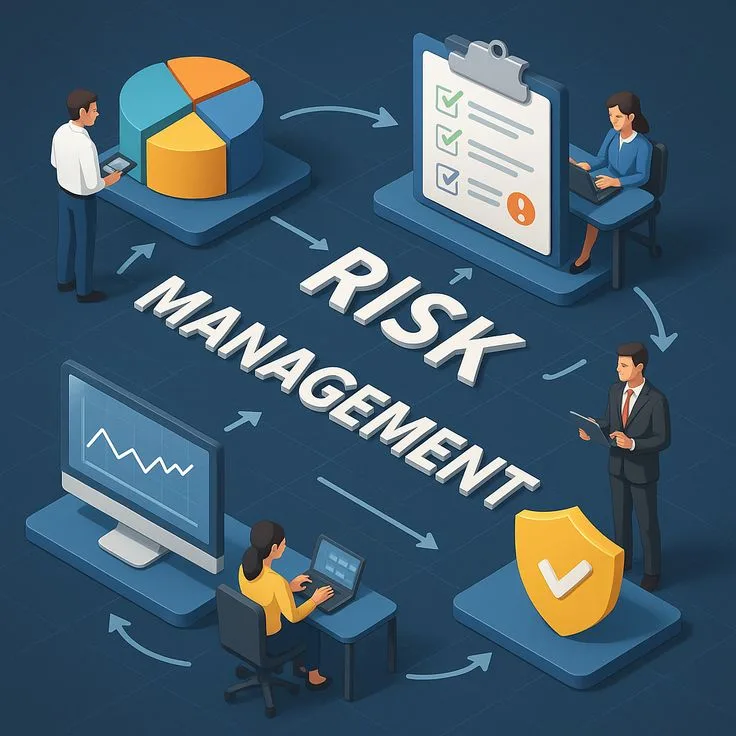
A career can be exposed to concentration risk when income, identity, networks, and savings all depend on one employer or industry. Career risk management treats those vulnerabilities as predictable rather than exceptional, applying the same attention to diversification and structural risk that people use in finance.
On March 10, 2023, Silicon Valley Bank collapsed in 48 hours - the second-largest bank failure in U.S. history. The professionals most devastated were not the bank's depositors, who were ultimately made whole.
They were the thousands of employees who had built their careers at SVB over years or decades, concentrating not just their jobs but their professional identities, networks, and in many cases their savings in a single institution.
For many, it was a brutal encounter with a risk they had never named or managed: career concentration risk.
Professional careers face risks that are systematic, structural, and largely predictable - yet most professionals give career risk management far less thought than they give to managing financial risk.
They diversify their investment portfolios but concentrate their entire income in a single employer, a single skill set, and sometimes a single industry. They insure their homes but leave their career capital entirely unprotected.[3]
This article maps the landscape of career risk, explains which risks are most consequential, and provides practical frameworks for building the resilience that allows careers to absorb shocks and recover from setbacks.
The Landscape of Career Risk
"The best time to repair the roof is when the sun is shining." - John F. Kennedy
Career risk management follows the same logic: the best time to build portable skills and a distributed network is before a disruption forces you to.
Risk Type
Primary Cause
Warning Signs
Primary Mitigation
Industry Risk
Sector decline or disruption
Falling investment, consolidation
Transferable skills, adjacent industries
Skill Obsolescence
Technology or market shift
Skills not requested in current role
Continuous learning, broad skill portfolio
Company-Specific Risk
Employer failure or restructuring
Revenue decline, leadership departures
Distributed network, financial reserves
Role Redundancy
Automation or outsourcing
Routine task content, rule-based work
Skills requiring judgment and creativity
Concentration Risk
Single employer or skill dependency
All network at one company
Diversify across employers, industries, geographies
Career risk is not monolithic. It takes different forms with different causes, different probabilities, and different appropriate responses.
Industry Risk
Industry risk is the possibility that the sector you work in declines, contracts, or transforms in ways that reduce demand for your skills. This is distinct from company risk because it affects everyone in the industry, not just your specific employer.
Industry risk has destroyed careers systematically throughout economic history:
Print journalism employment fell by 57% between 2008 and 2020 as digital media disrupted advertising models
Coal mining employment in the United States declined from 200,000 workers in 1980 to under 42,000 by 2020
Retail banking employment faces structural pressure from fintech automation and branch closures
Example: In 2007, Nokia employed over 130,000 people globally and was the world's largest mobile phone manufacturer. By 2014, the handset division had been sold to Microsoft and most of those jobs had disappeared.
Engineers who had built careers in Symbian operating system development found their primary skill nearly worthless in the market. The industry risk had materialized without adequate warning time for most individuals to prepare.
Assessment questions: Is your industry growing or contracting? What technology or regulatory changes could transform it within 10 years? What would happen to demand for your skills if your industry declined by 30%?
Skill Obsolescence Risk
Skill obsolescence risk is the risk that the specific capabilities you have built become less valuable over time, even if the broader industry remains healthy. This is distinct from industry risk because it is about the specific skills mix you carry.
Skill obsolescence accelerates during periods of technological change:
Expertise in legacy programming languages has limited market value despite demand for software engineers generally
Expertise in traditional advertising creative has depreciated as programmatic advertising has expanded
Expertise in physical film processing became obsolete as digital photography displaced it
The half-life of skills: Research by IBM's Institute for Business Value suggests that technical skills have a half-life of approximately 2.5 years in fast-moving technology domains.[4] Skills require active renewal, not just initial acquisition.
Example: Blockbuster employed 60,000 people in 2004. Many store managers had deep expertise in physical video retail operations - inventory management, customer service, store layout optimization.
When Netflix's streaming service made those stores obsolete, that expertise had minimal market value in the digital era. The skills were not bad skills; they were skills in a domain that had been eliminated.
Company-Specific Risk
Company-specific risk is the risk that your specific employer fails, contracts, or undergoes changes that eliminate your role. Unlike industry risk, this affects employees of one company while others in the same field continue normally.
Company-specific risk includes:
Financial failure (bankruptcy, insolvency)
Acquisition and integration (restructuring that eliminates redundant roles)
Leadership change (new leadership with different priorities and preferred team)
Strategic pivot (company abandons the area you worked in)
Layoffs driven by cost pressure or business decline
Example: When General Electric began unwinding its massive conglomerate structure between 2017 and 2022, tens of thousands of employees in divisions that were sold or closed faced displacement. GE Capital, once the world's largest non-bank financial company, was substantially dismantled.
GE Power, GE Transportation, and GE Healthcare were sold or spun off. Career risk that employees might have attributed to specific industries was actually concentrated in the specific corporate entity.
Role Redundancy Risk
Role redundancy risk is the risk that your specific function - regardless of industry or company health - becomes automated, outsourced, or restructured out of existence.
Automation risk is concentrated in predictable roles:
Routine data processing and entry
Standardized analysis following rule-based frameworks
Physical tasks following repetitive patterns
First-level customer service and support
The McKinsey Global Institute estimated in 2017 that up to 375 million workers globally might need to switch occupational categories by 2030 due to automation.[2]
While these projections involve significant uncertainty, the directional pressure is clear: roles with high routine and codifiable task content face higher automation risk than roles requiring judgment, creativity, and complex human interaction.
Concentration Risk
Concentration risk is the risk created by depending on a single employer, a single skill set, a single industry, or a single professional relationship for your career security.
The most dangerous careers are highly concentrated on multiple dimensions simultaneously:
One employer (the only place your skills are valued)
One relationship (all opportunities flowing through one sponsor or client)
One technology (expertise in one platform or language only)
One geography (skills valued only in one market)
Each concentration is a single point of failure. A professional who is deeply specialized in a specific employer's proprietary systems, in a single industry, with a network concentrated at that employer, faces catastrophic risk if that employer changes direction or fails.
Mapping Your Personal Risk Profile
Before managing career risk, you need to understand your current exposure. A structured assessment covers four questions:
1. What is my income concentration? What percentage of my income depends on a single employer? A single client? A single relationship?
2. What is my skill transferability? If I had to find a new role tomorrow, how many employers would value my skills? In how many industries? In how many geographies?
3. What is my network diversity? Are my professional relationships concentrated at my current employer, or distributed across multiple companies, industries, and geographies?
4. What is my financial resilience? How many months could I maintain my lifestyle if my income stopped tomorrow? Financial resilience converts career risk from existential to manageable.
Example: A mid-career software engineer with 10 years of experience in enterprise software has a different risk profile than one with 10 years at a single company working on proprietary internal systems.[5]
The first has highly transferable skills, broad market demand, and likely a diverse professional network. The second may have deep expertise that is difficult to apply elsewhere.
Risk Mitigation Strategies
Strategy 1: Diversify Your Skill Portfolio
The most durable form of career risk management is building a skill portfolio that has value across multiple contexts.
The T-shaped professional model - depth in one domain combined with breadth across several adjacent areas - provides both specialized value and flexible positioning. An accountant with deep expertise in corporate tax who also understands data analysis, financial modeling, and technology systems can pivot across roles as needs evolve.
Skill diversification in practice:
Invest in skills that are complementary to your core expertise
Learn skills that are increasingly in demand (data literacy, systems thinking, cross-functional communication) regardless of domain
Maintain currency in your primary domain while building adjacent capabilities
Seek roles that expose you to different functions, challenges, and contexts than your current position
The learning budget question: How much of your professional development time and resources are you investing in maintaining existing skills versus building new ones? Maintenance investment has diminishing returns as skills age; new skill investment compounds.
Strategy 2: Build a Distributed Professional Network
A network concentrated at a single employer is not a professional network - it is a social group with career implications. A genuine professional network distributes across multiple companies, industries, and geographies.
Building a distributed network:
Maintain relationships with former colleagues at each employer as you move
Participate in industry communities, conferences, and professional associations
Develop relationships with people in adjacent fields who intersect with your work
Build a public professional presence (writing, speaking, open source contribution) that attracts inbound relationships
Invest in mentoring others - relationships built through mentoring are among the most durable in professional life
The network test: If you needed to find a new role in 30 days, how many people outside your current company could you call who would take the call? Who would actively help? The answer reveals the actual quality and diversity of your professional network.
Financial resilience is the most direct form of career risk management. When you have adequate savings, you can:
Decline opportunities that are wrong for you without desperation
Take time to find the right next role rather than accepting the first available
Pursue learning or transitions that require temporary income reduction
Negotiate from confidence rather than from need
Survive career disruptions without catastrophic personal consequences
Minimum financial resilience: Six months of living expenses accessible as cash or highly liquid assets. This is a floor, not a ceiling. Twelve months is more resilient; eighteen months enables significant career risk-taking.
Example: When Arianna Huffington resigned from The Huffington Post in 2016 to start Thrive Global, she had sufficient financial resources to make that transition without external pressure.
The career risk was real - starting a new company in an adjacent field - but financial resilience converted it from existential risk to manageable uncertainty.
Strategy 4: Build Portable Career Capital
Career capital - skills, reputation, relationships, and demonstrated results - is most valuable when it is portable: recognized and valued outside your current employer.
Building portable capital:
Develop expertise that is recognized in your field, not just at your company (write, speak, contribute to industry conversations)
Seek credentials and demonstrations of skill that are externally validated (publications, open source projects, professional certifications)
Build a track record of results that can be described concisely to outsiders
Develop relationships with people who can vouch for your capabilities to employers they know
The portability test: Can your career capital be summarized in a way that is immediately understandable and compelling to a recruiter at a company you have never worked with? If your skills and accomplishments require a 30-minute explanation of context, they are insufficiently portable.
Strategy 5: Seek Optionality in Career Choices
Some career decisions create more future options than others. Option value - the value of keeping multiple future paths available - should be an explicit consideration in career choices.
Options-preserving career choices:
Roles that develop broadly applicable skills rather than narrow, company-specific ones
Employers with strong alumni networks (people who hire from each other)
Experiences that demonstrate leadership, scope management, or business impact
Industries that overlap with multiple other sectors (technology roles in healthcare, finance, manufacturing all provide cross-industry transferability)
Options-reducing career choices (not always wrong, but worth explicit consideration):
Highly specialized roles in proprietary systems
Small companies with limited alumni networks
Industries with high barriers to exit (regulated professions, geographically concentrated industries)
Roles that provide limited learning or visibility
The Antifragility Framework
Nassim Nicholas Taleb introduced the concept of antifragility - the property of gaining from disorder rather than merely surviving it.[1] Applied to careers, antifragility means designing your career so that disruption and setbacks actively strengthen your position rather than damaging it.
Antifragile career features:
Skills that improve through challenge: Expertise developed by solving hard problems is more robust than expertise developed in stable, easy environments.[8] Seek hard problems.
A reputation built on demonstrated results: Reputation built through outputs - things you created, problems you solved, teams you led - survives company collapses and industry shifts. Reputation built through proximity to success (being present when others succeeded) does not.
A diverse income base: Consulting, advisory work, passive income from intellectual property, or equity in multiple ventures creates resilience that a single salary cannot.[6]
Cross-domain knowledge: Understanding multiple fields simultaneously is antifragile because disruption in one domain often creates opportunities visible only to those who understand adjacent domains.
The professionals who understood both healthcare and software engineering were extraordinarily well-positioned as health technology exploded in the 2010s.[7]
Example: Marc Andreessen co-created the first widely used web browser (Mosaic) in 1993, co-founded Netscape in 1994, joined Hewlett-Packard's board after Netscape was acquired, became an investor and board member at multiple companies, then co-founded the venture capital firm Andreessen Horowitz in 2009.
Each career phase built portable capabilities - technical depth, operational experience, board-level perspective, investment judgment - that made subsequent phases possible and more valuable. The career design is explicitly antifragile: each challenge expanded options rather than concentrating them.
Recognizing Early Warning Signs
Effective risk management requires detecting signals before risks materialize into crises.
Industry-level warning signs:
Investment in your sector is declining (venture capital, private equity, corporate R&D)
Consolidation is accelerating (mergers reducing total employer count)
Technology press is covering automation or disruption of your core functions
Entry-level hiring in your field is declining
Company-level warning signs:
Revenue growth is slowing or reversing
Key leadership is departing, especially CFO or chief revenue officer
Cost-cutting measures are targeting non-critical functions (perks, conference budgets, training)
Rumors or press coverage of financial challenges
Strategic pivots that move away from the areas you work in
Personal warning signs:
Your skills are not being requested or applied in your current role
Your performance reviews plateau despite increased effort
Your requests for stretch assignments or advancement are repeatedly deferred
Your professional network is shrinking because you are not investing in it
You have not learned a significant new skill in more than a year
When multiple warning signs appear simultaneously, proactive action becomes urgent. Waiting for confirmation of risk through layoffs, bankruptcy notices, or formal announcements leaves little time for an effective response.
Managing the Transition When Risk Materializes
Even with excellent risk management, career disruption happens. Industries decline. Companies fail. Skills become obsolete. Roles are eliminated. How you navigate the transition determines whether disruption becomes disaster or opportunity.
The First 30 Days After Disruption
1. Stabilize the emotional response. Career disruption triggers grief, anxiety, and often anger. These responses are normal and should not be denied, but they should not drive decisions in the immediate aftermath. Give yourself permission to feel the disruption without requiring immediate action on the first day.
2. Activate the network before you need it. Reach out to people in your network to reconnect and share your situation. Most people underestimate how willing their networks are to help during career disruption.
The request is not "give me a job" - it is "I'm exploring what's next; would you have 20 minutes for a conversation?"
3. Assess your financial runway. Calculate how long you can maintain your current lifestyle without income. This number determines the pace and pressure of your search. More runway means more selectivity and better decisions.
4. Define your target. Disruption is an opportunity to be intentional about what comes next. What type of role? What industry? What skills do you want to develop? What does success look like in 18 months?
Career Transitions as Risk Management
Proactive career transitions - changing roles, functions, or industries before disruption forces it - are a form of risk management that is underutilized. The best time to look for a new job is when you do not need one.
When you have options and income, you can be selective, negotiate effectively, and choose based on fit rather than urgency.
Warning signs that proactive transition is warranted:
The industry is showing structural decline signals (declining investment, consolidation, automation progress)
Your employer's financial position is deteriorating (revenue decline, leadership departures, cost-cutting signals)
Your skills are becoming less relevant to what the market values
Your learning rate in your current role has dropped to near zero
Your network is becoming increasingly concentrated at your current employer
For a comprehensive approach to building career momentum over the long term, see long-term career planning.
The Risk Management Mindset
Effective career risk management is not pessimism or anxiety about the future. It is the practice of building a career that is robust to the uncertainties that are genuinely present in all professional paths.
The professionals who navigate career disruption most effectively share certain characteristics:
They maintain skills and relationships that have value across multiple contexts
They have financial resilience that gives them time and choices during transitions
They have built reputations based on portable, demonstrable results
They have diverse networks that can generate opportunities outside their current employer
They have thought explicitly about their career risks rather than hoping disruption will not reach them
The fundamental insight: Career security in the modern economy does not come from a secure employer. It comes from being valuable to many employers, skilled in ways that are broadly applicable, and financially resilient enough to navigate transitions when they come.
Build that security deliberately, and the career disruptions that devastate some professionals become manageable transitions for you.
Research Evidence on Career Risk Concentration and Recovery
The human tendency to underestimate career concentration risk is well-documented in behavioral economics and organizational psychology.
A landmark study by economists Henry Farber, Dan Silverman, and Till von Wachter, published in 2017 as "Employment, Hours, and Earnings Consequences of Job Loss," tracked workers who experienced job displacement in the 2008-2009 recession and followed their earnings trajectories for five years post-displacement.
Workers who had been at their employer for more than ten years before displacement experienced earnings losses averaging 18% below pre-displacement levels five years after returning to work - even after controlling for industry and skill level.
The earnings loss was not explained by skill obsolescence alone; it was substantially driven by the collapse of employer-specific human capital and internal networks that could not be transferred to new employers.
Workers who had maintained broader external networks and transferable skills experienced significantly smaller long-term earnings penalties from the same displacement events, with some workers showing no meaningful long-term earnings decline.
A parallel finding emerged from research by economists Patricia Cortes and Jessica Pan on dual-earner households facing career disruption.
Their 2017 analysis in the Journal of Labor Economics found that households where both partners had invested in portable skill development and external professional networks recovered from individual job displacement approximately 40% faster than households where one or both partners had concentrated their career capital entirely at a single employer.
The insurance value of portable skills - measurable in months of recovery time after disruption - was equivalent to the financial insurance value of several months of savings.
This finding has a direct practical implication: investments in external visibility, transferable skill development, and distributed professional networks should be evaluated not just as growth investments but as risk management instruments with quantifiable insurance value.
The research provides empirical grounding for what intuition already suggests: career resilience comes from diversification of career capital, just as financial resilience comes from diversification of financial capital.
How Industry-Level Risk Materially Changed Real Careers: Documented Cases
The abstract categories of career risk become concrete through examination of how specific industry disruptions affected real cohorts of workers. The decline of print journalism between 2008 and 2020 provides one of the most thoroughly documented cases of industry-level career risk materializing across an entire professional class.
The Pew Research Center's annual State of the News Media reports documented newspaper newsroom employment falling from approximately 71,000 in 2008 to under 31,000 by 2020 - a loss of more than 56% of positions.
Researchers at Northwestern University's Medill School of Journalism conducted structured interviews with 400 displaced print journalists between 2015 and 2019 to document career trajectories post-displacement.
The key finding from the Northwestern research was that journalists who had invested in cross-platform skills - digital content, data journalism, video production, audience analytics - before the displacement wave arrived experienced dramatically better outcomes than those who had not.
Journalists who had maintained skills purely within traditional print workflows found that their expertise was valued almost exclusively at the very publications that were declining, creating a trap: the more specialized their print expertise, the fewer organizations wanted it.
Journalists who had built adjacent skills had options that crossed into content marketing, corporate communications, digital media startups, and data-driven reporting organizations that were actually growing during the same period.
Among the Northwestern cohort, journalists who had proactively built two or more cross-platform skills before their displacement had found new positions paying within 15% of their previous compensation within 18 months of displacement.
Journalists whose skills remained concentrated in traditional print formats took on average 34 months to find comparable work, and many never returned to journalism at all.
The research provides a detailed case study of the specific mechanism by which skill diversification converts industry-level career risk from catastrophic to manageable.
Sources & Further Reading
Taleb, N. N. Antifragile: Things That Gain from Disorder. Random House, 2012. View source
McKinsey Global Institute. "Jobs Lost, Jobs Gained: Workforce Transitions in a Time of Automation." McKinsey & Company, 2017.
Newport, C. So Good They Can't Ignore You: Why Skills Trump Passion in the Quest for Work You Love. Grand Central Publishing, 2012. View source
IBM Institute for Business Value. "Facing the Storm: Navigating Skills Challenges in the Workforce." IBM, 2019. View source
Bureau of Labor Statistics. "Employee Tenure Summary." U.S. Department of Labor, 2022. View source
Pink, D. H. Free Agent Nation: The Future of Working for Yourself. Warner Books, 2001. View source
Gladwell, M. Outliers: The Story of Success. Little, Brown and Company, 2008. View source
Dalio, R. Principles: Life and Work. Simon & Schuster, 2017. View source
Further Reading
Korn Ferry Institute. "Future of Work: The Global Talent Crunch." Korn Ferry, 2018. View source
Collins, J. Good to Great: Why Some Companies Make the Leap and Others Don't. HarperBusiness, 2001.
Career risks are potential events or conditions that could damage your earning power, opportunities, or professional standing, understanding them enables proactive protection. Why career risk matters: Careers are long (40+ years): More time for things to go wrong. Income dependence: Most people depend on career income for livelihood. Concentrated risk: Career is often single source of income and identity.
Changes accelerate: Technology, markets, organizations shift faster than ever. Major career risk categories: 1) Skills obsolescence risk: What it is: Your skills become outdated or irrelevant to market demand. g., mobile disrupts desktop development). g., print media declining). g., AI automation). You stop learning while field evolves. Impact: Harder to find roles. Lower compensation. Need to re-skill (costly and time-consuming).
Potential forced career change. Example: Expert in Flash development. Flash becomes obsolete. Years of specialized skills suddenly worthless. 2) Industry/company risk: What it is: Your industry or employer declines or fails. g., ride-sharing disrupts taxis). g., 2008 financial crisis, 2020 pandemic). Poor company performance (bankruptcy, layoffs, restructuring). Impact: Job loss. Industry-specific skills less transferable. Entire network in declining field.
Need to pivot to new industry. Example: Work in oil & gas. Industry long-term decline due to clean energy transition. Your specialized expertise loses value. 3) Concentration risk: What it is: Over-dependence on single employer, skill, industry, or geography. Causes: Deep specialization (all expertise in one narrow area). Single employer for many years (no external network). Geographic constraints (opportunities limited to one city).
Impact: Vulnerability if that concentrated area declines. Limited options if you need to move. High switching costs. Example: 15 years at one company. Company restructures and eliminates your role. Your network, skills, and experience are company-specific. Limited external options. 4) Economic/market risk: What it is: Broader economic downturns affecting hiring and opportunities. Causes: Recessions. Market crashes. Credit crunches.
Pandemics or black swan events. Impact: Hiring freezes. Layoffs. Salary freezes or cuts. Reduced opportunities across board. Example: 2008 recession, mass layoffs, hiring freezes. Even high performers lose jobs due to economic conditions beyond their control. 5) Organizational/political risk: What it is: Internal company dynamics that threaten your position. Causes: New management with different priorities. Reorganizations or restructuring.
Office politics (losing political battles). Leadership changes (your sponsor leaves). Impact: Role eliminated or changed. Reduced influence or scope. Forced out or sidelined. Career momentum stops. Example: Your executive sponsor leaves. New leadership has different priorities. Your high-profile project gets canceled. Your influence drops. 6) Reputation risk: What it is: Damage to your professional reputation or brand. Causes: Public failure or mistake.
Association with failed project or unethical behavior. Interpersonal conflicts or difficult personality perception. Social media or public missteps. Impact: Fewer opportunities (people don’t want to work with you). Harder to get hired or promoted. Network closes doors. Long-lasting damage to career capital. Example: Public failure on high-profile project. Perceived as incompetent. Reputation spreads.
7) Health/personal risk: What it is: Personal health issues or life events disrupting career. Causes: Illness or injury (yours or family member’s). Mental health challenges (burnout, depression, anxiety). Family obligations (caregiving for parents, children). Impact: Time away from work. Reduced capacity or performance. Career interruption. Need to deprioritize career for health/family. Example: Burnout after years of intensity.
Need 6-month break to recover. Career momentum pauses or reverses. 8) Technology/automation risk: What it is: Your job or function becomes automated or AI-replaced. Causes: Automation of routine tasks. AI/ML doing work previously requiring humans. Technology making roles redundant. Impact: Job elimination. Need to re-skill to higher-value work. Competition for fewer remaining roles.
Example: Data entry, basic coding, routine analysis increasingly automated. Roles shrink or disappear. Why these risks are often invisible until too late: Gradual change: Skills don’t become obsolete overnight. Change accumulates slowly until sudden crisis. ‘ Underestimate risk until it materializes. Recency bias: If things have been stable, assume they’ll stay stable.
Complexity: Hard to predict which technologies, industries, or companies will thrive vs decline. The compounding nature of career risk: Early risk creates later vulnerability: Poor risk management in 20s (over-specialization) creates vulnerability in 40s (limited options when change needed). Multiple risks compound: Skills obsolescence + company decline + recession = severe vulnerability.
Single risk is manageable; multiple simultaneous risks can be catastrophic. Recovery gets harder over time: At 25: Can re-skill or change industries relatively easily. At 50: Much harder to pivot, fewer opportunities, more obligations. The lesson: Career risks are real and varied, skills obsolescence, industry decline, concentration, economic shocks, organizational changes, reputation damage, health issues, and automation.
These risks compound over time and recovery gets harder with age. Most people underestimate career risk until crisis hits. Proactive risk management is essential to long-term career security and resilience.
Assessing career risk requires honest evaluation of your vulnerabilities across multiple dimensions, most people significantly underestimate their exposure. Risk assessment framework: Step 1: Skills obsolescence check: Questions to ask: When did I last learn a new significant skill? (If >2 years: Red flag). Are my core skills growing or declining in market demand? How long would my current skills be valuable if I stopped learning today?
Could someone 10 years younger do my job? (If yes easily: Skills may be commoditized). Market demand test: Job postings: Are there many roles requiring your skills or few? Salary trends: Is comp for your skills rising, flat, or declining? Industry trends: Is your domain growing, stable, or shrinking? Risk level indicators: Low risk: Learning continuously. Skills in high demand. Multiple years of relevance ahead. Moderate risk: Learning occasionally.
Skills in steady demand. Some relevance but not cutting-edge. High risk: Haven’t learned new skills in years. Skills declining in demand. Field shrinking or being automated. Example assessment: Software engineer specializing in legacy mainframe systems. Last new skill: 5 years ago. Market demand: Declining. Job postings: Few and shrinking. Risk level: HIGH (skills obsolescence imminent).
Step 2: Concentration risk audit: Questions to ask: Single employer: How long at current company? (>7-10 years: Increasing risk). How company-specific are my skills and relationships? Could I get similar role elsewhere tomorrow? Single industry: All experience in one industry? How transferable are my skills to other industries? Single geography: Are opportunities concentrated in one city? Could I work remotely or relocate if needed?
Single skill: Is my value tied to one narrow expertise? Do I have breadth beyond specialization? Risk level indicators: Low risk: Multiple employers. Transferable skills across industries. Geographic flexibility. Diverse skill set. Moderate risk: 5-7 years at one employer. Some transferable skills. Limited geographic flexibility. High risk: 10+ years at one employer. Industry-specific skills. Geographic constraints. Narrow specialization.
Example assessment: Finance professional, 12 years at one investment bank, all skills specific to that bank’s systems and culture, lives in expensive city where job is located, no remote options. Risk level: HIGH (concentration across multiple dimensions). Step 3: Market/economic exposure check: Questions to ask: How cyclical is my industry? (Tech, finance, construction = high; healthcare, education = lower). How secure is my company?
(Startup = higher risk; stable enterprise = lower). How essential is my role? (Core business function = lower risk; support function = higher). What’s my financial runway? (3-6 months savings = moderate; <1 month = high risk; 12+ months = low risk). Risk level indicators: Low risk: Counter-cyclical or stable industry. Essential role. Strong financial buffer. Moderate risk: Cyclical industry. Important but not essential role. 3-6 months runway.
High risk: Highly cyclical industry. Easily cut role. Minimal savings. Example assessment: Marketing manager at early-stage startup. Industry: Cyclical (marketing budgets cut first in downturn). Company: High failure risk (startup). Role: Non-essential (first to be cut). Savings: 2 months. Step 4: Organizational/political risk evaluation: Questions to ask: How secure is my position in current org? Do I have sponsors and advocates? (If no: Higher risk).
How well do I navigate organizational politics? Is my role tied to specific leader or initiative? (If yes and they leave: Higher risk). How visible and valued is my work? Risk level indicators: Low risk: Multiple sponsors. Strong relationships across org. Politically savvy. Visible, valued work. Moderate risk: Some support but not broad. Navigate politics adequately. Moderately visible. High risk: No sponsors. Poor at politics. Tied to single leader.
Low visibility. Example assessment: Individual contributor on isolated team. Manager is only advocate. Don’t know anyone outside immediate team. Work is invisible to broader org. Manager considering leaving. Risk level: HIGH (organizational vulnerability). Step 5: Reputation and network assessment: Questions to ask: What’s my professional reputation? ). How broad is my network? ). When did I last build new professional relationships?
Have I had public failures or controversies? Risk level indicators: Low risk: Strong positive reputation. Broad, active network. Continuously building relationships. Moderate risk: Neutral reputation. Moderate network. Occasional networking. High risk: Damaged reputation. Narrow or stagnant network. Isolated. Example assessment: Strong individual performer but known for being difficult to work with. Limited network beyond immediate team.
Haven’t built new relationships in years. Risk level: MODERATE-HIGH (reputation and network vulnerability). Step 6: Personal/life stability check: Questions to ask: Health stable or chronic issues? Family obligations (kids, aging parents, etc.)? Burnout risk high or managed? Financial obligations (debt, dependents)? Risk level indicators: Low risk: Healthy. Minimal obligations. Good work-life balance. Low debt.
Moderate risk: Some health issues or obligations. Managing balance. Moderate debt. High risk: Health problems. Significant obligations. Burned out. High debt. Example assessment: Experiencing burnout symptoms. Aging parents requiring care. High mortgage and expenses. Risk level: HIGH (personal capacity and obligations create vulnerability). Overall career risk score: Combine assessments: Count high-risk areas.
Overall: VERY HIGH RISK (5 high-risk areas). Urgent need for risk management plan. ‘ You assume you’re safe because things have been stable. Blind spot 2: Recency bias: Recent past predicts future. If last 5 years were stable, assume next 5 will be too. ’ Many people who thought this have been laid off. Blind spot 4: Underestimating obsolescence rate: Skills become outdated faster than you think.
Blind spot 5: Not planning for black swans: Pandemic, recession, industry disruption happen more often than expected. The lesson: Assess career risk across dimensions: skills obsolescence, concentration, economic/market exposure, organizational position, reputation/network, and personal stability. Be brutally honest, optimism bias is dangerous. Multiple high-risk areas compound vulnerability. Identify your highest risk areas and prioritize mitigation.
Regular assessment (annually) catches risks before they become crises. Most people significantly underestimate their career risk until too late.
Career risk mitigation requires building diversification, maintaining currency, creating optionality, and preparing for shocks, proactive protection before crises. Core mitigation strategies: Strategy 1: Continuous learning and skills currency: Why it works: Keeps skills relevant and employable. Protects against obsolescence. Tactics: Schedule learning time: 5-10 hours per week for skill development.
Learn adjacent skills: Expand beyond core expertise (T-shaped skills). Track market trends: What skills are growing in demand? Position toward growth. Certifications/courses: Demonstrate current knowledge. Apply learning: Use new skills in projects (learning without application doesn’t stick). Example: Software engineer commits to learning new framework/technology each quarter. After 3 years, has broad skillset (React, cloud, ML basics, system design).
If core expertise becomes obsolete, has alternatives. Strategy 2: Diversify your skills and expertise: Why it works: Reduces concentration risk. Creates multiple paths if one closes. Tactics: T-shaped skills: Deep in one area, but capable in several others. Cross-functional experience: Exposure to other domains (product, operations, marketing). Hard + soft skills: Technical expertise plus communication, leadership, strategy.
Transferable skills: Problem-solving, analysis, stakeholder management work across industries. Example: Product manager with technical background, plus data analysis skills, plus stakeholder management. Can pivot to technical PM, data PM, or operations roles. Not locked into one path. Strategy 3: Build and maintain professional network: Why it works: Opportunities come through relationships. Network is safety net.
Tactics: Regular networking: 2-3 new connections per month. Diverse network: Across companies, industries, functions. Not all in one place. Maintain relationships: Check in quarterly with key contacts. Give value: Help others before you need help (reciprocity builds strong network). Internal + external: Build network inside current company and outside.
Example: After layoff, person with strong network has 5 introductions within 2 weeks and new job within 6 weeks. Person with no network struggles for 6 months. Strategy 4: Create optionality and fallback plans: Why it works: Options mean you’re not trapped. Can weather shocks. Tactics: Multiple income sources: Consulting, side projects, investments (if possible). Plan B skills: Know what you’d do if primary path closes.
Keep interviewing: Even when employed, talk to recruiters occasionally to understand market value. Geographic flexibility: Ability to relocate or work remotely expands options. Financial buffer: 6-12 months expenses saved (optionality requires runway). Example: Keep resume updated. Interview every 12-18 months to calibrate market value. Know you could land new role in reasonable time. Not trapped in current job.
Strategy 5: Avoid over-specialization early: Why it works: Breadth creates adaptability. Specialization later, once broad foundation established. Tactics: Early career: Generalize: Exposure to multiple areas before deep specialization. Mid-career: Specialize strategically: Choose growing field with long runway. Late career: Can afford narrow depth: You’ve built broad foundation.
Don’t specialize in declining fields: If specializing, choose growth areas. Example: Instead of deep specializing in narrow tech at 25, spend 5 years learning product, engineering, data, and operations. g., AI/ML). Strategy 6: Monitor and adapt to market trends: Why it works: Proactive adaptation beats reactive scrambling. Tactics: Industry research: Follow trends in your field (newsletters, conferences, thought leaders).
Job market scanning: What skills are companies hiring for? What’s in demand? Competitive intelligence: What are peers doing? Where are they moving? Pivot early: If trends show your area declining, pivot before crisis (easier). Example: See job postings shifting from on-premise to cloud. Start learning cloud 2 years before on-premise skills fully obsolete. By time market shifts, you’re ready.
Strategy 7: Build visibility and reputation: Why it works: Strong reputation opens doors when you need them. Tactics: Demonstrate expertise publicly: Write, speak, teach, open source contributions. g., ‘the expert in X’). Maintain online presence: LinkedIn, GitHub, portfolio, blog. Deliver consistently: Reputation is earned through reliable excellence over time. Example: Developer who writes technical blog and contributes to open source.
When laid off, network knows their work. Multiple companies reach out proactively. Lands role quickly. Strategy 8: Maintain financial resilience: Why it works: Financial buffer lets you weather shocks and take smart risks. Tactics: Emergency fund: 6-12 months expenses (ideally). Reduce fixed costs: Lower expenses = less pressure during career transitions. Avoid lifestyle inflation: Don’t tie spending to income (flexibility).
Diversify income if possible: Side income, investments, passive revenue. Example: Person with 12-month runway can weather layoff without panic. Has time to find right role, not just any role. Can even consider pivots or re-skilling. Strategy 9: Build organizational resilience: Why it works: Protects against organizational/political risks. Tactics: Multiple sponsors: Don’t depend on single advocate.
Cross-functional relationships: Visibility beyond immediate team. Document your impact: Make contributions visible and measurable. Stay attuned to politics: Understand power dynamics (don’t ignore). Example: Have sponsors across 3 different orgs. When reorganization happens, multiple people advocate for you. Position survives. Strategy 10: Regular career health check-ups: Why it works: Catches problems early before they become crises.
Tactics: Annual risk assessment: Review risk exposure (as outlined in previous FAQ). Quarterly market check: Are you still competitive? Skills current? Update resume and portfolio: Keep employment materials current. Interview occasionally: Every 18 months, talk to recruiters. Validate market value. Example: Annual review reveals skills becoming dated. Commit to learning program. Catches risk 2 years before it becomes critical.
Risk mitigation by career stage: Early career (0-7 years): Focus: Build broad foundation. Develop multiple capabilities. Network actively. Stay adaptable. Tactics: Rotate through different roles/functions. Learn continuously. Build diverse network. Avoid over-specializing too early. Mid-career (7-20 years): Focus: Specialize strategically in growth areas. Build financial buffer. Expand network. Maintain currency.
Tactics: Choose specialization carefully (growth field). Save aggressively (build financial resilience). Build reputation. Continue learning. Late career (20+ years): Focus: Leverage accumulated capital. Mentor and give back. Maintain flexibility. Plan for longevity. Tactics: Use reputation and network for opportunities or flexibility. Keep skills current (don’t assume experience is enough). Financial security should be established.
Common mistakes in risk management: Mistake 1: Only reacting when crisis hits: Waiting until laid off to update skills or network. Mitigation: Proactive maintenance (learning, networking) before you need it. Mistake 2: Over-optimizing for current role: Becoming indispensable in current job but not valuable externally. Mitigation: Build skills and network beyond current employer.
Mistake 3: Ignoring warning signs: Seeing industry decline or company struggles but assuming it won’t affect you. Mitigation: Act on trends early (pivot before forced). Mistake 4: No financial buffer: Living paycheck to paycheck despite high income. Mitigation: Prioritize emergency fund before lifestyle inflation.
The lesson: Mitigate career risk through continuous learning (currency), skills diversification (optionality), network building (safety net), market monitoring (early adaptation), visibility (reputation), and financial buffer (resilience). Proactive risk management beats reactive crisis response. Build protections before you need them. Review and adjust strategies regularly. Most career crises are predictable and preventable with proper risk management.
Invest in resilience early and consistently.
Career recovery from layoffs, failures, or crises requires structured approach, managing psychology, rebuilding capital, and strategic repositioning. Common career crises: Layoff or termination. Major project failure. Industry decline or obsolescence. Health crisis or burnout. Reputation damage. Company failure or bankruptcy. Long gap in employment. Failed startup or business.
The recovery process, structured approach: Phase 1: Stabilize (first 1-4 weeks): Goal: Process shock, assess situation, secure immediate needs. Tactics: Acknowledge emotion: Shock, anger, fear are normal. Allow yourself to feel it (don’t suppress). ). Apply for unemployment if laid off. Cut unnecessary expenses immediately. Immediate support: Lean on family, friends, mentors. Don’t isolate. Assess health: If burnout, prioritize rest and recovery.
Can’t rebuild career while burned out. Avoid panic decisions: Don’t take first offer out of desperation (usually regret). Give yourself time to process. Example: After layoff, person takes 2 weeks to process emotions, assess finances (6-month runway), and reach out to support network before starting job search. Phase 2: Diagnose and learn (weeks 2-6): Goal: Understand what happened and what you can control going forward.
Tactics: Honest assessment: What was in my control vs external factors? Layoff due to economy (external) vs performance issues (internal)? What could I have done differently? What do I need to change going forward? Identify gaps: Skills that need updating? Network that needs expanding? Career capital that needs building? Avoid blame spiral: Learn from situation but don’t wallow in self-blame. Forward focus.
Gather feedback: If comfortable, ask former colleagues or manager for honest feedback. Example: After project failure, person reflects: technical skills solid, but communication and stakeholder management were weak. Need to build those skills to avoid repeat. Phase 3: Rebuild foundation (weeks 4-12): Goal: Update skills, network, and positioning for next opportunity.
Tactics: Update employment materials: Resume, LinkedIn, portfolio (showcase best work). Skill refresh: Take courses, certifications, or projects to update/expand skills. Activate network: Reach out to connections (not just asking for jobs, reconnect genuinely). Informational interviews: Learn about opportunities and market. Let people know you’re looking (don’t hide). Positioning: How will you present your situation?
(Layoff due to reorg, not performance; taking time to upskill and pivot; etc.). Example: Person uses first month post-layoff to complete certification in new technology, update portfolio with side projects, and reconnect with 20 professional contacts. Phase 4: Strategic search (weeks 6-16+): Goal: Find and secure next opportunity that moves career forward. Tactics: Define criteria: What do you need from next role? (Comp, learning, stability, etc.).
Target search: Don’t spray-and-pray. Identify companies/roles that fit criteria. Leverage network: Referrals have much higher success rate than cold applications. Interview as learning: Each interview teaches you about market and how to position yourself. Avoid desperation: Don’t take terrible fit just because offered. Wait for reasonable option. Negotiate: Even in weaker position, negotiate offers (comp, role, flexibility).
Example: After 3 months, person lands 3 offers by leveraging network. Phase 5: Rebuild momentum (months 4-12 in new role): Goal: Re-establish yourself and get back on growth trajectory. Tactics: Prove value quickly: Deliver wins in first 90 days. Build relationships: Network within new company. Demonstrate lessons learned: Show you’ve grown from previous experience. Avoid old mistakes: Apply what you learned from crisis.
Rebuild confidence: Success in new role rebuilds confidence damaged by crisis. Example: In new role, person delivers high-impact project in first 6 months. Builds strong relationships. Within 12 months, back on trajectory (and wiser from experience). ‘ Focus: Update skills, activate network, move quickly to next role. Avoid: Bitterness or badmouthing previous employer (burns bridges). Timeline: 3-6 months average to land equivalent role with network.
Project failure recovery: Positioning: ‘Project didn’t achieve goals but learned X and Y.’ Focus: Demonstrate learning and how you’ve improved. Avoid: Hiding failure or defensiveness (own it, show growth). Timeline: Can recover within months if you demonstrate lessons learned. ‘ Focus: Prioritize health, set boundaries, choose sustainable role. Avoid: Jumping back into high-intensity role before recovery (will burn out again).
Timeline: 3-12 months recovery time before returning to full capacity. ’ Focus: Re-skill through courses, projects, entry-level role in new area if needed. Avoid: Expecting same seniority immediately in new field. Timeline: 6-24 months to re-skill and re-establish in new area. ‘ Focus: Rebuild trust through consistent behavior over time. Small wins compound. Avoid: Defensiveness or excuses (own it, show change through actions).
Timeline: 1-3 years to rebuild damaged reputation (slow process). ’ Focus: Show you stayed current (courses, side projects, volunteering). Emphasize skills, not gap. Avoid: Apologizing excessively or defensiveness about gap. Timeline: Harder but doable, leverage network and focus on capability. Key principles for crisis recovery: Principle 1: Psychology matters: Mindset: Growth mindset (setback is learning opportunity, not permanent failure).
Reframe: Crisis often redirects you to better path (hindsight shows it was valuable). Self-compassion: Be kind to yourself. Everyone experiences setbacks. Principle 2: Network is safety net: Reality: Most recovery happens through relationships, not cold applications. Action: Activate network early and genuinely (don’t just ask for jobs). Principle 3: Show learning and growth: Reality: Employers care less about setback than how you responded.
Action: Demonstrate what you learned and how you’ve improved. Principle 4: Control what you can: Reality: Can’t control layoffs, economy, or health crises. Action: Control your response, how you learn, adapt, and rebuild. Principle 5: Recovery takes time: Reality: Don’t expect instant bounce-back. Rebuilding takes months. Action: Be patient but consistent. Progress compounds.
Warning signs recovery isn’t working: After 6 months, no traction (interviews, offers, progress). Repeated rejections with no feedback to improve. Financial runway running out with no prospects. Health or mental state worsening. Adjustments if recovery stalls: Expand search (different roles, industries, locations). Lower criteria (may need bridge role temporarily). Seek external help (career coach, mentor, therapist if needed).
Consider alternative paths (consulting, contract work, pivot). The lesson: Career crisis recovery follows phases: stabilize emotions and finances, diagnose root causes, rebuild foundation (skills, network, positioning), conduct strategic search, and rebuild momentum in new role. Psychology is as important as tactics, growth mindset, self-compassion, and patience matter.
Leverage network (most critical asset), demonstrate learning from crisis, and focus on what you can control. Recovery takes time (typically 3-12 months) but most people emerge stronger and wiser. Setbacks are normal career experiences, not permanent failures. How you respond to crisis matters more than the crisis itself.
Career resilience means ability to withstand shocks; antifragility means growing stronger from volatility and stress, both require intentional building over time. Resilience vs Antifragility: Resilient: Can absorb shock and return to previous state (bounces back). Antifragile: Actually benefits from volatility and stress (grows stronger from challenges). Goal: Build career that doesn’t just survive disruptions but thrives because of them.
Building blocks of career antifragility: Building block 1: Asymmetric opportunities (upside > downside): Principle: Seek opportunities where downside is limited but upside is large. Tactics: Early career: Take risks when cost of failure is low (time to recover). Calculated bets: Join growth companies, learn new skills, build ventures where failure is learning and success is breakthrough.
Avoid big-downside risks: Don’t bet career on single narrow path with high failure risk. Example: Join startup with equity. Downside: Moderate (can find another job if fails). Upside: Large (equity windfall if succeeds, plus learning). Asymmetric. Building block 2: Optionality (multiple paths forward): Principle: Maintain multiple viable paths so you’re never trapped. Tactics: Diversified skills: Can pursue multiple types of roles.
Broad network: Connections across industries and functions. Financial buffer: Can weather transitions without panic. Multiple income streams: Not solely dependent on single employer. Example: Product manager with engineering background, data skills, and strong communication. Can pivot to technical PM, data PM, or product marketing. Many paths open. Building block 3: Redundancy (backup systems): Principle: Don’t rely on single point of failure.
Tactics: Multiple sponsors: Not dependent on single advocate. Diversified network: Across companies, not just current employer. Skills across domains: If one becomes obsolete, others remain valuable. Financial buffer: Can sustain 6-12 months without income. Example: Person laid off from company but has strong external network. Multiple people advocate, land new role quickly. Redundancy saved them.
Building block 4: Skin in the game (learning through risk): Principle: Take calculated risks that expose you to consequences, learning through stakes. Tactics: Stretch projects: Volunteer for high-visibility, challenging work (risk of failure, but learning). Job changes: Leaving comfort zone for growth (risk, but builds adaptability). Side projects: Build something (risk of time/effort, but learning and potential upside).
Example: Engineer takes on project in unfamiliar domain. Risk: Might fail publicly. Result: Succeeds, builds new skills, increases career capital. Becomes more resilient through challenge. Building block 5: Continuous adaptation: Principle: Constant small adjustments beat infrequent large disruptions. Tactics: Learn continuously: Small weekly learning beats annual crash course. Monitor trends: Track market shifts early, adjust proactively.
Iterate career: Small pivots and adjustments over time. Stay current: Don’t let skills or network atrophy. Example: Developer learns new framework every quarter. After 5 years, has adapted to multiple tech shifts through continuous small changes. Building block 6: Decentralization (not putting all eggs in one basket): Principle: Diversify dependencies, don’t rely on single company, skill, or industry.
Tactics: Change companies every 5-7 years: Avoid concentration at single employer. Cross-industry experience: Work in 2-3 industries over career. g., not just technical or just management). Geographic flexibility: Not tied to single location. Example: Career across 3 companies, 2 industries, developed both technical and leadership skills. If any one path closes, others remain open.
Building block 7: Long-term thinking with short-term flexibility: Principle: Clear long-term direction but flexible on short-term path. g., ‘senior leader in tech’). Short-term opportunism: Take detours that build capital even if not direct path. Avoid over-planning: Rigid 10-year plans break (be directionally correct, not precisely planned). Example: Goal is executive role. Path includes stint in consulting (detour) that builds strategic thinking and network.
Flexible path, clear direction. Building block 8: Stoic mindset (control what you can): Principle: Focus energy on what you control; accept what you don’t. Tactics: Control: Your effort, learning, relationships, attitude, choices. Don’t control: Economy, company decisions, industry trends, luck. Manage controllables aggressively. Accept uncontrollables without stress. Example: During recession, person can’t control market (uncontrollable).
Focuses on: learning new skills, networking, delivering strong work (controllables). Comes through recession stronger. How antifragility manifests over career: Scenario 1: Layoff: Resilient response: Network helps land new role within 3 months. Back to previous state. Antifragile response: Uses layoff to pivot to better opportunity. Ends up in higher-paying role with more learning. Layoff became catalyst for improvement.
Scenario 2: Skills becoming obsolete: Resilient response: Re-skills to stay relevant. Maintains employability. Antifragile response: Had been learning adjacent skills proactively. Obsolescence creates opportunity, demand for new skills is high, positioned early, advances faster than peers. Scenario 3: Industry decline: Resilient response: Pivots to new industry using transferable skills. Recovers.
Antifragile response: Saw decline early, pivoted before crisis. New industry is growth area, positioned ahead of crowd. Becomes leader in new space because entered early. Practical antifragility practices: Practice 1: Embrace calculated volatility: Action: Don’t optimize for pure stability. Take smart risks (change jobs, learn new things, stretch projects). Benefit: Builds adaptability. Each challenge makes you stronger.
Practice 2: Build margin of safety: Action: Maintain financial buffer, skill redundancy, relationship diversity. Benefit: Can take risks and weather shocks without panic. Practice 3: Learn from every failure: Action: Treat setbacks as learning opportunities. Reflect, extract lessons, improve. Benefit: Each failure makes you wiser and more capable. Practice 4: Compound small bets: Action: Many small calculated risks (not one giant bet).
Benefit: Some bets fail (small loss), some succeed (large gain). Portfolio approach to career. Practice 5: Stay paranoid (in healthy way): Action: Assume disruption is coming. Prepare proactively. Benefit: Never complacent. Always building resilience before you need it. Example: Assume your skills will become obsolete in 5 years. Plan now. When disruption comes, you’re ready.
Antifragility over career stages: Early career: Focus: Build diverse foundation. Take calculated risks. Learn voraciously. Develop adaptability through exposure. Tactics: Multiple roles, industries, skills. Embrace challenges. Mid-career: Focus: Specialize but maintain optionality. Build financial resilience. Expand network. Position for leadership. Tactics: Strategic specialization (growth areas). Save aggressively. Develop leadership skills.
Late career: Focus: Leverage accumulated capital. Mentor others. Maintain flexibility. Plan for longevity (work into 60s-70s). Tactics: Use reputation and network for opportunities or flexibility. Stay current (don’t rely only on experience). Share knowledge. The antifragility test: Question: If disruption hits (layoff, obsolescence, industry decline, health crisis), would you: A) Be devastated (fragile). B) Recover to previous state (resilient).
C) Emerge better positioned (antifragile). Goal: Build career where answer is increasingly C over time. The lesson: Career resilience means bouncing back from shocks. Antifragility means growing stronger from volatility. Build antifragility through: asymmetric opportunities (big upside, limited downside), optionality (multiple paths), redundancy (backups), calculated risk-taking, continuous adaptation, diversification, and controlling what you can.
Embrace challenges as growth opportunities, not just threats. Proactively build margin of safety (financial, skills, network). Compound small bets rather than single large bets. Over time, disruptions become opportunities rather than crises. Antifragile careers don’t just survive change, they thrive because of it.
Tools change, benchmarks move, and research gets superseded. We would rather be corrected than be wrong, so every When Notes Fly guide is open to public correction through CitePep.
Create a free CitePep account and you can file a correction against this page directly. Accepted corrections are published here with your name and a permanent link to your contribution.
CitePep accounts are free and take under a minute.
02
Open this page on CitePep
Every guide has a matching verification page.
03
File the correction
Point at the claim and attach the source that contradicts it.
04
We review against sources
Accepted corrections are published here with your name.
CitePep is an independent verification platform. When Notes Fly does not control which corrections are filed, and contributors are credited under their own names.
New guides and revisions from across six sections. One email, no pitches.
We Value Your Privacy
We use cookies to enhance your experience, analyze site traffic, and provide personalized content. By clicking 'Accept All', you consent to our use of cookies. View our cookie policy
Cookie Preferences
Choose which cookies you want to allow. Essential cookies are required for the website to function properly.
Essential Cookies
These cookies are necessary for the website to function and cannot be disabled. They are usually set in response to actions you take, such as setting privacy preferences or logging in.
Always Active
Analytics & Performance Cookies
These cookies help us understand how visitors interact with our website, allowing us to improve our services and user experience.
Advertising & Marketing Cookies
These cookies are used by Google AdSense to display personalized ads. They help us provide free services by generating revenue from advertisements.