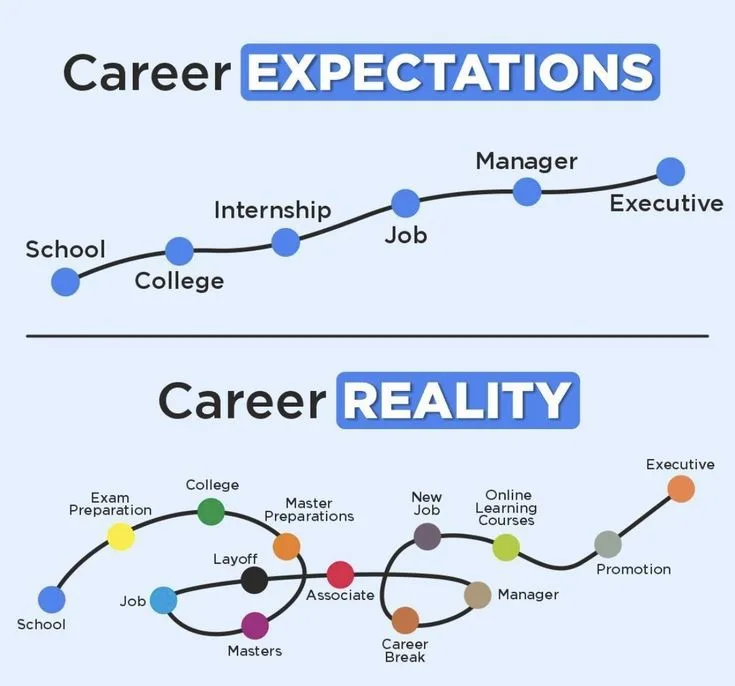
Navigating career tradeoffs intentionally means weighing money versus learning, specialization versus breadth, and stability versus growth at each stage.
More money, prestige, or security does not automatically make one job better when another offers learning, autonomy, flexibility, or meaningful work. Navigating career tradeoffs intentionally means recognising that genuine choices involve competing values, not merely finding an objectively correct answer.
A thirty-two-year-old engineering manager at a Series C startup received an offer she had been working toward for years: a director-level position at one of the largest technology companies in the world. The compensation package was extraordinary - nearly double her current total pay.
The title was a meaningful step up. The brand would open doors for decades. But the role required relocating to a different city, working in an office five days a week, and leading a team building incremental improvements to a mature product.
Her current startup role paid less, carried more risk, but offered the chance to build something from scratch, work remotely three days a week, and learn at a pace that was impossible at a larger company.
This is a career tradeoff. Not a clear right answer. Not a question of which option is objectively better. A genuine tradeoff, where accepting one set of goods requires forgoing another set of goods that are also genuinely valuable.
Career tradeoffs are inescapable. The professional who achieves extraordinary technical depth does so at the cost of professional breadth. The one who achieves extraordinary breadth does so at the cost of depth. The one who optimizes for income optimizes against time.
The one who optimizes for autonomy optimizes against stability. Every professional allocation decision is, at its core, a tradeoff.
What separates professionals who navigate these tradeoffs effectively from those who do not is not intelligence or luck - it is the clarity with which they understand what they are trading and what they actually value.
The Currency System of Career Tradeoffs
Career capital can be thought of as existing in several distinct currencies that cannot be freely exchanged:
Money: Current income, total compensation, and the financial security that comes from it. Money buys flexibility, reduces risk, and funds other aspects of life.
Learning: The rate at which you are developing new skills, understanding new domains, and expanding your professional capability.
Time: Autonomy over how you spend your hours. Time to invest in relationships, health, personal development, and the parts of life outside work.
Status: Recognition, title, organizational influence, and the social value that comes from your professional position.
Impact: The degree to which your work creates meaningful change - in customers, organizations, society, or your field.
Optionality: The range of future choices that your current position makes available. Some roles open doors; others close them.
Security: Predictability of income, stability of employment, and the degree to which your professional position is protected against disruption.
These currencies cannot be fully converted into each other. You cannot simply trade money for learning or status for time. Some exchange is possible at the margins, but the fundamental point is that each currency matters and they trade off against each other in ways that require explicit choices.
The Major Career Tradeoffs
Compensation vs. Learning
This is the most common tradeoff faced by early-career professionals. Almost universally, the roles that pay the most for early-career talent are the roles that teach you the least: roles at large established companies in mature functions where your primary contribution is executing well-defined processes.
The roles that teach the most are frequently at smaller organizations with fewer resources, where the scope of each person's responsibility is larger and the problems are less well-structured.
The data on this tradeoff is compelling: The McKinsey alumni network, for instance, produces an extraordinary number of senior executives, not because McKinsey pays the most, but because the intensity of the learning environment, combined with the quality of the peer group, produces career capital that compounds for decades.
Example: In 2008, Brian Chesky was a 26-year-old design graduate with no significant income. When Airbnb was barely surviving, he was working for equity in a company that many investors believed would fail.
The learning he accumulated - about product design, about hospitality, about fundraising, about managing through crisis - would have been impossible to acquire in any traditional paid position.
By 2023, Airbnb's market capitalization had exceeded $70 billion and Chesky's career capital had generated personal value that no early salary could have approached.
When to weight learning over compensation: Early in your career, when the compounding value of skills is highest. When you are entering a new domain or making a significant pivot. When the learning environment is genuinely exceptional rather than merely described as such.
When to weight compensation: When financial obligations (debt, family, geographic cost of living) make lower compensation genuinely unsustainable. When compensation is already at market and additional learning will require choosing among similarly structured roles.
When you have accumulated enough learning capital that the marginal rate of skill growth is declining.
Depth vs. Breadth
Specialization - building extraordinary capability in a specific domain - creates distinctive value but reduces flexibility. Generalism - building competent capability across many domains - creates flexibility but risks being insufficiently differentiated.
The tension manifests in specific career choices:
Staying in a functional area (accounting, engineering, design) vs. moving into general management
Developing deep technical expertise vs. building leadership and communication capabilities
Focusing on one industry vs. building cross-industry perspective
Example: Jeff Dean at Google became one of the most influential engineers in the world through extraordinary technical depth - he co-designed Google's core infrastructure systems, including Bigtable and MapReduce. His career is the model of specialization producing extraordinary value.
Satya Nadella at Microsoft built a career through strategic breadth - moving through engineering, server products, cloud, and finally enterprise leadership before becoming CEO. His career is the model of breadth enabling the largest leadership opportunities.
Neither path is categorically superior. The choice depends on your strengths, your market, and what you are trying to achieve.
The T-shaped model resolves this for many professionals: develop deep expertise in one domain while building sufficient breadth in adjacent areas to understand context and collaborate effectively. The depth provides differentiation; the breadth provides context and connection.
Startup vs. Established Company
This tradeoff bundles many other tradeoffs:
Startup
Established Company
Higher risk
Lower risk
Higher potential equity upside
Lower equity upside
Faster learning, more scope
Specialized roles, more structured learning
Less stable income
More predictable income
More ambiguity and chaos
More structure and process
Less brand credential
Stronger brand on resume
Smaller peer network
Larger, more diverse network
Neither is universally better. The right choice depends on your career stage, risk tolerance, financial situation, and what you are trying to build.
Example: Reid Hoffman worked at Apple and then Fujitsu before co-founding SocialNet in 1997 - his first startup attempt, which failed. He then joined the early team at PayPal, which was acquired by eBay. He then founded LinkedIn in 2003.
Each phase built something the next phase required: the large company experience gave him organizational pattern recognition; the failed startup gave him founder experience; the successful startup gave him the network and credibility to raise capital for LinkedIn.
The sequence, in retrospect, was almost perfectly ordered - though it was not planned to be.
Individual Contribution vs. Management
The transition from individual contributor to management is one of the most significant career tradeoffs, and it is one of the most commonly misunderstood.
What you gain by moving into management:
Organizational influence and the ability to multiply your impact through others
Access to strategic conversations that individual contributors rarely enter
Leadership experience that becomes essential for the most senior organizational roles
What you give up by moving into management:
The deep satisfaction of solving hard technical or creative problems directly
The ability to own your outputs entirely (management success depends on others)
The professional identity of being valued for what you personally produce
Many professionals make this transition because they see it as the "next level" - the automatic progression of career advancement. But management is a distinct skill set that many excellent individual contributors do not have and do not enjoy developing.
The mistake is treating management as a promotion rather than as a career change.
The staff engineer path - senior individual contributor tracks that provide compensation, influence, and career recognition without requiring people management - has become more common in engineering and data science. It is an explicit acknowledgment that the tradeoff exists and that management is not the only path to seniority.
Stage-Appropriate Tradeoffs
The correct resolution of most career tradeoffs depends significantly on career stage, because the value of different currencies changes over the course of a career.
"You cannot have everything you want at the same time. A life without trade-offs is a life without choices, and a career without trade-offs is a career without direction. The question is not whether to make trade-offs but whether to make them consciously." - adapted from Barry Schwartz, The Paradox of Choice[2]
Early Career (0-7 Years): Prioritize Learning and Relationships
In early career, the rate of capability development determines most of your long-term trajectory. The compounding value of skills acquired early is enormous. A capability built at age 27 benefits from decades of deployment; a capability built at 45 benefits from fewer years.
The early-career priority ordering:
Learning rate (how much you are developing)
People quality (who you are learning from and alongside)
Future optionality (what doors this opens)
Current compensation (within reason)
Sacrificing significant current compensation for dramatically better learning is almost always the right tradeoff in early career, provided the financial sacrifice is sustainable.
Mid-Career (7-20 Years): Prioritize Leverage and Reputation
In mid-career, accumulated skills and relationships should begin creating leverage - you should be generating more value than you were generating in early career with the same hours of effort.
The mid-career priority ordering:
Impact and contribution (doing work that matters at scale)
Reputation building (being known for the right things)
Compensation growth (deploying accumulated capital for appropriate reward)
Learning (now more focused - deepening specific expertise rather than broad acquisition)
Senior Career (20+ Years): Prioritize Impact and Legacy
In senior career, the question shifts from "what am I building?" to "what does my work enable?" The most significant career satisfaction in senior career typically comes from multiplying others' capabilities and creating organizational conditions that produce results at scale.
The senior career priority ordering:
Mission alignment (is the work genuinely important?)
Relationship quality (are you working with people you respect and from whom you continue learning?)
Impact scale (is your work creating meaningful change?)
Personal sustainability (is this pace and pressure compatible with long-term health and relationships?)
The Tradeoff You Rarely See Coming: Time
The most consequential career tradeoff is often invisible until it has already been made: the tradeoff between professional achievement and everything else that makes life worth living.
Careers that require 70-hour weeks, constant travel, sustained stress, and total cognitive focus do produce extraordinary professional outcomes for some people. They also produce divorce, health problems, estranged children, and profound personal regret for many of the same people.[5]
This tradeoff is real. A career that genuinely requires 70 hours of engaged work per week cannot also fully accommodate an engaged partnership, active parenting, serious health maintenance, deep friendships, and non-professional pursuits. The hours are not there.
The tradeoff becomes visible when you acknowledge that professional achievement is not the only thing that matters. Every hour invested in career is an hour not available for something else - including building the non-professional dimensions of a life that give professional achievement its meaning.
The productive question is not "should I make this tradeoff?" but "what specific tradeoff am I making, and do I endorse it explicitly?" Many professionals who burn out at 45 did not consciously choose to sacrifice their health, relationships, and personal development for professional advancement - they drifted into that tradeoff incrementally, one late night and one missed occasion at a time.
Making the tradeoff conscious - "I am choosing to spend 60 hours per week on this career phase for the next 3 years because the learning and positioning value is worth the sacrifice, and I have a specific plan to rebalance at year 3" - is dramatically different from drifting into the same time allocation with no deliberate choice.
Making Tradeoffs Wisely
The frameworks for making career tradeoffs more wisely share a common structure:
1. Name the tradeoff explicitly. "By accepting this offer, I am trading X for Y." If you cannot name both sides clearly, you do not fully understand the decision.
2. Clarify what you actually value, not what you think you should value. The professional whose peers all care about status should not automatically weight status highly if it is not actually what drives their engagement and satisfaction.
3. Consider career stage. The right resolution of a tradeoff changes as your career develops. An acceptable sacrifice in early career is not necessarily appropriate in mid-career.
4. Test your reasoning against reality. "I will sacrifice current compensation for learning" is only a wise tradeoff if the role genuinely provides exceptional learning. Does the evidence support the expectation?
5. Acknowledge that not deciding is a decision. Staying in a current role is an implicit tradeoff decision - you are trading the potential gains of a different role for the familiarity and stability of the current one.[3]
For a deeper exploration of how career decisions can be made more rigorously, see career decision making. For frameworks on managing the career risks that tradeoffs create, see career risk management.
The Tradeoffs You Cannot Make Up
One important constraint in career tradeoff thinking: some losses are not recoverable. Some opportunities only exist once. Some relationships, once neglected, cannot be rebuilt.
The decade when your children are young is not recoverable. The window to enter a specific market before it matures does not stay open indefinitely. The relationships that would have defined your career, had you maintained them, drift when neglected.
This is not an argument for either professional sacrifice or professional ambition - it is an argument for making these tradeoffs consciously, with full awareness of what cannot be undone, rather than allowing them to resolve themselves through inertia and busyness.
The professionals who navigate career tradeoffs best are not those who make the right choices every time.[9] They are those who make their choices explicitly, with understanding of what they are accepting and what they are giving up, and who revisit those choices regularly enough to adjust when circumstances or priorities change.
What Research Shows About Career Tradeoffs
The academic literature on career tradeoffs has produced several findings that challenge conventional professional wisdom.
Cal Newport's analysis of career trajectories in So Good They Can't Ignore You (2012) examined what separated people who loved their careers from those who found them unfulfilling.
His central finding was that the compensation-versus-learning tradeoff resolves clearly in favor of learning in early career: professionals who invested in building rare, valuable skills - what Newport called "career capital" - were significantly more satisfied with their careers at the ten- and twenty-year marks than those who had optimized for early compensation.
Newport studied the career histories of musicians, software developers, and knowledge workers and found that the "follow your passion" advice produced worse outcomes than deliberate skill-building.[1]
Herminia Ibarra's research on the depth-versus-breadth tradeoff offers important nuance.
In Act Like a Leader, Think Like a Leader (2015), Ibarra found through longitudinal study of executives that the professionals who achieved the most senior leadership positions were not the deepest specialists or the broadest generalists - they were people who had built a specific pattern of breadth around a domain of acknowledged depth.[7]
Her research found that leadership transitions required what she called "outsight" - perspective from working across different domains - rather than either deep specialization or undifferentiated breadth.
Adam Grant's work in Give and Take (2013) reframes the individual contribution versus management tradeoff through the lens of who captures value from collaborative work.[8]
Grant found that people who give generously in collaborative settings - sharing knowledge, making introductions, investing in others' success - tend to be both at the top and the bottom of career outcome distributions.
The difference between the high-performing givers and the low-performing givers was boundaries: high-performing givers were selective about whom they invested in and ensured their own work got done first.
This finding directly applies to the management tradeoff: managers who remain personally effective at their own work while investing in their teams' development outperform those who sacrifice their own effectiveness for team investment, or those who prioritize personal production at the expense of team development.
Daniel Pink's research in Drive (2009) on intrinsic motivation provides a framework for understanding the time tradeoff. Pink's synthesis of motivation research found that autonomy, mastery, and purpose are the three primary drivers of intrinsic motivation in knowledge work.
Career phases that optimize heavily for one of these (a high-pressure, low-autonomy role that builds mastery rapidly, for example) impose intrinsic motivation costs that should be explicitly factored into the tradeoff analysis.
Pink's research suggests that the sustainable career is not one that maximizes any single variable but one that maintains a minimum threshold of all three drivers.
Linda Babcock and Sara Laschever's research in Women Don't Ask (2003) identified a specific gender dimension to career tradeoffs: women systematically negotiate salary and advancement less aggressively than men, often framing the negotiation itself as a tradeoff against likability.[4]
Their research found that women who did negotiate achieved outcomes comparable to men, but faced social penalties that men did not.
This creates a real tradeoff structure unique to women in many organizational contexts, where the gains from negotiation must be weighed against social costs that are invisible in gender-neutral career frameworks.
Real-World Case Studies in Career Tradeoff Navigation
Pat Gelsinger's career arc illustrates the depth-versus-breadth tradeoff navigated deliberately over decades. Gelsinger spent 30 years at Intel building extraordinary technical depth in chip architecture - he led the development of the 80486 and became Intel's first Chief Technology Officer.
He then moved to VMware as CEO, leveraging his technical credibility to build operational and strategic breadth. When Intel recruited him back as CEO in 2021, his value was the unusual combination: technical depth that gave him credibility with engineers and the organizational breadth to run a complex global operation.
The sequence was not accidental - Gelsinger has described deliberately choosing roles that added to his capability base rather than simply advancing his title.
Arianna Huffington's pivot after collapse (2007) is a well-documented case of the time tradeoff made explicit under crisis. Huffington collapsed from exhaustion, broke her cheekbone in the fall, and used the event as a forcing function to restructure her professional life.
She published Thrive (2014) analyzing the data on overwork and health, finding that the productivity gains from 70-plus-hour weeks are largely illusory beyond six to eight weeks - cognitive function, decision quality, and creative output all decline significantly, erasing the nominal productivity gains from additional hours.
Her Thrive Global company was built on this research finding applied as a business model.
Jeff Weiner at LinkedIn represents the individual contribution to management tradeoff navigated with unusual self-awareness.
Weiner, CEO of LinkedIn from 2008 to 2020, described his management philosophy as "compassionate management" - explicitly investing in his team's development as the primary job of his role, while maintaining personal involvement in product strategy.
His stated view was that the management tradeoff is only negative when managers stop learning and stop contributing their personal judgment to substantive decisions.
Under his tenure, LinkedIn grew from 338 employees to over 16,000 and was acquired by Microsoft for $26.2 billion in 2016.
The McKinsey alumni network effect illustrates the compensation-versus-learning tradeoff at scale. McKinsey pays below what comparable talent could earn at technology companies or in finance but above most other professional services.
The tradeoff - accepting below-market compensation relative to tech - has historically been justified by the learning density: consultants work on a different industry problem every six to twelve weeks, developing pattern recognition across sectors that takes a decade to acquire in traditional career paths.
The McKinsey alumni network includes a disproportionate number of CEOs and senior executives precisely because this learning-compensation tradeoff, made early, produces outsized career capital that compounds over decades.
Evidence-Based Approaches to Navigating Career Tradeoffs
Research points to several specific practices that improve career tradeoff decision-making.
Temporal discounting awareness is the first intervention. Research by Shane Frederick, George Loewenstein, and Ted O'Donoghue on present bias found that people systematically underweight future consequences relative to present ones, using implicit discount rates far higher than those they would endorse explicitly.[6]
For career tradeoffs, this means the current salary at a well-paying but low-learning job is cognitively weighted more heavily than the future salary premium that superior skills would produce - even when people know intellectually that skill-building is the right long-term choice.
Making the future compensation projections explicit and concrete reduces present bias.
Career tradeoff audits on an annual basis - a structured review of which tradeoff choices were made implicitly during the year versus explicitly - help professionals identify drift.
Research on goal-achievement by Peter Gollwitzer at New York University found that people who reviewed their progress against stated priorities adjusted their behavior more effectively than those who set goals without review.
Applied to career tradeoffs: an annual audit asking "what did I actually trade this year, and is it consistent with what I said I valued?" produces more intentional tradeoff navigation.
Portfolio thinking, adapted from finance by Herminia Ibarra and Mark Hunter in Harvard Business Review research (2007), treats the career as a portfolio of experiences to be managed for return.
The key insight is that career tradeoffs need not be permanent - a period of deep specialization can be followed by a period of cross-functional breadth, and a period of high-intensity work can be followed by a period of consolidation.
Managing the portfolio over a ten-to-twenty-year horizon produces better outcomes than optimizing each individual decision in isolation.
Sources & Further Reading
Newport, C. So Good They Can't Ignore You. Grand Central Publishing, 2012. View source
Schwartz, B. The Paradox of Choice: Why More Is Less. Ecco Press, 2004.
Kahneman, D. Thinking, Fast and Slow. Farrar, Straus and Giroux, 2011.
Sandberg, S. Lean In: Women, Work, and the Will to Lead. Knopf, 2013. View source
Christensen, C. M. "How Will You Measure Your Life?" Harvard Business Review, July 2010. View source
Ariely, D. Predictably Irrational. Harper Perennial, 2010. View source
Ibarra, H. Act Like a Leader, Think Like a Leader. Harvard Business Review Press, 2015.
Galinsky, A. & Schweitzer, M. Friend and Foe: When to Cooperate, When to Compete, and How to Succeed at Both. Crown Business, 2015.
Duke, A. Thinking in Bets. Portfolio, 2018. View source
Further Reading
Collins, J. & Porras, J. Built to Last: Successful Habits of Visionary Companies. HarperBusiness, 1994.
Career decisions involve fundamental tradeoffs, you can’t maximize everything simultaneously, requiring conscious choices about priorities. Core career tradeoffs: 1) Compensation vs Learning/Growth: The tradeoff: Higher-paying roles often have less learning. Growth opportunities often pay less initially. Why this exists: Established companies pay more but offer incremental work. Startups or growth roles pay less but offer rapid learning.
Market pays for proven skills, not for your development. Example: $200K at stable corporation doing familiar work vs $140K at startup building new skills in growing area. When to choose compensation: Financial obligations (debt, family, immediate needs). Late career (you’ve already invested in growth). Financially independent (wealth accumulated, optimize for income). When to choose growth: Early career (compounding returns on learning).
Stagnating in current skills. Career pivot (need new experience). Have financial runway to sustain lower pay. 2) Specialization vs Generalization: The tradeoff: Specialists earn premium in their domain but have narrow options. Generalists have broader options but less depth and premium. Why this exists: Deep expertise is rare and valuable (supply/demand). But narrow focus creates risk if field declines.
Breadth creates adaptability but dilutes mastery. Example: Deep AI/ML expert (high pay, narrow roles) vs product generalist (more role variety, less premium). When to specialize: Field is growing rapidly (high demand). You enjoy deep expertise. Premium for specialization is significant. You’re building complementary breadth alongside. When to generalize: Early in career (still exploring). Industry or field uncertain. Enjoy variety over depth.
Want optionality and adaptability. 3) Stability vs Risk/Growth: The tradeoff: Stable roles offer predictability but limited upside. Risky roles (startups, new ventures) offer growth potential but uncertainty. Why this exists: Stability = known path, lower variance. Risk = unknown outcomes, high variance (big upside or downside). Example: Stable F500 job (predictable career, modest growth) vs startup (equity upside, layoff risk).
When to choose stability: Financial obligations (mortgage, family, dependents). Risk-averse personality. Late career (less time to recover from setbacks). Economic uncertainty. When to choose risk: Financial runway (can absorb failure). Early career (time to recover). High risk tolerance. Believe in asymmetric upside (small downside, large upside potential).
4) Work-Life Balance vs Career Intensity: The tradeoff: High-intensity careers advance faster but demand more time and energy. Balanced careers offer sustainability but slower advancement. Why this exists: Advancement often rewards those who go above and beyond. High-impact roles require significant time investment. But sustained intensity leads to burnout. Example: 60-hour weeks, rapid promotion vs 40-hour weeks, moderate advancement.
When to choose intensity: Early career (building foundation). Pursuing ambitious goals (VP, entrepreneurship). No family obligations yet. High energy and capacity. When to choose balance: Family obligations (kids, aging parents). Health concerns (burnout risk). Later career (already established). Values shift toward life over work.
5) Prestige vs Fulfillment: The tradeoff: Prestigious roles offer status and credentials but may not be fulfilling. Fulfilling work may lack external prestige. Why this exists: Prestige often comes from institutions or roles society values. Fulfillment is personal, what matters to you, not others. They don’t always align.
Example: High-prestige consulting job (impressive, exhausting, unfulfilling) vs nonprofit work (meaningful, lower prestige, fulfilling). When to choose prestige: Building credentials early in career. Prestige opens future doors. You genuinely enjoy the work. Society’s values align with yours. When to choose fulfillment: Financially secure (don’t need prestige for next role). Clear on your values and priorities. Prestige no longer motivates you.
Later career (caring less about others’ opinions). 6) Autonomy vs Impact: The tradeoff: High autonomy (consulting, small company, IC roles) means control but limited scope. Low autonomy (large company, team roles) means less control but potentially larger impact. Why this exists: Autonomy requires independence (solo work, small teams). Large impact often requires collaboration and compromise.
Example: Solo consultant (full control, limited impact) vs corporate exec (constrained, large-scale impact). When to choose autonomy: Value control and flexibility. Entrepreneurial or independent personality. Expertise allows independent work. Don’t need large-scale impact for fulfillment. When to choose impact: Motivated by large-scale change. Enjoy collaboration and teamwork. Willing to navigate organizational complexity.
Prestige or promotion tied to impact. 7) Short-Term Comp vs Long-Term Equity: The tradeoff: High salary now vs equity that may be valuable later. Why this exists: Established companies pay cash (certain value). Startups pay equity (uncertain, potentially high value). Example: $300K salary at F500 vs $200K + significant equity at startup. When to choose salary: Need cash now (expenses, debt). Risk-averse.
Don’t believe in company’s upside. Late in career. When to choose equity: Believe in company’s potential. Financial runway to sustain lower cash. Early in career (long time horizon). Asymmetric risk/reward appeals to you. 8) Location vs Opportunity: The tradeoff: Living where you want vs living where best opportunities are. Why this exists: Opportunities cluster geographically (tech in SF/Seattle, finance in NYC).
Remote work helps but many roles require location. Example: Stay in hometown (family, comfort, limited jobs) vs move to major city (more opportunities, higher cost, far from family). When to stay: Family ties are priority. Remote work available. Content with local opportunities. Cost of living matters more than opportunity. When to relocate: Career is top priority. Opportunities in target city are significantly better.
Early in career (fewer ties). Excited by target location. The meta-tradeoff: Time vs Everything Else: You have finite time and energy. Investing in career means less time for: Family, relationships, hobbies, health, rest. Every career choice is also a life choice. Acknowledge this explicitly. How to think about tradeoffs: 1) Clarify priorities: What matters most right now? (Compensation, learning, balance, autonomy, impact?).
Priorities change over time, revisit regularly. 2) Understand your values: What do you truly care about vs what society says you should care about? Be honest with yourself. 3) Recognize you can’t have everything: Trying to maximize all dimensions leads to frustration. Choose consciously. 4) Think in seasons: You don’t need to balance everything simultaneously. Some years emphasize career, others family or health.
5) Accept opportunity cost: Every yes is a no to alternatives. Make peace with your choices. The lesson: Career tradeoffs are inevitable, you can’t maximize compensation, learning, balance, autonomy, impact, prestige, and stability simultaneously. Clarify your priorities, understand the tradeoffs, and make conscious choices aligned with your values and life stage. Revisit as circumstances and priorities change.
The best career decisions come from clear-eyed tradeoff awareness, not wishful thinking that you can have it all.
Optimal tradeoffs shift across career stages, what makes sense at 25 often doesn’t at 40, requiring stage-appropriate prioritization. Early career (0-5 years post-graduation): Optimal focus: Learning and skill-building > Compensation. Growth and optionality > Stability. Building capital > Extracting value. Why: Time horizon is long (30-40 years ahead). Early learning compounds. Fewer personal obligations (often no family yet).
High energy and capacity. Recovery time if things don’t work out. Recommended tradeoffs: Accept lower comp for better learning: Join startups, growth companies, or rotational programs over highest-paying offers. Prioritize skill development and exposure to impact. Choose growth over stability: Take calculated risks (startups, new ventures, stretch roles). Volatility is acceptable, you have time to recover.
Specialize enough to be valuable, but maintain breadth: Develop T-shaped skills (deep in one area, broad across others). Don’t over-specialize too early (limits options). Intensity over balance: Work hard, take on more responsibility, build reputation. Invest heavily in career while capacity is high. Prestige can help early: Brand-name companies or roles can open future doors. But don’t sacrifice learning just for prestige.
What to avoid: Golden handcuffs (high pay, no growth). Over-indexing on stability (too conservative too early). Not taking risks when risk tolerance is highest. Mid-career (5-15 years): Optimal focus: Impact and positioning > Pure learning. Compensation becomes more important (life obligations increase). Balance becomes more important (family, health). Why: Established foundation of skills.
Life complexity increases (family, mortgage, etc.). Peak earning years, maximize value of accumulated capital. Less time to recover from major setbacks. Recommended tradeoffs: Balance compensation and growth: Don’t accept significant pay cuts unless clear strategic benefit. But still prioritize learning and advancement. Leverage specialization strategically: Deep expertise pays off now, you can command premiums.
But maintain enough breadth for pivots if needed. Seek high-impact, visible roles: Work that advances your career and demonstrates leadership. Position for next level (director, VP, executive). Build in flexibility: Negotiate for remote work, flexible hours, autonomy. Family obligations require more balance. Stability matters more: Can’t take as much risk, more people depend on you. But don’t become completely risk-averse.
What to avoid: Stagnation (staying in comfort zone too long). Ignoring balance (burnout risk is real). Over-optimizing for short-term comp (still need career growth). Late career (15-30+ years): Optimal focus: Meaning and fulfillment > Pure advancement. Autonomy and flexibility > Intensity. Sustainability > Growth at all costs. Why: Established career and reputation. Potentially financially secure.
Shifting priorities (family, health, legacy). Less need to prove yourself. Recommended tradeoffs: Prioritize fulfillment: Work that’s meaningful, not just prestigious or high-paying. Autonomy and control become more valuable. Leverage accumulated capital: Use skills, reputation, network for high compensation or flexibility. Can be selective about opportunities. Balance is essential: Health and relationships matter more.
Can’t sustain early-career intensity. Stability can be priority: Less time to recover from risks. But some take more risks if financially independent. Mentorship and legacy: Giving back becomes more fulfilling. Building legacy through others. What to avoid: Coasting too early (still have decades of career). Ignoring learning (skills can become obsolete). Burning out from ignoring balance.
Tradeoff decision framework by life stage: Questions to ask at each stage: Early career: What will I learn? Does this build valuable skills and experience? Will this create future options? Can I afford the financial tradeoff? Mid-career: Does this advance my goals (promotion, impact, income)? Can I balance this with family and life? Does this position me for the next level? Is the compensation appropriate for my experience?
Late career: Is this fulfilling and meaningful? Do I have autonomy and control? Does this fit my lifestyle and values? Am I giving back or building legacy? Life circumstances that shift tradeoffs: Having children: Balance becomes more important. Flexibility and location matter more. May need higher comp (expenses) but less travel/intensity. Health issues: Balance and sustainability become critical. Stress reduction is priority.
May need flexibility or reduced hours. Aging parents: May need location flexibility or reduced hours. Caregiving obligations shift priorities. Financial independence: Can optimize for fulfillment, meaning, autonomy over pure compensation. More freedom to take risks or pursue passion. Partner’s career: May need to balance two careers. Location, flexibility, household income all factor in.
Economic conditions: Recession: Stability becomes more valuable, risk tolerance drops. Boom: Growth opportunities abundant, can take more risks. Career pivot considerations: Pivoting early career (pre-30): Can take big risks (switching industries, starting over). Time to rebuild if pivot doesn’t work. Accept starting over in new path. Pivoting mid-career (30s-40s): More challenging but possible. Leverage transferable skills.
May need financial runway (savings) for transition. Shorter time to recoup investment. Pivoting late career (50+): Difficult unless building on accumulated expertise. Often lateral pivot (same skills, different context). Or shift to consulting/portfolio career. Example tradeoff decisions by stage: Age 25: Choice: $180K at BigTech doing maintenance work vs $120K at startup building new product.
Decision: Choose startup (learning, growth, building capital more valuable than extra $60K). Time horizon: 35+ years, compounding returns on learning. Age 35: Choice: VP role requiring 60hr weeks and travel vs Senior IC role with flexibility and good comp. Decision: Depends on personal situation. If no kids: Maybe VP (still building toward executive level). If young kids: Maybe IC (balance matters more now).
Age 50: Choice: Stay in high-stress exec role ($500K) vs advisor/consultant role ($300K but flexible). Decision: If financially secure and values fulfillment/balance: Probably transition. If still need income or enjoy role: Stay. The lesson: Optimal career tradeoffs shift across life stages. Early: Invest in learning and growth. Mid: Balance advancement and life obligations. Late: Prioritize meaning, fulfillment, autonomy.
Align tradeoff decisions with your current stage, life circumstances, and priorities. What’s right at one stage may be wrong at another, adapt your approach as you progress.
When career factors conflict, use explicit frameworks and prioritization to make conscious tradeoffs rather than hoping for perfect options. The reality: Perfect opportunities rarely exist. Most decisions involve conflicting factors: high pay but poor learning, great learning but bad location, meaningful work but low comp. You must choose what matters most.
Decision frameworks for conflicting tradeoffs: 1) Weighted scoring: Assign weight to each factor based on importance, score options, calculate total. Example factors and weights (adjust to your priorities): Learning potential: 30%. Compensation: 25%. Work-life balance: 20%. Career advancement: 15%. Location: 10%.
Reveals why one option is better. Limitations: Arbitrary scoring and weights. Not all factors are comparable. Gut feel still matters. 2) Satisficing: Define minimum acceptable for each factor, eliminate options below threshold, choose from remaining based on top priority. Example thresholds: Compensation: Must be $150K+ (anything below is unacceptable). Location: Must be remote or in specific cities.
Learning: Must involve new skills or growth opportunity. Balance: Must be <50 hrs/week average. Filter options: Option A: Meets comp, location, learning. Doesn’t meet balance (60+ hrs). Option B: Meets comp, balance, learning. Doesn’t meet location. Option C: Meets all thresholds. Decision: Choose from options meeting all thresholds. If none do, identify which threshold to relax. Benefits: Ensures basics are covered.
Simplifies decision (eliminates non-starters). Focuses on what’s truly non-negotiable. 3) Regret minimization: Imagine yourself at 80 looking back, which decision would you regret less? Example: Option A: High-paying but unfulfilling job. At 80: ‘I made money but wasted years doing work I hated.’ Option B: Meaningful but lower-paying job. At 80: ‘I lived modestly but did work that mattered.’ Decision: Which regret is more tolerable?
Most people regret playing it too safe, not pursuing meaning. Benefits: Long-term perspective cuts through short-term anxiety. Clarifies true values. Memento mori effect focuses decisions. 4) Opportunity cost analysis: What are you giving up with each choice? Example: Option A (stable corporate job): Giving up: Learning velocity, entrepreneurial experience, risk/reward upside. Gaining: Stability, predictable income, respectable resume line.
Option B (startup): Giving up: Stability, high cash comp, prestige. Gaining: Equity upside, learning, building something new. Decision: Which opportunity cost is more acceptable? For early career: Maybe giving up stability is fine (have time to recover). For mid-career with family: Maybe stability matters more. 5) Reversibility test: How hard would it be to reverse this decision?
Example: Option A: Joining established company (easily reversible, can switch companies). Option B: Moving to new city (moderately reversible but costly). Option C: Starting business (hard to reverse, reputational and opportunity cost). Decision heuristic: If decision is easily reversible, take more risk. If hard to reverse, be more careful. Reversible decisions: Less agonizing needed, can try and adjust.
Irreversible decisions: Warrant more analysis and caution. 6) Best Alternative to Negotiated Agreement (BATNA): What’s your fallback if you don’t take this opportunity? Example: Current job: $180K, stable, boring. New offer: $200K, exciting, uncertain. BATNA (if you don’t take offer): Stay in current job, keep searching. Decision: How much better is the offer than your BATNA? If offer is much better: Take it.
If only marginally better: Maybe keep searching. If worse than BATNA: Definitely decline. Common tradeoff scenarios and how to decide: Scenario 1: High comp but poor culture/learning: Analysis: Early career: Probably decline (learning more important, have time to earn later). Mid-career with obligations: Maybe accept (need income, can tolerate short term). Financially secure: Probably decline (fulfillment matters more).
Framework: If need money urgently: Accept with timeline to exit (1-2 years, save aggressively, then leave). If building capital is priority: Decline and find better fit. Scenario 2: Meaningful work but low pay: Analysis: Financially independent: Accept (can afford to optimize for meaning). Early career: Maybe accept if learning is high (experience compounds). Debt or obligations: Probably decline (need higher income).
Framework: Calculate: Can I afford this? (Budget test). Is the meaning worth the financial sacrifice? (Values test). Is there a path to higher comp later? (Trajectory test). Scenario 3: Great opportunity but requires relocating: Analysis: Single, early career: Probably accept (mobility is advantage, few ties). Family with kids: Harder, weigh opportunity vs family disruption. Partner’s career matters: Negotiate (remote? Temporary?
Spouse opportunity?). Framework: Quantify tradeoffs (career gain vs family cost). Explore alternatives (can role be remote? Can family move later?). Time-bound (temporary move more acceptable than permanent). Scenario 4: Promotion requiring 60+ hour weeks: Analysis: Early career, ambitious: Maybe accept (intensity can pay off). Young kids at home: Probably decline (balance matters, can’t sustain).
Already burned out: Definitely decline (health is foundational). Framework: Intensity is ‘season’: If you can sustain for 2-3 years and it advances career, maybe worth it. If indefinite intensity, probably not sustainable. Balance with recovery plans. ). ). ). Step 4: Score or evaluate options (use framework that fits your style). ). ). Step 7: Decide and commit (don’t endlessly second-guess).
When to choose based on single dominant factor: Sometimes one factor overwhelms others. Financial crisis: If you’re in debt or facing financial hardship, comp may be only thing that matters (survival first). Health crisis: If burned out or health failing, balance/sustainability is paramount. Once-in-lifetime opportunity: If offer is exceptionally rare (work with legendary mentor, ground-floor of rocketship), other factors may not matter.
Clear strategic move: If opportunity clearly advances long-term goals (even with short-term cost), take it. The lesson: Career decisions rarely have perfect options, factors conflict. Use explicit frameworks to clarify priorities and evaluate tradeoffs. Make conscious choices aligned with your values, life stage, and circumstances. Accept that every choice involves giving something up. Decide, commit, and don’t endlessly second-guess.
Better to make a reasonable decision and execute well than to agonize seeking perfection that doesn’t exist.
You can’t know for certain upfront, but you can validate tradeoffs through feedback loops, satisfaction indicators, and progress toward goals. Indicators you’re making good tradeoffs: 1) Progress toward goals: Are you moving in the direction you want? Check: Quarterly: Am I building skills I need? Am I making professional connections? Am I positioning for next step? Annually: Am I closer to my career goals than last year?
Have I gained experience, visibility, or capital? If yes: Tradeoffs are likely working. If no: Reassess, maybe priorities are wrong or execution is lacking. 2) Growth and learning: Are you developing and improving? Signs of good tradeoffs: You’re learning new things regularly. You’re challenged (not overwhelmed, not bored). You’re building skills that will be valuable long-term. You’re gaining experiences others would want.
Signs of poor tradeoffs: You’re coasting or stagnating. You’re not learning anything new. Your skills are becoming less relevant. You’re not challenged or engaged. 3) Sustainable satisfaction: Do you feel generally satisfied (not euphoric, but content)? Realistic expectations: No job is perfect every day. Satisfaction comes from alignment of work with values and goals, not constant happiness.
Signs of good tradeoffs: You’re energized more often than drained. You feel your work matters. You’re proud of what you do. You don’t dread Mondays (most weeks). Signs of poor tradeoffs: Persistent unhappiness or resentment. Constant stress or anxiety. Dread going to work. Burnout symptoms. 4) Financial health: Are you meeting financial obligations and building security? Signs of good tradeoffs: You’re living within means.
You’re saving and building buffer. You’re not in financial distress. Compensation is fair for your experience and market. Signs of poor tradeoffs: Constant financial stress. Can’t meet obligations. No savings or buffer. Significantly underpaid for market. 5) Relationships and life quality: Are personal relationships and health intact? Signs of good tradeoffs: You have time for important relationships. Your health is stable or improving.
You have some time for yourself. Work doesn’t consume everything. Signs of poor tradeoffs: Relationships suffering (partner, kids, friends). Health declining (stress, sleep, exercise). No time for anything but work. Life feels out of balance. 6) Optionality: Are your career options expanding or contracting? Signs of good tradeoffs: You’re getting opportunities you didn’t have before. Your network is growing. Your reputation is strengthening.
You could leave and find another good role. Signs of poor tradeoffs: Fewer opportunities over time. Skills becoming obsolete. Network stagnating. Feel trapped or stuck. How to validate tradeoffs over time: 1) Regular check-ins: Monthly: Quick pulse check (Am I satisfied? Stressed? Learning?). Quarterly: Deeper assessment (Progress toward goals? Career capital growing?).
Annually: Comprehensive review (Are these still the right tradeoffs? Do priorities need adjustment?).
2) Seek external feedback: Ask trusted people: Mentor: ‘Am I making good career moves?’ Peer: ‘Do you see me progressing?’ Partner: ‘How am I balancing work and life?’ External perspective catches blind spots.3) Compare to alternatives: Thought experiment: ‘If I had made different tradeoffs, where would I be?’ Not to induce regret, but to validate or question current path.
4) Test against values: Are your tradeoffs aligned with what you truly care about? Example: If you value family but work 70 hours/week, tradeoffs aren’t aligned. If you value impact but optimize only for money, tradeoffs aren’t aligned. Misalignment creates persistent dissatisfaction.5) Track outcomes, not just inputs: Don’t just track effort (‘I worked hard’). Track results: Did I get promoted? Did I learn valuable skills?
Did I build important relationships? Am I happier or more fulfilled? Outcomes reveal whether tradeoffs are paying off.Signs you need to reassess tradeoffs: Red flags: Persistent unhappiness (not just bad day or week, but months). Stagnation (no growth, learning, or progress). Health declining (burnout, stress-related issues). Relationships suffering significantly. Financial distress. No options or opportunities emerging.
Regret about choices you’re making. What to do: Identify what’s not working (which tradeoff is causing problems?). Clarify if this is temporary or structural. Assess if adjustments can fix it (negotiate flexibility, change projects). Consider bigger changes if structural problem (change roles, companies, paths). The tradeoff adjustment cycle: Every 1-2 years, reassess: What tradeoffs am I making?
Are they still appropriate for my stage and circumstances? What would I change if starting fresh today? Adjust as needed: Life circumstances change (family, health, finances). Priorities evolve (what mattered at 25 may not at 35). Career stage shifts (early, mid, late require different tradeoffs). Examples of tradeoff validation: Good tradeoff example: Chose growth startup over stable corporate job. Lower comp but learning rapidly.
After 18 months: Developed valuable skills (check). Got promoted and comp increased (check). Energized and satisfied (check). Options expanding (recruiters calling). Validation: Tradeoffs were good, sacrificed short-term comp for long-term capital. Poor tradeoff example: Chose high-paying job that’s unfulfilling. After 18 months: Not learning anything new (red flag). Dreading work, burned out (red flag).
Using money to cope with unhappiness (red flag). Feel trapped by comp (red flag). Validation: Tradeoffs aren’t working, money isn’t worth the cost. Adjustment: Either find way to make current role better, or plan exit even if means pay cut. The acceptance: You can’t know upfront: Career decisions involve uncertainty. Perfect information doesn’t exist. Best you can do is make informed choice and adapt.
Some tradeoffs are temporary: Intensity in early career can pay off later. Low comp while learning can lead to high comp later. Temporary sacrifice can be strategic. Some tradeoffs are reversible: If a tradeoff isn’t working, you can usually change course. Few decisions are truly permanent. Not all discomfort means wrong tradeoffs: Growth requires discomfort. Stretch roles feel hard. That’s different from chronic unhappiness or misalignment.
Trust but verify: Make tradeoffs based on your best judgment. Then monitor outcomes and adjust. Iterate your way to good tradeoffs rather than expecting perfect decisions upfront. The lesson: You validate career tradeoffs through outcomes, not upfront certainty. Monitor progress toward goals, growth and learning, satisfaction, financial health, relationships, and optionality. Check in regularly (monthly, quarterly, annually).
Adjust when tradeoffs aren’t working. Accept that decisions involve uncertainty, make informed choices, monitor outcomes, and adapt. Good tradeoffs compound positive outcomes over time; poor tradeoffs create persistent dissatisfaction and stagnation. Trust your judgment but verify through results.
Career tradeoff mistakes compound over time, what seems manageable in the moment can create significant problems years later. Common mistakes and their long-term consequences: Mistake 1: Optimizing only for short-term compensation: The decision: Always choosing highest-paying job, ignoring learning and growth. Short-term: High income, nice lifestyle, financial comfort.
Long-term consequences (5-10 years): Skills become outdated (high pay for legacy work eventually declines). Difficult to pivot (narrow expertise, no growth). Stuck in golden handcuffs (can’t leave without significant pay cut). Options contract (fewer opportunities, market doesn’t value outdated skills). Career plateau (nowhere to go, companies value fresh skills over expensive legacy workers).
Real cost: May earn $200K now, but stuck there while peers who invested in growth earn $300K+. Mistake 2: Never taking risks or trying new things: The decision: Always choosing safety and stability, avoiding any risk. Short-term: Predictable, comfortable, low stress. Long-term consequences: Skills don’t diversify (vulnerable if field declines). Never build tolerance for discomfort or change.
Miss compounding opportunities (startup equity, high-growth companies, career acceleration). Regret (wondering ‘what if’ decades later). Risk aversion intensifies (becomes harder to change over time). Real cost: Safe path feels secure until industry disrupts or company downsizes, then no adaptability. Mistake 3: Sacrificing health and relationships indefinitely: The decision: Working 70-80 hours/week, neglecting family, health, and self.
Short-term: Career advancement, financial success, professional recognition. Long-term consequences (10-20 years): Health problems (stress, burnout, physical deterioration). Relationship damage (divorce, estranged kids, lost friendships). Burnout (can’t sustain intensity forever, eventual collapse). Regret (realizing what was sacrificed can’t be recovered). Diminishing returns (intensity doesn’t linearly translate to better outcomes).
Real cost: Success at work, failure at life, asking ‘was it worth it?’ with damaged health and relationships. Mistake 4: Staying in comfortable role too long: The decision: Remaining in familiar, easy job because it’s comfortable and pays decently. Short-term: Low stress, predictable, comfortable. Long-term consequences (5-15 years): Skills atrophy (what you knew becomes outdated).
Career capital doesn’t grow (network stagnates, reputation plateaus). Harder to move (comfort zone deepens, risk tolerance drops). Vulnerability (when change is forced, layoff, company change, you’re unprepared). Opportunity cost (could have been building toward bigger roles, higher comp). Real cost: Wake up at 40 or 50 realizing you’re unprepared for market, skills obsolete, limited options.
Mistake 5: Pursuing prestige over fit or values: The decision: Taking impressive-sounding jobs that don’t align with what you actually enjoy or value. Short-term: External validation, impressive resume, societal approval. Long-term consequences (10-20 years): Chronic dissatisfaction (years doing work you don’t care about). Identity crisis (built career on others’ values, not your own).
Midlife pivot (realize in 40s you want completely different path, costly to change). Regret (wasted years on path that never felt right). Real cost: Professional success but personal unfulfillment, asking ‘is this all there is?’ Mistake 6: Not investing in relationships and network: The decision: Focusing solely on technical work, ignoring networking and relationships. Short-term: More time for execution, less ‘political’ work.
Long-term consequences (10-20 years): No sponsors or advocates (advancement is slower or blocked). Limited opportunities (opportunities come through networks). Isolation (no community or support system). Vulnerability (if lose job, no network to help land next role). Real cost: Highly skilled but unknown, fewer options, slower advancement than less skilled but well-connected peers.
Mistake 7: Over-specializing too early: The decision: Becoming deep expert in narrow domain at age 25, ignoring breadth. Short-term: High demand, premium pay for specialized skill. Long-term consequences (10-20 years): Vulnerability if field declines (no transferable skills). Pigeonholed (seen only as that specialist, hard to pivot). Limited options (narrow expertise = narrow roles).
Obsolescence risk (specialized fields can become obsolete quickly). Real cost: High pay for 10 years, then field declines and no pivot options, starting over at 40. Mistake 8: Never developing leadership or soft skills: The decision: Focusing only on technical execution, avoiding people management or leadership. Short-term: Can stay in technical individual contributor roles.
Long-term consequences (15-20 years): Ceiling on comp (senior IC roles max out lower than leadership). Limited impact (can’t scale beyond individual contributions). Vulnerability (senior IC roles are fewer, more competitive). No pivot options (can’t move to management later without experience). Real cost: Maxing out at $200-250K as Senior IC while peers with leadership skills reach $400K+ as directors/VPs.
Mistake 9: Ignoring financial fundamentals: The decision: Living paycheck to paycheck, not saving, despite high income. Short-term: Nice lifestyle, enjoying money as it comes. Long-term consequences (20-30 years): No financial security (can’t weather layoffs or downturns). Can’t take career risks (no buffer to try new things). Trapped (must work for money, no option to pursue meaning or passion).
No retirement (working indefinitely by necessity, not choice). Real cost: Earned millions over career but have nothing saved, forced to work until unable. Mistake 10: Not adapting to life stage changes: The decision: Trying to maintain 20s career intensity at 40 with family and health issues. Short-term: Continuing high performance. Long-term consequences (5-10 years): Burnout (can’t sustain intensity indefinitely).
Health deterioration (stress compounds, recovery slows). Relationship damage (can’t be absent parent/partner indefinitely). Career derailment (burning out forces exit). Real cost: Collapse at 45, health crisis, divorce, forced career break to recover. How mistakes compound: Year 1-5: Mistakes feel manageable or even optimal. High pay (mistake 1) feels great. Comfort (mistake 4) feels safe. Specialization (mistake 7) feels rewarding.
Year 5-10: Subtle negative effects appear. Skills gap emerges. Options narrow. Health or relationships show stress. Still recoverable with adjustment. Year 10-20: Consequences crystallize. Career plateaus or declines. Realize opportunities were missed. Harder to pivot (age, obligations, ingrained patterns). Regret becomes persistent. Year 20+: Major problems if not addressed. Obsolete skills, limited options, damaged health/relationships.
Recovery is possible but difficult and costly. How to avoid compounding mistakes: 1) Regular tradeoff reviews: Annually assess whether current tradeoffs still make sense. Life stage changes, adjust tradeoffs accordingly. 2) Balance multiple dimensions: Don’t optimize only one thing (comp, prestige, comfort). Build career capital across skills, relationships, reputation. 3) Adapt to life stages: Early career: Invest in growth.
Mid-career: Balance advancement and life. Late career: Prioritize meaning and sustainability. 4) Listen to warning signs: Persistent dissatisfaction, health issues, relationship problems. These signal tradeoffs need adjustment. 5) Maintain fundamentals: Always keep learning (skills don’t atrophy). Always build relationships (network doesn’t stagnate). Always protect health and key relationships.
6) Think long-term: Ask: ‘Where will this tradeoff lead in 10 years?’ Make decisions with decades in mind, not just immediate outcomes. The lesson: Career tradeoff mistakes compound over time. What seems okay in the moment, high pay without growth, comfort without challenge, intensity without balance, creates problems years later. Mistakes are recoverable, but become harder and costlier to fix over time.
Make tradeoffs with long-term consequences in mind. Review and adjust regularly. Balance multiple dimensions (comp, growth, health, relationships, meaning). Avoid common pitfalls: short-term greed, excessive risk aversion, unsustainable intensity, comfort addiction, prestige chasing. Your 40-year-old or 60-year-old self will thank you for wise tradeoffs made today.
Want to write for us?
Pitch a guide to When Notes Fly
Evergreen subjects, primary sources, and a four-stage review. Contributors are chosen for knowledge of the specific topic.
Tools change, benchmarks move, and research gets superseded. We would rather be corrected than be wrong, so every When Notes Fly guide is open to public correction through CitePep.
Create a free CitePep account and you can file a correction against this page directly. Accepted corrections are published here with your name and a permanent link to your contribution.
CitePep accounts are free and take under a minute.
02
Open this page on CitePep
Every guide has a matching verification page.
03
File the correction
Point at the claim and attach the source that contradicts it.
04
We review against sources
Accepted corrections are published here with your name.
CitePep is an independent verification platform. When Notes Fly does not control which corrections are filed, and contributors are credited under their own names.
New guides and revisions from across six sections. One email, no pitches.
We Value Your Privacy
We use cookies to enhance your experience, analyze site traffic, and provide personalized content. By clicking 'Accept All', you consent to our use of cookies. View our cookie policy
Cookie Preferences
Choose which cookies you want to allow. Essential cookies are required for the website to function properly.
Essential Cookies
These cookies are necessary for the website to function and cannot be disabled. They are usually set in response to actions you take, such as setting privacy preferences or logging in.
Always Active
Analytics & Performance Cookies
These cookies help us understand how visitors interact with our website, allowing us to improve our services and user experience.
Advertising & Marketing Cookies
These cookies are used by Google AdSense to display personalized ads. They help us provide free services by generating revenue from advertisements.