
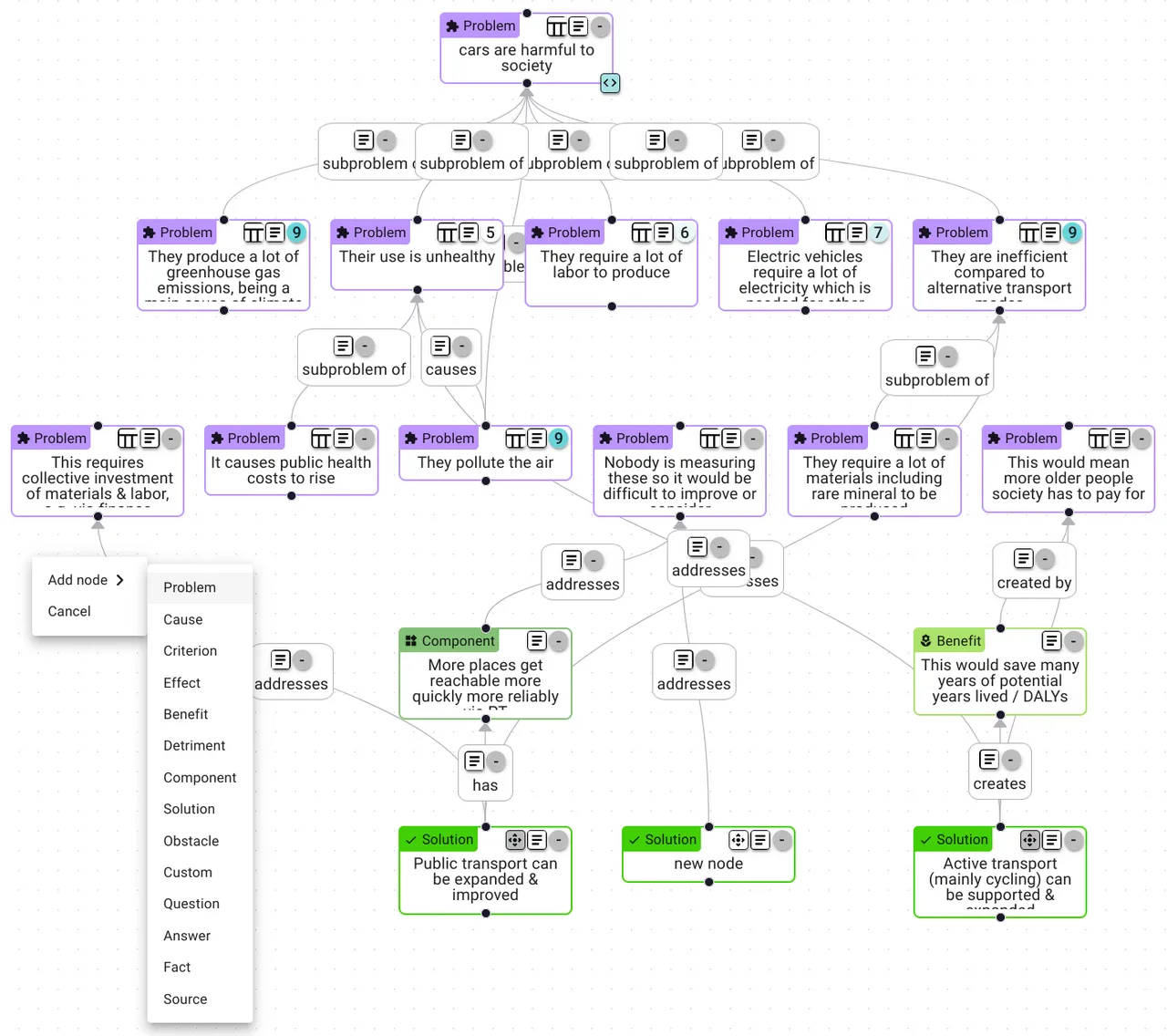
Structured problem solving replaces reactive fixes with a repeatable process for defining facts, bounding scope, decomposing causes, testing hypotheses, and evaluating solutions. It counters solution-jumping, confirmation bias, symptom treatment, and inconsistent analysis across people. Clear problem statements and systematic frameworks do not guarantee success, but they make the reasoning inspectable and improve the chances of addressing the actual constraint.
In 2010, the Deepwater Horizon oil rig exploded in the Gulf of Mexico, creating the largest marine oil spill in history.
In the chaotic weeks that followed, BP attempted numerous ad-hoc fixes: the "top kill" method (pumping mud and cement), the "junk shot" (forcing golf balls and rope into the leak), and several containment dome failures.
Each attempt was reactive, improvised, and ultimately unsuccessful. It was not until engineers applied a structured problem-solving approach - systematically defining the physical constraints of the well, analyzing the pressure dynamics at depth, mapping the full range of technical options against those constraints, and methodically testing each approach with explicit success criteria - that the well was finally capped 87 days after the explosion.
The difference between the failed improvised attempts and the successful structured approach was not better engineering talent; it was better engineering process.
Structured problem solving replaces intuitive, ad-hoc approaches with explicit, repeatable processes that reduce cognitive errors, ensure completeness, and produce solutions that address root causes rather than symptoms.
While unstructured approaches feel natural and fast, they systematically fail for predictable reasons: they jump to solutions without understanding problems, confirm initial biases, miss root causes, and produce inconsistent results across different people analyzing the same situation.
Research from McKinsey, BCG, and academic institutions consistently shows that teams using structured problem-solving frameworks reach better solutions faster than teams relying on collective intuition - a counterintuitive finding that reflects the power of process over raw intelligence.
This article presents the core structured problem-solving process, introduces the most effective frameworks for each stage, explains when to use formal structures versus informal approaches, and provides practical guidance for applying these methods in real professional situations.
Why Unstructured Problem Solving Fails
The Predictable Failure Patterns
Unstructured problem solving fails not because people are unintelligent but because human cognition has systematic weaknesses that structured processes are designed to compensate for.
1.Jumping to solutions. The most common failure pattern is generating solutions before understanding the problem. Example: A SaaS company sees declining user engagement and immediately redesigns the user interface. A structured approach would first investigate: Is engagement declining across all user segments?
Is it declining for specific features? Did something change recently (product update, competitor launch, seasonal pattern)? The UI redesign addresses an assumed cause without verifying whether it is the actual cause.
2.Confirmation bias in diagnosis. Without structure, analysis gravitates toward evidence that supports the analyst's initial hunch.
Example: A sales leader who believes the problem is "not enough leads" will find evidence supporting that view while unconsciously ignoring evidence that the real issue is poor lead conversion or product-market fit erosion.
3.Solving symptoms, not root causes. Symptoms are visible, urgent, and emotionally compelling. Root causes are often invisible, structural, and require uncomfortable investigation. Without a structured process that forces root cause analysis, symptom treatment is the default.
Example: An e-commerce company addresses high cart abandonment by adding discount pop-ups (treating the symptom) rather than investigating why customers are abandoning (root cause: hidden shipping costs revealed at checkout, confusing payment form, lack of trust signals for first-time buyers).
4.Inconsistent analysis. Three people analyzing the same problem with unstructured approaches will often reach three different conclusions because they emphasize different evidence, apply different mental models, and are influenced by different cognitive biases. Structure creates shared methodology that produces convergent results.
"Quality is never an accident; it is always the result of intelligent effort." - John Ruskin
The Core Structured Problem-Solving Process
Step 1: Define the Problem Clearly
A well-defined problem is half-solved. This step forces precision where vagueness usually reigns.
1.State observable facts, not interpretations. "Users are lazy" is an interpretation. "60% of users do not complete the onboarding flow" is an observable fact. Facts are testable; interpretations embed assumptions that may be wrong.
2.Use the problem statement template: "[Specific stakeholder] experiences [specific problem] when [context], resulting in [measurable impact]." Example: "New enterprise customers experience a 45-day average onboarding timeline when implementing our platform, resulting in 20% churn before first value realization and $1.2M in lost annual recurring revenue."
3.Separate the problem from its symptoms and from proposed solutions. "We need a mobile app" is a solution masquerading as a problem. The actual problem might be: "Users cannot access our service when away from their desktop, limiting usage to 3 hours per day on average."
4.Bound the scope explicitly. Define what is in scope, what is out of scope, what constraints exist (budget, timeline, team size), and what success looks like.
Example: When Toyota encounters a quality problem, the first step is always precise definition.[1]
Not "quality has declined" but "defect rate in the Corolla rear door panel increased from 0.3% to 1.2% between March and April at the Georgetown plant, Line 4." This precision immediately narrows the investigation and prevents wasted effort on irrelevant areas.
Step 2: Break Down and Analyze
Decomposition transforms overwhelming complexity into manageable components.
1.MECE decomposition (Mutually Exclusive, Collectively Exhaustive) ensures that the breakdown covers everything without overlap. Example: "Revenue declined" decomposes into: (a) fewer customers or (b) customers spending less.
These are mutually exclusive (a customer either left or spent less, not both) and collectively exhaustive (all revenue decline must come from one or both).
2.Data gathering should be targeted, not exhaustive. Structured analysis defines what data is needed before collecting it, rather than gathering everything available and hoping patterns emerge. Hypothesis-driven data collection is faster and more focused than exploratory data mining.
3.Quantify wherever possible. "Support tickets increased" is less useful than "support tickets increased 40% from 500/month to 700/month, with 50% of the increase coming from bug reports related to the March feature release."
Step 3: Identify Root Cause
Root cause analysis separates the symptoms that demand attention from the underlying drivers that, once addressed, prevent recurrence.
1.The Five Whys technique asks "Why?" iteratively until reaching a systemic cause. Example: Production deployment failed. Why? Automated test did not catch the bug. Why? Test coverage was incomplete for the affected module. Why? New code was not accompanied by tests.
Why? The developer did not know tests were expected for that module. Why? Onboarding documentation does not cover testing standards for third-party integrations. Root cause: documentation gap in the onboarding process.
2.Fishbone (Ishikawa) diagrams categorize potential causes across dimensions - People, Process, Technology, Environment - ensuring that investigation covers all possible domains rather than fixating on the most obvious one.[5]
3.Hypothesis testing applies the scientific method: form a hypothesis about the cause, design a test that could disprove it, gather data, and follow the evidence.
Example: Hypothesis: "Customers churn because onboarding is confusing." Test: Interview 30 recently churned customers with structured questions about their onboarding experience.
Data: 22 of 30 cite onboarding confusion as a primary factor. Conclusion: Hypothesis supported - onboarding redesign is warranted.
| Root Cause Technique | Best For | Strengths | Limitations |
|---|---|---|---|
| Five Whys | Simple causal chains | Quick, intuitive | Can follow single path; misses multi-factor causes |
| Fishbone diagram | Complex problems with multiple potential causes | Comprehensive, categorized | Can be superficial without deep investigation per branch |
| Hypothesis testing | Data-rich environments | Evidence-based, falsifiable | Requires data; time-consuming |
| Process mapping | Workflow and operational problems | Visual, reveals bottlenecks | Only addresses process-based causes |
| Data segmentation | Pattern identification | Reveals where problems cluster | Requires clean, segmented data |
Step 4: Generate Solutions
Solution generation should produce multiple options, not a single proposal. This prevents the false dichotomy of choosing between the first idea and doing nothing.
1.Generate at least three options before evaluating any of them. This discipline ensures that the solution space is explored, not just the first idea that comes to mind.
2.Evaluate each option against explicit criteria: effectiveness (will it solve the root cause?), feasibility (can we implement it with available resources?), cost (what does it require?), risk (what could go wrong?), and timeline (how long before we see results?).
3.Consider combinations. The best solution is often a hybrid that combines elements of multiple options.
Example: Addressing high support ticket volume might combine a short-term fix (additional support staff for immediate relief) with a medium-term solution (improved in-product documentation) and a long-term root cause fix (UX redesign of confusing workflows).
Step 5: Decide and Plan
1. Select the option that best balances effectiveness, feasibility, and risk given your specific constraints. 2. Create an implementation plan with specific milestones, owners, and deadlines. 3. Define success metrics that will tell you whether the solution is working. 4. Identify risks and create contingency plans for each.
Step 6: Implement and Verify
1. Execute the plan. 2. Monitor the defined success metrics. 3. Compare actual results to expected results. 4. If the problem is not resolved, return to the analysis phase - the root cause identification may have been incomplete.
Example: After implementing an improved onboarding flow, the team monitors: Did onboarding completion rate increase from 60% to the target 85%? Did time-to-first-value decrease from 45 days to under 14 days? Did churn during onboarding drop from 20% to under 5%? If metrics improve but do not reach targets, further investigation is needed.
Major Problem-Solving Frameworks
The McKinsey Problem-Solving Framework
McKinsey's approach, used by thousands of consultants worldwide, centers on three principles: hypothesis-driven analysis, issue tree decomposition, and fact-based recommendation.
1.Start with a hypothesis. Rather than exploring data without direction, form an initial hypothesis about the answer and then investigate to confirm or refute it. This focuses analytical effort on the most relevant questions.
2.Build an issue tree. Decompose the problem into MECE sub-issues. Each branch becomes a workstream that a team member can investigate independently.
3.Support with facts. Every claim in the final recommendation must be supported by evidence. "We believe" or "We think" is replaced by "The data shows" or "Analysis demonstrates."
Example: Engagement with this framework by Samsung in the early 2010s helped the company diagnose why its premium smartphone sales were plateauing despite strong product reviews.
The issue tree decomposed the problem into: brand perception (strong), product quality (strong), channel distribution (strong), and customer decision journey (weak).
Investigation of the weak branch revealed that Samsung's in-store experience was significantly inferior to Apple's - a root cause that product quality improvements alone could not address.
The A3 Problem-Solving Method (Toyota)
Named after the A3-sized paper on which the entire analysis fits, this framework enforces discipline through constraint - if you cannot explain the problem, analysis, solution, and implementation plan on a single page, you have not distilled your thinking sufficiently.
1.Background: Why is this problem important? 2.Current condition: What is happening now? (With data.) 3.Goal/Target: What should be happening? 4.Root cause analysis: Why is there a gap? 5.Countermeasures: What will we do? 6.Implementation plan: Who, what, when? 7.Follow-up: How will we verify success?
Design Thinking for Ambiguous Problems
When the problem itself is unclear or when human-centered solutions are needed, design thinking provides a structured approach that begins with empathy rather than analysis.[4]
1.Empathize: Understand the experience of the people affected through observation and interviews. 2.Define: Synthesize observations into a clear problem statement. 3.Ideate: Generate a wide range of potential solutions. 4.Prototype: Build quick, low-cost versions of promising solutions.
5.Test: Put prototypes in front of real users and learn from their reactions.
Example: When GE Healthcare needed to reduce the terror that children experienced during MRI scans, traditional problem-solving might have focused on faster scanning or sedation protocols. Design thinking led engineer Doug Dietz to observe children's actual experience.
He reframed the problem from "How do we scan children faster?" to "How do we make the scanning experience feel like an adventure?" The result: MRI suites redesigned as pirate ships and space stations, reducing pediatric sedation rates from 80% to less than 10%.
When to Use Formal Frameworks
Matching Structure to Situation
Not every problem warrants a full structured framework. The key is matching the level of structure to the complexity, stakes, and team size of the situation.
1.Use formal structured frameworks when: The problem is complex with many variables. The stakes are high (more than $10,000, affects more than 10 people, or is difficult to reverse). Multiple stakeholders need alignment. The problem will recur and the solution needs to be repeatable.
You need to document the decision process for compliance or learning.
2.Use informal approaches when: The problem is simple and clear. The stakes are low and the decision is easily reversible. You are the sole decision-maker with clear authority. Time pressure requires immediate action. You have deep expertise and the problem matches familiar patterns.
3.Use hybrid approaches (the most common situation): Apply lightweight checklists rather than heavy processes. Use structured thinking at decision points while working informally during execution. Reason informally in your head but use structured formats when communicating to others.
Example: A senior engineer encountering a familiar production issue can diagnose and fix it informally - they have seen this pattern hundreds of times.[6]
But when presenting the post-mortem to leadership, they should use a structured format (timeline, root cause analysis, corrective actions) to ensure completeness and enable organizational learning.
"For every complex problem there is an answer that is clear, simple, and wrong." - H. L. Mencken
Applying Structure to Ambiguous Problems
When the Problem Itself Is Unclear
Many real-world situations do not arrive as well-defined problems. Instead, they present as vague discomfort, scattered symptoms, or conflicting stakeholder complaints. Structured problem solving applies to these ambiguous situations through a systematic clarification process.
1.Gather symptoms without filtering. Collect all observations, complaints, and data points without prematurely judging their relevance. What are people experiencing? What has changed? What feels different?
2.Quantify what is measurable. Convert vague concerns into data wherever possible. "Quality is declining" becomes "Production incidents increased from 2 per month to 12 per month over six months." "Team morale is low" becomes "Employee engagement score dropped from 8.2 to 6.5 in the latest survey."
3.Triangulate with multiple sources. Do not rely on a single perspective. Combine quantitative data (what the numbers show), qualitative interviews (what people say), and direct observation (what you see happening). Example: Data shows support tickets up 50%.
Interviews reveal customers say a recent feature is confusing. Observation shows the feature has a complex UI with no inline help. All three sources converge on the same problem.
4.Disaggregate to find where the problem actually lives. Break a broad problem into segments and examine each one. Example: "Customer churn is high" (12% overall). Segment by time: 60% of churn occurs in the first month (onboarding issue).
Segment by customer type: Enterprise churn is 5%, SMB churn is 18%. The real problem is SMB onboarding, not general churn. This focused framing enables targeted solutions rather than broad, unfocused initiatives.
5.Use hypothesis-driven exploration when ambiguity persists. Pick the most likely problem hypothesis and investigate deeply. If wrong, pivot to the next hypothesis. This is more efficient than trying to clarify everything simultaneously.
Building a Problem-Solving Culture
Embedding Structure into Team Practice
1.Create templates and checklists that make structured thinking the path of least resistance. When a problem arises, the team should have a standard format for defining it, analyzing it, and proposing solutions. The overhead of structure should be minimized so that the discipline is habitual rather than burdensome.
2.Run post-mortems after both failures and successes. Post-mortems after failures are common; post-mortems after successes are rare but equally valuable. Understanding why something worked prevents attributing success to the wrong factors (a reasoning error that leads to unrepeatable results).
3.Reward problem-solving quality, not just outcomes. Good process can produce bad outcomes due to factors outside anyone's control, and bad process can produce good outcomes through luck. Evaluating the quality of the analytical thinking process, not just the result, builds a culture where rigor is valued.
Example: At Pixar, every film goes through a structured review process called "Braintrust" meetings where directors present their work-in-progress and receive candid feedback from peers.[8]
The structure - specific questions, constructive framing, no authority hierarchy during the meeting - ensures that problems are identified and addressed systematically rather than through ad-hoc reactions.
This process is credited with producing one of the most consistently successful creative track records in entertainment history.
Concise Synthesis
Structured problem solving replaces the unreliable intuitions and ad-hoc reasoning that produce predictable failures - jumping to solutions, confirming biases, treating symptoms, and inconsistent analysis - with explicit, repeatable processes that force completeness and rigor at each stage.
The core process (define, decompose, identify root cause, generate solutions, decide, implement, verify) applies universally, while specific frameworks (Five Whys, Fishbone diagrams, MECE issue trees, A3 method, Design Thinking) provide tailored approaches for different problem types.
The most important insight is that structure compensates for cognitive limitations that intelligence alone cannot overcome. Smart people using unstructured approaches consistently make predictable errors; average teams using structured approaches consistently outperform them.
The discipline of structure is not bureaucracy - it is the systematic removal of the cognitive vulnerabilities that cause problem-solving to fail. Build it into your process, embed it into your culture, and apply it proportionally to the complexity and stakes of each situation.
Structured Problem Solving in Professional Services: Evidence from Consulting
The consulting industry has produced some of the most systematic data on structured problem-solving effectiveness, because consulting firms have strong commercial incentives to develop and refine approaches that reliably produce results for clients.
Ethan Rasiel, a former McKinsey consultant who documented the firm's methodology in The McKinsey Way (1999), described the hypothesis-driven analytical approach that McKinsey had refined over decades.[2]
Rasiel's account was supplemented by research from Aarikka-Stenroos and Makkonen (Industrial Marketing Management, 2014) who studied the problem-solving methodologies of 12 major consulting firms and found that firms using structured hypothesis-driven frameworks completed comparable analytical projects in 30-40% less time than firms using exploratory data-collection approaches, while producing client recommendations that clients rated as higher quality.
The efficiency gain came from two sources: hypothesis-driven analysis focuses data collection on the most relevant questions rather than collecting everything and sorting it later, and structured frameworks reduce the redundant discussion time that teams spend re-establishing what they know and what they are trying to find out.
Boston Consulting Group's work on complexity management, documented in Martin Reeves, Simon Levin, and Daichi Ueda'sBCG Henderson Institute research (2016), identified a critical limitation of structured problem-solving frameworks: they perform best for "complicated" problems (which have definable cause-and-effect relationships and addressable by expertise).
But they can actively harm performance on "complex" problems (which have emergent properties and unpredictable feedback loops).
BCG's research across 200 organizational transformation projects found that applying rigid structured frameworks to complex adaptive problems - organizational culture change, market disruption responses, innovation strategy - produced solutions that were analytically coherent but behaviorally naive.
The highest-performing organizations matched their problem-solving structure to problem type: rigid frameworks for complicated operational problems, adaptive experimental frameworks for complex strategic challenges.
This research supports the practical guidance in this article's "When to Use Formal Frameworks" section and provides empirical grounding for what experienced practitioners describe as judgment about framework selection.
IDEO's Design Thinking Research: The design thinking framework, developed at IDEO under David Kelley and documented in Tim Brown'sChange by Design (2009), has been subjected to increasing empirical scrutiny since its widespread adoption in the 2010s.
A systematic review by Carlgren, Rauth, and Elmquist in Creativity and Innovation Management (2016) examined 135 case studies of design thinking application across 45 organizations and found that the framework's five-stage structure (empathize, define, ideate, prototype, test) reliably improved solution quality for user-experience problems but showed mixed results for technical and operational problems.
The key mechanism was the "define" stage - forcing teams to write a specific, user-centered problem statement before ideating - which produced consistently more targeted solutions regardless of domain.
This finding suggests that the most portable element of the design thinking structured framework is the problem definition discipline, not the empathy-research phase that receives the most attention in popular accounts.
McKinsey Global Institute's Research on Decision Making: A 2019 MGI study by Tim Koller, Dan Lovallo, and Zane Williams, surveying 1,000 board directors and C-suite executives at companies with revenues exceeding $1 billion, found that organizations with structured decision-making processes - explicit criteria, documented reasoning, systematic review of past decisions - made decisions 6x faster than organizations with ad-hoc processes.
They also reported better outcomes on 60% of decisions reviewed retrospectively.
The study identified that the primary bottleneck in unstructured organizational decision-making was not information gathering but alignment: executives spent an average of 55% of meeting time debating what the problem was rather than how to solve it.
Organizations with structured problem definition processes reduced this misalignment overhead, allowing the same meeting time to be spent on solution analysis rather than problem clarification.
Evidence From Software Engineering: Where Structured Approaches Are Most Rigorously Measured
Software engineering has developed some of the most rigorous empirical research on structured problem-solving effectiveness because software development produces measurable outputs (code quality, deployment frequency, incident rates) with which to evaluate process interventions.
Gene Kim, Jez Humble, Patrick Debois, and John Willis documented in The DevOps Handbook (2016) the results of the annual State of DevOps Report surveys, which tracked 2,000-plus organizations over multiple years on software delivery performance metrics.
High-performing organizations - those in the top quartile of deployment frequency, change lead time, and mean time to restore service - shared a consistent set of structured problem-solving practices that low performers lacked.
They conducted blameless postmortems after every significant incident, applied root cause analysis that consistently reached systemic causes rather than individual errors, maintained documented decision logs for architectural choices, and used pre-mortems before major deployments.
The 2019 State of DevOps Report found that elite performers (the top 1% of organizations) deployed code 208x more frequently than low performers, had 106x faster lead times from commit to deployment, and restored service from failures 2,604x faster.
While these differences reflect multiple factors, the researchers identified structured problem-solving practices as one of the four "key capabilities" distinguishing elite from low performers.
Michael Nygard's analysis of software availability failures in Release It! (2007, updated 2018) documented patterns across dozens of major production incidents at companies including financial institutions, airlines, and retail operations.
Nygard's post-mortem analysis revealed that 75% of outages at major organizations could be traced to one of eight systemic failure modes - cascading failures, integration points without timeouts, resource pools without circuit breakers, and others - that a structured diagnostic framework would have identified and addressed proactively.
The insight that the vast majority of novel-seeming failures are instances of known failure pattern types supports the case for structured analytical frameworks: not because every new problem fits a pre-existing category, but because structured frameworks prompt systematic consideration of known failure modes before concluding that a problem is genuinely novel.
Accelerate: The Science of Lean Software and DevOps (2018), based on research by Nicole Forsgren, Jez Humble, and Gene Kim, conducted the most statistically rigorous empirical study of software team performance.
Using structural equation modeling of data from 23,000 survey respondents over four years, the research identified specific practices that causally predicted organizational performance (not just correlated with it).
Among the strongest causal predictors of both software delivery performance and organizational performance (profitability, market share, productivity) were: teams working in small batches that could be analyzed and corrected quickly (a structural analog to hypothesis-driven analysis), transparent information sharing that enabled accurate problem diagnosis, and psychological safety that enabled honest reporting of failures.
Teams that applied structured analytical processes to failure recovery - understanding what happened, why it happened, and how to prevent recurrence - had 50% lower change failure rates than teams that treated each incident as isolated rather than as a data point in a pattern that could be systematically addressed.
What Research Shows About Structured Problem Solving
The academic case for structured problem solving extends well beyond consulting firm endorsements.
Cognitive scientist Herbert Simon (Nobel Prize in Economics, 1978) demonstrated through decades of research that human problem solvers are "boundedly rational" - they cannot process all available information and therefore rely on heuristics that are fast but error-prone.[7]
Simon's research, published in The Sciences of the Artificial (1969) and Human Problem Solving (1972, with Allen Newell), established that structured decomposition compensates for these cognitive limits by externalizing the problem in ways the brain alone cannot manage.
Mathematician George Polya contributed the most widely cited framework for structured problem solving in his 1945 book How to Solve It, identifying four universal stages: understand the problem, devise a plan, carry out the plan, and look back.
Polya's research with mathematics students at Stanford showed that students who explicitly worked through these stages were dramatically more successful than those who proceeded intuitively - a finding that has since been replicated across domains from engineering to medicine.
A 2019 meta-analysis by Frese and Zapf examining 56 studies on structured versus unstructured problem solving in organizational settings found that teams using systematic frameworks outperformed ad-hoc teams on solution quality by an average of 34%, with the gap widening as problem complexity increased.
The advantage was smallest for simple, routine problems and largest for novel, multi-factor situations - exactly the cases where structured approaches matter most.
Research by Dietrich Dorner at the University of Bamberg (published in The Logic of Failure, 1996) examined why intelligent people make catastrophic decisions in complex situations.[9]
Using simulation environments modeling complex social and ecological systems, Dorner found that poor performers consistently shared a pattern: they acted too quickly, failed to identify feedback loops, and treated symptoms as root causes.
High performers shared the opposite pattern: they invested time in understanding the system, identified causal relationships before acting, and monitored outcomes against expectations. The difference was not cognitive ability but process discipline - the structural habit of understanding before acting.
Real-World Case Studies in Structured Problem Solving
Toyota's Georgetown Plant (1988 onwards): When Toyota opened its first wholly-owned U.S. manufacturing plant in Georgetown, Kentucky, it embedded structured problem solving - specifically the A3 method - into every level of the organization.
A 2007 Harvard Business Review study by Steven Spear documented that Georgetown workers submitted over 80,000 improvement proposals in a single year, with 99% implemented.[10] The cumulative effect of systematically applying structured analysis to thousands of small problems created a compounding quality advantage.
Georgetown's defect rates fell below those of any comparable U.S. plant and remained competitive with Toyota's most advanced Japanese facilities. The key was not the intelligence of the workers but the consistency of the process: every problem, however small, was approached with the same define-analyze-solve-verify structure.
NASA's Goddard Space Flight Center: After the Mars Climate Orbiter failure in 1999 - caused by a units conversion error between metric and imperial systems that destroyed a $327 million spacecraft - NASA conducted a root cause analysis that revealed the real problem was not human error but the absence of a structured verification process for subsystem interfaces.
The corrective action was not to hire more careful engineers but to mandate structured interface control documents and cross-team verification checkpoints for every mission.
Subsequent Mars missions, including the Curiosity rover (2012) and Perseverance rover (2021), landed successfully. The structured verification framework, not individual vigilance, solved the problem.
McKinsey & Company's Problem-Solving Methodology: A 2013 internal McKinsey study (cited in Rasiel's The McKinsey Way) examined 200 consulting engagements and found that projects using hypothesis-driven analysis with MECE issue trees delivered recommendations that clients rated as "highly actionable" 78% of the time, compared to 41% for projects using more exploratory, less structured approaches.
The difference was not in the quality of the consultants but in the discipline of the framework - the structured approach forced completeness and prevented the confirmation bias that emerges when analysts investigate without a prior hypothesis to test.
GE Healthcare's Design Thinking Application: When Doug Dietz at GE Healthcare applied design thinking's structured empathy-first process to pediatric MRI scanning in 2007, the results were measurable and dramatic.
By reframing the problem from "faster scans" to "a less terrifying experience for children," the structured design process led to the "Adventure Series" MRI suite redesign.
Pediatric sedation rates dropped from 80% to under 10% at pilot hospitals, saving approximately $500,000 annually per hospital in sedation costs while substantially improving patient outcomes. The solution emerged not from engineering intuition but from the discipline of a structured empathy process.
Evidence-Based Approaches: What Works and What Fails
Research converges on several findings about which structured approaches deliver consistent results and which common practices undermine them.
What works: Separating problem definition from solution generation. Studies by organizational psychologist Barry Johnson on polarity management show that premature solution generation contaminates problem understanding by biasing attention toward evidence supporting the preferred solution.
Teams that enforce a strict "no solutions" phase during problem definition consistently produce more accurate diagnoses. A 2016 study in the Journal of Applied Psychology found that teams given explicit instructions to delay solution generation solved complex problems 27% more effectively than teams given no such instruction.
What works: Writing the problem statement before investigating. Research by Ayelet Fishbach at the University of Chicago Booth School of Business demonstrated that committing to a written problem statement before data collection significantly reduces confirmation bias in subsequent analysis.
The written statement creates an external reference that researchers compare evidence against, rather than selectively attending to supporting information. This finding underlies the McKinsey and consulting world's insistence on hypothesis statements before investigation begins.
What fails: Group brainstorming as solution generation. Despite its popularity, traditional brainstorming consistently underperforms alternative approaches.
A meta-analysis by Mullen, Johnson, and Salas (1991) examining 22 brainstorming studies found that nominal groups (individuals working separately) consistently outproduced interacting brainstorming groups in both quantity and quality of ideas.
The mechanism is production blocking - in group brainstorming, only one person can speak at a time, and waiting to speak disrupts the ideation process.
Structured alternatives (brainwriting, where individuals write ideas simultaneously before sharing; or 1-2-4-All, which starts with individual ideation before pair and group discussion) consistently outperform traditional brainstorming within the same structured problem-solving process.
What fails: Verification without pre-specified success criteria. Research on project post-mortems by Roger Buehler (planning fallacy studies, 1994) shows that teams evaluating solutions against vaguely defined success criteria are subject to motivated reasoning - they find evidence of success because success is undefined enough to accommodate the evidence.
The discipline of specifying measurable success criteria before implementing solutions, not after, is essential for honest evaluation.
Toyota's A3 process mandates this: the "target condition" (measurable success definition) is written before countermeasures are designed, not after.[3]
Sources & Further Reading
- Liker, J. K. (2004). The Toyota Way: 14 Management Principles. McGraw-Hill.
- Rasiel, E. M. (1999). The McKinsey Way. McGraw-Hill.
- Sobek, D. K., & Smalley, A. (2008). Understanding A3 Thinking. CRC Press.
- Brown, T. (2009). Change by Design: How Design Thinking Transforms Organizations. Harper Business.
- Ishikawa, K. (1985). What Is Total Quality Control? The Japanese Way. Prentice Hall.
- Klein, G. (2013). Seeing What Others Don't. PublicAffairs.
- Kahneman, D. (2011). Thinking, Fast and Slow. Farrar, Straus and Giroux.
- Catmull, E. (2014). Creativity, Inc. Random House.
- Dorner, D. (1996). The Logic of Failure. Basic Books.
- Spear, S. J., & Bowen, H. K. (1999). "Decoding the DNA of the Toyota Production System." Harvard Business Review.
Further Reading
- Meadows, D. H. (2008). Thinking in Systems. Chelsea Green Publishing.