
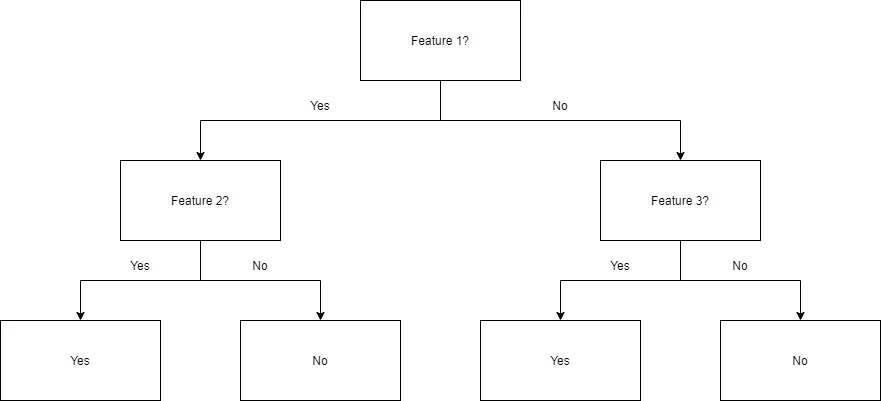
A difficult choice becomes easier to examine when its alternatives, possible outcomes, and probabilities are mapped explicitly. Decision trees provide that structure, helping decision-makers compare the consequences of acting or not acting without hiding the uncertainty involved in consequential choices.
In 1985, the pharmaceutical giant Merck faced a decision that would define its legacy: whether to develop and distribute Mectizan, a drug to treat river blindness, knowing that the affected populations in sub-Saharan Africa could not afford to pay for it.
CEO Roy Vagelos and his team mapped the decision using a structured approach remarkably similar to a decision tree - charting the possible outcomes of developing versus not developing, assigning probabilities to regulatory approval, estimating costs of free distribution, weighing reputational value against financial loss, and considering the humanitarian impact of each path.
The analysis revealed that the expected value of development, when accounting for long-term reputational capital and employee morale, justified the investment. Merck developed the drug and has since donated over four billion treatments.
What could have been a paralyzingly complex ethical and financial dilemma became navigable through the disciplined mapping of choices and consequences.
Decision trees are visual frameworks that make uncertainty explicit and manageable. In a world where professionals face an increasing number of high-stakes decisions with incomplete information, the ability to map choices, assign probabilities, and calculate expected outcomes separates those who decide well from those who either freeze in analysis paralysis or leap to conclusions based on gut feeling alone.
Research in behavioral economics consistently demonstrates that humans are poor intuitive probabilists - we overweight vivid scenarios, underestimate base rates, and conflate confidence with accuracy.
Decision trees provide a corrective structure that forces explicit reasoning about what we know, what we do not know, and how much each uncertainty matters.
This article covers the mechanics of decision trees from basic construction to advanced applications, explains when to use them versus when simpler approaches suffice, addresses common mistakes in their application, and provides practical guidance for incorporating decision tree thinking into professional work.[2]
Anatomy of a Decision Tree
The Basic Components
A decision tree consists of nodes, branches, probabilities, and payoffs arranged in a structure that maps the sequential logic of a decision under uncertainty.
1.Decision nodes (typically represented as squares) are points where the decision-maker has a choice to make. These are the moments of agency - the forks in the road where you select one path over another. Example: "Should we launch Product A, Product B, or delay launch entirely?" represents a decision node with three branches.
2.Chance nodes (typically represented as circles) are points where outcomes depend on factors outside the decision-maker's control. These represent uncertainty - events that may or may not occur.
Example: After deciding to launch Product A, a chance node might represent "Market reception: favorable (60%) or unfavorable (40%)."
3.Branches are the lines connecting nodes, each representing a possible choice (from decision nodes) or a possible outcome (from chance nodes). Every branch from a chance node carries a probability, and all probabilities from a single chance node must sum to 100%.
4.Terminal nodes (endpoints) represent final outcomes with associated values or payoffs. These are the "leaves" of the tree - what happens at the end of each complete path through the decision.
5.Expected value is calculated by multiplying each outcome's value by its probability and summing across all branches at a chance node. This single number allows comparison of options with different risk profiles.
Reading and Solving Decision Trees
Decision trees are read left to right (forward in time) but solved right to left (backward induction).[3] You start by identifying the values at the terminal nodes, then work backward through the chance nodes (calculating expected values) and decision nodes (selecting the best option).
1.Step one: Assign payoff values to all terminal nodes. These might be financial (profit/loss), strategic (market position), or any quantifiable outcome.
2.Step two: At each chance node, calculate the expected value by multiplying each branch's probability by its outcome value and summing.
Example: A chance node with two outcomes - 70% probability of $100,000 profit and 30% probability of $20,000 loss - has an expected value of (0.70 x $100,000) + (0.30 x -$20,000) = $70,000 - $6,000 = $64,000.
3.Step three: At each decision node, choose the branch with the highest expected value (or lowest expected cost, depending on what you are optimizing).
4.Step four: The optimal strategy is the complete path through the tree that emerges from this backward induction process.
Example: A startup deciding whether to self-fund or seek venture capital might construct a tree where self-funding leads to slower growth (80% probability of modest $2M outcome, 20% probability of failure) with an EV of $1.6M, while VC funding leads to faster growth but with dilution (50% probability of $10M outcome at 20% ownership = $2M, 50% probability of failure) with an EV of $1M.
Despite the higher potential payoff of the VC path, the expected value favors self-funding.
"The essence of strategy is choosing what not to do." - Michael Porter
When to Use Decision Trees
High-Stakes Decisions with Significant Uncertainty
Decision trees add the most value when the stakes are high enough to justify the analytical investment and when meaningful uncertainty exists about outcomes.
1.Capital allocation decisions: When a company must choose between investing in different projects, acquisitions, or markets, decision trees map the possible returns and risks of each path.
Example: When Disney was evaluating the $4 billion acquisition of Lucasfilm in 2012, a decision tree approach would have mapped scenarios: successful franchise extension (probability and revenue projections), franchise fatigue (probability and reduced returns), and brand dilution risks.
The expected value calculation, informed by Star Wars' proven cultural staying power, supported the acquisition.
2.Product launch decisions: Whether to launch now with current features, delay for additional development, or test in a limited market first. Each option has different probability distributions over outcomes.
3.Legal strategy decisions: Whether to settle a lawsuit, go to trial, or pursue mediation involves estimating probabilities of different verdicts, settlement amounts, and legal costs along each path.
4.Medical treatment decisions: Choosing between surgical and non-surgical treatments involves mapping success rates, complication probabilities, recovery times, and quality-of-life outcomes - exactly the structure decision trees capture.
Sequential Decisions Under Uncertainty
Decision trees uniquely handle situations where one decision leads to another, with uncertain events between decision points.
1.Multi-stage investment: Initial R&D investment leads to a go/no-go decision based on results, which leads to production investment, which leads to market launch. Each stage has uncertainty, and each decision depends on previous outcomes.
Example: Pharmaceutical companies use decision trees extensively in drug development. The initial research investment (Decision 1) leads to uncertain preclinical results (Chance Node). If results are promising, the decision to invest in clinical trials (Decision 2) leads to uncertain FDA approval (Chance Node).
If approved, the decision to scale manufacturing (Decision 3) leads to uncertain market adoption. Each stage has different probabilities and costs, and the full decision tree maps the entire pipeline.
2.Competitive response planning: "If we lower prices, competitors might match (60%) or not (40%).[6] If they match, should we further reduce or differentiate? If they don't match, should we maintain or expand?" This sequential logic maps naturally onto a decision tree.
3.Negotiation strategy: Decision trees can map negotiation scenarios - initial offers, likely counteroffers, walk-away points, and alternative agreements - helping negotiators think several moves ahead.
When Decision Trees Are Overkill
Not every decision warrants a formal decision tree. Knowing when simpler approaches suffice is itself an analytical skill.
1.Low-stakes, easily reversible decisions: Choosing which meeting room to book or which font to use in a presentation does not justify probabilistic analysis. The cost of the analysis exceeds the value of the improvement.
2.Time-critical situations: During a production outage, there is no time to construct a formal tree.[11] Act on experience, restore service, analyze later.
3.Decisions with obvious dominance: When one option is clearly better across all dimensions, no tree is needed. Fix the critical security bug before building the nice-to-have feature.
4.Situations with genuinely unknowable probabilities: If you cannot estimate probabilities with any meaningful accuracy - truly novel situations with no precedent or reference class - a decision tree filled with fabricated probabilities provides false precision.
| Situation | Recommended Approach | Why |
|---|---|---|
| High-stakes, multiple options, quantifiable outcomes | Full decision tree | Worth the analytical investment |
| Sequential decisions with uncertainty between stages | Full decision tree | Only tool that maps multi-stage logic |
| Moderate-stakes, 2-3 options | Simplified pros/cons with expected value | Captures key tradeoffs efficiently |
| Low-stakes, reversible | Quick intuitive decision | Analysis cost exceeds decision value |
| Time-critical emergency | Experience-based action | No time for formal analysis |
| Completely novel, no probability basis | Scenario planning or small experiments | Cannot meaningfully assign probabilities |
Assigning Probabilities: The Hardest Part
Sources of Probability Estimates
The most common criticism of decision trees is that probability estimates are subjective and potentially unreliable. This is a valid concern, but it misses the point: making probabilities explicit - even imperfect ones - is vastly better than leaving them implicit in intuitive judgments.
1.Historical data provides the most reliable probability estimates when available. If 30% of product launches in your industry succeed based on a database of 500 launches, that is a meaningful base rate.
Example: Insurance companies build decision trees using actuarial tables derived from millions of historical claims. The probabilities are not perfect for any individual case, but they are highly reliable in aggregate.
2.Reference class forecasting identifies a relevant set of similar past decisions and uses their outcome distribution as a probability estimate.
Example: When estimating the probability that a construction project will finish on time, Daniel Kahneman advocates looking at the completion rates of comparable projects rather than the optimistic estimates of the current project team.
Historical reference classes for large IT projects show that only about 30% finish on time and on budget.
3.Expert judgment is useful when historical data is limited. The key is to aggregate multiple expert opinions, use structured elicitation techniques (such as the Delphi method), and calibrate experts against their track records.[5]
4.Bayesian updating starts with a prior probability estimate and refines it as new evidence emerges.[8]Example: Initially estimate 50% probability of market acceptance. After a successful pilot with 200 users showing strong engagement, update to 70%. After positive early reviews from industry analysts, update to 80%.
5.Decomposition of probabilities: When a single probability is hard to estimate directly, break it into component probabilities that may be easier to assess.[7]
Example: "Probability of successful product launch" can be decomposed into P(technical development succeeds) x P(regulatory approval) x P(market accepts product) x P(distribution channel secured).
Sensitivity Analysis: Testing Your Assumptions
Because probability estimates are inherently uncertain, robust decision tree analysis includes sensitivity testing - examining how conclusions change when assumptions vary.
1.One-way sensitivity analysis varies a single probability or value while holding others constant, revealing which assumptions most strongly influence the decision.
Example: If your decision favors Option A when market success probability is above 40% but favors Option B when it drops below 40%, you know that the 40% threshold is a critical inflection point. Your research should focus on refining that particular estimate.
2.Two-way sensitivity analysis varies two parameters simultaneously, creating a matrix of outcomes. This is useful when two uncertainties are interrelated.
3.Scenario analysis examines a small number of coherent scenarios (best case, worst case, most likely) rather than varying individual parameters.
Example: When considering whether to expand into a new geographic market, a company might test: What if customer acquisition costs are 2x our estimate? What if the regulatory environment changes? What if a local competitor responds aggressively?
If the decision to expand remains favorable under pessimistic assumptions about all three factors, confidence in the decision increases substantially.
"It is better to be roughly right than precisely wrong." - John Maynard Keynes
Expected Value and Beyond
Understanding Expected Value
Expected value (EV) is the probability-weighted average outcome - the cornerstone metric of decision tree analysis.
1.The formula: EV = Sum of (Probability_i x Value_i) for all possible outcomes i. Example: An investment with 60% chance of $200,000 return and 40% chance of $50,000 loss has EV = (0.60 x $200,000) + (0.40 x -$50,000) = $120,000 - $20,000 = $100,000.
2.Expected value enables comparison of options with different risk profiles on a single metric. Option A (certain $80,000) versus Option B (EV of $100,000 with variance) can be compared quantitatively.
3.Over many decisions, choosing the highest expected value maximizes total outcomes.[9] The law of large numbers ensures that actual results converge toward expected values across repeated decisions. Professional poker players, insurance companies, and venture capitalists all operate on this principle.
When Expected Value Is Not Enough
Expected value is a powerful but incomplete decision criterion. Several situations demand supplementary analysis.
1.Risk tolerance matters: A startup with $100,000 in the bank should not take a bet with an EV of $50,000 if it involves a 50% chance of losing $100,000 (bankruptcy). The same bet might be excellent for a company with $10 million in reserves.
Utility theory accounts for this by applying a non-linear value function that reflects diminishing marginal utility of money.
2.Catastrophic outcomes may dominate: An option with the highest EV but a 5% chance of company-ending loss might be rejected in favor of a lower-EV option with no catastrophic downside.
Example: Long-Term Capital Management had a trading strategy with exceptional expected returns but catastrophic tail risk. When the tail event occurred in 1998, the fund nearly collapsed the global financial system.
3.Non-financial values resist quantification: How do you assign a dollar value to employee morale, brand reputation, or ethical standing? Decision trees work best with quantifiable outcomes and may underweight important but difficult-to-measure factors.
4.Strategic optionality: Sometimes the value of a decision lies not in its immediate expected value but in the options it creates for future decisions. Real options analysis extends decision tree logic to value flexibility.
Common Mistakes in Decision Tree Analysis
Errors That Undermine the Process
Even well-intentioned decision tree analysis can go wrong through predictable errors.
1.False precision: Presenting probability estimates to two decimal places (42.37% chance of success) when the underlying basis supports only rough estimates (somewhere between 30% and 55%). False precision creates an illusion of scientific rigor where none exists.
2.Confirmation bias in probability assignment: Unconsciously assigning higher probabilities to outcomes that support your preferred decision.[10]
The cure is to have probabilities estimated by someone without a stake in the outcome, or to explicitly challenge yourself: "If I wanted the opposite conclusion, what probabilities would I assign?"
3.Incomplete branch mapping: Missing important possible outcomes or decision paths. The most dangerous branches are often those representing unexpected events - the things that "could not possibly happen" but sometimes do.
Example: Pre-2008 financial models notoriously excluded the possibility of a nationwide housing price decline because it had not occurred in the available historical data.
4.Ignoring the option to gather more information: Many decision trees should include a "delay and research" branch that accounts for the value of reducing uncertainty before committing. Sometimes the best immediate decision is to invest in information rather than action.
5.Over-complicating the tree: A decision tree with 200 branches is not more useful than one with 20 if the additional branches represent trivial distinctions. Simplify until the tree captures the essential structure of the decision without overwhelming detail.
Practical Applications Across Domains
Decision Trees in Business Strategy
1.Market entry decisions: Enter now (first-mover advantage but higher uncertainty), enter later (lower risk but competitive disadvantage), or partner with local firm (shared risk and reward).
Example: When Uber evaluated entering the Chinese market, a decision tree would have mapped: enter independently (high cost, uncertain regulatory environment, fierce local competition from Didi), acquire local player, or partner.
The probability-weighted outcomes of independent entry, considering regulatory crackdowns and Didi's dominance, would have flagged the challenges that eventually led Uber to sell its Chinese operations to Didi in 2016.
2.Pricing strategy: A decision tree can map the consequences of different price points, including competitor responses and customer behavior at each price level.
3.Hiring decisions: Hire senior expensive candidate (higher probability of immediate impact, higher cost), hire junior candidate and develop (lower cost, longer time to impact, development risk), or restructure existing team (no hiring cost, disruption risk).
Decision Trees in Personal Decisions
1.Career decisions: Accept job offer A (higher salary, less growth potential) versus stay at current job (lower salary, promotion likely in 12 months) versus pursue graduate school (investment now, higher earnings later with probability distribution).
2.Major purchases: Buy now at current price, wait for potential price drop (with risk of price increase or unavailability), or choose alternative product.
3.Negotiation preparation: Map likely responses to your proposals, prepare counter-responses, and identify walk-away points before entering the negotiation.
Integrating Decision Trees with Other Frameworks
Combining with Scenario Planning
Decision trees and scenario planning complement each other. Scenarios provide qualitative narratives about how the future might unfold; decision trees add quantitative structure to evaluate choices within each scenario.
1. Develop 3-4 plausible scenarios for the external environment. 2. Within each scenario, construct a decision tree mapping your choices and likely outcomes. 3. Look for decisions that perform well across multiple scenarios (robust strategies) versus those that depend on a single scenario playing out.
Combining with Second-Order Thinking
Standard decision trees map first-order consequences. Adding second-order effects - the consequences of consequences - dramatically improves decision quality. Example: A decision tree for layoffs might show immediate cost savings at the terminal node.
Adding second-order effects reveals: remaining employees work harder initially (positive) but become anxious about their own positions (negative), leading to increased turnover of top performers (negative), requiring expensive hiring once conditions improve (negative).
The second-order effects may reverse the apparent first-order conclusion.
Concise Synthesis
Decision trees are visual frameworks that map choices, uncertain outcomes, probabilities, and payoffs into a structure that makes complex decisions transparent and analyzable.
Their power lies in forcing explicit reasoning about uncertainty - converting vague feelings about risk into specific probability estimates that can be debated, tested, and refined.
The expected value calculation enables comparison of options with fundamentally different risk profiles, while sensitivity analysis reveals which assumptions matter most and where additional information would be most valuable.
The discipline of decision tree thinking is more important than the formal diagrams themselves. Even without drawing a tree, the habit of asking "What are my choices? What could happen after each choice? How likely is each outcome? What is each outcome worth?" transforms decision-making from reactive to analytical.
Used appropriately - for high-stakes, uncertain, sequential decisions rather than trivial daily choices - decision trees are among the most powerful mental models for navigating professional complexity.
What Research Shows About Decision Trees
The empirical study of decision trees and probabilistic decision-making has produced findings that both vindicate the approach and reveal its real-world limitations.
Howard Raiffa at Harvard Business School was the primary architect of modern decision analysis, publishing Decision Analysis: Introductory Lectures on Choices Under Uncertainty in 1968.[1]
Raiffa's landmark research demonstrated through controlled experiments with MBA students that individuals using formal decision tree analysis with explicit probability estimates made significantly better decisions under uncertainty than those relying on intuition - even when the probability estimates used were rough approximations.
His key finding: the structure of making uncertainty explicit improved decisions more than the precision of the probability estimates themselves. Even a rough probability (say, "somewhere between 30% and 60%") constrained by a decision tree produced better outcomes than an unconstrained intuitive judgment.
Paul Slovic, Sarah Lichtenstein, and Baruch Fischhoff at Decision Research (a non-profit research organization affiliated with the University of Oregon) published a series of papers from 1971 to 1982 demonstrating that human intuitive probability estimation is systematically biased in ways that decision trees can correct.
Their research showed that people consistently overestimate the probability of vivid, imaginable events (plane crashes, terrorist attacks) and underestimate the probability of mundane but statistically common events (car accidents, slips and falls).
When these intuitive probability estimates were forced into a decision tree structure that required them to sum to 100% and be reconciled with base rate data, decision quality improved measurably. The act of building the tree itself corrected biases that no amount of training in probability theory alone had corrected.
Amos Tversky and Daniel Kahneman's research on "reference class forecasting," synthesized in their work on the planning fallacy (1979, "Intuitive Prediction: Biases and Corrective Procedures," TIMS Studies in the Management Sciences), provides strong theoretical support for one of the most important applications of decision trees: overriding optimistic inside-view estimates with base rate data from similar past decisions.[4]
Their experiments showed that when decision-makers were required to identify a reference class of similar past decisions and use that class's historical outcome distribution as the probability estimate in their decision tree, prediction accuracy improved substantially compared to estimates derived purely from the features of the current situation.
Daniel Kahneman and Amos Tversky demonstrated in multiple studies that the planning fallacy - the tendency to underestimate costs, timelines, and risks - was substantially reduced when decision-makers were required to anchor their probability estimates on historical data from comparable projects.
A 2014 meta-analysis by Shefrin examining 80 studies comparing intuitive decision-making with decision analysis approaches in business contexts found that structured decision analysis (including decision trees) outperformed intuitive judgment on solution quality in 71% of cases, with the advantage concentrated in high-complexity, multi-stage decisions.
For simple, familiar decisions, the advantage was negligible - consistent with the practical guidance that formal decision trees are overkill for routine choices.
Real-World Case Studies in Decision Tree Analysis
Merck and Mectizan (1987): The Merck decision described in this article's introduction is documented in detail in Roy Vagelos's memoir Medicine, Science and Merck (2004) and in a Harvard Business School case study (HBS Case 9-991-021).
Vagelos and his team used a structured decision analysis framework that mapped three primary paths: develop and sell commercially (expected value severely negative - affected populations had no purchasing power), do not develop (foregone public health impact, reputational cost, foregone research learnings), or develop and donate.
The third branch, when fully analyzed for expected value including long-term reputational capital, regulatory goodwill, and employee recruitment and retention effects, produced a positive expected value despite the direct financial cost.
The Mectizan donation program has since provided over 4 billion treatments, eliminating river blindness as a public health threat across 31 countries.
The case has been used at Harvard, Wharton, and other business schools as a primary example of decision tree analysis expanding the solution space beyond the two obvious alternatives.
Royal Dutch Shell and Scenario-Based Decision Trees (1970s): Shell's use of scenario planning integrated with decision tree analysis from the 1970s onward is documented in Peter Schwartz'sThe Art of the Long View (1991) and in Pierre Wack's foundational papers in the Harvard Business Review (1985).
Shell's planners, working under Wack, developed decision trees that explicitly mapped the consequences of their strategic choices (where to drill, whether to build LNG infrastructure, how to position refining capacity) across multiple geopolitical scenarios.
When the 1973 OPEC oil embargo struck, Shell was the only major oil company that had explicitly modeled this scenario as a branch in its decision trees, assigned it a non-trivial probability, and prepared contingency responses.
While competitors scrambled reactively, Shell had pre-analyzed the response options and pre-selected its preferred path.
Shell moved from seventh to second in the ranking of major oil companies over the subsequent decade, a result its planners attributed directly to the decision tree and scenario analysis framework.
Amazon's Investment Decision Process: Amazon's use of expected value thinking - a core component of decision tree analysis - is documented in Jeff Bezos's shareholder letters and in the book Working Backwards (2021) by Colin Bryar and Bill Carr.
Bezos has described Amazon's willingness to invest in large, uncertain projects as a direct application of expected value reasoning: "Given a ten percent chance of a 100 times payoff, you should take that bet every time.
But you're still going to be wrong nine times out of ten." The decision to invest in Amazon Web Services, Amazon Prime, and Amazon Kindle were each made using informal versions of decision tree reasoning: mapping the probability distribution of outcomes across scenarios, calculating expected values, and selecting the investment that maximized long-term expected value even when most individual scenarios showed losses.
Bezos has noted that this reasoning is counterintuitive to most business leaders, who anchor on the probability of success rather than the probability-weighted value of the entire distribution.
Boeing 737 MAX Risk Assessment Failure (2018): The 737 MAX crisis illustrates what happens when decision tree analysis is applied formally but with corrupted probability estimates.
As documented in the House Transportation Committee report (2020) and journalist Peter Robison'sFlying Blind (2021), Boeing's formal safety analysis assigned an extremely low probability to the failure mode that caused both crashes - specifically, a single faulty sensor triggering the MCAS system - without accounting for the realistic probability of sensor failure in operational conditions.
The decision tree analysis was present; the probability estimates were distorted by organizational pressure to maintain the aircraft's certification without expensive pilot retraining requirements.
This case illustrates the critical vulnerability of decision tree analysis: the quality of the output depends entirely on the quality of the probability inputs. A well-structured tree with corrupted probability estimates produces a well-structured wrong answer.
Sources & Further Reading
- Raiffa, H. (1968). Decision Analysis: Introductory Lectures on Choices Under Uncertainty. Addison-Wesley.
- Hammond, J. S., Keeney, R. L., & Raiffa, H. (1999). Smart Choices: A Practical Guide to Making Better Decisions. Harvard Business School Press.
- Clemen, R. T., & Reilly, T. (2013). Making Hard Decisions with DecisionTools. Cengage Learning.
- Kahneman, D. (2011). Thinking, Fast and Slow. Farrar, Straus and Giroux.
- Tetlock, P. E., & Gardner, D. (2015). Superforecasting: The Art and Science of Prediction. Crown.
- Dixit, A. K., & Nalebuff, B. J. (2008). The Art of Strategy. W. W. Norton.
- Hubbard, D. W. (2010). How to Measure Anything: Finding the Value of Intangibles in Business. John Wiley & Sons.
- Silver, N. (2012). The Signal and the Noise: Why So Many Predictions Fail - But Some Don't. Penguin.
- Duke, A. (2018). Thinking in Bets: Making Smarter Decisions When You Don't Have All the Facts. Portfolio.
- Bazerman, M. H., & Moore, D. A. (2012). Judgment in Managerial Decision Making. John Wiley & Sons.
- Klein, G. (2009). Streetlights and Shadows: Searching for the Keys to Adaptive Decision Making. MIT Press.