
Cybersecurity & Privacy
Differentiating Authentication from Authorization
Authentication verifies WHO you are with passwords or biometrics. Authorization determines WHAT you can access based on permissions and roles.
Challenge yourself with 60 interactive questions on cybersecurity threats, privacy protection, encryption, network security, data protection, and security best practices. Choose between practice mode for instant feedback or test mode for comprehensive assessment.
Choose your preferred learning mode and start testing your cybersecurity & privacy knowledge. Each mode is designed to help you learn effectively.
Learn as you go with instant feedback after each question. See detailed explanations, understand your mistakes, and discover related articles to deepen your knowledge.
Simulate real exam conditions by answering all questions first. Review your complete performance at the end with comprehensive feedback and scoring breakdown.
Questions cover multiple difficulty levels and all key Cybersecurity & Privacy concepts. Your results help identify strengths and areas for improvement.
Get detailed performance analytics, see your score breakdown, and receive personalized recommendations for further study based on your results.
Select how you want to test your knowledge
Get instant feedback after each question with detailed explanations and related resources. Perfect for learning and building understanding.
Answer all questions first, then see comprehensive results. Simulates real exam conditions for true assessment of your knowledge.
Continue learning with our latest articles
Authentication verifies WHO you are with passwords or biometrics. Authorization determines WHAT you can access based on permissions and roles.

Threat modeling process: identify assets to protect like data and systems, identify threat actors like hackers or insiders, and analyze attack...

Data protection fundamentals: encryption at rest and in transit, access controls using least privilege granting only necessary permissions.

Common breach causes: weak credentials like default passwords, unpatched vulnerabilities with known fixes, misconfigured cloud storage.

Privacy by Design builds privacy into systems from start. Seven principles: proactive prevention, default privacy settings, embedded protection.

Security protects from threats like unauthorized access and breaches. Privacy controls data use—what's collected, shared, and stored about...

Security tradeoffs: security vs usability where protection adds friction, security vs performance where encryption slows systems.

Secure system design principles: Defense in depth uses multiple layers, least privilege grants minimum necessary access, fail secure defaults to...

Security risk management: identify threats and assets, assess likelihood and impact of each risk, then mitigate through controls and monitoring.

Cybersecurity explained: the threat landscape, how phishing and attacks work, NIST 2024 password guidance, MFA types compared, zero trust model, and what individuals vs organizations should do.

Encryption converts readable data into an unreadable format that only authorized parties can decode, protecting information from interception and...
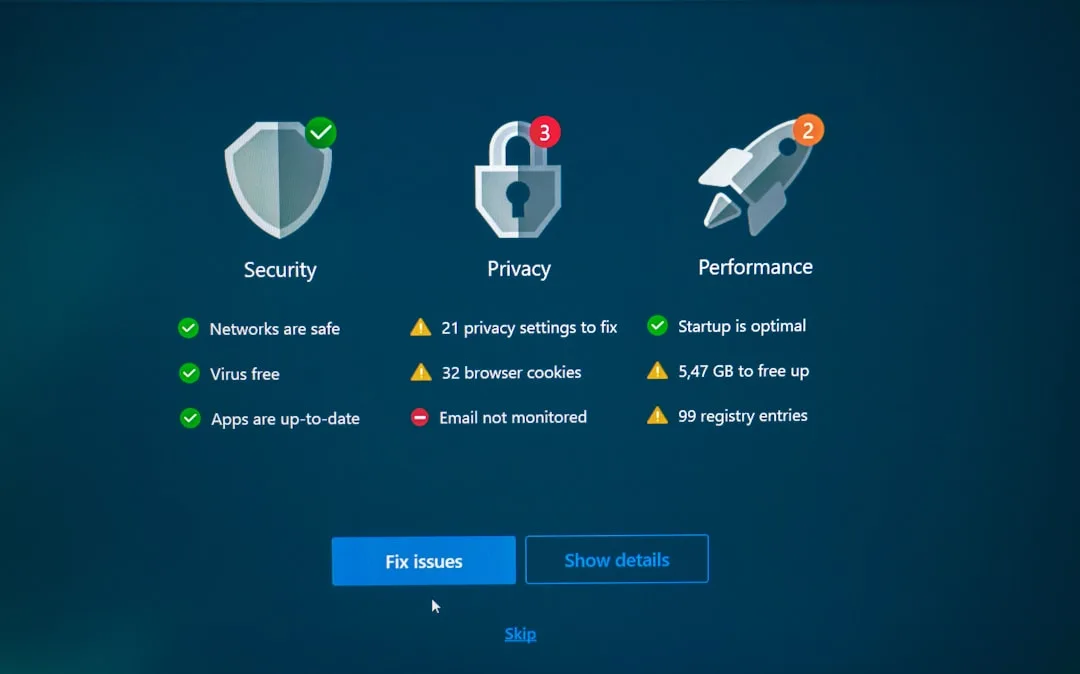
Protect your privacy online with practical, research-backed steps. Browser choices, password security, email privacy, and mobile settings that...