
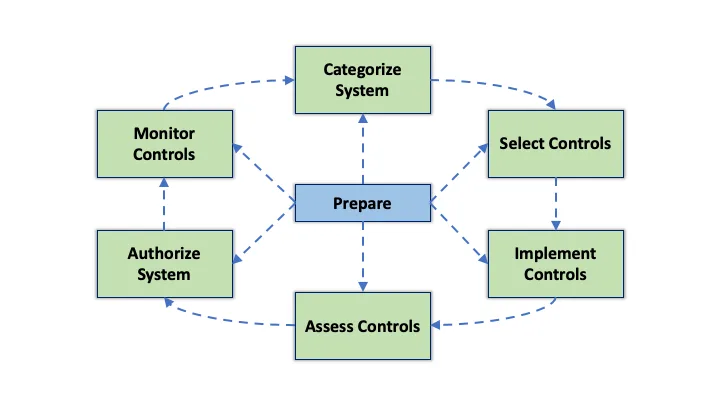
Security risk management identifies threats, vulnerabilities, likelihood, impact, existing controls, and the appropriate treatment for remaining exposure. It helps organizations choose where limited resources reduce the most consequential risk and when acceptance is genuinely defensible. A simple likelihood-by-impact calculation is useful, but catastrophic tail events, changing threats, data sensitivity, operational disruption, and incomplete assumptions can make a superficially rational decision dangerously wrong.
When the Maersk shipping company was hit by the NotPetya malware in June 2017, it took just seven minutes for the attack to spread across 49,000 laptops, destroy data on thousands of servers, and shut down operations at 76 terminals in ports around the world.
The company, which handles one-fifth of global shipping traffic, was reduced to managing logistics with whiteboards and personal cell phones for ten days.[1]
Recovery required reinstalling 45,000 PCs, rebuilding 4,000 servers, and restoring a single domain controller from a backup found in Ghana-the only one that happened to be offline when the malware struck. Total cost: an estimated $300 million.
Here is the part that makes this story useful rather than merely terrifying: Maersk's security team had known about the risk. They had flagged outdated systems and unpatched vulnerabilities. But the risk had been assessed, weighed against the cost and disruption of remediation, and accepted at a management level.
The calculation was straightforward-patching aging systems was expensive and operationally risky, and a major cyberattack seemed unlikely.
The calculation was wrong. Not because the team lacked intelligence or expertise, but because the risk assessment was incomplete: it underweighted the catastrophic tail risk and the way NotPetya was designed to spread laterally with unprecedented speed. The $300 million outcome was the price of an imprecise risk acceptance decision.
Security risk management is the discipline of systematically identifying what could go wrong, estimating how likely and how damaging it would be, and deciding what to do about it. It doesn't eliminate risk-that's impossible.
What it provides is a structured framework for making defensible decisions about where to invest limited security resources and which risks to accept with clear eyes. Done well, it prevents catastrophic surprises. Done poorly-or not at all-it produces Maersk.
Accepting a risk without fully understanding it is not risk management - it is hope. Risk acceptance is only a defensible decision when the likelihood and impact have been honestly assessed and compared against the cost of mitigation.
Maersk's $300 million outcome was the price of an incomplete risk acceptance, not an unavoidable catastrophe.
The Risk Equation
At its simplest, risk = likelihood x impact. A threat that is highly likely to occur but would cause minimal damage represents a different priority than one that is extremely unlikely but would be catastrophic. Both are risks, but they demand different responses.
A vulnerability that lets an attacker read a publicly available web page has high likelihood but trivial impact. A backdoor that grants full system access to patient health records has potentially catastrophic impact even if exploitation is unlikely.
Likelihood considers several factors:
Threat actor capability and motivation. A nation-state adversary targeting defense contractors brings different resources than a script kiddie running automated scans. Who would want to attack you, what resources do they bring, and do you represent a valuable target for them specifically?
An IT services company managing government infrastructure faces different threat actors than a small retail chain.
Vulnerability exploitability. Is exploit code publicly available? Is the vulnerability remotely exploitable or does it require local access? How complex is exploitation-does it require user interaction or can it be automated? The Common Vulnerability Scoring System (CVSS) provides a standardized 0-10 score that incorporates these factors.
Historical precedent. Have similar organizations been targeted? What attack vectors are being actively used in your sector? Financial services companies, hospitals, and critical infrastructure each face distinct threat landscapes documented in sector-specific threat intelligence.
Existing controls. A vulnerability behind a firewall, on a system requiring multi-factor authentication, with active monitoring and automated blocking, has lower residual likelihood than the same vulnerability on an internet-facing system with no controls. Controls multiplicatively reduce effective likelihood.
Impact considers:
Data sensitivity. Exposing public marketing materials is trivially different from exposing 147 million Social Security numbers (Equifax 2017). Impact assessment must identify what data could be exposed and what its sensitivity is.
Operational disruption. Can the business continue operating? For how long? Colonial Pipeline paid a $4.4 million ransom in May 2021 not because they couldn't recover from backup but because the ransom was less expensive than the operational disruption of keeping 5,500 miles of pipeline offline while recovery proceeded.
Financial cost. Direct costs (forensic investigation, legal fees, breach notification, credit monitoring for affected individuals) and indirect costs (lost revenue during downtime, customer churn, reduced future business, stock price impact).
IBM's 2023 Cost of a Data Breach Report found the global average breach cost was $4.45 million, with healthcare breaches averaging $10.93 million.[5]
Regulatory consequences. Fines under GDPR (up to 4% of global annual revenue), HIPAA (up to $1.9 million per violation category per year), PCI DSS (up to $100,000 per month), and SEC disclosure requirements for public companies. The regulatory landscape has materially increased the financial impact of breaches over the past decade.
Reputational damage. Customer trust is slow to build and fast to lose. Target's 2013 breach cost the company its CEO and CIO, produced a multi-year revenue decline, and cost over $162 million in settlements. The reputational tail extends far beyond the incident itself.
The combination of likelihood and impact produces a risk level. Most organizations use a matrix approach:
| Risk Level | Likelihood | Impact | Response |
|---|---|---|---|
| Critical | High | Catastrophic | Immediate action, executive escalation, emergency resourcing |
| High | High | Significant | Remediate within 30 days, leadership visibility |
| Medium | Medium | Moderate | Remediate within 90 days, tracked in risk register |
| Low | Low | Minor | Accept or remediate as resources permit |
| Informational | Very Low | Negligible | Document and monitor, no immediate action required |
The Risk Assessment Process
A structured risk assessment moves through five stages, each building on the previous one.
Stage 1: Asset Identification
You cannot protect what you don't know you have. The first step is building a comprehensive inventory of assets: systems, applications, data stores, network infrastructure, third-party services, APIs, and the data flowing between them.
Asset inventories must capture not just what exists but what data each asset holds, what it connects to, and what business processes depend on it.
Example: During the 2017 Equifax breach investigation, it emerged that the vulnerable Apache Struts web application had not been included in the company's vulnerability scanning program because the security team didn't know it existed.
An asset you haven't inventoried is an asset you cannot protect. The $575 million FTC settlement and the exposure of 147 million Americans' personal data flowed directly from this visibility gap.[9]
Modern environments make asset inventory difficult. Cloud infrastructure scales elastically, creating and destroying resources dynamically. Shadow IT-applications and services deployed by business units without IT involvement-is pervasive.
Third-party APIs and SaaS integrations extend the attack surface beyond traditional infrastructure boundaries.
Tools like cloud security posture management (CSPM) and attack surface management (ASM) platforms automate discovery, but they require ongoing attention rather than periodic manual audits.
Stage 2: Threat Identification
For each asset, identify the threats it faces. Threat modeling frameworks provide systematic approaches to identifying threats that might otherwise be overlooked.
The STRIDE framework (developed at Microsoft) categorizes threats as: Spoofing identity, Tampering with data, Repudiation of actions, Information disclosure, Denial of service, and Elevation of privilege. Walking through each STRIDE category for each system component surfaces threats that intuitive analysis misses.
MITRE ATT&CK provides a more granular framework organized around actual attacker tactics and techniques observed in real-world attacks.[4]
Rather than abstract threat categories, ATT&CK describes specific techniques like "spearphishing attachment" (T1566.001) or "OS credential dumping" (T1003) that threat actors use in each phase of an attack.
Mapping your threats to ATT&CK allows comparison against real threat intelligence about which techniques specific adversary groups use.
Threat sources include:
- External attackers: opportunistic criminals scanning for vulnerabilities, organized cybercrime groups, ransomware operators, nation-state actors conducting espionage or sabotage
- Malicious insiders: employees deliberately stealing data or causing damage, often with authorized access that external attackers lack
- Negligent insiders: well-intentioned employees making mistakes (misconfiguring servers, clicking phishing links, using weak passwords)
- Third-party risk: supply chain attacks like SolarWinds (2020), where attackers compromised the software update mechanism to reach 18,000 organizations that trusted the vendor
- Environmental threats: natural disasters, power failures, infrastructure outages that affect availability without any malicious actor
Stage 3: Vulnerability Assessment
For each threat, identify the specific weaknesses it could exploit. Several complementary approaches contribute:
Vulnerability scanning uses automated tools (Nessus, Qualys, OpenVAS) to identify known vulnerabilities in software versions, configurations, and network services. Scans should be continuous, not periodic-new vulnerabilities are disclosed daily, and a system that was clean last week may be vulnerable today.
Penetration testing goes further: skilled security professionals (or teams) attempt to exploit vulnerabilities as a real attacker would, chaining together weaknesses that automated scanners might identify individually but not in combination.
Annual penetration testing is a compliance requirement for PCI DSS and many other frameworks, but leading organizations conduct more frequent engagements.
Configuration auditing examines whether systems are configured to security baselines. The Center for Internet Security (CIS) Benchmarks provide detailed, tested configuration standards for hundreds of platforms.
Misconfigurations-overly permissive S3 bucket policies, unrestricted security group rules, public database endpoints-are consistently among the top causes of breaches.
Code review and static application security testing (SAST) identifies vulnerabilities in application source code before it reaches production. Dynamic application security testing (DAST) identifies vulnerabilities in running applications by simulating attacks.
Software composition analysis (SCA) identifies known vulnerabilities in open-source dependencies-a critical capability given that most modern applications are majority open-source code.
Stage 4: Risk Analysis
Combining threat likelihood and impact produces risk levels that drive prioritization. This can be:
Qualitative: High/Medium/Low ratings assigned by experienced analysts using judgment. Fast and accessible but subjective and hard to defend to non-security stakeholders. Effective for initial screening and operational security decisions.
Semi-quantitative: Numerical scores (1-5 or 1-10) on likelihood and impact dimensions, multiplied or plotted on a heat map. Provides more granularity than simple qualitative assessment but still relies on subjective scoring.
Quantitative: Financial models that express risk as expected annual loss in dollars. The Factor Analysis of Information Risk (FAIR) framework is the leading quantitative approach.[2] FAIR decomposes risk into measurable components:
- Loss Event Frequency: how often will the loss event occur in a given year?
- Threat Event Frequency: how often will threat actors attempt to cause harm?
- Vulnerability: what percentage of threat events will succeed given current controls?
- Loss Magnitude: what is the financial impact of a successful event?
Example: A FAIR analysis of ransomware risk might estimate: 4 threat events per year (attackers attempting to compromise the organization), 15% vulnerability given current controls (endpoint protection, email filtering, employee training), and average loss magnitude of $3 million per successful event (ransomware payment, recovery costs, business interruption).
Annual expected loss: 4 x 0.15 x $3M = $1.8 million. If a $300,000 endpoint detection and response (EDR) platform would reduce vulnerability from 15% to 3%, annual expected loss drops to $360,000, saving $1.44 million per year against a $300,000 investment. The ROI case is clear and quantified.
Quantitative analysis requires better data and analytical capability than most organizations initially have. A hybrid approach works well: qualitative assessment for initial screening and operational decisions, quantitative analysis for major investment decisions and executive communication.
Stage 5: Prioritization
Not all risks can be addressed simultaneously. Prioritization requires balancing risk level against available resources:
- Critical and high risks first: these represent the largest expected losses and most immediate threats
- Quick wins: high-risk items with easy, inexpensive mitigations deserve early attention regardless of where they fall in the overall priority list
- Regulatory requirements: compliance-mandated controls are non-negotiable regardless of the risk assessment ranking
- Dependencies: some controls enable others-network segmentation enables many other controls; fix foundational issues before building on them
- Resource constraints: available budget, staff capacity, and timeline all constrain what can be accomplished in a given period
The Four Risk Response Strategies
Once risks are identified and prioritized, organizations choose from four fundamental response strategies for each risk.
1. Mitigate - reduce the likelihood or impact. This is the most common response. Implement controls that make the risk less likely to materialize or less damaging if it does.
Example: After the 2013 Target breach, where attackers accessed payment card data through a compromised HVAC vendor's network connection, the retail industry widely adopted network segmentation as a mitigation. Payment processing networks were isolated from general corporate networks and from vendor access zones.
The same attack path that worked against Target became significantly harder to execute against organizations that implemented segmentation-the compromise of a vendor connection no longer provided direct access to payment systems.
Controls can reduce likelihood (firewall rules, access controls, vulnerability patching, security training), reduce impact (encryption, backup systems, incident response capabilities), or both (multi-factor authentication both reduces account compromise likelihood and limits blast radius when credentials are stolen).
2. Accept - acknowledge the risk and proceed without additional controls. Risk acceptance is a valid strategy when mitigation cost exceeds expected loss, when the risk falls within the organization's stated risk tolerance, or when the disruption of remediation outweighs the risk.
But acceptance must be explicit, documented, and approved by appropriate authority.
"Nobody bothered to fix it" is not risk acceptance-it's negligence.
Genuine risk acceptance involves: documenting the specific risk, documenting the analysis showing why acceptance is appropriate, obtaining sign-off from the appropriate authority (based on risk level), setting a review date, and tracking the acceptance in the risk register.
The Maersk case illustrates the danger of risk acceptance without adequate analysis. The risk of a major cyberattack was accepted because it seemed unlikely, but the analysis didn't account for the catastrophic impact if it occurred.
Low probability multiplied by existential impact is still a critical risk. Risk acceptance requires understanding both dimensions.
3. Transfer - shift the risk to a third party. Cyber insurance is the most common form of risk transfer. Policies typically cover breach notification costs, legal fees, ransomware payments, and business interruption losses.
The global cyber insurance market exceeded $13 billion in premiums in 2023 and is growing rapidly as breach costs increase.
Outsourcing security operations to a Managed Security Service Provider (MSSP) transfers operational risk. Cloud hosting transfers infrastructure risk to the cloud provider. Third-party certifications (SOC 2, ISO 27001) shift audit burden to auditors.
But risk transfer has critical limits. You can transfer financial consequences through insurance, but you cannot transfer accountability. If a breach occurs at your cloud provider, your customers hold you responsible, not AWS. The GDPR explicitly states that data controllers remain responsible for breaches at their processors.
Contractual risk transfer between companies is enforceable between the parties but doesn't affect the organization's obligations to regulators and customers.
4. Avoid - eliminate the risk by not engaging in the risky activity. If storing Social Security numbers creates unacceptable risk, stop collecting them. If a legacy system cannot be adequately secured, decommission it. If a third-party integration introduces unacceptable risk, find an alternative or eliminate the integration.
Avoidance is the most effective strategy-a risk that doesn't exist cannot materialize-but the least frequently chosen because it requires giving something up. The organization must weigh the value of the activity generating the risk against the risk itself.
Avoidance is often underused because it requires business stakeholders to agree to constrain what they can do, which is harder to achieve than adding a technical control.
The Risk Register
A risk register is the central document that makes risk management operational rather than abstract. It transforms risk from something people think about into something that drives action and accountability.
An effective risk register captures:
- Risk ID and description: unique identifier and clear description of the risk
- Affected assets and business processes: what systems and operations are exposed
- Threat source and vulnerability: who could exploit this and how
- Inherent risk rating: likelihood and impact before any controls
- Existing controls: what mitigations are currently in place
- Residual risk rating: likelihood and impact given current controls
- Treatment decision: mitigate, accept, transfer, or avoid-with rationale
- Planned mitigations: specific additional controls to be implemented
- Implementation timeline: when planned mitigations will be complete
- Risk owner: a specific named individual (not a team or committee) accountable for managing this risk
- Status: current state of treatment implementation
- Last review date and next review date: ensuring the entry stays current
The risk owner is critical. Without clear individual accountability, risks fall into the space between departments. "The security team" or "IT" as risk owners diffuse accountability. A named individual whose performance evaluation includes managing specific risks creates genuine accountability.
Example: Capital One's risk register reportedly included the risk of cloud misconfigurations leading to data exposure. However, the web application firewall that was supposed to mitigate the risk was itself misconfigured-it allowed Server Side Request Forgery (SSRF) attacks rather than blocking them.
The 2019 breach exposed 106 million records. A risk register entry for "cloud misconfiguration risk" with a mitigation of "WAF deployment" is insufficient if the WAF configuration itself is never verified. Controls must be tested, not assumed.
The risk register must be treated as a living document. Risks change as threats evolve, systems are modified, and controls are implemented or degrade. A risk register reviewed annually becomes dangerously outdated. Leading organizations review critical risks monthly and the full register quarterly.
Inherent Risk vs. Residual Risk
Inherent risk is the risk level before any controls are applied what the risk would be if the organization did nothing to protect itself. Residual risk is the level remaining after controls are implemented what the organization actually faces given its current security posture.
The gap between inherent and residual risk measures control effectiveness:
- Large gap (High inherent, Low residual): controls are working well, significantly reducing risk
- Small gap (High inherent, Medium residual): controls exist but are insufficient; additional investment is warranted
- No gap (High inherent, High residual): controls are absent or completely ineffective; immediate action required
- Inverted (Low inherent, High residual): unusual situation-controls may be actively making things worse, or the inherent assessment is wrong
Tracking both over time reveals program trajectory. If residual risk levels are increasing despite security investment, threats are evolving faster than controls. If residual risk is decreasing, the program is making genuine progress.
Inherent risk assessment is also a powerful communication tool. "This risk is Critical before controls; our current controls reduce it to Medium; additional investment would reduce it to Low" is a clear, compelling argument for security budget that the alternative-"we need $500,000 for a new security tool"-cannot match.
Quantitative Risk Analysis: FAIR in Practice
FAIR (Factor Analysis of Information Risk) provides a rigorous, auditable approach to expressing risk in financial terms. The FAIR Institute, a non-profit organization, has developed training, certification, and a growing community of practitioners.
The FAIR ontology decomposes risk into a hierarchy of measurable factors:
Risk = Loss Event Frequency x Loss Magnitude
Loss Event Frequency = Threat Event Frequency x Vulnerability
Vulnerability = Threat Capability / Control Strength
Loss Magnitude = Primary Loss + Secondary Loss
Each factor can be estimated using historical data, industry benchmarks, expert judgment, and threat intelligence. Importantly, FAIR expresses estimates as probability distributions rather than point estimates-acknowledging uncertainty rather than false precision.
A FAIR analysis might produce: "There is a 90% probability that the annual loss exposure for ransomware falls between $200,000 and $4.5 million, with a most likely value of $1.1 million."
This range-based output matches reality. Security predictions are uncertain. FAIR captures that uncertainty rather than hiding it in a single number that implies false precision.
Example: A healthcare organization uses FAIR to prioritize investment between two proposed controls: a next-generation antivirus upgrade ($180,000/year) and an enhanced privileged access management (PAM) system ($250,000/year).
FAIR analysis shows the antivirus upgrade reduces ransomware risk exposure by $420,000/year and the PAM system reduces insider threat exposure by $890,000/year.
The PAM investment has higher absolute cost but far better return. Without FAIR, the antivirus might win the budget argument based on familiarity and vendor marketing.
Threat Intelligence Integration
Risk assessment is a snapshot. Threat intelligence converts it into a continuous process.
Threat intelligence is information about threats, threat actors, their techniques, and indicators of compromise (IOCs) that security teams can use to update risk assessments and defensive posture in real time.
Sources include:
- Commercial threat intelligence feeds: CrowdStrike Intelligence, Mandiant Threat Intelligence, Recorded Future, and others provide curated, contextualized intelligence including specific IOCs and actor profiles
- Information Sharing and Analysis Centers (ISACs): sector-specific organizations (FS-ISAC for financial services, H-ISAC for healthcare, OT-ISAC for operational technology) share threat intelligence among members who compete commercially but share a common security interest
- Government sources: CISA advisories, FBI Private Industry Notifications, and National Cyber Awareness System alerts provide government threat intelligence, often including attribution and specific defensive recommendations
- Open-source intelligence (OSINT): security research blogs, conference presentations, vulnerability disclosure databases (CVE, NVD), and dark web monitoring
The value of threat intelligence is proportional to how quickly it updates risk assessments and drives action. An intelligence feed that populates a spreadsheet reviewed monthly is far less valuable than one that automatically updates vulnerability priorities in real time.
Example: When the Log4Shell vulnerability (CVE-2021-44228) was publicly disclosed on December 9, 2021, organizations with mature threat intelligence programs could immediately query their asset inventories for Log4j deployments, understand the severity (CVSS 10.0, maximum severity), and begin emergency patching.
Organizations without current asset inventories and threat intelligence processes spent weeks discovering where Log4j existed across their environments while active exploitation was underway.
The gap between organizations wasn't technical capability-it was operational maturity in risk management processes.
Building a Risk-Aware Culture
The most sophisticated risk management framework fails without an organizational culture that supports honest risk identification and informed risk-taking.
Psychologically safe risk reporting is the foundation. If security teams are penalized for identifying risks because identification creates work, delays projects, or embarrasses leadership-they stop reporting. This doesn't make risks disappear; it makes them invisible until they materialize as incidents.
Google's Project Aristotle research found that psychological safety-the belief that one can speak up without punishment-was the strongest predictor of team effectiveness. Security teams without it systematically underreport risk.
Explicit risk appetite prevents inconsistent decision-making. Every organization has a tolerance for risk, but few articulate it clearly.
Without a documented risk appetite statement, individual managers make inconsistent decisions: one manager accepts a High risk to accelerate a product launch; another delays a Low-risk project for security review.
Defining and communicating which risk levels require escalation and which can be handled at the team level creates consistency.
Risk appetite statements should address: maximum acceptable risk levels without executive approval, maximum acceptable residual risk for critical systems, specific risk categories that are never acceptable (e.g., unencrypted storage of payment card data, publicly accessible admin interfaces), and the balance between security investment and business enablement.
Near-miss learning is underused. Most security programs analyze actual incidents but treat near-misses as non-events.
A phishing simulation where 40% of employees clicked a link, a vulnerability discovered in production before exploitation, a misconfigured cloud resource identified through internal audit-these near-misses reveal real vulnerabilities without the damage of actual incidents.
Organizations that treat near-misses as free lessons develop faster than those that only learn from breaches.
Executive engagement is non-negotiable for effective risk management. Risk management decisions have business impact-they affect budgets, timelines, products, and capabilities. Security teams can identify and assess risks, but only leadership can make the business tradeoff decisions that risk response requires.
The CISO's job is to make risk visible and understandable to executives who must accept accountability for risk decisions. Organizations where the security team makes all risk decisions have confused technical implementation with governance.
Adapting to Emerging Threats
The threat landscape changes faster than most organizations' risk management processes. Several emerging trends require active adaptation.
Artificial intelligence and machine learning introduce novel attack vectors: adversarial attacks that fool AI models, model theft through repeated API queries, training data poisoning, and the use of AI to accelerate and scale attacks (AI-generated phishing, deepfakes for social engineering).
Risk assessments built on historical attack patterns don't capture these emerging threats.
Software supply chain attacks became a dominant threat vector after SolarWinds (2020), Kaseya (2021), and numerous subsequent attacks. The attack pattern-compromise a trusted software vendor and use their update mechanism to reach thousands of downstream customers-bypasses traditional perimeter defenses.
Risk assessments must now include the supply chain as an explicit attack surface, with controls like software bill of materials (SBOM), vendor security questionnaires, and code signing verification.
Ransomware evolution has shifted from opportunistic attacks to sophisticated, targeted operations.
Modern ransomware groups conduct multi-week reconnaissance campaigns before deploying ransomware, exfiltrate data before encryption (enabling double extortion: pay ransom or we publish your data), and specifically target backup systems to prevent recovery.
Risk assessments that treat ransomware as a nuisance requiring backup restoration dramatically understate the current threat.
Quantum computing threatens the mathematical foundations of current encryption algorithms. RSA, Elliptic Curve Cryptography, and Diffie-Hellman key exchange are vulnerable to Shor's algorithm on a sufficiently powerful quantum computer.
The National Institute of Standards and Technology (NIST) finalized the first post-quantum cryptography standards in 2024.[10]
Organizations handling data that must remain confidential beyond 2030 should begin migration planning now-adversaries are already harvesting encrypted data for future decryption ("harvest now, decrypt later" attacks).
See also: Common Security Failures Explained, Authentication vs Authorization, Security Tradeoffs Explained
From Assessment to Program
Security risk management is not a project. It is a continuous program with regular cycles of assessment, treatment, monitoring, and reassessment.
Organizations that treat it as a project-conduct a risk assessment, create a remediation plan, execute the plan, done-find that their risk posture has degraded significantly by the time the next assessment occurs.
Leading organizations build risk management into operational cadences: weekly triage of new vulnerabilities against asset inventory, monthly review of high-risk items in the register, quarterly full register review, annual comprehensive reassessment, and event-driven reassessment after significant changes or incidents.
The cost of this discipline is real: staff time, tool investment, process overhead. The cost of its absence is measured in headlines-SolarWinds, Change Healthcare, MOVEit Transfer, Colonial Pipeline. Each exploited risks that were identifiable in advance.
Each was preventable not through better technology but through better risk management processes applied consistently over time.
What Research and Industry Reports Show
Structured research on security risk management has produced consistent findings about what distinguishes effective programs from ones that produce Maersk-scale surprises.
NIST Special Publication 800-30, "Guide for Conducting Risk Assessments," is the federal government's foundational risk methodology document, first published in 2002 and revised in 2012.[3]
It defines a tiered risk framework that aligns risk management activities across organizational governance, business processes, and information systems.
NIST's research found that organizations with a tiered approach - where risk decisions at the system level are informed by organizational risk tolerance statements approved at the governance level - made more consistent and defensible risk decisions than those managing risk ad hoc at the system level only.
SP 800-30's companion documents, including SP 800-39 and the NIST Cybersecurity Framework, form a cohesive risk management architecture that has been adopted by thousands of organizations globally.
The Verizon Data Breach Investigations Report provides empirical evidence about which risks materialize in practice, offering a corrective to theoretical risk assessments that may overweight or underweight specific threats.
The 2024 DBIR, which analyzed 30,458 security incidents including 10,626 confirmed breaches, found that vulnerability exploitation as an initial access vector grew 180 percent year-over-year, driven substantially by attacks on edge devices like VPNs and firewalls.
This finding directly challenges risk assessments that deprioritize perimeter device patching.
The DBIR's threat actor analysis consistently shows that external actors are responsible for the vast majority of breaches (over 65 percent), with organized crime groups - primarily ransomware operators - accounting for most financially motivated incidents.
The IBM Cost of a Data Breach Report provides the most detailed financial data available for calibrating impact estimates in risk analyses.
IBM's 2023 research found that organizations with high DevSecOps maturity (security embedded in development and deployment processes) had breach costs 48 percent lower than organizations with low DevSecOps maturity - one of the largest cost differentiators IBM has measured.
Organizations with incident response plans that had been tested through tabletop exercises or simulations saved an average of $1.49 million compared to those without tested plans, providing strong empirical support for investment in response capability as a risk reduction measure.
Douglas Hubbard and Richard Seiersen, in How to Measure Anything in Cybersecurity Risk (2016, updated 2023), provide the most rigorous treatment of quantitative risk analysis available.[11]
Their research on organizational risk estimates found that security professionals systematically overestimate certain risks (exotic zero-day attacks, nation-state threats for non-strategic targets) and underestimate others (credential theft, misconfiguration, third-party risk).
Their calibration training methodology - teaching estimators to provide probability ranges that reflect genuine uncertainty rather than false precision - has been shown to improve the accuracy of risk estimates by 40 to 60 percent in controlled settings.
Adam Shostack, a security architect who worked at Microsoft during the development of their threat modeling practices, published Threat Modeling: Designing for Security in 2014.[6]
His research on how organizations actually conduct risk and threat analysis found that the single most effective improvement was moving from informal, ad hoc threat identification to systematic frameworks like STRIDE.
Organizations that implemented structured threat modeling during design consistently identified and mitigated more high-severity issues than those relying on code review and penetration testing alone - at significantly lower total cost.
Real-World Case Studies
The NotPetya Attack on Maersk (2017) is the benchmark case study for risk acceptance decisions with catastrophic tail consequences.
The NotPetya malware, attributed by multiple governments to Russia's Sandworm military intelligence unit, was initially disguised as ransomware but was actually a wiper - designed to permanently destroy data rather than enable recovery for ransom.
It spread explosively via the EternalBlue exploit (stolen from the NSA) and the Mimikatz credential harvesting tool, which extracted credentials from memory to authenticate across network shares without needing to crack passwords.
Maersk's network, which had not been segmented to isolate shipping operations from corporate IT, provided a flat attack surface across which the malware spread in minutes.
The crucial vulnerability was not the malware itself but the network architecture and patch management process that allowed a single infected system in Ukraine to destroy systems across 130 countries.
The $300 million recovery required reimagining the company's entire IT infrastructure over ten days - a process normally taking months - aided by the fortuitous survival of a single offline domain controller in Ghana.
The Capital One Cloud Misconfiguration Breach (2019) demonstrates the risk of unverified control effectiveness. Capital One's cloud risk register included the risk of misconfigured cloud resources and listed a web application firewall (WAF) as the primary mitigation control.
The WAF was deployed but misconfigured: it failed to block Server Side Request Forgery (SSRF) attacks, which allowed an attacker to query AWS's instance metadata service and retrieve the temporary credentials of the WAF's associated IAM role.
Those credentials had excessive permissions - they allowed listing and downloading S3 bucket contents far beyond what the WAF's legitimate function required. The attacker, a former AWS employee who understood the architecture, used this chain to download 106 million customer records.
The breach illustrates a fundamental risk register failure: the control listed as providing protection (WAF) was never tested to verify it actually blocked SSRF, and the IAM role it operated under violated least privilege. Controls that exist on paper but are misconfigured or improperly scoped provide no residual risk reduction.
The Change Healthcare Ransomware Attack (2024) caused the most significant disruption to US healthcare payment infrastructure ever recorded from a cyberattack. The ALPHV/BlackCat ransomware group gained access through a Citrix remote access portal that lacked multi-factor authentication.
Once inside Change Healthcare's network - which processes medical claims for approximately one-third of US patients - the attackers spent weeks conducting reconnaissance before deploying ransomware.
The payment disruption affected hospitals, pharmacies, and physician practices nationwide; some small practices reported being unable to process insurance claims for weeks. UnitedHealth Group, Change Healthcare's parent company, paid a $22 million ransom to ALPHV.
The total financial impact, including a subsequent extortion attempt by a splinter group, government loans to affected providers, and remediation costs, is estimated to exceed $1 billion.
The attack's root cause - a remote access portal without MFA - represents a control gap that NIST, CISA, and every major security framework explicitly require for systems with patient data access.[7]
Key Security Metrics and Evidence
Concrete benchmarks from research and industry data help calibrate risk assessments and prioritize investments.
Vulnerability Exploitation Window: According to the Ponemon Institute's analysis, the average time from a vulnerability's public disclosure to active exploitation in the wild is 12 days. For critical vulnerabilities (CVSS 9.0+), exploit code is publicly available within an average of 7 days.
Organizations that take the industry average of 102 days to patch critical vulnerabilities are operating with a roughly 90-day window of exposure to active exploitation - a window that most attackers are actively using.
Ransomware Financial Impact: Coveware's quarterly ransomware reports show that the average ransom payment in 2023 was approximately $740,000, up from $220,000 in 2021.
However, ransom payments represent only a fraction of total incident cost: the FBI estimates that forensic investigation, business interruption, legal fees, and recovery costs typically add two to three times the ransom payment to total incident cost.
Organizations with tested backup and recovery capabilities that avoid paying ransom spend an average of 25 to 30 percent less on total recovery than those that pay.
Insider Threat Costs: The Ponemon Institute's 2022 Cost of Insider Threats Global Report found that insider incidents cost organizations an average of $15.38 million annually, up 34 percent from 2020.
Notably, negligent insiders - employees making mistakes rather than acting maliciously - were responsible for 56 percent of incidents, while malicious insiders caused 26 percent and credential theft caused 18 percent.
This distribution is directly relevant to risk likelihood estimates: organizations that weight malicious insider risk most heavily are miscalibrated relative to the empirical data.
FAIR Adoption and ROI: The FAIR Institute's member survey data shows that organizations using quantitative risk analysis (FAIR or similar methods) for major security investment decisions report 35 to 50 percent improvement in their ability to justify security budgets to executive leadership, and a measurable improvement in the quality of risk acceptance decisions - specifically, fewer instances where accepted risks later materialized at costs exceeding what mitigation would have cost.
Third-Party Risk Prevalence: Verizon's DBIR data shows that third-party involvement in breaches has increased substantially over recent years.[8] In 2024, 15 percent of all breaches involved a third party - software vendor, supplier, or partner - compared to 9 percent in 2022.
The SolarWinds, Kaseya, MOVEit, and 3CX supply chain attacks in the 2020-2024 period collectively exposed tens of millions of systems, demonstrating that third-party risk is no longer a secondary consideration in risk assessments.
Sources & Further Reading
- Greenberg, Andy. "The Untold Story of NotPetya, the Most Devastating Cyberattack in History." Wired, 2018. View source
- FAIR Institute. "What is FAIR?" FAIR Institute. View source
- NIST. "SP 800-30 Rev. 1: Guide for Conducting Risk Assessments." National Institute of Standards and Technology, 2012. View source
- MITRE. "ATT&CK Framework." MITRE ATT&CK. View source
- IBM Security. "Cost of a Data Breach Report 2023." IBM, 2023. View source
- Shostack, Adam. "Threat Modeling: Designing for Security." Wiley, 2014. View source
- CISA. "Cross-Sector Cybersecurity Performance Goals." Cybersecurity and Infrastructure Security Agency, 2023. View source
- Verizon. "2024 Data Breach Investigations Report." Verizon Business, 2024. View source
- U.S. Government Accountability Office. "Equifax Data Breach: Equifax Faces Continuing Challenges to Protect and Market Its Data." GAO, 2019. View source
- NIST. "Post-Quantum Cryptography Standardization." National Institute of Standards and Technology, 2024. View source
- Hubbard, Douglas W. and Seiersen, Richard. "How to Measure Anything in Cybersecurity Risk." Wiley, 2023. View source