
Critical Thinking & Problem Solving
Understanding Logical Fallacies to Identify Flawed Arguments
Common logical fallacies: ad hominem attacking person not argument, strawman misrepresenting positions, false dichotomy, appeal to authority.
Challenge yourself with 60 interactive questions on analytical thinking, logical reasoning, decision-making frameworks, root cause analysis, creative problem solving, strategic thinking, and systematic approaches to complex challenges. Choose between practice mode for instant feedback or test mode for comprehensive assessment.
Choose your preferred learning mode and start testing your critical thinking and problem solving knowledge. Each mode is designed to help you learn effectively.
Learn as you go with instant feedback after each question. See detailed explanations, understand your mistakes, and discover related articles to deepen your knowledge.
Simulate real exam conditions by answering all questions first. Review your complete performance at the end with comprehensive feedback and scoring breakdown.
Questions cover multiple difficulty levels and all key analytical thinking concepts. Your results help identify strengths and areas for improvement.
Get detailed performance analytics, see your score breakdown, and receive personalized recommendations for further study based on your results.
Select how you want to test your knowledge
Get instant feedback after each question with detailed explanations and related resources. Perfect for learning and building understanding.
Answer all questions first, then see comprehensive results. Simulates real exam conditions for true assessment of your knowledge.
Continue learning with our latest articles
Common logical fallacies: ad hominem attacking person not argument, strawman misrepresenting positions, false dichotomy, appeal to authority.

Analytical thinking: decompose complex problems into components, identify patterns and repetitions, evaluate evidence for truth, synthesize...
Root cause analysis identifies underlying problems preventing recurrence. Use 5 Whys, fishbone diagrams, and hypothesis testing to find systemic...

Decision trees map choices visually: decision nodes for choices, chance nodes for uncertain outcomes, probabilities, and payoffs.
Problem framing determines solution quality. How you define a problem shapes available solutions and reveals root causes over symptoms.
Structured problem solving uses systematic steps: define the problem clearly, analyze root causes, generate solutions, and implement with...
Common reasoning errors: circular reasoning, false cause confusing correlation with causation, hasty generalizations from small samples.

Common problem-solving mistakes include jumping to solutions, addressing symptoms instead of root causes, and confirmation bias in analysis.

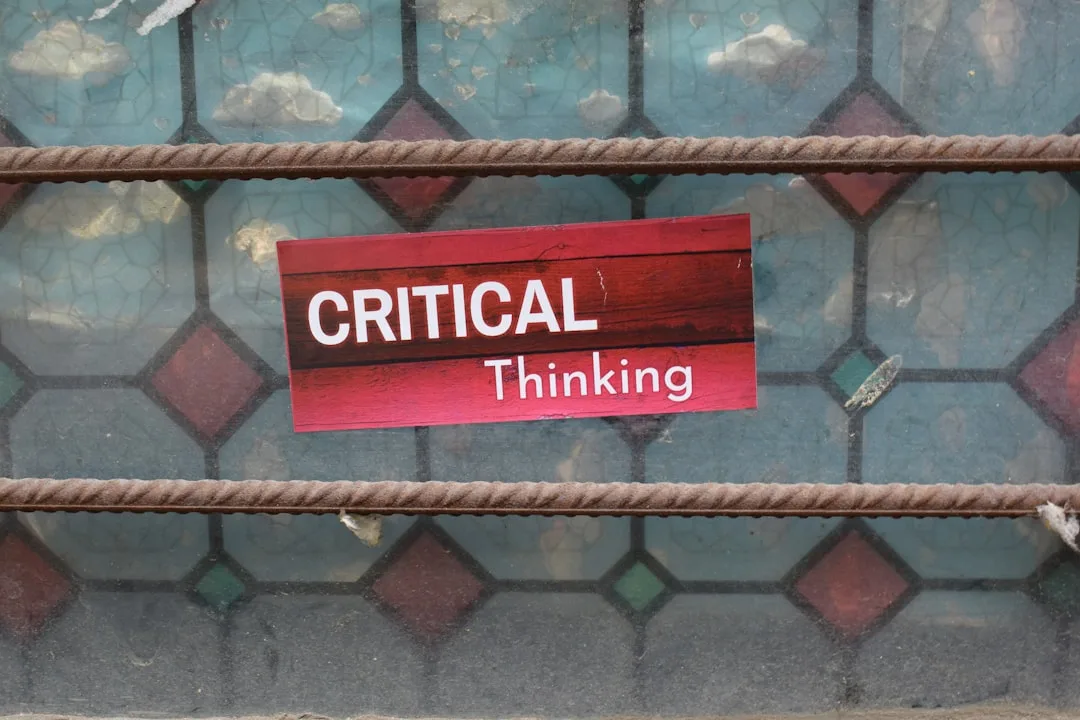
Critical thinking is the systematic evaluation of information and reasoning to reach better conclusions.
Every choice involves tradeoffs. Recognize opportunity costs, second-order effects, and constraints to make informed decisions about competing...

Learn how to think critically using Bloom's taxonomy, the Socratic method, and logical fallacy detection.

Critical thinking explained: the definition, Bloom's taxonomy's 6 levels, common logical fallacies, cognitive barriers, and practical exercises to...