Productivity & Time Management
Research on Effective Morning Routines
What makes a good morning routine? Explore the science of the cortisol awakening response, chronotypes, sleep inertia, and daylight exposure to...
Challenge yourself with 60 interactive questions on time management techniques, productivity strategies, prioritization frameworks, task management systems, efficiency optimization, distraction management, energy management, and work-life balance. Choose between practice mode for instant feedback or test mode for comprehensive assessment.
Choose your preferred learning mode and start testing your productivity and time management knowledge. Each mode is designed to help you learn effectively.
Learn as you go with instant feedback after each question. See detailed explanations, understand your mistakes, and discover related articles to deepen your knowledge.
Simulate real exam conditions by answering all questions first. Review your complete performance at the end with comprehensive feedback and scoring breakdown.
Questions cover multiple difficulty levels and all key productivity concepts. Your results help identify strengths and areas for improvement.
Get detailed performance analytics, see your score breakdown, and receive personalized recommendations for further study based on your results.
Select how you want to test your knowledge
Get instant feedback after each question with detailed explanations and related resources. Perfect for learning and building understanding.
Answer all questions first, then see comprehensive results. Simulates real exam conditions for true assessment of your knowledge.
Continue learning with our latest articles
What makes a good morning routine? Explore the science of the cortisol awakening response, chronotypes, sleep inertia, and daylight exposure to...
How to wind down in the evening using evidence-based strategies: adenosine, blue light, CBT-I, to-do list journaling, hot baths, cognitive...
Learn how to improve focus using neuroscience research on sustained attention, flow states, the Pomodoro Technique, and practical strategies...
The science of burnout: Maslach's three-component model, WHO ICD-11 classification, how it differs from depression, nervous system recovery, and...
Learn why you procrastinate and how to stop with science-backed strategies. Beat procrastination at work and finally tackle the tasks you keep...
Master deep work with strategies from Cal Newport and cognitive science. Learn how to focus deeply, protect your attention, and produce your best...
What productivity actually means for knowledge workers: deep work vs shallow work, flow state research, energy management vs time management, and...

Energy management beats time management: Match hard tasks to high-energy periods. Protect energy through sleep, breaks, exercise, and strategic rest.

Burnout kills productivity through chronic exhaustion, cynicism, and reduced efficacy. Causes: overwork, lack of control, unclear expectations,...

Deep work is focused uninterrupted work on cognitively demanding tasks. Requires no distractions, extended 90-120 minute blocks, and full attention.

Planning hierarchy: Yearly for direction, quarterly for milestones, weekly for priorities, daily for execution. Each layer informs the next.
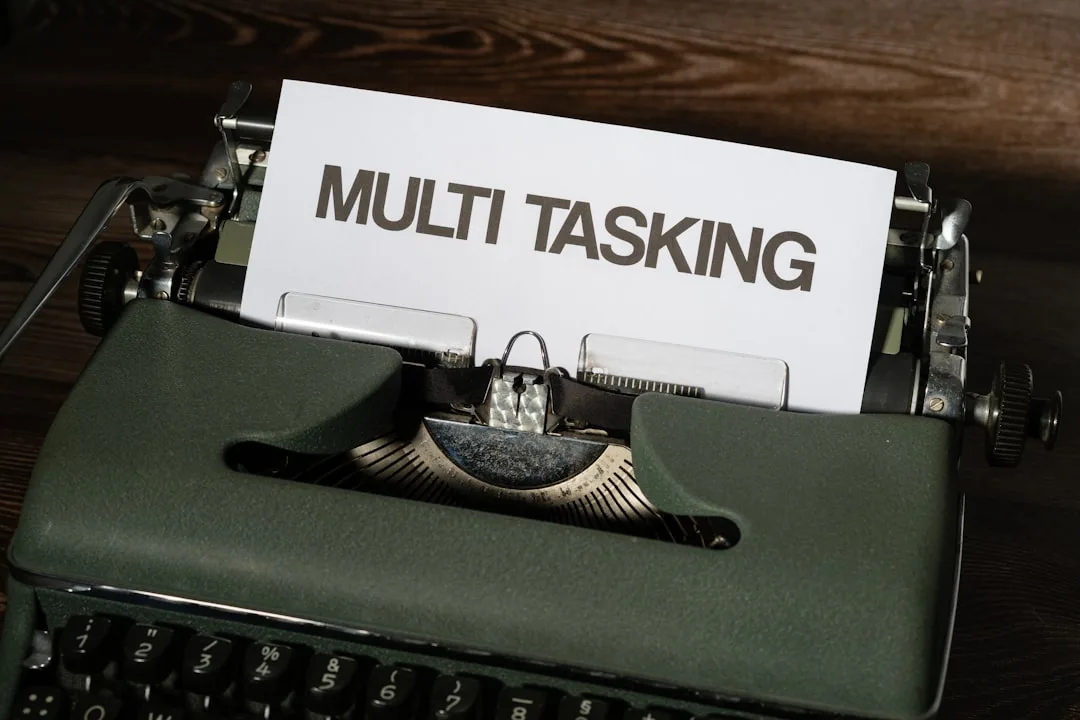
Multitasking is a myth—brain switches between tasks not parallel processing. Task switching creates attention residue, ramp-up time, and increased...