
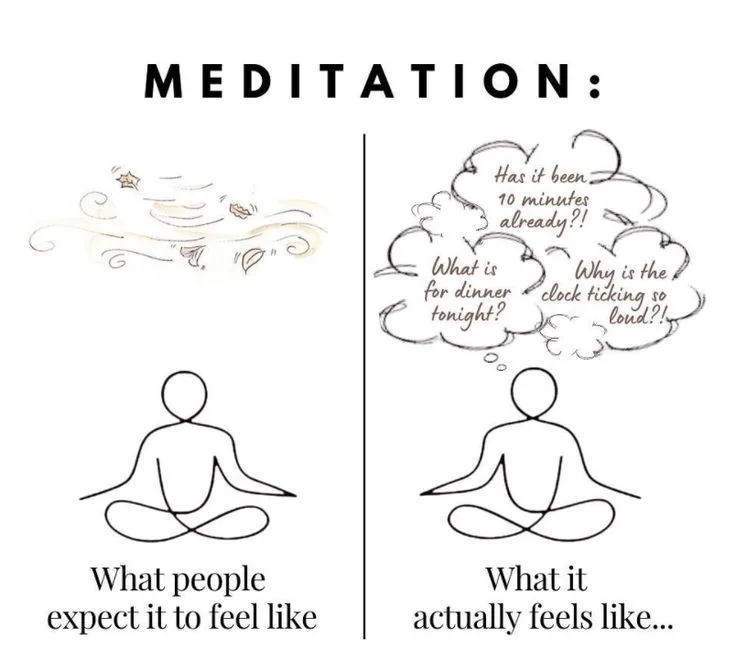
Meditation is a family of attention and awareness practices, not one uniform intervention. What happens during meditation depends on the method: focused attention trains noticing and returning from distraction, open monitoring cultivates nonreactive awareness, and loving-kindness develops goodwill.
Research reports measurable effects, but the article also distinguishes better-supported clinical programs from broad claims that exceed the evidence.
In 1979, Jon Kabat-Zinn - a molecular biologist with a meditation practice he had learned from Zen masters and Vipassana teachers - was on a ten-day silent retreat in Massachusetts when he had an idea.
He had been watching patients at Massachusetts General Hospital struggling with chronic pain, cancer, and stress-related conditions that medicine had little to offer.
Most of them would never sit a Zen retreat. But perhaps, he thought, the essential elements of contemplative practice could be extracted from their Buddhist context, operationalized into an eight-week program, and tested scientifically.
He launched the Mindfulness-Based Stress Reduction program that year.
The clinical results were striking enough to attract neuroscientific attention, and the neuroscientists - beginning with Richard Davidson at the University of Wisconsin-Madison and eventually including hundreds of labs worldwide - started putting meditators into brain scanners.
What they found was that meditation produces measurable changes in brain structure, function, stress hormones, immune activity, gene expression, and cognitive performance. These are not subtle statistical artifacts. They are biologically significant alterations in how the nervous system processes experience.
They also come with important caveats: much of the early meditation research was methodologically weak, the popular interpretation of results has consistently outrun the evidence, and the meditation landscape includes both well-supported clinical interventions and loosely defined wellness practices with minimal evidence.
Here is what the science actually shows.
"If you're not sure where you're going, you might wind up somewhere else." - Yogi Berra (often quoted, opposite of good meditation science)
"Meditation is not about getting anywhere. It's about being exactly where you are." - Jon Kabat-Zinn, Wherever You Go, There You Are (1994)
Key Definitions
Meditation - A family of practices involving deliberate regulation of attention and awareness, typically with the goal of training mental qualities (sustained attention, equanimity, compassion) or achieving altered states of consciousness.
The term encompasses practices ranging from focused attention on the breath to open monitoring of arising thoughts to loving-kindness cultivation to mantra repetition to contemplative prayer.
Mindfulness - Present-moment, non-judgmental awareness - noticing what is happening as it is happening, without reactivity or elaboration. A quality that many meditation practices aim to cultivate; also the name of a family of clinical interventions (MBSR, MBCT) based on this quality.
MBSR (Mindfulness-Based Stress Reduction) - Jon Kabat-Zinn's 8-week clinical program, the most researched mindfulness intervention: weekly 2.5-hour group sessions, daily 45-minute home practice, one all-day retreat. Teaches body scan, sitting meditation, and mindful yoga.
MBCT (Mindfulness-Based Cognitive Therapy) - An adaptation of MBSR combined with cognitive behavioral therapy elements, developed by Zindel Segal, Mark Williams, and John Teasdale specifically for prevention of depressive relapse. NICE-recommended for individuals with three or more past depressive episodes.
Default mode network (DMN) - A set of brain regions (medial prefrontal cortex, posterior cingulate cortex, angular gyrus, hippocampus) active during internally directed thought - mind-wandering, autobiographical memory, self-referential processing, and social cognition.
Active when not focused on external tasks; associated with rumination when dysregulated.
Focused attention (FA) meditation - Meditation involving sustained concentration on a single object (typically the breath), with detection of and recovery from mind-wandering. Trains attentional stability, metacognitive awareness, and the ability to disengage from distracting thoughts.
Open monitoring (OM) meditation - Meditation involving receptive, non-reactive awareness of whatever arises in experience - thoughts, sensations, sounds - without selective attention to any particular object. Trains equanimity and reduced reactivity to mental events.
Loving-kindness (LK / Metta) meditation - Practice of deliberately cultivating feelings of warmth, goodwill, and compassion toward oneself, others, and eventually all beings. Activates distinct neural networks from FA and OM practices.
Interoception - Perception of the body's internal state - heartbeat, breath, visceral sensations, muscle tension, pain. Mediated by the insula. Meditation consistently enhances interoceptive awareness; this may be a central mechanism through which meditation affects emotional regulation.
Neuroplasticity - The brain's capacity to reorganize itself - forming new connections, strengthening used pathways, and pruning unused ones - in response to experience. The mechanism through which meditation can produce lasting structural changes.
The Brain During Meditation: What Imaging Shows
Focused Attention: Training the Attentional System
The focused attention practice - sustaining awareness on the breath, noticing when the mind has wandered, returning - is, at the neural level, a training protocol for the attention network.
Each cycle of this loop (sustaining mind-wanders noticing returning) activates distinct neural events: the dorsal attention network (dorsolateral PFC, parietal cortex) maintains sustained focus.
The salience network (anterior cingulate cortex, anterior insula) detects the conflict signal when the mind has wandered, and the central executive network redirects attention back to the object.
Wendy Hasenkamp's 2012 neuroimaging study at Emory University tracked these phases in real time, having meditators press a button when they noticed mind-wandering.
The results confirmed the cycle's neural architecture and showed that experienced meditators had more efficient transitions between phases - catching mind-wandering earlier and recovering more rapidly.
Consistent with long-term training effects, experienced meditators show differences in the attention network itself.
Attentional blink - a well-documented phenomenon in which a second target presented 200-500 ms after the first is missed because attentional resources are still engaged with the first - is substantially reduced in experienced meditators.
Antoine Lutz's 2009 study found meditators had superior attentional blink performance and showed distinctive gamma-wave neural synchrony.
Open Monitoring: Defusing from the Default Mode
Open monitoring meditation does something more subtle to the default mode network than simply suppressing it.
The goal is not to eliminate arising thoughts but to change the practitioner's relationship to them - noticing thoughts as arising mental events without being captured by them, without adding the secondary elaboration ("I'm having this thought, which means... which connects to...
which reminds me of...") that turns a passing thought into a train of rumination.
Judson Brewer's neuroimaging research at Yale and Brown has been particularly revealing.[4]
His 2011 study compared experienced meditators to meditation-naive controls across all three major meditation styles and found that experienced meditators showed decreased activity in key DMN nodes - particularly the posterior cingulate cortex (PCC), often described as the DMN's "hub" - across all conditions, including rest.
The PCC is associated with self-referential processing and narrative self-construction - the sense of "me" elaborating its story.
Reduced PCC activity in meditators corresponds to what practitioners describe as reduced identification with the narrative self: thoughts still arise, but they are noticed as thoughts rather than as the self's ongoing autobiography.
This has direct clinical relevance. In depression and anxiety, the DMN shows pathological hyperactivity and reduced ability to disengage. Ruminative loops - the repeated, unproductive cycling through negative thoughts about self, past, and future - are mediated by DMN hyperactivation.
The mechanism through which MBCT prevents depressive relapse likely involves training this DMN defusion capacity: practitioners learn to notice early warning signs of depressive thinking as cognitive events rather than as facts about reality or self.
Loving-Kindness: The Social Brain
Loving-kindness meditation activates a distinct neural circuit from focused attention or open monitoring.
Richard Davidson and Antoine Lutz's work with Tibetan Buddhist monks - some with more than 10,000 hours of meditation practice - examined neural activity during loving-kindness meditation.
They found dramatically elevated gamma oscillations (25-100 Hz), a high-frequency pattern associated with neural integration, at levels never previously recorded in healthy individuals.
Neuroimaging studies find that loving-kindness practice activates:
- Insula: associated with empathy and awareness of one's own and others' emotional states
- Temporal-parietal junction (TPJ): associated with perspective-taking, "theory of mind," and distinguishing self from other
- Medial prefrontal cortex: associated with social cognition and attributing mental states to others
These are the neural substrates of empathy and compassion - not as felt emotions in the moment, but as dispositional capacities that meditation trains as skills.
Behavioral evidence supports functional changes.
A 2013 study by David DeSteno found that participants who had completed a brief loving-kindness meditation training were significantly more likely to give up their seat to a person on crutches (50% vs 16% in controls) - a spontaneous compassionate behavior in a real-world context.
Yoona Kang's 2014 study found loving-kindness meditation reduced implicit racial bias (measured via IAT) after 6 weeks.
Structural Changes: The Meditating Brain is Physically Different
The evidence that meditation produces structural brain changes is now substantial, though many of the early studies have been refined by more rigorous replications.
Sara Lazar's landmark 2005 study at Harvard compared 20 experienced meditators to 15 controls matched for age and gender.[3]
Meditators had greater cortical thickness in the right anterior insula (a region involved in interoceptive awareness - the sense of the body's internal state), left superior temporal gyrus, and the prefrontal cortex.
The right anterior insula thickness correlated with years of meditation experience. Crucially, the age-related cortical thinning that normally occurs in the PFC appeared attenuated in meditators - suggesting meditation may partially offset age-related cognitive decline in these regions.
Britta Hölzel's 2011 longitudinal study - using pre/post MRI rather than the cross-sectional comparison of Lazar's work - found measurable gray matter changes after just 8 weeks of MBSR in participants with no prior meditation experience.[2] Increases were found in:
- Left hippocampus (memory, learning, emotional regulation)
- Posterior cingulate cortex (self-referential processing, perspective-taking)
- Temporoparietal junction (empathy, perspective-taking)
- Cerebellum
And a decrease in:
- Right basolateral amygdala (threat detection, fear response)
The amygdala finding is particularly striking: structural reduction in the amygdala after 8 weeks correlated with participants' self-reported stress reduction. The brain was physically reorganizing its threat-detection infrastructure in response to meditation training.
A 2014 meta-analysis by Kieran Fox and colleagues examined 21 neuroimaging studies of meditators and found eight regions consistently showing altered structure in long-term meditators versus controls:[5]
| Region | Function | Direction |
|---|---|---|
| Frontopolar cortex | Meta-awareness | Increased thickness |
| Sensory cortices and insula | Interoception, body awareness | Increased thickness |
| Hippocampus | Memory, emotional regulation | Increased volume |
| Anterior cingulate cortex | Attentional control, conflict monitoring | Increased thickness |
| Frontal white matter | Connectivity | Increased integrity |
| Striatum | Reward processing | Altered activity |
| Insula | Interoception, empathy | Increased thickness |
These are not trivial effects. They represent genuine remodeling of neural architecture in response to sustained practice - the same neuroplasticity that underlies skill learning in other domains, applied to the practice of mental training.
The Stress Hormones: Cortisol and Beyond
The most clinically replicable finding from meditation research is its effect on stress reactivity - specifically, reduced cortisol responses to psychological stressors.
A 2013 meta-analysis by Cramer and colleagues found that MBSR significantly reduced cortisol levels compared to control conditions.
The mechanism is not simply relaxation (which also lowers cortisol) but appears to involve altered cognitive appraisal of stressors - what is perceived as threatening versus manageable changes with meditation training.
Jon Kabat-Zinn's original clinical observations documented that MBSR participants reported reduced pain, improved psychological well-being, and reduced medical symptom complaints.[1] Subsequent work quantified the biological correlates:
Inflammatory markers: Davidson's 2003 study gave participants an influenza vaccine and found that those who completed MBSR showed higher antibody titers (stronger immune response) and increased left-sided anterior brain activation (associated with positive affect and approach motivation).[6]
This is the gold standard for immune function measurement - not just self-reported wellness, but actual antibody production in response to a real pathogen.
Cortisol: Multiple studies find reduced cortisol reactivity to laboratory stressors in meditators. Carlson et al. found reduced cortisol in cancer patients after 8 weeks of MBSR, with effects maintained at 6-month follow-up.
Gene expression: Perla Kaliman and colleagues (2014) studied changes in gene expression in expert meditators compared to controls after an intensive day of mindfulness practice.[8]
They found rapid down-regulation of genes involved in the inflammatory pathway - specifically RIPK2 and COX2, involved in NF-kB signaling - in meditators but not controls. Meditation appeared to modulate the inflammatory response at the genomic level.
This gene expression finding connects to the broader evidence that mind-body practices affect what researchers call the "conserved transcriptional response to adversity" (CTRA) - a genomic profile characterized by up-regulation of inflammatory genes and down-regulation of antiviral genes that is produced by chronic stress and loneliness.
Meditation appears to partially reverse this profile.
What Meditation Does to Attention
Outside of clinical outcomes, some of the most carefully measured meditation effects concern cognition - particularly attention.
Sustained attention: Multiple studies find that experienced meditators maintain attention on boring sustained tasks longer and with fewer performance decrements than non-meditators. The SART (sustained attention to response task) and other vigilance tasks show significant advantages for meditators.
Attentional blink reduction: As noted above, the attentional blink - missing a second target presented shortly after the first - is substantially reduced in experienced meditators, suggesting more efficient attentional resource allocation.
Mind-wandering reduction: Killingsworth and Gilbert's 2010 Science paper, based on smartphone sampling of thousands of people's ongoing thoughts, found that people spend approximately 47% of waking hours mind-wandering and that mind-wandering is associated with unhappiness - even when wandering to pleasant thoughts.[9]
Meditation training reduces mind-wandering, though the magnitude of this effect in daily life (outside laboratory conditions) is less well characterized.
Working memory: Working memory capacity - the ability to hold and manipulate information in consciousness - shows modest improvements in meditators in some studies.
Jha's 2010 study with military personnel found that MBSR training before deployment buffered working memory capacity against stress-related degradation during deployment.
The Meditation Science Reckoning
The enthusiasm for meditation research has not been without pushback from within the field itself.
A 2018 paper in Perspectives on Psychological Science - titled "Mind the Hype: A Critical Evaluation and Prescriptive Agenda for Research on Mindfulness and Meditation" - was written by 15 leading researchers in the field, including Davidson himself.[7]
Its core message was that the evidence for meditation's benefits, while real, is considerably less certain and smaller in magnitude than popular accounts suggest.
The key methodological problems they identified:
Weak comparison conditions: Many studies compare meditation to a waiting list control (doing nothing) rather than an active control - like an equally engaging, equally structured wellness program that doesn't involve meditation.
Effects relative to a waiting list are almost certain to include non-specific effects of attention, expectation, social support, and novelty. When active controls are used, effect sizes are typically smaller.
Self-selection bias: People who choose to meditate and complete meditation studies are not representative samples. They are more likely to be highly motivated, stress-sensitive, and already interested in psychological well-being - characteristics that predict both completion and response.
Inadequate measurement: Many studies rely on self-reported mindfulness (measured by questionnaires like the FFMQ) and self-reported outcomes. Self-report is susceptible to demand characteristics - the tendency to report improvement when you believe you're supposed to be improving.
Publication bias: Positive findings are more likely to be published than null findings, inflating apparent effect sizes in the literature.
Replication gaps: Many high-profile findings - including several brain imaging results - have not been replicated in adequately powered studies.
None of this means meditation doesn't work. It means the effect sizes are more modest than the enthusiastic accounts suggest, and that specific claims require specific evidence.
The strongest evidence supports MBSR and MBCT for anxiety, depression, and stress - at effect sizes comparable to other active treatments for these conditions, not dramatically superior.
Claims that meditation fundamentally transforms cognition, produces enlightenment-like mental states accessible through a smartphone app, or is appropriate as a standalone treatment for serious mental illness are not supported by the current evidence.
How Much Practice Is Enough?
A practical question: what dose of meditation produces meaningful effects?
The 8-week MBSR protocol (45 minutes/day, plus weekly group sessions) is the best-studied dose. Most studies showing meaningful clinical outcomes have used this or equivalent amounts. But there is evidence for effects at lower doses:
- A 2007 study by Brefczynski-Lewis found that experts with 10,000 to 54,000 hours of practice (averaging roughly 19,000) showed dramatically different neural profiles compared to novices - but even 1-month meditators showed measurable attentional differences from complete novices
- Zeidan et al. found cognitive improvements after just 4 days of 20-minute meditation sessions
- Brief loving-kindness meditation (7 minutes in some studies) produced measurable behavioral changes in compassion measures
The likely answer is that there is a dose-response relationship: small doses produce small effects, larger doses produce larger effects, and years of dedicated practice produce the most pronounced effects.
For clinical purposes, the MBSR-equivalent dose (8 weeks, consistent daily practice of 20-45 minutes) appears sufficient for meaningful anxiety and stress benefits.
Structural brain changes require at least this much; the most striking long-term meditator differences likely require years of sustained practice.
For related concepts, see how stress damages the body, how pain works, how sleep works, and what causes depression.
Sources & Further Reading
- Kabat-Zinn, J. (1990). Full Catastrophe Living. Delacorte Press.
- Hölzel, B. K., et al. (2011). Mindfulness Practice Leads to Increases in Regional Brain Gray Matter Density. Psychiatry Research: Neuroimaging, 191(1), 36-43. DOI: 10.1016/j.pscychresns.2010.08.006
- Lazar, S. W., et al. (2005). Meditation Experience Is Associated with Increased Cortical Thickness. NeuroReport, 16(17), 1893-1897. DOI: 10.1097/01.wnr.0000186598.66243.19
- Brewer, J. A., et al. (2011). Meditation Experience Is Associated with Differences in Default Mode Network Activity and Connectivity. Proceedings of the National Academy of Sciences, 108(50), 20254-20259. DOI: 10.1073/pnas.1112029108
- Fox, K. C. R., et al. (2014). Is Meditation Associated with Altered Brain Structure? A Systematic Review and Meta-Analysis. Neuroscience and Biobehavioral Reviews, 43, 48-73. DOI: 10.1016/j.neubiorev.2014.03.016
- Davidson, R. J., et al. (2003). Alterations in Brain and Immune Function Produced by Mindfulness Meditation. Psychosomatic Medicine, 65(4), 564-570. DOI: 10.1097/01.PSY.0000077505.67574.E3
- Van Dam, N. T., et al. (2018). Mind the Hype: A Critical Evaluation and Prescriptive Agenda for Research on Mindfulness and Meditation. Perspectives on Psychological Science, 13(1), 36-61. DOI: 10.1177/1745691617709589
- Kaliman, P., et al. (2014). Rapid Changes in Histone Deacetylases and Inflammatory Gene Expression in Expert Meditators. Psychoneuroendocrinology, 40, 96-107. DOI: 10.1016/j.psyneuen.2013.11.004
- Killingsworth, M. A., & Gilbert, D. T. (2010). A Wandering Mind Is an Unhappy Mind. Science, 330(6006), 932. DOI: 10.1126/science.1192439
Further Reading
- Britton, W. B., et al. (2019). Defining and Assessing Meditation-Related Adverse Effects in Mindfulness-Based Programs. Clinical Psychological Science, 7(6), 1185-1204. DOI: 10.1177/2167702619848635