
Understanding: In the 1980s, the pharmaceutical company Eli Lilly was preparing to launch a new antidepressant called Prozac. Marketing teams needed a way to explain to doctors and patients how the drug worked - and, more importantly, why the patient needed it.
The explanation they landed on was elegant in its simplicity: depression is caused by low serotonin. Prozac raises serotonin. The depression is treated.
The problem is that none of the three propositions in that model were well-established at the time, and the first - that depression is caused by low serotonin - has progressively accumulated more evidence against it than for it in the decades since.
In 2022, Joanna Moncrieff and colleagues published a comprehensive umbrella review in Molecular Psychiatry that examined the entire literature on serotonin and depression across multiple lines of investigation: serotonin metabolites, serotonin receptors, serotonin transporter studies, genetic studies, and serotonin depletion experiments.[1]
Their conclusion: there is no consistent evidence that depression is associated with lower serotonin activity or concentrations.
This is not a finding that SSRIs do not work. They do, for many patients. It is a finding that the mechanism through which they were marketed is not the actual mechanism through which they appear to work - and that the story we have been told about what depression is has been, for 40 years, substantially shaped by pharmaceutical marketing rather than neuroscience.
What does the science actually say about what causes depression? The answer is considerably more complicated than a single neurotransmitter deficit - and considerably more interesting.
"Depression is not a chemical imbalance in your brain - at least not in the way that was explained to us. It is a response - often a painful, disproportionate response - to the way we are living." - Johann Hari, Lost Connections (2018)
Key Definitions
Major Depressive Disorder (MDD) - A clinical syndrome characterized by depressed mood, loss of interest or pleasure (anhedonia), changes in sleep, appetite, and psychomotor activity, fatigue, cognitive impairment, feelings of worthlessness, and (in severe cases) suicidal ideation - persisting for at least two weeks and producing significant functional impairment.
HPA axis - The hypothalamic-pituitary-adrenal axis: the neuroendocrine cascade by which perceived threat activates cortisol release.
Dysregulated in depression: typically showing either chronically elevated cortisol (hyperactive axis, common in melancholic depression) or blunted cortisol response (hypoactive axis, common in atypical depression).
BDNF (Brain-Derived Neurotrophic Factor) - A protein supporting neuronal survival, synapse formation, and hippocampal neurogenesis. Consistently reduced in depressed patients; consistently increased by effective antidepressant treatment (medication, exercise, electroconvulsive therapy).
The neurotrophic hypothesis of depression proposes that reduced BDNF-dependent neuroplasticity is a core biological feature.
Neuroinflammation - Activation of the brain's immune cells (microglia) and penetration of peripheral inflammatory molecules (cytokines) into the brain. A significant and growing body of evidence associates elevated inflammatory markers with depression, particularly treatment-resistant subtypes.
Cytokines - Signaling proteins of the immune system, including interleukins (IL-1, IL-6) and tumor necrosis factor-alpha (TNF-alpha). Pro-inflammatory cytokines produce "sickness behavior" - fatigue, anhedonia, social withdrawal, anorexia, and cognitive slowing - that closely resembles depression.
Stress sensitization (kindling) - The process by which repeated or severe stress permanently lowers the threshold for depression in response to subsequent stressors. Early life adversity is particularly sensitizing: it epigenetically alters the HPA axis, producing lifelong hypersensitivity to stress.
Anhedonia - The inability to experience pleasure or interest in previously enjoyed activities. Considered a core feature of depression, distinct from sadness; reflects dysfunction in the mesolimbic dopamine reward system.
Epigenetics - Modifications to gene expression that do not alter the DNA sequence but affect whether and how genes are transcribed. Early life stress produces durable epigenetic changes to stress-response genes that persist into adulthood.
Treatment-resistant depression (TRD) - Depression that has not adequately responded to two or more adequate antidepressant trials. Affects approximately 30% of depressed patients.
Depression Causal Models: A Comparison
The science of depression includes several major theoretical frameworks. They are not mutually exclusive - most researchers now view them as complementary perspectives on a multi-causal syndrome.
| Model | Core Claim | Key Evidence | Treatment Implications |
|---|---|---|---|
| Monoamine/Serotonin | Depression = low serotonin/noradrenaline | SSRI efficacy; limited direct serotonin evidence | SSRIs, SNRIs; but mechanism disputed |
| HPA/Stress-Dysregulation | Depression = chronic stress + sensitized HPA axis | Cortisol dysregulation in MDD; gene-environment interactions | Stress reduction; trauma treatment; HPA-targeting agents |
| Inflammation | A subtype of depression = neuroinflammation | Elevated CRP/IL-6/TNF-alpha in TRD; interferon-induced depression | Anti-inflammatory agents; lifestyle changes |
| Neuroplasticity/BDNF | Depression = impaired neuroplasticity, reduced BDNF | BDNF reduction in MDD; hippocampal volume loss; delayed therapeutic effects | Exercise; ketamine; ECT; any BDNF-raising intervention |
| Social/Circumstantial | Depression = rational response to unlivable conditions | Social determinants predict depression; adversity as primary cause | Address social circumstances; community connection |
| Network/Transdiagnostic | Depression = mutually reinforcing symptom network, not a disease entity | Strong network modeling evidence | Target key nodes in symptom network |
The Serotonin Story: How We Got Here
To understand what depression actually is, it helps to understand why the serotonin theory became so dominant despite the weakness of its evidence.
Serotonin's involvement in mood regulation was first suggested in the 1960s, based on observations that reserpine - a drug that depletes monoamines including serotonin - sometimes caused depression, and that early antidepressants increased monoamine availability.
From these observations, the monoamine hypothesis was developed: depression reflects reduced monoamine (serotonin, noradrenaline, dopamine) activity in the brain.
The problem was that the monoamine hypothesis never fit the data cleanly:
- Serotonin depletion experiments - giving healthy volunteers a diet that depletes serotonin precursors - produce sadness or irritability in some people but do not reliably produce clinical depression
- The expected changes in serotonin metabolites and receptor densities were not consistently found in depressed patients' cerebrospinal fluid or post-mortem brain tissue
- SSRI treatment increases synaptic serotonin within hours, but the antidepressant effect takes 4-6 weeks - inconsistent with a direct serotonin-deficiency model
- If low serotonin caused depression, artificially depleting serotonin should reliably cause depression in healthy people; it does not
The theory persisted not because of strong evidence but because it was useful: it provided a simple, medically legitimate explanation for a complex, stigmatized condition; it justified prescribing medication; and it was commercially promoted by pharmaceutical companies whose marketing budgets vastly exceeded the budgets of any academic communication effort.
The 2022 Moncrieff review was not reporting new findings - the evidence against the serotonin theory had been accumulating for decades. It was a systematic compilation of that evidence, published in a high-profile journal, that finally brought it into public view at scale.
What Actually Causes Depression
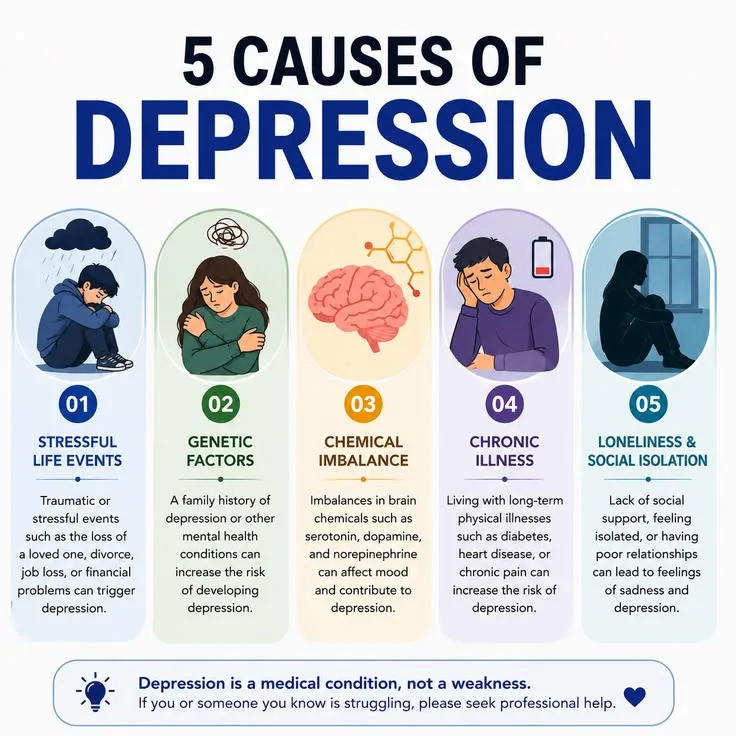
Depression is not a single disease. It is a syndrome - a collection of symptoms with multiple underlying causes that overlap and interact.
The most important advance in depression science in the past 30 years is the recognition that there is no single mechanism but multiple biological, psychological, and social pathways that converge on similar symptom presentations.
The Stress-Dysregulation Model
The most robustly supported biological model of depression centers on the HPA axis and stress physiology. The core finding: depression is strongly associated with a history of stress - particularly uncontrollable, chronic, or early-life stress - and with ongoing HPA axis dysregulation.
Avshalom Caspi and colleagues documented the gene-environment interaction that explains why stress affects people differently: certain variants of the serotonin transporter gene (5-HTTLPR) do not cause depression directly - but they significantly moderate the impact of stressful life events on depression risk.[6]
People with the short allele are more vulnerable to depression in response to stress. This gene-environment interaction model replaced the simple "low serotonin" model in scientific understanding.
The early life stress component is particularly well-documented. Research by Bruce Perry, Bessel van der Kolk, and Martin Teicher on childhood adversity demonstrates that experiences of physical, emotional, or sexual abuse, parental neglect, and household instability produce permanent neurobiological changes:
- Epigenetic modification of the glucocorticoid receptor gene, reducing feedback inhibition of the HPA axis
- Elevated baseline cortisol throughout life
- Reduced hippocampal volume (cortisol is neurotoxic to the hippocampus over time)
- Altered amygdala reactivity (more sensitive to threat)
- Reduced prefrontal cortical thickness (impairing emotional regulation)
This is stress sensitization: the HPA axis is permanently recalibrated toward higher reactivity, so that later stressors - even relatively minor ones - can trigger depression in ways they would not in a person without early adversity history.
This provides a biological mechanism for why childhood trauma elevates lifetime depression risk even decades after the original events.
The Inflammation Hypothesis
A significant subtype of depression may be fundamentally an inflammatory condition of the brain.
The evidence has accumulated from multiple directions:
Inflammatory markers in depressed patients: Meta-analyses consistently find elevated IL-6, TNF-alpha, and C-reactive protein (CRP) in depressed patients compared to controls.[9]
The elevations are most pronounced in patients who are treatment-resistant - suggesting that inflammation may specifically characterize a subtype that does not respond well to standard antidepressants.
Experimental induction: When healthy subjects are given pro-inflammatory cytokines (interferon-alpha, administered for viral hepatitis or cancer treatment), a substantial proportion develop clinical depression. The depression resolves when cytokine treatment stops.
This is direct experimental evidence that inflammation can cause depression.
Risk factor overlap: Nearly every major risk factor for depression is also pro-inflammatory: chronic stress activates the HPA axis, which promotes inflammatory signaling; obesity produces persistent low-grade inflammation through adipose tissue cytokine secretion; sedentary lifestyle, poor sleep quality, gut dysbiosis, smoking, and social isolation all upregulate inflammatory pathways.
The convergence is too consistent to be coincidental.
Inflammatory treatment response: Several studies have found that anti-inflammatory medications - NSAIDs, TNF-alpha inhibitors, and other anti-cytokine biologics - have antidepressant effects in patients with high baseline inflammation.
The effect appears specific to the high-inflammation subgroup, suggesting not all depression is inflammatory but a meaningful proportion is.
The mechanism likely involves cytokines activating brain microglia, which release their own cytokines and reactive oxygen species; altering serotonin and dopamine synthesis (inflammation diverts tryptophan toward kynurenine rather than serotonin); and directly damaging the hippocampus and prefrontal cortex.
The Neuroplasticity Model
Ronald Duman and colleagues at Yale developed the neurotrophic hypothesis of depression: depression reflects impaired neuroplasticity - specifically reduced BDNF signaling, reduced hippocampal neurogenesis, and dendritic atrophy in the prefrontal cortex and hippocampus.[5]
The evidence is robust:
- BDNF levels are consistently reduced in depressed patients' blood and post-mortem brains
- Hippocampal volume is measurably reduced in depression (up to 8-10% in chronic depression) and normalizes with effective treatment
- Hippocampal neurogenesis, which requires BDNF, is suppressed by chronic cortisol elevation and restored by antidepressant treatment
- All effective antidepressant treatments - SSRIs, tricyclics, ECT, exercise - consistently increase BDNF
This model elegantly explains the therapeutic delay of antidepressants: weeks, not hours - consistent with the time required for neuroplastic changes (new synaptic connections, new neurons) rather than immediate neurotransmitter changes.
It also explains why ketamine works within hours: ketamine rapidly stimulates synaptic BDNF release through a different mechanism.
The neuroplasticity model reframes what depression is: not simply a mood disorder but a condition of impaired brain plasticity in which the circuits that regulate mood, reward, and stress response are both structurally and functionally compromised.
Social and Psychological Causes
The biological models above operate within a social context that profoundly shapes who becomes depressed and when.
George Brown and Tirril Harris's landmark 1978 work on the social origins of depression found that working-class London women with childhood losses, current caring responsibilities, lack of social support, and absence of a confiding relationship were dramatically more likely to develop depression in response to life events.[10]
The vulnerability was not purely biological - it was social and relational.
The social determinants of depression are well-established:
- Social isolation: Loneliness is one of the strongest predictors of depression, with effect sizes comparable to smoking for mortality risk
- Unemployment and financial insecurity: Job loss and persistent financial stress produce depression through both psychological (loss of identity, control, routine) and biological (HPA axis activation) pathways
- Relationship conflict: Marital discord and conflict predict depression onset; supportive relationships protect against it
- Meaningful work: Absence of work perceived as meaningful and purposeful is consistently associated with depressive symptoms, beyond the financial dimension
Johann Hari's synthesis emphasizes that depression in many cases is a rational response to circumstances - disconnection from meaningful work, from secure relationships, from a sense of control over one's life, from a stable community.
The biological changes are real, but they are often the downstream physiological consequences of genuinely difficult circumstances. Addressing social determinants is not an alternative to biological treatment - it is part of treatment.
Antidepressants: A More Accurate Picture
The evidence for antidepressant effectiveness is more nuanced than either "they work perfectly" or "they don't work."
Irving Kirsch's meta-analysis of FDA trial data (2008, PLoS Medicine) found that for mild-to-moderate depression, the difference between antidepressants and placebo was below the threshold of clinical significance defined by NICE.[7]
For severe depression, the drug-placebo difference was clinically meaningful. This finding was controversial but has been substantially replicated.
The Cipriani et al. 2018 network meta-analysis in The Lancet - covering 522 trials and 116,000 patients - found all 21 studied antidepressants more effective than placebo, with response rates approximately 50-60% for drug versus 30-40% for placebo.[2] The drug advantage was larger in more severe presentations.
The therapeutic delay remains the most important piece of evidence against the simple serotonin model. Ketamine and esketamine - which work through glutamate NMDA receptor blockade - produce antidepressant effects within hours in treatment-resistant patients.
This rapid onset suggests glutamatergic and neuroplastic mechanisms are more central to depression than serotonergic mechanisms - and ketamine's rapid BDNF-releasing effect is now thought to be its primary antidepressant mechanism.
Psilocybin, being studied intensively for treatment-resistant depression, appears to produce antidepressant effects through increased neuroplasticity (the "REBUS" model) and psychological experiences that reorganize dysfunctional thought patterns - offering yet another non-serotonin mechanism.
Early trials (Carhart-Harris et al. 2021) found psilocybin-assisted therapy comparable to or exceeding escitalopram for depression severity scores.[8]
Why Exercise May Be the Most Underutilized Treatment
The evidence for exercise as a depression treatment is now extensive and compelling.
A 2023 umbrella meta-analysis in the British Journal of Sports Medicine by Singh and colleagues - covering 97 systematic reviews, over 1,039 trials, and 128,119 participants - concluded that exercise was more effective than medication or counseling alone for reducing depression.[3]
Walking, jogging, yoga, and strength training all produced large effect sizes.
Blumenthal's SMILE trial (1999) found that 30 minutes of aerobic exercise three times weekly was as effective as sertraline at 16 weeks - and at 10-month follow-up, the exercise group had significantly lower relapse rates than the medication group.[4]
The mechanisms are now well-characterized:
- Exercise acutely increases BDNF (reversing the key neuroplasticity deficit in depression)
- Regular exercise normalizes HPA axis hyperreactivity
- Exercise promotes hippocampal neurogenesis
- Exercise reduces inflammatory markers (IL-6, TNF-alpha, CRP)
- Exercise improves sleep quality (which independently improves depression)
- Exercise produces acute mood elevation through endocannabinoid and endorphin release
- Exercise provides behavioral activation - engagement with the world - which itself breaks the withdrawal cycle of depression
This is not to suggest exercise should replace antidepressants for everyone. Combination approaches may be optimal, and severe depression may require faster-acting pharmaceutical intervention.
But the evidence that exercise is a genuine, clinically meaningful depression treatment - not just a lifestyle suggestion or adjunct - is now unambiguous. The prescription that emerges: 30-45 minutes of moderate aerobic exercise at least 3-4 times weekly.
What This Means for Treatment
Understanding the multifactorial nature of depression has direct clinical implications:
Medication alone is rarely a complete answer. For most patients, medication can stabilize symptoms but does not address the cognitive patterns, behavioral avoidance, social circumstances, or neuroplasticity deficits that maintain depression long-term.
The combination of medication with therapy (particularly CBT) consistently outperforms either alone.
The high proportion of treatment-resistant cases (around 30%) may partly reflect biological heterogeneity that is not matched to treatment. Patients with an inflammatory subtype of depression may not respond well to SSRIs but might respond to anti-inflammatory approaches.
Precision psychiatry - matching treatment to biological subtype - is an active research priority.
Lifestyle factors are not optional extras. Exercise, sleep quality, social connection, and dietary patterns each have independent evidence bases for depression prevention and treatment. A treatment plan that addresses only the pharmacological dimension while ignoring these factors is leaving substantial clinical benefit on the table.
Early intervention changes trajectory. The evidence on stress sensitization and kindling suggests that each depressive episode lowers the threshold for subsequent episodes and produces measurable neurobiological changes.
Effective early treatment - when depression first emerges rather than after it becomes severe and chronic - may prevent the sensitization that makes subsequent episodes easier to trigger.
Sources & Further Reading
- Moncrieff, J., et al. (2022). The Serotonin Theory of Depression: A Systematic Umbrella Review of the Evidence. Molecular Psychiatry, 28, 3243-3256.
- Cipriani, A., et al. (2018). Comparative Efficacy and Acceptability of 21 Antidepressant Drugs for the Acute Treatment of Adults with Major Depressive Disorder. The Lancet, 391(10128), 1357-1366.
- Singh, B., et al. (2023). Effectiveness of Physical Activity Interventions for Improving Depression, Anxiety and Distress: An Overview of Systematic Reviews. British Journal of Sports Medicine, 57(18), 1203-1209.
- Blumenthal, J. A., et al. (1999). Effects of Exercise Training on Older Patients with Major Depression. Archives of Internal Medicine, 159(19), 2349-2356.
- Duman, R. S., & Aghajanian, G. K. (2012). Synaptic Dysfunction in Depression: Potential Therapeutic Targets. Science, 338(6103), 68-72.
- Caspi, A., et al. (2003). Influence of Life Stress on Depression: Moderation by a Polymorphism in the 5-HTT Gene. Science, 301(5631), 386-389.
- Kirsch, I., et al. (2008). Initial Severity and Antidepressant Benefits: A Meta-Analysis of Data Submitted to the Food and Drug Administration. PLoS Medicine, 5(2), e45.
- Carhart-Harris, R., et al. (2021). Trial of Psilocybin versus Escitalopram for Depression. New England Journal of Medicine, 384, 1402-1411.
- Raison, C. L., Capuron, L., & Miller, A. H. (2006). Cytokines Sing the Blues: Inflammation and the Pathogenesis of Depression. Trends in Immunology, 27(1), 24-31.
- Brown, G. W., & Harris, T. O. (1978). Social Origins of Depression: A Study of Psychiatric Disorder in Women. Tavistock.
Health note: This article is general educational information about how a topic works, not medical, psychological, or mental-health advice, diagnosis, or treatment. Everyone's situation is different, and research findings describe groups, not individuals.
If you are struggling or have concerns about your health, please talk to a qualified professional such as a doctor or licensed therapist.
If you are in crisis or thinking about harming yourself, contact your local emergency services or a crisis line right away, in the US you can call or text 988 (Suicide & Crisis Lifeline); elsewhere, find local lines at findahelpline.com.