
The real danger is false consensus: people suppress their doubts because they mistake silence for agreement, then a group commits to an outcome nobody wants. The abilene paradox explains why shared objections can emerge only after resources are committed, and why dissent must be surfaced before an apparently unanimous decision moves ahead.
The Abilene Paradox is a phenomenon in group dynamics where a group collectively decides on a course of action that no individual member actually wants, because each person mistakenly believes the others are in favor. Coined by management professor Jerry B.
Harvey in his 1974 paper "The Abilene Paradox: The Management of Agreement," it describes one of the most counterintuitive failures in human decision-making: organizations and groups can be destroyed not by conflict, but by a peculiar collapse of communication in which everyone is privately right and no one says so.
The paradox operates through pluralistic ignorance - each person's private doubt is suppressed because they assume their skepticism is unique, when in fact it is universal.
Understanding the Abilene Paradox is essential for anyone who works in teams, serves on committees, or makes decisions in groups.
It explains a wide range of organizational failures, from doomed projects that no one believed in to strategic pivots that everyone privately opposed, and it offers a lens for recognizing when apparent consensus is actually collective self-deception.
The Original Story: A Trip Nobody Wanted
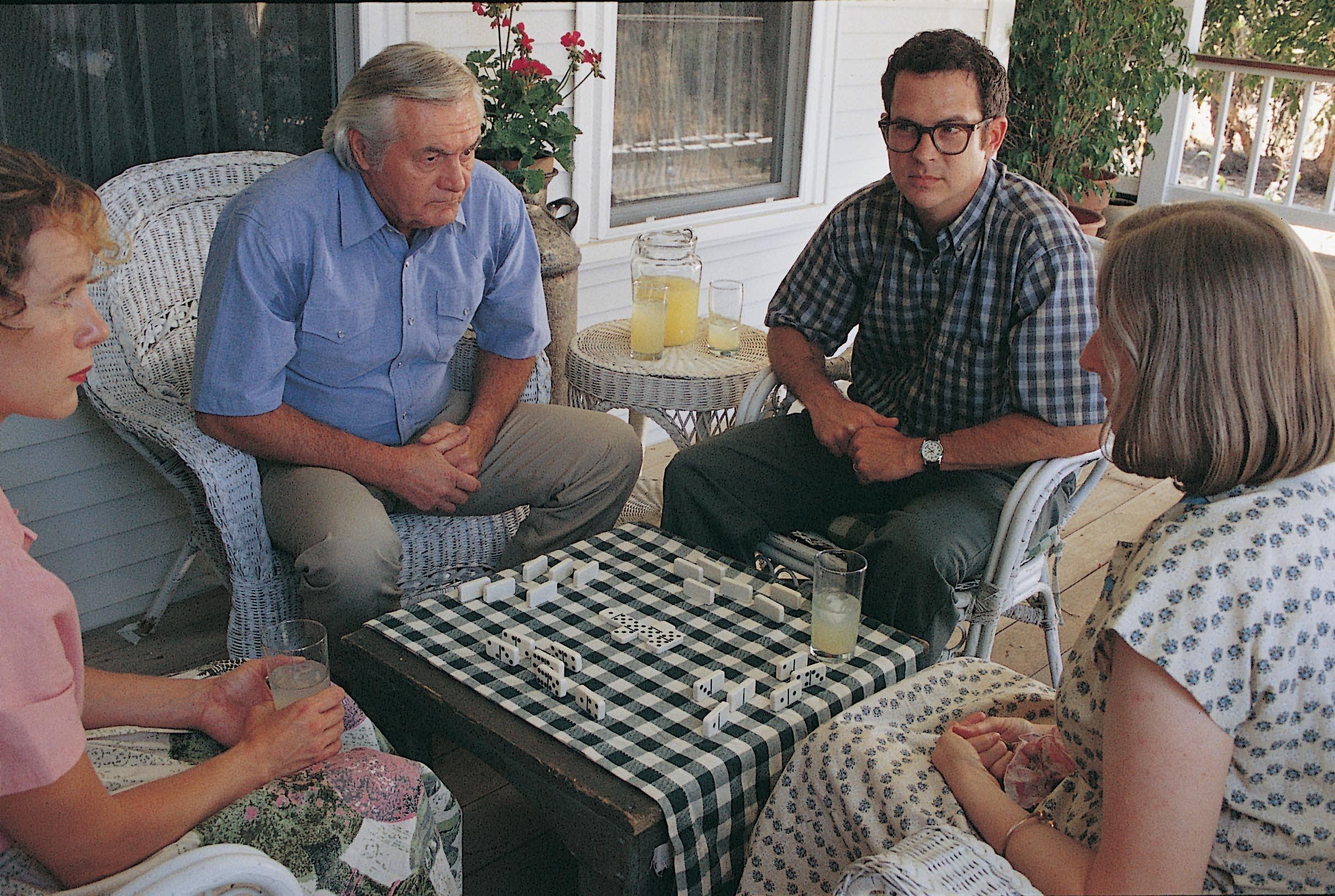
On a hot July afternoon in Coleman, Texas, Jerry Harvey's family was sitting on the porch playing dominoes. The temperature was 104 degrees Fahrenheit. The fan was running. Cold lemonade sat on the table. Everyone was reasonably comfortable.
Then Harvey's father-in-law made an offhand suggestion: "Let's get in the car and go to Abilene and have dinner at the cafeteria."
Harvey's wife said, "Sounds like a great idea." Harvey himself thought it was a terrible idea - 53 miles in a car with no air conditioning, in suffocating heat, for a meal at a mediocre cafeteria - but he said nothing. He reasoned that if his wife and her parents wanted to go, he should be agreeable.
So he said, "Sounds good to me. I just hope your mother wants to go." His mother-in-law replied, "Of course I want to go. I haven't been to Abilene in a long time."
So they went.
The trip was exactly as miserable as Harvey had anticipated. The car was stifling. The food was forgettable. Dust coated everything. Four hours and 106 miles later, back in Coleman, exhausted and irritated, someone finally said something honest: they had not really wanted to go.
Then another person agreed. Then another. It turned out that not a single person in the car had wanted to make the trip. Harvey's father-in-law had only suggested it because he thought the others were bored. His wife had agreed because she assumed the others wanted to go.
Harvey went along because he did not want to be the dissenter. His mother-in-law went because she did not want to be left out.
Each person's decision to go along was based on a false assumption about what the others actually wanted. The group had collectively done something that contradicted the genuine preference of every individual member.
Harvey, a professor of management science at George Washington University, recognized in this family anecdote a pattern he had seen repeatedly in organizations. He formalized it in his 1974 paper, published in Organizational Dynamics, and it became one of the most cited concepts in organizational behavior.
"Organizations frequently take actions in contradiction to the data they have for dealing with problems and, as a result, compound their problems rather than solve them." - Jerry B. Harvey, "The Abilene Paradox," 1974
The Psychology Behind It: Pluralistic Ignorance
The psychological engine of the Abilene Paradox is a phenomenon social psychologists call pluralistic ignorance: a state in which individuals in a group each privately hold a belief, attitude, or preference but publicly behave differently, because each assumes their private view is unusual or idiosyncratic.
The term was developed by sociologists Floyd Allport and Daniel Katz in the 1930s, but the phenomenon itself is ancient. It operates whenever people use other people's public behavior as evidence of their private beliefs - and when public behavior systematically misrepresents those beliefs.
Classic Demonstrations
The research literature contains numerous demonstrations of pluralistic ignorance:
The lecture hall effect: Dale Miller and Cathy McFarland (1987) conducted experiments showing that students in a lecture who privately found the material confusing typically assumed their classmates understood it perfectly - because no one raised their hand.
When surveyed individually, most students reported confusion. The silence was not evidence of understanding. It was evidence that everyone was equally afraid of looking foolish.
Alcohol norms on college campuses: Research by Deborah Prentice and Dale Miller (1993) at Princeton University found that students systematically overestimated how comfortable their peers were with heavy drinking culture. Students who privately felt uncomfortable with the drinking norms assumed they were in the minority.
In fact, the discomfort was widespread. The perceived norm was an illusion sustained by everyone's compliance with it.
Bystander inaction: The famous bystander effect, studied extensively by Bibb Latane and John Darley following the 1964 murder of Kitty Genovese, involves a form of pluralistic ignorance.
Witnesses to an emergency who see other witnesses not acting interpret the inaction as evidence that the situation is not serious - even though each witness is privately alarmed but suppressing their alarm because the others appear calm.
How It Works in Organizations
In the workplace, pluralistic ignorance typically manifests like this: a strategy is proposed that multiple team members privately doubt. Each member, seeing the others say nothing, concludes that the silence reflects genuine confidence. So each says nothing. The strategy is approved unanimously.
Later, in hallway conversations, it emerges that nearly everyone had the same concern. The project proceeds. Resources are committed. And the concerns that might have saved the organization time and money were never voiced in the meeting where they could have made a difference.
The mechanism is self-reinforcing. Each round of unexpressed doubt strengthens the illusion of consensus, making it harder for anyone to speak up in the next meeting, and the next.
The Abilene Paradox vs. Groupthink: A Critical Distinction
The Abilene Paradox is frequently confused with groupthink, the concept developed by psychologist Irving Janis in his 1972 book Victims of Groupthink. Both involve groups making decisions worse than what informed individuals would choose alone.
But the underlying mechanism is fundamentally different, and confusing them leads to applying the wrong solutions.
How Groupthink Works
Groupthink occurs when a cohesive, high-status group develops strong internal pressure toward conformity. Members actively suppress dissent to maintain group harmony and shared identity. The group overestimates its own wisdom and moral correctness.
Alternative viewpoints are not seriously considered. Mindguards - self-appointed members who shield the group from contradictory information - may emerge.
Janis identified groupthink as the mechanism behind several catastrophic policy failures: the Bay of Pigs invasion (1961), the failure to anticipate the attack on Pearl Harbor (1941), and the escalation of the Vietnam War.
In each case, a tight-knit group of decision-makers reinforced each other's assumptions and actively excluded dissenting perspectives.
In groupthink, people conform to real social pressure. The consensus is genuine in the sense that the group has collectively convinced itself. Dissent is suppressed because it threatens group identity.
How the Abilene Paradox Works
In the Abilene Paradox, the perceived consensus is entirely illusory. No one is enthusiastic about the direction. No one is applying social pressure to conform.
Each person's silence is independently produced by the same incorrect inference: "everyone else seems to want this, so I should go along." The group is not cohesive and unified in its wrongness - it is disconnected and individually correct, collectively wrong only because no one has shared their private view.
| Feature | Groupthink (Janis, 1972) | Abilene Paradox (Harvey, 1974) |
|---|---|---|
| Nature of consensus | Real but biased - members have been persuaded | Entirely illusory - no member actually agrees |
| Group cohesion required? | High (tight-knit, high-status groups) | Not necessarily - can occur in loose groups |
| Source of conformity | Social pressure, desire to belong, active suppression of dissent | Misreading others' silence as agreement |
| Individual private beliefs | Members may have genuine (if flawed) enthusiasm | Every member privately opposes the direction |
| Role of authority | Leader often drives the consensus | Authority is not the primary driver; misperception is |
| Key intervention needed | Make dissent socially safe; appoint devil's advocates; invite outside perspectives | Surface actual private views before discussion solidifies consensus |
| Famous case studies | Bay of Pigs, Challenger disaster, Pearl Harbor | Failed corporate projects, unnecessary reorganizations, Harvey's Abilene trip |
The practical distinction matters enormously. Groupthink interventions - such as bringing in outside experts or encouraging debate - are designed to counteract real pressure. Abilene Paradox interventions must go further: they must create mechanisms that reveal private views before the illusion of consensus forms in the first place.
How the Abilene Paradox Manifests in Organizations
The Committee Approval Problem
Corporate committees are breeding grounds for the Abilene Paradox. A project proposal arrives for review. The most senior person in the room - or the person who prepared the proposal and is visibly invested in it - says they find it promising.
Others interpret this as a signal. Questions are asked, but critical objections are softened or withheld. The committee approves the project.
In the hallway afterward, two committee members who said nothing tell each other their actual concerns. But the decision has been made, resources have been allocated, and reversing course now would require someone to formally challenge a decision that appeared unanimous.
This is not hypothetical. Research on corporate decision-making by Roberto (2005), published as Why Great Leaders Don't Take Yes for an Answer, documented that post-mortems on failed projects consistently reveal widespread pre-decision concerns that were never voiced. The concerns existed.
The information existed. The decision-making process failed to surface them.
Escalation of Commitment
The Abilene Paradox compounds over time in a way that is particularly dangerous. Once a group has collectively approved a direction, raising concerns later feels not just uncomfortable but disloyal - a repudiation of the group's prior judgment.
Each subsequent check-in produces the same silent acquiescence, now reinforced by the accumulated history of previous "agreement."
The group can travel deeper and deeper into Abilene with each passing month. Each step makes it harder for anyone to turn around, because turning around means acknowledging that every previous step was a mistake that everyone saw but no one mentioned.
Barry Staw's research on escalation of commitment (1976) documents this dynamic extensively. His studies showed that groups and individuals invest additional resources in failing courses of action precisely because the prior investment makes abandonment psychologically costly.
When combined with the Abilene Paradox - where no one endorsed the original commitment in the first place - the result is an organization pouring resources into a direction that nobody believes in and nobody is willing to question.
Performance Reviews and Calibration Sessions
The Abilene Paradox quietly distorts evaluation processes. When employee performance ratings are discussed in calibration sessions, early speakers disproportionately shape the outcome.
A participant who privately holds a different view of an employee's performance often defers to the emerging group assessment, particularly when the initial rating came from a more senior voice.
The final evaluation may reflect no individual's honest judgment but rather a cascade of mutual deference.
Research on social influence in performance ratings by Murphy and Cleveland (1995) found that calibration discussions often produce convergence toward a mean that does not represent any individual rater's true assessment - a form of manufactured consensus that mirrors the Abilene dynamic.
Product Development and Feature Creep
In technology companies, the Abilene Paradox frequently appears in product development. A feature is proposed by a senior leader or influential stakeholder. Engineers privately think it is technically questionable. Designers privately think it will confuse users.
The product manager privately thinks it does not align with the product strategy. But each sees the others appearing to go along, and each assumes they are the only skeptic.
The feature ships. It underperforms. In the retrospective, the team discovers that everyone had the same concern. This is not a failure of individual intelligence or courage. It is a structural failure of the process that was supposed to surface honest assessment.
The Role of Fear and Organizational Culture
Harvey was explicit that the Abilene Paradox is not a failure of courage in the abstract sense. It is a rational response to a perceived social environment. People do not speak up because they are afraid of specific, predictable consequences:
- Being seen as obstructive or not a team player: In organizations that value alignment and positivity, raising concerns can mark someone as "difficult." The social cost is real and persistent.
- Embarrassing the person who proposed the idea: In cultures where face-saving matters (which is most cultures), publicly challenging a colleague's proposal feels like a personal attack, even when it is analytically warranted.
- Being wrong: If everyone else seems confident, the dissenter bears the risk of looking foolish if the plan succeeds. The asymmetry is clear - there is no reward for being the person who expressed doubt about a successful initiative.
- Damaging a relationship: In small teams where ongoing collaboration is necessary, being the person who "killed" someone's project can have lasting interpersonal consequences.
- Being isolated as the sole dissenter: Research on social norms consistently shows that the psychological cost of being a lone dissenter is extremely high. Most people will adjust their public behavior to avoid that position.
These fears are not irrational. In many organizations, they are well-founded. People who regularly raise concerns are sometimes labeled as negative, resistant to change, or lacking team spirit. This history shapes what people believe it is safe to say in groups.
The Abilene Paradox flourishes in organizations where the perceived cost of being wrong about your private view exceeds the perceived cost of going along with a collective mistake.
"The inability to manage agreement is a major source of organization dysfunction." - Jerry B. Harvey
This is why addressing the Abilene Paradox is fundamentally a cultural and structural challenge, not merely a communication technique. A team can be taught every facilitation method in the world and still travel to Abilene regularly if the underlying cultural signals punish honesty and reward agreement.
Breaking the Pattern: Practical Interventions
Pre-Meeting Written Assessment
The most reliable way to surface private views is to collect them before the group convenes - before social signaling, authority gradients, and the cascade of mutual deference can take effect.
The implementation is simple: before a decision meeting, ask each participant to write down their honest assessment of the proposal - including concerns, reservations, and alternative recommendations - and submit it privately.
These written responses are then shared (anonymously or attributed, depending on the culture) at the start of the meeting.
Written responses collected in advance are far more likely to reflect genuine views than verbal responses given in sequence after a senior person has spoken.
Sunstein and Hastie (2015), in Wiser: Getting Beyond Groupthink to Make Groups Smarter, documented that this technique significantly improved decision quality in both experimental and organizational settings.
Anonymous Polling
Digital tools make real-time anonymous polling trivially easy. Before finalizing any significant decision, a facilitator can pose a simple question: "On a scale of 1-5, how confident are you that this is the right direction?" The results appear without attribution.
When a room full of people who appeared to be in unanimous agreement produces an anonymous poll showing average confidence of 2.3, the Abilene Paradox becomes visible. The illusion dissolves. The conversation that should have happened before the decision can finally happen.
The Pre-Mortem Technique
Gary Klein, a psychologist specializing in naturalistic decision-making, developed the pre-mortem technique as a structured method for inviting honest concern without the social costs of direct dissent.
Before approving a plan, the group is asked to imagine it is one year in the future and the plan has failed completely. Each person then writes down the most likely reasons for the failure.
The pre-mortem works because it reframes dissent as analysis. Instead of saying "I think this plan is flawed" (which feels critical and socially risky), participants are saying "Here are the risks I can foresee" (which feels analytical and constructive).
Klein documented in Sources of Power (1998) that pre-mortems increased the ability of groups to identify potential problems by 30% compared to standard planning processes.
The technique is particularly effective against the Abilene Paradox because it gives everyone explicit permission to express doubt. When the exercise asks you to imagine failure, voicing concerns is not dissent - it is participation.
The Designated Devil's Advocate
Formally assigning one person the role of critical challenger serves a specific function: it removes the social cost of being the first to object. When someone is playing a defined role, their challenges are understood as part of the process rather than expressions of personal opposition.
However, this approach has a significant limitation. The designated dissenter's objections can be dismissed as performative - "they're just playing their role." For the technique to work, the group must genuinely engage with the objections.
Nemeth, Connell, Rogers, and Brown (2001) found in experimental research that authentic dissent - where someone genuinely held a minority position - produced better group decisions than role-played dissent, because groups took authentic disagreement more seriously.
The devil's advocate technique works best as a supplement to, not a replacement for, genuine cultural openness to challenge.
Structured Turn-Taking
In meetings where decisions are being made, the order in which people speak matters enormously. When the most senior person speaks first, the Abilene Paradox becomes almost inevitable - everyone calibrates their public position to the authority's stated view.
A simple structural fix: reverse the hierarchy. Ask the most junior person to share their view first, then work up the seniority ladder.
This is the approach reportedly used by Amazon in some decision meetings, and by military organizations following studies on decision quality in hierarchical teams. When junior members have already committed to a position, senior members cannot inadvertently silence them.
The Abilene Paradox in Daily Life
Harvey's insight extends well beyond organizations. The paradox appears wherever people care more about preserving perceived group harmony than about expressing their genuine preferences.
Couples and families: Partners who end up at restaurants neither of them wanted, families who repeat holiday traditions everyone secretly dreads, groups of friends who maintain social arrangements that no one particularly enjoys.
"Where do you want to eat?" "I don't care, wherever you want." "Me neither, wherever you want." The result: a restaurant neither person chose because each deferred to a preference that did not exist.
Social plans: A group of friends agrees to an expensive vacation, a late-night event, or a social gathering that each person would privately prefer to skip. Each goes along because they assume the others are enthusiastic.
Afterward, someone says "I only went because I thought you all wanted to" - and the collective realization follows.
Political and civic life: The Abilene Paradox offers a partial explanation for why social norms persist even when private opposition is widespread. Public compliance creates the appearance of consensus, which discourages the private dissent that would reveal the norm's actual fragility.
The Antidote at the Personal Scale
At the individual level, the antidote to the Abilene Paradox is deceptively simple: say what you actually think, gently and honestly, early enough that it can change the outcome.
Research on pluralistic ignorance consistently shows that when one person voices the private doubt that others share, the illusion collapses almost immediately. Most people, when someone else goes first, will quickly express the same view.
The first honest voice breaks the pluralistic ignorance. That is all it usually takes to turn the car around. The difficulty, of course, is being the first voice - which requires either genuine courage or a social environment that makes honesty feel safe.
Measuring Vulnerability to the Abilene Paradox
Organizations can assess their susceptibility to the Abilene Paradox by asking several diagnostic questions:
| Diagnostic Question | High Vulnerability Signal | Low Vulnerability Signal |
|---|---|---|
| How often do post-mortems reveal pre-existing but unexpressed concerns? | Frequently - "we all knew this was a problem" | Rarely - concerns are surfaced during the decision process |
| Do meeting outcomes change depending on who speaks first? | Yes - the first senior voice determines the direction | No - outcomes are consistent regardless of speaking order |
| Is anonymous feedback significantly different from public feedback? | Yes - large gaps between anonymous and public views | No - people say publicly what they say privately |
| What happens to people who voice concerns about popular proposals? | They are labeled as "negative" or "not team players" | They are thanked and their concerns are genuinely considered |
| How quickly does the group reach apparent consensus on significant decisions? | Very quickly - often within minutes | Appropriate pace - time taken corresponds to decision significance |
Organizations that score high on vulnerability indicators should prioritize the structural interventions described above - not because their people lack courage, but because their systems are failing to surface the information their people already possess.
Key Takeaways
- The Abilene Paradox describes group action that no individual member actually wants, produced by each person's misreading of others' silence as agreement
- The underlying mechanism is pluralistic ignorance: each person's private view differs from their public behavior, and they assume their private view is unusual when it is actually shared by all
- It is distinct from groupthink: groupthink involves real social pressure toward conformity; the Abilene Paradox involves an entirely illusory consensus that no one actually holds
- Organizations are particularly susceptible because hierarchy, relationship preservation, and fear of being labeled "difficult" all discourage honest dissent
- Practical interventions include pre-meeting written assessments, anonymous polling, pre-mortems, devil's advocates, and reverse-hierarchy speaking orders
- The long-term solution is cultural: organizations must make honest challenge safe and expected - not merely technically permitted but actively rewarded
- At the personal level, being the first honest voice is usually sufficient to dissolve the illusion, because pluralistic ignorance collapses as soon as one person reveals the private doubt that everyone shares
Sources & Further Reading
- Harvey, J. B. "The Abilene Paradox: The Management of Agreement." Organizational Dynamics, 3(1), 63-80, 1974.
- Harvey, J. B. The Abilene Paradox and Other Meditations on Management. Jossey-Bass, 1988.
- Janis, I. L. Victims of Groupthink: A Psychological Study of Foreign-Policy Decisions and Fiascoes. Houghton Mifflin, 1972.
- Allport, F. H. Social Psychology. Houghton Mifflin, 1924.
- Miller, D. T. & McFarland, C. "Pluralistic Ignorance: When Similarity is Interpreted as Dissimilarity." Journal of Personality and Social Psychology, 53(2), 298-305, 1987.
- Prentice, D. A. & Miller, D. T. "Pluralistic Ignorance and Alcohol Use on Campus." Journal of Personality and Social Psychology, 64(2), 243-256, 1993.
- Klein, G. Sources of Power: How People Make Decisions. MIT Press, 1998.
- Sunstein, C. R. & Hastie, R. Wiser: Getting Beyond Groupthink to Make Groups Smarter. Harvard Business Review Press, 2015.
- Roberto, M. A. Why Great Leaders Don't Take Yes for an Answer. Wharton School Publishing, 2005.
- Staw, B. M. "Knee-Deep in the Big Muddy: A Study of Escalating Commitment to a Chosen Course of Action." Organizational Behavior and Human Performance, 16(1), 27-44, 1976.
- Latane, B. & Darley, J. M. The Unresponsive Bystander: Why Doesn't He Help? Appleton-Century-Crofts, 1970.
- Nemeth, C., Connell, J., Rogers, J., & Brown, K. "Improving Decision Making by Means of Dissent." Journal of Applied Social Psychology, 31(1), 48-58, 2001.
- Murphy, K. R. & Cleveland, J. N. Understanding Performance Appraisal: Social, Organizational, and Goal-Based Perspectives. Sage, 1995.