Social norms are shared expectations whose force often becomes visible only when someone breaks them. Understanding norm violations means recognizing that the same behavior can be acceptable or objectionable depending on context, and that folkways, moral norms, and taboos draw different responses. Violations may result from ignorance, disagreement, or deliberate challenge, with some becoming catalysts for social change.
In sociology classes across the United States, professors assign what is perhaps the discipline's most memorable homework: breach experiments.
Students are instructed to deliberately violate a social norm-stand facing the wrong direction in an elevator, eat with their hands at a fine restaurant, sit down uninvited at a stranger's table in a cafeteria, bargain over the price at a department store-and observe the reactions.
The results are remarkably consistent.
People become visibly uncomfortable. They stare, frown, move away, or confront the violator. Some laugh nervously. Some become angry. The discomfort is palpable, immediate, and disproportionate to the actual harm caused.
These experiments, inspired by sociologist Harold Garfinkel's pioneering work in the 1960s, demonstrate something fundamental about human social life: we are surrounded by unwritten rules that we follow automatically and enforce reflexively.
We do not experience these rules as rules-we experience them as "how things are done," "common sense," or "normal behavior." It is only when someone violates them that the rules become visible, and the visceral discomfort we feel reveals how deeply we depend on them.
"The way to do research is to attack the facts at the point of greatest astonishment."
Howard Becker
Norm violations are not merely academic curiosities. They are a central phenomenon of social life, encompassing everything from accidentally using the wrong fork at dinner to deliberately challenging racial segregation through civil disobedience.
Understanding norm violations-why they occur, how societies respond to them, what distinguishes minor faux pas from moral transgressions, and when violations serve as catalysts for social progress-is essential for navigating social life and understanding social change.
What Is a Norm Violation?
A norm violation is any behavior that deviates from the shared expectations of appropriate conduct within a particular social group or context.
Social norms are the unwritten rules that govern behavior-they specify what to wear, how to speak, when to make eye contact, how close to stand, what topics to discuss, how to eat, how to greet strangers, and thousands of other behavioral expectations that vary across cultures, communities, and situations.
Types of Norms and Their Violations
Sociologist William Graham Sumner distinguished three levels of social norms, each with different enforcement intensity:
Folkways are everyday customs and conventions. Violating them produces mild social discomfort but no moral outrage:
- Standing too close to someone in conversation
- Wearing inappropriate clothing for the occasion (shorts to a formal dinner)
- Talking loudly on a phone in a quiet space
- Cutting in line
- Not saying "bless you" when someone sneezes
Mores (pronounced MOR-ayz) are norms with moral significance. Violating them produces strong disapproval, moral judgment, and potentially significant social consequences:
- Lying to a friend or colleague about something important
- Cheating on a romantic partner
- Taking credit for someone else's work
- Failing to help someone in obvious danger
- Public intoxication at a professional event
Taboos are the strongest norms, often related to deeply held moral, religious, or cultural values. Violating them produces intense reactions including disgust, ostracism, and potentially legal consequences:
- Incest
- Cannibalism
- Desecration of sacred objects or spaces
- Child abuse or exploitation
- Certain forms of blasphemy in religious communities
| Norm Type | Severity | Typical Violation Response | Recovery Difficulty |
|---|---|---|---|
| Folkway | Low | Uncomfortable looks, mild correction, avoidance | Easy-quickly forgotten |
| More | Medium | Moral judgment, reputation damage, relationship strain | Moderate-requires apology, time, behavioral change |
| Taboo | High | Disgust, ostracism, potential legal consequences | Very difficult-may be permanent |
Context Dependence
The same behavior can be a norm-compliant, a folkway violation, or a mores violation depending entirely on context:
- Nudity is normal in a locker room, a folkway violation in a grocery store, and potentially a legal offense in a school
- Shouting is normal at a sports event, a folkway violation in a library, and a mores violation in a courtroom
- Drinking alcohol is normal at a party, a folkway violation at a business breakfast, and a taboo violation in a mosque
- Physical contact between strangers is normal in a crowded subway, a folkway violation in a spacious lobby, and a mores violation if prolonged and unwanted
This context dependence means that norm violations are not properties of behaviors in isolation-they are relationships between behaviors and contexts. A behavior is not inherently a violation; it becomes a violation when performed in a context where it is not expected.
Why Do People Violate Norms?
People violate social norms for many different reasons, and understanding these reasons is essential for understanding both the violations themselves and the appropriate responses to them.
Ignorance
The most common reason for norm violations is simply not knowing the norm exists. Norms are largely unwritten and learned through socialization within a specific cultural context.
People who are new to a context-immigrants to a new country, employees at a new company, students at a new school, visitors to a new platform or community-frequently violate norms they have never been exposed to.
Ignorance-based violations are typically:
- Unintentional and non-hostile
- Concentrated among newcomers
- Addressable through education and gentle correction
- Socially forgivable when the ignorance is understandable
The experience of culture shock-the disorientation experienced when encountering an unfamiliar cultural environment-is largely composed of the accumulated stress of repeatedly violating norms one does not know exist and receiving social feedback (confusion, disapproval, correction) that one does not fully understand.
Disagreement
Some norm violations reflect principled disagreement with the norm itself. The violator knows the norm, understands it, and deliberately chooses to violate it because they believe the norm is wrong, unjust, or harmful:
- Civil rights activists who violated segregation norms by sitting at whites-only lunch counters
- Suffragettes who violated gender norms by speaking publicly and demanding the vote
- Whistleblowers who violate organizational norms of loyalty and secrecy to expose wrongdoing
- Artists who violate aesthetic norms to challenge conventions and expand the boundaries of creative expression
Disagreement-based violations are often the engine of social change. Every norm that has ever been revised-from norms about slavery to norms about women's education to norms about same-sex relationships-was revised because individuals deliberately violated the existing norm, endured the social consequences, and eventually persuaded enough others that the norm should change.
This gradual process of normative revision is what sociologists call norm drift.
"One has a moral responsibility to disobey unjust laws."
Martin Luther King Jr.
Cost-Benefit Calculation
Some norm violations result from a rational assessment that the benefits of violating the norm outweigh the costs:
- Driving above the speed limit when running late for an important meeting
- Taking a phone call during a meeting when the call is genuinely urgent
- Cutting in line at a store when you have only one item and the person ahead has a full cart (asking first is the norm-compliant version; cutting without asking is the violation)
- Plagiarizing an assignment when the deadline pressure feels overwhelming and the detection risk seems low
These violations are not principled disagreements with the norm. The violator generally accepts that the norm is valid but judges that their particular circumstances justify an exception. The social response to cost-benefit violations depends largely on whether others consider the claimed exception legitimate.
Emotional State
Strong emotions can override the self-monitoring processes that normally prevent norm violations:
- Anger can produce hostile speech that violates norms of civility
- Grief can produce public emotional displays that violate norms of composure
- Fear can produce flight responses that violate norms of orderly behavior
- Excitement can produce volume and exuberance that violate norms of restraint
Emotion-driven violations are typically forgiven more readily than calculated violations because they are perceived as involuntary-the person could not help themselves rather than chose not to comply.
Group Pressure
Conformity to group expectations can lead individuals to violate broader social norms:
- Hazing rituals in fraternities, sports teams, and military units involve norm violations that individuals would not perform independently
- Peer pressure among adolescents drives norm violations (underage drinking, vandalism, risky behavior) that reflect conformity to peer norms at the expense of broader social norms
- Workplace cultures that normalize overwork, hostility, or unethical behavior create group pressure to violate norms of work-life balance, civility, or integrity
In these cases, the individual is simultaneously violating one set of norms (broader social expectations) and complying with another (group-specific expectations). The conflict between these normative systems creates the violation.
Deliberate Challenge (Norm Entrepreneurship)
Some individuals violate norms strategically, with the explicit goal of changing them:
- A CEO who wears casual clothing to board meetings to signal that the company's dress code norms should relax
- A public figure who openly discusses their mental health struggles to normalize mental health disclosure
- An activist who kneels during a national anthem to challenge norms of patriotic performance
- A community member who consistently uses inclusive language to shift community norms around inclusion
These norm entrepreneurs accept the social costs of violation (disapproval, criticism, potential ostracism) as the price of attempting to shift the norms themselves. Their success depends on whether others eventually adopt the new behavior, converting a violation into a new norm.
What Happens When Norms Are Violated?
"In every community there is work to be done. In every nation, there are wounds to heal. In every heart, there is the power to do it."
Marianne Williamson
The social response to norm violations follows predictable patterns that have been studied extensively by sociologists, psychologists, and anthropologists.
Immediate Reactions
The initial response to a norm violation is typically automatic and emotional rather than deliberate and rational:
- Surprise: The violation disrupts expectations, producing a startle response
- Discomfort: The violation creates an unpleasant sense of social disorder
- Moral emotion: Depending on the severity, the violation triggers disgust (for taboo violations), anger (for mores violations), or mild annoyance (for folkway violations)
- Evaluation: The observer quickly assesses whether the violation was intentional, whether it was justified, and how to respond
Social Sanctions
Following the initial reaction, social sanctions are applied. The severity of sanctions is determined by the severity of the violation, the relationship between violator and sanctioner, and the cultural context:
Informal sanctions (most common):
- Disapproving looks, facial expressions, and body language
- Cold or distant treatment
- Gossip-sharing information about the violation with others, damaging the violator's reputation
- Social avoidance-reducing contact with the violator
- Direct verbal correction ("You can't do that here")
- Exclusion from social groups or activities
- Public shaming
Formal sanctions (for severe violations or violations that also break laws):
- Workplace discipline (warnings, suspension, termination)
- Legal penalties (fines, arrest, prosecution)
- Institutional sanctions (suspension, expulsion, excommunication)
- Professional consequences (license revocation, professional censure)
The Sanctioning Dilemma
Enforcing norms through sanctions creates a dilemma for potential sanctioners: sanctioning is costly. Confronting a norm violator requires effort, involves social risk (the violator may react hostilely), and disrupts the sanctioner's own activities.
Most people most of the time choose not to sanction minor violations because the personal cost of sanctioning exceeds the personal benefit.
This creates a free-rider problem: everyone benefits from norm enforcement, but no individual wants to bear the cost of enforcing. The norms are maintained primarily through:
- Internalization: Most people follow norms not because they fear sanctions but because they have internalized the norms as part of their own values and self-concept
- Distributed enforcement: When many people contribute small sanctions (a disapproving look from one person, a cold shoulder from another, a critical comment from a third), the aggregate cost to the violator is significant even though the individual cost to each sanctioner is minimal
- Selective enforcement by motivated actors: Some individuals are more willing to sanction than others, either because they feel strongly about the norm, because they have authority (parents, teachers, managers, moderators), or because they derive social status from enforcement
Are All Norm Violations Equally Serious?
Norm violations range from trivial to devastating, and the factors that determine severity include:
Harm Caused
The most important determinant of violation severity is the actual harm produced:
- A violation that causes no tangible harm (wearing white after Labor Day) is trivial regardless of how strongly some people feel about it
- A violation that causes significant harm to identifiable victims (fraud, assault, betrayal of trust) is serious regardless of how normalized the behavior might be in some contexts
Intentionality
Intentional violations are judged more harshly than unintentional ones:
- A tourist who unknowingly violates a cultural norm receives sympathy and gentle correction
- A local who deliberately violates the same norm receives judgment and sanction
- The attribution of intent transforms the meaning of the same behavior from "mistake" to "disrespect"
Social Position of the Violator
The same violation produces different consequences depending on the social position of the violator:
- People with high social status can often violate norms with less consequence because their status provides a buffer of social goodwill
- People with low social status face harsher sanctions for the same violations because they lack the social capital to absorb the cost
- Newcomers violating norms out of ignorance are treated differently from established members who "should know better"
Frequency and Pattern
Isolated violations are treated differently from patterns of violation:
- A single instance of rudeness is easily forgiven
- A consistent pattern of rudeness is interpreted as a character trait and produces more severe social consequences
- A single violation followed by sincere apology and behavioral change is recoverable
- Repeated violations after correction suggest either inability or unwillingness to comply, both of which produce escalating sanctions
Can Norm Violations Be Positive?
"The reasonable man adapts himself to the world; the unreasonable one persists in trying to adapt the world to himself. Therefore all progress depends on the unreasonable man."
George Bernard Shaw
One of the most important insights in the study of social norms is that norm violations are not inherently negative. Some of the most important social changes in human history were initiated by norm violations.
Civil Disobedience
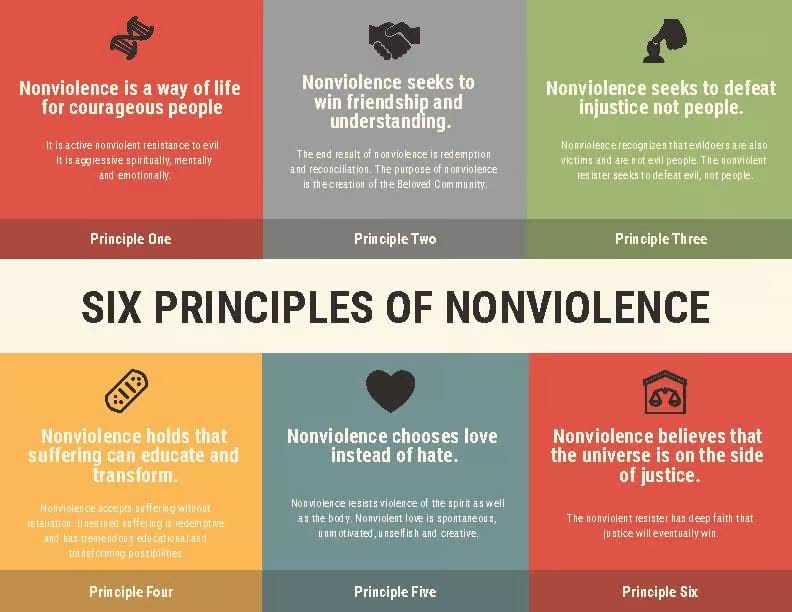
The tradition of civil disobedience-deliberately, publicly, and non-violently violating a norm or law that one considers unjust-is one of the most powerful tools for social change:
- Rosa Parks's refusal to give up her bus seat violated the racial segregation norms of 1955 Montgomery, Alabama
- Gandhi's Salt March violated British colonial laws restricting Indian salt production
- Suffragettes' public demonstrations violated gender norms restricting women's participation in political life
- Lunch counter sit-ins violated segregation norms by occupying spaces designated for whites only
Civil disobedience works as a tool for norm change precisely because it makes the norm visible and forces the community to consciously evaluate it. Norms that operate automatically and unquestioned can persist indefinitely.
Norms that are visibly, publicly, and repeatedly challenged must be consciously defended-and norms that cannot survive conscious evaluation eventually fall.
Innovation and Creativity
Every act of genuine creativity and innovation involves norm violation-doing something differently from how it has been done before:
- Artistic innovation violates aesthetic norms (Impressionism violated the academic painting norms of the 19th century; punk violated the musical norms of the 1970s; hip-hop violated the norms of what counted as "music")
- Scientific innovation violates paradigmatic norms (germ theory violated the norm of miasma theory; plate tectonics violated the norm of fixed continents; quantum mechanics violated the norms of classical physics)
- Business innovation violates industry norms (Amazon violated the norm of physical retail; Uber violated the norm of licensed taxi monopolies; Wikipedia violated the norm of expert-authored encyclopedias)
The relationship between norm violation and innovation reveals a deep tension: the social stability that norms provide comes at the cost of resistance to change, and the creative destruction that innovation produces comes at the cost of social disruption.
Whistleblowing
Whistleblowers violate organizational norms of loyalty, confidentiality, and chain-of-command to expose wrongdoing that the organization is concealing. This norm violation serves the public interest by making information available that would otherwise remain hidden:
- Daniel Ellsberg violated government secrecy norms to release the Pentagon Papers
- Sherron Watkins violated Enron's corporate loyalty norms to report accounting fraud
- Edward Snowden violated government classification norms to expose mass surveillance programs
- Frances Haugen violated Facebook's confidentiality norms to reveal internal research on the platform's harmful effects
Whistleblowing demonstrates the conflict that can arise between different normative systems: the organizational norm of loyalty conflicts with the broader social norm of honesty and accountability. The whistleblower's violation of one norm is simultaneously compliance with another.
Can You Recover from Norm Violations?
Recovery from norm violations is possible in most cases but depends on several factors.
The Recovery Process
- Acknowledgment: Recognizing and admitting the violation rather than denying or minimizing it
- Apology: Expressing genuine remorse that demonstrates understanding of why the behavior was wrong
- Explanation: Providing context (not excuse) for the violation what circumstances led to it
- Restitution: Taking concrete action to repair any harm caused
- Behavioral change: Demonstrating through subsequent behavior that the violation was anomalous rather than characteristic
Factors Affecting Recovery
- Severity of violation: Minor folkway violations are quickly forgotten. Taboo violations may be unrecoverable.
- Sincerity of apology: Apologies perceived as genuine facilitate recovery. Apologies perceived as strategic or insincere can make things worse.
- Consistency of new behavior: Recovery requires sustained behavioral change, not just a single apology. A pattern of improved behavior gradually rebuilds trust.
- Community norms around forgiveness: Some communities and cultures have strong forgiveness norms that facilitate recovery. Others have strong punishment norms that impede it.
- Time: The passage of time reduces the salience of violations, allowing memories to fade and identities to evolve beyond the violation.
"Shame is a soul-eating emotion."
Carl Jung
The Special Case of Public Violations
In the digital age, norm violations that become publicly visible (through social media, news coverage, or viral sharing) are dramatically harder to recover from because:
- The audience is vastly larger than the audience for private violations
- The violation is permanently documented and searchable
- The response includes contributions from strangers with no relationship to the violator and no investment in their recovery
- The scale of social sanction (thousands of hostile messages, media coverage, employer attention) far exceeds what any single violation would normally provoke
- The internet's collective memory prevents the temporal fading that would normally facilitate recovery
The disproportionate consequences of publicly visible norm violations what journalist Jon Ronson has called "public shaming"-represent one of the most significant challenges of digital social life, where the punishment for a single violation can be permanently life-altering in ways that bear no reasonable relationship to the severity of the original transgression.
Understanding norm violations is understanding the boundary conditions of social life itself where the invisible lines are drawn, what happens when they are crossed, and how the act of crossing them can preserve social order or catalyze social transformation.
Research on Norm Violations: What the Evidence Shows
Systematic empirical research on norm violations has moved well beyond Garfinkel's foundational breach experiments to quantify how violations are detected, attributed, and sanctioned - and to identify which individual and contextual factors determine severity of response.
Ernst Fehr and Urs Fischbacher at the University of Zurich conducted a landmark experimental study of third-party punishment published in Evolution and Human Behavior in 2004.
Using economic games in which participants could spend their own resources to punish a third party who had violated a fairness norm (even when they were personally unaffected by the violation), Fehr and Fischbacher found that 55-65% of participants chose to punish violations even at personal cost.
The punishment was stronger when violations were more severe and weaker when the violator appeared to have acted under duress - demonstrating that humans apply nuanced intentionality assessments to norm violations rather than responding mechanically to rule-breaking.
Crucially, their follow-up studies found that the mere existence of third-party punishment options substantially reduced norm violation rates, suggesting that the credible threat of social sanction is as important as its actual application.
Harold Garfinkel's original breach experiments at UCLA in the 1960s, documented in Studies in Ethnomethodology (1967), established the foundational methodology for studying norm violations experimentally.
Garfinkel instructed students to behave as boarders in their own homes - formally polite, requesting permission before using household items - and to document family reactions.
Without exception, family members responded with bewilderment, concern, and anger, demanding explanations for behavior that technically violated no explicit rule.
Garfinkel's insight was that violations of implicit background expectations produce stronger reactions than violations of explicit rules, because the implicit expectations form the taken-for-granted structure of everyday life.
This finding has been replicated in digital contexts by researchers including Byron Reeves and Clifford Nass, who found in their "media equation" research that people apply real-world social norms to computer interfaces even when they know intellectually that the computer is not a person.
Jon Ronson's investigation of public shaming, documented in So You've Been Publicly Shamed (2015), combined journalistic reporting with analysis of approximately 50 cases of individuals who experienced large-scale public responses to norm violations.
Ronson found a consistent pattern: the severity of the response was determined less by the severity of the original violation than by how many people were primed to respond and how easily shareable the violation was.
His interviews with targets documented long-term psychological consequences including PTSD symptoms, career destruction, and social withdrawal - consequences that persisted years after the original incident and that were disproportionate to violations that ranged from genuine moral failures to simple misunderstandings of context.
Case Studies: Norm Violations and Their Consequences
The most revealing cases for understanding how norm violations actually function in social systems are those where the response to the violation produced more significant effects than the violation itself.
The Karen Klein Bullying Incident (2012). Karen Klein, a 68-year-old school bus monitor in Greece, New York, was subjected to sustained verbal abuse by middle school students, which was recorded and posted on YouTube. The video went viral within 24 hours.
Within 96 hours, a crowdfunding campaign launched by Max Sidorov of Toronto had raised over $700,000 - far exceeding its initial $5,000 goal - as a spontaneous collective response to a visible norm violation.
Simultaneously, the students responsible received thousands of threatening messages from around the world.
Researchers studying the case at Cornell's Internet Lab documented it as a textbook example of "moral outrage cascade" - a phenomenon where a clearly legible norm violation, captured in irrefutable video form, triggers rapid and massive collective enforcement response far exceeding local community capacity.
The case demonstrated both the potential for digital communities to produce genuinely generous norm enforcement (rewarding the victim) and the tendency toward disproportionate punishment of violators.
The Justine Sacco Tweet (2013). Public relations executive Justine Sacco posted a poorly worded tweet about AIDS in Africa to her 170 Twitter followers before boarding an 11-hour flight, arriving to find herself the worldwide trending topic and her life fundamentally altered.
Jon Ronson's account of his subsequent conversations with Sacco, and with the man who first amplified her tweet, Sam Biddle, documented the chain of decisions through which a minor norm violation (an unsuccessful attempt at ironic humor) became a major public event.
Biddle later publicly acknowledged that he regretted amplifying the tweet and that his amplification was partly motivated by engagement incentives on the platform.
The case has become the canonical example of proportionality failure in digital norm enforcement, cited in academic literature on online shaming by scholars including David Nussbaum, Danielle Citron, and Whitney Phillips.
The Pepsi Harrier Jet Lawsuit (1995-1999). Pepsi ran a television advertisement depicting a teenager arriving at school in a Harrier jet, with a caption offering the jet for "7,000,000 Pepsi Points." John Leonard, then 21, obtained 15 points from Pepsi cans and purchased the remaining 6,999,985 points for $700,000 from a broker, then attempted to redeem them for the jet.
Pepsi refused; Leonard sued. The case (Leonard v. Pepsico, 1999) became a landmark in advertising law and a fascinating study in competing norm interpretations: Leonard argued that Pepsi had made an offer by broadcasting the ad, while Pepsi argued that the "obvious joke" framing meant no reasonable person could interpret it as a genuine offer.
Federal Judge Kimba Wood sided with Pepsi, finding that a reasonable person would understand the advertisement as humor rather than contract.
The case illustrates how norm violations in commercial communication - making claims that are understood as jokes by most but taken literally by some - can produce legal rather than merely social consequences when the stakes are sufficient.
Rosa Parks and Strategic Norm Violation (1955). Rosa Parks's refusal to give up her seat on a Montgomery, Alabama bus on December 1, 1955, is frequently presented as a spontaneous act of personal courage, but NAACP organizer E.D. Nixon and Parks herself documented that it was a deliberate, strategically planned norm violation selected specifically because Parks - a trained civil rights activist, secretary of the local NAACP chapter, and a dignified figure unlikely to be dismissed - was the ideal candidate for a test case.
The organizers had previously declined to pursue cases involving other individuals who had violated the same segregation norm under less favorable circumstances.
Parks's act illustrates the most consequential form of norm violation identified by sociologists: deliberate violation by someone with the personal characteristics and social support necessary to sustain the violation through the enforcement response and convert it into a platform for norm change.
Within 381 days, the Supreme Court had ruled Montgomery's bus segregation laws unconstitutional.
Sources & Further Reading
Garfinkel, H. (1967). Studies in Ethnomethodology. Prentice Hall.
Sumner, W.G. (1906). Folkways: A Study of the Sociological Importance of Usages, Manners, Customs, Mores, and Morals. Ginn and Company. View source
Bicchieri, C. (2006). The Grammar of Society: The Nature and Dynamics of Social Norms. Cambridge University Press. View source
Fehr, E. & Fischbacher, U. (2004). "Third-Party Punishment and Social Norms." Evolution and Human Behavior, 25(2), 63-87. DOI: 10.1016/S1090-5138(04)00005-4
Ronson, J. (2015). So You've Been Publicly Shamed. Riverhead Books. View source
Goffman, E. (1963). Stigma: Notes on the Management of Spoiled Identity. Prentice Hall. View source
Cialdini, R.B. & Trost, M.R. (1998). "Social Influence: Social Norms, Conformity, and Compliance." In The Handbook of Social Psychology, 4th ed. McGraw-Hill. View source
Sunstein, C.R. (1996). "Social Norms and Social Roles." Columbia Law Review, 96(4), 903-968. View source
Milgram, S. (1974). Obedience to Authority: An Experimental View. Harper & Row. View source
Thoreau, H.D. (1849). "Civil Disobedience." View source
Elster, J. (1989). The Cement of Society: A Survey of Social Order. Cambridge University Press. View source