
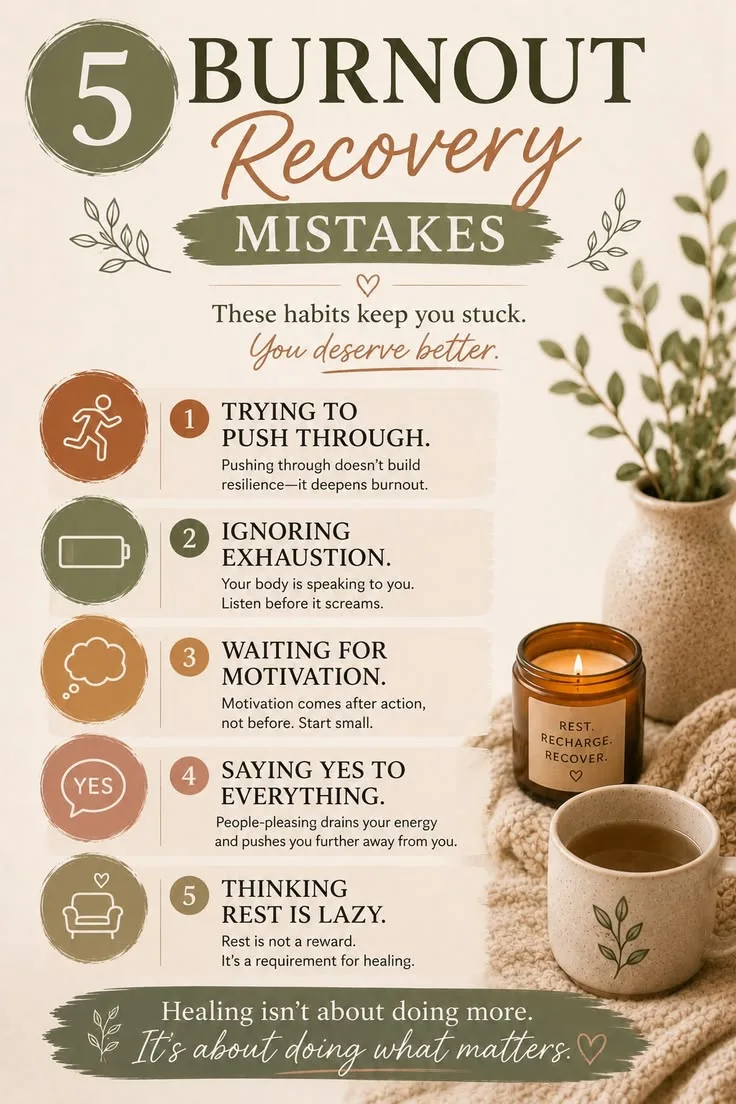
Burnout: In 2008, Erin Callan was the Chief Financial Officer of Lehman Brothers, one of the most powerful women on Wall Street, profiled in cover stories and cited as evidence of the financial industry's progress on gender. She worked seven days a week.
She described her entire identity as having migrated into her job. She had no hobbies. Her relationships had narrowed to the point that her colleagues were her only real community.
When Lehman collapsed later that year and she left the industry entirely, Callan wrote candidly about what she had built and lost: not just a career, but the capacity to have a life outside one.
In a New York Times essay in 2013, she described not knowing herself at all by the time she left, having optimized so completely for professional performance that nothing else remained. "I'd been so determined to prove myself," she wrote, "that I'd completely lost sight of what I wanted my life to look like."
What Callan described is recognizable across professions and income levels, from healthcare workers to teachers to warehouse employees, though it rarely receives the attention Wall Street burnout generates.
Christina Maslach, the psychologist at the University of California Berkeley who has devoted her career to studying this state, proposed in 1981 the framework that still defines the field. Burnout, in Maslach's model, is not simply exhaustion.
It is a three-dimensional syndrome involving emotional exhaustion, depersonalization (a defensive cynicism and detachment from one's work and the people one serves), and reduced personal accomplishment (a collapse in one's sense of effectiveness and meaning).
The exhaustion is the entry point. The depersonalization is the defensive adaptation. The reduced accomplishment is the consequence of both. Together, they describe not merely being tired but being emptied out.
In 2019, after decades of debate about whether burnout is a medical condition or a lifestyle phenomenon, the World Health Organization officially added burnout to ICD-11, the international classification of diseases, as an occupational phenomenon.
This was both a recognition of the condition's prevalence and impact and a clarification of its scope: burnout is specifically work-related.[3] Its classification does not make it a medical diagnosis in the same sense as depression, but it legitimizes it as a serious health concern requiring both clinical and organizational responses.
Understanding the science, what causes burnout physiologically and psychologically, how it differs from adjacent conditions, and what the evidence says about recovery, has practical consequences for anyone who works.
"Burnout is not a problem of too little resilience or too little self-care.
It is primarily a problem of too much chronic stress without sufficient recovery, and that stress usually originates in systemic conditions, not individual inadequacy." - Christina Maslach, Professor Emerita of Psychology, UC Berkeley, co-developer of the Maslach Burnout Inventory
Key Definitions
Burnout: As defined by Maslach's framework and adopted by the WHO, a syndrome of chronic workplace stress comprising emotional exhaustion, depersonalization or cynicism, and reduced professional efficacy. Distinct from depression by its work-specificity, though the two frequently co-occur.
Emotional exhaustion: The central depleting feature of burnout. A state of having nothing left to give emotionally, feeling depleted of the resources needed to engage with work demands.
Depersonalization: The defensive distancing that develops in response to exhaustion, manifest as cynicism, detachment, callousness toward clients or colleagues, and loss of idealism. Particularly damaging in caring professions where connection is central to effectiveness.
Maslach Burnout Inventory (MBI): The most widely used research tool for measuring burnout, developed by Christina Maslach and Susan Jackson in 1981. Contains separate subscales for emotional exhaustion, depersonalization, and personal accomplishment.
Psychological detachment: Sabine Sonnentag's concept of mentally disengaging from work during non-work time. The single strongest predictor of burnout prevention in her research.
| Burnout Dimension | Description | Distinguishing Feature | Primary Recovery Approach |
|---|---|---|---|
| Emotional exhaustion | Depleted, drained; nothing left to give | Central symptom; entry point | Sustained recovery time; workload reduction |
| Depersonalization (cynicism) | Detachment and callousness toward work and people | Defensive adaptation to exhaustion | Meaning restoration; boundary-setting |
| Reduced personal accomplishment | Collapse in sense of effectiveness | Consequence of the above two | Small wins; reconnection with competence |
The Science of Burnout: Maslach's Framework
Christina Maslach began studying burnout in the 1970s through fieldwork in healthcare settings, interviewing workers in high-demand helping professions: nurses, doctors, social workers, police officers, teachers.
She noticed a consistent pattern: workers who entered their professions with strong idealism and commitment gradually developed a defensive cynicism, described their work as meaningless, and lost their capacity for empathy with the people they were supposed to be helping.
The change was so consistent that she suspected it was not a character failure but a predictable response to specific working conditions.
Her 1981 paper and the development of the Maslach Burnout Inventory (with Susan Jackson) operationalized these observations into a measurable construct.[1]
The MBI assesses three dimensions on frequency scales: emotional exhaustion (how often one feels emotionally drained), depersonalization (how often one feels detached or cynical toward recipients of one's work), and personal accomplishment (how often one feels effective and successful).
High emotional exhaustion, high depersonalization, and low personal accomplishment constitute full burnout syndrome.
Maslach and her colleague Michael Leiter subsequently developed a theoretical model of what causes burnout, published most comprehensively in "The Truth About Burnout" (1997) and in subsequent papers.
Their model, known as the job-person mismatch model, identifies six areas where a mismatch between the individual and the work environment generates chronic stress leading to burnout.[2]
The six mismatch areas are: workload (too much to do with too little time and resources), control (insufficient autonomy over decisions affecting one's work), reward (inadequate financial, social, or intrinsic recognition), community (poor quality of relationships at work, including conflict and isolation), fairness (perceived inequity in how people are treated), and values (conflict between one's own ethical or professional values and organizational demands).
A mismatch in any one area creates chronic stress. Mismatches in multiple areas, which are common, create the conditions for burnout.
This model has important practical implications. If burnout primarily results from these six systemic mismatches, then burnout prevention programs focused on individual resilience, teaching workers to meditate, practice gratitude, or develop better stress management skills while leaving the structural conditions unchanged, will fail.
This is not speculation. A 2022 systematic review by the American Medical Association found that physician wellness programs focused on individual-level interventions reduced burnout less effectively than organizational changes to workload, autonomy, and workflow.[11]
Maslach has been vocal in criticizing the wellness industry's tendency to locate the problem in individuals rather than organizations.
Burnout vs. Depression: An Important Distinction
The overlap between burnout and depression is clinically significant and practically important. Both involve fatigue, loss of motivation, cognitive impairment, and emotional flatness. But the distinctions matter for how the conditions are understood and treated.
Pedro Gil-Monte, a Spanish occupational psychologist, and other researchers have argued that burnout and depression are related but distinct constructs.
The key distinctions are: burnout is context-specific (primarily tied to work situations) while depression pervades all domains of life; burnout often features depersonalization and cynicism as central elements while depression features more pervasive sadness and hopelessness; and burnout typically develops gradually from excessive engagement with rewarding work while depression can arise from many sources including genetic vulnerability.
However, the two are highly comorbid and probably influence each other bidirectionally.
A 2014 meta-analysis by Bianchi, Schonfeld, and Laurent found substantial correlations between burnout subscales and depression measures across studies, leading some researchers to question whether burnout is meaningfully distinct from occupational depression.[8]
The consensus view, as reflected in the ICD-11 classification, is to treat burnout as an occupational phenomenon that is a distinct (but related) condition from clinical depression while acknowledging the diagnostic complexity of severe cases.
The clinical importance of distinguishing them lies in treatment. Depression may require pharmacological treatment, and antidepressants may be appropriate and beneficial.
Burnout treatment that focuses on restoring the conditions for engagement and addressing the work-environment mismatches that drove the burnout requires different interventions.
Prescribing antidepressants for occupational burnout without addressing the working conditions that caused it is increasingly recognized as insufficient.
The Nervous System in Burnout
Burnout is not merely psychological. It involves dysregulation of the body's stress-response physiology in ways that share some features with chronic stress conditions more broadly.
The HPA axis, which regulates cortisol secretion, shows characteristic dysregulation in burnout. Similar to the pattern observed in PTSD (see What Is Trauma and How It Affects the Body), burnout is associated not with uniformly elevated cortisol but with a more complex pattern that varies by burnout stage and individual.
Early-stage burnout may involve elevated cortisol reflecting an overloaded stress response. Advanced burnout may show blunted cortisol awakening response, suggesting a flattened, depleted HPA axis that can no longer mount adequate responses.
Research on burnout and the autonomic nervous system shows reduced heart rate variability (HRV) in people with severe burnout, reflecting reduced flexibility in the autonomic system's response to challenges.
High HRV reflects a system that can rapidly shift between activation and relaxation; low HRV reflects a more rigidly activated sympathetic state. Reduced HRV is a predictor of both cardiovascular disease and psychological vulnerability.
Emily and Amelia Nagoski's 2019 book "Burnout: The Secret to Unlocking the Stress Cycle" introduced a concept from stress physiology that has been clinically useful: the stress cycle.[6]
The Nagoskis argue that stress begins a physiological cycle of activation (the stress response), and that this cycle needs to be completed, meaning the body needs to physically process and discharge the stress activation, for recovery to occur.
When people under chronic stress cannot complete the cycle, because they must suppress and push through, or because the stressor never fully resolves, the incomplete activation accumulates.
Physical activity, social connection, laughter, crying, and creative expression are ways of completing the cycle that the cognitive processing of problems does not address. This framework helps explain why intellectual understanding of one's stressors does not alone produce recovery from burnout.
Healthcare Burnout: The Research of Tait Shanafelt
Burnout in healthcare has received more rigorous study than in almost any other sector, driven by its consequences for patient safety and the dramatic escalation during the COVID-19 pandemic.
Tait Shanafelt, a hematologist and oncologist at Stanford Medicine who has studied physician well-being for two decades, has been the central researcher documenting burnout's prevalence, causes, and organizational determinants in medicine.
Shanafelt's surveys of American physicians, conducted periodically from 2011 onward, documented burnout rates above 40 percent in most specialties and above 50 percent in emergency medicine, general internal medicine, and family medicine.[4]
The pandemic dramatically worsened these rates. A 2021 study co-authored by Shanafelt found that 38 to 60 percent of physicians reported burnout symptoms at different pandemic timepoints, with anxiety, depression, and sleep disorders substantially elevated as well.
His research consistently identifies specific organizational factors as the primary drivers: excessive administrative burden (electronic health record documentation requirements), loss of control over clinical decisions, insufficient time with patients, poor institutional leadership quality, and inadequate staffing.
These are structural problems. Shanafelt's work on organizational interventions has shown that programs targeting these structural factors, reducing documentation burden, providing schedule flexibility, improving teamwork, and developing leadership capability, outperform individual-focused wellness initiatives.[5]
The lessons extend beyond medicine. The structural drivers of burnout in healthcare, excessive demands with insufficient resources, loss of autonomy, poor recognition, and value conflicts, are present across sectors.[12] The evidence that structural interventions outperform individual resilience training is relevant to any organization.
Recovery: What the Research Shows
Recovery from burnout requires, first and most fundamentally, a reduction in the stressors causing it. This sounds obvious but is frequently overlooked in discussions that focus entirely on individual coping strategies.
If someone returns from a two-week holiday to the same understaffed team, the same impossible deadline structure, and the same absent management support that burned them out, the holiday will provide temporary relief but not lasting recovery.
Sabine Sonnentag, a work psychologist at the University of Mannheim, has conducted extensive research on psychological detachment as a recovery mechanism.
Her studies consistently find that the ability to mentally switch off from work during evenings and weekends, not just physically leaving the office but genuinely not thinking about or worrying about work, is the strongest predictor of recovery and burnout prevention.
People who cannot achieve this detachment, who ruminate about work problems during personal time, fail to restore their resources even when they have nominally stopped working.
The mechanisms are physiological as well as psychological. Psychological detachment allows cortisol to drop to baseline, HRV to recover, and the default mode network to engage in the restorative processing that occurs during non-task-focused mental states.
People who ruminate about work during evenings show sustained sympathetic activation and delayed sleep onset, reducing the restorative quality of sleep.
Sonnentag's framework also identifies mastery experiences (engaging in new, challenging activities outside work that produce a sense of competence), relaxation (activities reducing activation), and control over one's time (being able to structure non-work time as desired) as components of effective recovery.[7]
The common thread is that recovery is active and requires specific conditions, not merely the absence of work.[9]
Research on longer-term recovery from severe burnout suggests that sabbaticals and extended leaves of absence can be effective when they allow genuine disengagement, but often inadequate when they merely postpone return to unchanged conditions.
A 2012 study by Fritz and colleagues found that sabbaticals produced significant initial improvements in burnout and well-being, but that effects eroded within a year of return if the underlying work conditions had not changed.
Lasting recovery requires either structural change in the work environment or a change in the individual's relationship to work, its scope, its demands, or its meaning.
The Arianna Huffington Case and the Broader Conversation
In 2007, Arianna Huffington collapsed from exhaustion in her office, breaking her cheekbone on her desk. The incident became, in her telling, a wake-up call that led her to write "Thrive" (2014) and eventually found Thrive Global, an organization dedicated to workplace well-being.
Huffington's story and advocacy helped mainstream the conversation about burnout and the costs of hustle culture, and she deserves credit for amplifying it.
The limitation of the frame she and similar advocates often deploy is that it individualizes what is substantially a structural problem. Huffington's solutions center primarily on individual behavior change, sleep more, meditate, disconnect from devices.[10]
These practices have genuine benefits. But they do not address the organizational systems that created the conditions for burnout in the first place. A nurse working mandatory overtime in an understaffed ICU cannot meditate her way out of burnout.
A teacher managing 35 students with inadequate support and deteriorating school infrastructure cannot yoga her way to sustainable engagement.
The more complete picture, supported by the research of Maslach, Shanafelt, and Sonnentag, is that burnout is a person-environment interaction problem requiring intervention at both levels. Individuals need the conditions and skills for genuine recovery.
Organizations need to examine the structural mismatches they create. Locating the problem entirely in individual resilience is both empirically inaccurate and potentially harmful, as it increases shame and self-blame in people who are already depleted.
Practical Takeaways
Recovery from burnout requires genuine reduction of the stressor load. If the structural conditions creating burnout cannot change, recovery requires a fundamental renegotiation of one's relationship to the work, up to and including leaving.
Psychological detachment is the most evidence-based recovery practice. Establishing genuine boundaries between work and personal time, protecting time for activities that have nothing to do with professional identity, and reducing availability outside work hours all serve this function.
Physical activity completes stress cycles and restores nervous system flexibility. For people in burnout, exercise should be moderate and enjoyable rather than another performance goal; depleted people often add intense training regimens and worsen their recovery.
Sleep is the most fundamental recovery resource. Chronic sleep restriction is both a cause and consequence of burnout. Protecting sleep before other recovery practices is appropriate.
Social connection outside work context is specifically restorative. Relationships that are not instrumentally tied to professional identity provide recovery that purely work-based social interaction does not.
Seek professional support if burnout has progressed to include depression, anxiety disorders, or inability to function. These are treatable conditions that respond to evidence-based intervention.
Burnout relapse rates are high when people return to unchanged conditions. Return-to-work planning that does not include structural adjustments, role changes, or genuine organizational commitment to reducing the original stressors is inadequate.
For related reading on the nervous system, stress, and recovery, see How Stress Damages the Body, What Is Trauma and How It Affects the Body, and Sustainable Productivity.
Sources & Further Reading
Maslach C, Jackson SE. The measurement of experienced burnout. Journal of Organizational Behavior. 1981;2(2):99-113.
Maslach C, Leiter MP. The Truth About Burnout: How Organizations Cause Personal Stress and What to Do About It. Jossey-Bass; 1997.
World Health Organization. ICD-11 for Mortality and Morbidity Statistics: Burn-out. WHO; 2019.
Shanafelt TD, Hasan O, Dyrbye LN, et al. Changes in burnout and satisfaction with work-life balance in physicians and the general US working population between 2011 and 2014. Mayo Clinic Proceedings. 2015;90(12):1600-1613.
Shanafelt TD, Noseworthy JH. Executive leadership and physician well-being: nine organizational strategies to promote engagement and reduce burnout. Mayo Clinic Proceedings. 2017;92(1):129-146.
Nagoski E, Nagoski A. Burnout: The Secret to Unlocking the Stress Cycle. Ballantine Books; 2019.
Sonnentag S, Fritz C. The recovery experience questionnaire: development and validation of a measure for assessing recuperation and unwinding from work. Journal of Occupational Health Psychology. 2007;12(3):204-221.
Bianchi R, Schonfeld IS, Laurent E. Burnout-depression overlap: a review. Clinical Psychology Review. 2015;36:28-41.
Fritz C, Sonnentag S, Spector PE, McInroe JA. The weekend matters: relationships between stress recovery and affective experiences. Journal of Organizational Behavior. 2010;31(8):1137-1162.
Huffington A. Thrive: The Third Metric to Redefining Success and Creating a Life of Well-Being, Wisdom, and Wonder. Harmony Books; 2014.
West CP, Dyrbye LN, Erwin PJ, Shanafelt TD. Interventions to prevent and reduce physician burnout: a systematic review and meta-analysis. Lancet. 2016;388(10057):2272-2281.
Demerouti E, Bakker AB, Nachreiner F, Schaufeli WB. The job demands-resources model of burnout. Journal of Applied Psychology. 2001;86(3):499-512.
Health note: This article is general educational information about how a topic works, not medical, psychological, or mental-health advice, diagnosis, or treatment. Everyone's situation is different, and research findings describe groups, not individuals.
If you are struggling or have concerns about your health, please talk to a qualified professional such as a doctor or licensed therapist.
If you are in crisis or thinking about harming yourself, contact your local emergency services or a crisis line right away, in the US you can call or text 988 (Suicide & Crisis Lifeline); elsewhere, find local lines at findahelpline.com.