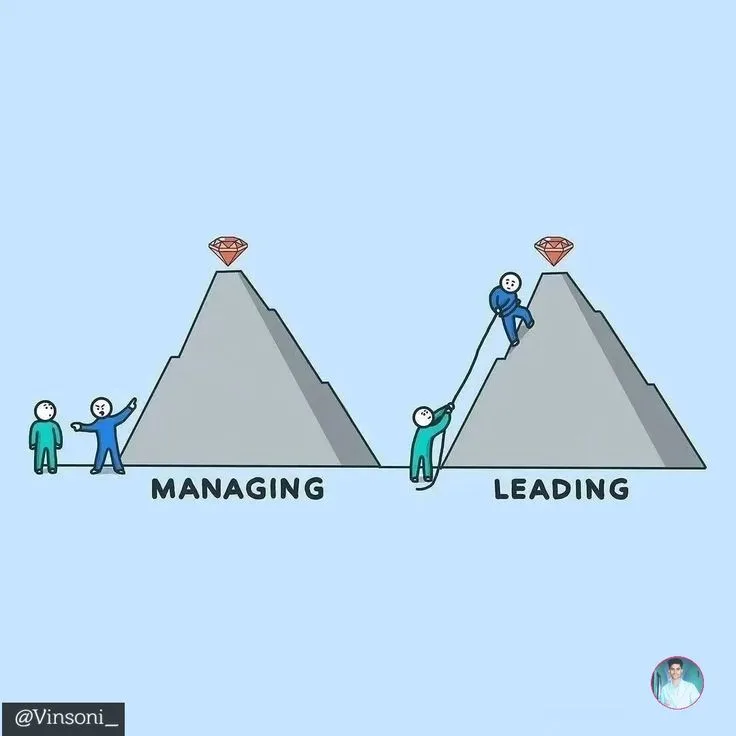
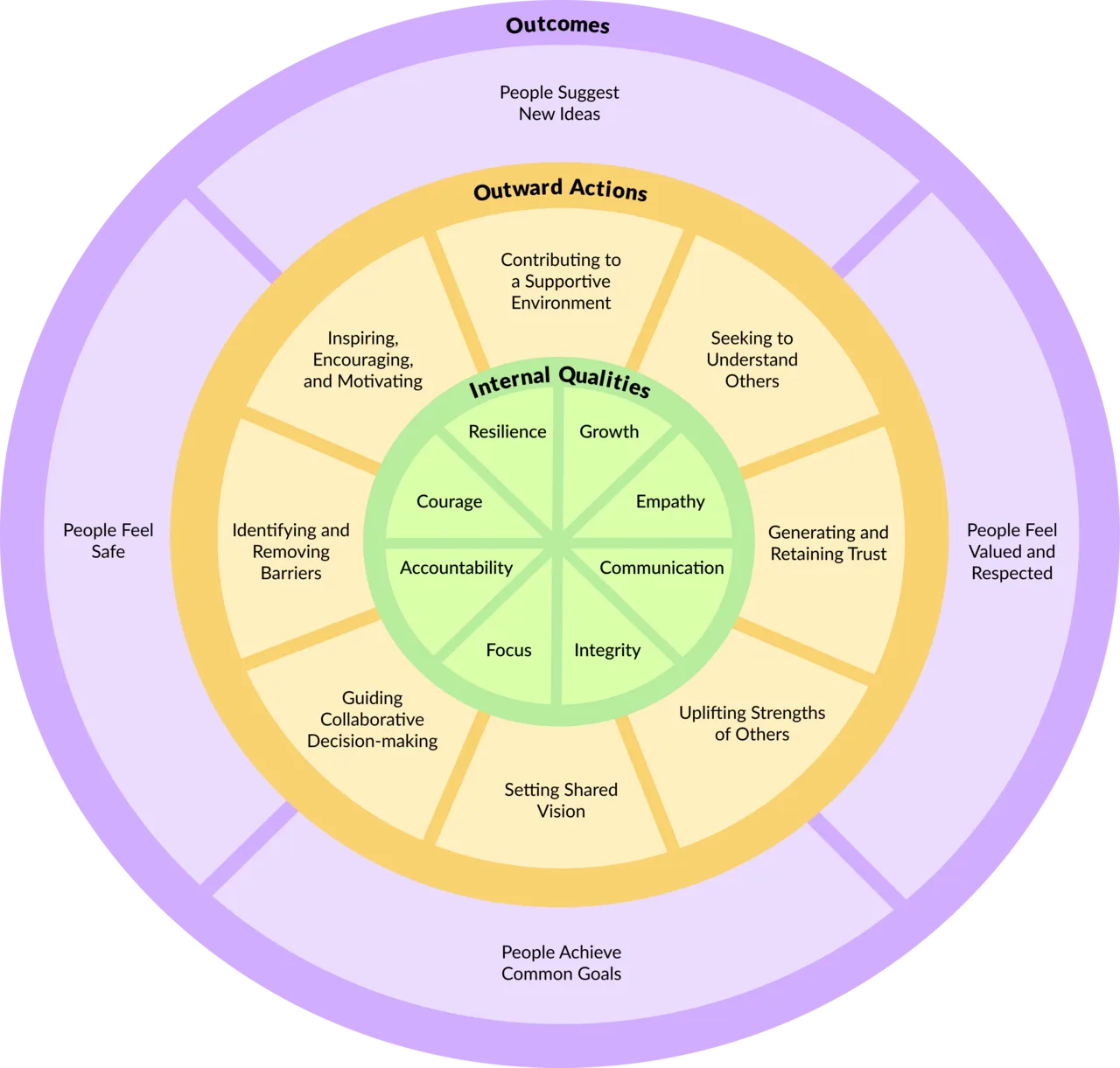
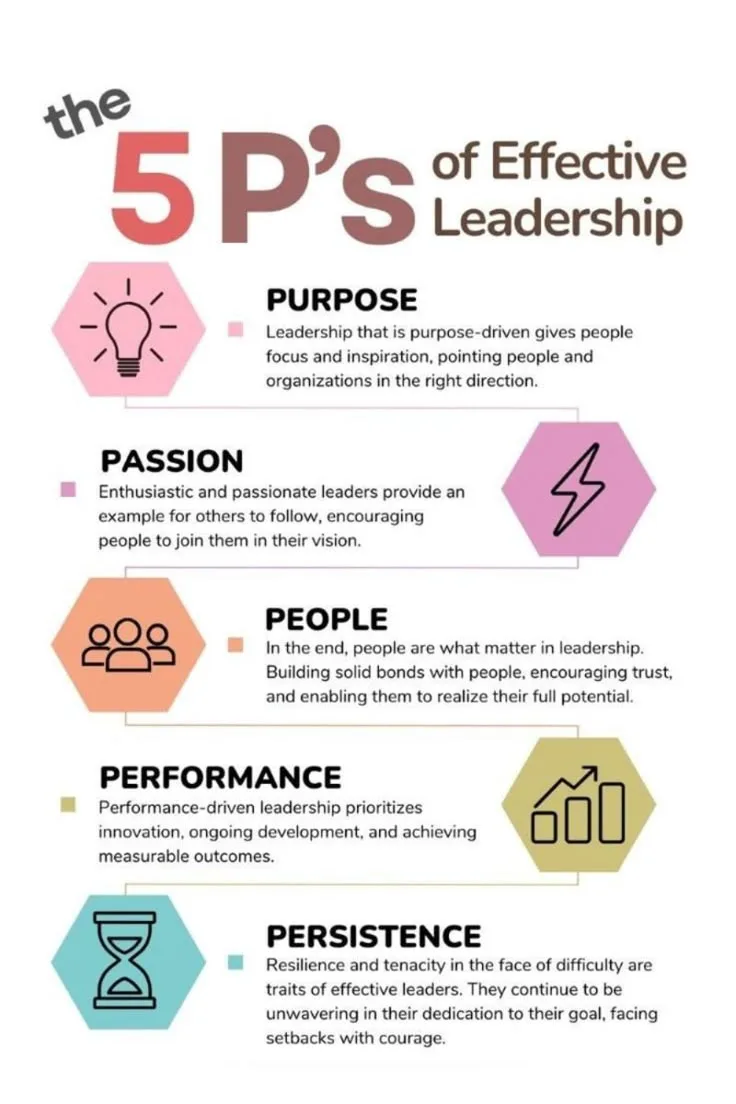
Delegation: A manager at a fast-growing startup found herself working 70-hour weeks, constantly exhausted, while her team of eight sat underutilized, waiting for her to assign tasks, approve decisions, and review every detail.
When asked why she didn't delegate more, she said: "It's faster if I just do it myself. By the time I explain what needs to be done and fix their mistakes, I could have finished it twice over."
Six months later, three of her best performers had quit, citing lack of growth opportunities and feeling "micromanaged." The manager was burning out, the team was disengaged, and organizational capacity had actually decreased despite doubling headcount.
This is the delegation paradox: managers intellectually understand they should delegate, but struggle to actually do it. The result is a vicious cycle-overwhelmed managers, underutilized teams, declining performance, and organizational bottlenecks that prevent scaling.
Applying second-order thinking reveals why this matters beyond individual efficiency: the second-order effect of not delegating is that team members never develop the skills, judgment, and ownership needed to build their own career capital, leaving the organization structurally dependent on a single bottleneck indefinitely.
Delegation-assigning genuine ownership of outcomes, not just tasks-is among the most powerful yet most difficult management skills. Done well, it multiplies organizational capacity, develops team capabilities, and frees leaders for strategic work.
Done poorly-or avoided entirely-it creates micromanagement, bottlenecks, and frustrated teams.
This article provides a comprehensive explanation of effective delegation: what it actually means (beyond just task assignment), why managers struggle with it, how to delegate in ways that build capability without abdicating responsibility, how to follow up without micromanaging, and how to scale delegation as teams grow.
What Is Effective Delegation? Beyond Task Assignment
Many managers think they're delegating when they're actually just assigning tasks: "Format this document. Update the spreadsheet. Send these emails."
Real delegation is fundamentally different-it's assigning ownership of outcomes, not mechanical execution of pre-defined tasks.[2]
Dimension
Task Assignment
Effective Delegation
What's assigned
Specific tasks, predefined steps
Outcomes, goals, problems to solve
Authority
None-follow instructions
Autonomy to decide approach
Thinking required
Minimal-execute as directed
Substantial-problem-solving, judgment
Ownership
Compliance-based
Genuine ownership
Development
None-repetitive execution
Significant-builds capability
Example of task assignment:"Call these 10 customers and ask these exact questions. Fill out this form with their responses. Report back to me tomorrow."
The person has no ownership, no decision-making authority, and learns nothing beyond following instructions.
Example of effective delegation:"I need to understand why customers are churning in the enterprise segment. Interview 8-10 enterprise customers, identify patterns, and recommend three actions we could take. You decide who to interview and how to approach the conversations.
Present your findings and recommendations by Friday. Let me know if you hit blockers or need support."
The person owns the outcome, has authority to make decisions, must use judgment and analytical skills, and grows through the process.
The Core Components of Effective Delegation
Management researcher Peter Drucker emphasized that effective delegation requires transferring not just responsibility, but also authority and accountability together.
1. Clear outcome or goal (not just task):
What needs to be accomplished?
Why does it matter?
What does success look like?
2. Appropriate authority:
What decisions can they make?
What resources can they use?
What needs approval or escalation?
3. Context and constraints:
Why this matters strategically
Known constraints (time, budget, dependencies)
Relevant background or history
4. Support and resources:
What help is available?
Who can they consult?
Where can they find information?
5. Agreed milestones and check-ins:
When will progress be reviewed?
What triggers an early check-in?
How will success be measured?
6. Accountability for results:
Clear ownership
Explicit expectations
Consequences (positive and negative)
Without these elements, what looks like delegation often devolves into confusion, micromanagement, or failure.
Why Managers Struggle to Delegate: The Psychological Barriers
Understanding why delegation is difficult reveals how to overcome resistance.
Reason 1: "I Can Do It Faster/Better Myself"
The most common rationale: "By the time I explain it and fix their mistakes, I could have done it myself twice."
This is true in the short term but catastrophic long-term:
First time delegating: Yes, you could do it faster
Second time: Still probably faster yourself
Tenth time: They're now faster than you
Hundredth time: They're an expert; you've freed hundreds of hours
The manager thinking short-term never escapes the work. The manager thinking long-term invests in delegation once and reaps compound returns forever.
Psychologist Anders Ericsson (deliberate practice researcher) found that expertise requires practice-if you never delegate, your team never develops expertise.[4] You remain the permanent bottleneck.
Reason 2: Fear of Failure and Loss of Control
"What if they mess up? What if it doesn't meet my standards? It's risky to trust others with important work."
This fear has some validity-delegated work will sometimes fail. But:
Perfect control is impossible as you scale
High performers leave when not trusted with meaningful work
Learning requires failure-prevent all failures, prevent all learning
You can manage risk through appropriate check-ins and guardrails
Research professor Brené Brown found that vulnerability (accepting you can't control everything) and trust (believing others can succeed) are essential leadership capabilities.[1] Delegation requires both.
Reason 3: Perfectionism
"It has to be exactly right. Only I know the right way. I can't accept 'good enough' from others."
Perfectionism is a delegation killer because:
Most work doesn't actually require perfection-80-90% quality is sufficient
Different approaches can be equally valid (your way isn't the only way)
Perfectionism blocks team development
The opportunity cost of your time often exceeds the value of perfection
Management writers commonly advocate a 70% rule: if someone can do it 70% as well as you, delegate it.[5] Your 30% quality advantage is rarely worth your time if it frees you for higher-leverage work.
Reason 4: Identity Tied to "Doing"
"I'm valued for my technical contributions. If I stop doing the work, what's my role? What makes me valuable?"
This is an identity crisis many managers face when transitioning from individual contributor to leader:
IC identity: I'm valuable because I produce excellent work
Manager identity: I'm valuable because I enable others to produce excellent work
The shift requires redefining success from personal output to team output. This is psychologically difficult but necessary.
Reason 5: Lack of Delegation Skills
"I don't know how to set people up for success. When I've tried delegating, it's gone poorly."
This is the most solvable problem-delegation is a learnable skill with specific techniques. Poor delegation outcomes often reflect poor delegation technique, not inherent inability to delegate.
The Principles of Effective Delegation
Research on management effectiveness (including studies by Harvard Business Review and Google's Project Oxygen) reveals several core principles.
Principle 1: Delegate Outcomes, Not Just Tasks
Tasks: Mechanical execution-"Format this document. Update the spreadsheet."Outcomes: Results that require thinking-"Improve customer onboarding completion rate."
Why outcome delegation is superior:
Engages critical thinking and problem-solving
Creates genuine ownership
Allows for innovation (they may find better approaches than you would)
Develops capabilities
Example:
Task delegation: "Update project status in these five tools every Monday morning."Outcome delegation: "Ensure stakeholders are well-informed about project status. You decide the best method and frequency. Current stakeholders are [list]. They care most about [priorities]."
The second approach gives ownership and space for them to potentially find better solutions than your prescribed method.
Principle 2: Match Delegation to Capability
Not all delegation should look the same-adjust to the person's readiness (combination of skill and confidence).[7]
The delegation spectrum:
Readiness Level
Delegation Approach
Example
High capability
Delegate outcome and full authority; minimal oversight
"Own customer retention strategy. Report back in two weeks with analysis and recommendations."
Developing capability
Delegate with structure and support; moderate check-ins
"Here's framework for retention analysis. Work through it, we'll check in twice before your final recommendation."
Low capability
Delegate bounded tasks; close guidance; build toward outcome delegation
"Analyze this customer segment using this template. We'll review together before you proceed to next segment."
The goal is progressive delegation: as capability grows, gradually increase autonomy and scope.
Principle 3: Provide Context and Authority
Context answers:
Why does this matter?
How does it fit the bigger picture?
What are we trying to achieve?
What constraints or considerations exist?
Authority clarifies:
What decisions can they make independently?
What requires approval?
What resources can they use?
What budget or time constraints?
Bad delegation (no context or authority):"Improve the onboarding flow."
Good delegation (rich context and clear authority):"We're losing 30% of new users in the first week-onboarding is a suspected bottleneck. The goal is reducing drop-off to under 15%. You have authority to: redesign the flow, run experiments, and coordinate with engineering.
Budget: $10K. Check with me before: major product changes or external hires. This is a top Q2 priority because new user activation directly drives revenue."
The second version empowers effective action by providing the "why" and "how much autonomy."
Principle 4: Agree on Success Criteria and Check-In Points
Prevent "set and forget" delegation failures by establishing:
Success criteria:
What does good look like?
What metrics or outcomes indicate success?
What are deal-breakers or must-haves?
Check-in points:
When will you review progress?
What milestones trigger check-ins?
How should they escalate if blocked?
Example:"Success is a comprehensive analysis of churn patterns with three actionable recommendations, backed by data. Let's check in Friday for preliminary findings, then Monday for final recommendations. If you hit major blockers before then, reach out immediately."
This maintains accountability without micromanagement-you're not hovering, but you're not abandoning them either.
Principle 5: Support Without Taking Over
The balance: be available for questions and guidance, but resist the temptation to jump in and do it for them.
How to support effectively:
Answer questions without providing complete solutions
Offer frameworks or resources rather than prescribing specific actions
Remove organizational blockers they can't handle themselves
Coach through problem-solving with questions, not directives
Example:
They come to you stuck.
Bad response: "Let me just do it" or "Here's exactly what to do: step 1, step 2, step 3." (Taking over)
Good response: "Walk me through where you're stuck. What have you tried? What options are you considering? What would happen if you approached it from [alternative angle]? What resources might help?" (Coaching)
The second approach keeps ownership with them while providing support.
Principle 6: Accept Different Approaches
Your way is not the only way. Sometimes their approach is different but equally good-or even better.
When to intervene:
Approach violates clear constraints
High likelihood of catastrophic failure
Unethical or contrary to organizational values
When to let them proceed:
Approach is different but viable
Risk of failure is acceptable (learning opportunity)
Their method might actually work better than yours
Example: You would analyze data using Method A. They choose Method B. Method B is valid, just different. Let them. Resist the urge to impose your preferred method unless there's a compelling reason.
Principle 7: Hold Accountable for Results
Delegation is not abdication-you still retain accountability for outcomes even while giving them responsibility.
If work doesn't meet standards:
Address it directly and promptly
Provide clear, specific feedback
Discuss what needs to change
If pattern continues, escalate consequences
Don't:
Silently redo their work
Lower standards without discussion
Ignore poor performance
Take the work back without conversation
Example conversation:"The analysis you delivered doesn't meet our quality standard. Specifically: [concrete issues]. What happened? What do you need to deliver to standard next time?"
Accountability with support.
What to Delegate: The Decision Framework
Not everything should be delegated. Use a systematic framework to decide.
The Delegation Decision Matrix
Ask these questions for each activity:
1. Can someone else do this reasonably well?
Yes → Strong candidate for delegation
No (truly requires your unique expertise) Consider keeping
2. Is this a development opportunity?
Yes → Excellent delegation candidate (helps team grow)
No → Less urgent to delegate, but may still make sense
3. Is this the best use of your time?
No → Delegate and focus on higher-value work
Yes → Keep, but question if it truly needs to be you
4. What's the cost of failure?
Very high → Keep or closely supervised delegation
Low to medium → Good delegation opportunity
5. How frequently does this occur?
Regular/recurring → Definitely delegate (build team capability)
Rare/one-time → May make sense to do yourself if faster
High-Priority Delegation Candidates
1. Routine operational tasks:
Status reports and regular updates
Standard documentation
Scheduling and coordination
Data gathering and basic analysis
Why delegate: Don't require senior judgment; free your time for strategy; often good development opportunities.
2. Well-defined projects with clear scope:
Research with specific questions
Implementation following established patterns
Process improvement in specific area
Why delegate: Clear scope reduces risk; excellent development opportunity.
3. Work where others have or could develop expertise:
Technical implementations where team has skills
Domain-specific analysis
Customer-facing work team can learn
Why delegate: Builds team capability; multiplies organizational expertise.[8]
4. Lower-risk decisions:
Tactical execution choices
Resource allocation within limits
Tool or vendor selection (with guidelines)
Why delegate: Builds decision-making capability; speeds execution; you retain oversight.
What to Keep (Initially)
1. High-stakes decisions requiring your authority:
Executive-level stakeholders (initially-can delegate over time)
Critical cross-functional partnerships
4. Strategy and vision setting:
Team goals and priorities
Long-term planning
Core strategic decisions
5. Areas where you're intentionally building expertise:
New domains critical for your role
Skills needed for advancement
Technology requiring your deep understanding
Following Up: The Art of Accountability Without Micromanagement
The delegation challenge doesn't end with assignment-effective follow-up is critical.
"Surround yourself with the best people you can find, delegate authority, and don't interfere as long as the policy you've decided upon is being carried out."
Ronald Reagan
The Follow-Up Spectrum
Too hands-off (abdication):
Delegate and disappear
No check-ins until deadline
Surprised by problems
Result: Projects drift off track; team feels unsupported; failures discovered too late.
Too hands-on (micromanagement):
Constant status requests
Questioning every detail
Involvement in every decision
Result: Team feels untrusted; you become bottleneck; delegation defeats its purpose.
The sweet spot:
Regular but not excessive check-ins
Focus on outcomes and blockers, not methods
Support available without hovering
Trust with accountability
Principles of Effective Follow-Up
1. Agree on check-ins upfront: When delegating, establish:
When you'll check in
What you'll review
What triggers early escalation
Example: "Let's check in Friday for your initial findings, then Monday for draft recommendations. If you hit major blockers before then, reach out anytime."
2. Focus on outcomes and obstacles, not methods: Check-in questions:
"How's progress toward the goal?"
"What obstacles are you facing?"
"What support do you need?"
Avoid:
"Which exact steps have you completed?"
"Why did you choose that approach?" (unless truly problematic)
Drilling into minute details
3. Ask coaching questions, don't issue directives: Help them think through issues rather than solving for them.
Coaching questions:
"What have you tried?"
"What are you considering?"
"What are the tradeoffs?"
"What would you recommend?"
Avoid: "Here's what you should do" or "Do it this way" (unless they're truly stuck or seriously off track).
4. Adjust oversight based on performance
Doing well → Reduce check-in frequency, increase autonomy
Struggling → Increase support temporarily, return to autonomy once stable
5. Respond to help requests without taking over: They ask for help → Answer questions, provide guidance, remove blockers-but don't do the work for them.
The Gradual Release Model
Delegation should be progressive, releasing autonomy as capability grows:
Phase 1: I do, you watch: You perform the work; they observe and learn.
Phase 2: We do together: Collaborate closely; they take parts with your guidance.
Phase 3: You do, I review: They do the work; you review before it's final.
Phase 4: You do, milestone check-ins: They work independently; check in at key points.
Phase 5: You do, report when done: Full autonomy; they report completion.
Example progression (writing stakeholder updates):
Month 1: You write, they watch
Month 2: You draft, they edit, you review
Month 3: They draft, you edit and approve
Month 4-5: They draft, you review before sending
Month 6+: They write and send, you get CC'd
Delegating to Struggling Team Members
What about delegation when someone has failed at previous tasks?
First: Diagnose the Root Cause
Possible reasons for struggle:
Skill gap: Genuinely don't know how to do the work
Unclear expectations: Didn't understand what success looked like
Confidence issue: Have skills but don't trust themselves
Workload problem: Too much on their plate
Task-person mismatch: Wrong person for this particular work
Diagnostic approach: Have an honest conversation.
"Let's talk about project X. What made it difficult? Where did you get stuck? What support would have helped?"
Delegation Strategies by Root Cause
If skill gap:
Progressive skill-building with scaffolding
Provide templates, examples, frameworks
Pair with stronger team member for mentoring
Formal training or resources
If unclear expectations:
Over-communicate context and success criteria
Collaborative kickoff to ensure alignment
Written brief documenting expectations
Provide examples of good work
If confidence issue:
Build confidence through small wins first
Normalize iteration: "First draft won't be perfect"
More frequent check-ins initially (safety net)
Explicit encouragement and recognition
If workload problem:
Reduce their plate or adjust priorities
Extend timeline to be realistic
Protect their time for this work
If mismatch:
Acknowledge this task isn't good fit
Delegate to someone better suited
Find different work matching their strengths
General Principles for Delegating to Struggling Members
1. Right-size the delegation: Don't give overly ambitious tasks given past performance. Set up for achievable success.
2. Increase structure, decrease ambiguity: More guardrails, clearer process, more defined scope.
3. Front-load support, back-load autonomy: High support at beginning, taper as they succeed.
4. Frame as development opportunity: Explicit learning goals; you're invested in their growth.
5. Maintain psychological safety: Mistakes are expected learning opportunities; you support their success.[9]
Scaling Delegation: From Small Team to Large Organization
1. Team members take initiative: Proactively identify and solve problems; bring recommendations, not just questions.
2. Quality work with decreasing oversight: Initially needed close review; now work meets standards with minimal input.
3. Good independent decisions: Decisions you used to make, they now handle well.
4. You have time for higher-level work: Freed from operational details; can focus on strategy and vision.
5. Team growth and development: Expanding capabilities; progressing in careers.
6. Work continues when you're away: Team operates smoothly during your vacation.
7. Less reverse delegation: Team solves problems instead of pushing them back to you.
Scaling Challenges
Can't directly delegate to everyone as team grows from 5 to 20 to 50
Need delegation through others (managers who also delegate well)
Maintaining consistency across more people
Knowledge transfer without personally teaching everyone
Scaling Strategies
1. Develop multiple highly capable delegates: Build a "delegation bench"-several people who can take major ownership.
2. Document and systematize: Create templates, frameworks, playbooks for recurring work.[11] Enables learning without direct teaching.
3. Delegation of delegation: Teach your managers to delegate effectively; multiplier effect.
4. Create ownership culture: Cultural norm: everyone owns outcomes in their domain; taking initiative is expected.
5. Cascade goals and decision rights: Clear delineation: what you decide, what managers decide, what individuals decide. Push decisions to lowest appropriate level.
7. Leverage tools and automation: Project management visibility, documentation platforms, communication tools that scale.
8. Create feedback loops: Team demos, reviews, retrospectives-peer accountability and learning without your constant intervention.
The Multiplication Effect
Good delegation creates exponential capability:
You delegate to 5 managers
Each delegates to their teams of 8
That's 40 people empowered through your delegation multiplied
Over time, capabilities compound. Year 1: delegate tactical projects. Year 3: delegate strategic initiatives. Year 5: entire functions run independently with you setting vision and guardrails.
Common Delegation Mistakes to Avoid
1. Delegating responsibility without authority: Telling people to "own" something but they can't make decisions or access resources.
Fix: Ensure authority matches responsibility.
2. Reverse delegation: They bring you problems; you solve them and hand back solution.[10] You've taken delegation back.
Fix: When they bring problems, ask: "What do you think we should do?" Make them solve.
3. Seagull management: Flying in, criticizing their work, flying away. No sustained support, just drive-by criticism.
Fix: Consistent support and feedback, not episodic criticism.
4. Delegating only grunt work: Keeping interesting work for yourself; delegating only unpleasant tasks.
Fix: Delegate meaningful, developmental work. Mix of routine and interesting.
5. Saying you delegate while still doing it: Claim to delegate but actually keep doing the work yourself.
Fix: Actually let go. Resist temptation.
Conclusion: Delegation as Leadership Leverage
Delegation is not optional for effective leadership-it's the primary mechanism through which leaders multiply their impact. Without delegation, your organization's capacity is limited to your personal capacity. With effective delegation, your impact scales exponentially.
The key insights:
1. Delegation is outcome ownership, not task assignment: Assigning tasks is managing execution. Delegating outcomes is building capability.
2. Managers struggle for psychological reasons: Fear of loss of control, perfectionism, identity tied to doing, and lack of delegation skills-all solvable with awareness and practice.
3. Effective delegation requires multiple components: Clear outcomes, appropriate authority, rich context, agreed success criteria, support without taking over, and accountability for results.
4. Follow-up must balance accountability and autonomy: Regular check-ins focused on outcomes and obstacles, not micromanagement of methods.
5. Adjust delegation to capability: Progressive delegation-building from structured tasks to full outcome ownership as capability grows.
6. Scale through systems and culture: As teams grow, delegation must evolve from direct delegation to systems, documentation, delegation through managers, and ownership culture.
The manager's job is not to do the work-it's to multiply the team's capability to do the work. Delegation is how that multiplication happens. It requires trust, letting go of control, accepting different approaches, and investing time upfront to save exponentially more time later.
"The best executive is the one who has sense enough to pick good men to do what he wants done, and self-restraint enough to keep from meddling with them while they do it."
Theodore Roosevelt
As management scholar Peter Drucker emphasized, effective leaders build organizations that function without them. That's the ultimate test of delegation: does your organization continue to function excellently when you're not there?[3]
If yes, you've delegated well. If no, you've created a bottleneck-yourself.
The choice is clear: delegate and multiply, or hold on and stagnate.
Delegation Across Organizational Structures
Effective delegation looks different in flat startups, hierarchical corporations, and matrix organizations. Understanding how structure shapes delegation dynamics helps managers adapt principles to their specific context rather than applying one-size-fits-all approaches.
Flat organizations and startup delegation: Startups and flat organizations create distinctive delegation challenges. Early-stage companies often have founders who are deeply expert in every function-they built the product, designed the sales process, managed the finances.
Delegating to less experienced hires means accepting lower quality in the near term during the capability-building period. Founders frequently underdelegate, maintaining control because they genuinely can do most things better than their current team.
The inflection point typically comes around 20-50 employees. Below this threshold, a founder can maintain meaningful visibility into most of the organization's work. Above it, the cognitive load becomes impossible and the founder's personal bandwidth becomes the primary organizational constraint.
Companies that fail to make this transition where the founder remains operationally involved in every domain-struggle to scale and often plateau.
The research by Ben Horowitz documented in The Hard Thing About Hard Things identifies this transition from "wartime CEO" (hands-on, involved in everything) to "peacetime CEO" (setting direction, building culture, delegating execution) as one of the most difficult challenges in startup leadership.
Hierarchical organizations and authority gradients: Traditional hierarchical organizations create the opposite problem. Managers may want to delegate but face authority constraints that limit what they can pass down.
Corporate approval chains, compliance requirements, and rigid job descriptions can prevent managers from granting the authority their direct reports would need to truly own outcomes.
A manager who says "own this project" but whose direct report cannot approve budgets, communicate with external stakeholders, or make personnel decisions without multiple layers of sign-off has delegated responsibility without authority-a recipe for frustration and failure.
Effective delegation in hierarchical contexts requires managers to be explicit about the boundaries of the authority they are passing down and to actively work upward to secure the authority their reports will need.
This "upward delegation management"-negotiating with senior leadership for the autonomy to give your team-is an under-recognized dimension of the delegation skill set.
Matrix organizations and accountability ambiguity: Matrix structures, where employees report to both a functional manager and a project or product manager, create delegation challenges around accountability.
When an employee has two managers, it is unclear which one's delegated work takes priority, who assesses performance, and who can revoke delegation.
The result is frequently that neither manager delegates substantively because each lacks full authority and neither wants to overcommit the other's time.
Research on matrix organizations consistently finds that clarity of primary accountability is the critical factor in making matrices functional. When employees know which manager's priorities take precedence in conflicts, delegation can work.
When accountability is genuinely ambiguous, both managers tend to reduce delegation to reduce risk, and the employee ends up in the worst of both worlds: multiple bosses without genuine ownership of anything.
This accountability ambiguity also shapes how employees experience performance review culture: when ownership is unclear, review processes become especially political, as neither manager nor employee has clear evidence of individual contribution to cite.
The Research Basis for Delegation
The case for delegation is empirically grounded, not just theoretically appealing. Several research streams provide quantitative evidence for its effects.
Google's Project Oxygen (launched 2008, with findings updated in 2009 and 2011) was an internal research initiative to identify what distinguished high-performing managers from low performers. The project analyzed performance reviews, employee surveys, and management assessments across thousands of Google managers.
One of the eight behaviors consistently identified in the best managers was: "Is a good coach and empowers the team and does not micromanage." The researchers found that managers who micromanaged who maintained high control over details and resisted delegating meaningful work-produced teams with lower satisfaction, higher turnover, and lower objective performance on team-level metrics.
The autonomy-performance research: Self-determination theory, developed by psychologists Edward Deci and Richard Ryan, provides the motivational mechanism underlying delegation's effectiveness.
The theory identifies autonomy (the experience of choice and volition in one's actions), competence (feeling effective in one's activities), and relatedness (feeling connected to others) as the three basic psychological needs that drive intrinsic motivation.
Delegation directly supports autonomy and competence development when employees own outcomes and have authority to choose their approach, they experience higher autonomy; when they successfully complete delegated work, they build competence.
The practical implication of this research is that delegation's benefits are not just efficiency-based (freeing the manager's time) but motivational. Employees who are given meaningful ownership produce higher-quality work, stay longer, and develop more rapidly than employees who execute narrowly specified tasks.
This explains the talent retention finding from the opening scenario: high performers who are not given meaningful ownership will eventually leave for organizations that offer it.
The Zenger/Folkman leadership research: Jack Zenger and Joseph Folkman's large-scale research on leadership effectiveness, published in The Extraordinary Leader and subsequent work, analyzed 360-degree feedback data from hundreds of thousands of leaders.
Across multiple data sets and industries, managers rated highest on "empowers others" and "develops people" were also rated significantly higher on overall leadership effectiveness.
Critically, the correlation was asymmetric: managers who scored low on empowerment but high on other dimensions still showed substantially lower overall effectiveness ratings.[6] Failing to delegate was not compensated for by other strengths.
Sources & Further Reading
Brown, B. (2018). Dare to lead: Brave work. Tough conversations. Whole hearts. Random House.
Covey, S. R. (1989). The 7 habits of highly effective people. Free Press.
Drucker, P. F. (1967). The effective executive. Harper & Row.
Ericsson, K. A., Krampe, R. T., & Tesch-Römer, C. (1993). The role of deliberate practice in the acquisition of expert performance. Psychological Review, 100(3), 363-406. DOI: 10.1037/0033-295X.100.3.363
Grant, A. (2021). Think again: The power of knowing what you don't know. Viking.
Hackman, J. R., & Wageman, R. (2007). Asking the right questions about leadership. American Psychologist, 62(1), 43-47. DOI: 10.1037/0003-066X.62.1.43
Hersey, P., & Blanchard, K. H. (1969). Life cycle theory of leadership. Training & Development Journal, 23(5), 26-34.
Katzenbach, J. R., & Smith, D. K. (1993). The wisdom of teams: Creating the high-performance organization. Harvard Business School Press.
Lencioni, P. (2002). The five dysfunctions of a team: A leadership fable. Jossey-Bass.
Oncken, W., Jr., & Wass, D. L. (1974). Management time: Who's got the monkey? Harvard Business Review, 52(6), 75-80. (Reprinted 1999).
Rother, M., & Shook, J. (2003). Learning to see: Value stream mapping to add value and eliminate muda. Lean Enterprise Institute.
Cialdini, R. B. (2006). Influence: The psychology of persuasion (Rev. ed.). Harper Business.
Effective delegation is assigning ownership of outcomes (not just tasks) with appropriate authority and support, managers struggle because it requires trust, letting go of control, and accepting different approaches than their own. What effective delegation is: Not just task assignment: ‘Do this specific thing exactly this way.’ That’s task allocation, not delegation. Real delegation: Assign outcome or goal. Give authority to decide approach.
Provide support and guidance. Hold accountable for results. Example: Task assignment: ‘Call these 10 customers and ask these exact questions. Report back tomorrow.’ (No ownership, no decision-making). Effective delegation: ‘I need to understand why customers are churning. Interview 8-10 customers, figure out patterns, and recommend 3 actions we could take. You decide who to talk to and what to ask. Present findings by Friday.
Let me know if you need help.’ (Ownership, authority, outcome-focused). Why managers struggle to delegate: Reason 1: ‘I can do it faster/better myself’: The thought: Time to explain and oversee > time to just do it myself. My standard higher than theirs. Why it’s problematic: True short-term, false long-term. Never building team capability. Becoming bottleneck. Can’t scale yourself.
Reality: Yes, first time you delegate something, you could do it faster. But 10th time? They’re faster than you. Investment in development pays compound returns. Reason 2: Fear of failure or loss of control: The thought: What if they mess up? What if it doesn’t meet my standard? Risky to trust others. Why it’s problematic: Can’t control everything as you scale. High performers leave when not trusted. Learning requires some failure.
Reality: Some failures will happen. Part of development. Set guard rails and check-ins to manage risk. Trust is necessary for growth. Reason 3: Perfectionism: The thought: It has to be exactly right. Only I know the right way. Can’t accept ‘good enough’ from others. Why it’s problematic: Perfectionism prevents delegation. ‘Perfect’ often unnecessary (80% solution fine). Blocks team development. Reality: Ask: Does this actually need to be perfect?
Or am I being perfectionistic? Often 90% quality from team member frees you for higher-value work. Reason 4: Identity tied to doing work: The thought: I’m valued for my technical contributions. If I stop doing, what’s my role? Why it’s problematic: As manager, value shifts from doing to enabling others. Holding onto old identity limits effectiveness. Reality: Manager’s job is multiplying team output, not maximizing personal output.
Need to redefine value. Reason 5: Don’t know how to delegate well: The thought: Haven’t learned effective delegation. Don’t know how to set up for success. Why it’s problematic: Delegation done poorly leads to frustration on both sides. Reality: Delegation is learnable skill. Has specific techniques (covered below). Principles of effective delegation: Principle 1: Delegate outcomes, not just tasks: Tasks: ‘Format this document.
Update this spreadsheet. Send these emails.’ Mechanical execution. Outcomes: ‘Solve this customer problem. Improve this process. Make this decision.’ Requires thinking and ownership. Why outcome delegation better: Builds capability. Engages problem-solving skills. Creates real ownership. Allows different (possibly better) approaches. Example: Bad: ‘Update project status in these 5 places every day.’ Good: ‘Keep stakeholders informed of project status.
You decide best method and frequency.’ Principle 2: Match delegation to person’s capability: The delegation spectrum: High capability/readiness: Delegate outcome and authority. Minimal oversight. Developing capability: Delegate with structure and support. More check-ins. Low capability/readiness: Delegate specific tasks. Close guidance. Then build to outcome delegation. Example: Senior person: ‘Own customer retention strategy.
Come back in 2 weeks with analysis and recommendation.’ Mid-level person: ‘Here’s retention data and framework to analyze it. Work through analysis, let’s check in twice before your recommendation.’ Junior person: ‘Analyze this customer segment using this template. Let’s review together before you move to next segment.’ Progressive delegation. Principle 3: Provide context and authority: Context: Why this matters. How it fits bigger picture.
What success looks like. Constraints and resources. Authority: What decisions can they make? What needs your approval? What resources can they use? Example: Bad: ‘Improve the onboarding flow.’ (No context). Good: ‘We’re losing 30% of new users in first week. Onboarding is suspected issue. Goal is to reduce drop-off to <15%. You have authority to: redesign flow, run experiments, coordinate with engineering. Budget: $10K.
Check with me before: major product changes, external hires. This is top priority because new user activation drives our Q2 goals.’ Full context and authority. Principle 4: Agree on success criteria and check-in points: Success criteria: What does good look like? How will we measure? Check-ins: When will we review progress? What milestones trigger check-in? Why this matters: Prevents ‘set and forget’ delegation failures. Catches issues early.
Maintains accountability without micromanaging. Example: ‘Success is comprehensive analysis of churn patterns with 3 actionable recommendations. We’ll check in Friday for preliminary findings, then Monday for final recommendations. If you hit blockers before then, reach out immediately.’ Clear expectations and touch points. Principle 5: Support without taking over: The balance: Be available for questions and guidance.
Don’t jump in and do it for them (even when tempted). How to support: Answer questions (don’t provide full solution). Offer frameworks or resources. Remove organizational blockers. Coach through problem-solving. Example: They’re stuck. Bad: ‘Let me just do it.’ Or ‘Here’s exactly what to do.’ Good: ‘Walk me through where you’re stuck. What have you tried? What are you considering? What if you approached it from [angle]?
How would you handle [scenario]?’ Coaching, not taking over. Principle 6: Accept different approaches: The insight: Your way isn’t the only way. Sometimes their approach is different but equally good (or better). Let go of: ‘But I would do it differently.’ Different isn’t wrong. Intervene only when: Violates constraints. Likely to fail badly. Unethical or contrary to values. Otherwise: Let them try their approach. Learning opportunity.
Example: You’d analyze data using Method A. They choose Method B. Method B is valid, just different. Let them. Resist urge to impose your method. Principle 7: Hold accountable for results: Delegation ≠ abdication: Still accountable for outcome as manager. Delegation gives them ownership but you maintain accountability. If work isn’t meeting standard: Address it directly. Clear feedback. If pattern continues, escalate consequences.
Don’t: Bail them out silently. Lower standards. Ignore poor performance. Example: Delegated project delivered below standard. Have conversation: ‘This doesn’t meet our quality expectations. Specifically: [issues]. What happened? What do you need to deliver to standard next time?’ Accountability with support.
Common delegation mistakes: Mistake 1: Delegating responsibility without authority: Telling people to ‘own’ something but they can’t make decisions or access resources needed. Fix: Ensure authority matches responsibility. Mistake 2: Reverse delegation (upward delegation): They bring you problems, you solve them and hand back solution. You’ve taken delegation back.
Fix: When they bring problems, ask: ‘What do you think we should do?’ Make them solve. Mistake 3: Hovering and constant checking: Defeat purpose of delegation. Micromanagement through check-ins. Fix: Set appropriate check-in cadence and trust in between. Mistake 4: ‘Seagull management’: Fly in, crap on their work, fly away. No sustained support, just criticism. Fix: Consistent support and feedback, not drive-by criticism.
Mistake 5: Delegating but doing it yourself anyway: Say you’re delegating but keep doing the work. Sends message you don’t trust them. Fix: Actually let go. Resist temptation. The lesson: Effective delegation assigns outcome ownership with authority and support, not just task allocation. Managers struggle due to: faster to do it themselves short-term, fear of failure, perfectionism, identity tied to doing, lack of delegation skills.
Effective delegation: delegate outcomes not tasks, match to capability, provide context and authority, agree on success criteria and check-ins, support without taking over, accept different approaches, hold accountable for results. Avoid: delegating responsibility without authority, reverse delegation, hovering, seagull management, saying you delegate while doing it yourself.
Delegation multiplies your impact by building team capability, investment in learning to delegate well is one of highest-leverage management skills.
Delegate routine work, development opportunities for others, and tasks where team has capability, keep work requiring your unique authority, strategic decisions, sensitive matters, and areas where you’re building expertise. Use a decision framework considering impact, capability, development value, and your time leverage. The delegation decision framework: Factor 1: Can someone else do this reasonably well? Yes → Strong candidate for delegation.
No (truly requires your unique expertise/authority) → Consider keeping. Factor 2: Is this a development opportunity for someone? Yes → Excellent delegation candidate. Helps team grow. No → Less urgent to delegate but still may make sense. Factor 3: Is this the best use of your time? No → Delegate. Focus your time on higher-value work. Yes → Keep, but question if it really needs to be you.
Factor 4: What’s the cost of failure? Very high → Keep or closely supervised delegation. Low to medium → Good delegation opportunity. Can tolerate learning failures. Factor 5: How frequently does this occur? Regular/recurring → Definitely delegate. Build team capability. One-time or rare → May make sense to do yourself if faster. Apply framework: Score each task. High delegation score = delegate. Low = keep.
What to delegate (strong candidates): Category 1: Routine operational tasks: Examples: Status reports and updates. Routine meeting attendance. Data entry or administrative work. Standard documentation. Scheduling and coordination. Why delegate: These tasks don’t require senior judgment. Free your time for higher-value work. Often development opportunity for someone. Example: Weekly status report to stakeholders. You’re doing it yourself?
Delegate to team member: ‘You own stakeholder communication now. Here’s the standard format. Check with me first few times, then you run with it.’ Category 2: Well-defined projects with clear scope: Examples: Research project with clear questions. Implementation following established pattern. Process improvement in specific area. Why delegate: Clear scope reduces risk. Good development opportunity. Builds team capability.
Example: ‘Research competitive landscape in X space. Here’s framework. Report back with findings and recommendations.’ Bounded, delegable. Category 3: Work where others have or could develop expertise: Examples: Technical implementations where team has skills. Customer research (team can learn interviewing). Data analysis (team has analytical ability). Why delegate: Others can do this well or learn to. Develops team expertise. Multiplies capability.
Example: You’re expert at customer interviews, but team could learn. Start by doing some together, then delegate: ‘You run next round of interviews. I’ll coach you.’ Category 4: Lower-risk decisions: Examples: Tactical execution decisions. Resource allocation within limits. Hiring decisions (with your approval). Tool or vendor selection for team. Why delegate: Builds decision-making capability. Speeds execution. You retain oversight.
Example: ‘Choose project management tool for team. Budget is $5K/year. Evaluate options, make recommendation, if makes sense you decide.’ Category 5: Work others are motivated by: Examples: Someone loves data analysis: delegate analytics projects. Someone wants presentation experience: delegate presenting team’s work. Someone interested in strategy: delegate strategic research. Why delegate: Leverages motivation. Development opportunity.
Better engagement. Example: Team member shows interest in product strategy. Delegate: ‘Research potential new market segment. Assess viability. Present findings to leadership.’ What to keep (strong candidates): Category 1: High-stakes decisions requiring your authority: Examples: Hiring/firing decisions. Major resource allocation. Strategic direction. Performance ratings and promotion decisions. Why keep: Accountability rests with you.
Requires judgment you’ve built over time. Carries risk requiring senior judgment. Example: Deciding team priorities for quarter. Your call as manager. Can get input, but decision is yours. Category 2: Sensitive or confidential matters: Examples: Compensation decisions. Performance issues and difficult conversations. Organizational changes before announcement. Confidential company information. Why keep: Requires discretion and authority.
Inappropriate to delegate. Example: Performance improvement plan for struggling team member. You must own this conversation and process. Category 3: Key relationships and stakeholder management: Examples: Relationship with your manager. Executive stakeholder relationships (initially). Cross-functional peer relationships. Why keep (at least initially): Require your credibility and context. Relationship-building at your level.
Can delegate over time as team builds relationships. Example: Negotiations with peer in another function. Start by owning relationship, eventually introduce team member to take over. Category 4: Strategy and vision setting: Examples: Team strategy and direction. Setting priorities and goals. Long-term planning. Why keep: Core leadership responsibility. Requires your broader context. Example: Setting team OKRs.
You lead this process (with team input). Don’t fully delegate strategic planning. Category 5: Areas where you’re intentionally building expertise: Examples: New technology you need to understand. New domain you’re learning. Skills critical for your next role. Why keep (temporarily): Your development priority. Learning by doing. Example: Company moving to new technology. As tech leader, you need deep understanding.
Don’t delegate initial learning, do it yourself, then teach team. The gray area: Shared or progressive delegation: Many things fall in between: Not fully keep, not fully delegate. Share or progressively hand off. Approach 1: Do together: You and team member co-own. Work on it collaboratively. They learn from you. Example: Important presentation to executives. First time: You present, they watch. Second time: Co-present together.
Third time: They present, you provide feedback. Fourth time: Fully theirs. Approach 2: Review and approve: They do work, you review before it goes out. Training wheels. Example: Delegate writing stakeholder update. They draft, you review and edit. Over time, need less editing. Eventually just glance before sending. Approach 3: Authority with guardrails: They have authority to decide within parameters. Escalate edge cases.
Example: ‘You can approve expenses up to $5K. Come to me for anything larger.’ Clear boundaries. The test: ‘Only I can do this’: Question: ‘Am I the only person who can do this reasonably well?’ If yes: Examine why. Is it because: You haven’t taught anyone else (teachable). Requires authority you hold (legitimate). Requires context you have (can share context). Genuinely requires your specialized expertise (rare).
Often ‘only I can’ is really ‘only I currently can’: Difference: Currently vs. inherently. Most things are teachable. Example: ‘Only I can write the technical strategy doc.’ Why? Haven’t taught anyone else how. They don’t have the context. Could you share context and coach someone? Probably. Common delegation mistakes in what to delegate: Mistake 1: Delegating only grunt work: Keeping all interesting work for yourself.
Delegating only unpleasant tasks. Impact: Team not developing. Feels like being dumped on. Fix: Delegate meaningful, developmental work. Mix of routine and interesting. Mistake 2: Delegating dump (abdication): Throwing problems at team without context or support. Impact: Setting up for failure. Frustration. Fix: Proper delegation with context, authority, support.
Mistake 3: Cherry-picking easy wins: Keeping work that’s easy and makes you look good. Delegating only difficult or impossible tasks. Impact: Team sees through it. Resentment. Fix: Delegate successes too. Share credit. Mistake 4: Not delegating because ‘faster to do myself’: Repeatedly doing task because in moment it’s faster. Impact: Never build team capability. Permanent bottleneck.
Fix: Accept short-term time investment for long-term leverage. The 70% rule: Guideline: If someone else can do it 70% as well as you, delegate it. Reasoning: Your 30% better isn’t worth your time if it frees you for higher-value work. 70% solution often good enough. They’ll get to 80-90% with practice. Application: Don’t let perfectionism prevent delegation. Good enough is often actually good enough.
Example: Your project plans are 100⁄100 quality. Team member’s would be 70⁄100. Delegate anyway. Their 70% is sufficient for most projects, and they’ll improve. You use time for strategy that only you can do. Practical exercise: List all your current activities: Meetings, reports, decisions, projects, communications. For each, ask: Could someone else do this 70% as well? Is this best use of my time? Does this develop someone else?
What’s cost of failure? How often does this happen? Categorize: High priority to delegate. Consider delegating. Keep (for now). Create delegation plan: Who to delegate to. How to set up for success. Timeline for handoff. Lesson: Delegate routine operational tasks, well-defined projects, work where others have capability, lower-risk decisions, work others are motivated by.
Keep high-stakes decisions requiring your authority, sensitive matters, key stakeholder relationships (initially), strategy and vision setting, areas where you’re intentionally building expertise. Use decision framework: Can others do it? Development opportunity? Best use of your time? Cost of failure? Frequency? Gray area: do together, review and approve, authority with guardrails, progressive delegation.
Challenge ‘only I can’ thinking: often really ‘only I currently can’ and is teachable. Avoid delegating only grunt work, abdication, cherry-picking easy wins, not delegating because ‘faster to do myself.’ Apply 70% rule: if they can do it 70% as well, delegate, good enough is often sufficient, frees you for higher value work, they’ll improve with practice. Do exercise: list activities, assess each against framework, create delegation plan.
When delegating to struggling team members, increase structure and support, break work into smaller pieces, provide clearer guidance, check in more frequently, and diagnose whether issue is skills, confidence, clarity, or workload, while still giving ownership within appropriate bounds. First: Diagnose why they struggled: Possible reason 1: Lack of skills or experience: They don’t actually know how to do what you asked. Skill gap.
Signs: Produced work that misses technical fundamentals. Asked questions revealing basic misunderstandings. Took much longer than expected because figuring it out. Possible reason 2: Unclear expectations or context: You didn’t explain well enough. They didn’t understand success criteria or why it mattered. Signs: Delivered something that technically works but misses the point. Different interpretation of what you asked for.
Possible reason 3: Lack of confidence: Have skills but don’t trust themselves. Paralyzed by anxiety or perfectionism. Signs: Overthinking. Asking for excessive validation. Taking too long because unsure. Possible reason 4: Too much on their plate: Overwhelmed with workload. This task got insufficient attention. Signs: Rushed job. Mistakes of inattention. Apologizing for not having enough time.
Possible reason 5: Mismatch of task to person: Wrong person for this particular task. Their strengths don’t match requirements. Signs: Struggled in ways that don’t surprise given their profile. Success would require them being different person. Diagnostic approach: Have honest conversation: ‘Let’s talk about project X. What made that difficult? Where did you get stuck? What support would have helped?
What did you learn?’ Listen for root cause: Skills? Clarity? Confidence? Workload? Fit? Don’t assume: Might be different reason than you think. Ask, don’t guess. Delegation strategies by root cause: If skill gap: Strategy: Progressive skill building with scaffolding: Approach: Start with smaller scoped task. Provide templates, frameworks, examples. Work through first one together. Gradually increase complexity.
Example: Struggled with writing strategy doc. Too big a jump. Next delegation: ‘Write analysis of this one area using this template. Let’s review together. Then you’ll do next section with less help.’ Building capability progressively. Strategy: Pair with stronger team member: Let them learn by working alongside someone with skills. Mentorship in action. Example: ‘Partner with Alex on next analysis. Alex is strong at this.
Learn the approach, then you’ll do the next one more independently.’ Strategy: Provide training or resources: Formal training, courses, articles, books. Give them way to build skills. Example: ‘Here’s course on data analysis. Take that, then we’ll try delegating analytics work again.’ If unclear expectations: Strategy: Over-communicate context and success criteria: Explain the why, not just the what. Be very specific about success criteria.
Provide examples. Check for understanding. Example: Before: ‘Improve the onboarding doc.’ (Vague). Now: ‘Here’s the problem: New hires confused about X and Y. Goal: Doc that answers these specific questions clearly. Success = new hire can complete onboarding without asking these common questions. Here’s example of similar doc that works well. After you draft, we’ll review together.’ Strategy: Collaborative kickoff: Spend time together at start.
Make sure they understand. Answer questions. Example: ‘Let’s spend 30 min now making sure we’re aligned on this project. Walk me through what you’re planning to do. What questions do you have?’ Strategy: Written brief or rubric: Document expectations clearly. What good looks like. What to avoid. Example: Write 1-page brief: Background, objective, success criteria, examples, timeline, resources, how you’ll support. Share at kickoff.
If confidence issue: Strategy: Build confidence through small wins: Delegate smaller things they can definitely succeed at. Build confidence. Gradually increase scope. Example: Struggled with big project. Boost confidence first: Delegate smaller task in same area. They succeed. Acknowledge it. Next task slightly bigger. Building confidence progressively. Strategy: Normalize mistakes and iteration: Message that drafts are expected.
Iteration is normal. First version doesn’t have to be perfect. Example: ‘I’d like you to own this analysis. Here’s my expectation: You’ll do first draft, it won’t be perfect, we’ll review together, you’ll improve it, we’ll iterate. That’s the process.’ Takes pressure off. Strategy: More frequent check-ins initially: Lower stakes touch points. Can catch and correct early. Reduces anxiety of going off track.
Example: ‘Let’s check in every 2 days while you’re working on this. Quick 15 min to make sure you’re on track and answer questions.’ Safety net. If workload issue: Strategy: Reduce their workload or adjust priorities: Clear their plate. Protect their time for this delegated work. Example: ‘This is your top priority. I’m taking X and Y off your plate so you can focus.
Let me know if anything else is pulling your attention.’ Strategy: Extend timeline: Give more realistic time for their current capacity. Example: ‘Last time timeline was too tight given your other work. For this project, you’ve got 3 weeks instead of 1. That should be realistic.’ If mismatch: Strategy: Delegate to someone else or adjust delegation: Acknowledge this particular task isn’t good fit.
Example: ‘I notice this type of work isn’t playing to your strengths. I’m going to have Alex take this one. I’ve got different project I think you’ll be better suited for.’ Supportive approach: Not failure. Just fit. General principles for delegating to struggling team members: Principle 1: Right-size the delegation: Don’t give them something too ambitious given past performance. Set up for achievable success.
Start smaller: Break big project into phases. Delegate Phase 1. After success, delegate Phase 2. Example: Struggled with full market analysis. Next time: ‘Do competitive analysis of just these 3 companies. That’s Phase 1. We’ll expand from there based on how it goes.’ Principle 2: Increase structure and decrease ambiguity: Provide more guardrails. Clearer process. More defined scope.
Example: Instead of open-ended ‘improve customer experience,’ provide: ‘Interview 10 customers using this script. Summarize findings in this template. Recommend 3 improvements from this list of possibilities.’ Much clearer. Principle 3: Front-load support, back-load autonomy: High support at beginning. Taper as they succeed. Example: Week 1: Work together on first part. Daily check-ins. Lots of guidance. Week 2: They work more independently.
Check in twice. Week 3: Mostly autonomous. One check-in. Principle 4: Explicit learning goals: Frame delegation as development opportunity. What will they learn? Example: ‘You struggled with project management last time. This project is chance to build that skill. Here’s what I want you to learn: [specific skills]. I’ll coach you through it.’ Principle 5: Psychological safety: Message that you’re invested in their success.
Mistakes are learning opportunities. Example: ‘I know last project was tough. I believe you can do this with right support. We’ll work on this together. Questions and mistakes are expected and welcome.’ Warning signs to not delegate to this person (yet): They’re not coachable: Defensive about feedback. Don’t implement suggestions. Blame others for failures. If so: Address coachability first before delegating more.
They’re consistently overwhelmed: Workload already too high. Adding more would be unfair or set up for failure. If so: Reduce load before adding delegation. Or delegation is inappropriate. They lack basic capability despite support: You’ve provided training, support, clearer instructions. Still not able to perform. If so: May be performance issue requiring different conversation (performance plan, role fit).
Balancing support and accountability: Provide support but maintain standards: Don’t lower the bar. Give them tools to meet it. If they fail again despite support: Address directly. What’s going on? Do they need different kind of support? Is role fit issue? Example: ‘We’ve tried this twice now with different approaches. You’ve had training and support. Still not meeting expectations.
Let’s have honest conversation about whether this is right role for you.’ The lesson: When delegating to struggling team members, first diagnose root cause: skill gap (provide scaffolding, examples, training, pair with stronger member), unclear expectations (over-communicate context and success criteria, collaborative kickoff, written brief).
Also diagnose: confidence issue (build through small wins, normalize iteration, frequent check-ins), workload problem (reduce plate, extend timeline), task-person mismatch (delegate to someone else).
General principles: right-size delegation (start smaller), increase structure (clearer scope and process), front-load support (high initially, taper), set learning goals, create psychological safety.
Warning signs not to delegate yet: not coachable, consistently overwhelmed, lacking basic capability despite support. Balance support with accountability: help them succeed but maintain standards. After genuine support, if still struggling, address role fit honestly.
Most people can handle delegation with appropriate support and setup for success.
Effective follow-up balances accountability with autonomy through agreed check-in points, coaching questions instead of directives, focus on outcomes not methods, and adjusting oversight based on performance, avoiding both micromanagement and abdication. The follow-up challenge: Too hands-off (abdication): Delegate and disappear. No check-ins. Only find out about problems when too late. Team feels unsupported.
Too hands-on (micromanagement): Constantly checking in. Asking for detailed updates. Questioning every decision. Team feels untrusted. The sweet spot: Regular but not excessive check-ins. Supportive but not controlling. Accountability without micromanagement. Principles of effective follow-up: Principle 1: Agree on check-in points upfront: When you delegate, agree on: When you’ll check in. What you’ll review. What triggers early check-in.
Why this works: Expectations clear. Check-ins expected, not intrusive. Accountability built in. Example: ‘Let’s check in Friday to review your initial findings, then Monday for draft recommendations. If you hit major blockers before then, reach out anytime.’ Clear, agreed-upon. Principle 2: Focus check-ins on outcomes and blockers, not methods: Ask about: Progress toward outcome. Obstacles they’re facing. Support they need.
Key decisions or questions. Don’t drill into: Exactly how they’re doing every step. Minute-by-minute activities. Details of approach (unless they ask for input). Example of good check-in: ‘How’s progress on the customer research? What have you learned so far? Any obstacles? What support do you need?’ (Outcome and support focused). Example of micromanagement: ‘Which customers did you talk to? What time? What exact questions did you ask?
Why did you choose that approach?’ (Controlling method). Principle 3: Ask coaching questions, don’t issue directives: Help them think through issues rather than solving for them. Coaching questions: ‘What have you tried?’ ‘What are you considering?’ ‘What do you think the tradeoffs are?’ ‘What would you recommend?’ ‘What would help you move forward?’ Avoid: ‘Here’s what you should do.’ ‘Do it this way instead.’ (Takes ownership back).
Exception: If they’re truly stuck or going seriously wrong direction, provide more directive guidance. Principle 4: Adjust oversight based on performance: If they’re doing well: Reduce check-in frequency. Give more autonomy. Trust them. If struggling: Increase check-ins temporarily. More support and guidance. Return to more autonomy once back on track. Example: First few delegated projects: Weekly check-ins. Consistent success?
Move to bi-weekly, then monthly. Struggling? Back to weekly until stable. Principle 5: Respond to requests for help without taking over: When they ask for help: Answer questions, provide guidance, remove blockers. Don’t do the work for them. Example: They ask: ‘I’m stuck on how to analyze this data.’ Bad: ‘Let me do the analysis.’ Or ‘Do exactly steps X, Y, Z.’ Good: ‘What approaches have you considered? Have you tried [technique]?
Here’s resource on [method]. Try that and let’s discuss what you find.’ Support without taking over. Check-in formats: Format 1: Quick sync (15-30 min): Touch base on progress. Answer questions. Unblock obstacles. When to use: Mid-project check-ins. Agreed-upon milestones. Example: ‘Quick sync on project status. What’s your progress? What questions have come up?
What do you need from me?’ Format 2: Work review (30-60 min): Review draft or work-in-progress together. Provide feedback. Coach improvements. When to use: At key deliverable points. When they request feedback. Example: ‘Let’s review your draft analysis. Walk me through your findings. I’ll give feedback. We’ll discuss next steps.’ Format 3: Problem-solving session (30-60 min): Stuck on difficult problem. Work through it together.
When to use: They’ve hit serious blocker. Complex decision needing input. Example: ‘Let’s work through this decision together. What are options? What are tradeoffs? What’s your instinct?’ Format 4: Written update: Async written status. You review and respond. When to use: When schedules don’t align. Simple status updates. Example: ‘Send me written update by EOW: Progress, blockers, questions.
I’ll respond with feedback by Monday.’ Warning signs you’re micromanaging: Sign 1: Team members ask permission for everything: Created environment where they’re afraid to decide without you. Sign 2: You’re involved in every detail: Can’t let anything happen without your input. Bottleneck to progress. Sign 3: Team expresses frustration: Direct feedback (‘You’re micromanaging’) or indirect (sighs, eye rolls, disengagement).
Sign 4: High performers want to leave: Talented people seek autonomy. Micromanagement drives them away. Sign 5: You’re working long hours: Can’t keep up with reviewing everything. Unsustainable. If you see these signs: Step back. Trust more. Delegate authority not just tasks. Focus on outcomes. Warning signs you’re too hands-off: Sign 1: Surprised by problems: Didn’t know things were going wrong until crisis.
Sign 2: Delegated work consistently misses expectations: Quality, timing, or direction off. Could have been caught earlier with check-ins. Sign 3: Team feels unsupported: ‘I needed help but didn’t know if I should ask.’ ‘I felt abandoned.’ Sign 4: Blame games: ‘You didn’t tell me.’ ‘I didn’t know I was supposed to.’ Lack of accountability. Sign 5: Inconsistent execution: Different team members doing things completely differently. No coordination.
If you see these signs: Increase check-ins. Create accountability points. Be more present. The gradual release model: Delegation as progressive autonomy: Start with more structure and oversight. Gradually release as they demonstrate capability. Phase 1: I do, you watch: You do the work. They observe and learn. Explain your thinking. Phase 2: We do together: Collaborate. They take parts. You guide closely.
Phase 3: You do, I review: They do work. You review before it’s final. Provide feedback. Phase 4: You do, check in at milestones: They work independently. Check in at key points. Course-correct if needed. Phase 5: You do, report when done: Full autonomy. They report completion. You review outcome. Example progression for ‘writing stakeholder updates’: Month 1: You write, they watch and learn. Month 2: You write draft, they edit, you review.
Month 3: They write draft, you edit and approve. Month 4-5: They write, you review before sending. Month 6+: They write and send, you get CC’d. Progressive release. Following up on different delegation levels: Junior person on new task: Frequent check-ins (daily or every 2 days). Review work-in-progress. Close guidance. Mid-level person on familiar task: Moderate check-ins (weekly or bi-weekly). Review at milestones. Available for questions.
Senior person on area of expertise: Minimal check-ins (project kickoff, final review). Trust their execution. Let them drive. Adjust based on task risk: High-stakes, high-risk: More oversight regardless of seniority. Low-stakes, learning opportunity: Less oversight, room for mistakes. The feedback loop: After delegation completes: Debrief how it went. What worked well? What could be improved? How should we approach next time?
Use this to calibrate: Next delegation: more or less oversight? Build trust over time: Successful delegations → more autonomy. Example: ‘Now that project is complete, let’s reflect. How did check-in schedule work for you? Too much? Too little? What support was most helpful?
What would you want different next time?’ Lesson: Effective follow-up balances accountability with autonomy through: agreed check-in points upfront (clear expectations, built-in accountability), focus on outcomes and blockers not methods (what not how), coaching questions not directives (help them think vs. solving for them), adjust oversight based on performance (more autonomy if doing well, more support if struggling), respond to help requests without taking over (guide, don’t do).
Check-in formats: quick syncs (15-30 min progress check), work reviews (30-60 min feedback on drafts), problem-solving sessions (work through blockers together), written updates (async status). Warning signs micromanaging: team asks permission for everything, you’re in every detail, team frustrated, high performers leaving, you’re working unsustainable hours.
Warning signs too hands-off: surprised by problems, work misses expectations, team feels unsupported, blame games, inconsistent execution. Use gradual release model: I do-you watch → we do together → you do-I review → you do-milestone check-ins → you do-report when done. Calibrate oversight to: person’s experience, task familiarity, stakes/risk. Debrief after completion to improve next delegation.
Most common error: not delegating enough authority or doing too-little follow-up.
Successful delegation shows through team members taking ownership, making decisions confidently, producing quality work with minimal oversight, and growing capabilities, while scaling requires developing multiple capable delegates, creating systems and documentation, building a culture of ownership, and delegation by other managers.
Signs delegation is working well: Sign 1: Team members taking initiative and ownership: Proactively identifying problems and solutions. Not waiting for you to assign everything. Bringing recommendations, not just questions. Example: Instead of ‘What should we do about X?’… You hear: ‘Here’s problem X I noticed. I think we should try approaches A or B. I recommend B because [reasoning]. Can I move forward?’ Ownership.
Sign 2: Quality work with decreasing oversight: Early delegations needed close review. Now work meets standard with minimal input from you. Example: First few projects: Heavy editing and feedback. Now: Glance at work, it’s good to go. Quality there. Sign 3: Team making good decisions independently: Decisions you used to make, they’re now making well. Trust their judgment. Example: You used to approve all vendor selections.
Now they evaluate, decide, inform you. Decisions are sound. Sign 4: You have more time for higher-level work: Freed from operational details. Can focus on strategy, vision, longer-term thinking. Example: Your calendar shifts from: 80% execution details, 20% strategy… To: 40% execution oversight, 60% strategy and development. Sign 5: Team members growing and developing: Expanding capabilities. Taking on bigger responsibilities. Progressing in careers.
Example: Team member who started doing basic analysis now leading complex projects and mentoring others. Growth through delegation. Sign 6: Team expresses feeling trusted and empowered: Engagement surveys show trust and autonomy. 1-on-1s reflect ownership and growth. Team says they feel empowered. Sign 7: Work continues smoothly when you’re away: Team doesn’t grind to halt when you’re on vacation. Can operate independently. Example: Week vacation.
Come back. Everything progressed fine. No fires. No backlog of decisions. Delegation working. Sign 8: Less reverse delegation: Team solves problems instead of pushing them back to you. Stopped bouncing everything upward. Example: Used to be: ‘Here’s problem, what should I do?’ (Bouncing back). Now: ‘Here’s problem, here’s what I’m doing about it, FYI.’ (Ownership).
Scaling delegation challenges: Challenge 1: Growing from managing few people to managing many: When team small (3-5), can be hands-on with everyone. When team grows (10, 20, 50+), impossible to directly delegate to everyone. Need new approach. Challenge 2: Delegation through others: Need managers on team who also delegate well. Your delegation multiplied through them. Challenge 3: Maintaining consistency: More people means more variation.
Need systems and standards. Challenge 4: Knowledge transfer: Can’t personally teach everyone. Need documentation, training, peer learning. Scaling strategies: Strategy 1: Develop multiple highly capable delegates: Identify high performers: Who can take on significant ownership? Invest in developing them. Give stretch assignments. Create senior individual contributors or team leads: People who can take large chunks of responsibility.
Build your ‘delegation bench’: Multiple people capable of major delegation, not just one. Example: Director of 40 people. Can’t delegate to all 40 directly. Develop 4-5 senior engineers/team leads who can each take major areas of ownership. Delegate big chunks to them. They cascade delegation to their areas. Strategy 2: Document and systematize delegatable work: Create templates, frameworks, guides: Standard approaches for recurring work.
Document processes and decisions: ‘How we do X.’ Enables others to execute without you. Build playbooks: ‘Here’s how to run customer research. Here’s how we make technology decisions.’ Why this helps scaling: New people can learn from documentation, not just from you. Consistent quality across team. Reduces dependency on you personally.
Example: Instead of personally teaching every new engineer your debugging approach, create written guide: ‘Our debugging process.’ Link to in training. Team teaches each other. Strategy 3: Delegation of delegation: Teach your managers to delegate: Don’t just delegate to managers, teach them to delegate to their teams. Multiplier effect. Example: You delegate project to manager. Coach them: ‘Now you should delegate parts to your team.
Let’s talk about how to break it down and who should own what.’ Set expectation: Managers are successful when their teams are capable and independent. Not when managers do everything themselves. Measure manager effectiveness by: Team’s growth and capability. Manager having time for leadership work. Team engagement and ownership. Strategy 4: Create culture of ownership: Cultural norm: Everyone owns outcomes, not just tasks.
Everyone expected to think and make decisions in their domain. How to build this culture: Model it consistently. Reinforce ownership behavior. Recognize people who take initiative. Address dependency behavior. Example: Team member waits for permission on obvious decision. Coach: ‘This is your domain. You should be deciding this, not asking me. What’s your judgment?’ Over time, culture shifts to ownership.
Strategy 5: Cascade goals and decision-making authority: OKR-style approach: Set team objectives. Let team/sub-teams figure out how (key results and initiatives). Cascading ownership. Define decision rights: Clearly delineate: What decisions you make. What decisions managers make. What decisions team members make. Push decisions down to lowest appropriate level. Example: Team level: Set engineering priorities quarterly.
Manager level: Decide technical approaches and team allocation within priorities. Individual level: Decide implementation details and daily execution. Clear decision rights at each level. Strategy 6: Build peer learning and mentoring systems: Peer mentoring: Senior team members mentor junior. Learning spreads horizontally. Knowledge sharing: Lunch-and-learns, internal talks, documentation. Team teaches team.
Pair programming or shadowing: Learn by working alongside skilled colleagues. Example: New team member joins. Paired with experienced buddy for first month. Buddy teaches, models, delegates small things. You’re involved but not doing all teaching. Scales beyond you. Strategy 7: Leverage tools and automation: Project management tools: Visibility into work without manual status updates. Documentation platforms: Searchable knowledge base.
Reduces answering same questions. Communication tools: Transparency through channels. Team sees decisions and context without you repeating. Example: Instead of personally updating everyone on decisions, post in team channel. Everyone sees. Documented. Scales to large team. Strategy 8: Create feedback loops and accountability: Regular reviews: Team demos, project reviews, retrospectives. Peer accountability and learning.
Metrics and visibility: Track progress publicly. Team self-monitors. After-action reviews: Team learns from projects, documents lessons. Improvement without your constant intervention. Example: Weekly sprint reviews. Team presents work to each other. Peer feedback. You observe but don’t need to micromanage. Accountability to team, not just to you.
Scaling delegation red flags: Red flag 1: Everything still routed through you: Bottleneck hasn’t improved despite team growth. Still deciding everything. Fix needed: More aggressive delegation. Empower managers and senior ICs. Let go. Red flag 2: Inconsistent quality across team: Some people/areas great, others problematic. No shared standards. Fix needed: Document standards and approaches. Create review processes. Peer learning.
Red flag 3: Key person dependencies: Only Sarah can do X. Only Mike can do Y. Fragile. Fix needed: Cross-training. Documentation. Multiple people capable of critical work. Red flag 4: You’re working unsustainable hours: Working nights/weekends to keep up as team grows. Fix needed: Delegate more. Accept that you can’t be involved in everything. Develop managers. Red flag 5: Team waiting on you constantly: Decision backlogs. Questions piling up.
Progress blocked. Fix needed: Push decision-making authority down. Create decision frameworks. Empower team. Measuring delegation success at scale: Metrics to track: Manager spans of control: Can your managers effectively manage their teams? Appropriate span (typically 5-10 direct reports for most roles). Team autonomy: What percentage of decisions happen without your involvement?
Employee engagement: Surveys showing ownership, empowerment, growth. Decision velocity: How fast are decisions made? Slowing or improving? Your time allocation: What percentage on execution vs. strategy/development? Development and promotion rate: How many people growing into bigger roles? Example healthy numbers: 80%+ of decisions made by team without you. 60%+ of your time on strategy/vision/development (not execution).
Team engagement scores high on autonomy and growth. Regular promotions and growing responsibilities. The multiplication effect: Good delegation creates more capability than you alone: You delegate to 5 managers. Each delegates to their teams of 8. That’s 40 people empowered and growing. Your delegation multiplies through organization. Compound growth: As team develops, they can handle more. Can delegate bigger things. Capabilities compound over time.
Example: Year 1: Delegate tactical projects. Year 2: Delegate small initiatives. Year 3: Delegate major strategic projects. Year 5: Entire functions run independently with you setting vision and guardrails.
Lesson: Successful delegation shows through: team taking ownership and initiative, quality work with decreasing oversight, good independent decisions, you having more time for high-level work, team growing capabilities, team feeling trusted, work continuing when you’re away, less reverse delegation.
Scale delegation by: developing multiple capable delegates (build delegation bench), documenting and systematizing (playbooks, templates, processes), teaching managers to delegate (delegation of delegation), creating ownership culture, cascading goals and decision rights, building peer learning systems, leveraging tools and automation, creating feedback loops.
Red flags: everything routed through you, inconsistent quality, key person dependencies, unsustainable work hours, team constantly waiting. Measure success through: manager spans of control, team autonomy percentage, engagement scores, decision velocity, your time allocation, development/promotion rate.
Good delegation multiplies: your delegation cascades through organization, team develops compounding capability, eventually entire functions run with you setting vision and guardrails. Scaling requires moving from direct delegation to systems, culture, and leadership that enable delegation throughout organization.
Want to write for us?
Pitch a guide to When Notes Fly
Evergreen subjects, primary sources, and a four-stage review. Contributors are chosen for knowledge of the specific topic.
Tools change, benchmarks move, and research gets superseded. We would rather be corrected than be wrong, so every When Notes Fly guide is open to public correction through CitePep.
Create a free CitePep account and you can file a correction against this page directly. Accepted corrections are published here with your name and a permanent link to your contribution.
CitePep accounts are free and take under a minute.
02
Open this page on CitePep
Every guide has a matching verification page.
03
File the correction
Point at the claim and attach the source that contradicts it.
04
We review against sources
Accepted corrections are published here with your name.
CitePep is an independent verification platform. When Notes Fly does not control which corrections are filed, and contributors are credited under their own names.
New guides and revisions from across six sections. One email, no pitches.
We Value Your Privacy
We use cookies to enhance your experience, analyze site traffic, and provide personalized content. By clicking 'Accept All', you consent to our use of cookies. View our cookie policy
Cookie Preferences
Choose which cookies you want to allow. Essential cookies are required for the website to function properly.
Essential Cookies
These cookies are necessary for the website to function and cannot be disabled. They are usually set in response to actions you take, such as setting privacy preferences or logging in.
Always Active
Analytics & Performance Cookies
These cookies help us understand how visitors interact with our website, allowing us to improve our services and user experience.
Advertising & Marketing Cookies
These cookies are used by Google AdSense to display personalized ads. They help us provide free services by generating revenue from advertisements.
We Value Your Privacy
We use cookies to enhance your experience, analyze site traffic, and provide personalized content. By clicking 'Accept All', you consent to our use of cookies. View our cookie policy
Cookie Preferences
Choose which cookies you want to allow. Essential cookies are required for the website to function properly.
Essential Cookies
These cookies are necessary for the website to function and cannot be disabled. They are usually set in response to actions you take, such as setting privacy preferences or logging in.
Always Active
Analytics & Performance Cookies
These cookies help us understand how visitors interact with our website, allowing us to improve our services and user experience.
Advertising & Marketing Cookies
These cookies are used by Google AdSense to display personalized ads. They help us provide free services by generating revenue from advertisements.