
Science: In 1965, a 27-year-old man named Angus Barbieri walked into a hospital in Dundee, Scotland weighing 456 pounds. He asked doctors if he could fast under medical supervision to lose weight. The doctors agreed, expecting him to manage a few weeks.
Barbieri lasted 382 days - over a year - consuming nothing but tea, coffee, water, vitamins, and occasional yeast supplements while his weight fell from 456 to 180 pounds.
Barbieri's case, published in 1973 in the Postgraduate Medical Journal, is the most extreme documented therapeutic fast.[7] His blood glucose dropped and stabilized. His electrolytes required careful management. His body ran efficiently on its own fat stores for more than a year.
Barbieri's case is not a template anyone should follow - but it illustrated something the medical community had not fully appreciated: human metabolism is extraordinarily flexible.
The body can shift between fuel systems, adapt its energy sources, and maintain function through periods of no caloric intake far longer than most people assume.
The explosion of interest in intermittent fasting over the past fifteen years has produced both genuine scientific insights and a considerable amount of overselling. The science of what actually happens during fasting is fascinating - and it is more nuanced than either the enthusiasts or the skeptics typically acknowledge.
"Every time you eat or drink, you are either feeding disease or fighting it." - Heather Morgan (popular but scientifically imprecise)
"Fasting is the first principle of medicine; fast and see the strength of the spirit reveal itself." - Rumi (ancient, but mechanistically interesting)
Metabolic Phases of Fasting
| Hours Fasted | Primary Fuel Source | Key Hormone Shifts | Cellular Processes | Subjective Experience |
|---|---|---|---|---|
| 0-4 hours (fed) | Glucose (dietary) | High insulin; low glucagon | Glycogen synthesis; protein synthesis; fat storage | Normal |
| 4-12 hours | Glucose (liver glycogen) | Insulin falling; glucagon rising | Glycogenolysis begins; fat oxidation increases | Mild hunger |
| 12-24 hours | Glucose (gluconeogenesis) + fat | Low insulin; elevated glucagon; cortisol rises | Liver glycogen depleted; lipolysis; mild ketone production | Hunger; some fatigue |
| 24-48 hours | Fat + ketone bodies | Very low insulin; HGH rises | Significant ketosis; autophagy increasing; gluconeogenesis from amino acids | Hunger may ease; mental clarity for some |
| 48-72 hours | Ketone bodies primary | GH peaks; cortisol elevated | Peak autophagy; metabolic rate adapts; electrolyte loss risk | Hunger often reduced; weakness possible |
| 72+ hours | Ketone bodies / sparing protein | Full ketoadaptation | Deep autophagy; muscle protein catabolism accelerates | Extreme: medical supervision required |
Key Definitions
Glycogen - The storage form of glucose in the body, found primarily in the liver (approximately 100g) and muscle (approximately 400g). The liver's glycogen stores are mobilized to maintain blood glucose between meals; muscle glycogen is used locally for muscle contraction.
Liver glycogen is the primary fuel source for the first 12-24 hours of fasting.
Gluconeogenesis - The synthesis of glucose from non-carbohydrate precursors - primarily amino acids (from protein), glycerol (from fat breakdown), and lactate. Occurs primarily in the liver; increases progressively during fasting as glycogen stores are depleted. Essential for maintaining blood glucose for the brain and red blood cells.
Lipolysis - The breakdown of stored triglycerides (fat) into glycerol and fatty acids. Increases dramatically with low insulin and high glucagon, the hormonal shift that characterizes fasting. The released fatty acids are used for energy by muscle and other tissues, or converted to ketone bodies by the liver.
Ketone bodies - Water-soluble molecules (beta-hydroxybutyrate, acetoacetate, and acetone) produced by the liver from fatty acids during fasting and carbohydrate restriction. The brain, heart, and other tissues can use ketone bodies as alternative fuel to glucose.
Production begins significantly after 16-24 hours of fasting and increases substantially by 48-72 hours.
Ketosis - The metabolic state of elevated blood ketone body concentrations, typically defined as blood BHB >0.5 mmol/L. Achieved through extended fasting, very low carbohydrate diets, or both. Distinguished from ketoacidosis (dangerous in type 1 diabetes) by the preservation of insulin signaling that limits ketone overproduction.
mTOR (mechanistic target of rapamycin) - A central nutrient-sensing protein that promotes cell growth and protein synthesis when activated by amino acids and insulin. Suppressed during fasting, low amino acid availability, and caloric restriction. mTOR suppression is the primary signal activating autophagy.
Autophagy - The cellular process of breaking down and recycling damaged cellular components - misfolded proteins, dysfunctional organelles, excess lipids. Critically important for cellular quality control and implicated in longevity, cancer prevention, and neurodegeneration prevention.
Activated by mTOR suppression (fasting, caloric restriction) and by specific stress signals.
Insulin - The primary anabolic hormone, secreted by pancreatic beta cells in response to blood glucose and amino acids. When insulin is elevated, the body stores glucose as glycogen, stores fat, and builds proteins.
When insulin is low (during fasting), the opposite processes dominate: glycogen breakdown, fat oxidation, and selective protein catabolism.
Glucagon - The counter-regulatory hormone to insulin, secreted by pancreatic alpha cells when blood glucose falls. Promotes glycogenolysis, gluconeogenesis, and ketogenesis. The insulin-to-glucagon ratio is the primary metabolic switch between fed and fasting states.
Ghrelin - The "hunger hormone," primarily produced by the stomach. Rises before meals and falls after eating. Counterintuitively, ghrelin levels adapt during prolonged fasting: after the initial hunger period, ghrelin levels often stabilize or decrease, explaining why extended fasts become less subjectively difficult over time.
Hour by Hour: The Fasting Timeline
0-4 Hours: The Postprandial Phase
In the hours immediately after eating, blood glucose and insulin are elevated. The body is in anabolic mode: glucose is being taken up by muscle and fat tissue, glycogen is being rebuilt, dietary fat is being packaged into chylomicrons and distributed. mTOR is active. Autophagy is suppressed.
This is the fed state - the biochemical state that most people in modern industrialized societies spend most of their waking hours in, due to frequent eating and snacking.
4-12 Hours: Early Fasting
As the last meal's nutrients are absorbed and insulin declines, the body transitions toward early fasting. The liver begins releasing glycogen-derived glucose into the blood to maintain glucose homeostasis. Fatty acid oxidation increases as insulin decline releases adipose tissue from its inhibition on lipolysis.
By 8-12 hours, liver glycogen is meaningfully depleted. Glucagon rises relative to insulin. The metabolic shift is beginning but not complete. Most people experience this phase without significant discomfort - the body manages it smoothly, though hunger signals typically increase around 10-16 hours as ghrelin peaks.
12-24 Hours: Metabolic Transition
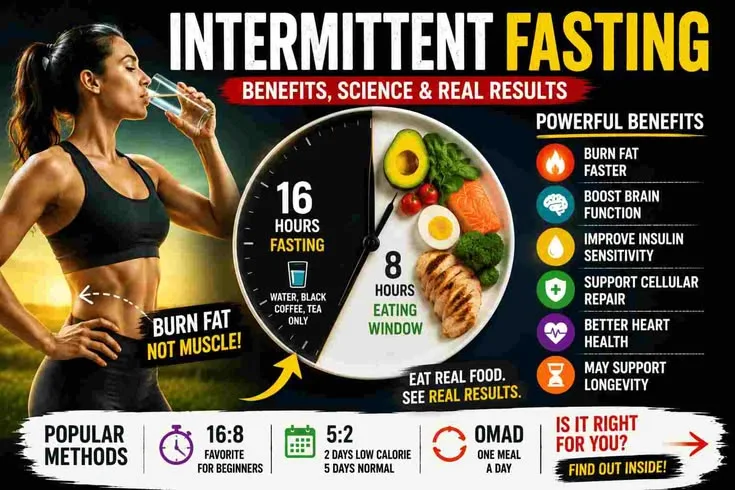
This is the range covered by most intermittent fasting protocols (16:8, 18:6).
Between 12 and 16 hours, liver glycogen approaches depletion. The liver increases gluconeogenesis and dramatically upregulates fatty acid oxidation. Ketone body production begins increasing. Blood BHB levels begin rising from baseline (<0.1 mmol/L) toward early ketosis levels (0.2-0.5 mmol/L in some individuals).
Insulin has reached its lowest point in the cycle - typically 40-60% lower than post-meal peaks. Growth hormone rises substantially (counter-regulatory response to low insulin; GH promotes fat oxidation and protein sparing). The catabolic hormone cortisol may rise slightly in some individuals.
mTOR suppression during this period begins activating autophagy. The evidence for significant autophagy induction in humans at 16 hours is limited; animal data suggest meaningful increases at 16-24 hours, but human studies with direct autophagy measurements (not proxy markers) suggest more pronounced effects require longer fasts.
24-48 Hours: Ketosis Deepens
By 24 hours, most people with standard body composition are in nutritional ketosis (BHB 0.5-2.0 mmol/L). The brain is using ketone bodies for a substantial fraction of its energy needs, reducing glucose demand and allowing gluconeogenesis to supply a lower total glucose requirement.
Autophagy is clearly elevated in animal models by this point; human studies with LC3-II (a direct autophagy marker) suggest meaningful increases at 24-48 hours. Frank Madeo's research group documented increases in several autophagy-related markers in humans during 24-48 hour fasts.
Protein catabolism for gluconeogenesis is occurring, though it is substantially less than the folk wisdom of "fasting destroys muscle" suggests.
The typical range is 15-25 grams of protein per day catabolized for gluconeogenesis during extended fasting - meaningful, but modest relative to total muscle mass and compensated by growth hormone's protein-sparing effects.
Hunger paradoxically often decreases after 24 hours. Ghrelin adaptation and ketone body production (which have appetite-suppressing effects through several mechanisms) contribute. Many extended fasters report that the first 18-24 hours are the hardest, after which hunger fades.
48-72 Hours: Extended Fasting
At 48-72 hours, ketosis is well-established with BHB levels typically 2-5 mmol/L. The brain derives approximately 60-70% of its energy from ketone bodies at this point. Autophagy is strongly upregulated. Growth hormone is markedly elevated. Insulin is at its nadir.
This is the range used in most clinical research on therapeutic fasting: Valter Longo's "fasting-mimicking diet" protocols, the prolonged fasting studies for chemotherapy sensitization, and research on fasting-induced regeneration of immune and metabolic systems.
The risks also increase meaningfully at this range: significant electrolyte depletion requires management; refeeding syndrome (dangerous electrolyte shifts upon reintroduction of food) becomes a concern; and the physiological stress of extended fasting becomes meaningful.
Extended fasts beyond 24-48 hours are generally not recommended without medical supervision.
Autophagy: The Nobel Prize Mechanism
Yoshinori Ohsumi spent years studying a process that most biologists considered a footnote in cell biology - the mechanism by which cells digest their own components. When he mapped the genetics of autophagy in yeast in the 1990s, he found an evolutionarily conserved system of remarkable sophistication.
In 2016, the Nobel Committee awarded him the prize for showing that autophagy is not cellular suicide but cellular recycling - essential for health and implicated in aging, cancer, neurodegeneration, and immunity.
The process: when mTOR is suppressed (during fasting, caloric restriction, or rapamycin treatment), the ULK1 complex activates, initiating autophagosome formation.
The autophagosome is a double-membrane vesicle that engulfs cellular cargo - misfolded protein aggregates, dysfunctional mitochondria (mitophagy), excess lipid droplets (lipophagy), intracellular pathogens (xenophagy) - and fuses with the lysosome, where the cargo is degraded and its components recycled for cellular use.
This quality control function is critical. Misfolded proteins and dysfunctional organelles accumulate with age, contributing to cellular senescence, inflammation (via SASP from senescent cells), and the protein aggregation that characterizes neurodegenerative diseases (amyloid-beta in Alzheimer's, alpha-synuclein in Parkinson's, huntingtin in Huntington's).
Deficient autophagy is a feature of aging cells, and restoring autophagy in aged animals improves multiple healthspan metrics.
The relationship between fasting and autophagy is well-established in cell culture and animal models.
Human evidence is more limited but supportive: studies using autophagy flux measurements (LC3-II levels, p62 degradation) find clear autophagy induction in human leukocytes after 24-48 hours of fasting, and in muscle biopsies after endurance exercise (which also activates autophagy).
The timing claims in popular fasting culture - "autophagy kicks in at 12 hours" - are biologically plausible but poorly supported by direct human measurement.
The honest summary: autophagy is meaningfully elevated during extended fasting in humans, the precise timing is uncertain, and 16-hour fasting probably produces some autophagy induction but much less than 48-72 hour fasting.
The Intermittent Fasting Evidence: What Actually Works
The clinical evidence for intermittent fasting divides into three categories:
Weight Loss and Metabolic Health
Krista Varady at the University of Illinois has published the most methodologically careful IF trials. Her meta-analyses and original RCTs consistently find:
- 16:8 and 5:2 protocols produce 3-8% body weight reduction over 8-12 weeks
- Similar improvements in fasting glucose, insulin, and HOMA-IR (insulin resistance measure) as continuous caloric restriction
- Some evidence for greater reductions in LDL and blood pressure with IF vs. continuous restriction
- No significant difference in lean mass loss compared to continuous restriction at equivalent caloric deficits
Kevin Hall's NIH metabolic ward studies found no metabolic advantage for IF when calories were precisely controlled - the "metabolic switch" effects (increased fat oxidation, growth hormone) did not produce additional calorie burning beyond what continuous restriction would achieve at equivalent intake.
The practical advantage of IF may be primarily behavioral: the clear fasting window simplifies eating decisions and tends to reduce total caloric intake.
Cardiovascular Risk Factors
Mark Mattson's animal research at NIH demonstrated remarkable effects of alternate-day fasting on cardiovascular risk factors, neuroplasticity, and healthspan.[1] Human translation has been more modest. A 2020 New England Journal of Medicine review by Mattson synthesized the human clinical evidence, finding:[2]
- Consistent reductions in blood pressure (systolic 3-8 mmHg)
- Reductions in resting heart rate
- Improvements in lipid profiles (particularly LDL and triglycerides)
- Reductions in fasting insulin and insulin resistance
- Reductions in inflammatory markers (CRP, IL-6)
These effects appear primarily driven by caloric restriction and weight loss rather than fasting per se, based on controlled comparisons.
Longevity and Disease Prevention
The longevity-related claims for IF are the most speculative. The animal data is compelling: caloric restriction extends lifespan by 20-40% in multiple organisms including yeast, worms, flies, and rodents.
The CALERIE trial in humans (the most rigorous long-term caloric restriction trial) found that 25% caloric restriction for 2 years produced significant improvements in cardiometabolic risk factors and biological aging markers.
The IF parallel data in humans is limited to surrogate endpoints - no human RCT has used lifespan or even long-term disease-specific outcomes as primary endpoints for IF.
Valter Longo's "fasting-mimicking diet" (5 days/month of approximately 800 calories, repeated monthly) has shown intriguing results in mouse models (extended lifespan, reduced cancer incidence) and in human pilot trials (reduction in cancer risk factors, improved metabolic health).
A 2015 study in Cell Metabolism found that periodic fasting-mimicking diet cycles in mice extended lifespan, reduced cancer incidence, and regenerated immune cells. Human data from Longo's clinical trials show reductions in IGF-1 (associated with longevity) and cardiometabolic risk factors.[3]
Ketosis: More Than Just Fuel
When the body shifts to ketosis during extended fasting, the ketone body beta-hydroxybutyrate (BHB) doesn't just serve as an alternative fuel. It functions as a signaling molecule with independent biological effects.
John Newman and Eric Verdin at the Buck Institute documented that BHB inhibits class I and IIa histone deacetylases (HDACs) - enzymes that normally compress chromatin and suppress gene transcription.[4]
By inhibiting HDACs, BHB increases acetylation of histones and activates transcription of genes associated with stress resistance, antioxidant defense (including FOXO3 and SOD2), and longevity pathways.
This is an epigenetic mechanism by which fasting - through BHB - alters gene expression in ways that resemble the effects of caloric restriction and HDAC inhibitor drugs.
BHB also inhibits the NLRP3 inflammasome, reducing IL-1beta and IL-18 production - directly suppressing one of the primary chronic inflammation drivers. Youm et al.'s 2015 Nature Medicine paper documented this mechanism; BHB at ketotic concentrations produced significant anti-inflammatory effects through NLRP3 inhibition.[5]
For the brain, ketone bodies provide an efficient, potentially neuroprotective fuel. The brain uses approximately 60% of its resting energy requirement; in Alzheimer's disease, glucose metabolism in specific brain regions is impaired decades before symptom onset.
Some researchers, including Stephen Cunnane, have proposed that ketone supplementation or ketogenic diet may compensate for this impaired glucose metabolism and slow AD progression - with early clinical trial evidence that is intriguing but not yet definitive.
The Fasting Hype Problem
The science of fasting is genuinely interesting. The popular narrative around fasting has outrun the evidence in several ways:
Autophagy claims are overstated: The claim that 16 hours of fasting produces dramatic autophagy benefits sufficient to "clean up" cellular damage has limited direct human evidence. Most autophagy research is in cell culture or animal models; human fasting studies measuring autophagy directly have used longer fasting periods.
Metabolic advantages over caloric restriction: Multiple carefully controlled studies show that IF protocols produce outcomes essentially equivalent to continuous caloric restriction at the same deficit.[6]
The "metabolic switch" does not produce meaningful additional weight loss or metabolic benefit beyond what the caloric deficit alone produces.
Muscle preservation: The popular claim that IF is superior to continuous restriction for preserving lean muscle mass is not consistently supported. Some studies show slightly better fat-to-muscle ratios with IF; others show no difference.
The most important variables for muscle preservation remain total protein intake and resistance training.
Hormetic effects: The framing of fasting as a beneficial stressor that "trains" the body is partially supported by evidence (exercise is also a stressor with positive adaptation responses), but the specific mechanisms and their long-term human significance are not as established as popular accounts suggest.
The honest summary: IF is a useful, evidence-based dietary strategy for caloric restriction that many people find easier to sustain than continuous restriction. The acute metabolic effects (reduced insulin, increased fat oxidation, some autophagy induction) are real.
The longevity and disease prevention claims are biologically plausible but not yet supported by long-term human outcome data.
For related concepts, see why diets fail, what causes chronic inflammation, how the gut microbiome works, and what the science of longevity shows.
Sources & Further Reading
- Mattson, M. P., Longo, V. D., & Harvie, M. (2017). Impact of Intermittent Fasting on Health and Disease Processes. Ageing Research Reviews, 39, 46-58. DOI: 10.1016/j.arr.2016.10.005
- de Cabo, R., & Mattson, M. P. (2019). Effects of Intermittent Fasting on Health, Aging, and Disease. New England Journal of Medicine, 381(26), 2541-2551. DOI: 10.1056/NEJMra1905136
- Longo, V. D., & Panda, S. (2016). Fasting, Circadian Rhythms, and Time-Restricted Feeding in Healthy Lifespan. Cell Metabolism, 23(6), 1048-1059. DOI: 10.1016/j.cmet.2016.06.001
- Newman, J. C., & Verdin, E. (2014). Ketone Bodies as Signaling Metabolites. Trends in Endocrinology and Metabolism, 25(1), 42-52. DOI: 10.1016/j.tem.2013.09.002
- Youm, Y. H., et al. (2015). The Ketone Metabolite Beta-Hydroxybutyrate Blocks NLRP3 Inflammasome-Mediated Inflammatory Disease. Nature Medicine, 21(3), 263-269. DOI: 10.1038/nm.3804
- Harvie, M. N., et al. (2011). The Effects of Intermittent or Continuous Energy Restriction on Weight Loss. International Journal of Obesity, 35(5), 714-727. DOI: 10.1038/ijo.2010.171
- Stewart, W. K., & Fleming, L. W. (1973). Features of a Successful Therapeutic Fast of 382 Days' Duration. Postgraduate Medical Journal, 49(569), 203-209. DOI: 10.1136/pgmj.49.569.203