
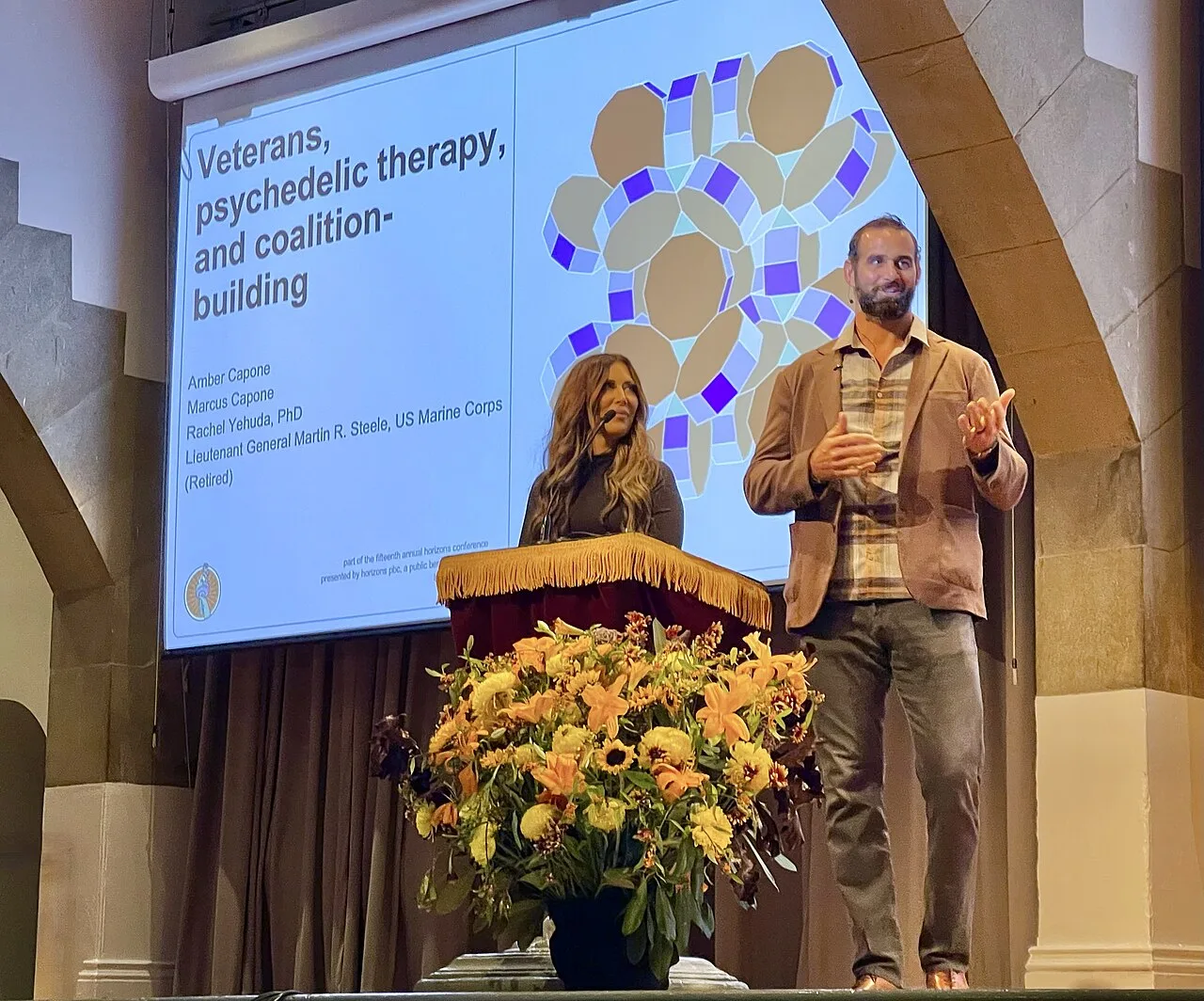
Psychedelic therapies combine preparation, supervised dosing, and integration sessions rather than treating a drug experience as treatment by itself. Early trials of MDMA for PTSD and psilocybin for treatment-resistant depression show notable promise, while ketamine is already used as a rapid-acting antidepressant. The evidence is meaningful but still developing, and outcomes depend on screening, therapeutic support, set, setting, risks, and regulatory review.
In 2021, Rick Doblin submitted Phase 3 clinical trial results to the FDA for MDMA-assisted therapy for PTSD. Of participants with treatment-resistant PTSD - people who had failed conventional antidepressants and therapy - 67% in the MDMA group no longer met diagnostic criteria for PTSD at follow-up, compared to 32% in the placebo group.
The effect size was enormous by the standards of psychiatric clinical trials. These were patients who had been suffering for years, many for decades, cycling through medications and therapy modalities without sustained relief.
The FDA had already granted MDMA Breakthrough Therapy designation in 2017 - one of only a handful of such designations ever given for psychiatric indications. That designation, reserved for drugs showing substantial improvement over existing therapies in preliminary evidence, signaled that regulators took the results seriously.
The psilocybin work at Johns Hopkins and NYU was earning the same attention: FDA Breakthrough Therapy for treatment-resistant depression in 2018, a second designation for major depressive disorder in 2019.
The renaissance in psychedelic medicine, suppressed for fifty years by the War on Drugs, had produced what appeared to be genuine clinical breakthroughs. Understanding what that means - and what it does not mean - requires tracing both the science and the history.
"Psychedelic drugs, if used carefully and with appropriate preparation and support, hold remarkable promise as therapeutic agents." - Robin Carhart-Harris, The Lancet Psychiatry (2016)
Key Definitions
Psychedelic-assisted therapy: a structured clinical treatment in which a psychedelic substance is administered within a therapeutic framework, including preparation sessions before and integration sessions after the drug experience.
MDMA (3,4-methylenedioxymethamphetamine): an entactogen that releases serotonin, dopamine, and oxytocin, producing feelings of empathy and trust; not a classical psychedelic but used therapeutically for PTSD.
Psilocybin: a naturally occurring compound in certain fungi that is converted to psilocin in the body; a serotonin 2A receptor agonist that produces profound alterations in perception, cognition, and self-experience.
LSD (lysergic acid diethylamide): a synthetic compound first synthesized by Albert Hofmann in 1938; the most potent classical psychedelic and the substance around which the first wave of psychedelic research was organized.
Ketamine: an NMDA receptor antagonist approved as an anesthetic and, more recently, as a rapid-acting antidepressant; the only currently legal psychedelic-adjacent treatment in most jurisdictions.
Breakthrough Therapy designation: an FDA designation that accelerates development and review of drugs showing substantial improvement over existing treatments in preliminary clinical evidence.
Treatment-resistant depression (TRD): depression that has not responded adequately to at least two different antidepressant treatments of adequate dose and duration; affects approximately one-third of people with major depressive disorder.
Mystical experience: a discrete psychological state characterized by unity, sacredness, noetic quality, transcendence of time and space, and positive mood; reliably occasioned by high-dose psilocybin and shown to predict therapeutic outcomes.
Entropic brain hypothesis: Robin Carhart-Harris's theory that psychedelics increase the entropy or disorder of brain activity, releasing it from rigid habitual patterns and enabling a wider exploration of psychological states.[5]
Default mode network (DMN) disruption: suppression by psychedelics of the brain network associated with self-referential thought and rumination, correlating with ego dissolution and antidepressant effects.
Set and setting: Timothy Leary's formulation that the psychedelic experience is shaped primarily by mindset (set) and physical and social environment (setting), not by pharmacology alone.
Therapeutic window: the pharmacologically active period during an MDMA or psilocybin session during which therapeutic work is possible; the session typically lasts four to eight hours.
Integration session: therapy sessions following a psychedelic dosing session in which the patient and therapist process the experience and connect it to therapeutic goals and everyday life.
Psychedelic Therapies: Current Evidence Summary
| Substance | Primary Target Condition | Phase of Research | Best Evidence | FDA Status |
|---|---|---|---|---|
| MDMA | PTSD | Phase 3 completed | 67% remission vs. 32% placebo (Mithoefer et al.) | Breakthrough Therapy; FDA decision pending |
| Psilocybin | Treatment-resistant depression | Phase 2/3 | 71% response rate at 3 weeks (Carhart-Harris 2021) | Breakthrough Therapy designation (2018, 2019) |
| Psilocybin | Alcohol use disorder | Phase 2 | Significant reduction in drinking days (Bogenschutz 2022) | Phase 3 ongoing |
| Psilocybin | End-of-life anxiety | Phase 2 | Large effect sizes on anxiety and depression in terminal cancer patients | Phase 3 planning |
| Ketamine / Esketamine | Treatment-resistant depression | Approved | Rapid onset (hours); FDA-approved Spravato (esketamine) 2019 | FDA-approved (Spravato/Ketamine clinics) |
| LSD | Anxiety disorders, alcoholism | Phase 2 | Promising early data; 1960s data methodologically limited | Phase 2 ongoing |
| Ibogaine | Opioid addiction | Phase 1/2 | Significant opioid use reduction; cardiac risk concerns | Not FDA-approved; Schedule I |
The First Golden Age: 1950s and 1960s
The scientific history of psychedelic medicine begins in 1943, when Albert Hofmann accidentally ingested the compound he had synthesized five years earlier and discovered its extraordinary potency. Within a decade, it had become the subject of serious clinical research.
The British psychiatrist Humphry Osmond coined the term "psychedelic" in 1957 - from the Greek for mind-manifesting - in a letter to the novelist Aldous Huxley, who had taken mescaline under Osmond's supervision and written about the experience in The Doors of Perception (1954).
By the early 1960s, research was flourishing. The Spring Grove State Hospital program in Maryland, led by Sanford Unger and Charles Savage, had conducted more than 100 studies on LSD-assisted psychotherapy by 1965. Sandoz Pharmaceuticals, which held the patent on LSD, supplied the compound free of charge to researchers worldwide.
The treatment indications under investigation included alcoholism, anxiety in terminal cancer patients, schizophrenia, and addiction to opioids and other substances.
Bill Wilson, co-founder of Alcoholics Anonymous, was treated with LSD in the 1950s and proposed its incorporation into AA's recovery model - a proposal that was not adopted.
At Harvard, Timothy Leary and Richard Alpert ran the Harvard Psilocybin Project and, later, the Concord Prison Experiment, which investigated whether psilocybin could reduce recidivism in released prisoners. Early reports suggested striking reductions in re-arrest rates.
Later methodological scrutiny, particularly by Rick Doblin, revealed serious flaws in data collection and follow-up.
The experiment was important not for its results but for what followed: Leary and Alpert were dismissed from Harvard in 1963, their advocacy became increasingly countercultural and politically radioactive, and the entire research enterprise became entangled with the social upheavals of the 1960s.
In 1970, President Nixon signed the Controlled Substances Act, placing LSD and psilocybin on Schedule I - the most restrictive category, reserved for drugs with no accepted medical use and high abuse potential. This effectively ended the first wave of psychedelic research.
For fifty years, the Schedule I designation made it nearly impossible to obtain research-grade compounds legally, to recruit funding, or to publish in mainstream journals. More than a thousand studies involving tens of thousands of participants were simply abandoned.
The Psilocybin Renaissance
The modern era of psychedelic research began cautiously in the late 1990s and early 2000s, as a small group of researchers, emboldened by changing regulatory interpretations at the DEA and encouraged by the organizational support of MAPS (the Multidisciplinary Association for Psychedelic Studies), began obtaining DEA Schedule I researcher licenses and conducting the first controlled studies in decades.
The landmark publication marking the return of mainstream psychedelic science was Roland Griffiths and colleagues at Johns Hopkins in 2006, published in Psychopharmacology.[1]
The study enrolled 36 healthy volunteers with no prior hallucinogen experience and administered either psilocybin or an active placebo (methylphenidate) in a randomized, double-blind design.
Participants were screened carefully, prepared extensively, and supported by trained monitors during sessions held in a comfortable, living room-like environment.
The results were striking: 67% of participants rated the psilocybin session as among the five most spiritually significant experiences of their lives, and 79% reported increased well-being and life satisfaction at two-month follow-up. The depth of the mystical experience was the primary predictor of positive outcomes.
This established the foundational framework for all subsequent psilocybin therapy research: the mystical experience is the active therapeutic ingredient, and maximizing its depth requires careful attention to set and setting.
Building on this foundation, two groups simultaneously published randomized controlled trials of psilocybin for cancer-related existential distress in 2016.[7]
The NYU group, led by Stephen Ross and Anthony Bossis, published in the Journal of Psychopharmacology (doi: 10.1177/0269881116675512), and the Hopkins group, led by Griffiths and Matthew Johnson, published in the same issue.[8]
Both trials enrolled patients with life-threatening cancer diagnoses who were experiencing depression, anxiety, and existential distress.
Both found that a single dose of psilocybin produced clinically significant reductions in depression and anxiety, with approximately 80% of participants in both studies showing responses that persisted at six-month follow-up.
The NYU trial found an effect size (Cohen's d) of approximately 2.0 for depression - two standard deviations of improvement, which is extraordinary by the standards of psychiatric clinical trials where effect sizes of 0.3 to 0.5 are typical.
The most rigorous psilocybin study to date was the 2021 randomized controlled trial by Carhart-Harris and colleagues, published in the New England Journal of Medicine (doi: 10.1056/NEJMoa2032994).[3]
The trial compared two doses of psilocybin to a six-week course of escitalopram (the SSRI most commonly prescribed for depression) in 59 patients with major depressive disorder.
Both groups received the same psychotherapy support. On the primary outcome measure, the two treatments were comparable.
On several secondary measures - emotional well-being, meaning in life, anhedonia - psilocybin performed significantly better. The psilocybin group also showed faster onset of benefit.
Critics noted that the trial was underpowered to detect the primary outcome difference, and that the blinding was imperfect since psilocybin's subjective effects are unmistakable.
These are legitimate methodological limitations. The study's importance was to establish that psilocybin could be compared to an active gold-standard treatment within a rigorous trial design, rather than only against placebo.
MDMA for PTSD
While psilocybin research proceeded at Johns Hopkins and NYU, a parallel and equally consequential research program was developing around MDMA and PTSD, organized and funded almost entirely by MAPS.
Rick Doblin founded MAPS in 1986, one year after the DEA emergency-scheduled MDMA - which had been in widespread therapeutic use since the late 1970s among psychotherapists who called it "empathy" - into Schedule I.
Doblin's explicit mission from the beginning was to develop MDMA into an FDA-approved prescription medication. He spent the next 37 years executing that plan.
The Phase 2 program, led primarily by Michael Mithoefer and Annie Mithoefer, enrolled participants with treatment-resistant PTSD in a series of trials beginning in 2004.
Published results showed that 83% of participants in the active MDMA group no longer met diagnostic criteria for PTSD at follow-up, compared to 25% in the placebo group. These were Phase 2 numbers from a relatively small sample, but the effect sizes were unprecedented.
The Phase 3 program, required for FDA approval, consisted of three trials totaling 149 participants.
The primary analysis, published by Mitchell and colleagues in 2021 in Nature Medicine (doi: 10.1038/s41591-021-01336-3), found that 67% of the MDMA group no longer met PTSD diagnostic criteria at primary endpoint, compared to 32% in the placebo group.[2]
The treatment protocol was intensive: participants received three 8-hour MDMA sessions interspersed with twelve 90-minute non-drug therapy sessions across approximately 18 weeks.
Total therapy contact time was roughly 40 hours. The sample was deliberately recruited to include participants who had been refractory to multiple prior treatment attempts.
Why does MDMA work for PTSD? The mechanism is different from classical psychedelics. PTSD involves a dysregulation of the fear response: the amygdala becomes hyperreactive to trauma cues, and the prefrontal cortex's capacity to regulate this response is compromised.
Conventional trauma-focused therapies like prolonged exposure work by asking patients to approach traumatic memories repeatedly until the fear response habituates - a process many patients find intolerable and drop out of.
MDMA appears to temporarily suppress amygdala reactivity to threat while simultaneously releasing oxytocin and increasing sense of safety and trust in the therapeutic relationship.
The MDMA session creates a pharmacologically-mediated window during which patients can approach traumatic memories with their therapists without being overwhelmed, allowing the processing and integration that habitual fear responses normally block.
The Neuroscience
The neuroscience of psychedelic therapeutics has advanced considerably in the past decade, though a complete mechanistic account remains elusive.
Robin Carhart-Harris at Imperial College London (later at UCSF) has been the most prolific researcher in this area.
His entropic brain hypothesis, published in Philosophical Transactions of the Royal Society B in 2014 and refined in subsequent papers, proposes that psychedelics increase the entropy or disorder of neural activity as measured by functional MRI, releasing the brain from the rigid attractor states that characterize conditions like depression and addiction.[6]
In healthy adults, psilocybin produced markedly increased neural signal diversity and a breakdown of the modular structure of resting-state networks. Depressed patients show abnormally rigid, low-entropy patterns of activity centered on the default mode network.
The default mode network - a set of regions including the medial prefrontal cortex, posterior cingulate cortex, and angular gyrus - is associated with self-referential processing, mind-wandering, autobiographical memory retrieval, and rumination.
It is sometimes called the "self" network because its activity tracks closely with the experience of being a self with a continuous identity. Psilocybin potently suppresses DMN activity, and this suppression correlates both with the subjective experience of ego dissolution and with antidepressant outcomes at follow-up.
The hypothesis is that depressive rumination - the repetitive, self-referential negative thought patterns that maintain depression - is disrupted by DMN suppression, creating an opportunity for new patterns to form.
Separately, Ly and colleagues published evidence in 2018 in Cell Reports (doi: 10.1016/j.celrep.2018.05.022) that psychedelics promote structural and functional neuroplasticity via BDNF (brain-derived neurotrophic factor) signaling pathways.[4]
In cortical neurons, both psilocybin and DMT increased the density of dendritic spines and synaptic connections - the physical substrate of neural learning - at doses lower than those producing behavioral effects in rodents.
This suggests that psychedelics may create a window of heightened neuroplasticity, analogous to the sensitive periods of brain development, during which therapeutic learning is more readily encoded.
It would explain why integration - the therapeutic work done in the days and weeks following a psychedelic session - appears to be essential for durable outcomes.
The predictive power of the mystical experience for therapeutic outcomes has been demonstrated across multiple studies.
Barrett and Griffiths in 2018 published a systematic analysis showing that mystical experience scores during psilocybin sessions predicted antidepressant, anxiolytic, and anti-smoking outcomes across different patient populations and therapeutic targets.
The complete mystical experience - characterized by unity consciousness, sense of sacredness, noetic quality, deeply felt positive mood, and transcendence of time and space - appears to be the common therapeutic factor across indications.
This is a remarkable finding because it suggests the therapeutic mechanism is not specific to any diagnostic category: whatever psilocybin does to the self-structure of the brain has beneficial consequences across a range of disorders where rigid, negative self-referential processing plays a role.
Ketamine: The Legal Bridge
While psilocybin and MDMA remained in regulatory limbo, ketamine carved out a unique position as the only legal psychedelic-adjacent treatment available in most countries.
Ketamine was developed in the 1960s as a dissociative anesthetic and has been on the WHO list of essential medicines for decades.
Its antidepressant properties were first noted in clinical settings incidentally and confirmed in a landmark 2000 paper by Berman and colleagues, which showed that a single subanesthetic intravenous infusion produced rapid antidepressant effects within hours in patients with treatment-resistant depression.
This was strikingly different from conventional antidepressants, which require weeks to achieve clinical benefit. The finding was replicated extensively in the following two decades.
The FDA approved esketamine (Spravato), the S-enantiomer of ketamine formulated as an intranasal spray, in 2019 for treatment-resistant depression and subsequently for major depressive disorder with acute suicidal ideation. This was the first genuinely new antidepressant mechanism approved in decades.
The mechanism is distinct from classical psychedelics: ketamine blocks NMDA (N-methyl-D-aspartate) glutamate receptors, which has downstream effects on AMPA receptors and, ultimately, on BDNF signaling pathways that converge with the neuroplasticity mechanisms implicated in psilocybin's effects.
Ketamine infusion clinics have proliferated across the United States since the esketamine approval, offering off-label intravenous ketamine for depression outside of a formal psychotherapy framework. The evidence for acute antidepressant effects is strong.
The limitations are that responses are often not durable - many patients require repeated infusions - and maintenance protocols are not well established.
The dissociative experience produced by ketamine is generally less therapeutically profound than the mystical experiences occasioned by psilocybin, and the therapeutic framework surrounding ketamine infusions is typically less intensive than classical psychedelic therapy protocols.
Ketamine also carries a higher abuse and dependence potential than psilocybin or LSD, which have very low dependence liability by pharmacological and epidemiological measures.
The Regulatory Pathway
The regulatory environment around psychedelic medicine has changed faster in the past five years than in the previous fifty.
The FDA Breakthrough Therapy designation for MDMA (2017) and psilocybin (2018 and 2019) represented a formal signal that regulators believed the preliminary evidence was compelling enough to warrant expedited development processes.
Breakthrough designation provides more frequent FDA guidance meetings, rolling review of clinical data, and the ability to submit sections of the application before the full package is complete.
MAPS submitted its New Drug Application for MDMA-assisted therapy for PTSD in December 2023. The FDA issued a Complete Response Letter in August 2024, declining to approve but requesting additional data.
The agency's concerns centered on two issues: the adequacy of the blinding in the trials (participants could readily identify whether they had received MDMA or placebo, potentially inflating perceived outcomes) and documented incidents of therapist misconduct during dosing sessions, including sexual boundary violations, which raised questions about the safety monitoring systems in the trial program.
The FDA also requested an additional Phase 3 trial or post-market study. This was a significant setback but not a final rejection: MAPS indicated it would work with the agency to address the concerns.
Australia moved more decisively. The Therapeutic Goods Administration, Australia's equivalent of the FDA, announced in February 2023 and implemented in July 2023 a decision to authorize authorized psychiatrists to prescribe MDMA for PTSD and psilocybin for treatment-resistant depression through a special access scheme - making Australia the first country in the world to approve these substances for clinical use.
The scheme requires treating psychiatrists to be specifically authorized and to submit detailed treatment plans.
At the state level in the United States, Oregon passed Measure 109 in November 2020, creating a framework for licensed psilocybin service centers separate from the conventional medical system.
Under this framework, which began operating in 2023, trained facilitators can provide psilocybin sessions to adults without a medical diagnosis or prescription. Colorado passed a similar measure in 2022 covering psilocybin and several other psychedelic substances.
These frameworks represent a different model from medical approval: therapeutic use without medicalizing the treatment or requiring a physician intermediary.
Risks and Caveats
The enthusiasm surrounding psychedelic therapy research is warranted by the evidence, but it is frequently accompanied by an underemphasis of genuine risks and limitations.
The most serious risk in clinical settings is not physical toxicity - psilocybin and LSD have very low physiological toxicity and essentially no lethal dose - but psychological harm from difficult experiences. Psilocybin and LSD can occasion episodes of intense fear, paranoia, and psychological destabilization.
In a well-screened and well-supported clinical context, these difficult experiences are usually manageable and may even be therapeutically productive.
In inadequately screened or poorly supported settings, they can cause lasting psychological harm, particularly in individuals with personal or family histories of psychotic disorders or bipolar I disorder. These conditions are absolute contraindications in current trial protocols, but may be missed in less rigorous settings.
MDMA carries specific cardiovascular risks not shared by classical psychedelics. It elevates heart rate, blood pressure, and body temperature, making it contraindicated in patients with cardiac conditions.
It has caused rare but fatal cases of hyperthermia, serotonin syndrome, and hyponatremia, primarily in recreational settings where large amounts of water are consumed without adequate sodium. Clinical protocols include medical monitoring during sessions and careful cardiovascular screening.
Persistent hallucinogen perception disorder (HPPD) - a condition in which visual perceptual disturbances from a psychedelic experience persist long after the drug has cleared - occurs in a small minority of LSD users.
Estimates of prevalence range from less than one percent to several percent depending on the definition used, and the condition ranges from mild and tolerable to debilitating in rare cases.
The documented incidents of therapist misconduct in MDMA trials - including sexual contact with patients during or after dosing sessions - are not merely isolated incidents but reflect a structural vulnerability of the therapy model: patients are in profoundly vulnerable, trust-enhanced, and sometimes dissociative states for many hours with therapists who hold considerable authority and whose conduct during sessions is difficult to verify.
Robust safeguards, including mandatory co-therapy teams, session recording, and independent monitoring, are essential and their implementation has not been uniform.
Finally, equity concerns are structural. The current therapy-intensive model costs several thousand dollars per treatment course and is not covered by insurance in most jurisdictions.
Without deliberate structural interventions, psychedelic therapy will begin as a treatment for the wealthy and may remain one for years after regulatory approval.
Connections
For a detailed account of the subjective phenomenology of psychedelic experiences, see what happens when you take psychedelics. For the neurobiological basis of depression that psychedelics may address, see what causes depression.
For a discussion of how trauma is stored in the body and mind, relevant to MDMA-assisted PTSD treatment, see what is trauma.
Sources & Further Reading
- Griffiths, R. R., Richards, W. A., McCann, U., & Jesse, R. (2006). Psilocybin can occasion mystical-type experiences having substantial and sustained personal meaning and spiritual significance. Psychopharmacology, 187(3), 268-283. DOI: 10.1007/s00213-006-0457-5
- Mitchell, J. M., Bogenschutz, M., Lilienstein, A., Harrison, C., Kleiman, S., Parker-Guilbert, K., ... & Doblin, R. (2021). MDMA-assisted therapy for severe PTSD: a randomized, double-blind, placebo-controlled Phase 3 study. Nature Medicine, 27(6), 1025-1033. DOI: 10.1038/s41591-021-01336-3
- Carhart-Harris, R., Giribaldi, B., Watts, R., Baker-Jones, M., Murphy-Beiner, A., Murphy, R., ... & Nutt, D. J. (2021). Trial of psilocybin versus escitalopram for depression. New England Journal of Medicine, 384(15), 1402-1411. DOI: 10.1056/NEJMoa2032994
- Ly, C., Greb, A. C., Cameron, L. P., Wong, J. M., Barragan, E. V., Wilson, P. C., ... & Olson, D. E. (2018). Psychedelics promote structural and functional neural plasticity. Cell Reports, 23(11), 3170-3182. DOI: 10.1016/j.celrep.2018.05.022
- Carhart-Harris, R. L. (2018). The entropic brain - revisited. Neuropharmacology, 142, 167-178. See also: Carhart-Harris, R. L., Leech, R., Hellyer, P. J., Shanahan, M., Feilding, A., Tagliazucchi, E., ... & Nutt, D. (2014).
- The entropic brain: a theory of conscious states informed by neuroimaging research with psychedelic drugs. Philosophical Transactions of the Royal Society B, 369(1638), 20130475.
- Ross, S., Bossis, A., Guss, J., Agin-Liebes, G., Malone, T., Cohen, B., ... & Schmidt, B. L. (2016). Rapid and sustained symptom reduction following psilocybin treatment for anxiety and depression in patients with life-threatening cancer. Journal of Psychopharmacology, 30(12), 1165-1180.
- Griffiths, R. R., Johnson, M. W., Carducci, M. A., Umbricht, A., Richards, W. A., Richards, B. D., ... & Klinedinst, M. A. (2016). Psilocybin produces substantial and sustained decreases in depression and anxiety in patients with life-threatening cancer. Journal of Psychopharmacology, 30(12), 1181-1197.