
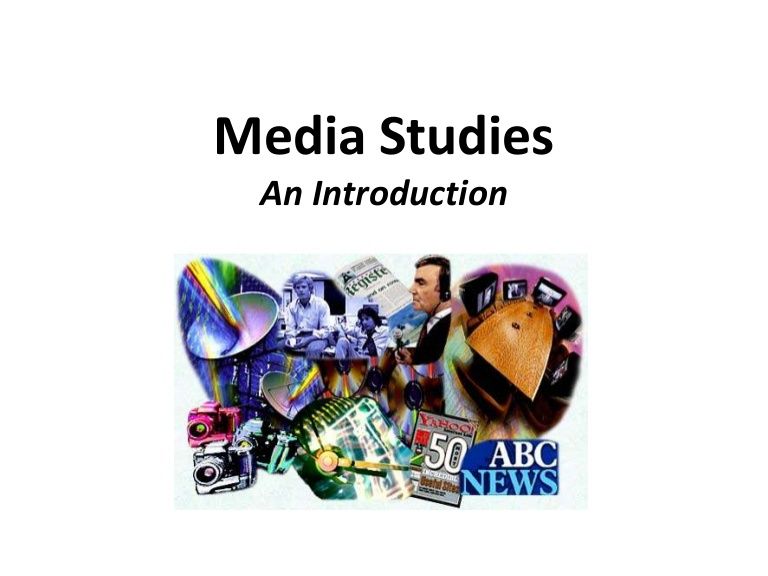
What is media studies? It is an interdisciplinary field that examines media technologies, institutions, content, and effects on knowledge, politics, culture, and social life. Its approaches range from propaganda and media ownership to audience interpretation, framing, misinformation, and platform research. A central idea is that a medium's form shapes perception and social organization, not merely the messages it carries.
Media studies is the interdisciplinary academic field that examines the content, history, and effects of communication technologies and media institutions: how they shape public knowledge, political behavior, cultural identity, and social life.
It draws on sociology, political science, cultural theory, psychology, economics, and philosophy to ask how the media we use to communicate transform what we communicate, who can communicate it, and who benefits from the exchange.
From Marshall McLuhan's sweeping claims about the effects of print culture on human consciousness, to Noam Chomsky and Edward Herman's structural analysis of news media ownership, to contemporary computational research on how false news spreads on social media, media studies has produced some of the most consequential, and contested, ideas in the social sciences.
The Scope and History of Media Studies
The formal study of mass communication dates to the early twentieth century, when radio and cinema raised urgent questions about the power of new media technologies to shape mass audiences.
Harold Lasswell's 1927 analysis of World War I propaganda, "Propaganda Technique in the World War," established the field's political urgency.
The Frankfurt School, including Theodor Adorno, Max Horkheimer, Herbert Marcuse, and others, developed a critical theory of the culture industry in the 1930s and 1940s, arguing that mass media produced standardized cultural commodities that served to integrate the working class into capitalist society, suppressing critical consciousness.
Simultaneously, American empirical researchers including Paul Lazarsfeld and his collaborators at Columbia University developed survey methods to study media effects, producing findings that often contradicted the strong effects model implicit in propaganda analysis.
Their two-step flow model, introduced in "The People's Choice" (Lazarsfeld, Berelson, and Gaudet, 1944), proposed that media effects were mediated through opinion leaders: socially active, media-attentive individuals who filtered and reinterpreted media messages for their social networks, complicating the picture of direct mass media influence.
The field was transformed again in the 1960s and 1970s by the cultural turn in the social sciences, the rise of semiotics and structuralism, and the influence of the British Cultural Studies tradition associated with Stuart Hall and the Birmingham Centre for Contemporary Cultural Studies.
Hall's encoding/decoding model (1980) proposed that media texts are encoded with preferred meanings by their producers but that audiences decode them in ways that may conform to, negotiate with, or oppose those preferred meanings, establishing audience activity as a central concern.
The contemporary field spans content analysis and framing research, political economy of media, audience studies, platform studies, misinformation research, and computational social science. It is simultaneously one of the most empirical and one of the most theoretically contested areas of the social sciences.
McLuhan: The Medium Is the Message
Marshall McLuhan's aphorism "the medium is the message," introduced in his 1964 book "Understanding Media: The Extensions of Man," is one of the most quoted and least understood statements in media theory. Its apparent paradox raises an obvious objection: should not the message be the message?
The answer is precisely the point: McLuhan was arguing that the content of a medium systematically distracts attention from the medium's own, more profound effects on human perception, social organization, and culture.
McLuhan's argument is that every medium, irrespective of its content, produces characteristic effects by virtue of its form.
The electric light is a medium with no content: it carries no messages in the ordinary sense, and yet it transforms human society profoundly by extending activity into the night, reorganizing work, leisure, and social life around a new temporal structure.
The medium itself is the social fact that matters.
McLuhan distinguished between hot and cool media, a typology that is productive even if imprecise:
| Media Type | Definition | Examples | Audience Role |
|---|---|---|---|
| Hot media | High definition: delivers rich information in a single sensory channel | Print, radio, cinema | Passive reception |
| Cool media | Low definition: sparse information, requires audience completion | Telephone, television (in McLuhan's era), face-to-face conversation | Active participation |
McLuhan's historical thesis was that the development of print technology in the fifteenth century had created a particular kind of linear, sequential, individualistic consciousness, a "Gutenberg man" who processed the world as a series of discrete, uniform units, like letters in a line.
Electronic media were reversing this, creating a new "global village" of simultaneous, multi-sensory, participatory communication more like oral culture than print culture.
The specific predictions were often wrong (McLuhan was notoriously indifferent to empirical verification). The general insight, though, that communication technologies shape consciousness and social structure, not just transmit information, remains genuinely important and is taken seriously by media scholars even those who reject his specific formulations.
The emergence of the internet, social media, and mobile communication has renewed interest in McLuhan's framework as a tool for understanding technological transformation.
"The medium is the message. This is merely to say that the personal and social consequences of any medium, that is, of any extension of ourselves, result from the new scale that is introduced into our affairs by each extension of ourselves." (Marshall McLuhan, Understanding Media, 1964)
Agenda-Setting Theory
Agenda-setting theory proposes that the news media do not tell people what to think, but are strikingly successful at telling people what to think about.
The distinction is important: it suggests that media influence operates not primarily through persuasion (changing opinions on issues) but through salience: determining which issues are prominent in public consciousness and therefore in political debate.
The theory was formalized by Maxwell McCombs and Donald Shaw in a landmark 1972 study of the 1968 US presidential election in Chapel Hill, North Carolina. They interviewed 100 undecided voters and coded the issues those voters regarded as most important.
They also content-analyzed newspaper and broadcast coverage in the preceding weeks to identify the issues that received the most attention.
The correlation between media emphasis and voter-perceived salience was very high: issues that received the most coverage were the issues voters regarded as most important, regardless of the voters' party alignment.
Second-level agenda setting, also called attribute agenda setting, proposes that media not only influence which issues are prominent but also which attributes of those issues or candidates are highlighted.
Politicians or issues can be framed in various ways, and the attributes the media emphasize shape how the public thinks about them: a candidate's personal likability versus their policy positions, for example, or an economic issue framed as a problem of individual responsibility versus structural inequality.
Agenda-setting research has important implications for understanding political power. If media gatekeepers determine which issues enter public consciousness and which remain invisible, they exercise substantial political power even without explicitly advocating positions.
This helps explain why advocacy groups, political campaigns, and corporate public relations departments invest heavily in managing media coverage: getting an issue covered is often more important than controlling the specific angle.
The theory's limitations have sharpened with media fragmentation. The original model implicitly treats "the media" as a unified actor, which was a reasonable simplification in the era of three dominant television networks and nationally read newspapers.
In the contemporary fragmented media environment, different audiences inhabit different information worlds, and the concept of a unified public agenda may itself require revision.
Framing Theory
Framing theory addresses how the way information is presented, the frame, shapes how audiences understand and evaluate it, often independently of the factual content itself.
The concept draws on sociologist Erving Goffman's foundational 1974 work "Frame Analysis," in which he argued that people make sense of the world by applying interpretive schemas that organize experience and guide action.
Media scholars adapted this insight to analyze how news presentations activate particular interpretive schemas.
Robert Entman's influential 1993 essay "Framing: Toward Clarification of a Fractured Paradigm" provides the most widely cited definition: "To frame is to select some aspects of a perceived reality and make them more salient in a communicating text, in such a way as to promote a particular problem definition, causal interpretation, moral evaluation, and/or treatment recommendation."
The classic demonstration of framing effects comes from Amos Tversky and Daniel Kahneman's research on decision-making.
When a medical treatment is described as having a "90 percent survival rate," people rate it more favorably than when the same treatment is described as having a "10 percent mortality rate." Logically the two descriptions are identical; cognitively they produce different judgments.
In political communication, framing effects are pervasive:
- Crime framed as a social problem (requiring investment in education and poverty reduction) versus crime framed as a public safety problem (requiring more policing and longer sentences)
- Immigration framed through economic or humanitarian lenses versus immigration framed through national security lenses
- Climate change framed as an environmental problem versus an economic opportunity versus a national security threat
Media framing research has documented systematic patterns in how particular issues are presented. Crime coverage disproportionately features violent crime and individual perpetrators, framing crime as a matter of individual pathology rather than social structure.
Coverage of protests tends to shift from the substantive issues being protested to the behavior of protesters, a pattern researchers call the protest paradigm (McLeod and Hertog, 1992). These patterns have ideological implications regardless of the conscious intentions of individual journalists.
Cultivation Theory and the Mean World Syndrome
Cultivation theory, developed by communications researcher George Gerbner and his colleagues at the Annenberg School of Communication at the University of Pennsylvania from the late 1960s onward, proposes that heavy exposure to television gradually cultivates a particular picture of social reality in viewers' minds: a picture that more closely resembles the world as television depicts it than the world as it actually is.
Gerbner's Cultural Indicators Project involved systematic content analysis of television programming over many years combined with surveys of heavy and light television viewers.
The central finding was that heavy viewers (four or more hours per day) held systematically different beliefs about the real world than light viewers (two or fewer hours per day), even after controlling for demographic variables:
| Belief Domain | Heavy Viewer Tendency | Reality |
|---|---|---|
| Violence prevalence | Overestimate dramatically | Violent crime is a minority of crime |
| Proportion working in law enforcement | Overestimate | Actual proportion is much lower |
| Personal risk of crime victimization | Overestimate | Most people are never violently victimized |
| General trust in other people | Lower trust | Actual social trust measures higher |
Gerbner called this cluster of distorted beliefs the mean world syndrome: television depicts a world far more violent, dangerous, and threatening than the real world, and heavy viewers absorb this picture and come to believe the world is meaner than it is.
The effect is produced not by any single program but by the cumulative, long-term exposure to a consistent symbolic environment.
Cultivation theory has been subject to methodological criticism: the correlations between heavy viewing and distorted worldviews are often small; it is difficult to establish causal direction; and the theory was developed for the era of broadcasting, when all heavy viewers watched roughly the same programming.
In the contemporary fragmented media environment, the specific mechanism of cultivation needs updating for personalized algorithmic feeds.
Nevertheless, the core insight, that the cumulative symbolic environment produced by dominant media shapes how people perceive social reality, remains among the most important ideas in media studies.
Manufacturing Consent: The Political Economy of Media
The political economy of media is an approach that focuses on the economic and institutional structures of media industries as determinants of media content and ideology.
Rather than asking only what media say, political economists ask who owns media, how they are financed, what institutional interests they serve, and how ownership and financing shape what gets covered.
Noam Chomsky and Edward Herman's 1988 book "Manufacturing Consent: The Political Economy of the Mass Media" is the most influential work in this tradition.
Their propaganda model proposes that the news media in the United States function primarily as a system of propaganda: not crude government-directed falsehood, but the more subtle, structural filtering of news in ways that serve the interests of powerful economic and political elites while maintaining the appearance of independence and objectivity.
Chomsky and Herman identified five "filters" through which news passes:
- Ownership: the size, concentrated ownership, and profit orientation of dominant media firms creates an institutional orientation toward safe, commercially viable content
- Advertising: as the primary revenue source, advertising gives advertisers effective power over coverage that might threaten their interests or their audience demographics
- Sourcing: reliance on official sources, including government officials, corporate spokespeople, and established think tanks, as legitimate, credible news sources structurally biases coverage toward elite perspectives
- Flak: organized responses and threats from powerful groups when coverage displeases them, which discourage challenging coverage
- Ideology: a shared ideological framework (originally anti-communism, updated to anti-terrorism) that provides standards against which journalists implicitly measure their coverage
"If we don't believe in freedom of expression for people we despise, we don't believe in it at all." (Noam Chomsky)
Chomsky and Herman supported their model with detailed comparative case studies, arguing that structurally similar events received systematically different coverage depending on whether they served or challenged US strategic interests.
The propaganda model remains controversial: critics argue it is unfalsifiable and overstates the coherence of elite interests; defenders argue it correctly identifies structural constraints without claiming perfect propaganda, and that its coverage predictions have been repeatedly confirmed.
Filter Bubbles and the Algorithmic Media Environment
The concept of the filter bubble was popularized by internet activist Eli Pariser in his 2011 book "The Filter Bubble: What the Internet Is Hiding from You."
Pariser's argument is that the personalization algorithms used by platforms like Facebook and Google, which tailor content to individual users based on their past behavior, create personalized information environments that increasingly show users only content reinforcing their existing views, filtering out challenging or contradictory perspectives.
Pariser's concern was not merely inconvenience but structural effects on public discourse and democratic deliberation.
If people only see content that confirms what they already believe, they become less aware of other perspectives, more confident in their own views, and less capable of the shared informational baseline that democratic politics requires.
The empirical evidence for filter bubbles is more nuanced than the popular discourse suggests.
A 2015 study by Facebook researchers (Bakshy, Messing, and Adamic, published in Science) found that algorithmic curation did reduce exposure to cross-cutting political content. However, individual user choices, the decision not to click on content from the other side, had a larger effect than the algorithm itself.
This finding generated controversy because it seemed to partially exonerate the algorithm while implicating users.
Subsequent research has complicated the picture further. Studies of partisan news segregation find it predates the internet and is not dramatically worse on social media than in the broadcast era. The most politically active users, who do show high levels of partisan sorting in their media consumption, are a minority.
Research by Guess and colleagues (2018) found that exposure to misinformation on social media was concentrated among older, highly partisan users.
These findings suggest that filter bubbles and echo chambers are real phenomena with real consequences for political polarization, but are less dramatic and universal than early popular accounts suggested. The political consequences are concentrated in specific demographic segments rather than uniformly distributed across the population.
Misinformation, False News, and the Information Ecosystem
The spread of misinformation online, and its role in political polarization, election outcomes, and public health crises, became one of the defining concerns of media studies in the 2010s.
The most-cited empirical study of false news diffusion is a 2018 paper by Soroush Vosoughi, Deb Roy, and Sinan Aral, published in Science under the title "The Spread of True and False News Online." Analyzing twelve years of Twitter data and tracking the diffusion of thousands of news stories fact-checked by six independent organizations, the authors found:
- False news spread faster, further, and more broadly than true stories, reaching more people and penetrating deeper into networks
- False political news was particularly viral
- Bots were not primarily responsible: human users, not automated accounts, were more likely to share false stories
- False stories tended to be more novel than true ones, and novelty drove sharing behavior
The study had important implications: the standard platform response to misinformation, identifying and removing bots, was insufficient because the core driver was human psychology.
People were drawn to share novel, surprising, and emotionally engaging content, and false stories disproportionately exhibited these properties because they were unconstrained by what had actually occurred.
Subsequent research has refined the picture. Work by Pennycook and Rand (2019) found that people who are prompted to think about accuracy before sharing, by asking them whether a headline is accurate, and then later presenting social media content, share significantly less misinformation, suggesting that inattention rather than motivated reasoning is a primary driver of misinformation sharing.
Research on who consumes misinformation finds it concentrated among a minority of highly partisan consumers, particularly older users.
Media Literacy in the Digital Age
Media literacy, the capacity to access, analyze, evaluate, and create media, has become one of the most widely advocated educational goals in the context of the contemporary information environment.
While media literacy education has a history stretching back to film education in the 1930s, the proliferation of social media, the democratization of content creation, and the rise of strategic misinformation have given it new urgency.
Contemporary media literacy frameworks encompass several distinct competencies:
| Competency | Description |
|---|---|
| Access | Technical ability to find and use media across platforms |
| Comprehension | Understanding how media texts are constructed and for what purposes |
| Critical analysis | Identifying framing, bias, sourcing, and economic interests |
| Evaluation | Distinguishing reliable from unreliable sources and claims |
| Creation | Producing responsible, accurate, and ethical media content |
| Civic participation | Using media knowledge for democratic engagement |
Lateral reading, the technique of leaving a webpage to research the source rather than evaluating it only in isolation, has been identified by researchers at the Stanford History Education Group as one of the most effective skills for evaluating online information.
Professional fact-checkers, the Stanford researchers found, use lateral reading instinctively; most secondary students and university undergraduates do not, preferring to scroll down the original page instead.
The effectiveness of media literacy education at scale is an active research question. Programs that develop specific skills, such as source evaluation, recognition of persuasion techniques, and lateral reading, tend to show measurable effects. Programs that focus on general critical thinking without specific media skills show weaker effects.
Inoculation theory (Lewandowsky and Cook, 2020) proposes that preemptively exposing people to weakened forms of misleading arguments, explaining the technique being used before they encounter it in the wild, can reduce susceptibility to misinformation, analogously to how vaccines work against biological pathogens.
Media studies occupies an unusual position in the academy: it is simultaneously the most practically urgent field, dealing with the information infrastructure of democracy, the economic structures of cultural production, and the psychological mechanisms of public persuasion, and one of the most theoretically heterogeneous, drawing on frameworks ranging from critical theory to experimental psychology to computational social science.
This heterogeneity is both a weakness (the field lacks the disciplinary coherence of chemistry or even sociology) and a strength (the object of study demands multiple methodological approaches and refuses reduction to a single framework).