
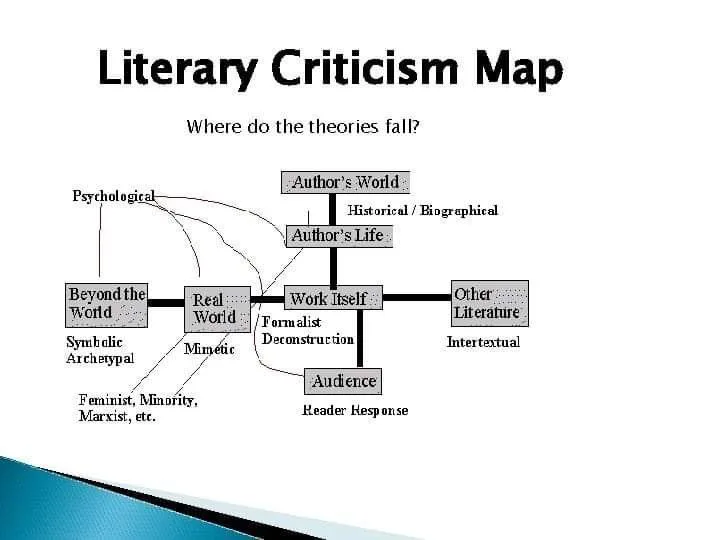
The complexity of literature lies in its imaginative, aesthetic, and intellectual value, as well as the historically contested boundaries of what counts as literary. It includes oral and written forms such as epic, tragedy, novels, lyric poetry, essays, and drama. Literary meaning emerges through conventions, language, and readers' encounters with texts, while debates about canons reveal broader struggles over cultural authority and exclusion.
Someone must have decided, at some point, that the Epic of Gilgamesh was worth copying down. The poem - or a set of related poems, drawing on older oral traditions - was composed in Mesopotamia and first written on clay tablets in the Sumerian and Akkadian languages sometime between 2100 and 700 BCE.
The most complete surviving version was discovered in the ruins of Nineveh in the 19th century, in the library of the Assyrian king Ashurbanipal. When scholars translated it, they found a story about a king who loses his closest friend to death, is shattered by grief, and undertakes a desperate quest for immortality that ends in failure.
He returns home. He looks at the walls of his city and, in the oldest surviving reflection on human mortality, is told by the barmaid Siduri that the search for eternal life is futile: when the gods made humanity, they allotted death to it and kept life for themselves. Eat, drink, embrace your wife, look at the child who holds your hand.
This is literature. It is also older than the wheel, older than the alphabet, older than any written religious text we possess.
And the fact that we can still read it, still recognize the grief in it, still feel the weight of its final recognition, tells us something important about what literature does and why human beings have been making it, in one form or another, for as long as they have been making anything at all.
Yet the question of what literature is turns out to be surprisingly difficult to answer with precision. We know it when we encounter it, or we think we do.
But the boundaries are contested, the criteria are disputed, and the history of who gets to decide what counts as literature is, in large part, a history of power, exclusion, and the politics of cultural authority.
A serious engagement with literature requires taking both its enduring human significance and its contested institutional politics seriously at the same time.
This article examines what literature is, where it came from, how it has been theorized, what it does to the minds that encounter it, and why the debates about which texts deserve the name are not merely academic disagreements but fights about what kind of culture we want to inhabit.
"If 'literature' means anything at all, it may be most usefully defined not as a fixed category but as a relationship between a writing and a reader shaped by the conventions, expectations, and values that both bring to the encounter." --- Terry Eagleton, Literary Theory: An Introduction
| Literary Form | Key Characteristics | Examples |
|---|---|---|
| Epic poetry | Long narrative; heroic deeds; oral tradition | Homer's Iliad and Odyssey; Beowulf |
| Tragedy | Serious drama; protagonist's downfall | Sophocles' Oedipus; Shakespeare's Hamlet |
| Novel | Extended prose fiction; interiority; social world | Cervantes, Austen, Tolstoy, Joyce |
| Short story | Compressed prose fiction; single effect | Chekhov, Poe, Alice Munro |
| Lyric poetry | Personal expression; emotion; compressed language | Sappho, Keats, Emily Dickinson |
| Essay | Personal non-fiction; exploratory argument | Montaigne, Orwell, Baldwin |
| Drama | Written for performance; dialogue-driven | Greek tragedy; Shakespeare; Brecht |
Key Definitions
Literature: Writing that is valued for its imaginative, aesthetic, and intellectual qualities, though the precise boundaries of what counts as literature are historically variable and culturally contested.
Mimesis: Aristotle's term for the imitative representation that is the basis of literary art. Literature represents or imitates human action and experience in order to illuminate it.
Narrative: A structured account of events in time, with a beginning, middle, and end. Narratives are the primary mode of both oral and written storytelling across cultures.
Genre: A category of literary work defined by shared conventions, forms, and expectations. Major genres include tragedy, comedy, epic, lyric poetry, novel, short story, and essay.
Canon: The body of literary works regarded as most important, influential, or representative of a literary tradition, as established by educational institutions, critics, and publishers.
Defamiliarization: The Russian Formalist concept (ostranenie) that literary language makes the familiar strange, restoring vividness of perception by presenting the ordinary from an unusual angle.
Reader-response theory: A family of critical approaches that locates literary meaning in the encounter between text and reader rather than in the text itself.
Postcolonial literature: Literature produced in the context of, and in response to, the history and aftermath of European colonialism.
The Origins of Literature: Oral Tradition
Literature did not begin with writing. Before cuneiform tablets, papyrus scrolls, or vellum codices, human beings told stories, sang songs, recited histories, and performed praise poetry in oral traditions that extended back as far as language itself.
The written texts we possess are late transcriptions of traditions that were often centuries old before anyone recorded them.
The Epic of Gilgamesh
The Epic of Gilgamesh is the oldest substantial literary text we possess, and it is remarkable not only for its age but for its sophistication.[12] Gilgamesh, king of Uruk, befriends Enkidu, a wild man created by the gods who has been 'civilized' by the embrace of a woman.
Together they perform heroic deeds - killing the Bull of Heaven, defeating the forest monster Humbaba. Then Enkidu dies, punished by the gods for the pair's transgressions.
Gilgamesh, for the first time confronting his own mortality, is overwhelmed by grief and terror.
He undertakes a journey to find the only man who has achieved immortality, Utnapishtim, who tells him of a flood (a narrative strikingly parallel to the later story of Noah) and reveals the location of a plant that grants eternal life.
Gilgamesh finds the plant, loses it to a snake, and returns home. He looks at the walls of Uruk.
The poem contains virtually every theme that will recur across world literature for the next four millennia: the tension between civilization and wildness, the nature of friendship, the meaning of grief, the confrontation with mortality, the inadequacy of heroism as a response to the fact of death.
These are not exotic concerns of a distant culture; they are the permanent concerns of human beings trying to make sense of their existence.
Homer and Oral-Formulaic Composition
The Homeric epics - the Iliad and the Odyssey - present a different case study in oral tradition. The American scholar Milman Parry, working in the 1920s and 1930s, made a discovery that transformed Homeric scholarship: the Homeric poems were composed using a systematic technique of 'oral-formulaic' composition.
Repeated phrases - 'wine-dark sea,' 'rosy-fingered Dawn,' 'swift-footed Achilles' - were not laziness or carelessness but tools of composition: metrically convenient, adaptable building blocks that allowed a skilled singer to compose vast works in performance without memorizing a fixed text.
This finding revealed that the Homeric epics were not authored in the modern sense - a single individual sitting alone and writing - but were the products of a tradition of performance that probably extended centuries before the texts were written down.
The 'author Homer' may have been a particularly gifted performer who gave the tradition its definitive shape, or may be a name attached to a tradition without a single identifiable individual behind it. The question remains genuinely open.
What the oral context reveals is that literature has always served social functions beyond individual aesthetic pleasure. Epic poetry preserved collective memory and transmitted cultural values.
The Iliad is not just a war story; it is an extended meditation on heroism, fate, grief, and the relationship between gods and humans that shaped Greek culture's understanding of itself.
The Mahabharata and Ramayana in India, the Sundiata epic in West Africa, the Song of Roland in medieval France - all functioned similarly: as repositories of cultural identity and moral instruction as well as entertainment.
What Counts as Literature? The Problem of Definition
Terry Eagleton begins his landmark 'Literary Theory: An Introduction' (1983) by spending the entire first chapter destroying possible definitions of literature, before concluding that there is no stable, objective set of properties that all literary texts share and non-literary texts lack.[1]
This is not a defeatist conclusion but an instructive one: it directs attention away from the intrinsic properties of texts and toward the social processes by which texts come to be valued as literature.
Formalist Definitions
The Russian Formalists - a group of literary scholars working in Russia in the 1910s and 1920s - proposed one of the most rigorous formal definitions of literariness.
For theorists like Viktor Shklovsky, literary language is distinguished from ordinary language by its use of 'defamiliarization' (ostranenie): it makes the familiar strange, restores the vividness of perception that habit and routine have dulled.
Literature forces us to see as if for the first time things we normally perceive automatically and without attention.
This is a powerful idea, and it captures something real about many great literary texts. Tolstoy's use of an innocent narrator who fails to understand the social conventions he observes makes those conventions visible to the reader in a way they would not be if described by a knowing narrator.
Dickens's grotesque exaggerations defamiliarize Victorian social arrangements by making their implicit cruelties explicit.
But as a definition of literature, defamiliarization is too broad: advertising copy, scientific writing, and political rhetoric all use defamiliarization when it serves their purposes, and much that is recognized as great literature uses plain, direct language rather than heightened or unusual language.
Institutional Definitions
An alternative approach, closer to Eagleton's position, treats 'literature' as what a society treats as literature - the texts that get taught in schools, discussed in literary reviews, awarded prizes, and preserved in libraries as culturally significant.
This is a sociological rather than a formalist definition: it locates literariness in social processes of valuation rather than in textual properties.
The advantage of this approach is that it explains the historical variability of the literary canon without requiring us to say that previously excluded texts are objectively inferior. The disadvantage is that it is somewhat circular: literature is what we call literature.
It also raises the normative question of whether existing social valuations are justified - whether some texts deserve more recognition than they receive and others deserve less.
In practice, literary scholars often work with something like a family resemblance concept: literary texts share overlapping features - imaginative engagement with experience, aesthetic attention to language, interest in character and consciousness, openness to multiple interpretations - without any single feature being present in all of them.
Aristotle's Poetics and the Foundations of Narrative Theory
Aristotle's 'Poetics,' written around 335 BCE, is the first systematic work of literary theory in the Western tradition, and its influence has never entirely dissipated.
It established a framework for understanding narrative that later critics, theorists, and writing teachers have elaborated, revised, and reacted against for two millennia.
Mimesis and the Purpose of Literature
Aristotle's central concept is mimesis - the representation or imitation of human action.[2] Literature is a mimetic art: it represents human experience in ordered, heightened form. But mimesis for Aristotle is not mere copying. Humans are by nature mimetic animals who take pleasure in representation and learn through it.
When we see a representation of something we recognize - whether a terrible or a beautiful thing - we take pleasure in the recognition itself, in the 'this is that.' Literature, by imitating action in concentrated and purposeful form, allows us to understand experience more clearly than we could through living it directly.
Plot, Character, and Catharsis
For tragedy specifically, Aristotle identifies six elements: plot (mythos), character (ethos), thought (dianoia), diction (lexis), spectacle, and music. Plot is the most important: tragedy is the imitation of an action, and character exists to serve and reveal that action.
The best plots have a beginning, middle, and end; achieve unity (all parts contribute to the whole); and move from happiness to misfortune through a reversal (peripeteia - the action turns in an unexpected direction) and a recognition (anagnorisis - the protagonist moves from ignorance to knowledge of their situation).
The purpose of tragedy, in Aristotle's account, is to produce catharsis through pity and fear - an emotional experience that is in some sense beneficial. The exact nature of catharsis has been debated since the Renaissance: purgation of emotions?
clarification or resolution of the emotional experience? a kind of pleasure in the contained, framed experience of painful emotions?
The debates continue, but the observation that engaging with represented suffering produces something valuable in the audience rather than simply being unpleasant remains one of the fundamental insights of aesthetic theory.
Vladimir Propp and the Structure of Narrative
While Aristotle analyzed tragedy, the Russian folklorist Vladimir Propp addressed a different question in his 1928 'Morphology of the Folktale': is there a universal structure underlying the apparent diversity of folk narratives? His answer was yes, and the demonstration was precise.
Analyzing a corpus of Russian fairy tales, Propp identified 31 narrative functions - actions or events that appear in a fixed sequence across tales, even when the specific characters and settings vary widely.[3]
A hero leaves home (Departure); a difficult task is set (Test); the hero acquires a magical agent (Provision); the villain is defeated (Resolution); the hero is recognized and rewarded (Recognition). Not every tale uses all 31 functions, but those used always appear in the same order.
Propp's work influenced structuralist narratology, the study of narrative's underlying structures independent of specific content. Claude Levi-Strauss applied related methods to myth; A.J.
Greimas developed a structural model of narrative grammar; Roland Barthes's 'S/Z' analyzed the narrative codes at work in a Balzac short story.
These approaches share Propp's fundamental insight that beneath the surface variety of narrative, there are underlying structural regularities that can be systematically analyzed.
The practical legacy of Propp's work extends far beyond academic literary theory.
The Hero's Journey framework developed by Joseph Campbell, which describes a recurring mythological pattern across world cultures, draws on related structural insights and has been enormously influential in screenwriting, game design, and popular narrative analysis.
The Major Literary Movements
Literary history is often organized around movements - periods characterized by shared aesthetic values, formal preferences, and cultural orientations.
Romanticism
Romanticism emerged in the late 18th and early 19th centuries as a reaction against the rationalism of the Enlightenment and the industrialization beginning to transform European society.
Romantic literature valued imagination over reason, individual experience over social convention, nature over civilization, and emotional intensity over classical decorum.
Blake, Wordsworth, Coleridge, Keats, Shelley, Byron in England; Goethe and Schiller in Germany; Hugo in France - these figures produced work that valorized the creative imagination as the faculty that could perceive truths inaccessible to analytical reason.
Realism
The Realist movement of the mid-19th century turned away from Romanticism's idealization and toward the detailed, faithful representation of contemporary social life.
Stendhal, Flaubert, Balzac in France; Dickens, George Eliot, Trollope in England; Tolstoy and Dostoyevsky in Russia - these novelists documented industrial society, class conflict, urban poverty, and the psychological complexity of ordinary lives with unprecedented precision.
Realism's formal innovations - free indirect discourse, which allows narrators to represent characters' thoughts without formal quotation marks; the panoramic social novel that maps an entire social world - remain foundational to literary fiction.
Modernism
Modernism emerged in the early 20th century as a response to the catastrophes of industrialization, the First World War, and the perceived inadequacy of 19th-century narrative forms to represent modern experience.
Its formal signatures were fragmentation, stream of consciousness, temporal disruption, unreliable narration, and the rejection of conventional plot closure.
Joyce's 'Ulysses,' Woolf's 'Mrs Dalloway,' Faulkner's 'The Sound and the Fury,' Eliot's 'The Waste Land' - these works demanded active, interpretively sophisticated readers and broke decisively with the assumption that narrative's purpose was transparent representation of external reality.
Postmodernism
Postmodernism extended and radicalized Modernism's formal experiments while adding a layer of self-conscious skepticism about representation itself.
Postmodern fiction questions its own status as fiction, plays with the conventions of genre and narrative, refuses resolution and closure, and treats reality itself as constructed through representation rather than independently existing.
Nabokov, Borges, Pynchon, DeLillo, Calvino, Coetzee - these writers produced work that is as much about storytelling as it is about the stories being told.
Reader-Response Theory: Meaning Between Text and Reader
Reader-response theory, which flourished in the 1970s and 1980s, redirected attention from the text as an autonomous object to the reader as an active maker of meaning.
Wolfgang Iser's phenomenological approach argued that literary texts are structured by 'gaps' - points of indeterminacy that the reader must actively fill in through imagination and inference.[11] The text underdetermines meaning; the reader completes it.
This makes reading a genuinely creative activity rather than passive reception.
Stanley Fish's more radical position, developed in 'Is There a Text in This Class?' (1980), located meaning neither in the text nor in individual readers but in interpretive communities - groups of readers who share interpretive strategies and conventions.[8]
Different communities read the same text differently because they bring different conventions to bear on it. The literary critic and the casual reader do not simply emphasize different aspects of the same meaning; they construct different meanings from the same marks on the page.
Fish's argument has significant implications. If meaning is produced by interpretive communities, then the authority to determine what a text means is not derived from the text itself but from the social power of communities to define legitimate interpretive practice.
This connects reader-response theory to questions about the literary canon and to the politics of literary education: who gets to say which texts matter, and which ways of reading them are valid?
Postcolonial Literature and the Decolonization of the Literary Imagination
Postcolonial literature and criticism represent perhaps the most significant transformation of literary studies in the second half of the 20th century.
By insisting that the literary traditions of formerly colonized peoples be taken seriously on their own terms, and by demonstrating how European colonial power shaped the literary imagination in ways that needed to be critically examined rather than simply inherited, postcolonial studies permanently changed what 'world literature' means.
Chinua Achebe and the Response to Conrad
Chinua Achebe's 1958 novel 'Things Fall Apart' is the founding text of modern African literature in English.[4]
Set in the Igbo community of Umuofia in what is now Nigeria, it tells the story of Okonkwo, a proud and successful man whose rigidity, driven by a terror of his feckless father's weakness, leads to his destruction as European missionaries and colonial administrators transform the world he inhabits.
Achebe wrote the novel explicitly as a response to the representation of Africa in European fiction, above all in Joseph Conrad's 'Heart of Darkness.' Conrad's novel depicts Africa as the 'Other World,' a place of darkness, savagery, and primordial chaos that exists as a backdrop for a European character's moral crisis.[5]
Africans in Conrad are nameless, inarticulate, associated with death and incomprehensible nature.
Achebe's 1975 essay 'An Image of Africa: Racism in Conrad's Heart of Darkness' made the argument directly and unforgettably: Conrad's dehumanization of African people serves the ideological function of making European civilization appear to be the standard against which everything else is measured and found wanting.
'Things Fall Apart' made the counter-argument not in the form of an essay but in the form of a great novel: by placing a complex, fully realized African society at the center of a narrative told from inside that society, with its own values, institutions, and contradictions presented on their own terms, Achebe demonstrated what European colonial fiction had systematically denied - that African people had history, interiority, and literary imagination.
Ngugi and the Language Question
The Kenyan novelist Ngugi wa Thiong'o extended the postcolonial critique in a different direction. In 'Decolonising the Mind' (1986), Ngugi argued that African writers who wrote in European languages - including his own earlier novels written in English - were participating in a form of cultural colonialism.[6]
Language is not a neutral tool for expressing pre-existing thoughts; it carries a worldview, cultural values, and relations of power embedded in its structure and history.
To write in English or French is to think within a frame shaped by colonial power, to address audiences defined by colonial education, and to consign one's own language to subordination.
Ngugi subsequently wrote exclusively in Gikuyu. His position has not been universally accepted - Achebe's response was that African writers could appropriate and transform the colonial language, turning the master's tool against the master's house - but the question it raises about the relationship between language, power, and literary imagination remains one of the most important in contemporary literary studies.
Cognitive Science and the Case for Fiction
Why do human beings spend so much time immersed in stories that they know are not real? This question, which literary critics have addressed in various ways for centuries, has in recent decades been taken up by cognitive scientists, producing empirical research that provides partial but genuinely illuminating answers.
The Simulation Hypothesis
Raymond Mar and Keith Oatley proposed, in a series of papers beginning in the early 2000s, that fiction functions as a simulation of social experience.[9]
When readers engage with narrative fiction, they do not merely observe characters performing actions; they mentally simulate those actions, emotions, and social situations using the same neural systems involved in real social cognition.
Fiction is, on this account, a training ground for social and emotional intelligence: it allows readers to practice navigating social situations, understanding other minds, and processing emotional experience in a safe, contained environment.
This proposal has been supported by empirical research showing that people who read more fiction, controlling for other factors, perform better on tests of social cognition and empathy.
The relationship is not merely correlational: experimental studies have shown that reading literary fiction - which tends to feature psychologically complex characters and ambiguous situations - produces measurable short-term improvements in Theory of Mind performance (the ability to attribute mental states to others).[10]
Reading and Empathy
The simulation hypothesis suggests that exposure to fiction featuring characters from different backgrounds, cultures, and experiences may contribute to cross-group empathy and understanding.
If reading about a character unlike yourself gives you practice inhabiting their perspective, then the diversity of the fiction available to readers may have measurable social consequences.
This is both an argument for literary diversity and a challenge to literary institutions that have historically privileged a narrow range of perspectives.
It also raises difficult methodological questions: empathy research is hard to conduct rigorously, and the mechanisms by which fiction might change long-term attitudes and behaviors are not fully understood.
The Canon Debate: What Literature Do We Teach?
The canon debate of the 1980s and 1990s was one of the defining intellectual controversies of that era, and its reverberations have not subsided.
Harold Bloom's Defense of the Western Canon
Harold Bloom's 1994 'The Western Canon: The Books and School of the Ages' is the most sustained and passionate defense of a traditional literary canon.[7]
Bloom's argument centers on what he calls 'strangeness': the great writers produce work of such originality and aesthetic power that it cannot be assimilated without being transformed.
Shakespeare is Bloom's central case: Shakespeare is so original that his characters seem to have shaped Western consciousness, and no account of human psychology can be fully adequate that ignores him.
Bloom is explicitly dismissive of what he calls the 'School of Resentment' - critics who approach literature through feminist, Marxist, or postcolonial lenses rather than through attention to aesthetic achievement.
For Bloom, reading with primarily political purposes reduces literature to a vehicle for ideology, destroying the very quality - aesthetic autonomy, the capacity to produce genuine surprise - that makes literature worth reading.
The Case for Expanding the Canon
The opposing case has been made across multiple registers. The institutional argument is that the traditional canon reflects the values and perspectives of a particular social group - predominantly white, European, male, educated - rather than representing universal literary value.
The historical argument is that significant writers from other traditions and backgrounds were excluded from canonical status not because their work lacked merit but because the institutions of literary culture were controlled by people who did not value or were not familiar with them.
The social argument is that a literary education that systematically excludes the experience of women, people of color, and non-Western cultures fails its students and the societies they inhabit.
In practice, the debate has produced a literary curriculum in most universities that incorporates both canonical European texts and a wider range of voices, while scholarly debates about how to evaluate and compare texts across very different cultural contexts continue.
The expansion of the canon has been accompanied by the development of 'world literature' as a pedagogical and scholarly category, with its own debates about what it means to read texts in translation, across vast cultural distances, and with what expectations about what literature is supposed to do.
Further Reading and Cross-References
For related topics that deepen understanding of literature and its context, see:
- What Is Literary Theory?
- What Is Mythology?
- What Is Media Studies?
- What Is Postcolonialism?
- What Is Cultural Studies?
Sources & Further Reading
- Eagleton, T. (1983). Literary Theory: An Introduction. Blackwell.
- Aristotle. "Poetics". Trans. S.H. Butcher. (Original work c. 335 BCE)
- Propp, V. (1968). "Morphology of the Folktale". University of Texas Press. (Original work published 1928)
- Achebe, C. (1958). "Things Fall Apart". Heinemann.
- Achebe, C. (1975). An image of Africa: Racism in Conrad's Heart of Darkness. In Hopes and Impediments. Anchor Books.
- Ngugi wa Thiong'o. (1986). "Decolonising the Mind: The Politics of Language in African Literature". James Currey.
- Bloom, H. (1994). "The Western Canon: The Books and School of the Ages". Harcourt Brace.
- Fish, S. (1980). Is There a Text in This Class? The Authority of Interpretive Communities. Harvard University Press.
- Mar, R.A., & Oatley, K. (2008). The function of fiction is the abstraction and simulation of social experience. Perspectives on Psychological Science, 3(3), 173-192.
- Kidd, D.C., & Castano, E. (2013). "Reading literary fiction improves theory of mind". Science, 342(6156), 377-380.
- Iser, W. (1978). The Act of Reading: A Theory of Aesthetic Response. Johns Hopkins University Press.
- George, A.R. (2003). The Babylonian Gilgamesh Epic. Oxford University Press.