
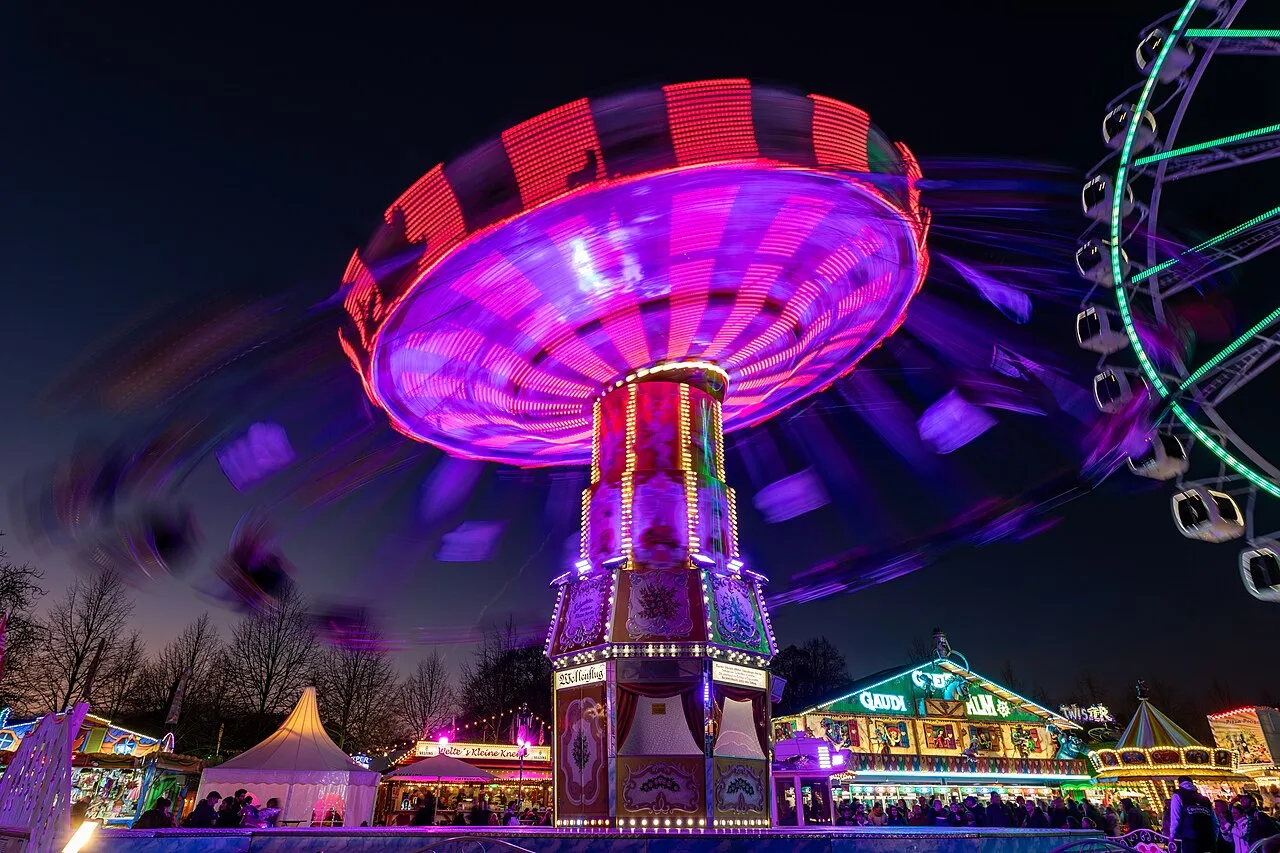
Photography: In 1839, the French government bought the rights to a new invention from Louis Daguerre and promptly gave them to the world, declaring the daguerreotype a gift to all humanity.
The scientist and astronomer Dominique Arago made the announcement to the French Academy of Sciences on August 19, 1839 - a date now celebrated as World Photography Day - describing a process that could fix an image of the world onto a silver-coated copper plate with extraordinary fidelity and permanence.
The painter Paul Delaroche reportedly declared that 'from today, painting is dead.' He was wrong about painting, but he was right that something had fundamentally changed in the human relationship to images, representation, and the visible world.
Photography is one of the most consequential inventions in cultural history.[2] It changed what it meant to remember, to document, to see, and to be seen. It transformed journalism, science, art, crime investigation, medicine, warfare, and the intimate documentation of ordinary life.
It democratised portraiture - previously available only to those wealthy enough to commission painted portraits - and created an entirely new relationship between individuals and their own appearances.
Within a century of Daguerre's announcement, photography had become so embedded in daily life that it was nearly invisible: the family snapshot, the passport photo, the newspaper image, the advertising photograph were all simply part of the furniture of modern existence.
And then, in the space of a decade at the beginning of the twenty-first century, that world was remade again. Digital photography, smartphones, and social media transformed photography from a considered act into a continuous ambient practice.[13]
The trillion-plus photographs taken each year represent more images than were produced in all the previous centuries of photography combined.
And now, in the 2020s, AI systems can generate photorealistic images of things that never existed or never happened - raising questions about the relationship between photography and truth that Daguerre's contemporaries could not have imagined asking.
"To photograph is to appropriate the thing photographed. It means putting oneself into a certain relation to the world that feels like knowledge - and, therefore, like power." - Susan Sontag, 'On Photography' (1977)
| Development | Year | Significance |
|---|---|---|
| Camera obscura refined | 1500s-1700s | Projected images; precursor to photography |
| Niepce's first photograph | 1826 | Oldest surviving photograph; 8-hour exposure |
| Daguerreotype introduced | 1839 | First practical process; sharp images on silver plate |
| Wet collodion process | 1851 | Shorter exposure; allowed portraiture |
| Dry plate process | 1871 | No darkroom required on location |
| Kodak box camera | 1888 | Mass-market photography; "You press the button" |
| Kodak Brownie | 1900 | $1 camera; created the snapshot aesthetic |
| 35mm film / Leica | 1925 | Portable cameras; photojournalism era |
| Color photography mainstream | 1950s-1960s | Kodachrome; amateur color slides |
| First digital camera (Kodak DCS 100) | 1991 | $13,000; digital professional photography begins |
| Digital photography surpasses film | 2003 | Professional digital SLRs match film quality |
| iPhone 4 front camera | 2010 | Selfie culture; social photography |
| AI-generated images | 2022 | Photorealistic images without cameras |
Key Definitions
Daguerreotype: The first commercially successful photographic process, introduced by Louis Daguerre in 1839. A daguerreotype is a unique, non-reproducible image on a silver-coated copper plate, with exceptional sharpness and detail.
Because each daguerreotype is unique and cannot be copied, it had significant limitations for wide distribution of images, which the subsequent negative-positive process addressed.
Negative-positive process: William Henry Fox Talbot's calotype process (1841) and its successors introduced the concept of a photographic negative - a reversed image from which multiple positive prints could be made.
This reproducibility was the foundational innovation that made photography a mass medium. The negative-positive process dominated photography until digital capture made it obsolete.
Documentary photography: Photography practised with the aim of recording reality for social, political, or historical purposes.
Documentary photography emerged as a distinct practice in the late nineteenth century, gained public significance through the work of Jacob Riis and Lewis Hine documenting poverty and child labour in early twentieth-century America, and found its greatest institutional expression in the Farm Security Administration photography programme of the 1930s.
Digital sensor: The electronic component in digital cameras and smartphones that converts light into digital data. Digital sensors replaced film as the light-capturing medium, eliminating development costs and enabling instant review and sharing.
The Charge-Coupled Device (CCD) sensor, developed by Willard Boyle and George Smith at Bell Labs in 1969, was the foundational technology of digital photography.
Computational photography: A mode of image-making, dominant in smartphones from approximately 2018 onwards, in which the final image is not a direct record of what the sensor captured but the product of complex algorithms that process multiple exposures, apply machine learning models, and composite images in real time.
Computational photography produces results impossible with traditional optics, including images taken in very low light, extreme depth-of-field effects, and, controversially, skin-smoothing and face-beautification that subtly alter appearance.
Photographic indexicality: The philosophical property of photographs, analysed by semiotician Roland Barthes in 'Camera Lucida' (1980), that distinguishes them from paintings and drawings.[6] Photographs are indexical signs - like footprints or shadows - in that they are causally produced by the light reflected from actual objects.
Barthes named this quality the punctum and distinguished it from the studium, the cultural and informational content of an image.
The indexical quality is what gives documentary photographs their evidential authority - and what AI-generated imagery now threatens to undermine.
The Pre-Photographic World: Seeing Without Fixing
The Camera Obscura
The desire to fix images that light could project long predates the chemistry that made it possible. The camera obscura - Latin for 'dark room' - had been known since antiquity and was systematically described by Arabian scholar Ibn al-Haytham in his 'Book of Optics' around 1011 CE.
By the Renaissance, painters including Johannes Vermeer are believed to have used portable camera obscura devices to achieve the extraordinary luminosity and spatial precision visible in works such as 'View of Delft' (c.
1660). The camera obscura projected an accurate, inverted image of the external world onto a surface, but could not fix it. An artist had to trace or paint what the lens displayed.
The question of fixation - of making the projected image permanent without human intervention - occupied natural philosophers for decades before the necessary chemical knowledge existed. Johann Heinrich Schulze demonstrated in 1727 that silver salts darkened when exposed to light.
Thomas Wedgwood, son of the famous potter, made contact prints on silver nitrate paper around 1800, but could not prevent them from darkening uniformly in ambient light.
The missing step was a chemical fixer that would halt the light-sensitivity of silver salts after development. It was the discovery of sodium thiosulphate (hypo) as a fixer by John Herschel in 1839 - communicated to Talbot and contributing to the broader solution of the fixation problem - that completed the essential chemistry.
The Invention of Photography (1826)
Niepce's First Photograph
The first surviving photograph was made by Joseph Nicephore Niepce around 1826 or 1827, using a camera obscura and a pewter plate coated with bitumen of Judea - a naturally light-sensitive substance.
The photograph, titled 'View from the Window at Le Gras,' required an exposure of approximately eight hours and shows a blurry view of rooftops from Niepce's upper-floor window. It is now held at the Harry Ransom Center at the University of Texas at Austin.
Niepce had been working on light-sensitive materials since the 1810s, driven by the desire to automatically capture the images that could be projected by a camera obscura but required an artist's hand to trace.
The extreme exposure time of Niepce's process - meaning the sun appeared on both sides of buildings as it moved across the sky during the exposure - illustrates both the achievement and the limitation of his method.
Capturing the world meant capturing it smeared across hours rather than frozen in an instant. The cultural fantasy of photography - the frozen moment - required much faster chemistry.
Daguerre and the Commercial Process
Louis Daguerre, a theatrical scene painter and inventor who had built the 'Diorama' - a popular visual entertainment using painted transparent screens and controlled lighting - entered into partnership with Niepce in 1829.
When Niepce died in 1833, Daguerre continued the research alone, eventually discovering that mercury vapour could develop latent images on silver plates, producing sharp images with exposure times of minutes rather than hours.
The French government's purchase of the process and its public release in August 1839 made Daguerre's process instantly available worldwide.
The social impact was immediate. Portrait studios opened across Paris, London, and New York within months of the announcement. A daguerreotype portrait cost a fraction of what a painted miniature would have, bringing portraiture within reach of the middle classes for the first time.
Historian Alan Trachtenberg (1989) estimated that by the 1850s, three million daguerreotypes were being produced annually in the United States alone.[5] The relationship between individuals and their own visual representation had fundamentally changed.
Fox Talbot and the Negative-Positive Process
William Henry Fox Talbot, an English mathematician, linguist, and polymath, had independently been pursuing photographic processes since the mid-1830s and learned of Daguerre's announcement with frustration. Talbot quickly published his own calotype process, which used paper negatives sensitised with silver iodide.
Though the calotype produced less sharp images than the daguerreotype, its key innovation was the negative from which unlimited positive prints could be made. This reproducibility was the architectural principle of photographic culture for more than 150 years.
Talbot also produced what is often described as the first photographically illustrated book, 'The Pencil of Nature' (1844-1846), which included actual photographic prints pasted into the pages and explored the medium's possibilities for documentation, art, and commerce.[3]
His text reflects a genuine wonder at the fact that objects could now make their own images: 'the same paper surface which receives the images of objects, also receives and fixes the impression of the object itself.'
Talbot's negative-positive concept was not merely a technical refinement. It was a conceptual revolution: photography became a medium for reproduction, not just capture. A single negative could produce an edition of prints, as a printer's type produces an edition of books.
This was the foundation on which photojournalism, advertising photography, illustrated magazines, and eventually cinema would all be built.
The Wet Plate Era and Photography's Spread
Frederick Scott Archer's introduction of the collodion wet plate process in 1851 transformed the economics of photography. The wet plate process was faster and cheaper than either daguerreotypes or calotypes and produced sharper images than paper negatives.
It also required photographers to coat, expose, and develop plates while still wet - giving them approximately ten minutes to complete the entire process, which meant travelling with a portable darkroom.
This technical constraint defined the practice of photography through the 1860s and 1870s, including the documentation of the American Civil War by Mathew Brady and his team of photographers, who carried their darkrooms in horse-drawn wagons across battlefields.
Photojournalism's Origins
The Civil War photographs of Brady, Alexander Gardner, and Timothy O'Sullivan constitute the first systematic photographic documentation of warfare.
When Gardner published 'Gardner's Photographic Sketch Book of the War' in 1866, the photographs of Antietam battlefield - featuring the first images of American war dead that the public had seen - shocked viewers who had been sheltered from the physical reality of combat.
Photography's capacity to document suffering in ways that no written description could replicate became, from this point, one of its defining social functions.
The cultural effect was profound. Historian Susan Sontag noted in 'Regarding the Pain of Others' (2003) that Brady's exhibitions, held in New York galleries under the title 'The Dead of Antietam,' made visible what newspapers could only describe.[10]
The New York Times observed at the time that Brady had 'brought home to us the terrible reality and earnestness of war.' The shocked public response to these images established photography as a primary tool of political persuasion, a role it has never relinquished.
Photography and Science
The same decade saw photography transforming scientific practice. Astronomer Warren De la Rue produced the first successful photographs of a solar eclipse in 1860, demonstrating that the camera could record celestial phenomena beyond human powers of visual observation.
By the 1880s, systematic astrophotography was reshaping astronomy: the Draper Catalogue (1890) photographically mapped the spectra of over 10,000 stars, a catalogue that no army of observers with pens could have produced.
Eadweard Muybridge's famous 1878 serial photographs of a galloping horse - commissioned by railroad magnate Leland Stanford to resolve a bet about whether all four hooves left the ground simultaneously - demonstrated that photography could reveal physical reality invisible to the unaided eye.
The camera was not only a new technology of representation; it was a new epistemological instrument.
George Eastman and the Democratisation of Photography
Kodak and Roll Film
George Eastman, a bank clerk from Rochester, New York, became interested in photography in the late 1870s and was frustrated by the cumbersome wet plate process. He developed a dry gelatin coating for glass plates that eliminated the need for on-site development, then replaced the glass plates with flexible film on a paper backing.
In 1884, he patented roll film - the first flexible photographic film that could be wound in a camera and loaded in daylight.
The first Kodak camera, launched in 1888, was a brilliant product design: a small, simple box camera pre-loaded with enough film for 100 exposures, which users sent back to Kodak for development and printing before the camera was returned re-loaded.
The tagline 'You press the button, we do the rest' captured the consumer proposition. For the first time, photography required no technical knowledge whatsoever.
The Brownie and the Snapshot
The Kodak Brownie, introduced in 1900 at a price of one dollar, is arguably the most consequential camera ever made.
It brought photography within the financial reach of almost any American household and created the vernacular of the snapshot - the informal, spontaneous, domestic photograph that documented family life, holidays, and ordinary moments.
Before the Brownie, photographs were formal occasions. After it, photography became the primary medium for personal and family memory.
Eastman's insight was that the market for photography was not professional photographers but ordinary people who wanted to remember.
Photography historian Geoffrey Batchen argues in 'Forget Me Not: Photography and Remembrance' (2004) that the vernacular photograph - the birthday snapshot, the holiday picture, the portrait kept in a locket - is not a degenerate form of serious photography but an entirely distinct practice with its own aesthetics and cultural functions.[8]
The amateur snapshot tradition, born with the Brownie, constitutes the photographic canon most people actually live inside.
The Twentieth Century: Documentary and Art
Lewis Hine and Social Documentary
Lewis Hine, a sociologist and teacher, used photography in the early twentieth century as an instrument of social reform, documenting the child labour conditions in American factories, coal mines, and farms for the National Child Labor Committee between 1908 and 1918.
Hine believed that the photographic image had a power of moral persuasion that text alone could not achieve. His photographs were instrumental in building public support for child labour legislation. His work established documentary photography as a form of social advocacy that combined aesthetic craft with political purpose.
Hine's approach required deception and courage: he gained access to factories and mines by posing as a fire inspector or equipment salesman. His photographs were not candid observations but carefully composed moral arguments.
The child subjects were positioned and lit to maximise pathos without staging false situations. Hine understood that documentary photography was always a rhetorical practice, not a neutral record.
The Farm Security Administration
The Farm Security Administration photography programme, directed by Roy Stryker from 1935 to 1944, employed photographers including Dorothea Lange, Walker Evans, Ben Shahn, and Gordon Parks to document rural poverty during the Depression.
Lange's 'Migrant Mother' (1936), a photograph of a 32-year-old pea picker named Florence Owens Thompson, became one of the most reproduced photographs in history and an icon of the Depression era.
The FSA programme produced more than 170,000 photographs and demonstrated, definitively, that photography could function as literature - capable of creating characters, evoking empathy, and making arguments.
Historian James Curtis, in 'Mind's Eye, Mind's Truth' (1989), documented that Lange's 'Migrant Mother' was the sixth of six photographs taken in a brief session, and that Lange had removed a thumb that appeared at the frame's edge in the original negative.[9]
The revelation did not undermine the image's power but complicated its documentary claims - a tension at the heart of all documentary practice. The image was both a truthful record of real poverty and a carefully constructed aesthetic object.
Henri Cartier-Bresson and the Decisive Moment
Henri Cartier-Bresson, the French photographer who co-founded Magnum Photos in 1947, developed the theory of the 'decisive moment' - the instant in which form and content align to create an image that perfectly captures a situation's truth.[4]
His 1952 book 'Images a la Sauvette' (published in English as 'The Decisive Moment') remains one of the most influential statements of photographic aesthetics ever written.
Cartier-Bresson's work, made with a small Leica camera that allowed unobtrusive documentation, defined the tradition of street photography and established the humanist photojournalism that dominated Life magazine, Paris Match, and picture magazines globally through the 1950s and 1960s.
The Leica 35mm camera, introduced in 1925, was the technological enabler of Cartier-Bresson's practice. Small, quiet, and capable of rapid-fire shooting from a roll of 36 exposures, it made possible a photography of ordinary life in its unrepeatable moments.
This was photographically distinct from the large-format, tripod-mounted cameras of the studio tradition, which required cooperation from the subject. The small camera enabled theft - the capture of moments subjects did not know were being recorded.
Color Photography and the Mid-Century Transformation
The introduction of Kodachrome film in 1935 by Kodak chemists Leopold Mannes and Leopold Godowsky marked the beginning of practical colour photography for amateur and professional use. Kodachrome's extraordinary colour accuracy and archival stability made it the dominant professional slide film for six decades.
Its distinctive colour rendition - saturated, warm, with deep shadows - defined the visual look of mid-twentieth-century photographic culture.
The transition from black-and-white to colour documentary photography was not smooth or uniform. Many serious photographers resisted colour until the 1970s, treating it as a commercial medium unfit for artistic or documentary purposes.
It was William Eggleston's 1976 exhibition at the Museum of Modern Art in New York - curated by John Szarkowski, who called Eggleston 'a perfect photographer' - that established colour photography as a legitimate artistic medium.
Eggleston's photographs of ordinary Southern American life in bright, saturated Dye Transfer prints showed that colour was not merely decorative but could be structurally essential to photographic meaning.
The Digital Revolution
From Film to Sensor
The first commercially successful digital camera, the Kodak DCS 100, was introduced in 1991 and sold for approximately $13,000. It was a modified Nikon F3 film camera fitted with a digital sensor and a separate hard drive worn on a shoulder strap.
Through the 1990s, digital cameras became smaller, faster, and cheaper, though until approximately 2003 professional film remained superior to digital for most applications.
By 2003, Canon and Nikon had released professional digital SLR cameras that matched film quality at commercially viable prices. Newspapers and magazines rapidly converted to digital capture, driven by the competitive advantage of instant transmission.
By 2010, film photography had effectively ceased to exist as an industry practice, and Kodak's catastrophic decline - from 145,000 employees at its 1988 peak to bankruptcy in 2012 - was the most dramatic corporate collapse produced by the digital photography transition.
The speed of Kodak's fall is worth dwelling on. In the 1990s, Kodak was one of the five most valuable brands in the world. In 1996, it had 140,000 employees. It filed for Chapter 11 bankruptcy protection in January 2012.
What makes this remarkable is that Kodak engineers had actually invented the first digital camera prototype in 1975 - engineer Steven Sasson built it, but the technology was shelved because it threatened the company's film business.
This is one of the most cited cases of successful innovation being suppressed by incumbent commercial interests.
The Smartphone Camera
The integration of cameras into mobile phones created the conditions for the second great democratisation of photography. The iPhone 4 (2010), which included a front-facing camera suitable for social sharing, was the catalyst for selfie culture and the social photograph.
By 2023, approximately 93 percent of all photographs were taken on smartphones. The computational photography capabilities of late-model smartphones - multiple lenses, real-time HDR compositing, machine learning portrait modes - produce results that would have been impossible with any film camera and difficult with professional digital equipment of a decade earlier.
The scale of smartphone photography is genuinely unprecedented. According to data from InfoTrends (2017) and subsequent analyses, approximately 1.4 trillion photographs were taken globally in 2023 - a figure that dwarfs the entire photographic output of the twentieth century combined.[18]
The majority are never printed, exist only as files on phones and cloud servers, and are viewed once or never.[14] The economics of photographs as scarce, costly objects - which shaped the entire cultural meaning of photography from 1839 to approximately 2010 - have been reversed.[7]
AI, Synthetic Images, and the Question of Truth
The development of generative image models - DALL-E by OpenAI (2021), Midjourney (2022), Stable Diffusion (2022) - introduced the possibility of photorealistic images made without cameras.
These systems, trained on billions of photographs, can generate images of people, places, and events that never existed, with a fidelity that often fools observers. The implications for documentary photography and photographic evidence are severe.
Photographic credibility has never been absolute - darkroom manipulation and image staging have existed as long as photography - but AI generation represents a qualitative change. Creating a convincing false photograph previously required significant skill and time.
AI generation requires a text prompt and seconds. The World Press Photo Foundation introduced mandatory disclosure of AI usage in 2023.[12] Courts in multiple jurisdictions are grappling with the evidentiary status of photographs in an era when synthetic images are indistinguishable from captured ones.
The Deepfake Problem
The specific threat of deepfakes - AI-generated video and photographic content placing real individuals in fabricated situations - has moved from science fiction to geopolitical concern. Research by cybersecurity firm Sensity AI (2019) found that deepfake video content online was doubling approximately every six months.[17]
A 2023 report by the Center for Countering Digital Hate documented that highly realistic AI-generated images of public figures were circulating on mainstream social platforms within days of new model releases.
Legal frameworks have scrambled to catch up: the United States, European Union, and United Kingdom all introduced or proposed legislation addressing synthetic media between 2021 and 2024, but enforcement against globally distributed content remains deeply difficult.
Photography's Philosophical Crisis
Roland Barthes argued in 'Camera Lucida' (1980) that the photograph's unique quality - its noeme, or 'that-has-been' - was the knowledge that what appears in the image once stood before the camera, in the light. The photograph is proof of presence.
AI-generated images dissolve that proof completely. They can depict anything, including events that never happened, people who never existed, and faces constructed from statistical patterns in training data rather than from any individual human face.
This is not merely a technological problem but a cultural and epistemological one.
Sontag wrote in 1977 that 'photographs furnish evidence' and that 'the camera record incriminates.' If photographs no longer incriminate because they may be fabricated, the entire evidentiary architecture that photography built - in courts, in journalism, in history - requires reconstruction.
The question of what constitutes proof in a world of infinite synthetic realism is one of the defining intellectual challenges of the current moment.
Photography and Identity: The Selfie as Cultural Practice
The selfie - a self-portrait photograph made with a front-facing smartphone camera - became a dominant photographic genre in the early 2010s.
Manovich, Tifentale, Yazdani, and Chow's 2014 'Selfiecity' project, which analysed 656,000 Instagram images from five cities, documented the demographic and aesthetic patterns of selfie culture, finding systematic differences in pose, expression, and framing across age, gender, and cultural context.[11]
The selfie has attracted both cultural derision and serious scholarly attention. Psychologist Pamela Rutledge (2013) argued that selfie-taking is an extension of a fundamental human impulse to self-narrate and self-present.
Sociologist David Grazian and others have pointed to the selfie as a form of identity management - the construction and maintenance of a public self through deliberate photographic self-representation.[15]
The long photographic tradition of the self-portrait, from Rembrandt's painted self-examinations to Cindy Sherman's photographic performances, is echoed in and complicated by billions of daily smartphone self-portraits.
The mental health implications of selfie culture have been extensively studied with mixed results.
Research by Vogel, Rose, Roberts, and Eckles (2014), published in the Journal of Social and Clinical Psychology, found that exposure to high-quality, idealised social media photographs produced downward social comparison and reduced self-evaluations.[16]
However, subsequent research by Stapleton, Coyne, Martins, and Morin (2017) found that active posting - as opposed to passive consumption - was associated with higher self-esteem, suggesting that the medium is not uniformly harmful.
Practical Takeaways
The history of photography is a repeated story of democratisation: each major technology has expanded who can make photographs, who can be seen, and what can be documented. Daguerreotype required wealth and access; Kodak required a dollar; smartphone photography requires only a device that most of the world carries.
Each democratisation has also raised new questions about truth, consent, power, and the relationship between image and reality.
The current moment - 1.4 trillion photographs per year, AI generation indistinguishable from camera capture, computational processing that subtly remakes appearances - raises these questions with new urgency. Understanding photography's history is useful precisely because the questions being asked now are not new.
The medium has always been both a tool of truth-telling and a tool of manipulation. What changes is the scale and the ease.
For anyone engaging with photography today - as a practitioner, a viewer, or a person navigating a world saturated in images - the critical question Sontag posed in 1977 remains: what is our relationship to images, and what do we think they owe us?[1]
The history of photography is the slow accumulation of evidence that the answer is more complicated, and more consequential, than it first appears.
Sources & Further Reading
- Sontag, S. (1977). "On Photography". Farrar, Straus and Giroux.
- Newhall, B. (1982). The History of Photography: From 1839 to the Present. The Museum of Modern Art.
- Talbot, W. H. F. (1844). "The Pencil of Nature". Longman, Brown, Green and Longmans.
- Cartier-Bresson, H. (1952). The Decisive Moment. Simon & Schuster.
- Trachtenberg, A. (1989). Reading American Photographs: Images as History, Mathew Brady to Walker Evans. Hill and Wang.
- Barthes, R. (1980). "Camera Lucida: Reflections on Photography". Editions du Seuil. (English translation: Farrar, Straus and Giroux, 1981.)
- Ritchin, F. (2009). After Photography. W. W. Norton.
- Batchen, G. (2004). Forget Me Not: Photography and Remembrance. Princeton Architectural Press.
- Curtis, J. (1989). Mind's Eye, Mind's Truth: FSA Photography Reconsidered. Temple University Press.
- Sontag, S. (2003). "Regarding the Pain of Others". Farrar, Straus and Giroux.
- Manovich, L., Tifentale, A., Yazdani, M., & Chow, J. (2014). Selfiecity: Investigating the Style of Self-Portraits (Selfies) in Five Cities. The Graduate Center, CUNY.
- World Press Photo Foundation. (2023). World Press Photo Contest 2023: Jury Statement on AI and Photojournalism Ethics.
- Jenkins, H. (2006). "Convergence Culture: Where Old and New Media Collide". New York University Press.
- Steyerl, H. (2012). The Wretched of the Screen. Sternberg Press.
- Greenfield, L. (2014). Generation Wealth. Phaidon Press.
- Vogel, E. A., Rose, J. P., Roberts, L. R., & Eckles, K. (2014). Social comparison, social media, and self-evaluation. Journal of Social and Clinical Psychology, 33(1), 1-22.
- Sensity AI. (2019). The State of Deepfakes: Landscape, Threats, and Impact. Sensity Research.
- InfoTrends. (2017). Photo and Video Sharing Growth Report. InfoTrends Research.