
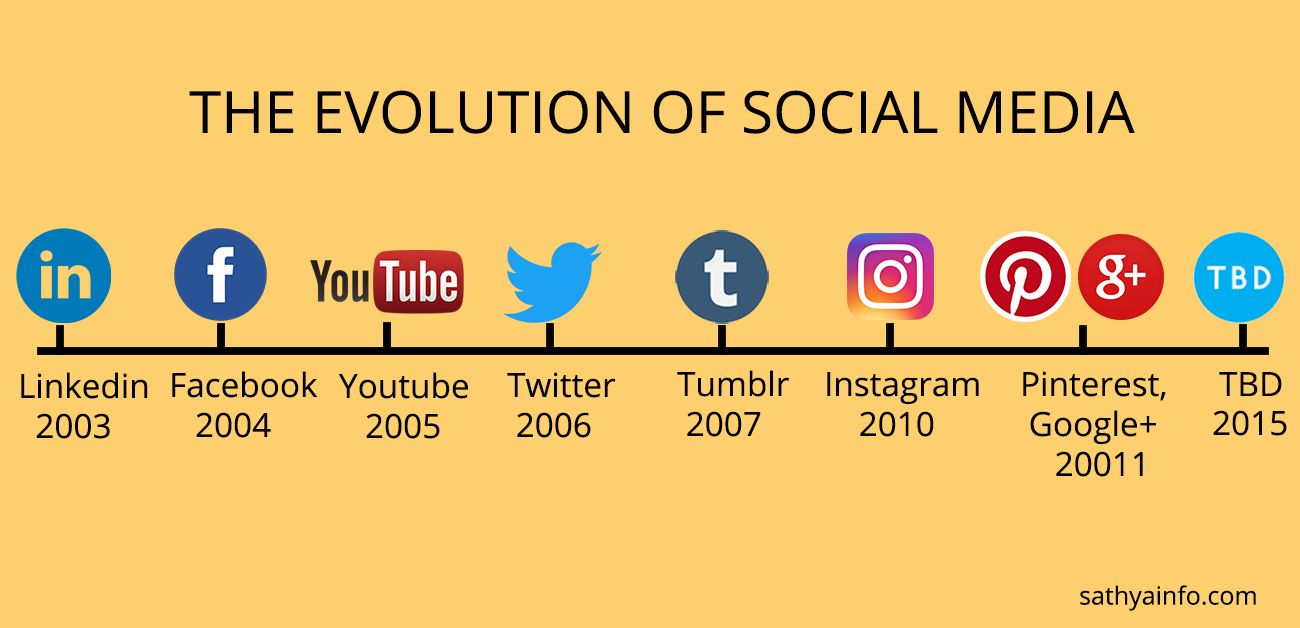
The evolution of social media moved from early online communities and friend networks to platforms shaped by network effects, real-identity profiles, user-generated media, and algorithmic recommendation.
Social graphs prioritize existing connections, while interest graphs can distribute content beyond them but centralize curation power. Advertising-driven engagement design has expanded reach and participation while intensifying concerns about attention, exploitation, polarization, and mental health.
In the winter of 1997, a programmer named Andrew Weinreich launched a website called SixDegrees.com.
Users could create a profile, list their friends, and then see who their friends' friends were - a digital map of human connection built on the then-novel theory that any two people on earth were separated by no more than six relationships.
The site attracted around a million users and then quietly died in 2001, killed not by a bad idea but by timing.
The infrastructure was not there. The habits were not there. The world would need another decade to be ready for what SixDegrees was attempting.
That readiness, when it arrived in the mid-2000s, changed human civilisation faster than almost any previous communications technology. Social media is now the primary way billions of people receive news, form opinions, maintain relationships, and understand themselves in relation to others.
It has toppled governments, launched careers, destroyed reputations, created fortunes, and been credibly linked to a global adolescent mental health crisis.
Understanding how we got here - from SixDegrees to TikTok, from simple friend lists to recommendation algorithms of staggering sophistication - is one of the essential intellectual tasks of the present moment.
This article traces the full arc of social media's development: the technical and cultural conditions that made each era possible, the design choices that shaped user behaviour, the business models that determined what platforms optimised for, and the emerging research on what all of this has done to human psychology.
The history is not simply a story of technological progress. It is a story about power, attention, and the ongoing negotiation between human connection and commercial exploitation.
"We have created a world in which online connection has become primary, especially for the young. And in that world, loneliness can coexist with being perpetually connected." - Sherry Turkle, 'Alone Together' (2011)
| Platform / Era | Year Launched | Key Innovation |
|---|---|---|
| Six Degrees | 1997 | First recognizable social network site |
| Friendster | 2002 | Social graph; viral growth; predecessor to Facebook |
| MySpace | 2003 | User profiles; music; dominant 2005-2008 |
| 2004 | News feed; real identity; global dominance | |
| YouTube | 2005 | User-generated video at scale |
| 2006 | Real-time short-form public conversation | |
| 2010 | Photo-centric; visual culture; influencers | |
| TikTok | 2018 (global) | Short-form video; algorithmic feed; Gen Z dominant |
Key Definitions
Social graph: The map of connections between users on a social platform - who follows whom, who is friends with whom. Early platforms like Facebook organised content delivery entirely around the social graph: you saw what your connections posted. The social graph rewards existing social capital.
Interest graph: The alternative architecture pioneered by TikTok, in which content is served based on algorithmically predicted interest rather than social connections. The interest graph can surface content from anyone to anyone, regardless of existing relationships.
It democratises reach while centralising curation power in the platform.
Engagement optimisation: The design principle of maximising measurable user interactions - likes, comments, shares, watch time. Platforms that optimise for engagement discovered, often inadvertently, that emotionally arousing content (outrage, anxiety, awe) generates more engagement than calm or neutral content.
Network effects: The dynamic by which a communication platform becomes more valuable as more people use it. Network effects create powerful winner-take-all tendencies in social media markets: the platform where your friends already are is inherently more useful than an equally good platform where they are not.
Persuasive technology: Term coined by Stanford researcher B.J. Fogg to describe design that changes attitudes and behaviours.
In social media contexts, persuasive technology techniques include variable reward notifications, social validation metrics (likes, follower counts), and infinite scroll - mechanisms that exploit known psychological vulnerabilities to increase time spent on platform.
Era One: The Precursors (1985-2002)
Bulletin Board Systems and Early Online Communities
Before social media, there were bulletin board systems. From the late 1970s through the 1990s, BBS communities allowed users to post messages, share files, and engage in discussions through dial-up connections.
The WELL (Whole Earth 'Lectronic Link), founded in 1985 in the San Francisco Bay Area, became one of the most celebrated early online communities - a gathering place for counterculture intellectuals, journalists, and technologists that journalist Katie Hafner documented in 'The Well: A Story of Love, Death, and Real Life in the Seminal Online Community' (2001).[1]
These early communities established patterns that would persist: the dynamics of online identity, the tension between pseudonymity and accountability, the tendency of communities to fragment around conflicts and personalities.
Howard Rheingold's 1993 book 'The Virtual Community' described the emotional depth that could develop in online relationships, a finding that would be continually rediscovered and debated for the next three decades.[2]
Geocities and the Personal Web (1994-1999)
Geocities, founded in 1994 and acquired by Yahoo in 1999 for $3.57 billion, gave millions of ordinary users their first experience of creating an online presence. Its model was simple: free web hosting organised into virtual 'neighbourhoods' themed around interests.
At its peak, Geocities hosted millions of user-created pages and was the third-most visited site on the internet. Though its design aesthetic would become a byword for garish amateurism, its cultural significance was genuine: it established that ordinary people, not just institutions, could publish on the web.
SixDegrees and Friendster (1997-2003)
SixDegrees.com, launched by Andrew Weinreich in 1997, combined profile pages with the ability to list connections and browse extended networks. It was, structurally, a social network.
But its timing was wrong: broadband penetration was low, digital cameras were rare, and the habit of documenting daily life online had not yet formed. The site closed in 2001.
Friendster arrived in 2002 and achieved what SixDegrees could not - viral adoption among young adults, particularly on the US West Coast. At its peak it had three million users and received a $30 million acquisition offer from Google, which founder Jonathan Abrams turned down.
The site was ultimately destroyed by technical failures: as the network grew, page load times became catastrophic, and Friendster's engineers could not scale the system fast enough. Users fled to MySpace. Friendster pivoted to become a gaming site in Southeast Asia and quietly shut down in 2015.
Era Two: The MySpace Generation (2003-2008)
MySpace and Cultural Ownership
MySpace launched in August 2003 and grew explosively, reaching 25 million users by 2005 when Rupert Murdoch's News Corporation acquired it for $580 million. It dominated US social networking until 2008 and at its peak had 100 million users.
Its distinguishing feature was customisation: users could modify their profiles extensively with HTML and CSS, embedding music players, animated backgrounds, and custom layouts. This made MySpace simultaneously more expressive and more chaotic than its successors.
MySpace's cultural significance was particularly strong in music. Independent bands could create profiles and directly reach fans, bypassing traditional label gatekeepers.
The platform was genuinely important for the careers of artists including Arctic Monkeys, Lily Allen, and Kate Nash, all of whom built audiences through MySpace before signing with major labels. This prefigured the creator economy model that would fully emerge a decade later.
The Rise of Facebook (2004-2008)
Mark Zuckerberg launched TheFacebook at Harvard University in February 2004. Its design philosophy differed from MySpace in one crucial respect: identity. Where MySpace allowed pseudonyms and extensive customisation, Facebook from the beginning required real names and kept visual presentation uniform.
This bet on authentic identity over expressive identity proved transformative. Real identity made the network more useful for existing social relationships - you were connecting with actual people you knew, not constructed online personas.
Facebook expanded from Harvard to other universities, then to high schools, then in September 2006 to anyone with an email address.
The News Feed, introduced in September 2006, was immediately controversial - users objected to the surveillance-like aggregation of friends' activities - but Zuckerberg did not back down, correctly predicting that users would adapt.
By 2008, Facebook had surpassed MySpace in global unique visitors.
Era Three: The Platform Era (2006-2012)
Twitter and the Real-Time Web
Twitter launched in July 2006 as an internal communication tool for Odeo, a struggling podcast startup. Its character limit (initially 140 characters, expanded to 280 in 2017) was a technical constraint derived from SMS messaging standards.
That constraint became a design philosophy: Twitter's brevity pushed users toward declarative statements, links, and reactions rather than extended argument.
Twitter's cultural importance outstripped its user numbers (which never approached Facebook's scale) because it became the primary communication channel for journalists, politicians, academics, and celebrities. Breaking news routinely appeared on Twitter before mainstream media outlets.
The Arab Spring uprisings of 2010-2012 were extensively coordinated and documented through Twitter, leading to widespread (and subsequently contested) claims that social media was a democratising force.
Journalist and researcher Zeynep Tufekci's 2017 book 'Twitter and Tear Gas' offered the most sophisticated analysis of social media's role in political movements: social media made organising faster and cheaper but also made movements structurally fragile, because they lacked the organisational capacity that older movement-building through slower, harder processes had produced.[4]
YouTube and the Video Revolution
YouTube launched in February 2005 and was acquired by Google for $1.65 billion in stock in October 2006 - at the time one of the largest technology acquisitions ever. It established video as a mainstream internet format and created the first generation of video creators who built audiences independent of television gatekeepers.
The implications for media culture were profound, though they would not fully manifest until the YouTube Partner Program (monetisation) launched in 2007, creating financial incentives for content creation at scale.
The Smartphone Integration (2007-2012)
The iPhone launched in June 2007 and the Android operating system in September 2008. The integration of social media with always-on personal devices transformed the relationship between users and platforms. Social media moved from something you did at a computer to something you did constantly, in every location, in every idle moment.
Facebook's mobile app, which initially struggled, became its dominant access point by 2012. Instagram, launched in 2010 and acquired by Facebook for $1 billion in 2012, was designed from the beginning as a mobile-first experience.
The psychological consequences of this integration were not immediately apparent.
Sherry Turkle's 2011 book 'Alone Together' documented, through extensive interviews, a growing pattern of people being physically present but mentally elsewhere - in conversation with absent others through their devices.[3]
The smartphone-social media integration made continuous partial attention the default mode of daily life.
Era Four: The Algorithm Era (2012-2018)
The 2012 YouTube Algorithm Shift
In 2012, YouTube made a decision that would reshape online video culture. It changed its recommendation algorithm's primary metric from view count to watch time - rewarding videos that held viewers' attention rather than videos that attracted clicks.
This single change, intended to reduce clickbait, had profound consequences for content creation. Creators optimised for longer videos with strong retention curves. Niche communities around long-form content - gaming commentary, political opinion, tutorial formats - grew explosively.
The algorithmic shift also had unintended consequences. The recommendation engine, optimised for watch time, learned that provocative and emotionally arousing content held viewers better than calm content.
Multiple investigative reports, including Zeynep Tufekci's 2018 New York Times piece 'YouTube, the Great Radicaliser,' documented how the recommendation algorithm systematically guided users from mainstream content toward progressively more extreme material - because extreme content held attention more effectively.[5]
Facebook's Pivot to News and Its Consequences
Facebook's emergence as a primary news source was largely unintended. As the News Feed algorithm evolved to prioritise engagement, news content - which generates strong emotional reactions and thus high engagement - crowded out personal updates.
Facebook became, for many users, a news reading and sharing environment. By 2016, a BuzzFeed analysis found that the top-performing fake news stories on Facebook generated more engagement than the top stories from major news organisations.
The 2016 US presidential election catalysed a reckoning with social media's political effects.
The disclosure that Russian-linked Internet Research Agency had purchased Facebook ads targeting politically divisive content, and subsequent research on the organic spread of misinformation, generated Congressional hearings, academic research programmes, and public concern at a scale the industry had never previously faced.
Instagram and the Beauty Industrial Complex
Instagram's growth - from 1 million users in December 2010 to 1 billion by June 2018 - coincided with a measurable shift in beauty standards, cosmetic surgery rates, and adolescent self-perception.
The platform's visual emphasis, the culture of editing and filtering images, and the monetisation of appearance through influencer marketing created an environment that researchers increasingly linked to body image issues, particularly among teenage girls.
A 2021 Wall Street Journal investigation reported that Facebook's own internal research had found that Instagram made body image worse for one in three teenage girls.
The research was leaked by whistleblower Frances Haugen, who testified before Congress in October 2021, and became central to ongoing legislative and regulatory debates about platform responsibility for adolescent mental health.
Era Five: The Recommendation Engine Era (2018-present)
TikTok and the Interest Graph
TikTok launched internationally (as a rebrand of Musical.ly) in August 2018 and reached one billion monthly active users by September 2021 - the fastest growth trajectory in social media history.
Its core innovation was architectural: where Facebook and Instagram primarily served content from people you followed, TikTok's 'For You Page' served content from its algorithm, optimised around your behaviour patterns rather than your social connections.
This shift from social graph to interest graph had profound consequences. New creators could reach massive audiences without pre-existing follower bases. Content could go viral globally regardless of its creator's nationality or social position.
The algorithm's effectiveness at predicting and shaping preferences was significantly greater than Western competitors, reportedly because ByteDance had trained its models on vastly larger behavioural datasets.
The geopolitical dimension of TikTok's success became a defining controversy of the early 2020s.
As a product of Chinese technology company ByteDance, TikTok faced sustained scrutiny from US legislators and intelligence agencies concerned about potential data access by the Chinese government and potential influence over recommendation outputs.
The US government's attempts to force a sale or ban of TikTok generated major legal battles and unsettled established assumptions about social media as a neutral private-sector domain.
The Mental Health Reckoning
Jonathan Haidt and Jean Twenge's research on adolescent mental health became among the most discussed social science of the early 2020s.
Twenge's longitudinal analysis, published in 'iGen' (2017) and subsequent papers, documented sharp increases in rates of depression, anxiety, loneliness, and suicide attempts among US teenagers, with the inflection point occurring around 2012-2013 - precisely when smartphone adoption and social media use became near-universal among teens.[6]
Haidt's 2024 book 'The Anxious Generation' synthesised a decade of research and argued for specific causal mechanisms: social comparison, cyberbullying, sleep disruption from nighttime phone use, and the displacement of in-person interaction with online interaction.[7]
Critics, including psychologists Amy Orben and Andrew Przybylski, maintained that effect sizes in observational studies were small and that causal claims were not warranted by correlational data.[8]
The debate continued into the mid-2020s with increasing intensity as multiple countries moved toward legislative restrictions on adolescent social media access.
Threads, Mastodon, and Platform Fragmentation
Elon Musk's acquisition of Twitter in October 2022 for $44 billion, followed by mass layoffs, advertiser departures, and rapid policy changes, triggered significant user migration and platform experimentation.
Mastodon, a decentralised alternative built on the ActivityPub open protocol, saw spikes in new users after major Twitter controversies.
Meta launched Threads in July 2023, gaining 100 million users within five days before user retention difficulties became apparent.
The fragmentation of the dominant real-time text social layer suggested that the era of platform monoculture might be ending - or might simply be shifting to video, where TikTok, YouTube Shorts, and Instagram Reels competed for the short-form attention that had become the period's defining media format.
The Psychological Effects Across Eras
Comparison, Performance, and Identity
Each social media era created distinct psychological environments. Facebook's real-name social graph made users visible to their entire social network simultaneously - a condition of continuous mutual observation that sociologist Erving Goffman's dramaturgical theory suggests creates persistent performance anxiety.
Instagram's visual emphasis intensified social comparison through highly curated, often professionally produced images of appearance and lifestyle.
Psychologist Leon Festinger's Social Comparison Theory (1954) posited that humans evaluate their opinions and abilities by comparison with others.[9]
Social media engineered an environment of near-constant social comparison with a radically expanded comparison pool - not just one's immediate community but a global selection of the most photogenic, successful, and apparently fulfilled people on earth.
Dopamine, Variable Rewards, and Compulsive Checking
Neuroscientist Wolfram Schultz's research on dopamine systems demonstrated that dopamine is released not primarily by rewards themselves but by unpredictable rewards - the anticipation of a possible reward activates dopamine circuitry more strongly than a certain reward.
Social media notifications function as variable reward schedules: sometimes a notification is meaningless, sometimes it signals significant social approval. This unpredictability, well understood by platform designers, is what makes notification-checking behaviourally compulsive in ways that predictable rewards are not.
Aza Raskin, best known for his work at Mozilla and as co-founder of the Center for Humane Technology, who invented infinite scroll, stated in a 2018 interview that he later regretted the design and estimated it had collectively consumed approximately 200,000 human hours of time per day that would not otherwise have been spent scrolling.
His statement became one of several prominent tech-industry self-criticisms that contributed to the growing 'humane technology' movement.
Polarisation and Epistemic Effects
The relationship between social media and political polarisation is one of the most actively studied questions in social science. A 2023 study by Levi Boxell and colleagues found that polarisation increased most among older Americans who were the least likely to use social media heavily, complicating simple causal narratives.[10]
However, a 2023 Science paper by a consortium of researchers working with Meta's data found that Facebook's algorithmic feed, compared to a chronological feed, increased exposure to partisan content, though effects on expressed political views were modest over the study period.[11]
The epistemic effects - how social media changed what people believe and how they come to believe it - may be more significant than the direct polarisation effects.
The speed at which false information travels, the ease with which misleading framing can reach large audiences before corrections arrive, and the partisan sorting of information environments have reshaped how knowledge circulates in democratic societies in ways that researchers are still working to characterise.
Practical Takeaways
Understanding the history of social media suggests several practical orientations.
First, platform design choices are not neutral: the decision to build around social graphs versus interest graphs, to display follower counts versus hide them, to use chronological versus algorithmic feeds, all have measurable effects on user behaviour and wellbeing.
These are design decisions that could be made differently, and in some cases have been.
Second, the business model is fundamental. Platforms that monetise through advertising have structural incentives to maximise engagement, which tends to produce designs optimised for emotional arousal rather than considered reflection. The history of social media's harms is largely the history of engagement optimisation.
Third, the effects are not uniform. Heavy use by adolescent girls on visual platforms shows the most consistent links to harm. Heavy use by older adults for news consumption shows different patterns. Heavy use for professional networking shows still different patterns.
Sweeping claims about social media being universally beneficial or harmful obscure more than they reveal.[12]
Sources & Further Reading
- Hafner, K. (2001). The Well: A Story of Love, Death, and Real Life in the Seminal Online Community. Carroll & Graf.
- Rheingold, H. (1993). The Virtual Community: Homesteading on the Electronic Frontier. Addison-Wesley.
- Turkle, S. (2011). Alone Together: Why We Expect More from Technology and Less from Each Other. Basic Books.
- Tufekci, Z. (2017). Twitter and Tear Gas: The Power and Fragility of Networked Protest. Yale University Press.
- Tufekci, Z. (2018). 'YouTube, the Great Radicaliser.' New York Times, 10 March 2018.
- Twenge, J. (2017). iGen: Why Today's Super-Connected Kids Are Growing Up Less Rebellious, More Tolerant, Less Happy. Atria Books.
- Haidt, J. (2024). The Anxious Generation: How the Great Rewiring of Childhood Is Causing an Epidemic of Mental Illness. Penguin Press.
- Orben, A. and Przybylski, A.K. (2019). 'The association between adolescent well-being and digital technology use.' Nature Human Behaviour, 3, 173-182.
- Festinger, L. (1954). 'A Theory of Social Comparison Processes.' Human Relations, 7(2), 117-140.
- Boxell, L., Gentzkow, M., and Shapiro, J. (2022). 'Cross-Country Trends in Affective Polarization.' Review of Economics and Statistics, 106(3).
- Gonzalez-Bailon, S. et al. (2023). 'Asymmetric ideological segregation in exposure to political news on Facebook.' Science, 381(6656).
- boyd, d. (2014). It's Complicated: The Social Lives of Networked Teens. Yale University Press.