
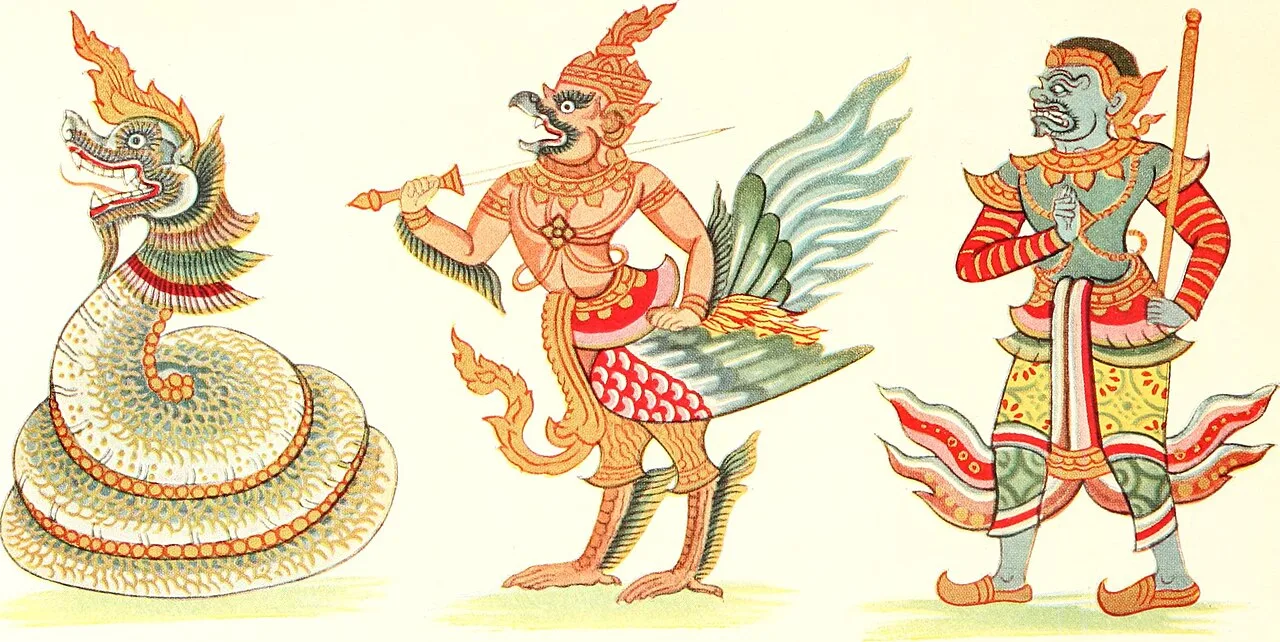
What is mythology? It is a body of sacred narratives that carries cultural values, cosmologies, social arrangements, and accounts of origins across generations. Scholars distinguish myths from legends and folktales by their sacred setting, supernatural figures, and community truth claims. Recurring patterns may reflect shared cognition, historical connection, or common human attempts to hold life's central contradictions.
Mythology is one of the oldest and most persistent forms of human meaning-making. Across every culture and historical period, people have told sacred narratives that explain how the world came to be, why suffering exists, what the gods demand, and what happens after death.
These stories are not mere entertainment or primitive science; they are the operating systems of culture, encoding values, social arrangements, and cosmological worldviews in forms memorable enough to survive across generations. To study mythology is to study the human mind working at the edge of what language can say.
The word itself comes from the Greek mythos (story, word, or narrative) combined with logos (study or reasoned account). Yet the discipline encompasses far more than the Greek tradition that named it.
From the Vedic hymns of ancient India to the Mayan Popol Vuh, from Norse Eddic poetry to the Yoruba narratives of Obatala shaping humanity from clay, mythology is a global phenomenon with deep structural patterns that have fascinated scholars for two centuries.
Understanding what mythology is - what distinguishes a myth from a legend, a religious doctrine, or a literary fantasy - is a necessary first step. Understanding why mythology matters, and what it reveals about the minds that produce it, requires a longer journey.
At the heart of that journey is a paradox: myths are simultaneously local and universal. Every tradition has its own gods, its own creation story, its own account of death and renewal.
Yet the structural patterns - the hero's journey, the flood, the divine combat, the trickster who disrupts order - recur across cultures with a regularity that demands explanation.
Whether this regularity reflects shared human cognitive architecture, ancient historical connections, or convergent responses to universal human predicaments is one of the most productive arguments in the study of religion and culture.
"The function of mythology is not to explain nature, nor to provide entertainment, nor to validate social arrangements, though it does all these things. Its deepest function is to open the mind and heart to the utter wonder of all being." - Joseph Campbell, 'Myths to Live By' (1972)[2]
What Mythology Is - and Is Not
The Scholarly Definition
In ordinary usage, "myth" is a synonym for falsehood. In scholarly discourse, the term carries a far more precise and interesting meaning.
William Bascom, the American folklorist, formalized the crucial three-way distinction in his 1965 paper "The Forms of Folklore: Prose Narratives," drawing on a classificatory tradition stretching back through the nineteenth century.
Myths are sacred narratives set in a remote, primordial time before the present world order. They feature divine or supernatural protagonists and are regarded by the community as fundamentally true accounts of how the cosmos came to be and how it is maintained.
The Genesis creation narrative, the Maori story of Tane separating earth and sky, and the Mesopotamian Enuma Elish describing Marduk's defeat of Tiamat are all myths in this sense.
Legends are set in a quasi-historical past, feature human protagonists who may possess extraordinary abilities, and make a claim to factual occurrence that is presented as plausible. The stories of King Arthur, Genevieve of Brabant, or the Japanese Momotaro occupy this category. Truth is claimed but acknowledged as uncertain.
Folktales make no serious claim to literal truth and are understood as fiction for entertainment or moral instruction. Cinderella, Bluebeard, and the tales collected by the Brothers Grimm are folktales.
In practice these categories are permeable. The Iliad sits between myth and legend. What begins as sacred myth can become mere legend as a culture's belief in it fades, and a historical figure can be mythologized when a community begins treating him as divinely ordained.
The sacred-secular axis is therefore as important as the question of truth-claim in classifying any given narrative.
Myth versus Science and Philosophy
An older scholarly tradition, associated with the British anthropologist Edward Tylor in his 1871 work Primitive Culture, treated myths as proto-scientific explanations: early humanity's attempt to explain natural phenomena by postulating personal agents before impersonal natural law was available.[15]
On this view, thunder myths are failed meteorology. This etiological or explanatory approach identifies a real function of myth but underestimates both its other functions and its sophistication.
Modern scholars are more likely to see myth, science, and philosophy as addressing partly overlapping but partly distinct questions. Myths address meaning, value, identity, and legitimacy as much as causation.
A flood myth is not only a meteorological hypothesis; it is a statement about the moral relationship between humanity and the divine, the fragility of civilization, and the possibility of renewal.
Claude Levi-Strauss captured this more generously in his structural analysis: myths, he argued, do not so much explain the world as think through the world's contradictions - the unresolvable tensions between life and death, nature and culture, individual and community - in forms that allow them to be contemplated, narratively held, and socially shared.
The goal of myth is not to eliminate the tension but to render it liveable.
The Sacred Distinction
Mircea Eliade, the Romanian historian of religion, argued in 'The Myth of the Eternal Return' (1954) that myth's defining quality is its connection to sacred time - the primordial in illo tempore ('in that time') when the events described took place.[5]
Myths are not merely ancient; they describe actions that created the structures of the present world and that are renewed through ritual re-enactment. The sacred narrative is cosmogonically active: it does not merely describe origins but participates in them.
This is why mythological narratives are often recited during rituals rather than just read as stories - the telling is believed to re-activate the creative power of the original event.
Theoretical Frameworks for Interpreting Myth
Since the nineteenth century, scholars have proposed competing frameworks for understanding what myths are and what work they do. Each captures something genuine; none is fully adequate alone.
Etiological Theory
The simplest explanatory approach holds that myths explain why the world is as it is. Why does the sun rise and set? Why do we die? Why does the snake shed its skin? Myths provide answers by reference to divine or supernatural agents. Tylor's animist framework treated all myth as this kind of proto-causal explanation.
The approach remains useful for understanding a subset of myths that explicitly serve explanatory functions - particularly cosmogonic myths and aetiological stories of the 'how the leopard got its spots' variety - but fails to account for the affective depth and social function of mythology more broadly.
Charter Myth Theory
Bronislaw Malinowski, working among the Trobriand Islanders of the Pacific in the early twentieth century, challenged purely explanatory readings with his charter myth theory.[4] Myths, he argued in works including Magic, Science and Religion (1925), do not primarily explain nature but validate present social arrangements.
They provide a precedent set in sacred time that justifies current institutions, land rights, ritual practices, and social hierarchies. The key question is not what a myth explains but whose authority it supports.
This insight is supported by anthropological fieldwork across dozens of cultures. Land tenure myths, lineage origin myths, and ritual founding myths are often suspiciously convenient for the groups currently holding power. Charter theory reveals mythology's ideological dimension without reducing it to mere propaganda.
Malinowski's contribution was to show that myths function in the present - they are tools for social life - rather than being fossils of an intellectual past.
Structural Analysis
Claude Levi-Strauss introduced structural analysis in the 1950s and 1960s, most ambitiously in his four-volume Mythologiques (1964-1971).[3]
Drawing on Saussurean linguistics, Levi-Strauss argued that myths think through problems of binary opposition: nature versus culture, raw versus cooked, life versus death, sky versus earth. The surface narrative is a vehicle for working through these deep logical tensions.
His analysis of the Oedipus myth attempted to show that its seemingly disparate elements - parricide, incest, dragon-slaying, riddle-solving - form a system addressing the contradiction between autochthonous origins (humans born from the earth) and biological kinship (humans born from two parents).
The myth "resolves" a culturally insoluble contradiction by holding both poles in narrative tension.
Levi-Strauss's approach opened mythology to rigorous structural analysis but has been criticized for imposing Western logical categories on traditions with different conceptual architecture, and for producing readings that are ingenious but unfalsifiable.
Depth Psychology and Archetypes
Carl Jung's concept of archetypes approached myth from a psychological direction.
Archetypes are universal symbolic figures and patterns - the Great Mother, the Hero, the Trickster, the Shadow - that recur across cultures because they express structures of the collective unconscious, the inherited layer of the psyche that all humans share.
Myths are collective dreams, externalizing interior psychological dynamics.
Joseph Campbell synthesized Jungian psychology with comparative mythology in The Hero with a Thousand Faces (1949), proposing the monomyth: a universal hero journey of departure (the call to adventure), initiation (road of trials, death and rebirth), and return (the hero brings boons back to society).[1]
Campbell's schema has been enormously influential in popular culture, consciously shaping George Lucas's structural template for Star Wars and serving as the basis for Christopher Vogler's The Writer's Journey, the most widely used screenwriting manual in Hollywood.[17]
However, scholars have criticized Campbell for forcing diverse traditions into a single Western-derived mold, for flattening genuine cultural difference, and for privileging one narrative pattern - the male hero's journey - over the full range of mythological forms.
Feminist scholars including Starhawk and Clarissa Pinkola Estes have argued that Campbell's monomyth systematically marginalises female protagonists and the mythological traditions centred on fertility, community, and cyclical regeneration rather than individual conquest.
Cognitive Approaches
More recent cognitive approaches, developed by scholars including Pascal Boyer and Harvey Whitehouse, locate the origins of mythological thinking in the architecture of human cognition rather than in social function or psychological need.
Boyer, in 'Religion Explained' (2001), argues that mythological beings are minimally counterintuitive - they violate one or a few basic categorical expectations while conforming to others.[9] A god who knows everything but has a human body is one cognitive category violation.
An invisible agency that causes illness is another. These minimal violations are memorable (because they require cognitive effort to represent) while remaining imaginable (because they largely conform to existing categorical frameworks).
Mythology, on this account, is not irrational; it is the natural output of reasoning systems applied to questions that exceed their ordinary domain.
| Framework | Key Theorist | What Myth Does | Key Criticism |
|---|---|---|---|
| Etiological | Tylor (1871) | Explains natural phenomena | Reduces myth to failed science |
| Charter theory | Malinowski (1925) | Validates social arrangements | Misses cosmological and psychological dimensions |
| Structural | Levi-Strauss (1964) | Resolves binary oppositions | Unfalsifiable; imposes Western logic |
| Archetypal / Monomyth | Jung / Campbell (1949) | Externalizes collective unconscious | Flattens cultural specificity; androcentric |
| Ritualist | Harrison / Frazer (1890) | Narrates ritual action | Priority of ritual over myth is unproven |
| Cognitive | Boyer (2001) | Exploits evolved cognitive architecture | Reductive; misses cultural elaboration |
| Sacred time | Eliade (1954) | Reconnects participants to cosmogonic origins | Too focused on structure, not enough on power |
Comparative Mythology
Comparative mythology examines myths across different cultures and periods to identify structural similarities, shared narrative patterns, and possible common origins. The discipline has produced both its most illuminating insights and its most controversial overreaches.
Indo-European Mythology
Georges Dumezil, the French comparative mythologist who worked from the 1920s through the 1980s, identified what he called the tripartite ideology underlying the mythologies of Indo-European peoples: a recurring division of social and cosmic functions into three domains - sovereignty-sacred, military-martial, and productive-fertile.
This pattern appears with remarkable consistency. The Norse gods Odin, Thor, and Freyr correspond to the three functions. The Hindu Varuna, Indra, and the Ashvins do so as well. The Roman Jupiter, Mars, and Quirinus follow the same structure.
Dumezil argued this reflects a shared proto-Indo-European theological and social organization.[6] His work was initially controversial but is now broadly accepted as a genuine contribution to understanding the Indo-European cultural legacy.
The scope of the Indo-European linguistic family - stretching from Irish to Bengali, from Russian to Persian - gives Dumezil's findings their significance.
The mythological parallels track linguistic ones: where languages share grammar and vocabulary inherited from a common ancestral tongue, mythologies share structural patterns inherited from a common ancestral religious framework.
This convergence of linguistic and mythological evidence provides some of the most robust data in comparative mythology.
The Global Flood Myth
The worldwide distribution of flood myths has fascinated comparative mythologists since the nineteenth century, when the discovery of the Gilgamesh flood narrative in Mesopotamian tablets provoked immediate controversy about its relationship to the Genesis account.
Flood myths appear in ancient Mesopotamia, Hebrew scripture, ancient Greece, Hindu tradition, pre-Columbian Mesoamerica, and hundreds of oral traditions across every inhabited continent.
Explanations range from a shared memory of actual catastrophic inundation events - geologist William Ryan and oceanographer Walter Pitman proposed in 1997 that the rapid inundation of the Black Sea basin roughly 7,200 years ago may underlie Near Eastern flood traditions - to convergent mythological thinking about the threat of watery chaos and the fragility of civilized order.[16]
The flood myth's universality may reflect both: real flood experiences in many traditions, combined with the structural resonance of the flood as a symbol of cosmic reset, divine anger, and the fragility of human order against natural chaos.
The Sumerian flood narrative from the Epic of Gilgamesh (c. 2100 BCE) predates the Genesis account by over a millennium and shares striking details: a favoured individual warned by a deity, a boat, animals brought aboard, birds sent out to find land.
Whether the Genesis narrative draws directly on Mesopotamian tradition, as many scholars believe, or whether both reflect an even older shared source remains debated. What is not debated is that the structural and thematic similarities are too precise to be coincidental.
Proto-Mythology
Michael Witzel's ambitious 2012 work The Origins of the World's Mythologies attempted to use linguistic paleontology, cultural phylogeny, and genetic data to reconstruct a hypothetical proto-mythology carried by anatomically modern humans out of Africa roughly 65,000 years ago.[11]
Witzel distinguishes a Laurasian mythological tradition, shared across Eurasia and the Americas, from an older Gondwana tradition preserved in sub-Saharan Africa, Australia, and parts of South Asia.
His thesis remains highly controversial but represents the most ambitious project of global comparative mythology yet undertaken.
The Gondwana tradition, Witzel argues, lacks the elaborate creation cosmology of Laurasian myth - the structured sequence from primordial chaos through divine creation to the present world order - and instead features more immediate, animistic accounts of the world's origins.
This structural difference, Witzel proposes, corresponds to the greater antiquity of the Gondwana populations and the different environmental and social conditions under which their mythological traditions developed.
Greek Mythology: Origins and Lasting Influence
Greek mythology is the body of stories concerning the gods, heroes, and cosmological origins of the ancient Greeks, transmitted through oral tradition and codified in literary texts including Hesiod's Theogony and Works and Days (c. 700 BCE), the Homeric epics, the Homeric Hymns, and the vast corpus of Athenian tragedy.
The Greek divine world centers on the Olympians - the twelve principal deities resident on Mount Olympus. Greek cosmogony as presented in Hesiod begins with primordial Chaos, from which emerge Gaia, Tartarus, and Eros, followed by the Titans and ultimately the Olympians who overthrow them in the Titanomachy.
The hero cycles - Heracles and his twelve labors, Perseus and Medusa, Theseus and the Minotaur, Odysseus's decade-long voyage home, Jason's quest for the Golden Fleece - represent some of the most narratively complex and extensively retold stories in any tradition.
What distinguishes Greek mythology from most other traditions is the degree to which the gods are anthropomorphised: Greek deities have human passions, human failings, and human bodies. They are not omniscient or omnipotent; they scheme, compete, desire, and deceive.
This anthropomorphisation enabled Greek tragedy - the dramatisation of conflict between divine and human will - and made the mythology available for psychological and philosophical elaboration in ways that more abstract or less humanised theological traditions resisted.
The Greek gods are, in a sense, thought experiments about what happens when human psychology is scaled to cosmic power.
Greek mythology's lasting cultural dominance in the Western tradition derives from several reinforcing factors. Ovid'sMetamorphoses (8 CE) and Virgil'sAeneid (29-19 BCE) incorporated and reframed Greek myths for the Latin-speaking world, ensuring their transmission through the Middle Ages.
The Renaissance recovery of Greek texts established mythology as a universal symbolic vocabulary for European art, literature, and philosophy. Freud named the Oedipus complex and narcissism after mythological figures.
The myths have proven remarkably adaptable precisely because their original religious context is no longer binding for most readers.
Norse Mythology: Heroism, Doom, and the Cyclical End
Norse mythology preserves the pre-Christian religious beliefs of Scandinavian and Germanic peoples, transmitted primarily through two Icelandic compilations from the thirteenth century: Snorri Sturluson'sProse Edda and the Poetic Edda, a collection of older poems.
The Norse cosmos is structured around Yggdrasil, the immense world-ash tree whose roots and branches connect nine worlds.
The principal deities are Odin, the one-eyed god of wisdom, war, and poetry who sacrificed himself on Yggdrasil for nine days to gain knowledge of the runes; Thor, the hammer-wielding protector of humanity; and Loki, the trickster whose scheming eventually leads to catastrophe.
The Vanir deities Freyr and Freyja govern fertility and desire.
The most distinctive feature of Norse cosmology is its eschatology. Unlike Greek or Roman tradition, Norse myth anticipates Ragnarok - a final cosmic battle in which the gods themselves will die. Odin will be swallowed by the wolf Fenrir. Thor will kill the Midgard Serpent and then die from its venom.
The worlds will be submerged and renewed. This cyclical doom, and the Norse value of courage in the face of inevitable loss, made Norse mythology particularly compelling to nineteenth-century Romanticism.
Richard Wagner's four-opera cycle Der Ring des Nibelungen (1869-1876), arguably the most ambitious artistic work of the nineteenth century, was structured around Norse and Germanic mythological material, mediated through Romantic nationalist interpretation.
The Problem of Transmission
Norse mythology presents a particular scholarly challenge: the primary texts were written down by Christian scribes in thirteenth-century Iceland, approximately two to three centuries after Christianisation, and at least five centuries after the myths were in their fullest oral flowering.
Snorri Sturluson, the author of the Prose Edda, was himself a Christian and a sophisticated literary scholar who may have systematised, invented, and rationalised material that in oral tradition existed in more fragmentary and regionally various forms.
How much of what we call 'Norse mythology' is an authentic record of pre-Christian belief, and how much is a thirteenth-century literary construction, is a question that cannot be fully resolved.
Myth, Ritual, and the Question of Origins
The relationship between myth and ritual is one of the oldest and most contested questions in the study of religion. The myth-ritual theory, articulated by the Cambridge Ritualists including Jane Harrison, Gilbert Murray, and Francis Cornford in the early twentieth century, held that myths derive from rituals.
The story of Demeter's grief and Persephone's descent into the underworld is secondary to the agricultural rituals of the Eleusinian Mysteries; the narrative grew to explain what was enacted.
William Robertson Smith, whose work influenced both Durkheim and Frazer, argued that in Semitic religion ritual preceded belief, and that doctrine was a later rationalization of communal practices whose origins had been forgotten.
James George Frazer'sThe Golden Bough (1890, expanded to twelve volumes), attempted to trace a universal pattern of sacred king-killing through seasonal ritual enactment - a comparison now regarded as selectively assembled and overextended.[7]
The reverse position - that myths generate rituals - holds that communities enact narratively what they have first conceived imaginatively.
Walter Burkert's analysis of Greek sacrifice, in 'Homo Necans' (1972), argues for evolutionary foundations in hunter-gatherer ritual behavior, with myth providing the narrative framework that gives sacrificial killing its meaning and legitimacy.[14]
The current scholarly consensus tends toward seeing myth and ritual as co-evolving and mutually reinforcing systems rather than standing in a simple genetic relationship. Some traditions are myth-heavy and ritual-light; others are the reverse.
The question of priority requires case-by-case analysis. What is clear is that myths and rituals are both products of the same underlying impulse: the human drive to mark certain times, places, actions, and experiences as sacred - as carrying weight beyond their immediate, practical significance.
Hindu Mythology: Scale and Continuity
Hindu mythology represents one of the world's most complex and continuously living mythological traditions. The earliest layer, preserved in the Rigveda (c.
1500-1200 BCE), features a pantheon of nature-deities - Indra, the storm god; Agni, the fire deity; Varuna, the cosmic order - who are addressed in hymns of great literary sophistication.
The epics - the Mahabharata (composed c. 400 BCE-400 CE, in its final form the longest poem in any language, at approximately 1.8 million words) and the Ramayana (c. 500-100 BCE) - represent a second mythological layer incorporating narrative cycles of divine heroes.
The Puranic tradition (c. 300-1200 CE), comprising eighteen major texts, developed the theology of the Trimurti - the divine triad of Brahma (creator), Vishnu (preserver), and Shiva (destroyer) - and elaborated the mythological cycles associated with Vishnu's ten avatars (divine incarnations) and the multi-armed goddess Devi in her many forms.
The Bhagavata Purana's account of Krishna - the most beloved avatar of Vishnu - combines cosmological narrative, philosophical dialogue, and erotic poetry in a synthesis that has shaped Hindu devotional practice for a millennium.
What distinguishes Hindu mythology is not only its scale but its continuous living practice: these are not historical documents but active components of religious life, enacted in festivals, visualised in temple sculpture, narrated in domestic ritual, and reinterpreted in each generation.
The tradition's capacity to absorb, reinterpret, and pluralise - to incorporate local deities into the pan-Hindu pantheon, to offer multiple conflicting cosmogonies without requiring doctrinal resolution - reflects a fundamentally different relationship between mythology and orthodoxy than characterises the Abrahamic traditions.
Mythology in Modern Political and Popular Contexts
Myths do not belong exclusively to the ancient world. They continue to be created, manipulated, and politically deployed with profound real-world consequences.
Political Misappropriation
The appropriation of Norse mythology by National Socialist ideology in Germany represents one of the most documented and catastrophic cases.
Heinrich Himmler's obsession with Aryan origins, mediated through Richard Wagner's mythologized Germania and the Thule Society's occult nationalism, constructed a pseudo-academic tradition that dressed racial ideology in the borrowed authority of ancient sacred narrative.
The SS used runic symbols, Odin iconography, and pseudo-ritual derived from garbled Norse tradition. This appropriation has had lasting effects: Norse symbolism remains associated with white supremacist movements.
The mechanism of political myth-appropriation is not unique to fascism. Roland Barthes, in Mythologies (1957), analysed the ways in which contemporary culture constantly produces new myths - turning ideological positions and historical contingencies into apparently natural facts.[12]
The cover of a French magazine showing a Black soldier saluting the tricolour flag, Barthes argued, performs the mythological work of naturalising French imperialism: it says 'France is great and all her sons, without colour discrimination, faithfully serve under her flag.' Ideology becomes nature through mythological encoding.
In India, Hindutva political ideology has drawn on Vedic mythology to construct a narrative of Hindu civilizational priority. The claim that ancient Vedic civilization predates and surpasses all others serves present political purposes while making contested claims about the archaeological and linguistic record.
Popular Culture and Recycled Myth
The Marvel Cinematic Universe presents an interesting case of mythological recycling. Thor, Loki, and Odin are extracted from their sacred context, secularized as extraterrestrial beings, and retold across billions of dollars of global entertainment.
Robert Jewett and John Shelton Lawrence argued in The American Monomyth (1977) that American popular culture sustains its own redemptive myth: the selfless outsider hero who saves society while remaining apart from it, traceable from the Western film through the superhero blockbuster.[13]
This secular mythology performs many of the same cultural functions as its ancient predecessors - legitimizing violence, defining community boundaries, articulating values.
The endurance and adaptability of mythological material in popular culture is itself a data point about mythology's functions. The Superhero - with supernatural origins, a double identity, sacrificial suffering, and redemptive power - maps remarkably closely onto the monomythic hero structure Campbell identified.
The persistence of this template across genre, medium, and culture suggests that it engages something durable in human psychology, something that does not disappear with the secularisation of formal religious life.
The Living Study of Mythology
Mythology remains one of the most productive areas of interdisciplinary inquiry, drawing on literary studies, anthropology, archaeology, cognitive science, evolutionary biology, and comparative religion.
Pascal Boyer's cognitive approach in Religion Explained (2001) argues that mythological thinking is not a cultural overlay but an expression of universal cognitive tendencies - particularly the tendency to attribute agency and intentionality to non-human phenomena - that are products of evolved mental architecture.
Wendy Doniger's comparative work, including The Implied Spider: Politics and Theology in Myth (1998), argues for the value of carefully contextualized cross-cultural comparison that neither erases cultural difference nor treats each tradition as completely unique.[10]
Her approach navigates between the over-universalism of Campbell and the over-particularism of critics who reject comparison entirely. Doniger insists that the comparativist's task is not to reduce myths to a common template but to illuminate each tradition through the resonance and dissonance it creates with others.
Recent work in evolutionary cognitive science has proposed that mythology, like religion more broadly, is a byproduct of cognitive systems that evolved for adaptive purposes.
The first is the agent detection system that defaults to attributing causation to intentional agents (valuable for detecting predators; also productive of supernatural beings).
The second is the theory of mind system that attributes mental states to others (essential for social life; also productive of gods with desires and plans).
The third is the coalitional psychology that binds groups around shared symbols (essential for cooperation; also productive of sacred narratives that define group membership).
On this account, mythology is not a mistake but an over-extension - the application of adaptive cognitive tools beyond their original domain.
The student of mythology stands at the intersection of literature and theology, psychology and politics, history and philosophy.
To take mythology seriously - neither dismissing it as superstition nor accepting it uncritically as literal history - is to engage with some of the deepest questions about how human beings make meaning, organize communities, and face the intractable facts of mortality and uncertainty.
The myths that have survived for thousands of years have done so because they work - not as science or as history, but as tools for living inside the questions that have no final answers.
Frequently Asked Questions
What is mythology and how does it differ from legend and folktale?
Mythology refers to a body of sacred narratives that a culture holds as fundamentally true accounts of origins, cosmic order, divine action, and the human condition. The distinction between myth, legend, and folktale was formalized by folklorist William Bascom in 1965.[8]
Myths are set in primordial time, feature divine protagonists, and are regarded as sacred. Legends are quasi-historical narratives with human protagonists making a plausible claim to truth.
Folktales are acknowledged fiction for entertainment or instruction. In practice these categories overlap and migrate across time as cultures' relationships to their stories change.
What are the main theoretical frameworks for interpreting myth?
Scholars have proposed competing frameworks: etiological theory (myths explain natural phenomena), charter myth theory (Malinowski: myths validate social arrangements), structural analysis (Levi-Strauss: myths resolve binary oppositions), archetypal theory (Jung/Campbell: myths externalize collective unconscious patterns), myth-ritual theory (Harrison/Frazer: myths derive from ritual action), and cognitive theory (Boyer: myths exploit evolved cognitive architecture).
None is adequate alone; modern scholars tend to apply multiple frameworks contextually and are alert to the ideological assumptions that each framework can impose.
What is comparative mythology and what patterns does it reveal?
Comparative mythology examines myths across cultures to identify shared patterns and possible common origins. Dumezil identified the tripartite ideology across Indo-European traditions. Flood myths appear on every inhabited continent.
Witzel's 2012 work proposed a global proto-mythology carried by humans out of Africa 65,000 years ago.
Comparative work reveals both genuine structural parallels and the risk of over-universalizing. The field requires careful attention to the difference between structural similarity (which can arise independently) and historical connection (which requires shared ancestry or contact).
How is mythology used and misused in modern contexts?
Contemporary political movements appropriate mythology to lend ancient authority to modern agendas - most catastrophically in National Socialism's misuse of Norse symbolism. Popular culture recycles mythological figures for mass entertainment, performing some of the same cultural functions as sacred narrative.
Jewett and Lawrence argued that America sustains its own secular mythology through the redemptive outsider hero of Western and superhero genres.
Roland Barthes documented how everyday culture continuously produces new myths, naturalising historical and ideological arrangements by embedding them in apparently timeless narratives.
Sources & Further Reading
- Campbell, J. (1949). The Hero with a Thousand Faces. Pantheon Books.
- Campbell, J. (1972). Myths to Live By. Viking Press.
- Levi-Strauss, C. (1964-1971). Mythologiques (4 vols.). Plon.
- Malinowski, B. (1925). Magic, Science and Religion. The Free Press.
- Eliade, M. (1954). The Myth of the Eternal Return. Pantheon Books.
- Dumezil, G. (1958). L'Ideologie tripartite des Indo-Europeens. Latomus.
- Frazer, J. G. (1890). The Golden Bough: A Study in Magic and Religion. Macmillan.
- Bascom, W. (1965). The forms of folklore: Prose narratives. Journal of American Folklore, 78(307), 3-20.
- Boyer, P. (2001). Religion Explained: The Evolutionary Origins of Religious Thought. Basic Books.
- Doniger, W. (1998). The Implied Spider: Politics and Theology in Myth. Columbia University Press.
- Witzel, M. (2012). The Origins of the World's Mythologies. Oxford University Press.
- Barthes, R. (1957). Mythologies. Editions du Seuil.
- Jewett, R., & Lawrence, J. S. (1977). The American Monomyth. Doubleday.
- Burkert, W. (1972). Homo Necans: The Anthropology of Ancient Greek Sacrificial Ritual and Myth. De Gruyter.
- Tylor, E. B. (1871). Primitive Culture: Researches into the Development of Mythology, Philosophy, Religion, Art, and Custom. John Murray.
- Ryan, W., & Pitman, W. (1997). Noah's Flood: The New Scientific Discoveries About the Event That Changed History. Simon & Schuster.
- Vogler, C. (1992). The Writer's Journey: Mythic Structure for Storytellers and Screenwriters. Michael Wiese Productions.
Further Reading
- Pinker, S. (2002). The Blank Slate: The Modern Denial of Human Nature. Viking Press.