
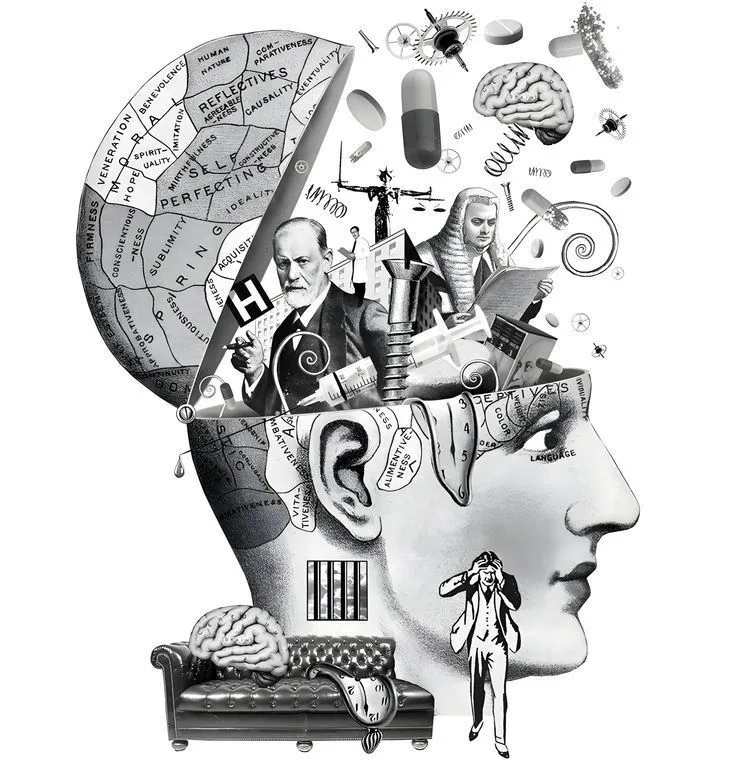
Psychology: Standing in front of a Rothko at the Tate Modern, people cry. They do not always know why. The painting contains no human figures, no narrative, no representational content of any kind - just large rectangles of deep, trembling colour. Yet the response is visceral and, for many visitors, overwhelming.
This is one of the great puzzles of human psychology: what is happening when art moves us? Why does paint on canvas produce grief or wonder? Why does a particular arrangement of musical notes make us ache?
Why do stories about people who do not exist, in worlds that never were, make us feel things as real and as consequential as anything that happens in our actual lives?
These questions have occupied philosophers for millennia, from Aristotle's account of catharsis to Kant's analysis of the sublime to Tolstoy's claim that art's purpose was the transmission of feeling from one person to another.
For much of the twentieth century, the scientific disciplines largely left aesthetics to the philosophers, on the reasonable grounds that there was no agreed methodology for studying subjective experience.
That changed in the 1990s, when neurologist Semir Zeki at University College London proposed the field of neuroaesthetics: the scientific study of the neural mechanisms underlying aesthetic experience.
Armed with brain imaging technology and the methods of experimental psychology, researchers began asking empirical questions about what happens in human minds and brains when they encounter art.
What they have found is both more specific and more surprising than the philosophical tradition suggested. Aesthetic response is not simply pleasure. It involves a complex interplay of perceptual processing, emotional activation, reward circuits, social cognition, and learned cultural frameworks.
Art works because it engages - and in some cases gratifies - systems that evolved for purposes having nothing directly to do with art: the visual processing system's drive to find meaning in patterns, the social brain's sensitivity to expressions of inner states, the reward system's response to pattern, resolution, and surprise.
Understanding the psychology of art illuminates not just why we make and consume art, but something fundamental about how human minds are structured.
"The function of art is to broaden and illumine our experience of the world. The scientist who understands why a painting moves him has not destroyed that experience. He has added to it." - Semir Zeki, 'Inner Vision: An Exploration of Art and the Brain' (1999)
| Psychological Response | Description | Key Researcher(s) | Research Area |
|---|---|---|---|
| Aesthetic pleasure | Positive emotional response to beautiful or skillful works | Zeki (1999); Ramachandran & Hirstein (1999) | Empirical aesthetics; neuroaesthetics |
| Elevation | Moral uplift from witnessing virtue or greatness | Jonathan Haidt (2000) | Positive psychology |
| Chills / frisson | Physiological response to music peaks | Goldstein (1980); Panksepp (1995) | Music psychology |
| Catharsis | Emotional release through identifying with tragedy | Aristotle; Freud | Philosophy; psychoanalysis |
| Transportation | Absorbed into narrative world; reality suspended | Green & Brock (2000) | Narrative psychology |
| Aesthetic distance | Contemplating art at emotional remove | Bullough (1912) | Phenomenological aesthetics |
| Flow | Absorbed, effortless engagement in creative making | Csikszentmihalyi (1990) | Positive psychology |
| Kama Muta | Feeling of being moved or touched (chills, tears) | Fiske et al. (2017) | Cross-cultural emotion research |
Key Definitions
Neuroaesthetics: The scientific field, formally proposed by Semir Zeki in the 1990s, that studies the neural and psychological bases of aesthetic experience.
Neuroaesthetics uses brain imaging (fMRI, EEG), experimental psychology, evolutionary biology, and cross-cultural research to investigate aesthetic preference, emotional response to art, and the relationship between perception and beauty.
Aesthetic emotion: A category of emotional response specifically elicited by art, music, nature, or other phenomena encountered with an aesthetic attitude - a mode of attention focused on intrinsic qualities rather than practical utility.
Research has identified aesthetic emotions as distinct from ordinary emotions in their combination of pleasurable engagement with objects or experiences that have no instrumental value.
Peak aesthetic experience: An intense, sometimes overwhelming aesthetic response characterised by chills, tears, or a sense of profound meaning.
Research by David Huron at Ohio State documented 'chills' responses to music (sometimes called 'frisson') and found that they correlate with personality traits and appear to involve the same neural reward systems as social bonding.
Psychologist Mihaly Csikszentmihalyi described related experiences of deep engagement in aesthetic creation as 'flow.'[9]
Categorical perception: A feature of human perceptual systems whereby stimuli are not experienced as continuous gradations but as belonging to distinct categories.
Relevant to art psychology because the visual system's categorical tendency - grouping patterns, finding faces, resolving ambiguity toward stable interpretations - underlies both the experience of recognising figurative art and the engagement with abstract art that resists easy resolution.
Cultural capital: Pierre Bourdieu's concept, developed in 'Distinction' (1979), describing the social value attached to culturally valued forms of knowledge, including aesthetic taste.
Bourdieu documented that art appreciation functions not only as personal experience but as a marker of social class and education, with significant consequences for social reproduction.
Kama Muta: A Sanskrit-derived term adopted by cross-cultural psychologists Alan Fiske, Sasha Seibt, and colleagues to describe the emotion of being moved or touched - characterised by chills, tears, a feeling of warmth in the chest, and a sense of connection.[18]
Research by Fiske and colleagues (2017), published in Emotion Review, found that this response to art, music, film, and witnessing human kindness shows consistent patterns across diverse cultures, suggesting universal psychological architecture for a specific aesthetic emotion.
What Semir Zeki Found
The Neural Basis of Aesthetic Experience
Semir Zeki's central hypothesis, developed from his decades of research on the visual cortex, was that the function of visual art is linked to the function of the visual brain.[1]
The visual system's fundamental task is to extract stable, permanent knowledge from the constantly changing images that fall on the retina - to identify what an object is despite varying lighting, angle, and distance.
Great art, Zeki proposed, exploits this system by presenting stimuli that engage the visual brain's search for constancy and meaning without simply resolving it.
His 1999 book 'Inner Vision: An Exploration of Art and the Brain' argued that different artistic styles - from Vermeer's light-drenched domesticity to Picasso's cubism - correspond to different strategies of visual representation that map onto different stages of visual processing.
Vermeer exploits the brain's colour and luminosity processing. Cubism, which represents objects from multiple viewpoints simultaneously, mirrors the actual structure of object knowledge in the visual cortex, where different features are processed in different regions that are integrated to form a unified percept.
The argument was controversial among art historians but productive for research.
The Reward Circuit
Subsequent brain imaging research has consistently found that aesthetic experiences - encountering beautiful faces, hearing music, viewing artworks judged beautiful - activates the medial orbitofrontal cortex, a region associated with reward processing.
Research by Semir Zeki and colleagues published in PLOS ONE in 2011 found that viewing paintings judged beautiful produced significantly greater activation in the medial orbitofrontal cortex than viewing paintings judged ugly, regardless of the category of painting.
The reward response to beauty appears to be a genuine neurological phenomenon rather than a metaphor.
Researcher Vessel and colleagues, publishing in Frontiers in Human Neuroscience in 2012, documented that artworks experienced as 'moving' - as opposed to merely beautiful or interesting - additionally activated the default mode network, a brain system associated with self-referential processing, memory, and imagining others' mental states.[5]
The most personally affecting art appears to engage not just perceptual and reward systems but the brain's social cognition architecture - the systems we use to understand ourselves and others.
Ramachandran's Laws of Art
Neurologist V.S. Ramachandran and William Hirstein proposed in 'The Science of Art' (1999), published in the Journal of Consciousness Studies, eight neuroaesthetic principles they called the 'laws of art.' These included peak shift (exaggerating features that signal category membership, as in caricature), grouping (the pleasure of finding hidden visual order), contrast, and symmetry.[13]
Ramachandran argued that artists intuitively discover and exploit the rules of the visual nervous system, and that aesthetic pleasure is the brain rewarding itself for successfully completing acts of perceptual inference.
The peak shift principle has particularly compelling empirical support. Studies using simplified visual stimuli - abstract patterns representing archetypes of form - consistently find that exaggerated versions produce stronger aesthetic responses than faithful reproductions, suggesting the visual system is responding to the essence of a category rather than a specific instance.
This is why great portraiture often subtly exaggerates characteristic features of the subject, and why effective abstract painting distils visual qualities rather than reproducing them.
Why Abstract Art Works
The Problem of Representation
The most accessible aesthetic theories - those that explain art's power by reference to its representation of meaningful subjects - face a direct challenge from abstract art. If a painting moves us because it depicts a face expressing grief, that is at least explicable.
But when a painting by Mark Rothko, which depicts nothing except colour relationships, produces the same intensity of response, the representational account fails.
The evidence for strong responses to abstract art is not merely anecdotal. The Tate Modern's long-running research on visitor responses, summarised in various annual reports and academic publications from 2012 onwards, has consistently documented that Rothko's paintings in the Seagram Murals room produce some of the highest self-reported emotional intensity of any works in the collection - including works with explicit representational and narrative content.
Anjan Chatterjee and Aesthetic Science
Anjan Chatterjee, neurologist and author of 'The Aesthetic Brain' (2014), has proposed that abstract art works by activating visual processing systems through formal properties - balance, dynamism, rhythm, contrast - that the visual system is tuned to respond to independently of representational content.
The visual brain did not evolve to appreciate art, but it evolved to process edges, contrasts, symmetries, and motion; and artists, through centuries of experimentation, have developed formal languages that engage these systems directly.
Chatterjee identifies three evolutionary origins of aesthetic response: the desire for objects (driven by systems evolved to evaluate resources), the attraction to other people (driven by social and reproductive systems), and navigation in space (driven by systems for spatial orientation and landscape evaluation).[2]
Art, he argues, parasitises all three systems simultaneously, which is why its effects can be as powerful as responses to food, faces, or landscapes.
Kandinsky and Emotional Colour
Wassily Kandinsky, who developed abstract painting as a deliberate artistic programme in the 1910s, believed that colour had direct emotional effects independent of representation, and wrote extensively on this in 'Concerning the Spiritual in Art' (1911).[7]
Contemporary research has partially validated his intuitions: colour psychology studies document reliable associations between colours and emotional states across many cultures, though these associations are also substantially culturally modulated.
Research by Andrew Elliot and colleagues (2007), published in the Journal of Experimental Psychology: General, documented that exposure to the colour red impairs analytical performance by activating threat-avoidance responses, while subsequent work found context-dependent effects where red could signal both danger and desire depending on framing.
Cross-cultural research by Lindsey and Brown (2006) found universal patterns in colour naming despite substantial variation in the specific colour terms available in different languages, suggesting that colour perception has biological architecture that cultural variation elaborates rather than creates from scratch.
The Psychology of Music: A Special Case
Why Music Moves Us
Of all the arts, music produces the most reliably intense physiological responses.
Research by Goldstein (1980), first published in Physiological Psychology, documented what he called 'thrills' - now more commonly called frisson - in response to music: goosebumps, shivering, changes in heart rate and breathing reported by 96 percent of his sample.
Subsequent neuroimaging research by Anne Blood and Robert Zatorre at McGill University, published in the Proceedings of the National Academy of Sciences (2001), found that musical passages producing chills activated the same mesolimbic reward circuits activated by food, sex, and drugs - regions including the nucleus accumbens, ventral tegmental area, and orbitofrontal cortex.[14]
David Huron's influential theory in 'Sweet Anticipation: Music and the Psychology of Expectation' (2006) proposed that music's power lies in its manipulation of expectation.
Huron's ITPRA theory (Imagination, Tension, Prediction, Reaction, Appraisal) describes music as a system for generating, fulfilling, violating, and deferring expectations in ways that produce sequences of emotional responses.[8]
A perfect authentic cadence satisfies; a deceptive cadence surprises and continues.
The emotional trajectory of a musical phrase is partly a record of how that phrase manages the listener's anticipatory state.
Cross-Cultural Musical Universals
A major question in music psychology is whether emotional responses to music are culturally specific or universal.
Research by Samuel Meer, Nori Jacoby, and colleagues, published in Current Biology (2018), studied isolated communities in rural Bolivia with no prior exposure to Western music and found that basic emotional categories in music - happy, sad, fearful - were consistently recognised across the cultural divide.
However, the specific emotional qualities and the intensity of response were culturally modulated. There are genuine musical universals, but cultural learning substantially amplifies and shapes them.
Art Therapy: The Evidence
Clinical Applications
Art therapy - using art-making as a therapeutic modality - has been practised since the 1940s, when artist and educator Edith Kramer and psychiatrist Margaret Naumburg independently developed approaches to using visual art-making in clinical settings.[12]
For most of its history, art therapy's evidence base was thin, relying largely on case studies and theoretical argument. This has changed significantly in the past two decades.
Cortisol and Stress Reduction
Girija Kaimal, associate professor at Drexel University, published research in 2016 in Art Therapy: Journal of the American Art Therapy Association finding that 45 minutes of art-making - drawing, collage, or sculpting with clay - produced significant reductions in cortisol levels in participants, measured via saliva samples.[6]
Crucially, the effect was independent of prior artistic experience or skill level: non-artists benefited as much as trained artists. The findings suggested that the stress-reducing mechanism was in the process of art-making rather than in any quality of the output.
A follow-up study by Kaimal and colleagues (2017), examining the neurological correlates of art-making using near-infrared spectroscopy (fNIRS), found that free art-making (as opposed to copying) produced greater prefrontal cortex activation and greater self-reported positive affect.
The study suggested that creative autonomy - making one's own choices about what to make - is a specific element of art therapy's effectiveness beyond the general relaxation of any absorbing activity.
PTSD and Trauma
Art therapy has accumulated its strongest evidence base in the treatment of trauma. A 2018 systematic review by Campbell and colleagues, published in the Journal of Affective Disorders, found consistent positive effects of arts therapies for PTSD symptoms across multiple study designs.[10]
The proposed mechanism is that art-making provides a non-verbal channel for processing traumatic memories - a way of approaching and externalising experiences that are too fragmented or too overwhelming for verbal expression.
For veterans, sexual assault survivors, and childhood abuse survivors, this non-verbal approach can circumvent the re-traumatisation that direct verbal discussion sometimes produces.
Research published by Gantt and Tinnin in Arts in Psychotherapy (2009) proposed a specific neurobiological mechanism: traumatic memories are stored in pre-verbal, sensorimotor memory systems that resist access by verbal narrative but are accessible through body-based, spatial, and imagistic processes.
Art-making engages precisely these systems. This account converges with the broader trauma therapy literature, including van der Kolk's 'The Body Keeps the Score' (2014), which emphasises the role of non-verbal and somatic interventions in trauma treatment.[20]
Dementia and Cognitive Function
Research on art therapy for dementia patients has found particularly compelling results. A 2014 Cochrane review of arts therapies for dementia found improvements in mood, quality of life, and emotional wellbeing.
Researchers at Harvard Medical School's Center for Alzheimer Research and Treatment have documented that procedural memories - knowing how to do things - are often preserved even in advanced dementia, enabling patients to engage in art-making even when explicit memory has severely deteriorated.
The most striking evidence comes from the case of artist William Utermohlen, who painted a series of self-portraits as his Alzheimer's disease progressed from 1996 to 2000, documented in the Lancet (2001).
The portraits show a progressive dissolution of spatial organisation and representational coherence that tracks the neurological deterioration of the disease, while retaining emotional intensity and expressive urgency.
Art persisted as a communicative medium even as language and memory failed. The research has prompted significant investment in arts programming in dementia care settings globally.
How Culture Shapes Beauty
The Universalist Position
Evolutionary psychologist Denis Dutton, in 'The Art Instinct' (2009), argued for universal elements in aesthetic response rooted in evolutionary history.[3]
Cross-cultural research on landscape preferences consistently finds preferences for open, parklike environments with scattered trees, water, and visibility to the horizon - features that psychologist Gordon Orians proposed correspond to features of ancestral African savanna habitat that signalled good conditions for early humans.
Preferences for faces showing signs of health, developmental stability, and genetic fitness show significant cross-cultural consistency.
Research by Steven Pinker in 'The Blank Slate' (2002) catalogued additional universals: preferences for symmetry in faces and bodies, for certain colour contrasts, for narrative with conflict and resolution.
The argument that aesthetic universals exist is now supported by substantial cross-cultural data, though the universals are always overlaid with cultural elaboration.
Bourdieu and Cultural Variation
Pierre Bourdieu's empirical research, conducted in France in the 1960s and 1970s and published as 'Distinction: A Social Critique of the Judgement of Taste' (1979), documented how strongly aesthetic preferences correlated with social class, education, and cultural background.
What people judged beautiful in painting, music, or interior design differed systematically by their position in the social structure.
Bourdieu's argument was not merely that tastes differed - that was obvious - but that these differences were socially reproduced through education and cultural socialisation, and that the cultural preferences of dominant classes were treated as objectively superior rather than recognised as class preferences.
Bourdieu found that high culture consumption - attending classical concerts, visiting art galleries, preferring abstract to figurative painting - was reliably predicted by educational level and social class.[4]
Crucially, these preferences were experienced as natural personal responses rather than as the products of class-specific socialisation. The power of cultural capital lay precisely in its invisibility as capital: it appeared as taste, not privilege.
Synthesis: Biology and Culture
The current scientific consensus is that aesthetic response involves both universal biological foundations and substantial cultural elaboration.
Certain formal features - symmetry, contrast, certain types of rhythmic pattern - produce aesthetic responses across cultures because they engage perceptual systems with cross-cultural architecture.
But what is made of these responses - what counts as beautiful, what categories of aesthetic experience are culturally valued, how aesthetic preferences map onto social identity - varies substantially across cultures and historical periods. Neither pure universalism nor pure cultural relativism captures the full picture.
A useful framework is Ellen Dissanayake's concept of making special from 'Homo Aestheticus' (1992).
Dissanayake argues that the propensity to mark certain objects and activities as special - set apart from ordinary use by additional care, elaboration, and attention - is a universal human behavioral tendency with evolutionary roots.[11]
What counts as special differs across cultures; the tendency to specialise does not.
Art and Identity
Taste as Self-Expression
Research in social psychology consistently finds that people use aesthetic preferences as a form of self-expression and identity construction. We choose the music we listen to partly to signal who we are. We hang art on our walls that tells a story about our values and self-image.
We read literature that affirms and extends our sense of who we are or who we aspire to be.
North and Hargreaves (2007), in a series of studies published in the European Journal of Social Psychology, found that people consistently made inferences about strangers' personalities, social class, and values from disclosed music preferences - and that these inferences were correlated with the preferences' self-reported meaning to the individuals concerned.
Music taste, in particular, functions as a publicly legible identity signal: the band on your t-shirt communicates something about who you are in ways that, say, your brand of car insurance does not.
Art During Disruption
Art's role in supporting identity is particularly visible during periods of life disruption.
Research by Matthew Huber and colleagues on music and identity found that people significantly increased engagement with personally meaningful music during periods of major life transition - grief, relationship breakdown, career change - using familiar aesthetic experiences as anchors of continuity when other sources of identity were in flux.
Literature has a similar function: readers often describe encountering books 'at exactly the right moment,' finding in fiction a representation of experiences or emotions they could not otherwise articulate or process.
Narrative Transportation and Empathy
Melanie Green and Timothy Brock's narrative transportation theory (2000), published in the Journal of Personality and Social Psychology, documented that readers absorbed into fictional narratives changed their real-world beliefs and attitudes in the direction suggested by the narrative.[15]
Being 'transported' into a story - losing awareness of the real world, feeling genuinely concerned about fictional characters - predicted attitude change that persisted after the reading ended.
Subsequent research by Raymond Mar and Keith Oatley (2008), published in Review of General Psychology, proposed that fiction functions as a 'simulation' of social experience, using the same neural systems as real social interaction to practice social understanding.[16]
Fiction readers showed higher scores on measures of empathy and social cognition than non-readers, even after controlling for personality traits associated with both fiction reading and empathy.
Exposure to literary fiction - as opposed to genre fiction or non-fiction - produced measurable short-term increases in empathy measures in a series of studies by Kidd and Castano (2013) published in Science.[17]
The Twenty-First Century: Digital Art and New Questions
The emergence of algorithmic and AI-generated art raises new psychological questions. When a generative AI model produces a painting in the style of Rembrandt, what is the psychological experience of the viewer?
Research by Chamberlain and colleagues (2018), published in Psychology of Aesthetics, Creativity, and the Arts, found that people rated AI-generated artworks lower in aesthetic quality and attributed less emotional depth to them when told they were AI-produced - even when the images were identical.
The same image judged beautiful as human-created was judged merely technically impressive when attributed to an algorithm.
This finding suggests that aesthetic response is not purely perceptual but involves beliefs about agency, intention, and communication. Art moves us partly because we believe a conscious being made choices, felt things, and communicated them.
When that belief is absent - when we know the work was generated by pattern-matching rather than lived experience - the emotional circuit is disrupted. Whether and how this will change as AI art becomes more prevalent is among the most significant open questions in contemporary aesthetics psychology.
Practical Takeaways
The psychology of art has practical implications that extend beyond the art world. Art therapy's evidence base is now robust enough to justify its inclusion in clinical settings - not as an alternative to evidence-based treatments but as a complement, particularly for populations who find verbal approaches difficult.
The stress-reducing effects of art-making are available without artistic training, suggesting that making things - drawing, crafting, writing - has genuine wellbeing benefits for ordinary people.
For cultural institutions, the research supports investment in arts access as a public health intervention, not merely a cultural luxury.
The evidence that arts engagement improves wellbeing, reduces stress, supports cognitive function in ageing populations, and helps process trauma makes the case for arts funding in terms that public health frameworks can evaluate.
A 2019 report by the World Health Organisation, 'What Is the Evidence on the Role of the Arts in Improving Health and Well-Being?', reviewed over 900 studies and concluded that arts engagement had robust positive effects on mental health, chronic disease management, and cognitive function across the lifespan.[19]
For individuals, the research suggests approaching art with curiosity rather than expertise, and recognising that personal response - being moved, being disturbed, being fascinated - is a legitimate and neurologically significant form of aesthetic experience.
The research also suggests that making art - regardless of skill level - offers benefits distinct from consuming it. The studio and the gallery are both, in their different ways, beneficial environments.
Sources & Further Reading
- Zeki, S. (1999). Inner Vision: An Exploration of Art and the Brain. Oxford University Press.
- Chatterjee, A. (2014). The Aesthetic Brain: How We Evolved to Desire Beauty and Enjoy Art. Oxford University Press.
- Dutton, D. (2009). The Art Instinct: Beauty, Pleasure, and Human Evolution. Bloomsbury Press.
- Bourdieu, P. (1979). La Distinction: Critique sociale du jugement. Editions de Minuit. (English: Harvard University Press, 1984.)
- Vessel, E. A., Starr, G. G., & Rubin, N. (2012). The brain on art: Intense aesthetic experience activates the default mode network. Frontiers in Human Neuroscience, 6, 66.
- Kaimal, G., Ray, K., & Muniz, J. (2016). Reduction of cortisol levels and participants' responses following art making. Art Therapy, 33(2), 74-80.
- Kandinsky, W. (1911). "Concerning the Spiritual in Art". Piper Verlag.
- Huron, D. (2006). Sweet Anticipation: Music and the Psychology of Expectation. MIT Press.
- Csikszentmihalyi, M. (1990). "Flow: The Psychology of Optimal Experience". Harper and Row.
- Campbell, M., Decker, K. P., Kruk, K., & Deaver, S. P. (2016). Art therapy and cognitive processing therapy for combat-related PTSD. Art Therapy, 33(4), 169-177.
- Dissanayake, E. (1992). Homo Aestheticus: Where Art Comes From and Why. Free Press.
- Naumburg, M. (1950). Schizophrenic Art: Its Meaning in Psychotherapy. Grune and Stratton.
- Ramachandran, V. S., & Hirstein, W. (1999). The science of art: A neurological theory of aesthetic experience. Journal of Consciousness Studies, 6(6-7), 15-51.
- Blood, A. J., & Zatorre, R. J. (2001). Intensely pleasurable responses to music correlate with activity in brain regions implicated in reward and emotion. Proceedings of the National Academy of Sciences, 98(20), 11818-11823.
- Green, M. C., & Brock, T. C. (2000). The role of transportation in the persuasiveness of public narratives. Journal of Personality and Social Psychology, 79(5), 701-721.
- Mar, R. A., & Oatley, K. (2008). The function of fiction is the abstraction and simulation of social experience. Perspectives on Psychological Science, 3(3), 173-192.
- Kidd, D. C., & Castano, E. (2013). "Reading literary fiction improves theory of mind". Science, 342(6156), 377-380.
- Fiske, A. P., Seibt, B., & Schubert, T. (2017). The sudden devotion emotion: Kama muta and the cultural practices whose function is to evoke it. Emotion Review, 11(1), 74-86.
- World Health Organisation. (2019). What Is the Evidence on the Role of the Arts in Improving Health and Well-Being? WHO Regional Office for Europe.
- van der Kolk, B. (2014). "The Body Keeps the Score: Brain, Mind, and Body in the Healing of Trauma". Viking.