
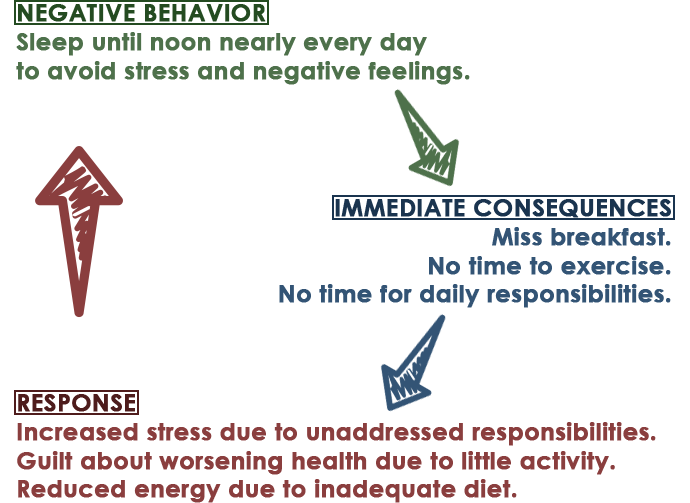
Withdrawal and avoidance can deepen depression by reducing contact with activities, social connection, and other sources of positive reinforcement. What is behavioral activation? It is a structured treatment that interrupts this cycle through activity monitoring, scheduling previously rewarding actions, mood tracking, and graded tasks. It does not wait for motivation or pleasure to return first; it rebuilds behavioral engagement in manageable steps.
Depression is one of the most common and most disabling conditions in the world. The World Health Organization estimates it affects more than 280 million people globally and is the leading cause of disability worldwide.
Its treatment landscape is crowded: antidepressant medications, cognitive behavioral therapy, psychodynamic therapy, mindfulness-based approaches, and dozens of variants and combinations.
In this crowded field, one of the most well-supported treatments is also one of the simplest. Behavioral activation does not require restructuring thoughts, resolving past conflicts, or achieving insight into underlying patterns.
It works by interrupting the behavioral cycle that maintains depression - specifically, the withdrawal and avoidance that progressively reduce a depressed person's contact with rewarding experience.
The evidence for its effectiveness is substantial. The research on why it works is illuminating. And its simplicity has made it the subject of a scientific debate about what, exactly, heals depression.
The Depression Cycle
Before explaining behavioral activation, it helps to understand the cycle it targets.
Depression is not simply feeling sad. It is characterized by a cluster of features - persistent low mood, loss of interest in previously enjoyable activities (anhedonia), fatigue, impaired concentration, sleep disturbance, and often a pervasive sense of worthlessness or hopelessness.
Critically, depression is self-reinforcing through behavior. When people feel depressed, they withdraw from activities and social contact. This withdrawal feels understandable - activity takes effort, and depressed people feel they lack energy. Social contact feels forced and hollow.
The activities that used to bring pleasure no longer seem to produce any.
But withdrawal has consequences. The activities people withdraw from are precisely the activities that would produce the positive experiences that counteract depression. Reduced activity produces fewer positive experiences.
Fewer positive experiences reinforce the depressed belief that nothing is enjoyable or worthwhile. The belief justifies further withdrawal.
The cycle operates through behavioral avoidance: the short-term relief of not having to do effortful, potentially disappointing things is purchased at the cost of progressive reduction in behavioral engagement with the world.
Over time, the depressed person's behavioral repertoire narrows, their contact with positive reinforcement diminishes, and depression deepens.
"Depression restricts activity. Restricted activity deepens depression. Breaking that cycle through deliberate action - not through waiting to feel like acting - is the theoretical heart of behavioral activation." - Based on Peter Lewinsohn's theoretical framework, 1970s
Lewinsohn's Original Model
The foundations of behavioral activation were laid by Peter Lewinsohn at the University of Oregon in the 1970s.
Lewinsohn proposed a behavioral theory of depression focused on what he called the rate of response-contingent positive reinforcement - the frequency with which a person's own behavior produces rewarding outcomes in their environment.
Depression, in Lewinsohn's model, results from and is maintained by a low rate of this kind of reinforcement. His theory identified three ways this could happen:
Environmental deprivation. The person's environment simply contains few activities or social contacts capable of providing positive reinforcement - poverty, social isolation, chronic illness, bereavement.
Skills deficit. The person lacks the social or behavioral skills to access potential reinforcement - social anxiety prevents connection, poor problem-solving prevents resolution of stressors.
Reduced capacity to experience pleasure. Even when positive events occur, the person cannot experience them as pleasurable - the anhedonia of depression interrupts the normal reward signal.
Lewinsohn's intervention - pleasant events scheduling - followed directly from this theory. Patients identified activities that had previously been rewarding, scheduled them into their days, and monitored mood before and after to identify the connection between activity and mood.
The treatment was behavioral: do more of the things that historically produced positive experience, and use the monitored relationship between activity and mood to rebuild the evidence that behavior has consequences.
This sounds straightforward, and it is. The challenge - and the reason it requires a structured treatment rather than just advice - is the inertia problem.
The Inertia Problem
The most common response when someone tells a depressed person to "get out and do things they enjoy" is: but I don't enjoy anything anymore, and I don't have the energy to try.
This response is not avoidance or weakness. It is an accurate description of the phenomenology of depression. Anhedonia means that activities that were previously rewarding no longer feel rewarding. Fatigue is both a symptom of depression and a genuine physical state.
The depressed person lacks not just motivation but the experience of anticipatory pleasure that motivation normally produces.
Behavioral activation works with this reality rather than against it through several structural features:
Activity monitoring before scheduling. Before prescribing activity increases, behavioral activation begins with systematic monitoring of what the patient currently does across a week, alongside mood ratings at regular intervals.
This serves two purposes: it identifies actual current activity levels and it often reveals connections between activities and mood that the patient had not noticed - small positive fluctuations associated with particular activities, however muted.
Graded task assignment. Rather than asking a severely depressed person to resume their full pre-depression activity level, behavioral activation builds a hierarchy of activities beginning with the smallest achievable step. A person who has not left the house in weeks might begin with walking to the end of the driveway.
The principle is to identify a level of activity that is within current capacity and to demonstrate - experientially, not through argument - that behavior has positive consequences.
Outside-in principle. One of the most important principles of behavioral activation is that behavioral change precedes mood change, not the other way around.
The instruction is not "wait until you feel like doing things and then do them" but "do the things and let the mood follow." This is counter-intuitive for people who believe action requires motivation, but it is both more practically useful and better supported by the evidence on how mood and behavior interact.
Values-based activity selection. Later developments in behavioral activation, particularly the model by Christopher Martell, Sona Dimidjian, and colleagues, emphasized selecting activities based on the patient's values and longer-term goals rather than simply on immediate hedonic value.
This addresses the problem that many depressed patients cannot identify activities that feel enjoyable in the present - but they can often identify what mattered to them before depression, what they would like their life to look like, and what connects to who they want to be.
The Jacobson Dismantling Study
The scientific significance of behavioral activation was substantially elevated by a 1996 study by Neil Jacobson and colleagues at the University of Washington.
The study is known as the "dismantling study" of cognitive behavioral therapy (CBT), and its results were surprising enough that they triggered a significant debate in clinical psychology.
CBT, as developed by Aaron Beck, has two primary components: a behavioral component (activity scheduling, behavioral experiments, graded task assignment) and a cognitive component (identifying and restructuring distorted automatic thoughts and dysfunctional beliefs).
The standard CBT model holds that the cognitive component is the active ingredient - that changing distorted thinking drives mood improvement.
Jacobson's team randomly assigned 150 depressed patients to one of three conditions:
- BA only - behavioral activation without any cognitive restructuring
- BA + automatic thought restructuring - behavioral activation plus identification and modification of automatic negative thoughts
- Full CBT - behavioral activation plus automatic thought restructuring plus core schema work
At the end of treatment and at two-year follow-up, all three conditions produced equivalent outcomes. Behavioral activation alone was as effective as full CBT. Adding cognitive components did not improve outcomes.
This finding was significant for two reasons. First, it suggested that the cognitive component of CBT - the part that consumed the most therapist training time and the part that had the most theoretical prominence - was not necessary for CBT's effectiveness.
Second, it legitimized behavioral activation as a standalone treatment, not merely as a component of something more complex.
The finding was controversial. Critics noted that the study may have been underpowered to detect modest differences between conditions, and that the therapists in the full CBT condition may not have implemented cognitive restructuring optimally.
Proponents argued that the two-year follow-up made the equivalence finding more credible than immediately post-treatment comparisons.
The Dimidjian RCT
A larger and more definitive test came with a 2006 randomized controlled trial by Sona Dimidjian and colleagues, published in the Journal of Consulting and Clinical Psychology.
This study compared behavioral activation, cognitive behavioral therapy, antidepressant medication (paroxetine), and pill placebo in a sample of 241 adults with major depressive disorder.
The results contained a particularly important finding for severely depressed patients. Among patients with severe depression (above a specified threshold on the Hamilton Rating Scale for Depression):
- Behavioral activation was as effective as antidepressant medication
- Behavioral activation outperformed cognitive therapy in this severity range
- Full CBT showed less advantage over placebo than expected at high severity
This was a striking finding. For severe depression, the simplest behavioral treatment matched the pharmacological gold standard. The Dimidjian study became one of the most-cited pieces of evidence in depression treatment research and contributed significantly to the subsequent growth in behavioral activation's clinical adoption.
Evidence Base Summary
The evidence for behavioral activation is now substantial:
| Study Type | Finding |
|---|---|
| Jacobson et al. (1996) RCT | BA alone equals full CBT at post-treatment and 2-year follow-up |
| Dimidjian et al. (2006) RCT | BA equals antidepressant medication for severe depression |
| Cuijpers et al. (2007) meta-analysis | BA significantly more effective than control conditions |
| Ekers et al. (2014) meta-analysis | BA effective with effect size comparable to CBT |
| Richards et al. (2016) UK NHS trial | BA non-inferior to CBT in a large 440-patient study |
| NICE Guidelines | BA recommended as first-line treatment for depression in the UK |
The evidence is strongest for unipolar major depressive disorder in adults. Evidence for adolescents, older adults, and comorbid presentations is growing but somewhat thinner. Evidence for BA delivered via digital or self-help formats (guided and unguided) is positive but shows smaller effect sizes than therapist-delivered BA.
How Behavioral Activation Is Structured
A standard course of behavioral activation consists of eight to twenty sessions, though briefer versions have been studied. The core components are:
Psychoeducation. The patient learns the model: depression causes withdrawal, withdrawal reduces contact with reward, reduced reward maintains depression. The treatment rationale is made explicit: the goal is to reverse the cycle by increasing activity even before mood improves.
Activity monitoring. The patient keeps an hourly diary of activities and rates mood at regular intervals. This creates an objective data record that supplements distorted depressed memory and often reveals mood-activity relationships the patient had not noticed.
Identification of avoidance patterns. The patient and therapist identify the specific withdrawal and avoidance behaviors maintaining depression: not answering the phone, staying in bed, avoiding social contact, stopping exercise, eating poorly. These become behavioral targets.
Activity scheduling. Based on the patient's values and previous sources of pleasure, a schedule of activities is created. Activities begin small and achievable, with gradual escalation. The schedule is collaborative - the patient has ownership over it.
Problem-solving. Where practical barriers prevent activities (no transport, social anxiety, physical limitations), structured problem-solving is used to develop alternative routes.
Relapse prevention. Late sessions focus on identifying early warning signs of depression recurrence and creating a plan for resuming behavioral activation at the first signs.
Why Does It Work
The theoretical debate about behavioral activation's mechanism of action remains active.
Lewinsohn's original model emphasizes direct contact with positive reinforcement. Getting the person to do more of the things that produce positive experiences gradually rebuilds the reward signal that depression suppresses.
More recent accounts, influenced by contemporary learning theory, emphasize the extinction of avoidance. Avoidance is maintained by negative reinforcement - the temporary relief of not having to do difficult things. Over time, avoidance generalizes and the feared consequences (social rejection, failure, pain) never get tested.
Behavioral activation interrupts avoidance and provides corrective experiences that disconfirm the feared consequences.
Neuroscientific accounts focus on the role of behavioral engagement in restoring dopaminergic reward system function. Depression is associated with blunted dopamine signaling, which produces anhedonia. Behavioral engagement that produces small positive outcomes gradually restores the sensitivity of reward systems.
The Jacobson dismantling study finding - that behavioral activation without cognitive restructuring works as well as full CBT - is consistent with any account in which behavioral change is the active mechanism.
Whether cognitive change is also occurring as a consequence of behavioral change (as some CBT proponents argue) or whether cognition is largely irrelevant to the mechanism is not fully resolved.
Self-Help Applications
Because behavioral activation is fundamentally a behavioral intervention with a clear rationale and structured components, it adapts well to self-help and lower-intensity delivery formats.
Several books offer accessible presentations of the approach: Overcoming Depression One Step at a Time by Michael Addis and Christopher Martell is the primary self-help translation of Martell's BA model.
Research on guided self-help using BA-based materials shows effect sizes smaller than therapist-delivered treatment but meaningfully better than waiting list controls.
Digital BA applications have been developed and studied, with early results suggesting they can provide benefit, particularly for mild to moderate depression. The UK NHS has made BA materials available through Improving Access to Psychological Therapies (IAPT) services, including self-help workbooks.
For people who cannot access formal treatment, the core principles of behavioral activation - monitoring the relationship between activity and mood, scheduling small activities connected to values, deliberately acting against the pull of avoidance - can be applied with some structure and self-monitoring even without a therapist.
Summary
Behavioral activation is a structured psychological treatment for depression that targets the behavioral withdrawal and avoidance cycle that maintains low mood.
It was developed from Lewinsohn's behavioral model in the 1970s and re-established as a standalone treatment by Jacobson's 1996 dismantling study and Dimidjian's 2006 RCT showing equivalence with antidepressant medication for severe depression.
Its core components - activity monitoring, scheduling based on values, structured work against avoidance, and the outside-in principle that behavioral change precedes mood change - are straightforward in concept but require structure to implement effectively in the context of depression's inertia.
Its strong evidence base, adaptability to brief and self-help formats, and suitability for a wide range of patients have made it one of the most important treatments in clinical psychology's evidence-based toolkit.
Health note: This article is general educational information about how a topic works, not medical, psychological, or mental-health advice, diagnosis, or treatment. Everyone's situation is different, and research findings describe groups, not individuals.
If you are struggling or have concerns about your health, please talk to a qualified professional such as a doctor or licensed therapist.
If you are in crisis or thinking about harming yourself, contact your local emergency services or a crisis line right away, in the US you can call or text 988 (Suicide & Crisis Lifeline); elsewhere, find local lines at findahelpline.com.