
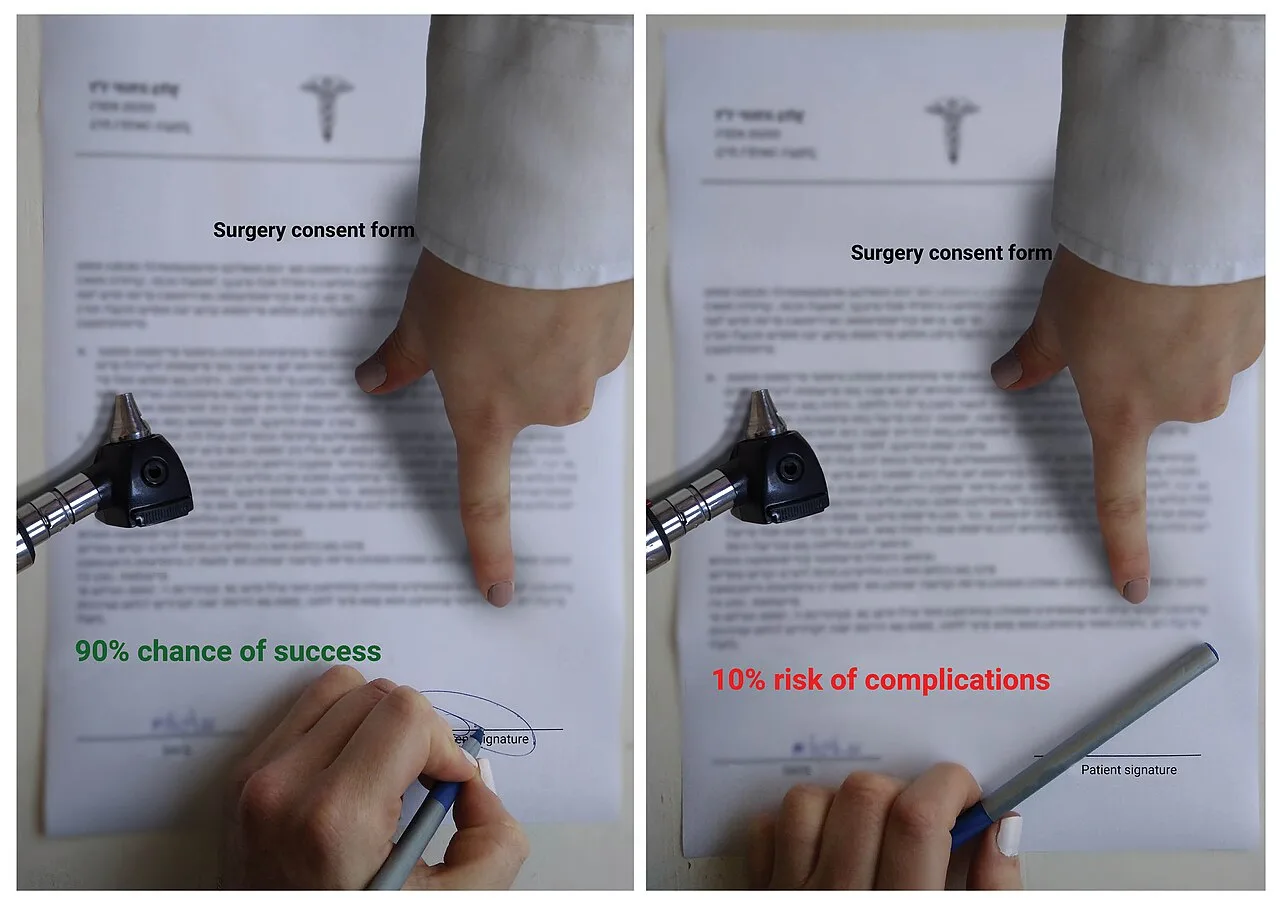
The same outcome can produce different choices when it is described as a gain or a loss. The framing effect reveals that preferences are shaped by presentation, challenging the assumption that people respond only to the underlying facts of a decision.
In the spring of 1981, Amos Tversky and Daniel Kahneman distributed a scenario to groups of American college students and faculty members. Imagine, they said, that the United States is preparing for the outbreak of an unusual Asian disease expected to kill 600 people.
Two alternative response programs have been proposed. The first group of participants read a gain-framed version: if Program A is adopted, 200 people will be saved.
If Program B is adopted, there is a one-third probability that 600 people will be saved and a two-thirds probability that nobody will be saved. Presented in these terms, 72 percent of respondents chose Program A - the certain rescue.
A second group read the same scenario recast in the language of death. If Program A is adopted, 400 people will die. If Program B is adopted, there is a one-third probability that nobody will die and a two-thirds probability that 600 people will die.
The arithmetic was unchanged. Four hundred dead and two hundred saved are mathematically identical when 600 lives are at stake. Yet 78 percent of the second group chose Program B - the gamble.
The certain loss of 400 lives felt intolerable in a way that the certain loss of 400 people "not saved" did not. The same objective situation, rendered in opposite verbal frames, had reversed the majority preference.
Tversky and Kahneman published these results in Science in 1981 under the title "The Framing of Decisions and the Psychology of Choice." Their finding struck at something foundational.[1]
Classical rational choice theory - the scaffolding beneath most of twentieth-century economics, political science, and legal reasoning - rests on the principle of description invariance: that stable preferences should not change when logically equivalent descriptions of the same options are substituted for one another.
The Asian Disease Problem demolished this assumption not in ignorant populations but in educated ones, not in naive intuitions but in deliberated choices, and not as a curiosity of the laboratory but as a reproducible, theoretically grounded feature of human cognition.
What Tversky and Kahneman had named was not an edge case. It was a window into the architecture of judgment.
"The same outcomes expressed as gains versus losses produce systematically different choices - a finding that violates rational decision theory." - Amos Tversky & Daniel Kahneman, 1981
Three Types of Framing: A Taxonomy
The term "framing effect" has accumulated a range of meanings across four decades of research.
Irwin Levin, Sandra Schneider, and Gary Gaeth brought systematic order to this proliferation in a landmark 1998 paper in Organizational Behavior and Human Decision Processes, arguing that the umbrella label concealed at least three mechanistically distinct phenomena.[5]
Their taxonomy remains the standard organizing framework in the field.
| Dimension | Risky Choice Framing | Attribute Framing | Goal Framing |
|---|---|---|---|
| Core mechanism | Loss aversion triggered by gain vs. loss description of identical gambles | Positive vs. negative labeling of a single attribute shifts overall evaluation | Emphasizing benefits of acting vs. costs of not acting alters persuasive impact |
| Canonical example | Asian Disease Problem: "200 saved" vs. "400 die" (Tversky and Kahneman, 1981) | "75% lean" vs. "25% fat" ground beef (Levin and Gaeth, 1988) | Gain- vs. loss-framed mammography screening messages (Rothman and Salovey, 1997) |
| Effect direction | Gain frame produces risk aversion; loss frame produces risk seeking | Positively framed attribute raises overall evaluation; negatively framed attribute lowers it | Loss frames more persuasive for detection behaviors; gain frames competitive for prevention |
| Effect strength | Large and robust in between subjects designs (d ~ 0.57 in meta-analyses) | Moderate; can penetrate sensory experience, not merely abstract judgment | Variable; depends on perceived riskiness of the target behavior |
These three types share the family resemblance of showing that logically equivalent information generates different responses depending on its descriptive packaging, but they differ in their underlying psychology and in the moderating variables that amplify or suppress them.
Conflating the three has generated apparent inconsistencies in the literature that largely dissolve once the type distinction is applied.
Intellectual Lineage
The framing effect did not emerge from a single insight. It was the culmination of a decade-long research program, and it inherited its conceptual vocabulary from a specific sequence of prior work.
The decisive precursor was Kahneman and Tversky's 1974 paper "Judgment Under Uncertainty: Heuristics and Biases," published in Science (Vol.[3] 185).
That paper catalogued three cognitive heuristics - representativeness, availability, and anchoring and adjustment - and demonstrated that each produced characteristic, predictable errors.
The paper's contribution was not merely to document irrationality but to give it structure: to show that cognitive mistakes follow rules and can be theorized. It established the intellectual program that would generate the framing research.
The theoretical engine that made framing effects intelligible came in 1979, when Tversky and Kahneman published "Prospect Theory: An Analysis of Decision Under Risk" in Econometrica (Vol.[2] 47, No. 2).
Prospect theory replaced the expected utility framework with a descriptive model built around two features absent from the standard account.
First, outcomes are evaluated relative to a reference point - typically the status quo - rather than in terms of final states of wealth or welfare.
Second, the value function is asymmetric: it is steeper in the loss domain than in the gain domain, capturing the empirical reality that losing a given amount feels psychologically worse than gaining the same amount feels good.
This asymmetry - loss aversion - explains why changing the reference point from which outcomes are described produces different choices even when the underlying states are identical.
The 1981 Science paper operationalized these theoretical commitments. Tversky and Kahneman connected the preference reversals in the Asian Disease Problem directly to prospect theory's value function, showed that the reversals violated description invariance, and argued that such violations were not "an artifact of stupidity or ignorance" but reflected deep and general features of human risk cognition.
They also introduced the concept of the decision frame - the decision maker's subjective representation of the acts, outcomes, and contingencies associated with a choice - and argued that frames are partly constructed by the way options are presented and partly by the norms and habits the decision maker brings to the problem.
From this foundation, several distinct research traditions grew. In cognitive psychology, Irwin Levin and Gary Gaeth extended attribute framing into consumer behavior beginning in 1988, producing a body of work on how product descriptions alter not just abstract evaluations but experienced quality.[6]
In health psychology, Alexander Rothman and Peter Salovey developed a research program on message framing in health communication, drawing on prospect theory and regulatory focus theory to predict when gain and loss frames would be differentially persuasive.
In political science, researchers including Thomas Nelson, William Gamson, and eventually Dennis Chong and James Druckman developed a parallel framing tradition focused on how media coverage and elite rhetoric activate different value dimensions in political judgment - a tradition that intersects with but is not identical to the Kahneman-Tversky program.
Richard Thaler's work on mental accounting, developed through the 1980s and synthesized in his 1999 paper in the Journal of Behavioral Decision Making, demonstrated how framing shaped financial decisions by determining which mental "accounts" expenses and gains were assigned to - an application of frame-dependence to everyday financial life that complemented Tversky and Kahneman's more formal demonstrations.
Daniel Kahneman's subsequent synthesis in Thinking, Fast and Slow (2011) situated the framing effect within a dual-process framework: System 1, which operates quickly, automatically, and associatively, responds to the affective valence of verbal labels like "death" and "survival" before System 2's deliberative computation can override it.
Frames work primarily by determining which System 1 associations are activated. The 2006 neuroimaging evidence from Benedetto De Martino and colleagues provided biological grounding for this account, showing that framing-susceptible choices were associated with heightened amygdala activation - the neural signature of emotional response - while framing-resistant choices correlated with greater orbitofrontal cortex engagement.
The Cognitive Science of Framing
Several research programs have moved beyond behavioral documentation to specify the cognitive and neural mechanisms by which frames alter decisions.
The most influential theoretical account remains Kahneman and Tversky's prospect theory, which predicts that the shape of the value function - concave in the gain domain, convex and steeper in the loss domain - will produce risk aversion for gains and risk seeking for losses when the reference point is held constant, and will produce preference reversals when frame manipulations shift the reference point.
The key cognitive operation is reference point assignment: which state of affairs does the decision maker treat as the baseline against which outcomes are coded as gains or losses?
Frames work, on this account, by providing reference points that the decision maker passively accepts rather than actively choosing.
Seymour Epstein's cognitive-experiential self-theory (CEST), developed through the 1990s and relevant to framing through its two-system architecture, distinguished between a rational system that operates on rules and evidence and an experiential system that operates on the associative and affective meaning of events.
Verbal labels like "die" and "survive" carry strong experiential-system charges that the rational system must actively override - a cognitively effortful operation that most decision makers do not consistently perform.
This framework predicts that conditions increasing cognitive load should amplify framing effects, and experimental evidence broadly supports this prediction.
Benedetto De Martino, Dharshan Kumaran, Ben Seymour, and Raymond Dolan provided direct neural evidence in a 2006 Science paper (Vol.[9] 313, No. 5787). In a gambling task, participants showed classic framing effects: they accepted more risk in the loss frame than the gain frame even when expected values were identical.
BOLD fMRI data showed that frame-consistent choices (those displaying the standard framing bias) were associated with enhanced activation of the amygdala, whereas frame-inconsistent choices - those where participants overcame the framing bias and responded rationally - were associated with greater engagement of the anterior cingulate cortex and orbitofrontal cortex.
Individual differences in susceptibility to framing correlated with individual differences in amygdala reactivity. This study provided the first direct demonstration that the framing effect involves affective processing systems, not merely computational ones, and gave biological meaning to the dual-process account.
Norbert Schwarz and colleagues, through research on the "feelings as information" hypothesis developed across the 1990s and 2000s, documented how the affective tone of verbal framing is used as a heuristic input to judgment.
When people feel uneasy - a response the loss frame reliably triggers - they use that unease as information about the choice at hand, even when the unease is causally irrelevant to the decision's actual merits.
Misattribution of affect to the options under evaluation is part of the mechanism by which attribute framing alters product quality assessments.
Four Case Studies
Case Study 1: Surgery or Radiation - McNeil, Pauker, Sox, and Tversky (1982)
The most consequential early replication of the framing effect was conducted in a clinical setting. Barbara McNeil, Stephen Pauker, Harold Sox, and Amos Tversky presented 238 patients, 491 students, and 424 physicians with a choice between surgery and radiation therapy for lung cancer.[4]
Half of each group received outcomes expressed as survival probabilities: the perioperative survival rate for surgery is 90%, the one-year survival rate is 68%, and the five-year survival rate is 34%.
For radiation, the corresponding figures were 77%, 68%, and 22%. The other half received the identical data expressed as mortality rates: 10% die during the perioperative period, 32% die within one year, and 66% die within five years for surgery; 23%, 32%, and 78% for radiation.
The results, published in the New England Journal of Medicine in 1982 (Vol. 306, No. 21), showed that the framing manipulation shifted surgical preference from 84% to 50% among patients, from 75% to 50% among students, and from 84% to 50% among physicians.
The magnitudes were statistically indistinguishable across groups. Trained physicians with quantitative fluency in outcome statistics were as susceptible to the framing as medically naive patients.
Subsequent investigators who believed that reformatting the statistics as natural frequencies would neutralize the effect found only partial attenuation. The words "survive" and "die" appear to be the operative variable, not the numerical format surrounding them.
The clinical implication is stark. Wherever informed consent materials, physician counseling, or patient education brochures present surgical outcome data in one frame rather than another, they are systematically biasing patient choices in a specific direction - and the direction of the bias is determined by whoever drafted the document, not by the patient's underlying values.
Case Study 2: Breast Self-Examination and Loss-Framed Persuasion - Meyerowitz and Chaiken (1987)
Beth Meyerowitz and Shelly Chaiken published a study in the Journal of Personality and Social Psychology in 1987 (Vol.[7] 52, No. 3) examining how frame valence influenced the persuasiveness of pamphlets about breast self-examination (BSE).
Undergraduate women read one of four pamphlets: gain-framed or loss-framed versions, each presented with either a strong or a weak argument about BSE's benefits.
The loss-framed messages emphasized the negative consequences of not practicing BSE - the risk of failing to detect tumors early. The gain-framed messages emphasized the positive consequences of practicing BSE - the benefits of early detection.
The loss-framed pamphlets produced greater intentions to perform BSE and higher actual BSE rates at a four-month follow-up.
The finding aligned with prospect theory's prediction that loss-framed messages should be more persuasive for behaviors perceived as high-stakes and detection-oriented, but it was one of the first demonstrations in health communication that the effect extended from laboratory gambles to real-world preventive behavior with a meaningful follow-up interval.
Meyerowitz and Chaiken's study became foundational for the health framing research program that Rothman and Salovey would later systematize.
The BSE context was particularly apt because it involves detection of a threatening condition - a context where the cost of not acting (missing cancer) is vivid and the gain from acting (finding it early) is psychologically coded as loss-prevention.
The study also raised a theoretical complication that the literature has not fully resolved: the distinction between gain-framed messages about gains and loss-framed messages about losses, versus the distinction between behaviors that are inherently gain-framed (health maintenance) versus inherently loss-framed (disease detection).
These dimensions interact in ways that subsequent research has mapped but not fully untangled.
Case Study 3: Detection vs. Prevention Behaviors - Rothman and Salovey (1997)
Alexander Rothman and Peter Salovey published a theoretical review and empirical synthesis in Psychological Bulletin in 1997 (Vol.[8] 121, No. 1) that became the organizing framework for health communication framing research.
Their central argument was that the persuasive advantage of gain versus loss framing in health messages depends on whether the target behavior is perceived as risky.
Behaviors that involve detecting a potential problem - mammography, HIV testing, skin cancer screening - are inherently associated with uncertainty about whether a threat exists.
In prospect theory terms, they involve a gamble: you might find something bad. Loss-framed messages, which activate risk-seeking preferences, should be more effective at motivating detection behaviors, because the relevant psychological question is whether to accept the uncertainty of testing.
Prevention behaviors - sunscreen use, dietary change, exercise, vaccination - are perceived as safer and more certain in their benefits. For these behaviors, Rothman and Salovey predicted gain-framed messages would be comparably or more effective.
Their review of the existing literature broadly supported this distinction, and they generated a program of experimental work testing it. A 1999 study by Rothman, Martino, Bedell, Detweiler, and Salovey published in Health Psychology (Vol.
18, No. 2) found that loss-framed messages were more effective than gain-framed messages at motivating participation in skin cancer detection screening, while gain-framed messages were more effective at motivating the use of sunscreen - a prevention behavior involving no uncertainty about whether a threat is present.
The Rothman-Salovey framework has been influential precisely because it moves beyond the simple prediction that loss frames always work better (an overgeneralization from the Asian Disease Problem) and offers a theoretically grounded account of when each frame will be more effective.
It has been applied to HIV testing campaigns, cervical cancer screening, dental hygiene, mammography promotion, and smoking cessation programs, with broadly consistent results.
Case Study 4: Competing Frames in Political Opinion - Chong and Druckman (2007)
Dennis Chong and James Druckman published an experimental study in the American Political Science Review in 2007 (Vol.[12] 101, No.
4) that extended framing research from a single-frame paradigm - where one group sees a gain frame and another sees a loss frame - to a competitive framing paradigm that better approximates the actual conditions of political communication.
In the real world, citizens encounter multiple competing frames about the same issue, often simultaneously.
The prior literature, conducted almost entirely in single-frame designs, could not address how citizens respond when opposing frames are in play.
Chong and Druckman exposed participants to issue frames of varying strength - operationalized as the quality of the supporting considerations - and found that strong frames reliably dominated weak ones. When opposing frames were of equal strength, they largely cancelled out, producing attitudes close to those of unframed control groups.
When one frame was substantially stronger than the other, it prevailed even when presented alongside a competing frame.
The study also found that repetition of a frame increased its impact - a finding consistent with availability accounts of framing, where repeated exposure makes frame-consistent considerations more cognitively accessible.
The Chong and Druckman study has important implications for the normative evaluation of framing effects in political contexts.
If frames can be made ineffective by exposure to strong counter-frames, then the democratic concern about elite manipulation of public opinion through strategic framing is partly addressable by ensuring competitive and diverse media environments.
The study also documented that politically sophisticated citizens - those with greater prior knowledge and stronger pre-existing attitudes - were less susceptible to framing, consistent with evidence from other domains that cognitive resources moderate the framing effect.
Empirical Research: Scope, Effect Sizes, and Moderators
The empirical literature on framing effects now spans more than four decades and thousands of studies across clinical medicine, consumer behavior, political opinion, legal judgment, environmental policy, and financial decision-making.
Several methodological syntheses allow for quantitative assessment of the effect's reliability and magnitude.
Anton Kühberger published a meta-analysis of risky-choice framing studies in 1998 in Organizational Behavior and Human Decision Processes (Vol.[10] 75, No. 1), reviewing 136 studies conducted between 1979 and 1997. He found a reliable framing effect across studies but with substantial heterogeneity.
Mean effect sizes varied considerably depending on whether the study used the exact Asian Disease Problem paradigm, a structural variant, or a more naturalistic scenario.
Studies that deviated from the canonical two-by-two structure - certain option versus probabilistic option, described in gain or loss terms - showed much weaker and less consistent effects.
Kühberger's conclusion was cautionary: the framing effect is robust in paradigms closely resembling Tversky and Kahneman's original design, but its generalizability to naturalistic decisions remains an open empirical question.
The laboratory-to-life gap is real and should not be papered over.
Individual difference moderators have received growing attention. Need for Cognition (NFC) - a stable dispositional tendency to engage in and enjoy effortful thinking, measured by Cacioppo and Petty's 1982 scale - consistently moderates framing effects: high-NFC individuals show smaller effects, presumably because they are more likely to engage System 2 processes that reframe loss descriptions into gain-equivalent terms.
Numeracy - the ability to understand and work with numerical probability information - also moderates framing susceptibility.
Anke Wegwarth and Gerd Gigerenzen, reviewing health communication framing research in 2013, found that high-numeracy individuals showed substantially reduced framing effects when information was presented in frequency formats, though framing effects in verbal descriptions persisted even for high-numeracy groups.
Anxiety, time pressure, and cognitive load all amplify framing effects, consistent with dual-process accounts.
The neuroimaging evidence from De Martino et al. (2006) also documented individual differences: participants with greater amygdala reactivity showed stronger framing effects, while those with greater orbitofrontal cortex engagement showed better resistance.
A subsequent study by the same group found that patients with focal amygdala lesions showed dramatically reduced framing effects, providing causal evidence that amygdala function is necessary for the standard framing pattern, not merely correlated with it.
Limits, Critiques, and Nuances
The framing effect is among the most replicated findings in behavioral science, but it is not immune to critique, and its scope conditions are substantially better understood than they were in 1981.
James Druckman published an influential critique in 2001 in the Journal of Politics (Vol.[11] 63, No. 4), arguing that framing effects in political opinion are fragile in ways that have been systematically underestimated.
He found that framing effects largely disappear when participants can discuss the issue with other people before forming a judgment - a finding with significant implications, because real political opinion formation almost always involves social interaction.
When citizens talk about an issue, they exchange considerations from multiple frames, and the effect of any single frame is substantially reduced.
Druckman's broader argument was that the strong version of the framing hypothesis - that elite framings straightforwardly determine public opinion - is inconsistent with evidence from deliberative settings. The effect is real but context-dependent in ways that matter.
Kühberger's 1998 meta-analysis also documented publication bias concerns: studies reporting significant framing effects were more likely to be published than null results, suggesting that the mean effect size in the published literature overstates the true population effect.
This concern applies to the behavioral literature generally but is particularly relevant here because framing effect studies are typically underpowered for detecting small effects, and researchers have strong incentives to use paradigms that reliably produce the effect.
A philosophically deeper critique questions whether description invariance - the normative standard against which framing effects are measured and found wanting - is actually the correct standard.
Suppose that the choice of frame by a communicator carries information: a physician who describes surgical risks in mortality terms may be signaling that mortality is the salient concern.
In that case, rational Bayesian updating might involve some sensitivity to the frame chosen, because the frame choice is evidence about the underlying situation.
Jonathan Koehler and Nigel Harvey made versions of this argument in the 1990s, and it has not been decisively refuted. The practical response is that in controlled experiments, the frame is demonstrably arbitrary - but in naturalistic settings, the normative status of frame-sensitivity is less clear.
Individual differences introduce substantial heterogeneity into what might otherwise appear to be a universal effect. High-numeracy, high-NFC, low-anxiety individuals under low cognitive load show considerably attenuated framing effects.
This is not merely a quantitative moderation: it suggests that the framing effect is not a fixed feature of human cognition but a conditional one, sensitive to cognitive resources and contextual factors.
The policy implication is that interventions targeting the moderators - improving numerical literacy, reducing time pressure in important decisions, providing deliberative forums - may be more effective than attempts to eliminate frames entirely, which is likely impossible.
The within-subjects design literature also complicates the picture. When the same person is presented with both the gain frame and the loss frame, framing effects are substantially reduced - participants appear to recognize the equivalence and correct for it.
This suggests that the effect depends partly on the decision maker's inability to generate the alternative frame spontaneously, and that prompt or assistance in generating alternative frames can partially inoculate against it. This has been operationalized in "consider the opposite" interventions, with moderate success.
Sources & Further Reading
Tversky, A., & Kahneman, D. (1981). The framing of decisions and the psychology of choice. Science, 211(4481), 453-458.
Kahneman, D., & Tversky, A. (1979). Prospect theory: An analysis of decision under risk. Econometrica, 47(2), 263-291.
Tversky, A., & Kahneman, D. (1974). Judgment under uncertainty: Heuristics and biases. Science, 185(4157), 1124-1131.
McNeil, B. J., Pauker, S. G., Sox, H. C., & Tversky, A. (1982). On the elicitation of preferences for alternative therapies. New England Journal of Medicine, 306(21), 1259-1262.
Levin, I. P., Schneider, S. L., & Gaeth, G. J. (1998). All frames are not created equal: A typology and critical analysis of framing effects. Organizational Behavior and Human Decision Processes, 76(2), 149-188.
Levin, I. P., & Gaeth, G. J. (1988). How consumers are affected by the framing of attribute information before and after consuming the product. Journal of Consumer Research, 15(3), 374-378.
Meyerowitz, B. E., & Chaiken, S. (1987). The effect of message framing on breast self-examination attitudes, intentions, and behavior. Journal of Personality and Social Psychology, 52(3), 500-510.
Rothman, A. J., & Salovey, P. (1997). Shaping perceptions to motivate healthy behavior: The role of message framing. Psychological Bulletin, 121(1), 3-19.
De Martino, B., Kumaran, D., Seymour, B., & Dolan, R. J. (2006). Frames, biases, and rational decision-making in the human brain. Science, 313(5787), 684-687.
Kühberger, A. (1998). The influence of framing on risky decisions: A meta-analysis. Organizational Behavior and Human Decision Processes, 75(1), 23-55.
Druckman, J. N. (2001). The implications of framing effects for citizen competence. Political Behavior, 23(3), 225-256.
Chong, D., & Druckman, J. N. (2007). Framing public opinion in competitive democracies. American Political Science Review, 101(4), 637-655.