
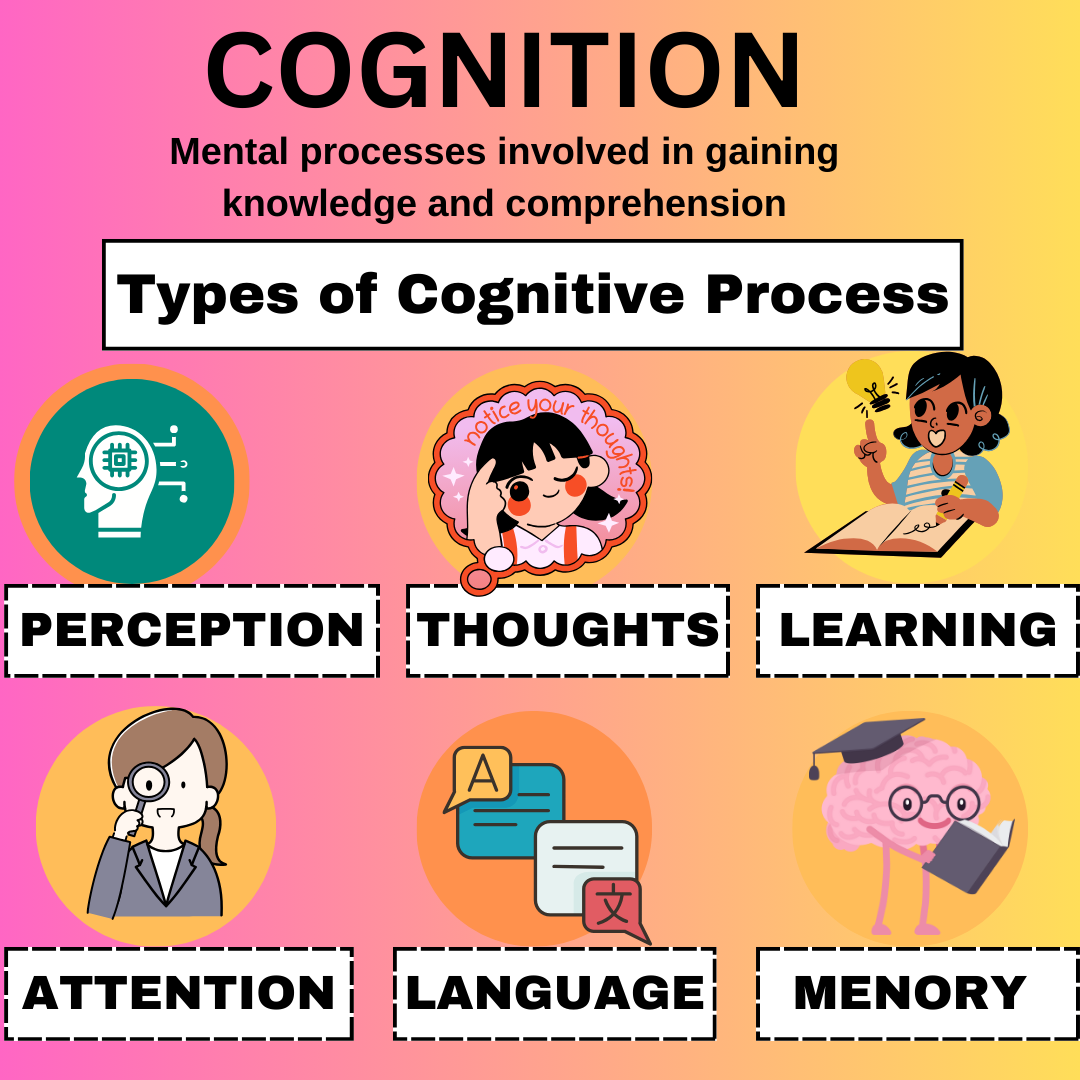
Need for cognition is a stable tendency to seek, engage in, and enjoy effortful thinking. It is distinct from intelligence: it concerns motivation to reason, not simply the ability to do so. People high in this trait tend to process arguments more deeply and value their quality, while people lower in it may rely more readily on simpler messages, cues, or cognitive shortcuts.
"Individuals high in need for cognition tend to seek out, engage in, and enjoy effortful cognitive endeavors." - John Cacioppo & Richard Petty, 1982
The Long Road from Need to Scale
In 1955, Arthur Cohen, Ezra Stotland, and Donald Wolfe published a paper in the Journal of Abnormal and Social Psychology titled "An Experimental Investigation of Need for Cognition." Their premise was modest but pointed: not everyone responds to the same environmental complexity in the same way.
Some people are driven by an intrinsic need to impose structure and meaning on their experience - to understand it, to analyze it, to resolve the ambiguity it produces.
Cohen and his colleagues called this motivation the need for cognition, framing it as a drive state activated by structurally ambiguous situations.[1]
The person high in this need, they proposed, would seek out information, pursue cognitive coherence, and experience something akin to discomfort in the presence of unresolved conceptual puzzles.
The 1955 paper was theoretically rich but methodologically modest. Cohen, Stotland, and Wolfe did not develop a psychometric instrument, and the construct remained a suggestive hypothesis more than a measured individual difference for nearly three decades.
What transformed NFC from a conceptual proposal into a research program was a 1982 paper by John T. Cacioppo and Richard E.
Petty published in the Journal of Personality and Social Psychology under the title "The Need for Cognition." Cacioppo and Petty shifted the definition in a consequential direction: rather than framing NFC as a need triggered by structural ambiguity, they reconceptualized it as a chronic tendency to engage in and enjoy effortful cognitive activity.[2]
They also developed the Need for Cognition Scale, a 34-item self-report instrument. This was not merely terminological tidying. The shift moved the construct from a reactive drive state - something activated by environmental cues - to a stable dispositional characteristic, an intrinsic orientation toward thinking as its own reward.
They also developed the Need for Cognition Scale, a 34-item self-report instrument with items such as "I would prefer complex to simple problems," "I like tasks that require little thought once I've learned them" (reverse-scored), and "I find satisfaction in deliberating hard and for long hours." The scale demonstrated solid internal consistency (Cronbach's alpha typically .80 to .90 across samples), good test-retest reliability, and discriminant validity from intelligence measures.
High scorers were not simply smarter; they were more motivated to think regardless of ability level.
This distinction - between the tendency to think and the ability to think - turned out to be one of the most theoretically important contributions of Cacioppo and Petty's reformulation. Intelligence predicts how well one can reason; NFC predicts how readily one reaches for reasoning as a default response to the world.
The two are moderately correlated in most samples (typically r = .20 to .35) but sufficiently independent to function as distinct predictors of behavior.
A person of high ability and low NFC may reason well when compelled to but avoid effortful cognition when given a choice. A person of moderate ability and high NFC may engage more thoroughly and arrive at better-calibrated conclusions precisely because they persist longer and consider more perspectives.
High vs. Low NFC: A Comparative Map
| Dimension | High NFC | Low NFC |
|---|---|---|
| Attitude formation | Forms attitudes through careful evaluation of evidence; attitudes are more internally consistent and resistant to change | Forms attitudes more readily through peripheral cues, social consensus, or emotional associations; attitudes are more susceptible to subsequent influence |
| Persuasion route (ELM) | Preferentially uses the central route; argument quality drives attitude change more than source attractiveness or number of arguments | Preferentially uses the peripheral route; source credibility, liking, and surface features drive attitude change more than argument logic |
| Information processing | Seeks out additional information; reads longer, denser texts; generates more issue-relevant thoughts; engages in deeper encoding | Satisfices on less information; prefers simpler messages; relies on heuristics and shortcuts; lower spontaneous elaboration |
| Political attitudes | More tolerant of ideological complexity; more likely to hold nuanced, issue-specific positions; less susceptible to authoritarian framing | More susceptible to cognitive closure motivations; more likely to favor simple, certain ideological positions; more responsive to threat-based political messaging |
| Decision making | More likely to weigh multiple options systematically; more sensitive to argument quality in high-stakes choices; less affected by irrelevant contextual cues | More likely to use satisficing strategies; more affected by framing effects and default options; more susceptible to anchoring and availability heuristics |
| Academic and professional outcomes | Higher academic achievement independent of measured ability; greater engagement with complex coursework; more likely to pursue intellectually demanding careers | Lower academic engagement and performance in reasoning-intensive domains; preference for procedural over conceptual learning tasks |
Cognitive Science Foundations
The theoretical and empirical foundations of NFC research intersect with several major programs in cognitive and social psychology.
The Elaboration Likelihood Model
The most consequential theoretical home for NFC research has been the Elaboration Likelihood Model (ELM), developed by Cacioppo and Petty across a series of papers from 1979 through the 1980s and synthesized in their 1986 book Communication and Persuasion: Central and Peripheral Routes to Attitude Change (Springer-Verlag).
The ELM proposes that persuasion occurs along a continuum anchored at one end by high elaboration - careful, systematic scrutiny of argument quality - and at the other by low elaboration, in which attitude change is driven by peripheral cues such as source attractiveness, social consensus, or message length regardless of content.
Within this model, NFC functions as a dispositional moderator of elaboration likelihood: individuals high in NFC are more likely to engage the central route across a wide range of persuasion contexts, whereas individuals low in NFC rely more heavily on peripheral cues.
Petty, Cacioppo, and colleagues published a series of studies between 1983 and 1990 demonstrating this interaction empirically. In a representative paradigm, participants read persuasive messages containing either strong or cogent arguments or weak and specious ones, while the credibility of the message source was independently varied.
High-NFC individuals showed the canonical pattern of central processing: strong arguments produced significantly more attitude change than weak arguments, and source credibility mattered relatively little.
Low-NFC individuals showed the peripheral pattern: source credibility drove attitude change more than argument quality. These findings were published across multiple issues of the Journal of Personality and Social Psychology and constitute some of the most replicated results in persuasion research.
Cacioppo, Petty, Feinstein, and Jarvis (1996)
The authoritative synthesis of the first decade and a half of NFC research appeared in a 1996 article by John Cacioppo, Richard Petty, Jeffrey Feinstein, and W.
Blair Jarvis published in Psychological Bulletin under the title "Dispositional Differences in Cognitive Motivation: The Life and Times of Individuals Varying in Need for Cognition." This review integrated findings from over 100 studies and addressed NFC's nomological network with unusual comprehensiveness.[4]
Among the key conclusions: NFC predicted attitude change patterns consistent with central route processing across laboratory and field settings; NFC was positively associated with analytic reasoning scores but not with most other personality measures; and NFC showed consistent effects on information-seeking behavior, with high-NFC individuals spontaneously seeking out more information before making decisions.
The 1996 review also addressed the distinction between NFC and need for achievement, openness to experience, and intelligence - a critical conceptual housekeeping exercise given the risk of construct redundancy.
The authors concluded that NFC was empirically distinguishable from each of these constructs, though they acknowledged moderate correlations with openness to experience that would later become a focal point of critique.
Nicol and Rounding: Social Influence and NFC
Andrew Nicol and Kim Rounding contributed importantly to the literature on NFC and social influence in a 2013 paper published in Personality and Individual Differences.
Their work examined how NFC moderated susceptibility to several classic social influence phenomena, including conformity to majority opinion and the foot-in-the-door technique.
Consistent with ELM predictions, high-NFC individuals showed less conformity when the majority position was not accompanied by substantive argumentation - they required genuine reasons, not mere consensus, to update their positions.[8]
Nicol and Rounding's findings underscored a practical implication of the NFC framework: social influence strategies that rely on normative pressure without substantive argumentation are selectively effective, succeeding more with low-NFC audiences and failing or even backfiring with high-NFC ones.
Fleischhauer et al.: Neurobiological Correlates
A neurobiological perspective on NFC was introduced by Monika Fleischhauer and colleagues in a 2010 paper published in Personality and Social Psychology Bulletin. Drawing on event-related potential (ERP) methodology, Fleischhauer et al. examined whether NFC was associated with differences in early cortical processing of information.[7]
Their findings indicated that high-NFC individuals showed greater P300 amplitudes - an ERP component associated with attentional resource allocation and cognitive engagement - in response to information-relevant stimuli.
This neurophysiological signature was interpreted as evidence that NFC reflects a genuine difference in habitual cognitive engagement patterns rather than merely self-reported preferences that might not correspond to actual processing behavior.
The study was modest in sample size and should be treated as exploratory, but it opened a productive line of inquiry connecting NFC to measurable neural indices of information processing.
Four Named Case Studies
Case Study 1: Cacioppo and Petty (1982) - Scale Validation and the Tendency-Ability Distinction
The foundational empirical contribution of Cacioppo and Petty's 1982 paper was demonstrating that the NFC Scale predicted attitude change patterns independently of verbal intelligence.
In a series of three studies, they showed that high-NFC individuals formed more issue-relevant cognitions in response to persuasive messages, recalled more argument-relevant information, and showed greater differentiation between strong and weak arguments - all without the NFC-intelligence correlation accounting for these effects.
This design, isolating NFC from ability through statistical control, established the empirical template for subsequent NFC research and created the field's core interpretive framework: motivation to think is not the same as capacity to think, and the former predicts qualitatively distinct patterns of information processing.
Case Study 2: Petty, Cacioppo, and Morris (1983) - NFC Moderates Argument Quality Effects
In a 1983 study published in the Journal of Personality and Social Psychology, Richard Petty, John Cacioppo, and J. Morris directly tested whether NFC moderated the persuasive impact of argument quality.[3]
Participants read either strong or weak arguments about a campus policy relevant to their university, and NFC was measured as an individual difference variable.
The key finding was a significant NFC x argument quality interaction: among high-NFC participants, strong arguments produced substantially more attitude change than weak arguments, replicating the central route pattern.
Among low-NFC participants, the difference between strong and weak arguments was attenuated. This study is frequently cited as the cleanest early demonstration that NFC operates within the ELM framework as a dispositional determinant of elaboration likelihood.
Case Study 3: Jost et al. (2003) - NFC, Cognitive Closure, and Political Conservatism
John Jost, Jack Glaser, Arie Kruglanski, and Frank Sulloway published a controversial and widely cited meta-analysis in Psychological Bulletin in 2003 titled "Political Conservatism as Motivated Social Cognition." Drawing on data from 88 samples across twelve countries, they reported that several cognitive-motivational variables predicted self-reported conservative political orientation, including low openness to experience, high need for cognitive closure, and intolerance of ambiguity.[6]
NFC itself was among the variables examined: the meta-analysis found a modest but consistent negative correlation between NFC and conservatism, with higher NFC predicting more liberal or less rigidly ideological positions.
The paper generated substantial controversy and replication efforts, and subsequent researchers challenged both its operationalization of conservatism and the causal interpretation of the correlational data. Nevertheless, the Jost et al.
synthesis directed research attention to the intersection of motivated cognition variables - NFC, need for cognitive closure, and openness to experience - and their relationships to political information processing, producing a rich if contested empirical literature.
Case Study 4: Verplanken (1993) - NFC and Consumer Information Processing
Bas Verplanken extended the NFC framework to consumer decision-making in a 1993 paper examining how NFC predicted information search behavior and decision quality in a product evaluation task.[9] Participants were given access to varying amounts of product information and asked to evaluate competing options.
High-NFC participants accessed significantly more product attributes before making decisions, showed less susceptibility to irrelevant price anchors, and were more likely to select the objectively superior product when quality differences were accessible through careful analysis.
Low-NFC participants accessed less information and were more influenced by surface attributes such as brand name and packaging. Verplanken's work established the applied relevance of NFC for marketing and consumer psychology, and his findings have been replicated in field settings involving actual purchasing decisions.
Intellectual Lineage
The intellectual genealogy of NFC research runs through several intersecting traditions.
The earliest conceptual ancestor is Fritz Heider's attribution theory, developed in his 1958 book The Psychology of Interpersonal Relations, which proposed that people are naive scientists motivated to understand the causal structure of their social world.
Cohen, Stotland, and Wolfe's 1955 formulation drew implicitly on this tradition, treating the need to understand as a fundamental epistemic drive.
Cacioppo and Petty's reconceptualization was shaped by two additional intellectual currents.
First, the personality psychology of Henry Murray, whose 1938 taxonomy in Explorations in Personality treated psychological needs as explanatory units for individual differences in behavior, provided the conceptual template for framing NFC as a stable dispositional tendency rather than a situationally activated drive.
Second, the cognitive revolution of the 1960s and 1970s - particularly research on depth of processing by Fergus Craik and Robert Lockhart (1972, Journal of Verbal Learning and Verbal Behavior) - supplied the information-processing vocabulary that Cacioppo and Petty used to specify what high elaboration actually involves at the cognitive level.
Arie Kruglanski's related but distinct construct of need for cognitive closure (NFC-C), developed in the late 1980s and formalized in his 1989 book Lay Epistemics and Human Knowledge and measured with the Need for Cognitive Closure Scale, represents both a conceptual parallel and a theoretical counterpoint to Cacioppo and Petty's NFC.
Where NFC describes a tendency to engage in effortful thinking, NFC-C describes a desire to reach firm conclusions quickly and avoid the discomfort of uncertainty.[5]
The two constructs are logically distinct: a person high in NFC but also high in NFC-C might think intensively but be motivated to reach closure quickly once a satisfying answer appears. Empirically, NFC and NFC-C tend to be negatively correlated (r = -.30 to -.50 in most samples), confirming their theoretical independence.
Kruglanski and Webster's 1996 paper in Psychological Review - "Motivated Closing of the Mind: 'Seizing' and 'Freezing'" - is the canonical statement of this construct and explicitly situates NFC-C within the broader landscape of epistemic motivation research that Cacioppo and Petty's work had helped create.
Empirical Research Patterns and Applications
The accumulated empirical literature on NFC is substantial. By the time of Cacioppo et al.'s 1996 review, the construct had been used in over a hundred published studies. By the early 2020s, the count had reached into the thousands across applied and basic research contexts.
In health communication, NFC has emerged as an important moderator of message effectiveness. Patients high in NFC respond better to messages that include detailed statistical evidence about treatment efficacy and side effects, while low-NFC patients respond better to simplified narratives and testimony-based formats.
This has practical implications for the design of public health campaigns: a single message format is unlikely to be optimal across a NFC-heterogeneous audience, and audience segmentation by NFC may improve campaign effectiveness.
Research by Derek Rucker and Richard Petty published in the early 2000s demonstrated that mismatches between message complexity and recipient NFC reduced both persuasion and message recall.
In political communication, NFC predicts differential engagement with ideological complexity and policy detail.
Research by Kevin Arceneaux and Martin Johnson (2013, University of Chicago Press) found that NFC moderated the effects of media framing on policy evaluations: high-NFC individuals were less susceptible to simple framing effects and more responsive to the substantive policy information embedded in news coverage.[11]
This finding has implications for understanding political polarization, since audiences sorted by media diet may also be differentially selected on NFC.
In educational psychology, NFC predicts academic engagement and achievement independently of standardized ability measures. Students high in NFC engage more deeply with challenging material, seek out additional resources, generate more elaborative questions, and show higher intrinsic motivation toward intellectual tasks.
Research by John Fleischhauer and colleagues (distinct from the neuroimaging work above) found that NFC predicted GPA in university samples after controlling for standardized test scores, suggesting that educational interventions that cultivate intrinsic motivation for thinking - not merely cognitive skill training - may improve academic outcomes.
Limits, Critiques, and Nuances
The NFC construct has attracted substantive criticism on several fronts.
The most persistent critique concerns overlap with openness to experience (OE), one of the Big Five personality traits.
OE - characterized by curiosity, aesthetic sensitivity, and preference for novelty - consistently correlates with NFC in the range of r = .40 to .60, raising questions about whether the two constructs measure distinct psychological phenomena or are largely redundant.
Proponents of NFC's distinctiveness note that NFC more specifically targets the cognitive and analytical dimension of intellectual engagement, while OE includes aesthetic and experiential openness that does not necessarily involve effortful reasoning.
Mussel (2013, Psychological Bulletin) conducted a comprehensive review of the NFC-OE relationship and concluded that while the overlap is substantial, NFC retains incremental predictive validity for cognitive engagement and persuasion outcomes after controlling for OE, particularly in laboratory paradigms with well-controlled argument quality manipulations.[10]
The debate is not fully resolved.
A second critique targets measurement confounds in the NFC scale itself. Some items may conflate the enjoyment of thinking with the self-perception of thinking ability, potentially contaminating NFC scores with ability-related self-concept.
Bless, Wanke, Bohner, Fellhauer, and Schwarz (1994) raised this concern and proposed a shortened version of the scale designed to more cleanly separate motivation from ability self-assessment.[12]
The psychometric debate has not produced a consensus alternative, and the original 34-item Cacioppo-Petty scale remains the dominant instrument in the literature, though researchers increasingly supplement it with behavioral measures.
A third concern involves cultural generalizability. The NFC scale was developed and validated primarily in North American undergraduate samples, and most of the empirical literature reflects the same demographic profile.
Research on NFC in collectivist cultural contexts has produced inconsistent results, with some studies finding that the construct's predictive relationships with persuasion and decision-making vary significantly across cultural settings.
Hsu (2007, Cross-Cultural Research) found that the factor structure of the NFC scale was not fully replicable in a Taiwanese sample, and the item-level correlates of NFC in that sample differed from North American norms in ways that suggest the construct may not travel across cultures without modification.
Finally, scholars have questioned whether NFC effects are stable across contexts or whether they are situationally modulated in ways the original dispositional framing underemphasizes.
High-NFC individuals do not always engage in effortful thinking: when cognitively depleted, when the topic is one on which they have already formed firm attitudes, or when situational constraints prevent elaboration, high-NFC participants converge toward low-NFC processing patterns.
This contextual sensitivity does not invalidate the trait but suggests that NFC is better understood as a dispositional tendency that requires enabling conditions rather than an unconditional determinant of how people process information.
Sources & Further Reading
Cohen, A. R., Stotland, E., & Wolfe, D. M. (1955). An experimental investigation of need for cognition. Journal of Abnormal and Social Psychology, 51(2), 291-294.
Cacioppo, J. T., & Petty, R. E. (1982). The need for cognition. Journal of Personality and Social Psychology, 42(1), 116-131.
Petty, R. E., Cacioppo, J. T., & Morris, K. J. (1983). Effects of need for cognition on message evaluation, recall, and persuasion. Journal of Personality and Social Psychology, 45(4), 805-818.
Cacioppo, J. T., Petty, R. E., Feinstein, J. A., & Jarvis, W. B. G. (1996). Dispositional differences in cognitive motivation: The life and times of individuals varying in need for cognition. Psychological Bulletin, 119(2), 197-253.
Kruglanski, A. W., & Webster, D. M. (1996). Motivated closing of the mind: "Seizing" and "freezing." Psychological Review, 103(2), 263-283.
Jost, J. T., Glaser, J., Kruglanski, A. W., & Sulloway, F. J. (2003). Political conservatism as motivated social cognition. Psychological Bulletin, 129(3), 339-375.
Fleischhauer, M., Enge, S., Brocke, B., Ullrich, J., Strobel, A., & Strobel, A. (2010). Same or different? Clarifying the relationship of need for cognition to personality and intelligence. Personality and Social Psychology Bulletin, 36(1), 82-96.
Nicol, A. A. M., & Rounding, K. (2013). Tobacco and alcohol attitudes, social influence, and need for cognition. Personality and Individual Differences, 54(7), 820-824.
Verplanken, B. (1993). Need for cognition and external information search: Responses to time pressure during decision-making. Journal of Research in Personality, 27(3), 238-252.
Mussel, P. (2013). Intellect: A theoretical framework and meta-analysis. Psychological Bulletin, 139(3), 655-701.
Arceneaux, K., & Johnson, M. (2013). Changing minds or changing channels? Partisan news in an age of choice. University of Chicago Press.
Bless, H., Wanke, M., Bohner, G., Fellhauer, R. F., & Schwarz, N. (1994). Need for cognition: Eine Skala zur Erfassung von Engagement und Freude bei Denkaufgaben. Zeitschrift fur Sozialpsychologie, 25(2), 147-154.