
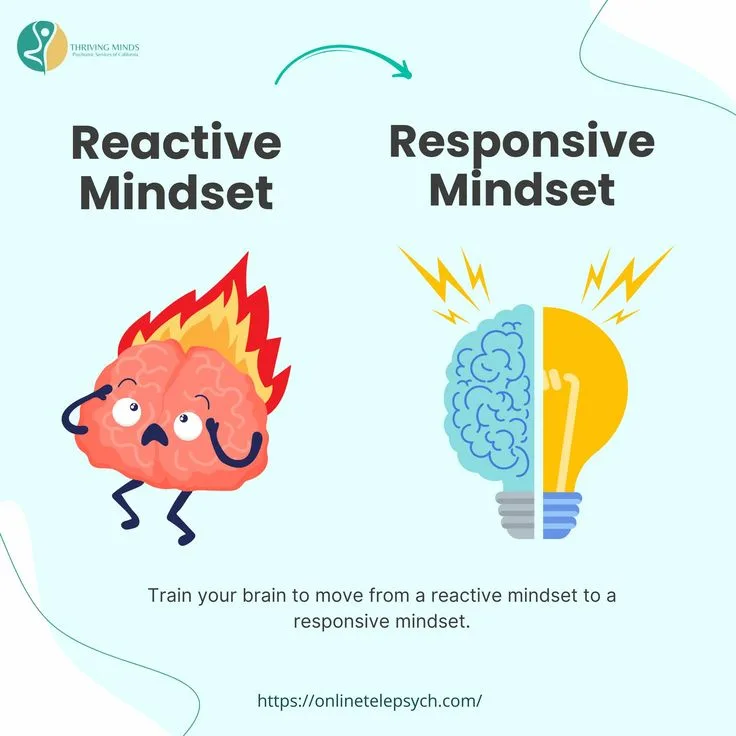
An emotional reaction can change when someone interprets the same event in a different way. Cognitive reappraisal is that deliberate shift in meaning, allowing a criticism, setback, or threat to be evaluated less as a personal attack and more in its broader context.
You receive a critical email from your manager. Before you have even finished reading it, your heart rate climbs. Your jaw tightens. A voice in your head begins composing a defensive reply. The emotion is already happening, and it is happening fast.
Now imagine the same email arriving, but this time, a moment before you feel yourself reacting, a thought crosses your mind: "She's been under enormous pressure this week. This isn't really about me." The tightness eases.
The defensive reply dissolves. You re-read the email and it looks different: harsher in tone, perhaps, but not an attack.
This is cognitive reappraisal in action, one of the most well-studied and effective tools in the science of emotion regulation. Understanding what it is, how it works, and when it fails is genuinely useful for anyone interested in managing stress, improving relationships, or developing psychological resilience.
What Is Cognitive Reappraisal?
Cognitive reappraisal is a strategy for managing emotions by changing the meaning you assign to a situation: specifically, by generating a different interpretation that alters the emotional trajectory the event would otherwise produce.
The key word is meaning. Emotions are not triggered directly by events. They are triggered by our appraisal of events: the interpretation the brain constructs about what the event means for our wellbeing.
This is why two people can experience identical situations (a flight delay, a job loss, a diagnosis) and have radically different emotional responses. The event is the same; the appraisal differs.
Reappraisal intervenes in this appraisal process. Rather than changing the event itself (not always possible) or suppressing the emotional response after it has fully formed (costly and ineffective), reappraisal changes how the event is understood, and therefore changes which emotional response the brain generates.
The theoretical roots of this idea reach back to the Stoic philosophers of ancient Greece and Rome.
Epictetus, the freed slave who became one of antiquity's most influential moral philosophers, wrote in the Enchiridion: "People are disturbed not by things, but by the opinions about things." This intuition, that the meaning we assign to events, not the events themselves, determines our emotional experience, is the philosophical foundation on which modern cognitive reappraisal research is built.
"The most powerful lever for changing how you feel is not changing what happens to you: it is changing what you make of what happens to you."
James Gross's Process Model of Emotion Regulation
The systematic scientific study of cognitive reappraisal owes much to the work of Stanford psychologist James Gross, who developed the influential process model of emotion regulation in the 1990s and has refined it through decades of research.
Gross's laboratory has produced over 300 publications on emotion regulation, making it one of the most productive research programs in affective science.
Gross's model organizes emotion regulation strategies along a timeline, from the earliest point where intervention is possible (choosing which situations to enter) to the latest (managing the physical and behavioral expression of a fully formed emotion).
The five families of strategies are:
| Strategy Family | Description | Example |
|---|---|---|
| Situation selection | Choosing which situations to approach or avoid | Avoiding a person who reliably upsets you |
| Situation modification | Changing aspects of the situation | Proposing a different meeting format to reduce tension |
| Attentional deployment | Directing attention within a situation | Focusing on what you can control rather than what you cannot |
| Cognitive change (reappraisal) | Changing how you interpret the situation | Viewing criticism as useful feedback rather than personal attack |
| Response modulation | Managing emotional responses after they arise | Controlling facial expression; suppressing visible reaction |
Gross's key insight is that earlier interventions are generally more efficient and less costly than later ones. By the time you reach response modulation, the latest stage, a full emotional response is already underway. Suppressing it requires effort and has physiological consequences.
Reappraisal, which operates at the cognitive change stage, can prevent much of that response from developing at all.
The Neural Basis of Reappraisal
Neuroimaging research has provided increasingly clear pictures of what reappraisal looks like in the brain.
Kevin Ochsner and James Gross (2005, Trends in Cognitive Sciences) synthesized fMRI studies of cognitive reappraisal and identified a consistent pattern: reappraisal engages prefrontal cortical regions (particularly lateral and medial prefrontal cortex and anterior cingulate cortex) while simultaneously reducing activation in the amygdala, the brain structure most directly involved in generating fear and threat responses.
This prefrontal-amygdala dynamic has been replicated dozens of times and represents one of the clearest demonstrations of top-down cognitive regulation of emotion in the human brain.
The lateral prefrontal cortex appears to implement the alternative interpretations being generated, while medial prefrontal regions monitor the emotional state being regulated.
The amygdala's reduced activation confirms that reappraisal is genuinely changing the emotional response at a physiological level, not merely masking it at the behavioral level.
Philippe Goldin and James Gross (2010, Biological Psychiatry) demonstrated that cognitive reappraisal training in individuals with social anxiety disorder produced both symptom reductions and measurable changes in prefrontal-amygdala connectivity, suggesting that reappraisal training literally changes brain function, not just behavior.
Reappraisal vs. Suppression: What the Research Shows
The most consistent and clinically significant finding in this literature is the comparison between reappraisal and suppression, the two strategies people most commonly use in daily emotional life.
Suppression involves inhibiting the outward expression of an emotion that you are internally experiencing. You feel the anger, the grief, the anxiety, but you don't let it show. This is sometimes called "masking" or "hiding" feelings.
The research findings are stark:
On subjective emotional experience: Reappraisal reduces both the intensity and duration of negative emotions. Suppression reduces external expression but leaves the internal emotional experience largely unchanged or even intensified.
On physiological arousal: Reappraisal lowers heart rate, blood pressure, and skin conductance responses in experimental settings. Suppression maintains or increases physiological arousal: the body is still responding to the emotion even while the face hides it.
On memory: Suppression impairs memory for events that occurred during the emotional experience. Reappraisal does not. This has significant practical implications: habitual suppressors retain less of their emotional experiences, which may interfere with learning and self-awareness.
On social functioning: When people suppress emotions in social interactions, their conversation partners also show elevated stress responses and less positive rapport. The effort of maintaining a mask is detectable even when the mask holds. Reappraisers show no such effect on their interaction partners.
On long-term wellbeing: Studies examining habitual use of these strategies (asking people how often they generally use each approach) consistently find that habitual reappraisers report higher wellbeing, lower depression, higher life satisfaction, and better social relationships. Habitual suppressors show the reverse pattern.
A landmark 2003 study by Gross and Oliver John in the Journal of Personality and Social Psychology, using data from over 1,300 participants across six samples, found that the difference in wellbeing outcomes between habitual reappraisers and habitual suppressors was large and consistent.
Suppressors reported more depressive symptoms, less positive affect, lower life satisfaction, and fewer close social relationships. The magnitude of these differences suggested that habitual emotional suppression carries costs comparable to those of recognized psychological risk factors.
Why Suppression Has Hidden Costs
The physiological costs of suppression are explained by what Roy Baumeister and colleagues called ego depletion: self-regulatory effort consumes a limited resource, and suppression is among the most effortful self-regulatory tasks.
Research by Matthew Inzlicht and colleagues has further refined this model, suggesting that willpower-consuming tasks like suppression redirect cognitive and motivational resources in ways that impair subsequent performance.
Someone who suppresses emotions through a difficult work meeting may find their self-regulation capacity depleted for hours afterward.
Additionally, suppression activates the stress axis: inhibiting behavioral or expressive responses to emotions while the underlying physiological arousal continues is the pattern associated with chronic stress.
James Pennebaker's research on disclosure and health found that individuals who had experienced trauma and kept it secret (a form of prolonged suppression) showed elevated rates of major illness.
The secret-keeping required ongoing suppressive effort that sustained autonomic arousal and compromised immune function.
The Different Forms of Reappraisal
Research has identified several distinct types of cognitive reappraisal, each operating through slightly different mechanisms. They are not interchangeable, and different forms work better in different contexts.
Reframing
The most common form: changing the interpretation of the event itself. "This setback is an opportunity to learn." "The criticism reflects their standards, not my worth." Reframing works by generating an alternative meaning that is emotionally less threatening than the initial appraisal.
Reframing works best when an alternative interpretation is genuinely available and plausible. It can fail when forced or dishonest, when the "silver lining" is transparently invented.
Research on positive reframing suggests that acknowledgment of the genuinely negative aspects of a situation actually makes reframing more effective, not less, because it preserves credibility.
Distancing (Decentering)
Rather than changing the interpretation of the event, distancing involves stepping back from the situation and viewing it from a third-person perspective, observing yourself and the situation as if from outside. This is sometimes called self-distancing and has been studied extensively by Ethan Kross at the University of Michigan.
A key finding from Kross's work: referring to yourself in the third person when thinking through a difficult situation ("Why is [your name] feeling this way?") reliably reduces emotional intensity compared to first-person reflection ("Why am I feeling this way?").
Third-person self-talk activates the kind of detached perspective that makes adaptive reasoning easier.
Kross and colleagues (2014, Journal of Personality and Social Psychology) found in a series of seven studies that self-distancing reduced the tendency to ruminate following conflict, reduced emotional reactivity to social rejection, and improved cardiovascular recovery after stressful interactions.
The effect appeared to operate by helping people construct a coherent, narrative account of their experience rather than remaining immersed in its raw emotional intensity.
Distancing works particularly well for rumination: the repetitive, unproductive dwelling on negative events that characterizes depression and anxiety. By creating psychological distance from the ruminated event, distancing interrupts the loop.
Perspective-Taking
Adopting another person's viewpoint, especially someone who caused you distress, is a form of reappraisal that changes the meaning of their behavior. Understanding that the critical manager was overwhelmed and anxious rather than deliberately hostile transforms the emotional meaning of the criticism.
Perspective-taking requires genuine engagement with the other person's internal state, not just intellectual acknowledgment that they had reasons for their behavior. When done well, it is highly effective for reducing interpersonal anger and resentment.
C. Daniel Batson and colleagues (1997) demonstrated that perspective-taking increased empathic concern and reduced hostile attribution even toward outgroup members, suggesting its power extends to socially charged interpersonal conflicts.
Benefit-Finding
Identifying what can be learned from or gained through a difficult experience. "This failure taught me something I needed to know." Research on benefit-finding shows it is particularly effective in the context of trauma and serious illness, where standard reframing may feel inadequate.
Crystal Park and Susan Folkman (1997, Journal of Personality and Social Psychology) developed an influential framework for understanding how people make meaning from adversity, finding that benefit-finding (identifying positive changes in the self, relationships, or priorities as a result of difficult experience) was associated with better psychological adjustment in bereaved individuals.
Studies of cancer patients who engaged in benefit-finding showed better psychological adjustment than those who did not, though the relationship is complex: benefit-finding appears most adaptive when it is genuine rather than forced.
The concept is related to post-traumatic growth, documented extensively by Richard Tedeschi and Lawrence Calhoun (1996, 2004): the observation that a substantial proportion of trauma survivors report meaningful positive changes following their experiences, including deepened relationships, new life priorities, enhanced personal strength, and greater appreciation for life.
Temporal Distancing
"How will I feel about this in five years?" This simple question creates psychological distance from the current emotional intensity by locating the event within a longer time horizon.
Research by Hal Hershfield and colleagues (2012, Social Psychological and Personality Science) and related work by Ozlem Ayduk and Ethan Kross consistently shows that temporal distancing reduces emotional intensity and increases adaptive thinking about difficult situations.
The mechanism involves shifting perspective from an experiencing self (immersed in the immediate emotional experience) to an observing self (able to evaluate the experience within a broader narrative context).
Temporal questions activate this observing perspective without requiring the generation of alternative interpretations, making temporal distancing particularly useful when no convincing reframe is available.
Reappraisal in Clinical Settings
Cognitive reappraisal is not just a self-help concept. It is one of the central techniques in Cognitive Behavioral Therapy (CBT), the most empirically supported psychological treatment for depression, anxiety disorders, and a range of other conditions.
In CBT, the process of identifying and challenging automatic negative thoughts is, at its core, a structured reappraisal practice.
The therapist helps the client identify distorted or overly negative appraisals of situations (cognitive distortions), evaluate the evidence for and against those appraisals, and generate more accurate, balanced alternatives.
The seminal work of Aaron Beck in developing CBT rested on the observation that depression is largely maintained by systematic negative biases in appraisal: the cognitive triad of negative views about oneself, the world, and the future. Therapy intervenes by teaching patients to notice these biases and practice more accurate appraisal.
Beck's cognitive model has been validated in hundreds of clinical trials across dozens of countries, making it arguably the most empirically tested psychological intervention in history.
Donald Meichenbaum's Stress Inoculation Training (SIT) provides another clinical application: by teaching clients to identify stress-generating self-talk and replace it with more adaptive self-instructions, SIT explicitly trains reappraisal as a coping skill.
Research on SIT has demonstrated effectiveness for anxiety disorders, anger management, and stress reduction in medical populations.
Reappraisal-based techniques appear in several other major therapeutic approaches:
Acceptance and Commitment Therapy (ACT): Uses defusion techniques that create distance from unhelpful thoughts, similar in mechanism to self-distancing reappraisal.
Dialectical Behavior Therapy (DBT): Includes "check the facts" and "opposite action" skills that involve evaluating whether current emotional appraisals are accurate.
Emotion-Focused Therapy: Helps clients work with emotions through deepened engagement rather than avoidance, often including reappraisal as part of transforming maladaptive emotional responses.
Reappraisal in Pediatric Settings
Particularly important findings have emerged from research on emotion regulation development in children and adolescents.
Amelia Aldao, Susan Nolen-Hoeksema, and Susanne Schweizer (2010, Clinical Psychology Review) conducted a meta-analysis of 114 studies and found that maladaptive emotion regulation strategies (including suppression and rumination) were associated with depression, anxiety, eating disorders, and substance use problems, while adaptive strategies like reappraisal were protective.
Teaching cognitive reappraisal skills to children has shown promise in school-based mental health programs.
Jane Gillham and colleagues' Penn Resiliency Program, which teaches cognitive reappraisal skills to middle school students, demonstrated in a randomized controlled trial that participation reduced depressive symptoms over a two-year follow-up period, with effects strongest in children with elevated baseline symptom levels.
When Reappraisal Fails or Backfires
Given its impressive evidence base, it would be tempting to conclude that more reappraisal is always better. Research reveals a more nuanced picture.
When the Threat Is Real
Reappraisal is a tool for responding to situations more adaptively. But adaptation requires accurate perception. If someone is in genuine physical danger, reappraising the threat as non-threatening is not regulation: it is denial, and it can be life-threatening.
The distinction matters: reappraisal is useful for changing unnecessary or excessive negative emotional responses, not for neutralizing appropriate alarm signals about genuine threats.
Gal Sheppes and colleagues (2011, Journal of Experimental Psychology) found that for low-intensity stressors, reappraisal was clearly superior to other strategies, but for high-intensity threats, distancing was more effective than reframing, suggesting that as threat intensity increases, maintaining some contact with the emotional reality may be necessary even as full immersion is abandoned.
When Injustice Requires Action
If someone is being mistreated and reappraises the mistreatment as acceptable or deserved, reappraisal serves to maintain an unjust situation rather than address it.
Research by Victoria Brescoll and colleagues suggests that this dynamic may play out in organizational contexts where reappraisal of mistreatment ("maybe they didn't mean it that way") inhibits appropriate assertiveness or reporting of misconduct.
When the emotionally correct response is anger that motivates advocacy for change, reappraisal can become a form of emotional accommodation to harm.
This is a particularly important consideration in discussions of emotional intelligence and reappraisal in organizational contexts: the ability to regulate one's emotional response to mistreatment is a skill, but deploying it to avoid conflict with a genuinely harmful situation is not adaptive functioning: it is compliance with dysfunction.
Cognitive Resource Depletion
Reappraisal is an effortful cognitive process. Under conditions of extreme stress, cognitive overload, or sleep deprivation, people have less capacity for the kind of effortful reasoning that effective reappraisal requires. In these conditions, reappraisal may fail or may itself consume resources needed for other adaptive functioning.
Jutta Joormann and colleagues (2010, Psychological Science) demonstrated that individuals with depression showed specific deficits in cognitive control that impaired their ability to engage in effective reappraisal.
The very condition that reappraisal is often prescribed to treat may undermine the cognitive mechanisms reappraisal depends on, suggesting that for severely depressed individuals, more structured therapeutic support may be needed before self-directed reappraisal becomes effective.
Forced or Dismissive Reappraisal
When reappraisal is rushed or minimizes genuine suffering, it can actually increase emotional distress. Research by Gal Sheppes and colleagues found that reappraisal is most effective when it follows adequate emotional processing, not when it is used to prevent any emotional engagement with a difficult event.
"Don't feel bad, look on the bright side" said immediately after a significant loss is not effective reappraisal: it is dismissal. Effective reappraisal acknowledges what is genuinely difficult before generating alternative meaning.
Kristin Neff's research on self-compassion provides a complementary perspective: the most effective self-directed emotional management involves first acknowledging suffering with warmth and without judgment, then broadening perspective.
Jumping directly to reframing without this first step bypasses rather than transforms the emotional experience.
Individual Differences in Reappraisal Capacity
Not everyone uses or benefits from reappraisal equally. Several factors moderate its effectiveness:
Cognitive flexibility: Reappraisal is essentially a form of divergent thinking applied to emotional situations: the ability to generate multiple alternative interpretations.
Research has found that individuals higher in cognitive flexibility, as measured by tasks requiring flexible switching between mental sets, are more effective reappraisers.
This may partly explain why cognitive flexibility training has been explored as a complement to reappraisal training in clinical populations.
Cultural context: Research comparing reappraisal use and effectiveness across cultures has found substantial differences.
Qi Wang and colleagues have documented that East Asian cultural norms, which emphasize emotional restraint and social harmony, influence the forms of reappraisal that feel natural and the contexts in which it is deployed.
In cultures where emotional expressiveness is less normative, the suppression-versus-reappraisal distinction may manifest differently than in Western individualistic contexts.
Age-related improvements: Research consistently finds that older adults are more skilled reappraisers than younger adults.
Laura Carstensen's socioemotional selectivity theory (2006, Science) provides the theoretical framework: as people perceive their time horizon as limited, they preferentially orient toward emotional meaning and regulation, investing more in the present emotional quality of their experiences and developing greater skill in managing them.
Older adults show both greater reappraisal use and greater effectiveness in laboratory emotion regulation tasks.
How to Practice Cognitive Reappraisal
The good news from research is that reappraisal is a skill that improves with practice. Several evidence-based approaches for developing it:
Name and delay: When you notice a strong emotional reaction, name the emotion ("I feel hurt") and create a brief pause before responding. The naming itself, what psychologists call "affect labeling," reduces amygdala activity and creates the cognitive space needed for reappraisal.
Matthew Lieberman and colleagues (2007, Psychological Science) demonstrated that putting feelings into words reduced amygdala activation to emotional stimuli, with the effect comparable in magnitude to explicitly instructed reappraisal.
Question the appraisal: Ask what interpretation you are making of the situation. Then ask: Is this the only possible interpretation? Is it the most accurate one? What would a trusted friend say about this situation?
Practice perspective-taking deliberately: When someone's behavior upsets you, invest five minutes genuinely trying to understand their internal state, history, and pressures. Not to excuse the behavior, but to understand it.
Use temporal distancing: For significant setbacks, write briefly about how you think you will feel about this situation in one year, five years, and ten years.
Engage in reflective journaling: James Pennebaker's research on expressive writing, writing about the facts, feelings, and meaning of difficult experiences, shows robust mental and physical health benefits across over 200 controlled experiments.
Pennebaker and colleagues found that expressive writing reduced physician visits, improved immune function, and reduced symptoms of depression and anxiety over months following the writing exercise. Writing promotes the cognitive processing that enables reappraisal.
Mindfulness as foundation: Before reappraisal is possible, you need to notice that you are having an emotional reaction. Mindfulness practice, deliberately attending to present-moment experience without judgment, trains this noticing capacity.
Research by Josh Gross and colleagues has found that mindfulness and reappraisal appear to operate through partially overlapping neural mechanisms and that combined mindfulness-reappraisal interventions may be more effective than either alone.
The Deeper Point: Meaning Is Not Fixed
The power of cognitive reappraisal rests on a philosophical foundation that is also its deepest practical implication: the meaning of events is not fixed. It is constructed, by us, from the raw material of experience.
The same event genuinely carries different meanings depending on context, history, and interpretation, and different meanings genuinely generate different emotions.
This is not positive thinking. It is not pretending bad things are good. It is the recognition that our initial appraisals are automatic, habitual, and often inaccurate, and that we have a genuine capacity to revise them when they serve us poorly.
Viktor Frankl, the psychiatrist and Holocaust survivor whose experience in Auschwitz informed his development of logotherapy, provided one of history's most extreme demonstrations of this principle.
Writing in Man's Search for Meaning (1946), Frankl argued that even in the extremity of the concentration camps, individuals retained the capacity to choose their attitude toward their circumstances, a form of reappraisal under conditions that make laboratory studies of the phenomenon seem trivial by comparison.
Frankl's insight, radical when he articulated it, has since received substantial empirical support: the capacity to find meaning in suffering is not merely inspirational rhetoric, it is a psychologically real and measurable predictor of resilience.
That capacity is not unlimited. It requires cognitive resources. It requires honesty. It requires acknowledging what is genuinely difficult rather than glossing over it.
But when these conditions are met, the research is consistent and impressive: changing how you interpret the world is one of the most powerful things you can do to change how you feel about it.