
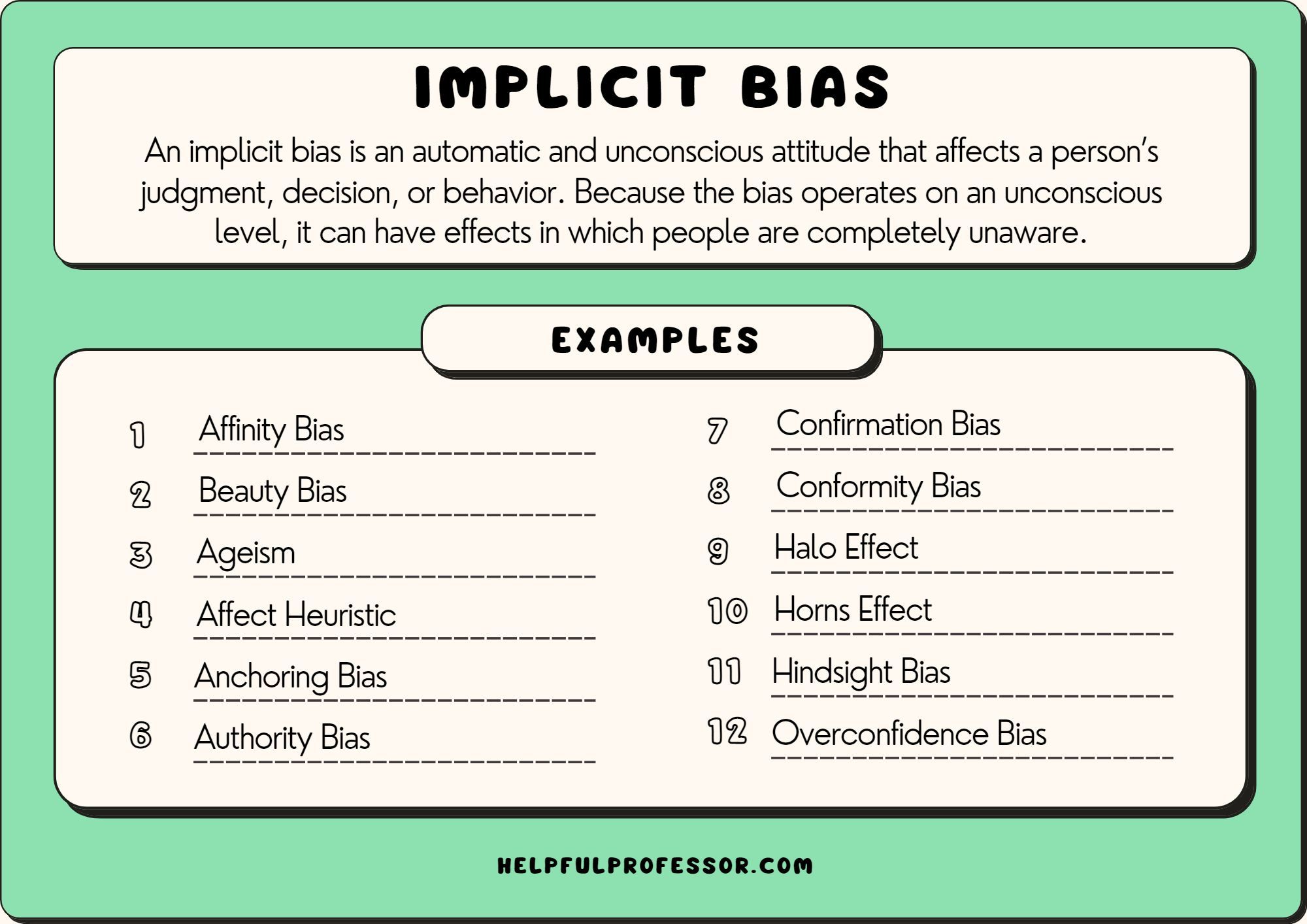
Implicit bias refers to automatic associations and preferences that can influence judgment outside conscious awareness and diverge from stated beliefs. Reaction-time measures such as the Implicit Association Test aim to detect these associations, though their meaning and predictive power remain contested.
Dual-process research explains why deliberation, motivation, and cognitive resources affect whether automatic stereotypes shape behavior.
"Implicit attitudes exist and operate largely outside conscious awareness and conscious control - they can diverge substantially from explicitly held beliefs." - Anthony Greenwald & Mahzarin Banaji, 1995
The 1998 Study That Changed How We Think About Prejudice
In the summer of 1995, Anthony Greenwald - a social psychologist at the University of Washington - was sorting a deck of cards in a hotel room when he noticed something peculiar about his own reaction times. Certain sorting combinations felt effortless.
Others felt sluggish, almost resistant. That mundane observation became the seed of one of the most consequential papers in modern psychology.
Three years later, Greenwald, Mahzarin Banaji, and Brian Nosek published the formal precursor architecture, but it was Greenwald, Debbie McGhee, and Jordan Schwartz who published the foundational 1998 paper in the Journal of Personality and Social Psychology: "Measuring Individual Differences in Implicit Cognition: The Implicit Association Test."
The study introduced a deceptively simple computerized task.[1]
Participants were asked to sort words and images into categories as quickly as possible.
In one block, they pressed the same key for "Black faces" and "pleasant words" (joy, love, peace), and the other key for "White faces" and "unpleasant words" (cancer, bomb, evil).
In the next block, the pairing was reversed - White faces shared a key with pleasant words, and Black faces with unpleasant words.
The results were stark. White participants - including those who reported low levels of explicit prejudice on self-report scales - were significantly faster when White faces were paired with pleasant words than when Black faces were paired with pleasant words.
The difference in milliseconds was small but statistically robust. Response latency, the researchers argued, was a proxy for the strength of automatic mental associations. The slower the response, the more the task violated an existing cognitive link. The faster, the more it confirmed one.
What made this finding disturbing was the gap between what participants reported and what their response times revealed. Many of the participants who showed the largest implicit preference for White faces described themselves as unprejudiced or even explicitly egalitarian.
The IAT did not measure what people believed. It measured something that operated below belief - a layer of associative cognition that neither introspection nor good intentions could access.
The 1998 paper has since been cited more than 15,000 times. It spawned Project Implicit, an online research platform that has collected IAT data from over 17 million participants across more than 70 countries. It has entered courtrooms, medical schools, corporate training programs, and public policy debates.
It has also attracted fierce methodological criticism, generating one of the most productive disputes in contemporary social science.
Definition
Implicit bias refers to attitudes, stereotypes, or associative preferences that influence judgment and behavior automatically, without conscious awareness or intentional control.
Implicit Bias vs. Explicit Bias
| Dimension | Implicit Bias | Explicit Bias |
|---|---|---|
| Awareness | Operates below conscious awareness | Consciously held and acknowledged |
| Measurement | Indirect (reaction time, priming tasks, IAT) | Direct (self-report surveys, interviews) |
| Controllability | Difficult to suppress; persists under cognitive load | Can be consciously regulated or concealed |
| Origin | Associative learning from cultural exposure, media, and experience | Deliberate belief formation or adoption of social norms |
| Relationship to behavior | Predicts behavior in ambiguous, fast, or low-accountability situations | Predicts behavior when deliberation is possible and stakes are clear |
| Consistency with stated values | Often contradicts self-reported values | Generally consistent with self-reported values |
| Malleability | Partially malleable through targeted strategies (see Blair 2002) | More directly altered through persuasion and education |
Cognitive Science Foundations
Dual-Process Theory
The psychological architecture underlying implicit bias rests on dual-process theories of cognition.
The two most influential formulations come from Seymour Epstein's cognitive-experiential self-theory (1994) and Daniel Kahneman's System 1 / System 2 framework, popularized in Thinking, Fast and Slow (2011) but grounded in decades of research by Kahneman and Amos Tversky beginning in the 1970s.
System 1 processing is automatic, fast, and associative. It operates without deliberate effort, drawing on learned associations stored in long-term memory. System 2 is slow, effortful, and rule-governed. Most of daily behavior runs on System 1, with System 2 invoked selectively when tasks are novel, important, or when errors are detected.
Implicit bias lives in System 1. When a hiring manager encounters a resume, their initial evaluation - the intuitive, pre-deliberative impression - is substantially shaped by automatic associations linked to the candidate's name, school, or neighborhood.
System 2 may then revise that impression, but only if the evaluator is motivated to do so, has sufficient cognitive resources, and is aware that bias might be influencing them.
Associative Learning and Social Categories
Patricia Devine's 1989 paper in the Journal of Personality and Social Psychology, "Stereotypes and Prejudice: Their Automatic and Controlled Components," was the first major empirical demonstration that automatic stereotype activation was dissociable from prejudice at the level of consciously endorsed beliefs.[8]
Using subliminal priming paradigms, Devine showed that both high- and low-prejudice individuals showed equivalent activation of racial stereotypes when primed below the threshold of awareness.
What differed was what they did with that activation: low-prejudice participants were more likely to actively suppress the stereotype in subsequent judgments.
Mahzarin Banaji and Anthony Greenwald extended this framework through the lens of cultural learning. In Banaji and Greenwald's 1995 paper in Psychological Review, "Implicit Social Cognition: Attitudes, Self-Esteem, and Stereotypes," they argued that implicit attitudes are not the residue of personal experience alone.
They are absorbed through pervasive cultural exposure - the consistent pairing of social groups with positive or negative valence in media, literature, institutional practices, and interpersonal interactions.
A person who has never deliberately adopted a prejudiced belief can still accumulate thousands of culturally encoded associative pairings over a lifetime of media consumption and social observation.
This framing has important implications. It means implicit bias is not a character flaw unique to morally deficient individuals. It is a predictable output of normal associative learning mechanisms operating on a culturally biased input environment.
Neural Correlates
Neuroimaging research has added a biological dimension to the cognitive framework.
Elizabeth Phelps and colleagues published influential work in 2000 in the Journal of Cognitive Neuroscience, "Performance on Indirect Measures of Race Evaluation Predicts Amygdala Activation."
The work demonstrated that higher IAT scores for White-over-Black preference predicted stronger amygdala activation, a region associated with threat detection and emotional salience, when participants viewed Black faces.[9]
This correlation between a behavioral measure (IAT score) and a neural measure (fMRI amygdala response) provided convergent evidence that the IAT was capturing something real and not merely a measurement artifact.
Later work by David Amodio and Patricia Devine (2006, Psychological Science) dissociated different components of implicit bias at the neural level, distinguishing between automatic stereotype activation (linked to the amygdala) and motor inhibition required to suppress bias in behavior (linked to the anterior cingulate cortex).
This dissociation helps explain why effortful suppression is both possible and exhausting - it recruits a distinct executive control system that operates on top of, rather than in place of, the automatic associative response.
Four Case Studies Across Domains
Case Study 1: Hiring - The Resume Audit Study
In 2004, economists Marianne Bertrand and Sendhil Mullainathan published "Are Emily and Greg More Employable Than Lakisha and Jamal? A Field Experiment on Labor Market Discrimination" in the American Economic Review.[5] The study sent 5,000 fictitious resumes in response to 1,300 job advertisements in Boston and Chicago.
The resumes were identical in qualifications. The only variable was the applicant's name - either one that was statistically associated with White Americans (Emily, Greg, Anne) or one that was statistically associated with Black Americans (Lakisha, Jamal, Aisha).
White-sounding names received 50 percent more callbacks than Black-sounding names. The discrimination was not uniform. Higher-quality resumes improved callback rates for White-sounding names substantially but improved callback rates for Black-sounding names only marginally.
The researchers concluded that discrimination operated at the point of initial screening - a fast, low-deliberation decision - precisely the conditions under which automatic associations dominate judgment.
The study is not a measure of implicit bias directly. It is a behavioral audit that captures the output of a discriminatory process without identifying its cognitive mechanism.
However, the pattern is highly consistent with an implicit rather than explicit account: hiring managers in 2004 were unlikely to openly endorse anti-Black hiring preferences, and yet the behavioral signature of discrimination was clear and replicable.
Case Study 2: Medicine - Racial Disparities in Pain Treatment
In 2000, Knox Todd and colleagues published "Ethnicity and Analgesic Practice" in the Annals of Emergency Medicine, documenting that Hispanic patients presenting to emergency rooms with long-bone fractures were half as likely as non-Hispanic White patients to receive analgesic medication, after controlling for pain severity, vital signs, and injury type.
A series of subsequent studies confirmed and extended this finding. A 2016 study by Kelly Hoffman and colleagues, "Racial Bias in Pain Assessment and Treatment Recommendations, and False Beliefs about Biological Differences between Blacks and Whites," was published in the Proceedings of the National Academy of Sciences.
The study found that a substantial proportion of medical students and residents endorsed biologically false beliefs about racial differences in pain sensitivity, for example, that Black patients have thicker skin or less sensitive nerve endings.[11]
These false beliefs predicted lower pain treatment recommendations for Black patients.
The link to implicit bias is direct. Using the IAT alongside vignette-based clinical scenarios, the Hoffman study found that physicians with higher anti-Black implicit bias scores made less accurate pain assessments and recommended inadequate treatment at higher rates.
The doctors were not consciously deciding to provide inferior care. The bias operated through false empirical beliefs that had been internalized without critical examination - exactly the process Banaji and Greenwald described as culturally absorbed associative learning.
Case Study 3: Criminal Justice - Shooter Bias and Sentencing
Joshua Correll and colleagues conducted a series of studies beginning in 2002, "The Police Officer's Dilemma: Using Ethnicity to Disambiguate Potentially Threatening Individuals," published in the Journal of Personality and Social Psychology.
The studies used a video-game simulation in which participants had to rapidly decide whether to shoot or not shoot targets who appeared to be holding either a weapon or a harmless object (a wallet, a phone, a can).[10]
Participants were faster and more accurate to shoot armed Black targets and faster and more accurate to not shoot unarmed White targets. They showed the reverse pattern for errors: shooting unarmed Black targets at higher rates and failing to shoot armed White targets at higher rates.
Crucially, this bias was present in both community samples and police officer samples, though the magnitude was smaller in officers who had received training. The effect was not explained by racial animus - many participants reported egalitarian attitudes.
It was explained by the strength of the automatic association between Black men and threat, an association that was reliably activated in the milliseconds available for a shoot/no-shoot decision.
In sentencing, work by Irene Blair, Charles Judd, and Melody Chapleau (2004) in Psychological Science found that among Black defendants convicted of crimes in Florida, those with more Afrocentric facial features received longer sentences - even controlling for the severity of the crime, prior record, and other legally relevant variables.
The relationship between appearance and sentence length was a direct output of a judgment made by human beings; it had no basis in law.
Case Study 4: Education - Teacher Expectations and Student Race
The intersection of implicit bias and education is perhaps most consequential because its effects accumulate across years of schooling.
A 2016 study by Jason Okonofua and Jennifer Eberhardt, "Two Strikes: Race and the Disciplining of Young Students," published in Psychological Science, created an experimental scenario in which teachers reviewed discipline files for students who had committed two infractions.
The student's name was manipulated to suggest either Black or White identity.
After the second infraction, teachers reported feeling more troubled by the Black students and more likely to recommend suspension. The effect was driven by escalating discomfort over time - teachers were not simply treating the second infraction differently; they were constructing a narrative about the student's character.
This finding maps onto decades of data from the U.S. Department of Education's Civil Rights Data Collection, which consistently shows that Black students are suspended at three times the rate of White students, a disparity that begins in preschool - where 3- and 4-year-olds cannot reasonably be subject to differential behavioral standards.
The gap at the preschool level is particularly difficult to explain through factors other than adult perception.
Walter Gilliam and colleagues (2016) conducted a study using eye-tracking technology in which early childhood educators were told they would watch video of children in a classroom and asked to identify challenging behavior. There was no challenging behavior in the video.
Black boys received the most visual attention from teachers - they were watched most closely in anticipation of misconduct that never occurred.
Intellectual Lineage
The intellectual ancestry of implicit bias research runs through several distinct traditions.
The first is the social psychology of prejudice, beginning with Gordon Allport's 1954 monograph The Nature of Prejudice.
Allport established the categorical structure of prejudice - the use of group membership as a cognitive shortcut - and emphasized that prejudice was not simply ignorance but a functional feature of cognitive economy.
His work laid the groundwork for subsequent inquiry into how stereotypes form, persist, and resist disconfirmation.
The second tradition is cognitive psychology's study of automaticity. The work of John Bargh and colleagues in the 1980s and 1990s - particularly the "auto-motive" model articulated in Bargh (1990, Psychological Review) - demonstrated that goals, attitudes, and social categories could be activated automatically by environmental cues without awareness or intention.
Bargh's 1996 paper "The Automaticity of Everyday Life" provided the theoretical scaffolding for understanding why social judgments could be systematically biased without deliberate intent.
The third tradition is memory research, particularly the distinction between implicit and explicit memory established by Daniel Schacter and colleagues in the 1980s.
The terminology "implicit" versus "explicit" cognition was borrowed directly from memory science, where implicit memory refers to knowledge that influences behavior without conscious recollection (e.g., procedural skills, priming effects).
Greenwald and Banaji's 1995 paper explicitly drew this analogy, arguing that attitudes, like memories, could be implicit - behaviorally operative without conscious access.
The fourth tradition is political psychology and the study of symbolic racism. David Sears and John McConahay developed the symbolic racism scale in the 1970s.
The scale captures a form of anti-Black sentiment that was expressed not through overt racial hostility but through opposition to race-conscious policies, resentment of perceived special treatment, and denial of ongoing discrimination.
This work anticipated the implicit bias literature by showing that prejudice had migrated from explicit to covert forms in the post-Civil Rights era.
John Dovidio and Samuel Gaertner's concept of aversive racism, developed through the 1980s and 1990s and most comprehensively articulated in their 2004 book chapter "Aversive Racism" in the Advances in Experimental Social Psychology series, is perhaps the most direct theoretical precursor to modern implicit bias research.[6]
Aversive racism describes the psychological profile of individuals who consciously reject prejudice and endorse egalitarian values but who nonetheless harbor negative feelings about Black Americans that they are unaware of.
The aversive racist discriminates not through direct hostility but through differential interpretation of ambiguous situations - evaluating the same behavior more negatively when the actor is Black than when they are White, without any awareness that race has influenced the judgment.
Empirical Research: Findings and the Predictive Validity Debate
Large-Scale Data: Project Implicit
Brian Nosek, Mahzarin Banaji, and Anthony Greenwald launched Project Implicit in 1998, creating an online platform for IAT research.
By 2007, they had accumulated data from 2.5 million visitors, enabling analyses of implicit attitudes across demographic groups, nations, and topics (Nosek et al., 2007, Journal of Personality and Social Psychology).[2]
The findings established that implicit preferences for White over Black Americans, thin over fat individuals, and young over old individuals were pervasive across the population.
The magnitude of these biases varied by demographics of the test-taker but was rarely zero, even among groups who might be expected to show bias in the opposite direction (e.g., Black Americans showed weaker, but still present, implicit pro-White associations on average in some studies, though more recent analyses show this pattern has shifted).
The Meta-Analytic Record
The most comprehensive assessment of the IAT's predictive validity was conducted by Greenwald and colleagues in 2009: "Understanding and Using the Implicit Association Test: III. Meta-Analysis of Predictive Validity," published in the Journal of Personality and Social Psychology.
Analyzing 122 research reports covering over 14,900 participants, they found that the IAT predicted criterion behaviors with a mean correlation of r = .274, compared to r = .361 for explicit measures.[3]
The IAT and explicit measures together predicted better than either alone for most outcomes. For socially sensitive topics - where social desirability pressures might distort self-report - the IAT showed comparatively stronger predictive validity.
The Oswald Critique
In 2013, Frederick Oswald, Gregory Mitchell, Hart Blanton, James Jaccard, and Philip Tetlock published a direct reanalysis of Greenwald et al.'s 2009 meta-analysis in the Journal of Personality and Social Psychology: "Predicting Ethnic and Racial Discrimination: A Meta-Analysis of IAT Criterion Studies." Their critique was methodological and pointed.
They argued that Greenwald's team had selectively included studies, used inconsistent coding schemes, and applied statistical corrections that inflated effect sizes.
Using a more conservative analytic approach, Oswald et al.[4] found that the IAT's predictive validity for discriminatory behavior was substantially lower - correlations in the range of r = .14 to r = .16, accounting for less than 2.5 percent of variance in behavior.
They concluded that the IAT "should not be used to predict or explain individual acts of discrimination" and that its policy applications were premature given its psychometric limitations.
The publication of Oswald et al. triggered a series of exchanges. Greenwald and colleagues published a rebuttal in the same journal, defending their coding and arguing that Oswald's analysis introduced errors of its own.
The dispute has not been fully resolved, and methodological reviews have tended to find that both analyses contain legitimate points.
Test-Retest Reliability
A consistent concern about the IAT is its relatively low test-retest reliability, with correlations across administrations typically in the range of r = .35 to r = .60. This is substantially lower than most psychological assessments used for individual prediction.
Low reliability creates a ceiling on predictive validity - a measure that does not reliably capture the same construct across occasions cannot strongly predict behavior.
However, defenders of the IAT argue that this framing misapplies a criterion developed for stable trait measures to a measure that is partly capturing fluctuating states. Implicit biases are sensitive to context - priming manipulations, recent exposure to counter-stereotypic exemplars, and situational stress all reliably shift IAT scores.
This contextual sensitivity may be a feature rather than a bug, reflecting that automatic associations are responsive to the immediate environment.
Behavioral Prediction in Context
A more nuanced view, advanced by Yoav Bar-Anan and Brian Nosek (2014) and by Bertram Gawronski and colleagues, is that the IAT's predictive validity is moderated by conditions.
In situations characterized by time pressure, ambiguity, high cognitive load, or reduced accountability, implicit measures outperform explicit self-report in predicting behavior. In situations that allow deliberation and provide clear behavioral norms, explicit attitudes are better predictors.
This view is theoretically coherent with dual-process models and suggests that the appropriate question is not "does the IAT predict behavior?" but "when does it?"
Malleability: Can Implicit Bias Be Reduced?
Irene Blair's 2002 review, "The Malleability of Automatic Stereotypes and Prejudice," published in Personality and Social Psychology Review, synthesized evidence that implicit biases are not fixed.[7] Several categories of intervention reliably reduce IAT scores, at least in the short term.
Counter-stereotypic exemplar exposure - imagining or viewing exemplars of the stereotyped group who disconfirm the stereotype (Black professionals, female engineers) - produces IAT score reductions.
Implementation intentions - specific if-then plans for counter-stereotypic responses (if I see a Black applicant, I will evaluate them on qualifications alone) - also reduce bias and improve behavioral outcomes.
Perspective-taking exercises, in which participants are instructed to imagine themselves as a member of the stereotyped group, produce similar effects.
The durability of these interventions is less well established. Most laboratory studies measure outcomes immediately after intervention.
A 2019 meta-analysis by Patrick Forscher and colleagues - "A Meta-Analysis of Procedures to Change Implicit Measures" - reviewed 492 studies and found that while many procedures produced statistically significant reductions in implicit bias, the effects were small (d = 0.14 to d = 0.41) and decayed rapidly.[12]
More critically, they found little evidence that reducing implicit bias scores translated into reduced discriminatory behavior - the outcome that matters most.
This finding has led some researchers to argue that the focus on individual-level bias reduction is misplaced, and that structural interventions - standardized evaluation criteria, blind review processes, diverse hiring panels - are more effective because they operate on decision environments rather than on individual psychology.
Limits and Nuances
The IAT Does Not Measure Racism
A critical conceptual limit is that the IAT measures the strength of associative links between concepts - it does not directly measure racism, prejudice, or discriminatory intent.
An implicit association between Black faces and unpleasant words could reflect genuine anti-Black sentiment, but it could also reflect awareness of cultural stereotypes without personal endorsement, exposure to media that systematically pairs Black identity with crime and poverty, or anxiety about appearing biased.
Conflating IAT scores with racism has led to overreach in applied contexts.
Individual-Level Prediction Is Weak
The psychometric limitations documented by Oswald et al. mean that an individual's IAT score is a poor predictor of their own discriminatory behavior in any given encounter. This has practical implications for legal and clinical settings where individual-level prediction is the relevant unit of analysis.
IAT data are more defensible at the group level - across many people and many decisions - than at the individual level.
The Cultural vs. Personal Endorsement Problem
Because implicit associations are absorbed from cultural exposure rather than personal endorsement, a high IAT score does not mean the test-taker personally endorses the association. This creates conceptual and political complications.
If a person who has actively worked to combat racial prejudice for decades still shows implicit pro-White preferences on the IAT, what is the moral and practical status of that score? The research does not resolve this question.
It establishes that the associations exist and influence behavior under certain conditions. It does not establish that the individual bearing those associations is culpable for them in the same sense as someone who consciously holds and acts on prejudiced beliefs.
Publication Bias and Replication
As with much of social psychology, the implicit bias literature has faced scrutiny in the wake of the replication crisis. Some priming-based measures of implicit attitudes have replicated poorly.
However, the IAT's core measurement properties have proven more replicable than many priming paradigms, partly because the effect sizes are larger and the methodology is more standardized.
The debate about predictive validity remains live, but the existence of implicit associations and their influence on cognition under appropriate conditions is well supported.
Structural vs. Psychological Accounts
A final limit is that implicit bias framing can inadvertently individualize problems that are partly or substantially structural. Racial disparities in health care, criminal justice, and education are not solely the product of individual physician, judge, or teacher bias.
They are also sustained by institutional policies, resource allocation decisions, and historical legacies that operate independently of individual psychology.
Attributing disparities to implicit bias risks creating a psychological story that obscures these structural mechanisms and implies that changing minds is sufficient - when changing institutions may be necessary.
Conclusion
The 1998 IAT paper by Greenwald, McGhee, and Schwartz opened a productive and contentious chapter in social science.
The central finding - that automatic associations between social categories and valence are pervasive, dissociated from conscious attitudes, and capable of influencing behavior - has been replicated in thousands of studies across cultures, domains, and measurement approaches.
The precise predictive validity of the IAT for individual behavior remains disputed, and the translation of laboratory findings to real-world intervention has proven more difficult than early optimism suggested.
What the research has established beyond reasonable dispute is that the psychology of judgment is not transparent to the person doing the judging. Implicit biases are not confined to people who hold explicit prejudices. They are a predictable product of associative learning in a culturally unequal environment.
Understanding them requires holding two uncomfortable ideas simultaneously: that bias is pervasive and that its presence does not establish moral culpability in a simple sense.
The science argues neither for resignation nor for self-flagellation. It argues for the careful design of systems, processes, and decision environments that reduce the conditions under which automatic associations dominate consequential judgment.
Sources & Further Reading
Greenwald, A. G., McGhee, D. E., & Schwartz, J. L. K. (1998). Measuring individual differences in implicit cognition: The Implicit Association Test. Journal of Personality and Social Psychology, 74(6), 1464-1480.
Nosek, B. A., Smyth, F. L., Hansen, J. J., Devos, T., Fuentes, N. M., Greenwald, A. G., & Banaji, M. R. (2007). Pervasiveness and correlates of implicit attitudes and stereotypes. European Review of Social Psychology, 18(1), 36-88.
Greenwald, A. G., Poehlman, T. A., Uhlmann, E. L., & Banaji, M. R. (2009). Understanding and using the Implicit Association Test: III. Meta-analysis of predictive validity. Journal of Personality and Social Psychology, 97(1), 17-41.
Oswald, F. L., Mitchell, G., Blanton, H., Jaccard, J., & Tetlock, P. E. (2013). Predicting ethnic and racial discrimination: A meta-analysis of IAT criterion studies. Journal of Personality and Social Psychology, 105(2), 171-192.
Bertrand, M., & Mullainathan, S. (2004). Are Emily and Greg more employable than Lakisha and Jamal? A field experiment on labor market discrimination. American Economic Review, 94(4), 991-1013.
Dovidio, J. F., & Gaertner, S. L. (2004). Aversive racism. In M. P. Zanna (Ed.), Advances in Experimental Social Psychology (Vol. 36, pp. 1-52). Academic Press.
Blair, I. V. (2002). The malleability of automatic stereotypes and prejudice. Personality and Social Psychology Review, 6(3), 242-261.
Devine, P. G. (1989). Stereotypes and prejudice: Their automatic and controlled components. Journal of Personality and Social Psychology, 56(1), 5-18.
Phelps, E. A., O'Connor, K. J., Cunningham, W. A., Funayama, E. S., Gatenby, J. C., Gore, J. C., & Banaji, M. R. (2000). Performance on indirect measures of race evaluation predicts amygdala activation. Journal of Cognitive Neuroscience, 12(5), 729-738.
Correll, J., Park, B., Judd, C. M., & Wittenbrink, B. (2002). The police officer's dilemma: Using ethnicity to disambiguate potentially threatening individuals. Journal of Personality and Social Psychology, 83(6), 1314-1329.
Hoffman, K. M., Trawalter, S., Axt, J. R., & Oliver, M. N. (2016). Racial bias in pain assessment and treatment recommendations, and false beliefs about biological differences between Blacks and Whites. Proceedings of the National Academy of Sciences, 113(16), 4296-4301.
Forscher, P. S., Lai, C. K., Axt, J. R., Ebersole, C. R., Herman, M., Devine, P. G., & Nosek, B. A. (2019). A meta-analysis of procedures to change implicit measures. Journal of Personality and Social Psychology, 117(3), 522-559.