
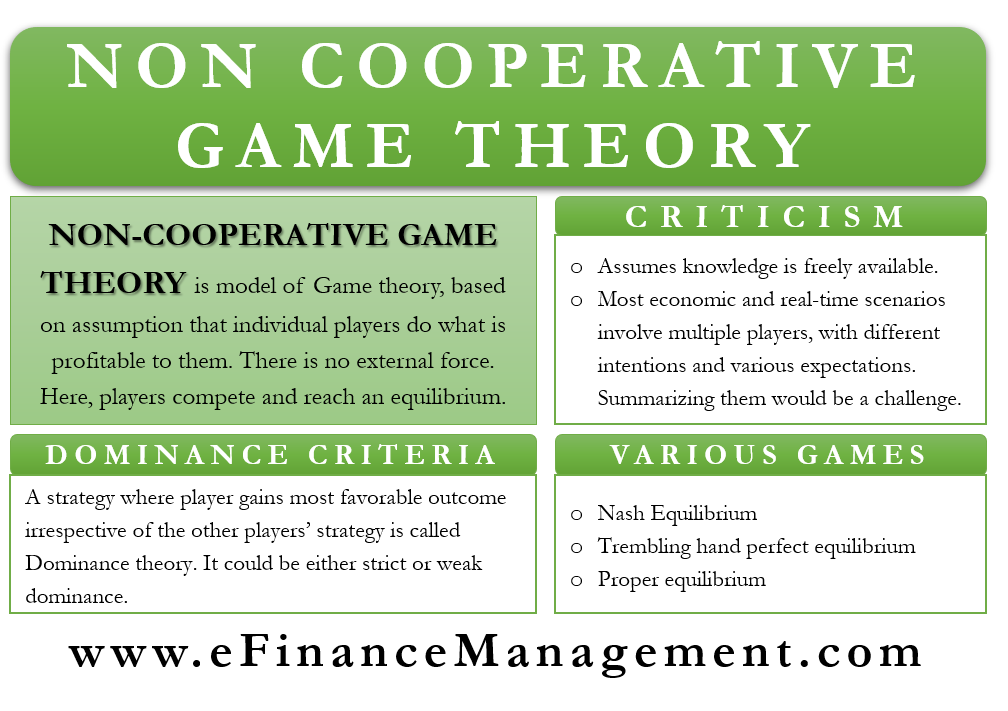
Game theory analyzes choices when each participant must account for others' incentives, information, and likely responses. It explains equilibrium, credible threats, signaling, coordination, and the gap between individual rationality and collective outcomes. Games such as the Prisoner's Dilemma show why cooperation is difficult, while repeated interaction can make it sustainable through future rewards and penalties.
In June 1944, the Allied high command needed Germany to believe that the D-Day invasion would land at Pas-de-Calais, not Normandy. The problem was not simply tactical deception but a strategic game: how do you make a rational, well-informed adversary believe something false, when that adversary knows you have an incentive to deceive them?
Operation Fortitude's answer was to make the deception expensive. Double agents sent fabricated reports. Fake tanks and trucks, visible from German aerial reconnaissance, accumulated near Dover.
Radio traffic was generated suggesting a large army group under General George Patton - the general the Germans considered most capable - was poised to cross at the narrowest point.
The deception held not just until the landings but for weeks afterward: German armored divisions remained at Pas-de-Calais waiting for the "real" invasion long after Eisenhower's forces were ashore in Normandy.
Military historians estimate this delay may have saved tens of thousands of Allied lives.
What Fortitude's planners were doing - reasoning about what an adversary would believe, given what the adversary knew about Allied incentives - is exactly what game theory formalizes.
The question is not just "what should I do?" but "what will the other player do, given what they know about what I will do, given what I know about what they know about what I will do?" This recursive, strategic logic governs negotiations, elections, arms races, business competition, evolutionary biology, and the structure of immune systems.
It is one of the most powerful analytical frameworks developed in the twentieth century.
Game theory was formally born in the final year of the Second World War, in a 625-page book published in 1944. But its intellectual roots extend deeper, and its applications extend further forward - into every domain where rational agents with competing interests interact.
Understanding game theory means understanding something fundamental about why cooperation is difficult, why some threats are credible and others are not, and why rational individuals so often produce collectively irrational outcomes.
"The best move for any player assumes the other players are also making their best moves." - John Nash, Non-Cooperative Games (1950)
Key Definitions
Nash equilibrium: A combination of strategies, one for each player, from which no individual player can improve their outcome by unilaterally changing their strategy, given what the others are doing.
Zero-sum game: A game where one player's gain exactly equals another player's loss. The total payoff is constant. Poker (ignoring the house) is zero-sum. Tic-tac-toe is zero-sum. Most real-world interactions are not.
Non-zero-sum game: A game where players' outcomes are not perfectly opposed - where cooperation can make everyone better off, or where mutual defection can make everyone worse off.
Prisoner's Dilemma: The canonical non-zero-sum game in which individually rational choices lead to a collectively inferior outcome. The dominant strategy is defection, but mutual cooperation would benefit both players.
Dominant strategy: A strategy that is best for a player regardless of what the other players do.
Mixed strategy: A strategy in which a player randomizes over pure strategies with specified probabilities.
Payoff matrix: A table showing the outcomes (payoffs) for each player under each combination of strategies.
Credible threat: A threat is credible if the threatening party would actually carry it out if the trigger condition occurred. Incredible threats are ignored by rational opponents.
Backward induction: Solving a game by working backward from the final period: what would a rational player do last? Given that, what would they do second-to-last? And so on.
Subgame perfect equilibrium: A refinement of Nash equilibrium that requires players to play Nash equilibria in every subgame - eliminating equilibria sustained by incredible threats.
Mechanism design: The "reverse" of game theory: designing the rules of a game to produce desired outcomes. Also called "reverse game theory."
Repeated game: A game played multiple times by the same players, where past actions can influence future behavior.
Folk theorem: The result showing that in infinitely repeated games, virtually any individually rational outcome can be sustained as an equilibrium, because players can be punished in future rounds for defecting today.
Signaling game: A game where one player has private information and takes actions (costly signals) to credibly communicate it.
Schelling point: A solution to a coordination problem that people converge on without communication, based on its salience or prominence.
Key Game Types and Their Equilibria
| Game type | Structure | Equilibrium concept | Classic example | Real-world analog |
|---|---|---|---|---|
| Zero-sum | One player's gain = other's loss | Minimax strategy (von Neumann) | Chess; poker | Military conflict; fixed-resource negotiations |
| Prisoner's Dilemma | Mutual defection is Nash equilibrium; mutual cooperation is Pareto superior | Dominant strategy (defect) | Two suspects, silent vs. betray | Arms races; carbon emissions; corporate advertising |
| Coordination game | Multiple Nash equilibria; challenge is selecting one | Schelling point (focal solution) | Driving on left vs. right | Currency standards; technical standards; border agreements |
| Battle of the Sexes | Multiple Nash equilibria with conflicting preferences | Mixed strategy Nash equilibrium | Couple disagrees on venue but prefers going together | Contract negotiations with distributional conflict |
| Stag Hunt | Cooperation yields higher payoff but requires trust | Two pure strategy Nash equilibria (cooperate all or defect all) | Hunters: combine for stag or hunt rabbit alone | International agreements; public goods provision |
| Repeated Prisoner's Dilemma | Same players, repeated interaction | Folk theorem: cooperation sustainable if future matters | Tit-for-Tat (Axelrod tournament) | Business relationships; diplomatic relations |
| Signaling game | One player has private information; signals to credibly reveal it | Separating vs. pooling equilibrium | Education as signal (Spence) | Job market credentials; corporate dividends |
| Auction | Bidders with private valuations | Nash equilibrium in bids | Second-price auction: bid true value | FCC spectrum auctions; art sales; online advertising |
Von Neumann and the Founding
John von Neumann was, by common agreement among his contemporaries, the most brilliant mathematician of the twentieth century. He made fundamental contributions to quantum mechanics, computer architecture, fluid dynamics, and nuclear weapons design. He also founded game theory.
In 1928, von Neumann proved the minimax theorem: in any finite two-person zero-sum game, there exists an optimal mixed strategy for each player such that each player minimizes their maximum possible loss. This was the first rigorous mathematical result about strategic interaction.
It solved the problem of optimal play for zero-sum games - games where one player's gain is exactly the other's loss, like chess or poker (abstractly) or military conflict (to a first approximation).
But von Neumann recognized that most important real-world interactions are not zero-sum. Two firms negotiating a contract, two nations trying to avoid war, a group of people deciding whether to contribute to a public good - these situations involve partial conflicts of interest, where cooperation can make everyone better off.
Together with economist Oskar Morgenstern, von Neumann spent years developing a mathematical framework for this broader class of interactions.
The result, "Theory of Games and Economic Behavior" (1944), is one of the most important scientific books of the century.[1] It introduced the formal language of game theory: players, strategies, payoffs, the normal form and extensive form of a game.
It proved the minimax theorem in full generality and began the analysis of cooperative games (where players can form binding coalitions). It defined what it meant for an outcome to be "stable" in a game-theoretic sense.
What the 1944 book did not contain was the concept that would become game theory's central tool. That would come six years later, from a twenty-two-year-old graduate student in Princeton.
Nash Equilibrium: The Concept That Changed Everything
John Nash arrived at Princeton in 1948 and, within two years, had produced the idea that earned him the 1994 Nobel Prize in Economics. His 1950 doctoral dissertation, "Non-Cooperative Games," was twenty-seven pages long. It introduced the Nash equilibrium and proved its existence.[2]
The key insight was a generalization of von Neumann's minimax result to games that were not zero-sum and that involved more than two players. Nash defined an equilibrium as any combination of strategies - one for each player - from which no individual player has an incentive to deviate, given the strategies of everyone else.
In a Nash equilibrium, each player is playing a best response to the other players' strategies. The equilibrium is stable in the sense that no one wants to change unilaterally.
Nash proved that every finite game - any game with finitely many players each having finitely many pure strategies - has at least one Nash equilibrium, though it may involve mixed strategies. This existence proof used Kakutani's fixed-point theorem and is a landmark of twentieth-century mathematics.
The concept is powerful because it provides a prediction: in a strategic situation involving rational players who think about each other's reasoning, outcomes that are not Nash equilibria are unstable (someone has an incentive to deviate). Nash equilibria are self-enforcing - no external enforcement is needed if players are rational.
Nash himself spent much of the three decades after the late 1950s in a psychotic episode, in and out of psychiatric hospitals, hearing voices, and wandering campuses writing messages about numerology.
His story was dramatized in the 2001 film "A Beautiful Mind." When the Nobel was announced in 1994, it was widely regarded as both a recognition of intellectual achievement and a kind of institutional reckoning with what had been lost.
The Prisoner's Dilemma: When Rationality Fails Society
The Prisoner's Dilemma is not an abstract curiosity. It is the mathematical skeleton of some of the most pressing problems in human civilization.
The canonical setup: two suspects are arrested and held separately. Each can cooperate with their partner (stay silent) or defect (betray). The payoffs are: if both cooperate, both get one year. If both defect, both get three years. If one defects and the other cooperates, the defector goes free and the cooperator gets five years.
The logic is remorseless. Whatever the other person does, you are better off defecting. If they cooperate and you defect, you go free instead of serving one year - defection is better. If they defect and you cooperate, you serve five years instead of three - defection is still better.
Defection dominates cooperation regardless of the other player's choice. Each player has a dominant strategy: defect.
But when both players follow their dominant strategy, they each serve three years. If they had both cooperated, they would have served only one. The Nash equilibrium of the game - mutual defection - is worse for both players than the cooperative outcome. Rational individual behavior has produced a collectively irrational result.
This structure is not exotic. Consider:
Arms races: Each nation is better off arming regardless of what rivals do (arms provide security against either an armed or unarmed adversary), yet mutual armament is more dangerous and expensive than mutual disarmament.
Environmental agreements: Each country is better off emitting carbon regardless of what others do (the benefit accrues domestically, the cost is spread globally), yet mutual emission is worse than mutual restraint.
Corporate advertising: Each firm is better off advertising regardless of what competitors do, yet industry-wide advertising can be self-canceling - everyone spends more and market shares stay the same.
The Prisoner's Dilemma does not tell us that cooperation is impossible. It tells us that cooperation requires either repeated interaction (where future punishment can deter present defection), binding agreements (which require institutions to enforce), or changes in the payoff structure itself.
Repeated Games and the Evolution of Cooperation
In the early 1980s, political scientist Robert Axelrod set up a series of tournaments that became among the most famous experiments in social science.[3]
He invited game theorists, economists, psychologists, and computer scientists to submit programs that would play an iterated Prisoner's Dilemma - the same two-player game, repeated 200 times per match against each opponent.
The winning strategy in the first tournament was Tit-for-Tat, submitted by Anatol Rapoport. It cooperated on the first move, then copied whatever the opponent did on the previous move. It never defected first. It retaliated immediately against defection. It forgave immediately when the opponent cooperated again. Four lines of code.
Axelrod published the results, invited more sophisticated entries for a second tournament, and Tit-for-Tat won again.
He published his analysis in "The Evolution of Cooperation" (1984), which distilled the lessons: successful strategies in iterated Prisoner's Dilemmas were nice (cooperate initially), retaliatory (punish defection), forgiving (don't hold grudges), and clear (easy for opponents to interpret).
The theoretical underpinning is the folk theorem: in a sufficiently long (or infinitely) repeated game, any individually rational outcome - including full cooperation - can be sustained as a Nash equilibrium, because players can use the future to discipline the present.
If you defect today, I can punish you tomorrow. The threat of future punishment changes the incentives, making cooperation rational.
This result has implications far beyond abstract game theory. It explains why long-term relationships produce different behavior than one-shot interactions. It explains why reputation matters.
It explains why the collapse of a repeated relationship (a firm going bankrupt, a country about to lose a war) often produces a burst of defection: when the future disappears, so does its disciplinary force.
Coordination Games and Schelling Points
Not all strategic problems involve conflict. Sometimes the challenge is pure coordination: you and a partner need to make the same choice, and you cannot communicate. You separated in a foreign city. Where do you go to find each other?
Thomas Schelling noticed, in research leading to "The Strategy of Conflict" (1960), that people in these situations did not reason through all logically equivalent options.[5]
They converged on focal points - what came to be called Schelling points - solutions that seemed naturally salient without any logic that would single them out in a purely abstract analysis.
In New York City, "noon at Grand Central" emerged spontaneously as the answer. In other cities, different landmarks served.
The deeper insight was that coordination is achieved through shared knowledge of what is prominent or conventional, not through abstract reasoning about which of several equivalent options to pick. This has enormous practical implications.
International agreements on boundaries, cease-fire lines, and currency exchange rates tend to cluster around focal points: round numbers, rivers, ethnic majorities, historical frontiers.
Nuclear deterrence relies on the focal point of the "nuclear threshold" - the bright line between conventional and nuclear weapons - as a coordination device.
Legal systems and social norms function partly as Schelling points: they solve coordination problems not because each specific rule is derivable from first principles, but because having a common convention everyone understands is more important than which convention it is.
The Battle of the Sexes - a game in which a couple prefers to go out together but disagree on where - illustrates a related but distinct problem: there are multiple Nash equilibria, and the challenge is selecting one. One player going first, or one player having more information, can break the symmetry and select an equilibrium.
Auction Theory: Designing Markets
Von Neumann's game theory analyzed existing games. Mechanism design - sometimes called reverse game theory - asks how to design games to produce desired outcomes. Auction theory is one of mechanism design's greatest practical achievements.
William Vickrey (1961) proved that a second-price sealed-bid auction - where the highest bidder wins but pays only the second-highest bid - has a dominant strategy: each bidder is best off bidding their true valuation, regardless of others' bids.[9]
This induces truth-telling and ensures the object goes to the person who values it most, achieving efficiency.
Paul Milgrom and Robert Wilson, who shared the 2020 Nobel Prize in Economics, extended this analysis to more complex environments.
In common-value auctions - where the object has an objective value that all bidders are uncertain about - the winner faces the "winner's curse": having bid the most, they are likely to have been the most optimistic and may have overbid.
Milgrom and Wilson showed how rational bidders should shade their bids to account for this.[7]
Their work was directly applied to the design of FCC spectrum auctions beginning in 1994, which raised tens of billions of dollars and allocated radio spectrum - previously assigned by bureaucratic fiat - to its highest-value users.
The matching theory of Alvin Roth (Nobel 2012, shared with Lloyd Shapley) addresses markets where price is not the clearing mechanism: medical residency assignments, school choice, kidney exchange.
The Gale-Shapley algorithm, developed in 1962, produces stable matchings - assignments where no pair of a student and school, or a doctor and hospital, would both prefer to be matched with each other over their current assignment.
Signaling: When What You Do Tells Others What You Know
In many strategic situations, one player has information that another lacks and that both care about. How can the informed player credibly communicate this information, when they have an incentive to misrepresent it?
Michael Spence's answer (1973) was: through costly signals.[8] If signaling is cheap, it is ignored (cheap talk). If it is costly - and importantly, if it is more costly for low-quality types than high-quality types - then the signal is credible.
The equilibrium is a separating equilibrium: high-quality types send the signal, low-quality types do not, and the receiver can infer quality from the signal.
Spence's application to education was deliberately provocative: even if a university degree teaches nothing directly relevant to a job, it can function as a signal of ability because completing four years of difficult coursework is easier for high-ability people than for low-ability people.
The labor market may therefore reward degrees not for the skills they represent but for the signal they provide. How much of the return to education is genuine human capital accumulation versus pure signaling is one of the most contested empirical questions in labor economics.
Signaling appears everywhere: firms paying dividends as signals of financial health (cash dividends are costly; only healthy firms can afford them); animals engaging in handicap displays (peacock tails are costly and reduce survival; only genetically fit peacocks can survive them; therefore tails signal fitness); startups choosing prestigious VCs over higher valuations from obscure ones; countries making costly commitments in foreign policy to signal resolve.
Evolutionary Game Theory: Rationality Optional
John Maynard Smith's "Evolution and the Theory of Games" (1982) demonstrated that game-theoretic equilibria could emerge through natural selection without requiring any rationality on the part of individual agents.[4]
The key concept was the evolutionarily stable strategy (ESS): a strategy such that if it is adopted by a population, no mutant strategy can invade.
The hawk-dove game illustrates the approach. Hawks fight for resources and never retreat; doves display but always retreat from fights. In a population of all doves, a hawk mutant does very well - it wins every contest without paying any cost.
So hawk spreads. But as hawks proliferate, they increasingly fight each other, paying heavy costs. A dove mutant in a population of all hawks does relatively well - it retreats, pays no cost, and lives to breed elsewhere. There is an ESS that is a mixture of the two types.
Crucially, this equilibrium is a Nash equilibrium of the underlying game - achieved not through rationality but through selection. Strategies that are not Nash equilibria are evolutionarily unstable: they can be invaded by mutations and will not persist.
This convergence between game-theoretic prediction and evolutionary dynamics is one of the deep results of theoretical biology, and it has been applied to animal behavior, immune system design, social norms, and linguistic evolution.
Nuclear Deterrence and Credible Commitment
Game theory's most consequential policy application may be nuclear deterrence. Bernard Brodie wrote in 1946, just after Hiroshima, that nuclear weapons had transformed the purpose of military force: the primary purpose of a military was no longer to win wars but to prevent them.
The logic was game-theoretic: if each side credibly threatens to destroy the other in response to attack, neither side will attack. Mutual Assured Destruction (MAD) is a Nash equilibrium: neither player can improve by unilaterally choosing to strike first, because the resulting retaliation would be worse than the status quo.
The problem is making the threat credible. Thomas Schelling, in "Arms and Influence" (1966), analyzed this problem with game-theoretic precision.[6] A deterrent threat is credible if the threatening party would actually carry it out - but massive retaliation is so costly that it may not be credible.
The solution, Schelling argued, involved commitment devices: automation, delegation, or "leaving something to chance" - mechanisms that reduced the decision-maker's ability to back down, making the threat credible precisely because it could not be easily rescinded.
The stability of MAD also depends on second-strike capability: the ability to absorb a first strike and still retaliate. If a first strike could destroy the adversary's retaliatory capacity, the threat of retaliation becomes non-credible, and the incentive to strike first returns.
This logic drove the development of submarine-launched ballistic missiles, which hide under the ocean and cannot be destroyed by a counterforce strike, and of hardened missile silos.
Why Game Theory Changed How We Think
Game theory's most lasting contribution is not any particular application but a way of thinking. It insists on taking seriously that other agents have their own interests, their own information, and their own strategies - and that outcomes depend on the interaction of strategies, not on any one player's choices alone.
This has proven to be a corrective to a widespread cognitive error: the tendency to analyze situations as if one were the only strategic actor. A firm sets its pricing strategy without adequately modeling how competitors will respond. A government passes a regulation without modeling how individuals and corporations will work around it.
A diplomat makes a demand without considering whether the adversary can credibly accept it given their domestic political constraints.
Game theory doesn't eliminate this error - human cognition remains stubbornly non-strategic in many contexts - but it provides a language and a set of tools for catching it.
The open problems in game theory are substantial. Real humans are not perfectly rational, do not have common knowledge of rationality, and operate with limited information about others' payoffs.
Behavioral game theory - pioneered by researchers including Colin Camerer, who combined game theory with experimental psychology - examines how actual human behavior in strategic situations deviates from Nash predictions and what models better capture observed behavior.[10]
The integration of game theory with psychology and neuroscience remains one of the most active frontiers in social science.
Related Articles
Sources & Further Reading
- Von Neumann, John, and Oskar Morgenstern. Theory of Games and Economic Behavior. Princeton University Press, 1944.
- Nash, John. "Non-Cooperative Games." Annals of Mathematics 54(2): 286-295, 1950.
- Axelrod, Robert. The Evolution of Cooperation. Basic Books, 1984.
- Maynard Smith, John. Evolution and the Theory of Games. Cambridge University Press, 1982.
- Schelling, Thomas C. The Strategy of Conflict. Harvard University Press, 1960.
- Schelling, Thomas C. Arms and Influence. Yale University Press, 1966.
- Milgrom, Paul. Putting Auction Theory to Work. Cambridge University Press, 2004.
- Spence, A. Michael. "Job Market Signaling." Quarterly Journal of Economics 87(3): 355-374, 1973.
- Vickrey, William. "Counterspeculation, Auctions, and Competitive Sealed Tenders." Journal of Finance 16(1): 8-37, 1961.
- Camerer, Colin F. Behavioral Game Theory: Experiments in Strategic Interaction. Princeton University Press, 2003.