
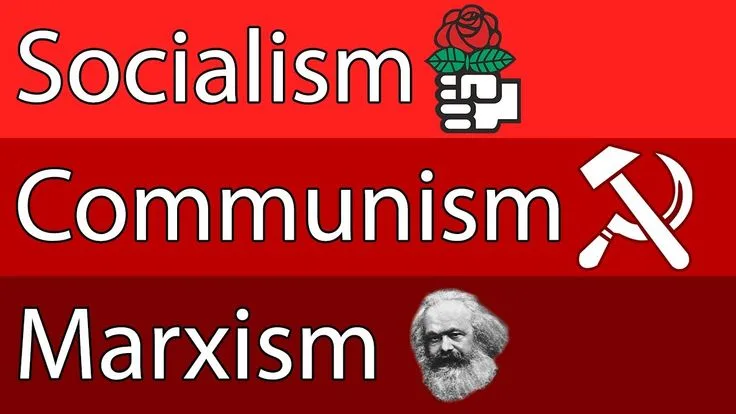
No political idea has shaped the twentieth century more profoundly than communism. Beginning as a philosophical and economic critique of industrial capitalism in the 1840s, it became by the 1950s the governing ideology of states comprising more than one-third of the world's population.[11]
It inspired revolutions, generated one of history's most destructive forms of state terror, produced genuine social achievements in literacy and healthcare in some contexts, and ended - in Europe at least - in the extraordinary sequence of 1989, when communist regimes fell across Eastern Europe in a matter of months, followed by the dissolution of the Soviet Union itself in December 1991.
The story of communism is a story about the relationship between utopian ideals and political power, between the emancipatory aspirations of a theory and the coercive realities of the states built in its name.
The difficulty in assessing communism is that the word covers an enormous range of phenomena. Marx's theoretical communist society - classless, stateless, organized around the principle "from each according to his ability, to each according to his needs" - was never implemented anywhere.
What actually existed under the communist label were Leninist vanguard-party states, Stalinist terror-regimes, Maoist peasant revolutions, Yugoslav self-management socialism, Cuban revolutionary nationalism, and Vietnamese guerrilla warfare, among other variants.
These share certain features: single-party political control, state or collective ownership of the means of production, opposition to capitalism as a system, and claims to represent the interests of the working class.
But they differ so substantially in their specific forms, policies, and human consequences that any unified assessment is misleading.
This article traces the intellectual origins of communism in Marx and Engels, examines the major variants of communist practice in the twentieth century from Lenin to Mao, surveys the reasons for the Soviet system's collapse, and considers what, if anything, remains of communist and socialist thought in the twenty-first century.
"A specter is haunting Europe - the specter of communism. All the powers of old Europe have entered into a holy alliance to exorcise this specter: Pope and Tsar, Metternich and Guizot, French Radicals and German police-spies." - Karl Marx and Friedrich Engels, The Communist Manifesto, February 1848.[2]
| Feature | Marxist Theory | Soviet Practice |
|---|---|---|
| Property | Common/collective ownership | State ownership |
| State | Withers away after revolution | Expanded and entrenched |
| Party | Vanguard leads transition | One-party monopoly on power |
| Economy | Planned by workers | Centrally planned by bureaucracy |
| Class | Classless society achieved | New bureaucratic class emerged |
| Freedom | Full human emancipation | Restricted civil and political rights |
Key Definitions
Historical Materialism: Marx's method of historical analysis, which holds that the economic base of a society - the mode of production - determines its political, legal, and cultural superstructure, and that historical change is driven by contradictions between forces and relations of production.
Surplus Value: The Marxist concept designating the difference between the value workers produce and the value of the wages they receive.[1] This unpaid labor is appropriated by capitalists as profit; for Marx it is the foundation of capitalist exploitation.
Vanguard Party: Lenin's concept of a highly organized, disciplined party of professional revolutionaries whose role is to provide revolutionary leadership to the working class, which cannot spontaneously develop the consciousness required for socialist revolution.
Dialectical Materialism: The Marxist-Leninist philosophical framework combining Hegel's dialectical method (thesis-antithesis-synthesis; contradictions driving historical change) with materialist ontology (matter, not spirit, is the fundamental reality).
Gulag: The Soviet system of labor camps (Glavnoye Upravleniye Lagerei - Main Administration of Camps) that held millions of political prisoners, criminals, and conscripted workers from the 1920s through the 1950s. Documented most fully by Aleksandr Solzhenitsyn's 'The Gulag Archipelago' (1973-1975).[5]
Marxist Foundations
The Communist Manifesto and Capital
Karl Marx (1818-1883) and Friedrich Engels (1820-1895) produced 'The Communist Manifesto' in February 1848, commissioned by the Communist League and published just before the revolutionary upheavals that swept Europe that spring. It is one of the most consequential political pamphlets ever written.
Its opening analysis - "The history of all hitherto existing society is the history of class struggles" - proposed that the conflict between economic classes, driven by material interests, was the engine of historical change.
The manifesto identified the bourgeoisie (capitalist class, owners of the means of production) and the proletariat (industrial working class, who own nothing but their labor power) as the decisive antagonists of modern capitalism.
It argued that the bourgeoisie, by concentrating workers in factories, creating misery and economic insecurity through the business cycle, and generating the communications and organizational infrastructure of a global economy, was creating the conditions for its own overthrow.
The proletariat, organized through class struggle, would seize state power and use it to abolish private property, creating first a socialist society and ultimately a communist one from which the state itself would wither away.
Marx's 'Capital' (Das Kapital, Volume 1, 1867) is a different kind of text: a dense, systematic analysis of the capitalist mode of production that draws on classical political economy (Adam Smith, David Ricardo) while radically subverting it.
Its central analytical contribution is the labor theory of value and the theory of surplus value. Every commodity's value is determined by the socially necessary labor time required to produce it.
Workers sell their labor power - their capacity to work - as a commodity, receiving wages equal to its value (the cost of their reproduction and subsistence). But in the working day, workers produce more value than they receive in wages: this surplus value is what the capitalist appropriates as profit, rent, and interest.
This is the mechanism of exploitation. Capital also develops the concept of commodity fetishism: in a market society, relations among people take the form of relations among things (commodities, prices, capital).
The social character of production is concealed by the market form; things appear to have inherent value rather than crystallized human labor. This mystification is not merely ideological manipulation but the actual form taken by social relations in a capitalist society.
Marx's analysis of capitalist dynamics was prophetic in several respects: the tendency toward the concentration and centralization of capital (small firms absorbed by larger ones, monopolies forming), the internationalization of capital, the periodic crises generated by the system's contradictions, and the increasing commodification of all aspects of life.
His prediction that capitalism would produce its own gravediggers - a revolutionary proletariat - proved wrong in its timing and mechanism, though Marxists have offered various explanations for the delay.
Varieties of Communism
Leninism and the Bolshevik Revolution
Lenin's most important theoretical innovation was the concept of the vanguard party, developed in 'What Is to Be Done?' (1902).[3]
The Bolshevik Revolution of October 25-26, 1917 (Old Style; November 7 New Style) was not a spontaneous proletarian uprising but the seizure of state power by the Bolshevik party in the conditions of wartime collapse, taking advantage of the vacuum left by the February Revolution that had overthrown the Tsar.
Lenin's gamble was that a Bolshevik-led Russia could hold on until revolutions in Germany and Western Europe followed, allowing socialist construction with more advanced economies.
When the German and Hungarian revolutions were defeated (1919), the Bolsheviks found themselves alone in a backward, war-devastated country, having to build "socialism in one country" - Stalin's formulation of the ideological rationale for what followed.
Lenin introduced the New Economic Policy (NEP) in 1921, retreating from the forced requisitioning of grain (War Communism) to a mixed economy that allowed small-scale private enterprise, particularly in agriculture, to resume. The NEP produced recovery but was regarded by many Bolsheviks as a strategic concession to capitalism.
Lenin died in January 1924 after a series of strokes, leaving behind a letter warning the party against Stalin's accumulation of power and recommending his removal from the General Secretary role - a letter that was suppressed.
Stalinism
Stalin's collectivization campaign (1929-1933) ended the NEP and the peasant agriculture it had revived. The Five-Year Plans (beginning 1928) drove massive industrialization through centralized direction of investment toward heavy industry: iron, steel, coal, machine tools.
Industrial output grew rapidly by standard measures, though at enormous human cost: forced labor (the Gulag's labor was economically significant), the destruction of the artisan and small merchant classes, and above all the catastrophic disruption of agriculture.
The Ukrainian Holodomor of 1932-1933 - the famine that killed millions in Ukraine as the state continued extracting grain quotas - was the most devastating consequence. Soviet archives opened after 1991 have confirmed approximately 750,000 executions during the Great Terror of 1936-1938 and millions imprisoned in the Gulag.[4]
Show trials of Old Bolsheviks - including Zinoviev, Kamenev, and Bukharin - produced public confessions extracted through a combination of torture, sleep deprivation, and threats to family members, convicting loyal communists on fabricated charges of Trotskyite sabotage and fascist espionage.
Trotskyism and the Fourth International
Leon Trotsky (1879-1940), who had been one of the principal leaders of the October Revolution and the founder of the Red Army, was expelled from the Soviet Union in 1929 and assassinated in Mexico City in 1940 by a Soviet agent wielding an ice axe.
His 'The Revolution Betrayed' (1936) argued that the Soviet Union under Stalin represented a degenerated workers' state - still based on nationalized property but governed by a bureaucratic caste that had usurped political power from the workers.
His doctrine of permanent revolution held that socialist revolution in underdeveloped countries could not stabilize at a 'democratic' stage but must immediately proceed to socialist transformation, and that the survival of any socialist revolution depended on its extension to more developed countries.
Trotskyist organizations, grouped in the Fourth International (founded 1938), remained significant in some Latin American, European, and South Asian contexts but never achieved state power anywhere.
Maoism
Mao Zedong's theoretical innovations centered on the peasantry as the primary revolutionary force in colonial and semi-colonial societies, guerrilla warfare strategy, and the concept of the mass line (learning from the masses in order to lead them).
The People's Republic of China, proclaimed in 1949, initially followed the Soviet model of economic development.
The Sino-Soviet split of the late 1950s and early 1960s - driven by Mao's contempt for Khrushchev's de-Stalinization, disputes over nuclear weapons sharing, and competition for leadership of the communist world - led Mao to articulate a more radical position.
The Great Leap Forward and the Cultural Revolution represent the most catastrophic expressions of Maoism in practice.[8] Deng Xiaoping's reforms after 1978 effectively abandoned Maoist economics while maintaining the CCP's political monopoly.
Titoism and Eurocommunism
Josip Broz Tito (1892-1980), leader of Yugoslavia's communist partisans and postwar socialist state, broke with Stalin in 1948 and developed a distinctive "Yugoslav road to socialism" featuring self-management socialism (workers' councils in enterprises rather than central state direction), non-alignment in the Cold War, and relative cultural openness.
Tito's model offered an alternative to Stalinist orthodoxy that attracted significant interest globally until Yugoslavia's dissolution after 1991 revealed how much the unity of its multinational state had depended on Tito's personal authority.
Eurocommunism, developed by the Italian Communist Party (PCI) under Enrico Berlinguer, the Spanish PCE, and the French PCF in the 1970s, accepted parliamentary democracy and pluralism, renouncing the dictatorship of the proletariat and seeking a democratic road to socialism within the political framework of liberal democracy.
The PCI's theorist Antonio Gramsci - whose 'Prison Notebooks' were published posthumously from 1947 - provided the intellectual resources for this strategy through his concept of hegemony and his analysis of how the working class could build a counter-hegemonic alliance through civil society before taking state power.[9]
The Soviet Union: Rise and Fall
Construction and Terror
The Soviet Union (Union of Soviet Socialist Republics, established December 1922) was the world's first state to claim communist foundations and the institutional template for communist states worldwide.
Its history divides broadly into: the Lenin period (1917-1924), characterized by revolution, civil war, foreign intervention, and the NEP; the Stalin period (1924-1953), characterized by forced industrialization, collectivization, terror, and victory in World War II; the Khrushchev period (1953-1964), characterized by de-Stalinization, the Secret Speech of 1956 acknowledging Stalin's crimes, and relative liberalization.
The Brezhnev stagnation (1964-1982); and the Gorbachev period (1985-1991), in which glasnost and perestroika unleashed forces that destroyed the system they were intended to save.
Nikita Khrushchev's Secret Speech to the Twentieth Party Congress on February 25, 1956 - in which he detailed Stalin's crimes against the party, his destruction of loyal communists, and his military incompetence - was one of the most consequential political acts of the Cold War.
It initiated de-Stalinization, liberalized the Gulag system, and provoked the Hungarian Revolution of 1956, which Soviet tanks crushed.
The speech delegitimized Stalinism as an ideological system while the party retained power; it was simultaneously a necessary truth-telling and an act of selective amnesia (Khrushchev himself had been implicated in the Ukrainian terror).
The 1989 Revolutions and Soviet Dissolution
The revolutions of 1989 - in Poland, Hungary, East Germany, Czechoslovakia, Romania, and Bulgaria - swept communist governments from power in a cascade that took Western observers largely by surprise.
The reasons were multiple: economic stagnation relative to capitalist neighbors, the demonstration effect of Western consumer culture through television, Gorbachev's signal that the Soviet Union would not intervene militarily to save satellite regimes (as it had in Hungary in 1956 and Czechoslovakia in 1968), and the accumulated illegitimacy of governments that had never been freely elected.
The fall of the Berlin Wall on November 9, 1989 became the defining symbol of the era. The Soviet Union itself dissolved on December 25, 1991, when Gorbachev resigned and the republics declared independence. Seventy-four years after the October Revolution, the communist experiment in Russia was over.
Communist States Today
China Under Xi Jinping
The People's Republic of China remains formally communist - the Chinese Communist Party (CCP) maintains its monopoly on political power, and Marxism-Leninism-Mao Zedong Thought is enshrined in the constitution.
In practice, the Chinese economy is a form of state capitalism: private enterprise is permitted and accounts for the majority of employment and output, but the party retains ultimate control over strategic sectors, major state-owned enterprises, and the political conditions of economic activity.
Deng Xiaoping's formulation "socialism with Chinese characteristics" was an acknowledgment that the Maoist command economy had failed; it authorized market mechanisms while maintaining party control.
The result has been the most rapid large-scale economic development in human history, lifting hundreds of millions from poverty between 1978 and 2020.
Xi Jinping's consolidation of personal power since 2012 - eliminating term limits, building a personality cult, and intensifying ideological discipline - represents a partial return to Maoist practices without Maoist economics.
The Xinjiang detention system, in which an estimated one million or more Uyghurs and other Muslim minorities have been held in "re-education" facilities since 2017, represents the most significant ongoing human rights crisis associated with communist governance.
Cuba, North Korea, and Vietnam
Cuba remains a one-party state under the Communist Party of Cuba, which has maintained power since 1959.
North Korea (the Democratic People's Republic of Korea), under the Kim dynasty (Kim Il-sung, Kim Jong-il, Kim Jong-un), represents the most extreme variant of remaining communist governance - a state of near-total social control combined with a military-first (Songun) policy and a catastrophic economy, sustained by Chinese support and nuclear deterrence.
Vietnam and Laos maintain communist party governance while pursuing market-oriented economic reforms similar to China's, producing significant economic growth alongside persistent political repression.
Why Did Communism Fail?
The debate about communism's failure encompasses economic, political, and moral dimensions that intersect in complex ways. The economic critique is the most technically developed.
Hayek's 'The Road to Serfdom' (1944) and Mises's 'Socialism' (1922) argued from first principles that central planning was necessarily irrational: without market prices to aggregate the distributed knowledge of millions of economic actors about costs, preferences, and possibilities, planners would have no rational basis for resource allocation.
This prediction was borne out: the Soviet economy produced spectacular growth in early stages (when mobilizing underutilized resources required only administrative direction, not sophisticated allocation) but stagnated at the technological frontier.
Kornai's 'The Socialist System' (1992) provided the most comprehensive account of how soft budget constraints, shortage economies, and distorted incentives systematically undermined socialist enterprise.[7]
The political critique is simpler: all major communist states became authoritarian, generating systematic state violence against their own populations on a massive scale.
Whether this was contingent (bad leaders, difficult circumstances) or structural (Rosa Luxemburg had predicted from the left, as early as 1918, that Bolshevik methods would produce authoritarian outcomes; she wrote: "Without general elections, without freedom of the press, freedom of speech, freedom of assembly, without the free battle of opinions, life in every public institution dies out, becomes a mere semblance of life") is the central contested question.
Marxist defenders argue that the failures of Soviet communism reflected Russian conditions, Stalinist distortions, and imperialist pressure rather than the inherent logic of socialist organization.
Critics argue that the concentration of economic and political power in a single apparatus creates structural tendencies toward authoritarianism regardless of initial intentions.[6]
Cuba's qualified successes in healthcare and education, operating under permanent embargo, suggest that social democratic achievements in these domains do not require the full apparatus of communist governance.
Nordic social democracy - combining generous welfare states with market economies and political democracy - is frequently cited as demonstrating that the social goals of communism (universal healthcare, education, housing security) can be achieved without the coercive and economic failures of communist states.
Communist Ideas Today
Gramsci, Neo-Marxism, and Academic Marxism
The most enduring legacy of communist thought in the contemporary West is intellectual rather than political.
Antonio Gramsci's concept of hegemony - the idea that capitalist power is maintained as much through cultural and ideological consent as through direct coercion - has been enormously productive for media studies, cultural studies, postcolonial theory, and feminist theory.
The Frankfurt School (Theodor Adorno, Max Horkheimer, Herbert Marcuse, Jurgen Habermas) combined Marxist political economy with Freudian psychology and Weberian sociology to produce critical theory - an analysis of how advanced capitalism creates forms of domination that operate through culture, administration, and the administered satisfaction of desire rather than simple class exploitation.
Slavoj Zizek's prolific output applies Lacanian psychoanalysis and Hegelian dialectics to contemporary culture and politics, maintaining a provocative engagement with communist ideas while acknowledging their historical failures.
David Harvey's geographical Marxism, developed in 'The Limits to Capital' (1982) and 'The Condition of Postmodernity' (1989), analyzes capital accumulation through the lens of space, urbanization, and temporal-spatial fixes.
Fredric Jameson's 'Postmodernism, or, The Cultural Logic of Late Capitalism' (1991) argued that postmodern culture represents the cultural dominant of a specific stage of capitalism rather than a post-ideological condition.
Democratic Socialism and Post-Capitalism
Erik Olin Wright's 'Envisioning Real Utopias' (2010) attempted to rehabilitate socialist institutional design through the analysis of actually existing socialist-inspired institutions: Mondragon worker cooperatives in the Basque Country, participatory budgeting in Porto Alegre, the Wikipedia commons, and experimental basic income programs.
Wright argued that socialist transformation is more likely to be achieved through the gradual expansion of such interstitial institutions within capitalism than through revolutionary rupture.[10]
Paul Mason's 'PostCapitalism' (2015) argued that digital technology - particularly the near-zero marginal cost of producing and distributing information goods - is eroding the mechanisms of capitalist value extraction and creating conditions for a post-market economy organized around open-source production and basic income guarantees.
These projections remain speculative, but they represent the most creative contemporary engagement with post-capitalist possibility.
The democratic socialism associated with Bernie Sanders and Alexandria Ocasio-Cortez in the United States, Jeremy Corbyn in the UK, and Jean-Luc Melenchon in France represents the reentry of explicitly socialist ideas into mainstream electoral politics after decades of marginalization.
Whether this represents a genuine revival of socialist politics or a temporary response to the perceived failures of neoliberalism remains to be seen.
Sources & Further Reading
- Marx, Karl. Capital: A Critique of Political Economy, Volume 1. 1867. Trans. Ben Fowkes. Penguin Classics, 1990.
- Marx, Karl, and Friedrich Engels. The Communist Manifesto. 1848. Trans. Samuel Moore. Penguin Classics, 2002.
- Lenin, Vladimir Ilyich. What Is to Be Done? Burning Questions of Our Movement. 1902. Trans. Joe Fineberg. Progress Publishers, 1969.
- Conquest, Robert. The Great Terror: A Reassessment. Oxford University Press, 1990.
- Solzhenitsyn, Aleksandr. The Gulag Archipelago, 3 vols. 1973-1975. Trans. Thomas P. Whitney. Harper and Row, 1974-1978.
- Hayek, Friedrich A. The Road to Serfdom. University of Chicago Press, 1944.
- Kornai, Janos. The Socialist System: The Political Economy of Communism. Oxford University Press, 1992.
- Dikotter, Frank. Mao's Great Famine: The History of China's Most Devastating Catastrophe, 1958-1962. Walker and Company, 2010.
- Gramsci, Antonio. Selections from the Prison Notebooks. Ed. and trans. Quintin Hoare and Geoffrey Nowell Smith. Lawrence and Wishart, 1971.
- Wright, Erik Olin. Envisioning Real Utopias. Verso Books, 2010.
- Service, Robert. Comrades: A World History of Communism. Harvard University Press, 2007.
Further Reading
- Pomeranz, Kenneth. The Great Divergence: China, Europe, and the Making of the Modern World Economy. Princeton University Press, 2000.