
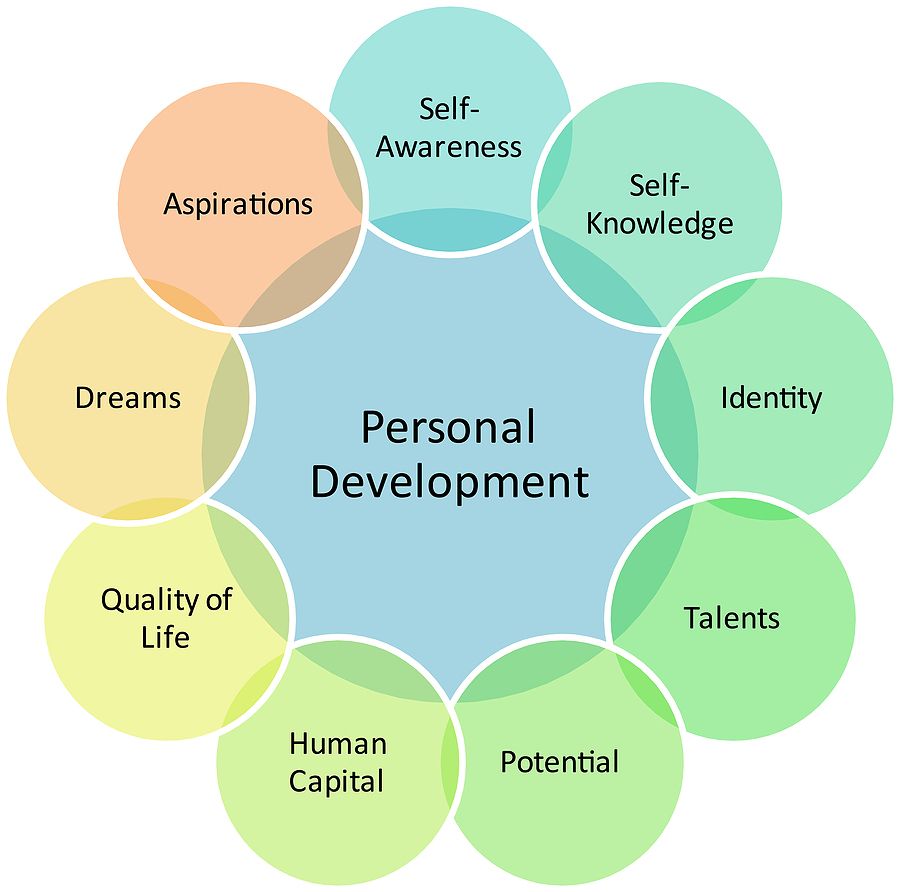
Lasting capability change comes from structured effort, feedback, and goals that target real weaknesses, rather than from motivational routines or accumulated experience alone. The practical answer to what is personal development is deliberate growth across skills, self-awareness, emotional management, execution, and learning capacity. Research on expertise emphasizes focused practice at the edge of ability, supported by immediate feedback and progressively stronger mental models.
Personal development is the deliberate, ongoing process of improving your knowledge, skills, self-awareness, and behaviors to become more effective in work and life.
Unlike the avalanche of motivational content and productivity hacks that dominate the self-help industry, genuine personal development rests on decades of research in learning science, cognitive psychology, and behavioral change theory.
This article examines what the evidence actually supports - from Anders Ericsson's foundational work on deliberate practice to Edwin Locke's goal-setting research - and provides a framework for designing a development approach that produces lasting capability change rather than temporary inspiration.
The personal development industry generates an estimated $44 billion annually in the United States alone, according to a 2022 market analysis by Grand View Research.
Alongside genuinely useful frameworks and evidence-based practices sits a vast market of motivational content, morning-routine prescriptions, and self-help systems that overpromise and under-deliver.
The challenge for anyone serious about improving their capabilities is separating what the research actually supports from what merely sounds compelling in a TED Talk.
"We are what we repeatedly do. Excellence, then, is not an act, but a habit." - Will Durant, paraphrasing Aristotle in The Story of Philosophy (1926)
This insight, written nearly a century ago, anticipated what modern research on expertise development would confirm: that character and competence are built through sustained, structured repetition - not through epiphanies or shortcuts.
What Personal Development Actually Means
The word "deliberate" is the critical qualifier in any serious definition of personal development. It distinguishes intentional growth from the incidental learning that happens through daily experience. Everyone accumulates experience over time. Not everyone converts that experience into genuine capability improvement.
Personal development encompasses several related domains:
- Skill development: Building technical competencies, communication abilities, and professional expertise through structured practice
- Self-awareness: Understanding your own strengths, blind spots, values, and behavioral patterns - what psychologist Tasha Eurich's research (2017) calls "internal self-awareness"
- Emotional intelligence: Managing your own emotional responses and understanding others', as described in Daniel Goleman's foundational framework (1995)
- Goal-setting and execution: The ability to identify meaningful objectives and follow through on them using evidence-based methods
- Learning capacity: Getting better at the process of getting better - metacognition and learning how to learn
Most self-improvement content focuses on tactics: morning routines, note-taking systems, habit stacks. These have their place, but they are downstream from the more fundamental questions of how expertise actually develops, what motivates sustained effort, and how individuals can design environments that support growth.
A personal development approach that starts with tactics without addressing these foundations is like optimizing a navigation app while driving in the wrong direction.
The Science of Expertise: What Deliberate Practice Actually Is
The most important scientific contribution to understanding skill development is the research of psychologist Anders Ericsson, who spent decades studying expert performers across domains from chess and tennis to surgery and music.
His central finding, published in foundational papers starting in 1993 and synthesized in Peak: Secrets from the New Science of Expertise (2016, co-authored with Robert Pool), is that deliberate practice - not raw talent, not simply accumulated hours - is the primary driver of expert performance.
Deliberate practice has specific characteristics that distinguish it from mere repetition:
It operates at the edge of current ability. Deliberate practice requires working in what psychologist Lev Vygotsky called the zone of proximal development - challenging enough to force adaptation, not so difficult as to be impossible. Doing things you can already do comfortably does not produce growth.
It is focused and intentional. Each practice session has specific goals targeting specific weaknesses, not general effort toward vague improvement. A musician practicing deliberate practice spends time on the difficult passage, not playing through pieces they already know.
It includes immediate feedback. The practitioner must receive rapid information about what worked and what did not. Without feedback, errors are reinforced alongside correct patterns. Ericsson's research showed that expert performers consistently worked with coaches or used environmental feedback to identify errors in real time.
It is effortful and not particularly enjoyable. Deliberate practice is work. The expert violin students Ericsson studied at the Berlin Academy of Music did not practice more total hours than their less accomplished peers - they practiced in more structured, deliberate ways and spent more of their practice time on difficult passages rather than playing through pieces they already knew.
It builds and refines mental representations. A key but less-discussed finding from Ericsson's work is that expert performers develop increasingly sophisticated mental representations - internal models that allow them to plan, monitor, and evaluate their performance more effectively.
A chess grandmaster does not just remember more positions; they perceive the board differently than a novice does.
The 10,000-Hour Rule: What Gladwell Got Wrong
Malcolm Gladwell's Outliers (2008) popularized a version of Ericsson's work as the "10,000-hour rule" - the idea that roughly 10,000 hours of practice produces world-class expertise.
Ericsson spent years publicly correcting this interpretation, including a 2012 paper in the British Journal of Sports Medicine and a 2016 interview in Salon.
The number 10,000 was an approximate average in one specific study of violinists and does not generalize across domains. More importantly, Gladwell's framing obscured Ericsson's core finding: it is not the hours that matter, it is the quality and structure of practice within those hours.
Ten thousand hours of undirected repetition produces an experienced practitioner, not necessarily an excellent one.
A 2014 meta-analysis by Macnamara, Hambrick, and Oswald published in Psychological Science examined 88 studies and found that deliberate practice accounted for approximately 26% of the variance in performance in games, 21% in music, and only 1% in professional performance.
The remaining variance comes from factors including natural ability, starting age, and the quality of instruction. This does not diminish the importance of practice - it remains the largest controllable factor - but it does correct the oversimplified narrative that practice alone determines outcomes.
The practical implication: less deliberate practice at higher quality beats more casual practice at higher volume in terms of developing genuine expertise.
Goal-Setting: What the Research Actually Shows
Goal-setting theory, developed by Edwin Locke and Gary Latham over four decades of research beginning in the 1960s, provides among the most replicated findings in organizational psychology. Their comprehensive review, published in American Psychologist (2002), analyzed over 1,000 studies.
The consistent finding is that specific, challenging goals produce significantly better performance than "do your best" goals or no goals. This is not a small effect - studies find performance differences of 10-25% between specific-goal and vague-goal conditions across a wide range of tasks and populations.
| Goal Type | Performance Effect | Best Use Case |
|---|---|---|
| Specific + Challenging | 10-25% improvement over vague goals | Well-understood tasks with clear metrics |
| Learning goals | Superior for complex, novel tasks | Early skill acquisition, new domains |
| "Do your best" goals | Baseline (no improvement) | Rarely effective |
| Performance goals (premature) | Can produce anxiety and shortcuts | Avoid during early learning phases |
| Implementation intentions | Roughly double follow-through rates | Any goal requiring behavior change |
Two additional findings from Locke and Latham's research are less widely known:
Commitment matters more than difficulty. Challenging goals only outperform easier goals when the person is committed to them. When commitment is absent, difficult goals produce worse performance than easy ones because they get abandoned.
The conditions that produce commitment - participation in setting goals, belief that the goal is attainable, clarity about why the goal matters - are therefore critical.
This finding has direct implications for career planning: goals imposed by others without buy-in are less effective than goals the individual helped shape.
Learning goals versus performance goals. For complex tasks requiring skill development, learning goals ("understand three new approaches to this problem") outperform performance goals ("hit this specific number") in the early stages of skill acquisition.
Research by Gerard Seijts and Gary Latham (2001) at the Rotman School of Management found that performance goals applied prematurely can produce anxiety and shortcuts rather than genuine learning.
This finding explains why many corporate goal-setting systems backfire: they apply performance metrics to situations that require learning orientation.
Implementation Intentions
A powerful complement to goal-setting is implementation intentions, studied extensively by psychologist Peter Gollwitzer at New York University. The technique involves specifying the when, where, and how of goal-directed behavior in advance: "When X happens, I will do Y."
For example, instead of "I will exercise more," the implementation intention is "When I close my laptop at 6pm on Mondays and Thursdays, I will change into running clothes and leave the house within ten minutes." A 2006 meta-analysis by Gollwitzer and Sheeran published in Advances in Experimental Social Psychology examined 94 studies and found that implementation intentions roughly doubled follow-through on intentions compared to goals without the if-then specification.
The effect size (d = 0.65) was medium-to-large and consistent across health behaviors, academic performance, and professional development contexts.
The Growth Mindset: Nuanced Evidence
Carol Dweck's growth mindset research, developed over decades at Stanford University and popularized in her 2006 book Mindset: The New Psychology of Success, is among the most cited in education and personal development.
The core idea: people who believe their abilities can be developed through effort and learning (a growth mindset) tend to outperform people who believe abilities are fixed (a fixed mindset), especially when facing setbacks.
Dweck's original research, particularly with children, found meaningful effects on academic performance, resilience, and willingness to take on challenges.
Her 1998 study with Claudia Mueller, published in the Journal of Personality and Social Psychology, showed that praising children for effort rather than intelligence led them to choose harder tasks and persist longer after failure.
However, subsequent large-scale replications have been more modest:
- A 2018 meta-analysis by Sisk, Burgoyne, Sun, Butler, and Macnamara, covering over 400,000 students and published in Psychological Science in the Public Interest, found weak overall relationships between mindset and academic performance (r = 0.10), with effects concentrated among students from lower socioeconomic backgrounds and high-risk environments.
- A 2019 large-scale study by Yeager and colleagues, published in Nature, found a statistically significant but small effect of a brief growth mindset intervention on academic achievement (d = 0.10), with the largest effects for lower-achieving students in schools with supportive peer norms.
- Dweck herself acknowledged in a 2015 Education Week article that the concept had been oversimplified and that "false growth mindset" - praising effort without changing actual learning practices - was widespread and ineffective.
What the evidence actually supports: a growth mindset appears to be a necessary but insufficient condition for development. Believing that improvement is possible reduces the likelihood of giving up prematurely.
But the belief alone does not produce improvement - it must be combined with deliberate practice, quality feedback, and appropriate challenge.
The honest framing: growth mindset is a useful belief to cultivate, especially in the face of setbacks, but it is not a substitute for the harder work of structured learning. Anyone serious about building their career needs more than mindset - they need method.
Strengths Versus Weaknesses: Where to Invest
A major debate in personal development concerns whether individuals should focus their development energy on strengthening their existing strengths or remedying their weaknesses.
The research from Gallup, summarized in Marcus Buckingham and Donald Clifton's Now, Discover Your Strengths (2001) and updated by the CliftonStrengths assessment (based on studies of over 20 million professionals), is directionally clear: investing in strengths produces larger gains than remedying weaknesses for most people in most contexts.
Their large-scale studies found that:
- Employees who use their strengths every day are six times more likely to be engaged at work (Gallup, 2015)
- Teams whose managers focus on strengths outperform teams where managers focus on weaknesses by a factor of 12.5% in productivity (Gallup, 2016)
- Strengths-based development produces faster and larger performance improvements than weakness remediation
The psychological logic is straightforward: developing a strength means accelerating something the person is already wired to do well and often finds energizing. Remediating a weakness means fighting against grain and often produces improvement from terrible to mediocre rather than mediocre to excellent.
As management researcher Peter Drucker wrote in Managing Oneself (1999), "It takes far more energy to improve from incompetence to mediocrity than it takes to improve from first-rate performance to excellence."
However, there is an important caveat: weaknesses that create a performance floor must be addressed. A technically brilliant engineer who cannot communicate clearly will be limited by that weakness regardless of how brilliantly they code.
A senior leader who lacks emotional self-regulation will damage their team regardless of their strategic insight. The practical framework is not "ignore weaknesses" but a triage system:
| Type of Weakness | Recommended Approach |
|---|---|
| Creates a critical performance floor | Address it to minimum acceptable level |
| Average performance in non-core area | Manage around it (systems, delegation) |
| Below average in strength area | Heavy investment in improvement |
| Irrelevant to role and goals | Largely ignore |
This framework connects directly to how professionals should think about career growth tradeoffs - where to invest limited development time for maximum return.
The 70-20-10 Learning Model
The 70-20-10 model is a framework developed at the Center for Creative Leadership based on research by Morgan McCall, Michael Lombardo, and Robert Eichinger, first published in their 1988 book The Lessons of Experience. They studied how successful executives learned to lead effectively and found a consistent pattern:
- 70% of development came from challenging assignments and on-the-job experiences - stretch roles, new responsibilities, solving difficult problems
- 20% came from feedback and learning from others - coaching, mentoring, observing effective leaders, and receiving developmental feedback
- 10% came from formal education and training - courses, reading, workshops, and certification programs
The model is not a precise prescription for how to allocate development time; it is a description of where meaningful development actually comes from for most people.
A 2017 study by the Corporate Executive Board (now Gartner) confirmed the general pattern, finding that on-the-job stretch experiences were the single strongest predictor of leadership capability development across a sample of 7,500 leaders.
The critical insight is that formal training has limited developmental impact unless embedded in opportunities to apply learning.
Research on training transfer is sobering: a meta-analysis by Baldwin and Ford (1988), updated by Blume, Ford, Baldwin, and Huang (2010), found that only 10-20% of skills learned in training are consistently applied six months later.
A two-day workshop on negotiation produces minimal lasting behavior change if the participant returns to a role with no negotiation opportunities and no feedback on their attempts.
The same content delivered immediately before a high-stakes negotiation, followed by coaching and reflection afterward, is far more likely to produce real capability change.
This has direct implications for structuring development:
- Seek challenging assignments that require using and stretching target capabilities
- Build feedback relationships with coaches, mentors, and peers who can provide real-time observations
- Use formal learning (courses, books, programs) primarily to provide frameworks and vocabulary that make on-the-job experience more legible
Feedback Seeking: The Overlooked Competency
If deliberate practice requires immediate feedback to be effective, then the ability to seek, receive, and act on feedback is a foundational personal development competency.
Most people are poor at feedback seeking. Research by psychologists David Dunning and Justin Kruger, published in the Journal of Personality and Social Psychology (1999), found that people systematically overestimate their own performance, especially in areas of genuine weakness - a phenomenon now known as the Dunning-Kruger effect.
A 2018 replication study by Jansen, Rafferty, and Griffiths confirmed the core finding across multiple domains. This overestimation reduces the perceived need for feedback and creates defensiveness when it arrives.
Tasha Eurich's research, published in Insight (2017) and based on surveys of nearly 5,000 professionals, found that while 95% of people believe they are self-aware, only approximately 10-15% actually meet the criteria for genuine self-awareness.
The gap between perceived and actual self-awareness is one of the biggest obstacles to effective personal development.
Effective feedback seeking involves several practices:
Asking for specific feedback, not general assessments. "What is one thing I could do differently in client presentations?" is far more useful than "How do you think I'm doing?" Specific questions are easier to answer honestly and produce actionable responses.
Research by Susan Ashford at the University of Michigan (1986) established that specific feedback-seeking produces higher-quality developmental information than open-ended requests.
Creating psychological safety for honest feedback. People give diplomatic, unhelpful feedback when they fear the recipient's defensive reaction.
Demonstrating non-defensiveness when receiving feedback - thanking the giver, asking clarifying questions, not explaining or justifying - gradually increases the quality of feedback you receive.
Amy Edmondson's research on psychological safety at Harvard Business School (1999) showed that teams with higher psychological safety were significantly more likely to report errors and learn from them.
Distinguishing coaching from evaluation. Feedback from a coach or developmental mentor ("here is how to improve") is categorically different from evaluation feedback from a supervisor ("here is my assessment of your performance").
Conflating the two - or receiving evaluation when you needed coaching - is a common source of development failure. Douglas Stone and Sheila Heen's Thanks for the Feedback (2014) provides a practical framework for navigating this distinction.
Seeking disconfirming information. People tend to seek feedback that confirms their existing self-assessment - a manifestation of confirmation bias. Actively seeking out assessors who are likely to challenge your self-image - your harshest critic rather than your most supportive colleague - produces more valuable developmental signal.
Designing a Personal Development System
The research points toward a development approach with several key features:
Identify your most valuable development targets. These are capabilities where improvement would have the largest impact on the things you care most about - not necessarily the easiest things to improve or the things your organization happens to offer training in.
A useful filter: ask yourself which single capability improvement would most increase your career capital over the next two years.
Create deliberate practice opportunities. Structure regular time to work at the edge of your current capability in your target area, with a specific focus on identified weaknesses within that domain.
Research suggests that sessions of 60-90 minutes of focused deliberate practice, with breaks between sessions, produce more effective learning than longer unstructured sessions (Ericsson, 1993).
Build feedback loops. Identify two or three people whose observations you trust and who will be honest. Establish regular check-ins that are specifically developmental in nature, not evaluative. Schedule these monthly, not annually.
Pursue stretch assignments. The highest-value development comes from doing new, difficult things in real contexts with real stakes. Deliberately seek roles, projects, and responsibilities that require capabilities you are developing.
McCall and Lombardo's research found that the most developmental experiences shared three characteristics: they were novel, they had real consequences, and they required skills the person did not yet fully possess.
Reflect systematically. Experience without reflection produces limited learning. A brief written reflection after significant experiences - what happened, what worked, what you would do differently, what you want to remember - dramatically increases the learning extracted from experience.
Research by Giada Di Stefano, Francesca Gino, Gary Pisano, and Bradley Staats (2014) at Harvard Business School found that workers who spent 15 minutes reflecting at the end of each day performed 23% better after 10 days than those who did not reflect.
Track leading indicators, not just outcomes. Development is slow and outcomes are noisy. Focus tracking on process metrics: practice hours, feedback conversations, stretch assignments undertaken. These are within your control and predict outcomes better than monitoring the outcomes themselves.
What Does Not Work
Evidence also speaks to common development approaches that produce limited results:
One-time training events without application opportunity and follow-up coaching produce minimal lasting behavior change. The training transfer research cited above is sobering: most studies find that 10-20% of skills learned in training are consistently applied six months later.
Organizations spend an estimated $370 billion globally on training annually (Statista, 2023), with much of that investment producing limited lasting impact.
Affirmations and visualization without action are not harmful but produce no meaningful effect on capability development.
A 2011 study by Kappes and Oettingen published in the Journal of Experimental Social Psychology found that positive fantasies about desired outcomes actually reduced effort and achievement by reducing the perceived need for action.
The one exception: mental rehearsal with detailed, process-focused imagery (not just outcome visualization) shows modest positive effects in motor skill domains, as demonstrated in sports psychology research by Feltz and Landers (1983).
Setting too many development goals simultaneously produces worse outcomes than focusing on one or two areas. Development energy is limited, and distributing it across five simultaneous goals produces shallow progress everywhere rather than meaningful growth anywhere.
This parallels the decision-making research on cognitive load and attention allocation.
Waiting for formal development programs. The most effective developers are opportunistic - they extract developmental value from everyday work rather than waiting for the organization to provide structured experiences.
Consuming development content without application. Reading ten books about leadership without leading anything is personal entertainment, not personal development. The 70-20-10 model's core implication is that learning divorced from application has minimal developmental impact.
Summary: A Research-Based Development Framework
Personal development is not a self-help category; it is the practical application of learning science, motivation research, and behavioral change theory to the project of becoming more capable and effective.
The research foundations are clear: expertise is built through deliberate practice - structured, effortful, feedback-rich work at the edge of current ability. Goals work best when specific, challenging, and accompanied by implementation intentions.
Growth mindset is useful but not sufficient. Strengths-based development produces the largest gains, with weakness remediation targeted at critical performance floors. The 70-20-10 model reminds us that formal learning is a small part of actual development - most growth comes from stretch experiences and developmental relationships.
The practical implication is that the most powerful development investment you can make is not buying another book or attending another course. It is seeking the challenging assignment, building the honest feedback relationship, and structuring the deliberate practice that makes everyday experience into genuine capability growth.
Sources & Further Reading
- Ericsson, K. A., Krampe, R. T., and Tesch-Romer, C. (1993). "The Role of Deliberate Practice in the Acquisition of Expert Performance." Psychological Review, 100(3), 363-406.
- Ericsson, A. and Pool, R. (2016). Peak: Secrets from the New Science of Expertise. Houghton Mifflin Harcourt.
- Locke, E. A. and Latham, G. P. (2002). "Building a Practically Useful Theory of Goal Setting and Task Motivation." American Psychologist, 57(9), 705-717.
- Gollwitzer, P. M. and Sheeran, P. (2006). "Implementation Intentions and Goal Achievement." Advances in Experimental Social Psychology, 38, 69-119.
- Dweck, C. S. (2006). Mindset: The New Psychology of Success. Random House.
- Sisk, V. F., Burgoyne, A. P., Sun, J., Butler, J. L., and Macnamara, B. N. (2018). "To What Extent and Under Which Circumstances Are Growth Mind-Sets Important to Academic Achievement?" Psychological Science in the Public Interest, 19(1), 25-40.
- Buckingham, M. and Clifton, D. O. (2001). Now, Discover Your Strengths. Free Press.
- McCall, M. W., Lombardo, M. M., and Morrison, A. M. (1988). The Lessons of Experience. Lexington Books.
- Macnamara, B. N., Hambrick, D. Z., and Oswald, F. L. (2014). "Deliberate Practice and Performance in Music, Games, Sports, Education, and Professions." Psychological Science, 25(8), 1608-1618.
- Eurich, T. (2017). Insight: The Surprising Truth About How Others See Us, How We See Ourselves, and Why the Answers Matter More Than We Think. Crown Business.
- Di Stefano, G., Gino, F., Pisano, G. P., and Staats, B. R. (2014). "Learning by Thinking: How Reflection Aids Performance." Harvard Business School Working Paper 14-093.
- Stone, D. and Heen, S. (2014). Thanks for the Feedback: The Science and Art of Receiving Feedback Well. Viking.
- Blume, B. D., Ford, J. K., Baldwin, T. T., and Huang, J. L. (2010). "Transfer of Training: A Meta-Analytic Review." Journal of Management, 36(4), 1065-1105.
- Goleman, D. (1995). Emotional Intelligence: Why It Can Matter More Than IQ. Bantam Books.
- Grand View Research. (2022). "Personal Development Market Size, Share & Trends Analysis Report." grandviewresearch.com.