
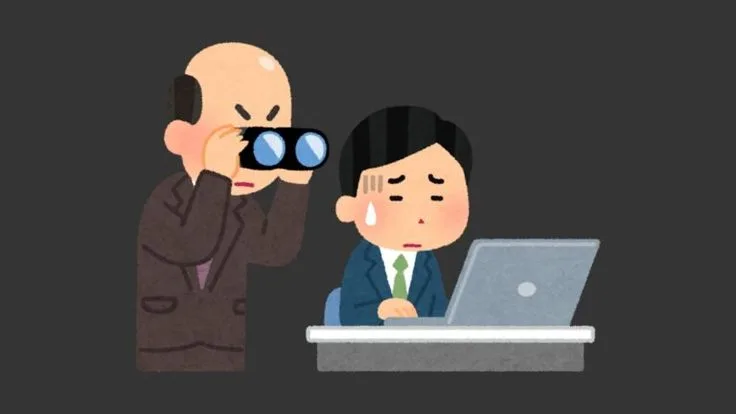
Micromanagement: Few workplace experiences are as reliably demoralizing as working for a micromanager. The constant check-ins, the second-guessing, the corrections of details that don't matter - over time, they erode motivation, damage quality, and drive good people out the door.
Yet micromanagement persists as one of the most common complaints in organizational life.
Understanding why it happens, what it costs, and what actually works to address it - from both sides of the relationship - requires looking at the psychology behind control and the research on what autonomy does for human performance.
What Micromanagement Actually Is
Micromanagement is a management style defined by excessive control over how employees do their work. It involves:
- Requiring frequent and detailed progress updates beyond what the work genuinely requires.
- Making decisions that should legitimately belong to the employee.
- Checking and rechecking work in progress rather than reviewing completed outputs.
- Correcting stylistic or minor details that don't affect the final outcome.
- Undermining employees' authority with their own teams or stakeholders.
The important distinction is between oversight and control. Oversight - setting clear expectations, checking in appropriately, reviewing outputs, providing feedback - is what competent managers do.
Control - directing exactly how each step should be performed, hovering over execution, preventing employee judgment from operating - is micromanagement.
Micromanagement is not defined by the frequency of interaction but by the nature of it. A manager can have daily conversations with an employee and not be micromanaging if those conversations are about progress and problem-solving.
A manager can check in monthly and still be micromanaging if the check-ins involve correcting the employee's method rather than evaluating their results.
The Scale of the Problem
Micromanagement is not a marginal organizational issue - it is endemic. A 2020 survey by Trinity Solutions found that 79% of respondents had experienced micromanagement at some point in their careers, and 69% said they had considered changing jobs because of it.[7]
A follow-up question found that 36% had actually left a position because of micromanagement.
These numbers are consistent with surveys conducted by Accountemps, the Society for Human Resource Management (SHRM), and Gallup across the 2010s and 2020s, which consistently find that management behavior is the single most cited factor in voluntary employee departures.
The economic implication is significant. If a meaningful fraction of voluntary departures are attributable to micromanagement - a conservative reading of the evidence suggests between 25% and 40% - then the direct dollar cost in recruiting, hiring, and onboarding alone is enormous, before you account for the productivity gap during the vacancy and transition period, the institutional knowledge that departs with each employee, and the drag on the engagement levels of those who stay.
Why Managers Micromanage
The common assumption is that micromanagers are power-hungry controllers who enjoy exerting dominance. The research suggests something more complicated and more sympathetic: micromanagement is almost always driven by anxiety, not sadism.
The Anxiety and Control Loop
Managers who micromanage are typically trying to reduce uncertainty. When you cannot predict whether an employee will get something right, close monitoring feels like a reasonable way to reduce the risk of error. The problem is that this logic is correct in the short term and wrong in the long term.
In the short term, close monitoring does catch errors before they compound. But over time it produces employees who wait to be told what to do (because acting independently risks correction), who produce minimally acceptable work rather than creative solutions (because their judgment has been systematically devalued), and who disengage or leave.
The manager's anxiety thus creates the incompetence it feared - and then uses that incompetence to justify further micromanagement. This is a genuine causal loop, not just a rhetorical flourish.
Robert Cialdini's work on commitment and consistency (1984) is relevant here: once a manager has established a pattern of intervention, each intervention reinforces the belief that intervention is necessary. The monitoring becomes self-justifying.
The Skill Transition Problem
Many micromanagers were promoted from individual contributor roles where detailed, precise execution was the core competency. As a software developer, journalist, or accountant, your value came from exactly how you did things. That habit of detailed personal involvement does not automatically switch off when you become a manager.
This transition problem is well-documented. Linda Hill's landmark research at Harvard Business School, published in her 2003 book Becoming a Manager, followed 19 newly appointed managers through their first year and found that the most common error was attempting to continue performing tasks directly rather than achieving results through others.
Hill's subjects consistently underestimated how different the managerial role was from the role that had earned them the promotion.[3]
The emotional identity investment in being the skilled technical expert made letting go genuinely difficult, not just behaviorally awkward.
Management requires a different competency set: clear goal-setting, assessment of others' capabilities, delegation calibration, and the ability to evaluate work by outcomes rather than process. These skills are rarely taught in the same training programs that produced the individual contributor's excellence.
The resulting dynamic is common: a high performer gets promoted, continues doing things the way that made them successful, and drives their reports toward the exits while wondering why their "high standards" aren't appreciated.
The Organizational Context
Individual manager psychology doesn't fully explain micromanagement. Organizations that punish errors severely, that do not tolerate failure, or that reward managers for visible activity rather than team outcomes create structural incentives for micromanagement.
A manager who will be blamed for any mistake an employee makes has rational reasons to maintain close control.
Research by Amy Edmondson at Harvard Business School on psychological safety identified that teams in low-safety environments - where errors are punished and risk-taking is discouraged - systematically underperform teams in high-safety environments, even when controlling for individual skill levels.
Micromanagement is both a cause and a symptom of low psychological safety: managers who fear accountability tend to create fear-based cultures, which reduce the discretionary effort and creative risk-taking that drive team performance.
What Self-Determination Theory Tells Us
The most rigorous psychological framework for understanding why micromanagement is harmful is self-determination theory (SDT), developed by Edward Deci and Richard Ryan at the University of Rochester over several decades of research.
SDT proposes that three basic psychological needs are universal to human beings:
- Autonomy: The need to experience your behavior as self-chosen and self-directed.
- Competence: The need to feel effective and capable.
- Relatedness: The need to feel connected and meaningful to others.
When these needs are satisfied, intrinsic motivation flourishes - people engage with work because it is meaningful, interesting, and genuinely theirs. When they are thwarted, intrinsic motivation decays and is replaced by extrinsic motivation at best (doing work to avoid negative consequences) or amotivation at worst (disengagement).
Micromanagement is a direct assault on autonomy. When your manager dictates not just what you should achieve but how each step should be performed, autonomy need satisfaction drops sharply. The research consequences are well-documented:
- Reduced creativity and problem-solving
- Reduced persistence in the face of difficulty
- Reduced quality of work (compliance replaces commitment)
- Increased stress and burnout
- Reduced job satisfaction and increased intention to leave
"Decades of research on self-determination theory show that when people feel controlled, they comply - but they stop caring. The manager who controls everything gets exactly what they control and nothing more."
A landmark meta-analysis by Deci, Koestner, and Ryan (1999) across 128 studies found that controlling management behaviors consistently undermined intrinsic motivation, with particularly strong effects when the control was perceived as controlling rather than informational.[1]
A subsequent meta-analysis by Ng, Sorensen, and Eby (2006) covering 219 studies confirmed that job autonomy was one of the strongest predictors of job satisfaction, organizational commitment, and reduced turnover intention.
The Competence Dimension
SDT's second need - competence - is equally affected by micromanagement, in ways that receive less attention. When employees are not permitted to exercise judgment, they do not develop the judgment-making capability they need to become effective independent contributors.
The micromanaged employee is not merely unhappy; they are being professionally stunted.
This creates a compounding problem. The manager who micromanages because they distrust their employee's judgment is actively preventing that employee from developing better judgment. The employee remains dependent not because they lack capability but because the environment has prevented capability from developing.
Over years, this produces a team of adults who are functionally dependent on their manager - exactly the outcome the manager claimed to be guarding against.
The Real Costs of Micromanagement
The costs of micromanagement are both direct and indirect, and they compound over time.
Productivity Loss
Micromanaged employees spend significant time managing upward - preparing unnecessary reports, waiting for approvals, documenting their work in formats designed to satisfy the manager's need for visibility rather than to support the work itself. This is pure efficiency loss.
A 2018 study by Harvard Business Review found that employees at companies with high levels of trust (a proxy measure for low micromanagement) reported 74% less stress, 106% more energy at work, 50% higher productivity, and 13% fewer sick days than employees at low-trust companies.[8]
These are not marginal improvements; they represent a substantial proportion of total productive capacity.
Additionally, when employees know their decisions will be overridden, they rationally reduce the effort they invest in making those decisions. Why think hard about the best solution when the manager is going to replace it with their preferred solution anyway?
The behavioral economics literature calls this learned helplessness - a concept introduced by Martin Seligman in the 1970s, extended to organizational settings by research on controllability and perceived agency at work.[2]
Creativity and Initiative Suppression
Research on creativity consistently finds that it requires psychological safety - the confidence that taking a novel approach will not be punished. Micromanaged environments destroy psychological safety because deviating from expected procedure triggers immediate correction. The result is conservative, incremental work that avoids risk.
Teresa Amabile's research at Harvard Business School on the componential theory of creativity identifies three factors necessary for creative output: domain expertise, creativity-relevant processes, and intrinsic motivation.[5] Micromanagement directly undermines the third factor.
In a series of studies across the 1990s and 2000s, Amabile and colleagues found that workers under conditions of surveillance and external constraint consistently produced less creative work than workers given equivalent tasks with greater autonomy. The effect was not explained by differences in skill or effort.
This is a serious long-term competitive disadvantage for organizations that depend on innovation.
Retention and Recruitment
Gallup's State of the Global Workplace research consistently finds that managers account for at least 70% of the variance in employee engagement.[6] Employees don't leave companies; they leave managers. Micromanagement is repeatedly cited among the top five reasons for voluntary departures.
The turnover cost is substantial. Conservative estimates put the cost of replacing an employee at 50% of annual salary for low-complexity roles and up to 200% for senior or specialized positions, when you account for recruiting, onboarding, the productivity gap during the transition, and the institutional knowledge that walks out the door.
The Society for Human Resource Management (SHRM) placed the average cost per hire at approximately $4,700 in 2022 - a figure that represents only the direct recruiting costs and excludes the full economic impact of vacancies and ramp-up periods.[13]
| Micromanagement Effect | Approximate Research Finding |
|---|---|
| Employees who have experienced micromanagement | 79% (Trinity Solutions, 2020) |
| Employees who considered leaving due to micromanagement | 69% (Trinity Solutions, 2020) |
| Employees who actually left due to micromanagement | 36% (Trinity Solutions, 2020) |
| Productivity improvement in high-trust vs low-trust companies | 50% higher (Zak, HBR 2017) |
| Energy improvement in high-trust vs low-trust companies | 106% more energy (Zak, HBR 2017) |
| Manager variance in employee engagement | 70%+ (Gallup) |
| Replacement cost as % of annual salary | 50-200% depending on role |
| Correlation between autonomy and job satisfaction | Strong positive (Ng et al., 2006 meta-analysis) |
Types of Difficult Management Behavior
Micromanagement comes in different forms, and recognizing which type you're dealing with helps identify the best response.
The Hoverer
The hoverer monitors in real time - appearing at your desk frequently, requiring constant updates, checking email response times. This style is usually driven by the manager's own anxiety and their inability to tolerate uncertainty. It feels invasive because it is: it interrupts work and signals distrust.
Research by Gloria Mark at the University of California, Irvine found that it takes an average of 23 minutes to fully regain focus after an interruption.[10] The hoverer's check-ins are not merely annoying - they are quantifiably destructive to productivity.
The Detail Corrector
The detail corrector focuses not on whether the work achieves its purpose but on whether it's done the way they would do it. A slightly different formatting choice, an alternative phrase, a different sequence of steps - all trigger correction.
This style is often found in managers promoted from specialist roles where precision mattered. The detail corrector frequently has genuine expertise; the problem is not their knowledge but their inability to accept that multiple approaches can achieve the same good outcome.
The Approval Bottleneck
The approval bottleneck requires sign-off on decisions within the employee's normal remit. This creates delays, signals distrust, and prevents the employee from developing decision-making capability. It is often organizationally embedded - some companies require manager approval for decisions that don't warrant it.
The approval bottleneck micromanager is often not acting from malice but from an organizational culture that has not clearly defined decision rights.
Clarity about RACI frameworks (Responsible, Accountable, Consulted, Informed) can sometimes address this structurally without requiring individual behavioral change.
The Credit Absorber
The credit absorber presents team work as their own, provides little credit to employees publicly, and creates an environment where the manager's visibility depends on being seen to be responsible for all outputs. This is micromanagement in its social rather than operational form.
The credit absorber may allow employees significant execution latitude while denying them the professional recognition that would allow them to develop reputations and careers. This is particularly damaging for employees early in their careers who need visible attribution to build professional capital.
The Inconsistent Controller
A fourth pattern deserves attention: the manager who oscillates between periods of neglect and periods of intense micromanagement, often triggered by external pressure from their own leadership. These managers are relatively easy to work with in normal periods but become controlling when they are stressed.
Understanding this pattern helps employees distinguish between a genuinely micromanaging manager and a situationally stressed one - the interventions required are quite different.
How to Deal With a Micromanager
If you're working for a micromanager, the situation is uncomfortable but not necessarily unresolvable. Several evidence-based approaches can help.
Provide Information Before It's Requested
Much micromanagement is driven by the manager's need for certainty about what's happening. You can reduce their anxiety - and your own interruptions - by proactively providing the information they seek. A brief status update before they ask preempts the hovering.
This is not rewarding bad behavior; it's managing the relationship intelligently.
Structuring these updates helps: a brief weekly written summary (two or three bullet points: what was completed, what is in progress, what has blocked or might block) satisfies the informational need in minimal time.
This approach is sometimes called managing up - building the information flow that your manager needs so they don't have to extract it disruptively.
Establish Agreement on Outcomes, Not Methods
Request a conversation explicitly about what "done well" looks like. Get the manager to articulate the output standard, not the method. Once you've met the output standard, you have a principled basis for resisting method-level interference.
This conversation works best when framed as a genuine desire to understand expectations rather than as a challenge to the manager's authority.
In practice, this might sound like: "I want to make sure I'm delivering this in a way that meets your standards. Can we spend 15 minutes defining what a successful outcome looks like for this project? I find I do my best work when I have a clear picture of the destination."
Name the Dynamic Carefully
In some cases, a direct but non-confrontational conversation can help: "I want to make sure I'm doing this in a way that gives you confidence. What would help you trust that this is on track without needing to check in as often?" This invites the manager to reflect on their behavior without triggering defensiveness.
Research on nonviolent communication (Marshall Rosenberg's framework) supports the framing of requests in terms of needs rather than complaints.[14]
Saying "I find I work most effectively with focused blocks of time and fewer interruptions - would it work to have a structured 15-minute check-in each morning instead of ad-hoc updates throughout the day?" is more likely to succeed than describing the current pattern as problematic.
Build Trust Through Visible Reliability
Some micromanagement is a response to genuine uncertainty about a new employee's capabilities.
Demonstrating reliability consistently - meeting commitments on time, communicating proactively about risks, asking good questions rather than making silent errors - reduces the uncertainty that drives oversight.
A six-month track record of reliability provides a factual basis for the conversation about reduced oversight.
Know When to Escalate or Exit
If the micromanagement is causing genuine harm to your performance, wellbeing, or career development, and direct approaches haven't worked, escalation to HR or a skip-level manager may be warranted.
This is a significant step and should be taken with a documented record of specific incidents and the attempts made to address them directly.
If organizational culture makes micromanagement endemic rather than individual - if the micromanager is simply modeling the behavior of their own leadership - exit may be the most rational response. A culture of control does not typically reform from below.
How to Stop Micromanaging If You Are a Manager
Changing a micromanagement pattern requires addressing both behavior and the anxiety that drives it.
Shift to Output-Based Management
Define clearly what good output looks like - measurable, specific, time-bound - and then step back from how the output is achieved. This requires clarity on standards that many managers have never articulated. The discipline of defining what "done well" means is itself valuable.
The OKR framework (Objectives and Key Results), popularized by Intel and Google, formalizes this approach at the organizational level: define the outcome (the Objective) and the measurable indicators that would confirm you've achieved it (the Key Results), then give teams the autonomy to determine how to reach those results.
The framework is not magic, but it creates a shared language for outcome-based accountability that makes micromanagement both less necessary and more obviously counterproductive.
Delegate Using the Situational Leadership Model
Ken Blanchard and Paul Hersey's Situational Leadership model (1969, updated multiple times since) provides a practical framework for calibrating oversight to individual capability and commitment.[9] The model distinguishes four development levels:
- D1: Low competence, high commitment (new to the task but enthusiastic)
- D2: Some competence, low commitment (learning the task but finding it difficult)
- D3: Moderate-to-high competence, variable commitment (capable but inconsistent)
- D4: High competence, high commitment (expert and self-directed)
The matching leadership style for D1 is directing (high task guidance, which looks like appropriate oversight). The style for D4 is delegating (high autonomy). Applying a D1 leadership style to a D4 employee is micromanagement.
The value of the model is that it legitimizes the question: what level is this person at, on this task, right now? The answer calibrates appropriate oversight rather than applying a uniform level of control.
Build Trust Incrementally
Start by giving employees full autonomy over lower-stakes decisions. Observe the outcomes. As trust accumulates - which it typically does when employees have the competence and the space - extend autonomy to progressively higher-stakes decisions. Trust builds faster through experience than through intention.
A structured approach is useful here. Create an explicit list of decision categories and map each to whether the employee should decide independently, consult you before deciding, or escalate for your decision. Review and update this mapping quarterly as capability is demonstrated.
Distinguish Your Preferences From Requirements
Many micromanagement interventions are really the manager's preferences imposed as requirements. Ask: if the employee did this a different way and achieved the same outcome, would that actually be a problem? If not, it is a preference - and you don't get to require your preferences.
This distinction is important both behaviorally and cognitively. Recognizing "this is a preference, not a requirement" in the moment is a skill that can be developed with practice.
Executive coaches working with managers on micromanagement often use this question as a real-time intervention: before correcting an employee's method, pause and ask yourself whether the outcome would be materially different. If not, the correction is serving you, not the work.
Address the Underlying Anxiety Directly
If the drive to control is rooted in deep anxiety about outcomes, behavioral changes to management style will be partially effective at best. Working with an executive coach, therapist, or trusted mentor to understand and address the anxiety that drives the behavior tends to produce more durable change.
This anxiety often connects to deeper professional identity questions: "If I'm not the expert who knows how everything should be done, what value am I adding as a manager?" Helping managers build a new professional identity around their capacity to develop others - and finding genuine satisfaction in team success rather than personal execution - is the core work of management development at this level.
The Organizational Dimension: When the System Is the Problem
It would be incomplete to address micromanagement purely as an individual manager's dysfunction. Organizations create the conditions for micromanagement in several structural ways that deserve explicit attention.
Accountability Without Authority
When managers are held accountable for outcomes they cannot fully control - and have not been given the authority to manage the people and processes that determine those outcomes - micromanagement becomes a rational survival strategy.
A manager blamed for every mistake made by people they did not hire, cannot performance-manage, and do not control the priorities of will, rationally, try to control as much as possible.
The fix is organizational: matching accountability with authority. Managers held accountable for team performance must have the authority to hire, set priorities, and manage performance within their teams. Where this alignment is absent, the micromanagement that results is a symptom of an organizational design problem.
Error-Punishment Cultures
Organizations that publicly punish errors - in all-hands meetings, in performance reviews, through sudden departures with unexplained messaging - signal that mistakes are career-ending.
In these environments, the rational managerial response is to minimize the probability of error by maximizing control. The result is an organization-wide pattern of micromanagement.
Edmondson's (2019) research on psychological safety and error reporting in medical settings found that teams with higher psychological safety actually reported more errors - not because they made more errors, but because they felt safe enough to report them, learn from them, and prevent recurrence.[4]
Organizations that measure error reporting as a leading indicator of a healthy learning culture, rather than as evidence of incompetence, create the conditions in which managers can tolerate the uncertainty necessary to give employees genuine autonomy.
The Management Development Gap
Most organizations promote their best individual contributors into management without providing meaningful management development.
A software engineer with six years of strong individual contribution is promoted to engineering manager and given access to a 90-minute "management fundamentals" workshop and perhaps a new-manager Slack channel. The structural expectation is that they will figure out the rest.
The evidence that management skills can be developed is strong - research by Zenger and Folkman (2009) on leadership development found that managers who received regular feedback on their management behaviors showed significant improvements in employee engagement scores within 12 months.[12]
The problem is not manager capability; it is investment in management development.
The Costs of Replacing Micromanagement With Abandonment
A final point deserves emphasis. The goal is not to eliminate oversight but to calibrate it correctly.
The response to micromanagement pathologies sometimes produces the opposite failure: managers who, chastened by feedback about over-control, retreat from appropriate oversight and become invisible leaders who provide no direction, no feedback, and no accountability.
Hands-off management has its own documented costs. Harter, Schmidt, and Hayes (2002) found in a Gallup study of 7,939 business units that both low and high extremes of management engagement were associated with poor outcomes; the optimal was active, present management that provided direction and feedback without controlling execution.[11]
Gallup's Q12 engagement measure - which includes items like "In the last seven days, I have received recognition or praise for doing good work" and "My supervisor, or someone at work, seems to care about me as a person" - measures a form of engagement that requires active management presence, not less management.
The goal is leadership that sets clear direction, provides genuine feedback on results, creates the conditions for employees to do their best work, and trusts them to determine how to get there.
This is neither micromanagement nor abandonment - it is what the research has consistently shown that people need from their managers to perform, grow, and stay.
Sources & Further Reading
- Deci, E. L., Koestner, R., and Ryan, R. M. (1999). A meta-analytic review of experiments examining the effects of extrinsic rewards on intrinsic motivation. Psychological Bulletin, 125(6), 627-668.
- Ng, T. W. H., Sorensen, K. L., and Eby, L. T. (2006). Locus of control at work: A meta-analysis. Journal of Organizational Behavior, 27(8), 1057-1087.
- Hill, L. A. (2003). Becoming a Manager: How New Managers Master the Challenges of Leadership. Harvard Business School Press.
- Edmondson, A. C. (2019). The Fearless Organization: Creating Psychological Safety in the Workplace for Learning, Innovation, and Growth. Wiley.
- Amabile, T. M., and Kramer, S. J. (2011). The Progress Principle: Using Small Wins to Ignite Joy, Engagement, and Creativity at Work. Harvard Business Review Press.
- Gallup. (2023). State of the Global Workplace Report. gallup.com
- Trinity Solutions. (2020). My Way or the Highway: The Micromanagement Survival Guide. trinitysolutions.com
- Zak, P. J. (2017). The neuroscience of trust. Harvard Business Review, January-February 2017.
- Blanchard, K., and Hersey, P. (1969, revised). Situational Leadership Model. Center for Leadership Studies.
- Mark, G., Gudith, D., and Klocke, U. (2008). The cost of interrupted work: More speed and stress. CHI 2008 Conference Proceedings.
- Harter, J. K., Schmidt, F. L., and Hayes, T. L. (2002). Business-unit-level relationship between employee satisfaction, employee engagement, and business outcomes. Journal of Applied Psychology, 87(2), 268-279.
- Zenger, J., and Folkman, J. (2009). The Extraordinary Leader: Turning Good Managers into Great Leaders. McGraw-Hill.
- SHRM. (2022). SHRM Benchmarking: Talent Acquisition Costs. shrm.org
- Rosenberg, M. B. (2003). Nonviolent Communication: A Language of Life. PuddleDancer Press.