
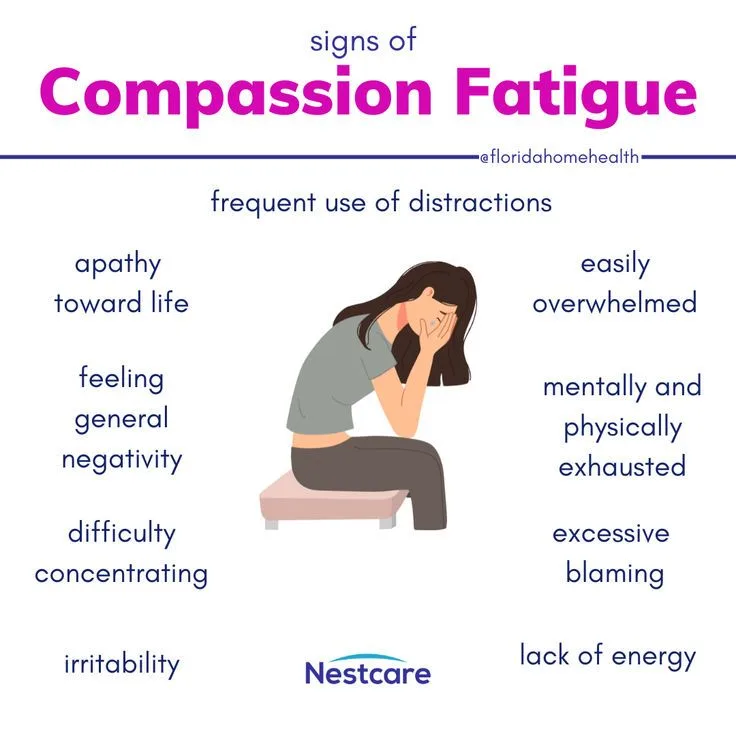
Compassion fatigue is a state of emotional and physical exhaustion that diminishes a person's capacity for empathy, resulting from prolonged exposure to the suffering, trauma, or distress of others.
First formally described by Charles Figley in 1995 as a form of secondary traumatic stress, compassion fatigue is not a character flaw or a failure of professionalism - it is a predictable occupational hazard for anyone whose work requires sustained empathic engagement with human pain.
It affects nurses, therapists, social workers, first responders, caregivers, and many others whose daily reality involves absorbing the weight of what other people endure.
There is a particular kind of exhaustion that people in helping professions describe - not the ordinary tiredness of a long week, but something deeper.
A nurse who has held the hands of dying patients for twenty years may find that one morning she cannot cry anymore, not because she does not care, but because she has cared so much for so long that the well has run dry.
A social worker who has listened to accounts of abuse and neglect begins having nightmares that are not quite her own.
A therapist notices, with some alarm, that she is already composing her grocery list during a client's most vulnerable disclosure.
This article explains the science behind compassion fatigue, who is most vulnerable, how it differs from burnout, and what the research says about recovery - at both the individual and organizational level.
The Origins of the Concept
The term "compassion fatigue" first appeared in the nursing literature when Carla Joinson (1992) used it to describe a unique form of burnout she observed among emergency department nurses. But it was Charles Figley, a psychologist and professor at Tulane University, who developed the formal theoretical model.
His 1995 edited volume Compassion Fatigue: Coping with Secondary Traumatic Stress Disorder in Those Who Treat the Traumatized established the construct and its relationship to trauma theory.
Figley distinguished primary traumatic stress - the response of someone directly exposed to a traumatic event - from secondary traumatic stress (STS), the response of someone who learns about or witnesses others' traumatic experiences.
He observed that helpers who work with trauma survivors could develop responses that mirrored the symptoms of post-traumatic stress disorder, without having been directly traumatized themselves.
"Compassion fatigue is the natural consequent behaviors and emotions resulting from knowing about a traumatizing event experienced by a significant other - the stress resulting from helping or wanting to help a traumatized or suffering person." - Charles Figley, 1995
The word "natural" in Figley's definition deserves emphasis. Compassion fatigue is not a sign of weakness. It is the predictable consequence of doing deeply human work over extended periods.
The capacity to feel what others feel - which makes someone effective as a healer, counselor, or caregiver - is the very mechanism that, over time, creates vulnerability.
Beth Hudnall Stamm extended this work by developing the Professional Quality of Life (ProQOL) scale, now the most widely used assessment instrument in the field, freely available at proqol.org. The ProQOL measures three dimensions: compassion satisfaction (the positive rewards of helping), burnout, and secondary traumatic stress.
Its widespread adoption in research and clinical settings has made it possible to track compassion fatigue across professions and populations with standardized data.
Who Is at Risk
Helping Professions: The Documented Core
The populations with the best-documented rates of compassion fatigue share a common characteristic: their work requires sustained, repeated exposure to others' suffering or trauma.
Nurses and physicians in emergency, oncology, intensive care, and palliative settings consistently show high rates on the ProQOL scale.
A 2017 meta-analysis published in the International Journal of Nursing Studies (Sorenson, Bolick, Wright, and Hamilton) found compassion fatigue prevalence rates ranging from 7.3% to 40% across nursing samples, with higher rates in settings involving terminal illness or pediatric trauma.
During the COVID-19 pandemic, these numbers surged.
A 2021 study in the Journal of Nursing Management (Ruiz-Fernandez et al.) found that 64% of nurses in COVID units reported moderate to high secondary traumatic stress - nearly double the pre-pandemic baseline.
Psychotherapists and counselors are exposed to traumatic material through client narratives over extended periods.
A 2010 study in Professional Psychology: Research and Practice (Craig and Sprang) found that therapists who worked with trauma survivors showed significantly higher secondary traumatic stress scores than those who did not, regardless of years of experience.
Notably, therapists using evidence-based trauma treatments (such as cognitive processing therapy) actually reported lower compassion fatigue than those using less structured approaches, suggesting that having a clear therapeutic framework may be protective.
Social workers, particularly those in child protective services, combine high caseloads, bureaucratic frustration, secondary exposure to abuse and neglect, and limited professional support.
A 2018 survey by the National Association of Social Workers found that 75% of social workers reported experiencing at least moderate levels of secondary traumatic stress in the preceding year.
Turnover rates in child welfare exceed 30% annually in many jurisdictions, with compassion fatigue cited as a primary driver.
First responders - paramedics, firefighters, police officers - are exposed to acute traumatic scenes regularly. Unlike mental health professionals who hear about trauma retrospectively, first responders often witness it directly, creating additional risk of primary as well as secondary traumatic stress.
A 2019 study in the Journal of Traumatic Stress (Jones, Nagel, McSweeney, and Curran) found that 34% of paramedics met screening criteria for PTSD, with secondary traumatic stress from patient encounters a significant contributing factor.
Less Obvious Populations
Research has expanded the compassion fatigue lens well beyond traditional helping professions:
Customer service workers who handle distressed, grieving, or angry customers - particularly in healthcare billing, insurance claims, and crisis hotlines - experience a form of emotional labor that shares characteristics with therapeutic work.
They absorb distress without the clinical training or institutional support that helps licensed professionals process it.
Journalists and documentary filmmakers who cover war, disaster, or human rights abuses. The Reuters Institute and Dart Center for Journalism and Trauma have produced guidelines specifically addressing secondary traumatic stress in journalists, acknowledging that "bearing witness" carries psychological costs.
A 2015 study by the Dart Center found that 80% of journalists covering conflict zones reported at least one symptom of secondary traumatic stress.
Animal welfare workers in shelters and rescue organizations face euthanasia of animals, hoarding cases, and animal cruelty investigations.
A 2012 study in the Journal of Applied Animal Welfare Science (Figley and Roop) found high rates of compassion fatigue alongside high rates of compassion satisfaction - a pattern that reflects the emotional complexity of caring work.
Family caregivers providing unpaid care to chronically ill, disabled, or elderly relatives. The informal caregiver population is enormous - estimated at over 53 million in the United States according to AARP's 2020 Caregiving in the U.S.
report - and often invisible to research and intervention programs. These caregivers lack organizational support structures, rarely have access to supervision, and frequently sacrifice their own health in the process.
Compassion Fatigue vs. Burnout: A Critical Distinction
These two conditions are frequently conflated, but distinguishing them matters for intervention. Treating compassion fatigue as if it were burnout - or vice versa - leads to incomplete recovery, because the underlying mechanisms differ.
Burnout
Burnout, as described by Christina Maslach and Michael Leiter (1997) in their foundational research, develops from chronic, unresolved workplace stress. It is characterized by three dimensions:
- Emotional exhaustion: Feeling depleted of emotional resources
- Depersonalization: Developing a detached, cynical attitude toward the people one serves
- Reduced personal accomplishment: Feeling ineffective and doubting one's own competence
Burnout develops slowly over months or years. Its causes are largely structural: excessive workload, lack of control, inadequate resources, fairness violations, value conflicts.
Critically, burnout is not specifically triggered by empathic engagement - a highly empathic person can burn out, but so can someone with low empathy, given sufficiently poor working conditions.
A software engineer with unreasonable deadlines and no autonomy can burn out without ever being exposed to another person's trauma.
Compassion Fatigue
Compassion fatigue is specifically rooted in empathic engagement with others' suffering. The key differences:
- Onset: Can develop rapidly following acute exposure to traumatic material, rather than accumulating slowly over years
- Symptoms: Includes intrusive traumatic imagery and re-experiencing - PTSD-adjacent symptoms - not typically present in burnout
- Mechanism: Specifically linked to vicarious trauma exposure rather than general work stress
- Paradox of empathy: Highly empathic individuals may be at greater risk, not less
In clinical practice, the two conditions frequently coexist. A nurse experiencing compassion fatigue is also likely working in an environment with the structural conditions for burnout: understaffing, high patient acuity, inadequate organizational support.
Treatment that addresses only one dimension without the other is likely to be incomplete.
| Feature | Burnout | Compassion Fatigue |
|---|---|---|
| Core cause | Chronic workplace stress | Empathic exposure to others' trauma |
| Onset speed | Gradual (months to years) | Can be rapid (days to weeks) |
| Primary emotional quality | Exhaustion, cynicism | Numbing, intrusion, hypervigilance |
| Trauma symptoms | Rare | Common (nightmares, flashbacks, avoidance) |
| Empathy as risk factor | Not specifically | Yes - high empathy increases vulnerability |
| Who is vulnerable | Anyone in high-stress work | Those in empathic/helping roles specifically |
| Primary intervention | Structural workplace changes | Trauma processing + self-care + workload management |
Understanding this distinction matters practically. A burned-out social worker needs better working conditions - reduced caseload, more autonomy, organizational support.
A social worker with compassion fatigue needs those things and structured opportunities to process vicarious trauma, peer support, and possibly clinical intervention for intrusive symptoms.
An organization that offers yoga classes and wellness days while maintaining crushing caseloads has addressed neither condition.
Symptoms and Recognition
Compassion fatigue presents across emotional, cognitive, behavioral, and physical domains. One of the challenges in recognizing it is that the symptoms often develop gradually and are easy to normalize - "I'm just tired," "This is just what the job is like."
Emotional Symptoms
- Reduced empathy or feeling emotionally numb toward clients, patients, or those one serves
- Emotional exhaustion that does not resolve with rest or vacation
- Feeling overwhelmed by the sheer volume of others' problems
- Irritability, anger, or resentment toward those one is supposed to help
- A pervasive sense of hopelessness about one's ability to make a difference
- Dread before shifts or client sessions that once felt meaningful
Cognitive Symptoms
- Intrusive thoughts or images related to clients' traumatic experiences - this is the hallmark symptom that distinguishes compassion fatigue from ordinary work stress
- Difficulty concentrating at work or during personal time
- Nightmares with content related to professional trauma exposure
- Questioning the meaning or value of one's work
- Rumination about difficult cases outside of work hours
- Hypervigilance about safety - seeing danger everywhere after hearing about trauma repeatedly
Behavioral Symptoms
- Avoidance of clients, patients, or situations associated with traumatic material
- Reduced professional performance or increasing errors
- Increased absenteeism or chronic lateness
- Over-involvement with certain clients (losing professional boundaries) or under-involvement (going through the motions)
- Withdrawal from colleagues, supervisors, or personal support systems
- Increased use of alcohol, substances, or other numbing behaviors
Physical Symptoms
- Chronic fatigue not explained by sleep quantity
- Somatic complaints: headaches, gastrointestinal disturbance, chronic muscle tension
- Disrupted sleep - difficulty falling asleep, staying asleep, or vivid nightmares
- Increased vulnerability to illness due to chronic stress activation
- Changes in appetite and weight
The ProQOL scale remains the gold standard for self-assessment. It takes approximately ten minutes to complete and provides scores across compassion satisfaction, burnout, and secondary traumatic stress.
Many organizations now administer it annually as part of employee wellness programs, though the tool is most useful when results are genuinely acted upon rather than collected and filed.
The Neuroscience: Why Compassion Work Is Cognitively Costly
Understanding why compassion fatigue develops requires understanding what happens in the brain during empathic engagement. Caring for others is not a passive act - it activates neural systems in ways that carry real physiological cost.
Mirror Neuron Systems and Affective Sharing
Mirror neurons - neural systems active both when one performs an action and when one observes another performing the same action - are implicated in the affective sharing component of empathy.
When a therapist hears a client describe a traumatic experience, regions of the therapist's own nervous system associated with that experience become activated.
This is not metaphorical - neuroimaging studies show measurable activation in pain-related brain regions when subjects observe others in pain (Singer et al., 2004, Science).
This neural mirroring is, under normal circumstances, a feature: it enables genuine understanding and attunement. But it means that sustained exposure to others' distress is not cognitively neutral.
The clinician is not merely processing information - she is, in a neurological sense, partially experiencing the distress she is hearing about.
Allostatic Load
Allostatic load - the accumulated wear on the body from sustained stress activation, a concept developed by Bruce McEwen (1998) - accrues from empathic work as surely as from direct stress exposure.
The hypothalamic-pituitary-adrenal (HPA) axis, which governs the stress response, does not distinguish between "my trauma" and "trauma I am witnessing in someone I care about." Chronic activation of cortisol release, elevated heart rate, and inflammatory markers occurs in caregivers and helping professionals at rates comparable to those experiencing direct chronic stress.
Empathic Distress vs. Compassionate Care
Research by Tania Singer and Olga Klimecki (2014) at the Max Planck Institute explored a critical distinction: empathic distress (feeling others' pain as one's own, leading to withdrawal and avoidance) versus compassionate care (recognizing others' pain and being motivated to help, while maintaining self-other distinction).
Using fMRI, Singer's team demonstrated that these two responses activate different brain networks. Empathic distress activates the anterior insula and anterior midcingulate cortex - regions associated with negative affect and pain processing.
Compassionate care activates the medial orbitofrontal cortex and ventral striatum - regions associated with positive affect, affiliation, and reward.
The practical implication is profound: teaching practitioners to shift from empathic distress to compassionate care - to care without fusing with the other person's pain - may be one of the most effective protective strategies against compassion fatigue. This is not detachment.
It is a different mode of caring that is both more sustainable and, arguably, more effective.
Recovery and Prevention: What the Evidence Supports
Individual Interventions
Structured self-care is not a platitude when it is taken seriously. Research on compassion fatigue consistently finds that practitioners who maintain adequate sleep, regular physical activity, meaningful social connections outside of work, and activities that provide genuine rest and renewal show lower rates of secondary traumatic stress.
The critical caveat: these practices are most effective when they are scheduled and protected, not aspirational. A self-care plan that exists only on paper accomplishes nothing.
Mindfulness-based stress reduction (MBSR) - the eight-week program developed by Jon Kabat-Zinn at the University of Massachusetts Medical Center - has been tested in numerous studies with healthcare workers.
A 2016 systematic review in Mindfulness (Burton, Burgess, Dean, Koutsopoulou, and Hugh-Jones) found significant reductions in anxiety, burnout, and secondary traumatic stress following MBSR completion.
The mechanism appears to involve strengthening the capacity for present-moment awareness without reactive identification - precisely the skill needed to maintain self-other distinction during empathic engagement.
Professional supervision and peer support provide structured opportunities to process traumatic material with colleagues who understand the context.
Clinical supervision - regular meetings with a more experienced practitioner to discuss caseload and emotional responses - is standard in mental health and social work but is inconsistently implemented.
A 2014 study in Traumatology (Knight) found that therapists receiving regular clinical supervision showed 40% lower compassion fatigue scores than those without supervision access.
Trauma-focused therapy (such as cognitive processing therapy or EMDR) can address secondary traumatic stress when it has progressed to clinical severity, treating the intrusive imagery, avoidance, and hyperarousal symptoms directly. This is not weakness - it is appropriate clinical intervention for a condition with clinical symptoms.
Compassion cultivation training, based on the research of Singer and others, teaches practitioners to consciously shift from empathic distress to compassionate care.
Programs such as the Stanford Compassion Cultivation Training (CCT) have shown promising results in reducing secondary traumatic stress while maintaining or increasing compassion satisfaction.
Organizational Interventions
Individual coping strategies address symptoms without addressing causes if the organizational environment continues to generate excessive compassion fatigue exposure. The most effective interventions combine individual and organizational components.
Workload management is fundamental. Excessive caseloads intensify exposure beyond what any individual coping strategy can sustainably manage. Research on social worker caseload size consistently finds a dose-response relationship: more clients means more secondary traumatic stress.
An organization that mandates self-care while maintaining impossible caseloads is engaged in what researchers call institutional gaslighting - placing the burden of a structural problem on individuals.
Critical incident debriefing: Structured debriefing after particularly difficult cases - death of a patient, disclosure of serious abuse, mass casualty events - provides a contained space to process what happened and prevents the suppression that feeds rumination.
The Critical Incident Stress Management (CISM) model, developed by Jeffrey Mitchell (1983), remains widely used, though its effectiveness depends heavily on implementation quality.
Organizational culture: Environments where discussing the emotional impact of work is normalized - rather than treated as weakness or unprofessionalism - show lower rates of compassion fatigue. Leadership behavior is the strongest driver of this culture.
Managers who acknowledge the emotional costs of the work, who check in on their teams' emotional state rather than only their productivity, create permission for practitioners to do the same.
Rotation and variety: Organizations that rotate staff through high-exposure and lower-exposure assignments - rather than leaving the same people in the most traumatic roles indefinitely - reduce cumulative exposure. This is standard practice in military deployment but rare in civilian healthcare and social services.
Access to confidential support: Employee assistance programs, confidential counseling, and clear pathways to mental health support reduce barriers to help-seeking. Many helping professionals carry their own stigma around using support services, which organizational culture can either reinforce or challenge.
Compassion Satisfaction: The Other Side of the Coin
Compassion fatigue is not inevitable. The same empathic engagement that creates vulnerability to secondary traumatic stress also generates compassion satisfaction - the positive, meaningful rewards of helping others effectively.
The midwife who witnesses the joy of a safe delivery, the therapist who sees a client reclaim their life, the firefighter who carries a child to safety - these experiences produce profound meaning.
Research on the ProQOL scale consistently finds that compassion satisfaction and compassion fatigue are not simply opposite ends of a single dimension. Many practitioners report both - high compassion satisfaction and significant secondary traumatic stress - simultaneously.
The capacity for compassion satisfaction appears to be a protective factor: practitioners who find genuine meaning and reward in their work sustain themselves through difficult periods more effectively than those who experience only the cost.
This finding has practical implications for career decisions. A professional experiencing high compassion fatigue with low compassion satisfaction may need to leave the role.
A professional experiencing high compassion fatigue with high compassion satisfaction may benefit more from better support structures, reduced caseload, and trauma processing - interventions that reduce the cost while preserving the meaning.
Compassion Fatigue in the Age of Information Overload
The digital age has introduced a phenomenon that researchers are only beginning to study: mass compassion fatigue in general populations. Social media exposes millions of people daily to traumatic imagery, disaster coverage, and personal accounts of suffering at a scale unprecedented in human history.
The 24-hour news cycle, algorithmic amplification of distressing content, and the emotional intimacy of video and first-person narrative create conditions for secondary traumatic stress far beyond traditional helping professions.
Susan Moeller's (1999) book Compassion Fatigue: How the Media Sell Disease, Famine, War and Death documented how repeated exposure to humanitarian crises through media led to public numbness and disengagement.
More recently, researchers have explored how social media platforms amplify this effect by making traumatic content inescapable and algorithmically persistent.
This expansion of the compassion fatigue concept raises important questions about emotional regulation in an era of constant connectivity, and about the responsibility of platforms and media organizations in managing the psychological costs of bearing witness at scale.
Conclusion
Compassion fatigue is the cost of a capacity that is also among human beings' most valuable: the ability to recognize and respond to others' suffering. The healthcare worker, the therapist, the social worker, the caregiver - these are people whose work requires sustained, repeated, close contact with pain, trauma, and loss.
That contact is not neurologically neutral, not emotionally free, and not infinitely sustainable without deliberate support.
Understanding compassion fatigue does not resolve the ethical tension at the heart of helping professions: that caring deeply may eventually diminish the capacity to care. But it offers something essential - the knowledge that this cost is predictable, recognizable, and amenable to intervention.
You cannot pour from an empty vessel. The cliche exists because it is true. Treating the sustainability of care as a professional and organizational responsibility - not merely a personal one - is the most honest response to what the research consistently shows: that compassion fatigue is not a weakness in the individual but a cost of the work, and managing it is part of doing the work well.
The most effective approach combines individual practices (mindfulness, structured self-care, peer support), organizational reforms (manageable caseloads, leadership that models vulnerability, protected time for reflection), and cultural change (normalizing emotional honesty in professional settings).
None of these alone is sufficient. Together, they create conditions in which the people who care for others can sustain their capacity to do so - not through stoic endurance, but through systems designed to make compassion sustainable.
Sources & Further Reading
- Figley, C.R. (Ed.). Compassion Fatigue: Coping with Secondary Traumatic Stress Disorder in Those Who Treat the Traumatized. Brunner/Mazel, 1995.
- Joinson, C. "Coping with Compassion Fatigue." Nursing, 22(4), 1992.
- Stamm, B.H. The Concise ProQOL Manual. ProQOL.org, 2010.
- Sorenson, C., Bolick, B., Wright, K., & Hamilton, R. "Understanding Compassion Fatigue in Healthcare Providers: A Review of Current Literature." Journal of Nursing Scholarship, 48(5), 2016.
- Singer, T. & Klimecki, O.M. "Empathy and Compassion." Current Biology, 24(18), 2014.
- Maslach, C. & Leiter, M.P. The Truth About Burnout: How Organizations Cause Personal Stress and What to Do About It. Jossey-Bass, 1997.
- Craig, C.D. & Sprang, G. "Compassion Satisfaction, Compassion Fatigue, and Burnout in a National Sample of Trauma Treatment Therapists." Psychotraumatology, 1, 2010.
- McEwen, B.S. "Protective and Damaging Effects of Stress Mediators." New England Journal of Medicine, 338(3), 1998.
- Moeller, S.D. Compassion Fatigue: How the Media Sell Disease, Famine, War and Death. Routledge, 1999.
- Burton, A., Burgess, C., Dean, S., Koutsopoulou, G.Z., & Hugh-Jones, S. "How Effective Are Mindfulness-Based Interventions for Reducing Stress Among Healthcare Professionals?" Stress and Health, 33(1), 2017.
- Ruiz-Fernandez, M.D., et al. "Compassion Fatigue, Burnout, Compassion Satisfaction and Perceived Stress in Healthcare Professionals During the COVID-19 Health Crisis in Spain." Journal of Clinical Nursing, 29(21-22), 2020.
- Kabat-Zinn, J. Full Catastrophe Living: Using the Wisdom of Your Body and Mind to Face Stress, Pain, and Illness. Bantam, 2013 (revised edition).