
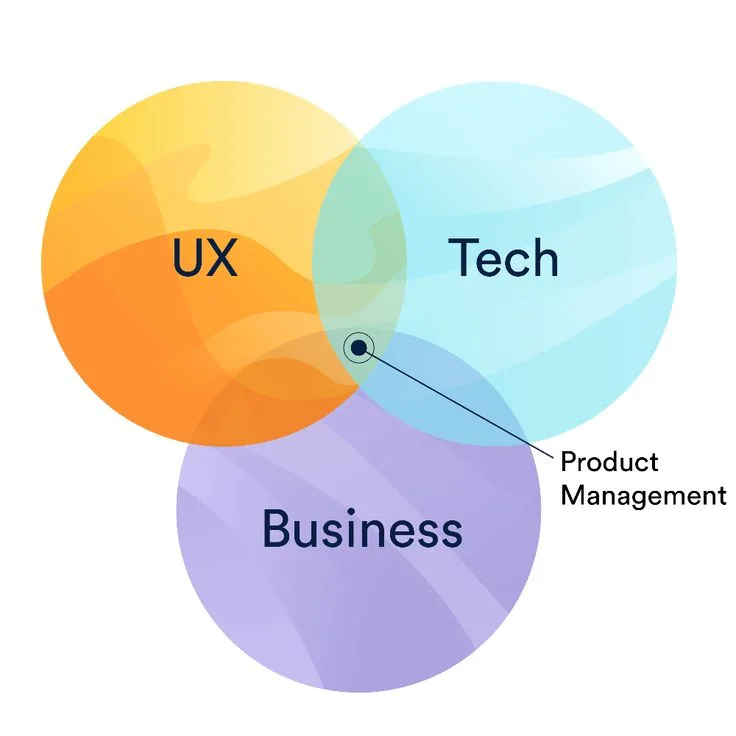
AI is transforming product management along two simultaneous axes: what PMs build (products that incorporate large language models, recommendation systems, and agentic AI) and how PMs work (using AI tools for drafting, research synthesis, data analysis, and the repetitive knowledge work that once consumed the majority of a PM's week).
For practicing product managers in 2025, the honest assessment is that the role is changing faster than most career guides acknowledge, and the PMs who are thriving engaged with the change early rather than waiting for clarity.
This article examines both dimensions of the shift - AI as a product domain and AI as a productivity tool - with current data on adoption rates, compensation premiums, the skills that are genuinely new versus overhyped, and what the career implications are for PMs at different levels and stages.
Product management has absorbed significant disruptions before - the shift to mobile, the rise of data-driven experimentation, the move from feature roadmaps to outcome-oriented planning. Each shift changed what good PMs did and what skills they needed, without eliminating the role itself.
The current AI disruption is broader and more structural than any of those. It is simultaneously changing the artifacts PMs produce, the speed at which they produce them, and the fundamental skill requirements for building products that behave probabilistically rather than deterministically.
"The PM role will not be automated. But the PM who does not use AI will be replaced by the PM who does." - attributed to multiple product leaders across the product management community, 2024
Key Definitions
LLM (Large Language Model): A type of AI model trained on large text datasets, capable of generating, summarizing, and analyzing text. GPT-4, Claude, and Gemini are examples. LLMs are the foundation of most consumer and enterprise AI products shipped in 2023-2025.
Probabilistic output: An output from an AI system that is stochastic rather than deterministic - meaning the system produces statistically likely results rather than exact, rule-based answers. Managing user expectations around probabilistic outputs is a core challenge in AI product design.
Hallucination: AI-generated content that is factually incorrect or fabricated but presented with apparent confidence. A known failure mode of LLMs that product managers must account for in user experience and communication design.
AI safety: The field focused on ensuring AI systems behave reliably, safely, and in alignment with human values. For product managers building AI features, AI safety concerns include preventing harmful outputs, preventing misuse, and ensuring the AI system does not produce discriminatory content.
Responsible AI: A framework for deploying AI products ethically, covering fairness, transparency, accountability, privacy, and safety. Many large technology companies have published responsible AI principles that product managers are increasingly expected to apply in product decisions.
Agentic AI: AI systems that can take sequences of actions autonomously, using tools and making multi-step decisions without continuous human input. Product decisions for agentic AI are significantly more complex than for generative AI assistants, because errors compound across action chains.
Foundation model: A large-scale AI model trained on broad data that can be adapted to many downstream tasks. GPT-4, Claude, Gemini, and Llama are all foundation models. Most enterprise AI products today are built on top of foundation models via APIs rather than trained from scratch.
How AI Is Changing PM Work: Overview
| PM Work Category | Pre-AI Time Allocation | AI-Augmented Reality | Net Effect |
|---|---|---|---|
| PRD and spec drafting | 4-6 hours for first draft | 30-60 min to review AI draft | Time shifted to judgment work |
| Customer research synthesis | 3-5 hours post-interview | 20-30 min reviewing AI synthesis | Breadth up, depth risk |
| Competitive analysis | 2-4 hours preliminary research | AI generates baseline; PM validates | Faster but requires validation |
| Meeting documentation | Manual note-taking during/after | Automated transcription and summaries | Near-fully automated |
| Strategic decision-making | High PM time investment | Unchanged - AI cannot replace | Core PM value preserved |
| Stakeholder influence | High PM time investment | Unchanged - AI cannot replace | Core PM value preserved |
| AI feature specification | Not previously required | New skill requirement | Net new capability needed |
| Model quality evaluation | Not previously required | New skill requirement | Net new capability needed |
| Prompt engineering | Not previously required | New skill requirement | Net new capability needed |
| Regulatory and ethics review | Minimal for most features | Required for AI features in regulated domains | Expanding scope |
The Scale of the Shift
The numbers make the scope of change concrete. According to McKinsey's 2024 State of AI report, 65% of organizations reported using generative AI in at least one business function in 2024, up from 33% in 2023 - a near-doubling of adoption in a single year.
Product management teams were among the earliest professional adopters: Reforge's 2024 PM AI Usage Benchmark found that 78% of senior PMs used AI tools weekly for work tasks, and 34% used them daily.
LinkedIn's 2024 Workforce Report identified "AI product management" as one of the five fastest-growing professional specializations globally. Job postings for roles explicitly requiring AI PM skills grew by 220% between 2022 and 2024 according to LinkedIn Talent Insights data.
At the compensation level, Radford Surveys found that dedicated AI PMs commanded base salaries 20-30% above comparable generalist PM roles in 2024.
The shift is not uniform across the industry. Companies building AI-native products (Anthropic, OpenAI, Cohere, Mistral, and thousands of AI-native startups) have PM organizations that are entirely oriented around AI product building.
Established technology companies (Google, Microsoft, Meta, Amazon) are embedding AI features across existing products, creating demand for PMs who can work at the intersection of AI and their existing product domain.
Traditional enterprises in finance, healthcare, and manufacturing are beginning to build or integrate AI capabilities but are often 12-24 months behind the technology sector in maturity and PM skill requirements.
Gartner's 2024 forecast predicted that by 2027, 80% of enterprise software products will include embedded AI features, up from approximately 30% in 2024.
For product managers, this means AI product literacy is transitioning from a specialization to a baseline competency - much as mobile product knowledge transitioned from specialty to table stakes between 2010 and 2015.
The Rise of the AI PM Role
The most significant structural change in product management since 2022 is the emergence of AI product management as a recognized specialization. The demand for dedicated AI PMs grew rapidly as companies began building products that were fundamentally different from traditional deterministic software.
Building a product powered by an LLM requires skills that traditional PM training does not provide.
Understanding Model Behavior
An AI PM must know how the model they are building on tends to fail. Does it hallucinate frequently with this type of prompt? Does it produce biased outputs in certain domains? How does output quality degrade at the edges of its training data?
This is not the same as understanding how a database query works or how an API call returns data - it requires a probabilistic, empirical understanding of a system that does not behave deterministically.
Understanding failure modes is essential for user experience design in AI products. A customer service AI that confidently gives wrong information needs different UX guardrails than one that is trained to express uncertainty.
An AI recommendation system that encodes historical bias needs different product decisions than one trained on diverse data. The PM who understands model behavior makes better decisions in both cases.
The practical consequence of not understanding model behavior shows up in shipping decisions. A PM who does not appreciate that LLMs are brittle under adversarial prompt inputs will ship a product without adequate input validation.
A PM who does not understand that model performance varies across demographic groups may launch a feature that works well for some users and unreliably for others - producing the kind of inequitable outcome that creates both product problems and regulatory risk.
Google's Bard launch in February 2023 provides a cautionary example: a factual error in the product's first public demonstration cost Alphabet approximately $100 billion in market capitalization in a single day.
The error was a hallucination about the James Webb Space Telescope that could have been caught by routine AI quality evaluation.
The episode underscored that AI product quality failures can have financial consequences orders of magnitude larger than traditional software bugs.
Prompt Engineering Literacy
PMs building LLM-powered features need to understand how prompts affect model behavior, what prompt injection attacks are and how to guard against them, how system prompts interact with user prompts, and how to structure prompts for consistent output.
This is not advanced engineering - it is intermediate user-facing product knowledge - but it is genuinely new for most PMs.
The practical implication is that AI PMs need to be able to get API access to the model they are building on, write prompts, evaluate outputs, and iterate - before handing off to engineering. PMs who can only describe the AI feature they want without directly testing model behavior are working at a significant disadvantage.
Prompt engineering for product purposes differs from prompt engineering for personal productivity.
When building a product, the goal is not to get the best output for your own use case - it is to design a system prompt and user interaction structure that produces consistently high-quality outputs across the full distribution of user inputs, including adversarial and edge-case inputs that real users will inevitably produce.
A structured prompt development process for product use cases:
- Define the desired output precisely - not "helpful summary" but specific length, structure, tone, and information inclusion/exclusion requirements
- Draft the system prompt with explicit instructions for each requirement
- Test with 20+ varied inputs covering the expected use case distribution
- Identify the 3-5 worst outputs - these reveal the prompt's failure modes
- Iterate the prompt to address failures without degrading the best-case outputs
- Test with adversarial inputs (attempts to manipulate the system prompt, off-topic inputs, extreme edge cases)
- Document the prompt, its rationale, and the test cases for engineering handoff
Model Evaluation and Quality Metrics
For traditional features, quality is binary: does it work or not? For AI features, quality is a distribution. An AI-assisted customer service feature might be right 85% of the time and wrong 15% of the time; the product decisions are about how to handle the 15% and whether 85% is acceptable for this use case.
Defining quality thresholds, establishing evaluation benchmarks, and running red-team exercises to identify failure modes are all skills AI PMs need.
A practical evaluation framework for AI PM work includes several dimensions:
- Accuracy: Does the AI output the correct or most useful information?
- Safety: Does the output avoid harmful, biased, or prohibited content?
- Coherence: Is the output logically structured and internally consistent?
- Helpfulness: Does the output serve the user's actual goal, not just the literal request?
- Tone and style: Is the output appropriate for the context and user expectation?
Each dimension requires separate evaluation methods. Accuracy can be measured against ground truth datasets; safety requires red-team adversarial testing; helpfulness often requires human evaluation panels.
The PM who can design multi-dimensional evaluation frameworks and interpret the results is dramatically more effective than one who treats AI quality as a single undifferentiated metric.
Research by Anthropic's alignment team (2024) found that multi-dimensional evaluation frameworks caught 40% more quality issues than single-metric approaches.
Regulatory and Ethical Literacy
The EU AI Act, NIST's AI Risk Management Framework, and company-level responsible AI principles are increasingly relevant to product decisions.
AI PMs need enough legal and ethical literacy to identify when a product decision requires legal review, privacy assessment, or responsible AI committee approval - not to be the expert, but to know when to escalate and what questions to ask.
The EU AI Act, which entered into force in August 2024, creates a tiered risk framework:
| AI Risk Tier | Examples | PM Implications |
|---|---|---|
| Unacceptable risk (prohibited) | Social scoring, biometric surveillance | Cannot ship; legal exposure |
| High risk | CV screening, credit scoring, medical diagnosis | Conformity assessment required before deployment |
| Limited risk | Chatbots, deepfake tools | Transparency obligations (must disclose AI) |
| Minimal risk | Spam filters, AI game characters | No specific obligations |
For US-based companies, the executive order on AI safety (2023) and emerging state-level AI legislation (Colorado's SB 24-205, California's proposed SB 1047, Texas's AI legislation) add additional compliance layers.
PMs working in regulated industries need to track these developments proactively rather than waiting for legal or compliance to surface them.
This regulatory awareness parallels the compliance challenges facing cybersecurity leaders navigating frameworks like NIST and SEC disclosure rules.
How AI Tools Are Changing PM Daily Work
PRD and Specification Drafting
AI tools can generate first-draft PRDs, user stories, and acceptance criteria from high-level inputs, reducing the time from "PM has a clear product decision" to "PM has a shareable draft" from hours to minutes.
The PM's role shifts from blank-page writing to editing and judgment - deciding what the AI draft got right and what requires correction.
In Reforge's 2024 PM AI Usage Survey, 67% of PMs reported using AI tools to generate first drafts of product documents.
The deeper shift is in what good PM writing looks like in 2025. When anyone can generate a competent first draft in two minutes, the value is in the thinking that goes before and after the draft - the strategic framing, the decision rationale, the edge cases identified, the tradeoffs named.
PMs who use AI drafts as the end product rather than the starting point are optimizing for output volume rather than decision quality.
Customer Research Synthesis
Dovetail, Notion AI, and other tools now synthesize interview transcripts, support ticket themes, and survey responses into structured summaries. PMs who previously spent 3-5 hours synthesizing a set of customer interviews can now generate a preliminary synthesis in 20 minutes, then spend the remaining time validating and refining it.
The risk is that AI synthesis flattens nuance. A PM who reads transcripts directly notices things that keyword-based synthesis misses - the hesitation before answering a particular question, the unprompted mention of a competitor, the observation that contradicts every other interview.
Dovetail's 2024 AI Research Synthesis Report found that PMs using AI synthesis tools identified 40% more themes across large transcript sets than those doing manual synthesis - but were 30% less likely to flag individual contradictions or outliers.
The implication: use AI for coverage and breadth, but maintain direct engagement with source material for depth and anomaly detection.
Competitive Analysis and Data Interpretation
AI tools can generate initial competitive landscape analyses, feature comparison tables, and market summary documents from publicly available information.
The quality caveat is significant: AI-generated competitive analysis reflects publicly available information and training data, not necessarily the current product reality. Feature claims based on documentation may not reflect actual user experience.
AI tools integrated into analytics platforms (Amplitude, Mixpanel, Mode) can now generate plain-language summaries of metric movements, surface anomalies, and propose hypotheses for observed trends.
The critical caveat is that AI data interpretation is only as good as the quality of the underlying data and the sophistication of the questioning.
AI tools are poor at distinguishing between causal relationships and correlations, and they cannot apply the contextual knowledge that a good PM brings to data interpretation.
Meeting Summaries and Action Tracking
AI tools integrated into Zoom, Google Meet, and Slack automatically generate meeting summaries, extract action items, and track commitments. Asana's 2024 Anatomy of Work report found that clear documentation of decisions and owners reduced project delays by 23% at companies using AI meeting tools consistently.
New Skills Genuinely Required for AI-Aware PMs
Prompt Design and Iteration
PMs who understand how to write effective prompts, iterate on them systematically, and test for robustness across varied inputs are more effective builders of AI-powered features.
The practical test: can you take an AI feature idea, write the system prompt for it, test 20 different user inputs, identify the failure cases, and iterate the prompt to improve performance? PMs who can do this are significantly more effective at AI feature development than those who cannot.
Evaluating AI Output Quality
As AI features become more common, PMs need frameworks for measuring and monitoring AI quality in production - not just at launch.
This means understanding how to set up evaluation pipelines, how to monitor for quality degradation over time, and how to distinguish between model improvement and overfitting. The specific challenge is that AI quality is multi-dimensional, and the right quality thresholds differ by use case.
Communicating AI Limitations to Users
One of the most impactful product decisions in AI features is how to communicate uncertainty, limitations, and the possibility of error to users without destroying trust or creating unnecessary anxiety.
Research by Nielsen Norman Group's 2024 AI UX study found that users were significantly more satisfied with AI features that clearly communicated limitations upfront, even when the actual accuracy was lower than comparison products that did not disclose limitations.
Appropriate expectation setting turns out to be a more important driver of user satisfaction than raw accuracy - up to a point.
Understanding Agentic AI Product Design
The most complex frontier of AI product management in 2025 is agentic AI: systems that take multi-step actions autonomously, using external tools and making sequential decisions without human input on each step. Building agent-based products requires a new product design vocabulary.
Human-in-the-loop design - determining where to insert approval steps, what actions require confirmation, and when to surface uncertainty to the user - is one of the most consequential product decisions in agentic systems.
Too many interruptions reduce the utility of automation; too few create situations where errors compound across action chains and become difficult to reverse.
Error recovery design - what happens when an agentic system makes a mistake - is a product design challenge that has no good prior art in traditional software.
Unlike a traditional software bug, an agentic error may have taken real-world actions (sent emails, made API calls, modified data) that cannot be cleanly undone. PMs building agentic products need to design recovery pathways as carefully as they design the happy path.
Career Implications: Who Benefits, Who Faces Headwinds
Who Benefits
Senior PMs with strong judgment and organizational skills: The leverage of AI tools is highest for people who know what to ask for. AI amplifies existing PM capability - it does not create it.
AI PM specialists: Compensation for dedicated AI PMs has commanded a 20-30% premium over comparable generalist PM roles (Radford Compensation Surveys, 2024).
Domain expert PMs: In healthcare, finance, legal, and other regulated domains, domain expertise combined with AI product knowledge is extremely rare and premium-compensated. This parallels trends in career specialization more broadly.
PMs with strong data literacy: As AI features generate more complex performance data, PMs who can interpret multi-dimensional AI quality metrics and communicate data-driven product decisions are at a significant advantage.
Who Faces Headwinds
Entry-level PMs doing primarily documentation, synthesis, and coordination work: This is the segment most exposed to AI automation. The number of junior PM seats is expected to shrink as AI tools reduce the documentation overhead that previously required dedicated junior headcount.
Generalist PMs with no technical depth: As AI product building becomes mainstream, PMs who cannot have informed conversations about model behavior, evaluation methodology, and technical tradeoffs are at a disadvantage.
PMs who treat AI as a novelty: Professionals who have experimented with AI tools without integrating them into their actual workflows are likely to find their output velocity falling behind peers who have genuinely restructured their work practices.
By 2025, AI tool proficiency is a baseline expectation at most technology companies, not a differentiator.
Compensation Data
| PM Role Type | Median Base Salary (US, 2024) | Premium vs. Generalist |
|---|---|---|
| Generalist PM (5+ years) | $155,000 | Baseline |
| Senior PM with AI feature experience | $175,000-$195,000 | +13-26% |
| Dedicated AI PM (AI-native company) | $185,000-$210,000 | +19-35% |
| Principal AI PM (large tech) | $210,000-$260,000 | +35-68% |
| VP Product (AI-first company) | $280,000-$380,000 base | Varies significantly |
Source: Radford/Aon Technology Compensation Survey 2024; Levels.fyi public data.
The PM Skills That AI Cannot Replace
Understanding what AI cannot replace is as important as understanding what it can do. For PMs assessing their career development priorities in 2025, the most durable investment is in the capabilities that AI augments rather than replaces.
Organizational judgment: Deciding which problems to solve, which bets to make, and which trade-offs to accept in conditions of genuine uncertainty is a fundamentally human capability. AI can surface options and analyze tradeoffs, but it cannot replace the judgment call.
Stakeholder trust: The relationships that allow a PM to ship difficult features, align competing priorities, and influence without authority are built through direct human interaction over time. AI can help you prepare for those conversations, but it cannot have them for you.
Customer empathy: Understanding not just what customers say they need, but what they actually want, what they are embarrassed to admit, and what they will value in ways they cannot yet articulate, requires the kind of contextual and emotional intelligence that AI tools demonstrate poorly.
Cross-functional influence: The ability to build coalition across engineering, design, sales, legal, and executive stakeholders - reading the room, navigating political dynamics, knowing when to push and when to wait - is unchanged by AI.
"AI makes the average PM faster. It does not make the great PM unnecessary. The skills that matter most at the top of the PM career are further from automation than they have ever been." - Shreyas Doshi, former PM leader at Stripe, Twitter, and Google, 2024
Building the Transition: A Practical Development Path
For PMs who want to develop genuine AI product competence, the most effective path involves direct building experience. The knowledge gained from reading about AI products is qualitatively different from the knowledge gained from actually building them.
Month 1-2: Develop AI tool fluency
- Use Claude, ChatGPT, and Gemini extensively for real work tasks (PRDs, research synthesis, data analysis)
- Get API access to at least one LLM and experiment with prompting directly
- Document your observations about what the models do well and where they fail
Month 2-4: Take on an AI feature project
- If your company has any AI feature work, volunteer for it
- If not, build a small AI-powered product outside work using publicly available APIs
- Focus on evaluation: define quality metrics, run tests, iterate on the prompt
Month 4-6: Develop evaluator judgment
- Practice red-teaming: systematically trying to break AI features you have built or used
- Learn to interpret AI evaluation metrics (BLEU scores, human evaluation frameworks, A/B test design for AI features)
- Study responsible AI frameworks (NIST AI RMF, EU AI Act) at a level sufficient to identify compliance questions
Ongoing: Build the community
- Engage with the AI PM community (Reforge AI products courses, AI product leadership communities)
- Follow practitioners writing honestly about AI product failures, not just successes
- Document your own learning - writing about what you are learning in public is both a personal brand investment and a forcing function for clarity
Practical Takeaways
For PMs at any level, the most actionable responses to AI's impact are: build genuine AI literacy by using AI tools extensively in your current work (not just reading about them), take on an AI feature project if your company is building one, and deepen the judgment and relationship skills that AI cannot replicate - customer empathy, organizational influence, and clear decision-making under uncertainty.
For PMs wanting to transition specifically into AI PM roles, the fastest path is direct experimentation: get API access to an LLM, build something, document what you learned about model behavior, and bring that hands-on perspective to interviews.
Companies hiring AI PMs in 2025 consistently report a preference for candidates who have personally built with AI over candidates who have read extensively about it.
The honest summary is that AI is making product management more stratified. The skills required for excellent PM work - judgment, strategy, customer empathy, and organizational influence - are not going away.
But the gap between PMs who have genuine AI fluency and those who do not is widening quickly. The best time to close that gap was two years ago; the second-best time is now.
Sources & Further Reading
- McKinsey Global Institute. (2024). The State of AI in 2024. mckinsey.com/capabilities/quantumblack/our-insights/the-state-of-ai
- Reforge. (2024). PM AI Usage Benchmark 2024. reforge.com
- Rachitsky, L. (2024). "How AI Is Changing Product Management." Lenny's Newsletter. lennysnewsletter.com
- European Commission. (2024). EU Artificial Intelligence Act. Official Journal of the European Union. artificialintelligenceact.eu
- NIST. (2023). AI Risk Management Framework 1.0. National Institute of Standards and Technology. nist.gov/artificial-intelligence
- LinkedIn Workforce Report. (2024). "AI Skills on the Rise: Product Management." linkedin.com/pulse/
- Dovetail. (2024). AI-Assisted Research Synthesis Report. dovetail.com
- Doshi, S. (2024). "What AI Means for Product Management Careers." shreyas.com
- Cagan, M. (2024). "AI and the Future of Product Management." Silicon Valley Product Group. svpg.com
- Radford Surveys and Consulting. (2024). Technology Industry Compensation: AI Product Roles. aon.com
- Nielsen Norman Group. (2024). AI UX Design Patterns: What Works and What Doesn't. nngroup.com
- Asana. (2024). Anatomy of Work: AI and Team Productivity. asana.com
- Levels.fyi. (2024). Product Manager Compensation Data 2024. levels.fyi
- Gartner. (2024). "Predicts 2025: AI in Software Products." gartner.com
- Anthropic. (2024). Claude Model Card and Evaluations. anthropic.com