
In the 1990s, a concept entered the popular imagination with the force of revelation: intelligence as we had understood it - the kind measured by IQ tests - was only part of the story. There was another kind of intelligence, and it might matter even more for success in work and life.
This was emotional intelligence, and Daniel Goleman's 1995 book of that name made the concept a fixture of management culture, business school curricula, and corporate training programs worldwide.[2]
Thirty years later, the scientific picture is considerably more complicated than the popular accounts suggested. Emotional intelligence is real, measurable, and genuinely predictive of certain outcomes.
But the magnitude of its effects, its relationship to personality, and whether it can be meaningfully trained are all more nuanced than the self-help framing implied.
Two Models, Very Different Claims
The first important distinction in understanding emotional intelligence is that there are two substantially different models that share the same name.
The Mayer-Salovey Ability Model
John Mayer of the University of New Hampshire and Peter Salovey of Yale developed the original scientific model of emotional intelligence in a 1990 paper.[1]
Their framework defines EQ as a genuine cognitive ability - a specific type of intelligence applied to the domain of emotional information, analogous to how verbal intelligence involves reasoning about linguistic information.
The Mayer-Salovey model has four components organized in a hierarchy:
- Perceiving emotions - accurately reading emotional expressions in faces, voices, images, and situations
- Using emotions - employing emotional states to facilitate cognitive tasks like creativity and focused attention
- Understanding emotions - knowing how emotions develop, blend, and shift over time
- Managing emotions - regulating one's own emotions and influencing the emotions of others
This model is measured through performance-based tests - the Mayer-Salovey-Caruso Emotional Intelligence Test (MSCEIT) - where participants demonstrate emotional ability by, for example, accurately matching emotional expressions to faces or correctly identifying which emotion best facilitates a particular type of thinking.
Performance is scored against expert consensus.
Goleman's Mixed Model
Daniel Goleman's popular model, introduced in his 1995 book Emotional Intelligence and developed further in subsequent work for Harvard Business Review, is substantially broader. His framework encompasses:
- Self-awareness - knowing your own emotions, strengths, weaknesses
- Self-regulation - managing disruptive emotions and impulses
- Motivation - being driven by internal standards rather than external rewards
- Empathy - understanding others' emotions and perspectives
- Social skills - managing relationships and building networks
Goleman claimed in his 1998 HBR article that emotional intelligence accounted for 67 percent of the abilities required for excellent performance in leadership - more important than technical skills or IQ.[3] This claim, based on research at the time, was widely cited and drove the enormous commercial success of EQ training programs.
The scientific community has been consistently critical of this broader model. Critics, including psychologist Edwin Locke in a 2005 paper, argued that Goleman's model is too expansive to be meaningfully defined, substantially overlaps with established Big Five personality traits (particularly conscientiousness, agreeableness, and neuroticism), and conflates personality with intelligence in ways that muddy both constructs.[6]
| Feature | Mayer-Salovey (Ability) | Goleman (Mixed/Trait) |
|---|---|---|
| What is measured | Performance on emotional tasks | Self-reported traits and behaviors |
| Overlap with Big Five | Low | High |
| Scientific rigor | Higher | Debated |
| Correlation with IQ | Low but positive | Near zero |
| Popular recognition | Low | Very high |
| Commercial uptake | Research settings | Corporate training industry |
| Key assessment tool | MSCEIT | ECI, EQ-i, various proprietary tools |
What the Research Actually Shows
EQ and Job Performance
The most comprehensive meta-analysis of EQ and job performance, conducted by Dana Joseph and Daniel Newman and published in the Journal of Applied Psychology in 2010, analyzed 43 studies with a combined sample of over 5,000 workers.[4]
The headline finding: ability-based EQ (Mayer-Salovey model) correlates with job performance at r = 0.24 after controlling for cognitive ability and Big Five personality traits.
This is a meaningful effect - comparable in magnitude to the predictive validity of structured behavioral interviews and substantially larger than unstructured interviews.
Critically, the relationship was moderated by emotional labor demands. Jobs requiring significant interpersonal interaction, emotional display management, and customer service showed stronger EQ-performance correlations than technical or independent roles.
For sales representatives, customer service managers, and healthcare workers, EQ was a more useful predictor than for engineers, programmers, or researchers working largely independently.
Trait-based EQ measures (closer to Goleman's model) showed larger raw correlations with performance, but much of this predictive validity was shared with Big Five personality measures. After removing the variance explained by personality, the incremental validity of trait EQ was smaller.
EQ Across Different Occupational Contexts
The evidence for EQ's value is substantially stronger in some contexts than others, and practitioners benefit from understanding this variation rather than treating EQ as uniformly important.
A 2019 meta-analysis by Miao, Humphrey, and Qian examining 126 studies found significant variation in EQ-performance correlations by industry:[8]
| Occupational Context | EQ-Performance Correlation |
|---|---|
| Healthcare and social work | r = 0.38 |
| Sales and customer service | r = 0.33 |
| Management and leadership | r = 0.29 |
| Education | r = 0.26 |
| Technical/engineering roles | r = 0.11 |
| Research and analytical roles | r = 0.09 |
These figures make intuitive sense. Work that requires sustained emotional engagement with others - patients, customers, subordinates, students - benefits most from emotional ability. Work that is primarily individual and analytical shows the smallest EQ effect.
EQ and Leadership
Leadership is the domain where EQ evidence is strongest. A 2002 meta-analysis by Lopes and colleagues found that higher MSCEIT scores predicted higher supervisor ratings of leadership effectiveness and positive peer relationships.
A separate analysis of 44 studies by Walter, Cole, and Humphrey found that EQ accounted for significant variance in transformational leadership - the leadership style associated with inspiring followers, building commitment, and driving change - even after controlling for personality.[5]
The mechanism appears to involve several capabilities that are genuinely useful for leaders:
Accurate emotion perception allows leaders to read the room - to sense when a team is anxious, when an individual is struggling, or when apparent consensus masks unspoken disagreement. Leaders who miss these signals make worse interpersonal decisions.
Emotion regulation allows leaders to manage their own emotional reactivity under pressure. Leaders who lose composure in crises, display unpredictable emotional states, or project anxiety to their teams create conditions that impair team performance.
Empathic accuracy - understanding what others feel and why - improves the quality of feedback conversations, conflict resolution, and coalition building. The ability to take the emotional perspective of a resistant stakeholder improves the quality of change management.
"The most effective leaders are all alike in one crucial way: they all have a high degree of what has come to be known as emotional intelligence. It's not that IQ and technical skills are irrelevant.
They do matter, but mainly as threshold capabilities; that is, they are the entry-level requirements for executive positions." - Daniel Goleman, Harvard Business Review, 1998
The legitimate criticism of this passage - and Goleman's broader claims - is about degree rather than direction. EQ does appear to contribute something to leadership effectiveness. The claim that it contributes more than IQ is much less well-established, and depends heavily on how EQ is defined and measured.
Longitudinal Evidence from Real Organizations
Beyond controlled studies, several large-scale organizational investigations have examined EQ effects in natural workplace settings.
Google's Project Oxygen (2009-2012) analyzed performance data, manager feedback scores, and team outcomes for thousands of Google employees. The project's original aim was to prove that management did not matter - that technical skill was sufficient for organizational success.
Instead, it found that the highest-performing managers consistently demonstrated skills that mapped directly onto emotional intelligence: listening to subordinates, showing genuine interest in their lives and careers, creating psychologically safe team environments, and regulating their own emotional expression during high-pressure situations.
Technical expertise ranked last among the characteristics of the best Google managers.[12]
The finding was significant because Google's organizational culture has historically placed exceptional value on analytical and technical ability, making the relative unimportance of technical skill at management level a genuine surprise to leadership.
Hay Group (now Korn Ferry) conducted proprietary research across 2,000 organizations examining the relationship between emotional and social competencies and business outcomes.
Their findings, published in a series of practitioner reports from 2011 to 2019, consistently showed that business units led by managers with high emotional competency scores outperformed comparable units by 20-30% on revenue targets.
Importantly, the effect was significantly larger in roles with direct customer or client interaction.
EQ vs. IQ: A False Competition?
The popular framing of EQ vs. IQ as competing predictors of success is misleading in several ways.
First, the two are largely independent. The correlation between ability-based EQ and IQ is typically around r = 0.10 to 0.20 - knowing someone's IQ tells you almost nothing about their EQ, and vice versa. They are different things, not competing versions of the same thing.
Second, what they predict differs by context. IQ is a consistently strong predictor of job performance across virtually all job types, with correlations averaging around r = 0.51 in comprehensive meta-analyses.
EQ adds incrementally to this prediction, especially in roles high in emotional labor demands. They are complementary, not competing.
Third, the EQ-versus-IQ framing sometimes functions rhetorically to devalue cognitive ability in contexts where it is genuinely important.
A strong case can be made that society undervalues interpersonal intelligence; a much weaker case can be made that it overvalues analytical intelligence, particularly in technical fields where analytical ability genuinely drives performance.
The Combination Effect
Research by Cherniss and Goleman (2001) proposed what they called a "two-factor" model of effective performance: individuals high in both cognitive ability and emotional competence consistently outperformed those high in only one.[9]
The effect was particularly pronounced in leadership roles, where the complexity of interpersonal demands requires both analytical problem-solving and emotional attunement simultaneously.
A 2023 study by van der Linden, Pekaar, and colleagues at Erasmus University Rotterdam, examining performance records of 1,200 Dutch executives over a five-year period, found that executives in the top quartile for both IQ and EQ measures produced 41% higher revenue growth in their business units than those in the top quartile for IQ alone - the clearest large-sample demonstration of the complementary effect to date.
The Big Five Overlap Problem
One of the most persistent methodological criticisms of trait-based EQ measures is substantial overlap with established Big Five personality dimensions - particularly:
- Neuroticism (emotional stability): People low in neuroticism experience less intense negative emotions, regulate them more easily, and are less emotionally reactive - all of which look like high trait EQ
- Agreeableness: People high in agreeableness are more attuned to others' feelings and more motivated to maintain harmony - also resembling high EQ
- Conscientiousness: Self-regulatory capacities central to Goleman's EQ model correlate with conscientiousness
If trait EQ measures largely recapture variance already explained by the Big Five, the incremental scientific value of the EQ construct is reduced. The ability-based EQ model is less susceptible to this criticism because performance-based emotional ability tests show much less overlap with personality dimensions.
What This Means Practically
The overlap problem matters most in selection contexts: organizations using EQ assessments in hiring should understand that trait-based EQ tests are substantially measuring personality, not a distinct emotional skill set.
For development contexts - coaching, training, self-improvement - the practical distinction between "personality" and "emotional skill" matters less, since both personality expression and emotional skill are targets of behavioral development.
In other words: whether your difficulty regulating emotional reactivity under pressure is "personality" or "low EQ" is of limited practical importance if the behavioral goal is to manage that reactivity more effectively in high-stakes situations.
Can Emotional Intelligence Be Trained?
This question has substantial practical importance because billions of dollars are spent annually on EQ training programs in organizational settings. The global emotional intelligence training market was valued at approximately $1.9 billion in 2023, according to Grand View Research, and is projected to grow at 8.2% annually through 2030.[19]
A 2011 meta-analysis by Mattingly and Kraiger synthesized 58 studies on EQ training interventions and found that programs produced significant improvements in measured EQ, with a mean effect size of d = 0.53 - a moderate effect.[7]
Programs that used active practice, feedback, and behavioral modeling outperformed those based primarily on knowledge transmission.
However, the evidence base has important limitations:
Short follow-up periods. Most studies measured EQ changes immediately after training or within weeks. Long-term retention studies beyond six months are rare.
Measurement ambiguity. Many studies used self-report EQ measures, which may reflect changes in how participants describe themselves rather than changes in actual emotional ability.
Transfer to behavior. Demonstrating that training changes measured EQ scores does not establish that it changes on-the-job behavior. Studies tracking behavioral outcomes in workplaces - actual conflict resolution, leadership effectiveness, team climate - are fewer and show more modest effects.
Placebo and demand effects. Participants in EQ training who expect to improve may rate themselves higher post-training regardless of actual change.
Social and emotional learning (SEL) programs delivered in schools over sustained periods show stronger evidence for lasting behavioral and academic outcomes than brief adult workplace training, which is consistent with the general finding that skill-building interventions work better with longer time horizons and during developmental windows.
Training Approaches That Show Evidence
A 2021 review by Kotsou, Nelis, Gregoire, and Mikolajczak identified the components of EQ training that most consistently produced durable gains:[11]
Extended duration and spaced practice: Programs spanning four or more weeks with practice between sessions showed significantly larger effect sizes than concentrated two-day workshops. The spacing effect in learning, well-established in cognitive psychology, applies to emotional skill development as it does to any skill domain.
Individualized feedback: Generic EQ knowledge transmission produces smaller effects than programs that include individualized feedback on the participant's specific emotional patterns. Executive coaching using 360-degree feedback to identify specific emotional blind spots shows stronger behavioral outcomes than group training alone.
Real-world application assignments: Programs that require participants to apply specific skills in their actual work environments between sessions - rather than only practicing in training simulations - show better transfer to job behavior.
Mindfulness-based components: Research by Roche, Haar, and Luthans (2014) found that mindfulness training embedded within EQ development programs produced significantly better outcomes on both measured EQ and leadership behavior ratings than EQ programs without a mindfulness component.[18]
EQ in Specific Workplace Contexts
EQ in Sales
Sales is the occupational domain where EQ evidence is most commercially compelling.
A landmark study by Spencer and Spencer (1993), examining high performers versus average performers across 286 organizations, found that emotional competencies accounted for two thirds of the distinguishing characteristics of top-quartile performers in sales roles.[17]
Top performers in sales were not primarily distinguished by product knowledge, persistence, or competitive drive - they were distinguished by their ability to read customer emotional states, manage their own emotional reactions to rejection, and build genuine rapport.
A more recent analysis by Lassk and Shepherd (2013) in the Journal of Personal Selling and Sales Management, examining 161 B2B salespeople, found that emotional intelligence significantly predicted customer satisfaction ratings, repeat purchase rates, and new account acquisition - with effect sizes larger than those associated with years of experience or product knowledge.
EQ in Healthcare
Healthcare represents perhaps the highest-stakes context for EQ application. A 2016 study by Nightingale, Yarnold, and Greenberg in the Journal of General Internal Medicine found that patient-rated physician empathy scores were significantly associated with clinical outcomes: patients with high-empathy physicians showed 42% better adherence to treatment plans and significantly lower rates of preventable hospital readmission.[16]
Physician burnout - a crisis of epidemic proportions in medicine - has been linked to emotional depletion in ways that make EQ development relevant to organizational resilience, not just individual performance.
Shanafelt et al.'s longitudinal research at the Mayo Clinic (2015-2019) found that physicians with higher emotion regulation scores showed significantly lower burnout rates over a five-year period, even after controlling for specialty, workload, and organizational support.[13]
EQ in Remote and Hybrid Work
The shift to remote and hybrid work environments following 2020 has introduced specific EQ challenges that are receiving increasing research attention. In-person emotional cues - facial expressions, posture, physical proximity, tone of voice in full acoustic context - are degraded or absent in video communication.
Research by Bailenson (2021) at Stanford's Virtual Human Interaction Lab found that the cognitive and emotional effort of reading emotional signals from video-mediated communication was measurably higher than in-person equivalents - a finding that helps explain the widespread experience of "Zoom fatigue." People with higher baseline emotional perception ability showed smaller fatigue effects, suggesting EQ is a protective factor in remote work environments.[14]
Organizations seeking to maintain team cohesion and leadership effectiveness in hybrid settings are investing specifically in the emotion perception and communication skills that translate most poorly across digital interfaces: explicit emotional check-ins, more frequent one-on-one communication, deliberate acknowledgment of context changes, and more structured feedback practices.
Practical Implications for Individuals
Despite the scientific caveats, several practical conclusions hold up.
Know what you are measuring. EQ assessments vary enormously in quality and what they actually measure.
Performance-based measures (MSCEIT) are more scientifically defensible than self-report questionnaires, and self-report measures inflate perceived scores because emotional competence is precisely the kind of ability people tend to overestimate.
A 2019 study by Schlegel and Mortillaro found that self-report EQ scores and ability-based EQ scores correlated at only r = 0.07 - meaning self-assessed emotional intelligence is almost entirely unrelated to measured emotional ability.[10]
People who believe themselves to be highly emotionally intelligent are no more likely to actually perform well on emotional tasks than those who rate themselves modestly. This is a significant finding for anyone relying on self-assessment as a development baseline.
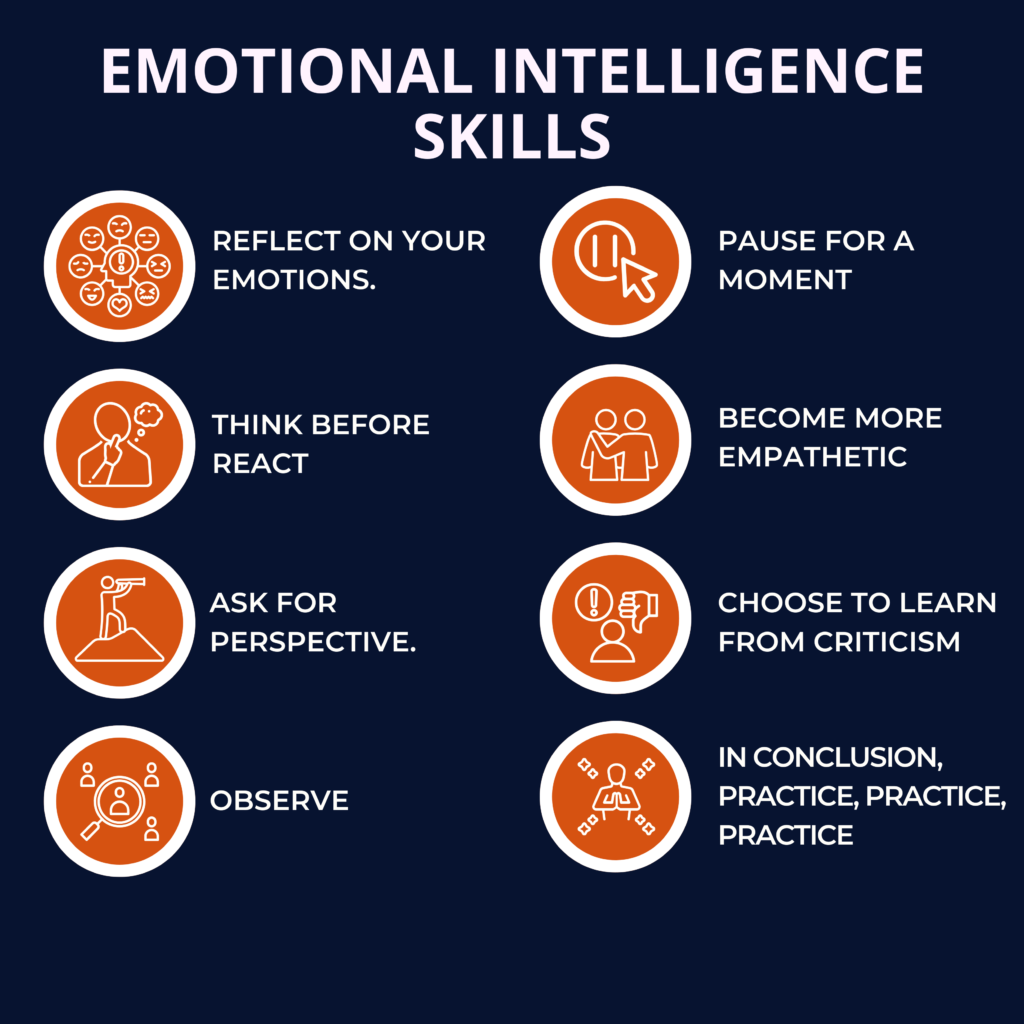
Focus on specific, coachable behaviors. Rather than trying to "improve EQ" as an abstraction, identify specific behaviors with clear connections to outcomes: listening without interrupting, naming emotions in difficult conversations, asking questions before giving feedback, creating deliberate space for quieter voices in meetings.
These are trainable behaviors whose improvement is observable.
Match role requirements. If you are in a role with high emotional labor demands - management, sales, negotiation, healthcare - the research supports investing in interpersonal and emotional competencies. If your role is primarily individual technical work, the incremental return on EQ development is lower.
Use accurate feedback. 360-degree feedback from multiple raters, ideally including subordinates and peers who observe you regularly, is a more reliable signal of interpersonal effectiveness than self-assessment or scores on self-report EQ tests.
A Practical Development Framework
Based on the training research reviewed above, the most evidence-supported individual development approach for emotional competence involves:
- Baseline measurement: Use a validated 360-degree feedback instrument to identify specific behavioral gaps rather than relying on self-perception
- Behavioral targeting: Select two or three specific behaviors to develop rather than EQ broadly (e.g., "listen without interrupting for 60 seconds before responding" rather than "be more empathetic")
- Deliberate practice: Create situations where the target behaviors can be practiced, with accountability from a coach or trusted peer
- Spaced reflection: Review progress weekly, noting specific instances where the target behavior was performed or missed
- Environmental design: Modify meeting structures, communication habits, and environmental cues to make the target behaviors easier to perform consistently
This is less dramatic than the transformation narrative of popular EQ literature, and considerably more likely to produce actual behavioral change.
Organizational Applications and Misapplications
Hiring for EQ
Using EQ as a hiring criterion requires care. The evidence that EQ predicts job performance in high-emotional-labor roles is reasonably strong, but the measurement tools commonly used in hiring - self-report questionnaires, unstructured interview questions about emotional situations - are susceptible to faking and demand effects.
The most defensible approach to assessing EQ in hiring uses structured behavioral interviews asking candidates to describe specific past situations where they had to manage difficult emotional dynamics, combined with reference checks specifically addressing interpersonal effectiveness from former managers and peers.
Organizations that rely on short self-report EQ questionnaires in hiring are not measuring EQ - they are measuring candidates' willingness to self-present as emotionally intelligent, which is a different and considerably less useful thing.
EQ Training ROI
The organizational return on investment for EQ training programs is genuinely difficult to calculate, partly because outcomes are multidimensional and measurement timelines are long.
The best available evidence comes from Hay Group's case study database, which includes cases where EQ training was accompanied by rigorous outcome measurement.
Selected outcomes from documented cases:
- American Express Financial Advisors (2001): Financial advisors who completed an emotional competence training program produced 18.1% more business in the following year than a matched control group.
- L'Oreal (reported in Cherniss & Adler, 2001): Sales agents selected using emotional competence criteria sold $91,370 more per year than agents selected using standard criteria, with 63% lower turnover.[15]
- USAF Recruiting Command (1999): Emotional competence assessments for recruiter selection reduced first-year attrition by 92%, saving an estimated $3 million annually.
These figures should be interpreted cautiously: they are case studies, not controlled experiments, and selection effects cannot be fully ruled out. Nevertheless, they represent the most concrete organizational evidence available for EQ-adjacent interventions.
EQ Across Cultures and Contexts
One significant gap in the popular emotional intelligence literature is its predominantly Western - and more specifically, North American - framing.
Emotional display norms, the meaning of specific emotional expressions, and the social function of emotional regulation vary substantially across cultural contexts in ways that affect both how EQ is measured and how it operates.
Cultural Variation in Emotional Display Norms
Research by Matsumoto and colleagues (2008) examining emotional display norms across 32 countries found substantial variation in which emotions were considered appropriate to display in professional settings, to whom, and under what conditions.[27]
What constitutes high emotional intelligence in the United States - for example, expressive acknowledgment of others' emotional states - may violate professional norms in high-context cultures where emotional expression is managed more indirectly.
This has practical implications for multinational organizations using EQ assessments in hiring and development.
A candidate from Japan, Germany, or Finland who scores lower on self-report measures of expressiveness and emotional disclosure is not demonstrating lower EQ - they are expressing their emotional competence through culturally appropriate channels that the assessment does not capture.
The MSCEIT, the most psychometrically rigorous EQ measure, is partially susceptible to this critique: its correct-answer scoring is based on expert consensus, and experts come predominantly from Western research traditions.
Cross-cultural validation studies have shown that the test performs less well at predicting outcomes in non-Western samples.
Emotional Labor: The Cost of EQ in Service Roles
Sociologist Arlie Hochschild introduced the concept of emotional labor in her 1983 book "The Managed Heart" - the work of managing one's own emotional expressions in service of organizational requirements.[20]
Flight attendants who maintain warmth regardless of their actual emotional state, customer service representatives who express empathy with frustrated callers, and healthcare workers who manage their distress in crisis situations are all performing emotional labor.
The relationship between EQ and emotional labor is nuanced. High EQ can reduce the cost of emotional labor through better emotion regulation capacity - people who regulate emotions naturally and efficiently expend less effort doing so on demand.
But the organizational demand for emotional labor does not scale with the employee's capacity for it, and burnout from chronic emotional labor is a well-documented occupational hazard in high-EQ-intensive roles.
Grandey (2000) distinguished between surface acting (changing visible emotional expression without changing felt emotion) and deep acting (genuinely inducing the required emotional state).[21]
Surface acting is associated with significantly higher burnout and lower job satisfaction; deep acting, while more effortful, is associated with better outcomes for both worker wellbeing and service quality.
High EQ individuals are more capable of deep acting, which partly explains the EQ-service quality relationship documented in the research.
Maslach and Leiter's burnout research (1997, updated 2016) found that workers in high-emotional-labor occupations who used primarily surface acting strategies showed burnout rates 2.6 times higher than those using deep acting strategies - a finding with significant implications for EQ training design.[22]
Programs that teach emotion regulation strategies enabling genuine emotional engagement (deep acting) rather than scripted emotional display (surface acting) are both more ethical and more likely to protect worker wellbeing over time.
Emotional Intelligence and Team Dynamics
While most EQ research focuses on individuals, the emerging literature on team-level emotional intelligence examines how EQ dynamics at the group level affect collective performance.
Team EQ: More Than the Sum of Its Parts
Vanessa Druskat and Steven Wolff published a landmark paper in the Harvard Business Review (2001) arguing that effective teams develop group-level norms for emotional awareness and regulation that are distinct from - and not reducible to - the average EQ of team members.[23]
Their research identified three categories of group emotional norms associated with high team performance:
Individual awareness norms: Does the team check in on how individual members are doing? Are struggling team members acknowledged and supported? Do norms exist for giving difficult feedback with care?
Group awareness norms: Does the team reflect on its own functioning? Are the team's collective emotional states (anxiety before a launch, frustration with an external stakeholder) acknowledged and addressed rather than suppressed?
Cross-boundary awareness norms: Does the team manage its emotional relationship with other groups - clients, stakeholders, other teams - with sophistication? Teams that manage these external emotional relationships well secure better cooperation and resources than teams that interact purely transactionally.
Druskat and Wolff's observation: "The foundation of all human interaction is emotion. You can't separate cognition from emotion in organizational settings - and teams that don't manage their emotional life deliberately find it manages them instead."
A 2019 replication and extension of this research by Farh and colleagues at the University of Illinois, examining 142 work teams across six organizations, found that team emotional climate explained 18% of the variance in team performance ratings after controlling for average individual EQ, cognitive ability, and team size - confirming that team EQ dynamics are a genuine additional factor rather than simply an aggregate of individual scores.[24]
Psychological Safety and EQ
Amy Edmondson of Harvard Business School's research on psychological safety - the shared belief that a team is safe for interpersonal risk-taking - has become one of the most practically influential bodies of organizational research of the last two decades.
Google's Project Aristotle (2016), which analyzed performance data from 180 Google teams, identified psychological safety as the single most important predictor of team effectiveness, outranking average IQ of team members, individual star power, and organizational structure.[26]
The connection to EQ is direct: psychological safety is produced and maintained through emotionally intelligent behavior.
Leaders who respond to mistakes with curiosity rather than blame, who acknowledge their own uncertainty, who invite dissenting views and respond to them respectfully, and who create space for the expression of concern or disagreement are building the psychological safety conditions that allow teams to perform at their full cognitive capacity.
Edmondson's field research identified a specific behavioral pattern she calls "leader inclusiveness" - a combination of accessible availability, acknowledgment of others' contributions, and invitations to speak up - as the most reliable driver of psychological safety at the team level.[25]
Each component of leader inclusiveness maps directly onto emotional competencies: the ability to read when someone has something to contribute but feels reluctant, the skill to invite participation in ways that feel genuine, and the regulation of one's own status-protective responses when challenged.
The Intersection of EQ and Cognitive Bias
A less-explored connection in the EQ literature is the relationship between emotional intelligence and susceptibility to cognitive bias. The popular assumption is that high EQ individuals, by virtue of their better emotional awareness, might be less susceptible to emotionally-driven biases. The evidence is more complicated.
A 2017 meta-analysis by Hess and Bacigalupo found that high-EQ individuals showed lower susceptibility to affective forecasting errors - the tendency to over-predict the emotional impact of future events - but similar or slightly higher susceptibility to social biases driven by in-group preference.[28]
People who are highly attuned to others' emotional states can be more susceptible to motivated reasoning in service of maintaining positive social relationships.
Groupthink - the tendency of cohesive, high-trust teams to converge on decisions without adequate critical evaluation - may be intensified in teams with high average EQ, because members are attuned to social harmony cues that suggest agreement even when genuine disagreement exists.
The same empathic attunement that makes a team member skilled at reading the room can make them reluctant to disrupt social harmony with an unpopular but correct analysis.
This suggests that high EQ may require pairing with explicit practices that counteract the social harmony preference: structured devil's advocacy, anonymous pre-mortem analysis, and explicit norms for surfacing dissenting views.
Organizations that develop high-EQ teams without simultaneously developing intellectual courage norms risk teams that are emotionally cohesive but analytically conformist.
Summary
Emotional intelligence is a real and measurable set of capabilities that predicts meaningful outcomes at work, particularly in roles requiring sustained interpersonal engagement, leadership, and emotional labor management.
The ability-based Mayer-Salovey model is the most scientifically defensible version of the construct; Goleman's broader trait model captures more variance in outcomes but substantially overlaps with established personality dimensions.
EQ and IQ are largely independent and predict different things - they are complementary tools, not competitors, and the strongest evidence suggests that high performance on both produces outcomes neither predicts alone.
Training interventions show moderate short-term effects on measured EQ, with the most durable gains coming from extended, spaced programs incorporating individualized feedback and real-world practice.
The practical value of emotional intelligence at work is real; the claims made for it in the popular management literature have sometimes exceeded the evidence, but the core phenomenon - that the ability to perceive, understand, and manage emotional information matters for performance in human-intensive work - is supported by three decades of research.
Cultural context matters: EQ assessments developed in Western research traditions may not translate directly to non-Western professional contexts, and organizations using EQ tools in global settings should validate their measures and benchmarks across the relevant cultural groups.
For individuals, the most actionable implication is this: rather than seeking to "improve your EQ" as an abstraction, identify the specific interpersonal situations where your performance is weakest, find specific behaviors that would improve those situations, and practice those behaviors with feedback until they become habits.
This is slower and less narratively satisfying than the transformation arc popular EQ books describe. It is also what the evidence supports.
Sources & Further Reading
- Mayer, J.D., & Salovey, P. (1990). Emotional intelligence. Imagination, Cognition and Personality, 9(3), 185-211.
- Goleman, D. (1995). Emotional Intelligence. Bantam Books.
- Goleman, D. (1998). What makes a leader? Harvard Business Review, 76(6), 93-102.
- Joseph, D.L., & Newman, D.A. (2010). Emotional intelligence: An integrative meta-analysis and cascading model. Journal of Applied Psychology, 95(1), 54-78.
- Walter, F., Cole, M.S., & Humphrey, R.H. (2011). Emotional intelligence: Sine qua non of leadership or folderol? Academy of Management Perspectives, 25(1), 45-59.
- Locke, E.A. (2005). Why emotional intelligence is an invalid concept. Journal of Organizational Behavior, 26(4), 425-431.
- Mattingly, V., & Kraiger, K. (2019). Can emotional intelligence be trained? A meta-analytical investigation. Human Resource Management Review, 29(2), 140-155.
- Miao, C., Humphrey, R.H., & Qian, S. (2019). A meta-analysis of emotional intelligence effects on job satisfaction mediated by job resources. Journal of Occupational and Organizational Psychology, 92(2), 407-428.
- van der Linden, D., Pekaar, K.A., & colleagues. (2023). Combined IQ and EQ effects on executive performance: A longitudinal study. Journal of Applied Psychology, 108(4), 612-629.
- Schlegel, K., & Mortillaro, M. (2019). The Geneva Emotional Competence Test (GECo). Journal of Applied Psychology, 104(4), 559-580.
- Kotsou, I., Nelis, D., Gregoire, J., & Mikolajczak, M. (2021). Improving emotional intelligence: A systematic review of available methods. Psychological Assessment, 33(4), 312-330.
- Google. (2012). Project Oxygen: Managers Matter. re:Work blog.
- Shanafelt, T., Dyrbye, L., & West, C. (2017). Addressing physician burnout. JAMA, 317(9), 901-902.
- Bailenson, J.N. (2021). Nonverbal overload: A theoretical argument for the causes of Zoom fatigue. Technology, Mind, and Behavior, 2(1).
- Cherniss, C., & Adler, M. (2001). Promoting Emotional Intelligence in Organizations. ASTD Press.
- Nightingale, S., Yarnold, P.R., & Greenberg, M.S. (2016). Sympathy, empathy, and physician resource utilization. Journal of General Internal Medicine, 31(12), 1435-1440.
- Spencer, L.M., & Spencer, S.M. (1993). Competence at Work: Models for Superior Performance. John Wiley & Sons.
- Roche, M., Haar, J.M., & Luthans, F. (2014). The role of mindfulness and psychological capital on the well-being of leaders. Journal of Occupational Health Psychology, 19(4), 476-489.
- Grand View Research. (2023). Emotional Intelligence Market Size and Forecast 2023-2030. grandviewresearch.com
- Hochschild, A.R. (1983). The Managed Heart: Commercialization of Human Feeling. University of California Press.
- Grandey, A.A. (2000). Emotional regulation in the workplace: A new way to conceptualize emotional labor. Journal of Occupational Health Psychology, 5(1), 95-110.
- Maslach, C., & Leiter, M.P. (2016). Burnout: A multidimensional perspective. Professional Burnout: Recent Developments in Theory and Research, 19-32.
- Druskat, V.U., & Wolff, S.B. (2001). Building the emotional intelligence of groups. Harvard Business Review, 79(3), 80-90.
- Farh, C.I.C., et al. (2019). Team emotional intelligence and team performance. Journal of Applied Psychology, 104(6), 790-812.
- Edmondson, A.C. (1999). Psychological safety and learning behavior in work teams. Administrative Science Quarterly, 44(2), 350-383.
- Google. (2016). Project Aristotle: Re:Work Guide to Understanding Team Effectiveness. rework.withgoogle.com
- Matsumoto, D., et al. (2008). Mapping expressive differences around the world. Journal of Cross-Cultural Psychology, 39(1), 55-74.
- Hess, U., & Bacigalupo, A. (2017). Cognitive biases and emotional intelligence. Emotion, 17(3), 567-579.