
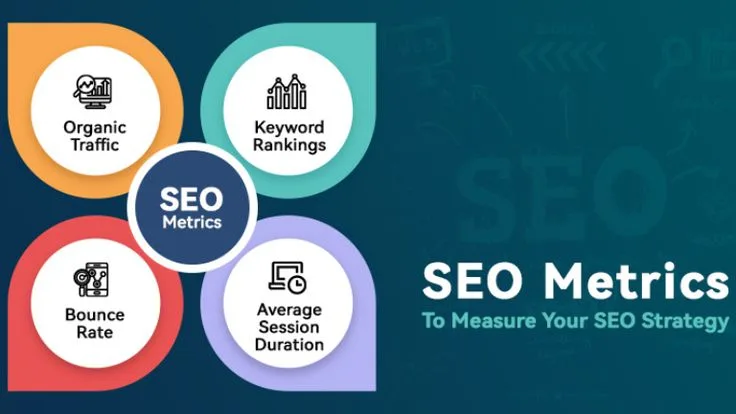
What Is SEO Measurement?
SEO measurement is the practice of tracking, interpreting, and acting on data that reflects a website's performance in organic search - including search visibility, click-through rates, user engagement, and ultimately the business outcomes that search traffic produces.
Effective measurement requires connecting search performance metrics from tools like Google Search Console to behavioral data from analytics platforms and then to conversion or revenue data, creating a chain of evidence from ranking changes to business impact.
The discipline exists because SEO investments take months to produce results, operate across hundreds of variables, and must compete for resources against channels with faster and more direct feedback loops.
Beginning in 2011, Google stopped providing keyword data in Google Analytics for organic search traffic. The company cited privacy concerns, and the decision was largely final - the vast majority of organic search traffic now appears in analytics as "(not provided)" for the referring keyword.
At the time, SEO professionals predicted that measurement would become impossible and the discipline would lose its accountability.
The opposite happened. The shift forced a more sophisticated approach to measurement.
Instead of optimizing for individual keyword rankings as the primary metric - which had always been a proxy for business outcomes, not the outcomes themselves - practitioners developed frameworks that connected search performance to user behavior, to conversions, and ultimately to revenue.
The loss of easy keyword data made SEO measurement more honest because it required connecting search performance to business outcomes rather than treating rankings as an end in themselves.
Today, the measurement challenge is not a lack of data. Google Search Console, Google Analytics 4, and a range of third-party tools provide more data than most teams have capacity to analyze.
The challenge is knowing which metrics reflect actual value, how to connect them to business outcomes that matter to executives, and how to structure measurement practices that support ongoing optimization rather than periodic reporting.
What SEO Measurement Actually Needs to Accomplish
Before examining specific metrics and tools, the purpose of measurement clarifies what matters and what does not. SEO measurement needs to answer four questions:
Is search visibility improving? Are more people finding content through search, are they finding it through more valuable queries, and is the volume growing in ways that are sustainable?
Is that visibility translating to meaningful user behavior? Visibility that generates traffic from users who immediately leave without engaging is not valuable. Measurement should distinguish traffic that produces engagement from traffic that does not.
Is that engagement translating to business outcomes? Traffic and engagement that never convert to revenue, leads, or other business outcomes are a cost without a return. SEO measurement must eventually connect to the metrics that organizations make resource allocation decisions against.[10]
What is changing, and why? SEO performance is not static. Algorithm updates, competitive changes, and site changes all cause performance to shift. Measurement must support diagnosis of what is changing and enable evidence-based response.
Most SEO reporting fails to answer questions three and four. It produces traffic and ranking reports that are interesting to specialists but do not translate to the language of business decisions.
This is why SEO programs are routinely undervalued and vulnerable to budget cuts - not because they are not producing value, but because the value they produce is not being measured in terms that decision-makers can evaluate.
The Core Metrics
Organic Search Traffic
Organic search traffic - the volume of visits arriving from unpaid search engine results - is the primary volume metric for SEO. It reflects the aggregate effect of ranking changes across all queries, providing a single number that represents total search visibility.
The useful dimensions for analysis:
Trend over time. Absolute traffic volume at a point in time is less meaningful than the direction and rate of change. A site with 50,000 monthly organic visits that is growing at 15% month-over-month is in a very different position from one with 80,000 monthly visits declining at 5% monthly.
The trend is more actionable than the current state.
Seasonality adjustment. Many verticals have strong seasonal patterns that make month-over-month comparisons misleading. A ski resort's organic traffic in November is not comparable to July. Year-over-year comparison for the same month provides a seasonality-adjusted view that distinguishes genuine growth from seasonal patterns.
Traffic by landing page. Aggregate traffic obscures which content is performing. Segmenting by landing page reveals which articles, product pages, or category pages are driving disproportionate traffic - and which have unexpectedly low traffic for their topic importance.
This identification of high-performers and underperformers drives the content strategy.
Traffic by device. Desktop and mobile search behavior differ. Rankings for the same query may differ between desktop and mobile due to personalization and mobile-specific ranking factors. If desktop traffic is growing while mobile is declining, that asymmetry requires investigation.
Traffic by geographic market. For sites serving multiple markets or languages, traffic broken down by country identifies which markets are performing well and which represent opportunities. Traffic quality often varies by market due to differences in purchasing power, content availability, and competition levels.
"The loss of easy keyword data made SEO measurement more honest because it required connecting search performance to business outcomes rather than treating rankings as an end in themselves." - SEO practitioner observation on Google's (not provided) change
| SEO Metric | What It Measures | Primary Tool | Business Relevance |
|---|---|---|---|
| Organic traffic | Total search visits | Google Analytics 4 | High - direct input to revenue |
| Click-through rate | Result appeal vs. impressions | Google Search Console | Medium - optimization opportunity |
| Average ranking position | Visibility for target queries | Search Console, Ahrefs | Medium - leading indicator |
| Conversions from organic | Business outcomes attributed | GA4 + goals | Very high - direct ROI |
| Indexed page count | Content in Google index | Search Console Coverage | Low-medium - health check |
| Core Web Vitals scores | Page experience signals | Search Console, PageSpeed | Medium - ranking factor |
| Backlink growth | Authority accumulation | Ahrefs, Majestic | Medium - lagging indicator |
Click-Through Rate from Search Impressions
Google Search Console reports both impressions (how many times your pages appeared in search results) and clicks (how many times users clicked through to your site).[1] The ratio - click-through rate (CTR) - measures how compelling your search result appearance is to users who see it.
CTR is influenced by ranking position, title tag effectiveness, meta description, and whether structured data markup creates rich result features (star ratings, FAQ dropdowns, article dates, review snippets). Expected CTR varies by position, with rough industry averages:
Position 1: approximately 25-30% CTR Position 2: approximately 13-17% CTR Position 3: approximately 9-12% CTR Position 4-5: approximately 5-8% CTR Position 6-10: approximately 2-5% CTR
Pages significantly below these benchmarks for their average position are underperforming on the CTR dimension and have optimization opportunities in their title tags and meta descriptions.
This is particularly valuable because CTR improvement does not require ranking improvement - the same ranking position, made more compelling, delivers more traffic.
Example: A page ranking average position 4 for a high-volume query with a 3% CTR (below the expected 5-8% range) could potentially double its traffic through title and meta description optimization alone. The optimization cost is minimal - updating two HTML elements - and the potential gain is substantial.
Keyword Rankings
Individual keyword rankings tell you the position your pages achieve for specific queries. This metric is more granular than organic traffic and more interpretable - if a target page drops from position 3 to position 9 for a key query, the reason for the traffic decline is visible.
Rankings are most useful for:
Tracking key target keywords over time. A set of 20-50 priority keywords, monitored daily or weekly with a rank tracking tool, provides visibility into whether optimization efforts are moving the needle. Movement from position 15 to position 6 for a target keyword is actionable evidence of progress.
Distribution analysis. How many keywords rank in positions 1-3 (driving significant traffic)? How many in positions 4-10 (capturing some traffic)? How many in positions 11-20 (capturing minimal traffic but close to page one)?
The distribution reveals the shape of the ranking portfolio and identifies opportunity bands - keywords near page one that could drive significantly more traffic with incremental improvement.
Competitor comparison. Rank tracking tools allow comparing your rankings to competitors' rankings for the same queries. When a competitor outranks you for a target keyword, their content is the benchmark against which your content will be evaluated.
Understanding what they have that you lack is the first step in competitive positioning.
The limitation of rankings as a primary metric: rankings fluctuate constantly and vary by user, location, device, and search history. A ranking of "position 4" in a third-party tool is an approximation of where most users see you, not a precise value.
Rankings also do not directly reflect business value - ranking for a high-volume keyword that does not convert to your business objective is not inherently valuable.
Conversions from Organic Traffic
The most business-relevant SEO metric is the volume of conversions - purchases, leads, signups, downloads, or other business objectives - that are attributed to organic search traffic.
This metric requires properly configured conversion tracking in Google Analytics 4:[2]
Define meaningful conversions. For e-commerce, purchase completion is the primary conversion; add-to-cart and checkout initiation are micro-conversions that indicate purchase intent.
For B2B lead generation, form submissions and demo requests are primary conversions; content downloads and free trial signups may be micro-conversions. For content publishing, email newsletter signups or account creation may be the primary conversion.
Attribute conversions to traffic sources. GA4's attribution reports show what percentage of conversions are credited to organic search. The attribution model matters - last-click attribution credits the final session before conversion; data-driven attribution distributes credit across the full conversion path.
For SEO, which often initiates purchase journeys that convert through other channels, first-touch or data-driven attribution models are often more appropriate than last-click.
Segment by landing page. Which specific pages are generating conversions from organic traffic? This identifies which content is most valuable to the business, not just which is generating the most traffic. High-traffic, low-conversion pages reveal misalignment between the search intent of the traffic and the conversion intent of the page.
Backlink Profile Metrics
External links from other websites to your content are one of the most important ranking signals. Measuring backlink acquisition and quality tracks the growth of a domain's authority over time.
Referring domains (unique sites linking to you) is more meaningful than total backlinks because one site can generate many links to many of your pages; the count of referring domains reflects how broadly your content is recognized across the web.
Domain authority / Domain Rating. Various tools (Moz's Domain Authority, Ahrefs' Domain Rating, Semrush's Authority Score) provide composite scores estimating a domain's overall authority based on its backlink profile.[5]
These scores are proprietary approximations of actual Google PageRank, not perfect proxies, but they provide comparable metrics for tracking authority growth over time.
Link velocity. The rate at which new referring domains link to your content. Sudden spikes may indicate a viral content moment; sustained, gradual growth indicates that consistent content quality is being recognized.
Anchor text distribution. What terms do other sites use when linking to you? A diverse, natural anchor text distribution (brand name, partial matches, generic terms, URL) looks natural. Heavily optimized anchor text distribution (all exact-match keywords) can appear manipulative.
The Measurement Stack
Google Search Console: The Foundation
Google Search Console is provided free by Google and is the single most important SEO measurement tool. It shows data from Google's own perspective - how Googlebot sees your site, which pages are indexed, which queries trigger your pages, and what technical issues exist.
The Performance report shows queries (what users searched), pages (which of your pages appeared), clicks, impressions, average position, and average CTR. The data is sampled and has a 16-month retention limit, but it is the authoritative source for understanding your relationship with Google search.
The Pages (Coverage) report shows indexing status: which pages are indexed, which are excluded and why, and which have errors. This is the primary tool for identifying crawling and indexing problems.
The Core Web Vitals report shows field data - actual loading performance experienced by real Chrome users on your pages. This is the performance data Google uses for ranking decisions; it is more representative than any lab test.
The Links report shows which pages have the most inbound links and what anchor text other sites use when linking to you.
Every site that cares about search performance should have Google Search Console configured, with ownership verified and sitemaps submitted.
Google Analytics 4: Behavior and Conversion
GA4 tracks what users do after arriving from search. It answers the questions that Search Console cannot: which pages produce conversions, which produce high engagement, and which produce traffic that immediately leaves.
The integration between GA4 and Search Console allows viewing keyword data alongside on-site behavior data - which queries lead to which pages, and what users do on those pages. This combined view reveals which search intents are being served well and which represent opportunities.
GA4's reporting requires configuration:
Conversion tracking must be set up explicitly. GA4 does not automatically track purchases, form submissions, or other conversions - you must define what constitutes a conversion for your site and implement the corresponding measurement.
Organic search sessions are visible in the Traffic Acquisition report, filtered by "Organic Search" as the session source. Analyzing landing pages, engagement rates, and conversion rates within organic sessions reveals content performance from a business outcome perspective.
Third-Party Tools: Depth Beyond Google's Data
Google's tools provide authoritative data about your own site's performance in Google search. Third-party tools - Ahrefs, Semrush, Moz - provide additional perspectives:[6]
Rank tracking across many keywords daily, with historical data and competitor comparison. Google Search Console provides ranking data but lacks the daily granularity and competitor benchmarking that third-party tools provide.
Backlink analysis of both your own profile and competitors'. Google Search Console shows your backlinks but not competitors'; third-party tools provide comprehensive competitive backlink intelligence.
Keyword research to identify opportunities. Search Console shows keywords you already rank for; tools like Ahrefs and Semrush show keyword opportunities - queries your competitors rank for that you do not, or queries with significant search volume that your current content does not address.
Site audit capabilities that identify technical SEO issues: broken internal links, redirect chains, missing meta tags, slow pages, and indexing problems.
Calculating SEO ROI
The fundamental challenge in presenting SEO's business value is that the returns are diffuse and long-term while the costs are concentrated and immediate. A $120,000 annual investment in SEO may produce traffic that, if purchased through paid search, would cost $1.5 million per year.
But the organic traffic does not appear on an invoice with a clear price tag.
Two approaches for quantifying SEO return:
The Traffic Replacement Value Method
Identify the cost-per-click that Google Ads would charge for the keywords your organic traffic comes from.[8] Multiply by the volume of organic clicks. The result is what you would spend to replace that organic traffic with paid traffic.
Data sources: Google Ads Keyword Planner shows estimated CPCs for any keyword. Ahrefs and Semrush provide estimated traffic value metrics that approximate this calculation at the keyword and page level.[4]
Example: A B2B software company generates 8,000 monthly organic clicks from keywords where the average Google Ads CPC is $22. Traffic replacement value: $176,000 per month. Annual value: $2.1 million. SEO investment: $180,000 per year. ROI ratio: approximately 12:1 before accounting for conversion value.
The Revenue Attribution Method
Connect organic traffic to revenue directly through conversion tracking. The calculation:
Monthly organic sessions x organic conversion rate x average conversion value = monthly organic revenue
The challenge is attribution accuracy. Many purchase journeys involve multiple sessions across multiple channels - a user might find your content through organic search, return via direct navigation two weeks later, and convert after a retargeting ad. How much credit does organic search receive?
For reporting purposes, use the attribution model that most accurately reflects organic search's role in the purchase journey for your specific business.
For B2B with long sales cycles, organic search often initiates awareness and research phases but is rarely the last touch before conversion - first-touch or linear attribution models are often more appropriate than last-click.
For e-commerce with shorter consideration periods, last-click may adequately represent organic search's contribution.
Reporting SEO Performance
The Audience-First Principle
SEO reports serve different audiences with different information needs:
Executive stakeholders need to understand business impact: revenue attributed to organic, cost savings compared to paid alternatives, trend direction, and how SEO fits into the overall marketing strategy. They do not need to understand ranking algorithms or crawl budget management.
Marketing managers need to understand content performance, competitive position, and resource prioritization: which content is working, where opportunities lie, and what the next investments should target.
Content and technical teams need actionable specifics: which pages to update, which technical issues to fix, which keywords to target in new content, and what structural changes would improve performance.
Reports that mix these audiences typically serve none of them well. A report that includes detailed crawl error analysis alongside executive revenue attribution is confusing to both audiences.
Structuring the Executive Report
The monthly executive SEO report should answer three questions:
What happened? Organic traffic trend, revenue attribution trend, any significant events (algorithm updates, competitive changes, major content launches).
Why did it happen? The key drivers behind the numbers: which content gained or lost traffic, what algorithm changes affected the site, what competitive developments influenced results.
What are we doing about it? The current priorities, why they were selected, and what outcomes they are expected to produce.
The report should not exceed two pages for most organizations. Executives who want more detail can ask for it; those who do not should not have to wade through technical details to find the business summary.
Communicating Through Uncertainty
SEO has inherent measurement uncertainty. Rankings fluctuate. Attribution models are imperfect. Algorithm changes create noise. A 10% decline in organic traffic in one week may reflect a genuine problem, a temporary fluctuation, or a change in how Google is measuring and reporting data.
Reporting should be honest about this uncertainty rather than presenting false precision.
"Organic traffic declined approximately 8% this month compared to last month; we are investigating whether this reflects algorithm impact or seasonal variation" is more trustworthy than a report that attributes the decline to a specific cause before that cause has been identified.
Responding to Performance Changes
Algorithm Updates
Google makes thousands of small changes to its ranking algorithms each year and several major "core updates." Major core updates, which Google now announces in advance, can produce significant traffic changes across many sites simultaneously.[9]
When organic traffic drops significantly following a confirmed algorithm update:
Check which pages lost the most traffic and which queries drove those pages. Compare the affected pages to what Google has communicated about the update's focus. If the update targets content quality (as many do), review affected pages against the E-E-A-T framework and identify substantive improvements.
Avoid making rapid, drastic changes in response to algorithm updates before understanding the pattern. Reactionary content rewrites or link building campaigns made without diagnosis of the specific issue can make performance worse rather than better.
The most durable protection against algorithm update volatility is systematic investment in genuine content quality, technical excellence, and real authority - the signals that algorithm updates consistently reward over time.
See also: Content Quality Signals Explained, Technical SEO Explained, and How Search Engines Work.
What Research Reveals About SEO Measurement Accuracy and Methodology
SEO measurement is complicated by the fact that the systems being measured - Google's ranking algorithm - are partially opaque, and the tools available to measure them have documented limitations that affect how results should be interpreted.
Backlinko's Large-Scale CTR Research: Brian Dean and the Backlinko research team published two major studies of organic CTR benchmarks - one in 2019 and an updated version in 2022 - analyzing millions of Google search results.[3]
The 2022 study, which analyzed 4 million search results, found that position 1 results receive 27.6% of clicks, with a steep drop-off at each subsequent position (position 2: 15.8%, position 3: 11.0%).
The study also documented that the presence of rich snippets (FAQ, How-To, article schema) increases CTR by 20-30% from the same position, and that SERP features (featured snippets, People Also Ask boxes, image packs) "steal" significant traffic from organic blue-link results.
The methodological limitation Dean acknowledged: the study cannot distinguish between different query types, and CTR distributions vary substantially between informational and transactional queries, between navigational and exploratory queries, and between branded and non-branded queries.
Ahrefs' Keyword Ranking Study on Traffic Prediction: Ahrefs conducted and published an analysis in 2020 finding that the actual traffic pages receive from their ranking positions is substantially different from what search volume data predicts.
The study found that the top-ranking page for any given keyword gets the majority of its organic traffic from hundreds of related keyword variants, not just the primary keyword it ranks for.
The median ratio of actual organic traffic to "predicted" traffic based on the primary keyword's search volume was 3:1 - meaning pages get approximately three times more traffic than the primary keyword's volume would suggest.
The implication for measurement: using keyword rankings as a traffic proxy systematically underestimates actual organic value, and click-based traffic data from Search Console is more accurate than rank-based projections.
The "Not Provided" Problem and Its Measurement Workarounds: When Google eliminated keyword data from Google Analytics in 2013-2014, it moved that data to Google Search Console, but with limitations: Search Console data is sampled (not 100% accurate), uses a 16-month retention window, and shows "clicks" rather than "sessions" (meaning one user could generate multiple counted events).
The Search Engine Land article documenting the not-provided transition (by Danny Sullivan, then not yet at Google) noted that the data gap primarily affected the ability to measure keyword-level conversion rates - which had been the primary metric for demonstrating SEO ROI to clients.
The industry developed workarounds: using Search Console's Performance report to approximate keyword-level traffic, combined with GA4's landing page data to attribute conversions, enables reconstruction of the keyword-to-conversion path that direct analytics data no longer provides.
These workarounds produce useful approximations but with compounded uncertainty from multiple data sources.
Rand Fishkin's MozCast and Algorithm Correlation Research: Rand Fishkin developed MozCast (mozcast.com) as a tool for detecting Google algorithm updates by measuring the volatility of ranking changes across a panel of tracked keywords.
MozCast assigns a "temperature" to each day based on how much rankings changed relative to the preceding period; high-temperature days correlate with confirmed Google updates.
The tool, along with similar volatility trackers from Semrush (Sensor) and Ahrefs (Algorithm changes tracker), enables distinguishing between seasonal ranking fluctuations, site-specific changes, and broad algorithm updates affecting rankings across many sites.
Fishkin's original research found that MozCast temperature above 70 degrees Fahrenheit correlated with confirmed Google updates approximately 80% of the time, establishing algorithm monitoring as a standard component of professional SEO measurement practice.
Google's Own Research on Search Quality Evaluation: Google published a paper in 2022, "Rethinking Search: Making Experts Accessible," describing research into how search quality is evaluated relative to expert-level information needs.
The research team, including scientists from Google's Search Quality team, found that users with domain expertise evaluate search results significantly differently from novice users searching the same topics - experts are more likely to click on sources they recognize, less likely to be satisfied by simplified explanations, and more likely to evaluate result quality based on the specificity of claims rather than the clarity of writing.
This research influenced Google's understanding that quality evaluation must be sensitive to query intent and audience expertise, not just generic content quality signals.
Real-World SEO Measurement Case Studies
Documented case studies of how organizations have built and used SEO measurement frameworks provide practical context for measurement methodology.
HubSpot's Historical Optimization Methodology: HubSpot's marketing team, led by data analyst Victor Pan, developed and published what became known as the "historical optimization" methodology between 2015 and 2018.
The methodology emerged from measurement: Pan's analysis of HubSpot's 50,000+ blog post archive found that a small proportion of posts (approximately 1-2%) drove the majority of organic traffic, and that many high-performing posts were not optimized for their current position in the search results (lower-than-expected CTR given average position).
HubSpot's measurement-driven conclusion was that updating existing high-potential posts was more efficient than creating new posts.
Pan published the quantitative analysis: systematically optimizing title tags, meta descriptions, and content depth for underperforming posts that had established authority produced an average 106% increase in organic traffic to those posts within six months, compared to a 15% average traffic increase for newly published posts in the same period.
The methodology is now standard in content SEO, and its development was enabled by the kind of rigorous landing-page-level traffic and CTR measurement the methodology describes.
Etsy's SEO A/B Testing Framework: Etsy's engineering team published detailed documentation of their SEO experimentation methodology in 2022.
Traditional A/B testing is complicated in SEO because search engine indexing and ranking changes lag the experimental treatment by days to weeks, making it impossible to observe ranking effects within a typical 2-4 week A/B test window.
Etsy's solution uses "geo-holdout" testing: splitting page types by geographic market instead of by user session, applying the experimental change to one market while holding the other as control, and comparing organic traffic trends between markets over 6-8 week periods.
This methodology produces statistically meaningful SEO effect estimates for specific changes (title tag formats, structured data types, internal linking patterns) that cannot be measured reliably through standard A/B testing.
Etsy's published methodology has influenced how large-scale platforms approach SEO measurement when scale makes individual variable testing feasible.
The Guardian's SEO Dashboard Development: The Guardian's engineering team published their approach to SEO measurement in a 2021 technical blog post, describing a custom dashboard built on BigQuery and Google Looker Studio that integrates data from Google Search Console, Google Analytics 4, and their CMS (editorial publishing data).[7]
The dashboard enables the editorial and SEO teams to see, for each article: organic impressions and clicks over time, average position history, CTR relative to position benchmarks, page speed field data, and content update history.
The integrated view allows correlation of editorial decisions (publication dates, update events, author attribution changes) with organic performance changes at the article level.
The Guardian's measurement infrastructure enables attribution of traffic changes to specific editorial actions, closing the gap between content decisions and observable SEO outcomes that afflicts teams using separate analytics tools for different data types.
Ahrefs' Study of What Actually Correlates with Rankings: Ahrefs published a study in 2020 of 920,000 pages analyzing which on-page and off-page factors most strongly correlate with top-10 rankings.
The top correlates: referring domains (the number of unique domains linking to the page), Domain Rating of the linking page (the quality of those links), and the number of referring pages with "follow" links.
Content-specific factors like content length correlated positively but weakly after controlling for referring domain count.
The study did not find significant correlations between keyword density, heading tag usage, or meta description content and ranking position - findings consistent with Google's own statements that these on-page factors are much less important than off-page authority signals for competitive queries.
The Ahrefs methodology - a correlation study, not a causal experiment - means these findings establish what tends to be true, not what produces rankings in individual cases.
Key SEO Metrics That Actually Predict Business Outcomes
The proliferation of available SEO metrics creates a selection problem. The metrics with the strongest documented connection to business outcomes are a smaller subset than what most tools report.
Organic Traffic from Non-Branded Queries (Brand-Excluded): Total organic traffic conflates branded traffic (users who searched for your company by name) with non-branded traffic (users who found you through generic topic queries).
For evaluating SEO performance, non-branded organic traffic is the more useful measure because it reflects how search visibility is growing among users who did not already know to search for you. Search Console's Performance report allows filtering by query to exclude branded terms.
Industry benchmarks suggest that for content sites, non-branded organic traffic should grow 15-25% year-over-year to indicate healthy SEO momentum; for e-commerce, 10-20% is typical depending on competitive intensity.
Organic Revenue Per Session (not just conversion rate): Organic conversion rate (the percentage of organic sessions that result in conversions) is useful but incomplete as a business metric because it does not account for the value of individual conversions.
Organic revenue per session - calculated as (total organic revenue / total organic sessions) - captures both conversion rate and average order value, providing a single metric that reflects the business value of organic traffic quality.
For subscription businesses, organic trials-to-paid conversion rate and lifetime value by organic acquisition cohort provide equivalent insight. A growing organic revenue per session metric indicates that SEO is generating increasingly valuable audiences, not just more traffic.
Share of Voice (SOV) in Organic Search: Share of Voice measures what percentage of total available organic clicks in a defined keyword set is going to your site.
Calculated using impression share data from Search Console combined with estimated total available impressions from keyword research tools, SOV is particularly useful for competitive analysis - it shows whether your absolute traffic growth reflects market growth or share gain against competitors.
Ahrefs' "Traffic Share" feature and Semrush's "Market Explorer" provide competitor-level SOV estimates.
Industry research consistently shows that SOV is a leading indicator of revenue growth: sites increasing SOV in high-value keyword categories typically see corresponding revenue increases 6-12 months later, making SOV a useful forward-looking metric for SEO investment decisions.
Content Decay Rate (Traffic Decline on Aging Content): Content decay - the gradual loss of organic traffic to pages as they age and become less comprehensive or current relative to newer competing content - is a measurement most organizations do not track but should.
Calculating the percentage of indexed pages that have lost more than 20% of their peak organic traffic in the past 12 months identifies the "content decay" rate.
High decay rates (over 30% of content showing material traffic decline) indicate that the content maintenance investment is insufficient relative to competitive dynamics.
Ahrefs' "Content Explorer" can be used to identify pages with declining referring domain counts, which often precedes traffic decline.
Organizations that measure content decay systematically discover that content maintenance - updating aging high-potential pages - often produces better ROI than creating equivalent volumes of new content.
Sources & Further Reading
- Google. "Google Search Console Help." support.google.com.
- Google. "Google Analytics 4 Documentation." support.google.com.
- Backlinko. "We Analyzed 4 Million Google Search Results: Here's What We Learned About Organic CTR." backlinko.com. View source
- Ahrefs. "How to Measure SEO Performance and Results." ahrefs.com. View source
- Moz. "The Beginner's Guide to SEO: Measuring and Tracking Success." moz.com. View source
- Semrush. "SEO Reporting: Metrics, Templates, and Best Practices." semrush.com. View source
- Google Looker Studio. "Build Custom Dashboards for Data Visualization." lookerstudio.google.com. View source
- Google Search Central. "Core Algorithm Updates." developers.google.com. View source
- Kaushik, Avinash. Web Analytics 2.0: The Art of Online Accountability and Science of Customer Centricity. Sybex, 2009. View source