
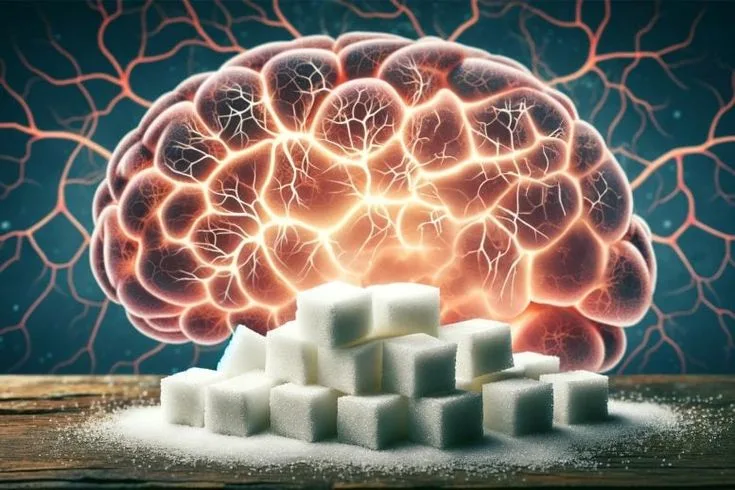
In the 1970s, researchers at Princeton began an experiment that would trouble the food industry for decades. They gave rats intermittent access to sugar - twelve hours on, twelve hours off - and watched what happened. The rats didn't eat the way rats normally eat, nibbling throughout the day.
They binged. When the sugar was removed, they showed signs that looked remarkably like withdrawal: anxiety, tremors, chattering teeth. When they were given access to alcohol during sugar deprivation, they drank more of it than control rats. And when they got sugar back, they went after it with escalating urgency.
Bart Hoebel, the Princeton neuroscientist who ran these studies, was not arguing that sugar is literally identical to heroin.
He was arguing something more precise and more useful: that sugar, under certain conditions - particularly intermittent access to large quantities - activates neurobiological mechanisms that overlap substantially with those of addictive drugs. The same reward circuitry.
The same escalating consumption. The same withdrawal. The same cross-sensitization.
The food industry dismissed these findings as rat research with no human relevance.
Meanwhile, the food industry was investing heavily in optimizing products to maximize what their own researchers called "palatability" - the addictive sensory experience of specific sugar-fat-salt combinations engineered to ensure that no one could eat just one.
The science of sugar and the brain has become one of the most contested areas in nutrition research, with legitimate scientific disagreements intertwined with significant commercial interests on multiple sides. Here is what the evidence actually shows.
"The dopamine system doesn't care about your long-term health. It cares about what was rewarding in the environment you evolved in." - Kent Berridge, University of Michigan
Key Definitions
Dopamine - A neurotransmitter released in the mesolimbic reward system in response to rewarding stimuli and predictive cues. Dopamine release drives approach behavior and reward learning - not just pleasure (which is mediated more by opioid systems), but the motivational "wanting" that directs behavior toward reward.
Mesolimbic pathway - The "reward circuit": projections from the ventral tegmental area (VTA) to the nucleus accumbens, prefrontal cortex, amygdala, and hippocampus. The pathway through which addictive drugs exert their primary effects, and through which food reward is processed.
Nucleus accumbens - A subcortical structure at the center of the reward circuitry, receiving dopamine from the VTA and integrating signals from the PFC, amygdala, and hippocampus.
Sometimes called the brain's "pleasure center" - though this is an oversimplification; it mediates motivated approach behavior as much as experienced pleasure.
Wanting vs. liking - Kent Berridge's influential distinction: dopamine mediates "wanting" (motivation, craving, approach behavior), while opioid and endocannabinoid systems mediate "liking" (the hedonic experience of pleasure).[6]
These systems can dissociate: sensitized dopamine systems produce intense wanting with reduced liking - craving without satisfaction - which characterizes advanced addiction.
Food addiction - The hypothesis that some people develop a pattern of food consumption resembling substance use disorder - loss of control, continued use despite negative consequences, inability to reduce use, and withdrawal.
Operationalized in the Yale Food Addiction Scale (YFAS), developed by Ashley Gearhardt. Contested as a diagnostic category; accepted as a dimensional description of eating behavior.
Hyperpalatable foods - Foods engineered to maximize palatability through specific combinations of sugar, fat, salt, and starch - often at ratios that do not occur in natural foods. Associated with loss-of-control eating in both animal models and human studies.
Cephalic phase responses - Physiological responses (insulin release, digestive enzyme secretion, salivation) that occur in anticipation of food - triggered by taste, smell, and sight - preparing the body for incoming calories.
Relevant because artificial sweeteners can trigger cephalic phase insulin release without providing the anticipated calories.
Intermittent access - The pattern of consuming a substance in periodic binges rather than continuously. A key variable in animal models of sugar addiction: continuous access to sugar does not reliably produce addiction-like behavior in most animal studies, but intermittent access consistently does.
Relevant to human eating patterns of periodic overindulgence.
Sugar and Addictive Substances: Overlapping Neurobiological Patterns
| Feature | Addictive drugs | Sugar (intermittent access) | Key evidence |
|---|---|---|---|
| Dopamine release in nucleus accumbens | Yes - primary mechanism | Yes - comparable to amphetamine during bingeing | Hoebel/Princeton rat studies |
| Tolerance (escalating intake) | Yes | Yes - D2 receptor downregulation with repeated bingeing | Animal models; Volkow 2001 human imaging |
| Withdrawal symptoms | Yes | Yes - anxiety, tremors, altered dopamine/acetylcholine balance in rats | Avena et al. 2008 |
| Cross-sensitization (increases other substance use) | Yes | Yes - sugar withdrawal increases alcohol, caffeine, amphetamine consumption | Princeton rat studies |
| Reduced striatal D2 receptors | Yes (cocaine users) | Yes - obese individuals show same pattern as cocaine users | Volkow et al. 2001 |
| Cue-triggered craving | Yes | Yes - cues (wrapper, time of day, emotional state) trigger dopamine before consumption | Schultz prediction error framework |
| Binge-withdrawal cycle | Yes | Yes - only with intermittent access; continuous access less reliably addictive | Hoebel; continuous vs. intermittent models |
The Brain on Sugar: The Reward Cascade
Step 1: Sweet Taste Detection
The moment sugar touches the tongue, specialized taste receptor cells in taste buds detect it via T1R2-T1R3 heterodimer receptors - the same receptors that detect artificial sweeteners.
Signals travel via the facial and glossopharyngeal nerves to the nucleus of the solitary tract in the brainstem, which relays to the hypothalamus (hunger/satiety regulation) and parabrachial nucleus.
But the most consequential downstream effects involve the mesolimbic system.
Step 2: The Dopamine Spike
Wolfram Schultz's foundational work on dopamine neurons established a crucial principle: dopamine neurons fire in response to rewarding stimuli and - critically - in response to stimuli that predict reward.[7] Initially, when a monkey receives juice as a reward, dopamine neurons fire when the juice arrives.
With repeated pairings of a conditioned stimulus (a light) with juice delivery, the dopamine neurons shift: they fire when the light appears, not when the juice arrives. If the juice fails to arrive after the light, dopamine neurons dip below baseline - a negative prediction error signal.
This temporal difference learning is exactly what occurs with sugar consumption. Initially, sugar itself drives dopamine release in the nucleus accumbens. With repeated experience, the cues associated with sugar - the wrapper, the vending machine, the time of day, the emotional state - begin to drive dopamine release before consumption.
The anticipatory dopamine surge is the craving. And the dopamine dip when expected reward doesn't arrive - when the craving is blocked - is the distress of frustration that drives continued seeking.
Step 3: Opioid Pleasure
Dopamine explains the "wanting" - the craving and pursuit. The "liking" - the actual pleasure of sweet taste - is mediated by opioid and endocannabinoid systems. The nucleus accumbens contains "hedonic hotspots" - small regions where opioid agonists dramatically amplify the pleasure response to sweet taste.
Opioid receptor stimulation (by the brain's own endorphins, released in response to sweet taste) drives the actual pleasure of sweetness.
This explains why naloxone (an opioid antagonist that blocks opioid receptors) reduces sweet food preference: it doesn't block the wanting (dopamine-driven), but it attenuates the liking (opioid-driven). The pleasure of sweet taste is partly the brain's own opioids.
It also connects to stress eating: cortisol sensitizes opioid receptors, making the opioid pleasure of sweet food more intense under stress. This is why stress-induced eating specifically targets sweet and fatty foods rather than other foods - the brain is using food's opioid properties as a pharmacological comfort.
Why You Can't Eat Just One: The Engineering of Hyperpalatability
"Bliss point" is a term from food industry research - the precise combination of sugar, fat, and salt that maximizes palatability.
Howard Moskowitz, a psychophysicist who developed palatability optimization for food companies, documented the process in detail: systematic testing of different formulations to find the combination that produces maximum desire for more consumption.
Natural foods don't hit the bliss point. Fruit contains sugar, but also fiber, water, and a sensory complexity that reduces palatability optimization. The specific sugar-fat-fat combinations in processed foods - the exact ratio found in chocolate, ice cream, cookies - do not occur naturally. They are engineered.
Ashley Gearhardt at Yale developed the Yale Food Addiction Scale (YFAS) to operationalize food addiction symptoms in humans.[3] Her studies find that the foods most commonly associated with addictive-like eating are:
- Chocolate
- Ice cream
- French fries
- Pizza
- Cookies
- Chips
- Crackers
- Cheeseburgers
- Cake
What these foods share is not simply sugar. They are all high-fat, high-sugar or high-fat, high-salt combinations. Pure sugar - in the form of fruit or sugar water - is far lower on the problematic consumption list.
The addictive properties appear to emerge from the specific hyperpalatable combinations that maximize hedonic impact through simultaneous opioid, dopamine, and endocannabinoid activation.
This reframing - from "sugar addiction" to "ultra-processed food addiction" - has important practical implications. Eliminating sugar while continuing to eat ultra-processed foods misses the mechanism. Reducing ultra-processed food consumption addresses it.
Kevin Hall's Landmark Experiment
The most rigorous human evidence for the effects of ultra-processed food comes from Kevin Hall's 2019 NIH randomized controlled trial, published in Cell Metabolism.[2]
Twenty participants lived in an inpatient metabolic ward for four weeks. For two weeks they ate an ultra-processed diet; for two weeks an unprocessed diet. Both diets were matched for:
- Available sugar
- Fat
- Fiber
- Macronutrients
- Salt
Participants could eat as much or as little as they wanted.
The results: on the ultra-processed diet, participants consumed on average 508 calories per day more and ate significantly faster. Over two weeks, they gained approximately 2 pounds on the ultra-processed diet and lost approximately 2 pounds on the unprocessed diet.
This is a controlled experiment demonstrating that ultra-processed foods cause overconsumption in humans even when caloric availability and macronutrient composition are equated - ruling out the simple explanation that ultra-processed foods cause weight gain because they have more sugar or fat.
Something about the processing itself - the speed of consumption, the sensory properties, the impact on satiety signaling - drives overconsumption independently of macronutrient composition.
Hall's hypothesis is that ultra-processed foods are consumed faster (their texture and composition don't require much chewing and allow rapid ingestion), and that this speed of consumption overwhelms the gut-brain satiety signaling that normally modulates intake.
The gut hormones (GLP-1, peptide YY, CCK) that signal fullness and satiety to the hypothalamus take time to respond to food intake; if food is consumed faster than this signaling catches up, overconsumption occurs.
The Neurological Patterns of Sugar Addiction
The animal literature on sugar addiction is more extensive than the human literature, but it identifies patterns worth examining.
Bingeing
Hoebel's Princeton rats given intermittent sugar access showed escalating intake during available periods - consuming most of their daily caloric intake within a few hours of gaining access. This bingeing pattern, which does not occur with continuous access to sugar, parallels the binge behavior of drug addiction.[1]
Neurochemically, bingeing on sugar produces dopamine surges in the nucleus accumbens comparable to those produced by amphetamine.
Tolerance
With repeated sugar bingeing, dopamine receptor density in the nucleus accumbens decreases - a downregulation consistent with tolerance. The same dopamine signal now produces less response, requiring more consumption to achieve the same reward. This is the neurological basis for escalating intake.
Withdrawal
Sugar deprivation after a period of bingeing produces measurable behavioral changes in rodents: increased anxiety on the elevated plus maze, reduced threshold for acoustic startle, altered dopamine and acetylcholine balance in the nucleus accumbens. These are the rat equivalent of withdrawal symptoms.
Cross-Sensitization
Sugar withdrawal increases consumption of alcohol, caffeine, and amphetamine. This cross-sensitization suggests that the neurochemical changes produced by sugar bingeing alter the reward system in ways that broadly increase vulnerability to addiction to other substances.
Human Correlates
Human neuroimaging studies find that obese individuals show reduced striatal dopamine receptor availability - the same pattern found in cocaine users - and that this reduction correlates with impulsive eating behavior.
Nora Volkow at NIDA documented in 2001 that obese subjects showed reduced D2 receptor availability comparable to that seen in drug-addicted individuals, and that this reduction was associated with elevated BMI.[4]
The parallel doesn't mean obesity is a drug addiction. It means that chronic overconsumption of highly rewarding foods can produce neurological adaptations in the reward system - reduced receptor sensitivity requiring more consumption to achieve comparable reward - that resemble those observed in drug addiction.
Sugar, Stress, and Serotonin
The specific targeting of sweet foods during stress and low mood has a neurochemical explanation that goes beyond dopamine.
Richard Wurtman's research at MIT documented the relationship between carbohydrate consumption and brain serotonin.[5] The mechanism: dietary protein competes with tryptophan (the serotonin precursor) for transport across the blood-brain barrier, because all large neutral amino acids share the same transporter.
Insulin, released after carbohydrate consumption, drives most amino acids out of the blood and into muscle tissue - but not tryptophan, which is loosely bound to albumin in the blood.
The net effect is that carbohydrate consumption improves tryptophan's competitive access to the blood-brain barrier and increases brain serotonin synthesis.
This is a genuine pharmacological effect. It explains why eating carbohydrates can improve mood and reduce anxiety - particularly in states of serotonin depletion (low mood, PMS, stress, SAD).
It also explains why carbohydrate craving increases in these states: the brain learns that carbohydrate consumption corrects the neurochemical deficit that is being experienced as low mood.
The practical consequence is that using sweet food to manage emotional states produces conditioned learning that strengthens the association between emotional distress and sugar-seeking. This is how emotional eating becomes entrenched: the sugar works, at least temporarily, which reinforces the behavior.
The Glucose Roller Coaster: How Blood Sugar Drives Cravings
Beyond the direct neurochemical effects of sugar on reward systems, the metabolic effects of refined carbohydrates create a physiological pattern that perpetuates craving.
Refined sugars and processed carbohydrates produce rapid blood glucose elevation followed by rapid insulin response and blood glucose decline. This blood glucose variability - the spike and crash - produces a state of relative hypoglycemia in the hours after consumption that triggers powerful appetite for sweet foods.
The hypothalamus, detecting falling blood glucose, activates hunger signals and specifically increases appetite for quick-energy carbohydrates.
This creates a self-perpetuating cycle:
- Consume refined sugar blood glucose spike
- Rapid insulin response blood glucose decline
- Relative hypoglycemia intense sweet craving
- Consume refined sugar repeat
Continuous glucose monitoring studies confirm that individuals with high glycemic variability report greater hunger, more frequent cravings, and more impulsive eating decisions.
The solution - reducing glycemic variability through lower glycemic index foods, higher fiber intake, and protein-fat-carbohydrate combinations that slow glucose absorption - interrupts the cycle at a metabolic level rather than requiring willpower to resist cravings generated by glycemic instability.
The Environment Matters More Than Willpower
The neuroscience of sugar addiction converges on an uncomfortable conclusion: relying on willpower to resist sugar in a cue-saturated food environment is a structurally inadequate strategy.
Cue-triggered dopamine anticipation - the craving produced by seeing, smelling, or even thinking about desired foods - operates faster than deliberate cognitive decision-making.
By the time the prefrontal cortex has formulated a reason to resist, the mesolimbic system has already mobilized approach behavior.
Brian Wansink's food environment research (though some studies were retracted for data issues, the core findings have been replicated) documented that proximity matters enormously: people eat more candy when the candy dish is on their desk versus on a shelf 2 meters away.
The difference is not willpower - it is the density of cue-triggered dopamine anticipation events per unit time. More proximity = more cues = more craving = more consumption.
The structural solution is environmental design: removing hyperpalatable foods from proximity, restructuring the food environment so that the path of least resistance aligns with intended eating patterns.
This is not intellectually satisfying - it doesn't feel like mastery - but it reflects the actual neuroscience of how reward-seeking behavior is controlled.
What Actually Reduces Sugar Consumption
The effective strategies for reducing sugar intake operate on multiple mechanisms simultaneously:
Environmental restructuring: Remove from home; don't buy; don't put in proximity. The friction of having to go to the store to get sugar provides time for the impulse-driven dopamine anticipation to subside.
Stable blood glucose: Eating regular meals with protein, fat, and fiber reduces the glycemic variability that generates physiological craving. Breakfast that includes protein has replicated evidence for reducing sugar craving later in the day.
Sleep: Matthew Walker's and Eve Van Cauter's research finds that sleep deprivation (6 vs 8 hours) increases ghrelin (hunger hormone) by 24% and decreases leptin (satiety hormone) by 18%, with the amplified appetite specifically targeting high-calorie, high-sugar foods.
Getting adequate sleep is not glamorous advice, but it is mechanistically well-supported for appetite regulation.
Gradual taste calibration: Reducing sweetness gradually - using less sugar in coffee over weeks, switching to less sweet versions of preferred foods - allows taste receptor adaptation. The goal is recalibrating the hedonic setpoint for sweetness rather than using willpower to resist unchanged cravings.
Avoiding intermittent restriction-binge cycles: Strict sugar restriction followed by "cheat days" may actually reinforce the bingeing pattern by introducing intermittent access - precisely the condition that animal studies find most reliably produces addiction-like behavior.
More consistent eating patterns with less extreme restriction may produce better long-term outcomes than alternating restriction and permission.
For related concepts, see why diets fail, how habits form and change, how the gut microbiome works, and how addiction works.
Sources & Further Reading
- Avena, N. M., Rada, P., & Hoebel, B. G. (2008). Evidence for Sugar Addiction: Behavioral and Neurochemical Effects of Intermittent, Excessive Sugar Intake. Neuroscience and Biobehavioral Reviews, 32(1), 20-39. DOI: 10.1016/j.neubiorev.2007.04.019
- Hall, K. D., et al. (2019). Ultra-Processed Diets Cause Excess Calorie Intake and Weight Gain: An Inpatient Randomized Controlled Trial of Ad Libitum Food Intake. Cell Metabolism, 30(1), 67-77. DOI: 10.1016/j.cmet.2019.05.008
- Gearhardt, A. N., Corbin, W. R., & Brownell, K. D. (2009). Preliminary Validation of the Yale Food Addiction Scale. Appetite, 52(2), 430-436. DOI: 10.1016/j.appet.2008.12.003
- Volkow, N. D., et al. (2001). Low Dopamine Striatal D2 Receptors Are Associated with Prefrontal Metabolism in Obese Subjects. NeuroImage, 30(2), 700-706. DOI: 10.1016/j.neuroimage.2005.10.002
- Wurtman, R. J., & Wurtman, J. J. (1989). Carbohydrates and Depression. Scientific American, 260(1), 68-75.
- Berridge, K. C., & Robinson, T. E. (1998). What Is the Role of Dopamine in Reward: Hedonic Impact, Reward Learning, or Incentive Salience? Brain Research Reviews, 28(3), 309-369. DOI: 10.1016/S0165-0173(98)00019-8
- Schultz, W. (1997). A Neural Substrate of Prediction and Reward. Science, 275(5306), 1593-1599. DOI: 10.1126/science.275.5306.1593
Further Reading
- Suez, J., et al. (2014). Artificial Sweeteners Induce Glucose Intolerance by Altering the Gut Microbiota. Nature, 514(7521), 181-186. DOI: 10.1038/nature13793