
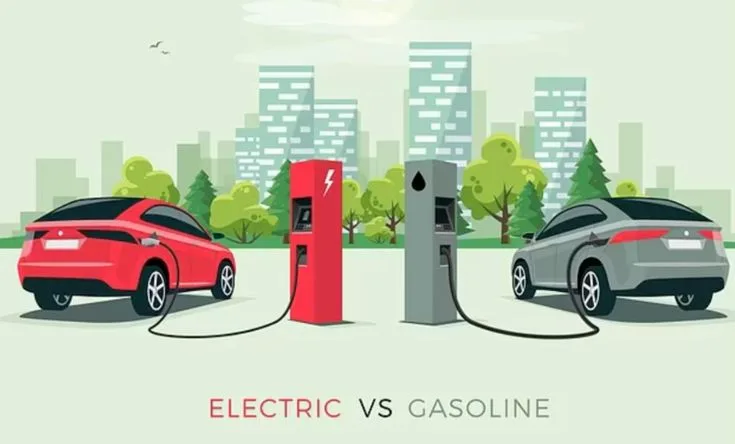
The electric vehicle conversation typically generates more heat than light. On one side, enthusiasts cite falling battery prices, clean energy credentials, and government subsidies. On the other, skeptics cite range limitations, charging infrastructure gaps, and high purchase prices.
Both sides tend to cherry-pick numbers that support their priors and ignore the full picture.
What most people actually need is a clear, honest accounting of what an electric car costs to own over five years compared to a petrol equivalent - not the sticker price comparison, but the real number that includes fuel, insurance, maintenance, depreciation, and financing.
The answer is genuinely more favorable to EVs than many assume, particularly for drivers who charge primarily at home and drive significant mileage annually. The fuel cost differential alone is substantial: electricity is typically 60-75% cheaper per mile than petrol at current prices.
Maintenance costs are meaningfully lower over the vehicle's life. But the higher purchase price, historically higher depreciation on some models, and the specific realities of charging infrastructure mean the economics are not uniformly favorable for everyone.
The right answer depends on how much you drive, where you live, whether you can charge at home, and which specific models you are comparing.
This article builds the full five-year cost picture for a realistic EV versus petrol comparison, addresses the environmental lifecycle question honestly, and identifies the specific circumstances where EVs make clear financial sense and where they do not.
The purchase price comparison between EVs and petrol cars is not the right question. The right question is: what is the total cost of owning and operating each vehicle over five or ten years, including all fuel, maintenance, depreciation, and financing costs?
Key Definitions
Total cost of ownership (TCO): All costs associated with owning and operating a vehicle over a defined period - purchase price (or lease payments), fuel or electricity costs, insurance, maintenance and repair, registration, and depreciation (the decline in resale value).
TCO is the relevant number for comparing vehicles, not sticker price alone.
Depreciation: The loss in a vehicle's value over time. Depreciation is typically the largest single cost of vehicle ownership, often exceeding fuel costs for the first 3-5 years. New vehicles lose roughly 15-25% of their value in the first year and 50-60% over five years on average.
Levelized cost per mile: Total ownership cost divided by miles driven over the ownership period. A useful single metric for comparing vehicles across different use patterns.
kWh/100 miles: The electric equivalent of miles per gallon - how many kilowatt-hours of electricity a vehicle uses per 100 miles driven. Typical for EVs: 25-35 kWh/100 miles. Lower is more efficient.
Charging levels: Level 1 charging (standard 120V household outlet) adds 3-5 miles of range per hour - slow but works overnight. Level 2 charging (240V, like a dryer outlet) adds 20-30 miles per hour - practical for home charging.
DC Fast Charging (Level 3) adds 100-200+ miles in 20-30 minutes - used for road trips at public charging stations.
The Five-Year Cost Comparison
Setting up the comparison
For a realistic comparison, consider two vehicles in a similar segment:
EV: A mid-range electric sedan or crossover - comparable to a Tesla Model 3 Standard Range, Chevrolet Equinox EV, or Hyundai Ioniq 6 - priced at approximately $40,000 after any applicable tax credits.
Petrol: A comparable mid-range petrol sedan or crossover - think Toyota Camry Hybrid, Honda CR-V, or similar - priced at approximately $32,000.
The price gap is real and is the central financial headwind for EVs. The following calculation shows whether lower operating costs can close that gap over five years.
Fuel and electricity costs
At US average fuel prices around $3.50 per gallon and average petrol car efficiency of 32 MPG, driving 15,000 miles per year costs approximately $1,641 in fuel annually.
A typical mid-range EV uses roughly 28 kWh per 100 miles. At 15,000 miles per year, that is 4,200 kWh annually. At the US average residential electricity rate of $0.16 per kWh (2024), annual electricity cost for home charging is approximately $672 - a saving of roughly $969 per year versus petrol.
Over five years, assuming flat fuel and electricity costs for simplicity: electricity advantage = $969 x 5 = $4,845.
If you drive more miles (25,000+ per year), the savings grow proportionally. At 25,000 miles per year, the annual fuel saving exceeds $1,600, and the five-year advantage exceeds $8,000.
Maintenance costs
Consumer Reports' 2023 analysis found that EV owners spend roughly 40% less on maintenance over the first 200,000 miles of ownership compared to ICE vehicle owners.[2]
The structural reasons are clear: no oil changes (saving $100-$200 per year), fewer brake replacements (regenerative braking reduces pad wear), no transmission fluid, spark plugs, or exhaust system maintenance, and fewer fluid replacements overall.
Common EV maintenance costs: tires (same as petrol), wiper blades, cabin air filter, and occasional 12V battery replacement. The EV powertrain simply has fewer wear components.
Conservative estimate over five years: EV saves $1,500-$2,500 in maintenance costs versus a petrol vehicle.
Combined operating cost advantage over 5 years: approximately $6,000-$7,500 for a typical 15,000 miles/year driver.
The purchase price and depreciation problem
With an $8,000 purchase price premium for the EV and $6,000-$7,500 in operating cost savings over five years, the break-even is close but the EV may slightly underperform financially at 15,000 miles/year - unless federal tax credits apply.
The US federal EV tax credit of up to $7,500 (for qualifying vehicles and income levels) changes this calculation significantly. A $7,500 credit effectively eliminates the entire purchase price premium and tips the five-year TCO clearly in the EV's favor at 15,000 miles/year.
Canada, the UK, and many European countries have similar incentive structures.
For higher mileage drivers (20,000+ miles/year), the EV typically wins on TCO even without incentives once the five-year calculation is complete.
Insurance costs
EV insurance has historically run $200-$500 per year higher than comparable petrol vehicles, primarily because repair costs for EV-specific components (battery pack, sensors) are higher and because some insurers are still pricing EV risk conservatively.
As the repair ecosystem matures and volume grows, this gap is narrowing. For the purposes of five-year TCO, account for $500-$1,500 higher insurance costs for the EV.
Five-Year TCO Comparison at a Glance
| Cost Category | EV (est.) | Petrol Car (est.) | EV Advantage |
|---|---|---|---|
| Purchase price | $40,000 | $32,000 | -$8,000 |
| Federal tax credit (if eligible) | -$7,500 | $0 | +$7,500 |
| Fuel / electricity (5 yr, 15k mi/yr) | $3,360 | $8,205 | +$4,845 |
| Maintenance (5 yr estimate) | $2,000 | $4,000 | +$2,000 |
| Insurance premium (5 yr extra) | +$1,000 | - | -$1,000 |
| Net TCO difference (with credit) | +$5,345 in EV favor | ||
| Net TCO difference (no credit) | -$2,155 (petrol wins) |
Assumes 15,000 mi/year, $0.16/kWh electricity, $3.50/gal petrol, 32 MPG petrol, 28 kWh/100 mi EV. Depreciation assumed equal.
Depreciation: The Key Variable
Historical EV depreciation patterns
EV depreciation has been highly variable and in some cases substantially worse than comparable petrol vehicles. The Nissan Leaf, with its older battery chemistry and smaller range, lost 70%+ of its value over five years.
Many early Teslas held value better than average due to strong brand demand, though Tesla's series of aggressive price cuts in 2022-2023 significantly reduced the resale value of used Teslas already in the market.
The core driver of EV depreciation uncertainty is technology change. Battery improvements and new model releases make older EVs with shorter range relatively less desirable faster than equivalent petrol models age.
A 2019 car with a 220-mile range is less competitive in 2024's market than a 2019 petrol car is to comparable 2024 petrol vehicles.
The trend toward normalization
As EV technology matures, range improvements slow, and consumer familiarity grows, EV depreciation rates are converging toward ICE vehicle norms for mainstream models. The Tesla Model Y and Model 3, the Chevy Bolt, and the Hyundai Ioniq 5 and 6 have shown improving residual value as the market deepens.
8-year, 100,000-mile battery warranties from manufacturers (required for federal tax credit eligibility) substantially reduce the battery replacement risk that previously depressed resale values.
For a five-year TCO comparison, using similar depreciation assumptions for EV and petrol is increasingly appropriate for mainstream models. The uncertainty remains higher for EVs, which argues for somewhat conservative assumptions.
The Environmental Lifecycle Question
Manufacturing emissions: the carbon debt
An EV starts its life with a higher carbon 'debt' than a comparable petrol car. Battery production is energy-intensive. Manufacturing a 75 kWh lithium-ion battery pack generates roughly 5-10 tonnes of CO2 equivalent, depending on the energy source used in manufacturing.
A typical petrol car manufacturing process generates roughly 6-8 tonnes. The EV manufacturing phase thus produces approximately 40-70% more CO2 than an equivalent petrol car before it leaves the factory.
Payback through operation
The carbon debt is repaid during the operational life of the vehicle. How quickly depends on the carbon intensity of the electricity grid where the car is charged.
In a coal-heavy grid (parts of West Virginia, Poland, or Australia's coal-reliant states), an EV may take 4-5 years to pay back its manufacturing carbon debt.
In a low-carbon grid (France with its nuclear-heavy electricity mix, Iceland with geothermal, or the US Pacific Northwest with hydropower), the payback period may be under a year.
A Union of Concerned Scientists analysis found that the average EV in the US produces lifetime emissions equivalent to a petrol car achieving 94 MPG - dramatically better than any petrol vehicle available.[3]
As electricity grids continue decarbonizing with renewable energy additions, this advantage grows automatically over the operational life of the EV without the owner doing anything differently.
The whole-vehicle lifecycle
On full lifecycle analysis (mining, manufacturing, fuel/electricity generation, vehicle operation, and disposal), EVs produce significantly lower greenhouse gas emissions than petrol vehicles in most electricity grids today, and that advantage grows as the grid decarbonizes.
The lifecycle advantage is well-established in peer-reviewed research and is not seriously contested in the scientific literature, though the magnitude varies by location and specific vehicle compared.
Range Anxiety: The Reality in 2026
What range anxiety actually means
Range anxiety - the fear of running out of charge before reaching a destination - is the most commonly cited concern about EV ownership. For daily driving, it is largely a solved problem. The average American drives about 37 miles per day.
An EV with 200+ miles of range, charged overnight at home on a Level 2 charger, starts every morning full. The anxiety is rational only for specific use cases.
Where range anxiety remains legitimate
Long road trips: Charging at DC Fast Chargers adds 150-200 miles in 20-30 minutes, versus 5 minutes to fill a petrol tank. For a 500-mile trip, an EV requires 1-2 charging stops of 20-30 minutes each - not a major issue but a real planning consideration.
The Tesla Supercharger network has made this manageable for Tesla owners; the NACS/CCS charging networks are improving for other EVs.
Rural and infrastructure-limited areas: In areas with limited DC Fast Charging availability, long trips require more planning. Rural drivers who routinely travel 150+ miles from home on a single trip should verify charging infrastructure before committing to an EV.
Apartment and condo dwellers without home charging: Level 1 charging from a standard outlet is impractically slow for most drivers. Without Level 2 home charging, EV ownership is significantly more friction-intensive and depends on reliable access to public charging. This is a genuine and underappreciated barrier for urban renters.
The apartment charging solution gap
Apartment charging infrastructure is one of the most significant remaining structural barriers to broad EV adoption. Many multi-family housing buildings have no EV charging provisions, and retrofitting shared parking is complex and expensive.
Renters who cannot install their own charger are partially excluded from the home-charging cost advantage that makes EV ownership most compelling financially.
When EVs Make Clear Financial Sense
High annual mileage (15,000+ miles per year): The fuel savings compound faster, and the break-even on higher purchase price is reached sooner.
Home charging access: The combination of lower electricity cost, overnight charging convenience, and not depending on public charging infrastructure makes home charging the key enabler of EV economics.
Federal or state tax credits available: The US federal $7,500 credit for qualifying vehicles and buyers substantially changes the purchase price comparison. Check eligibility carefully - income limits and vehicle MSRP limits apply.
Local low-emission zones or congestion charge exemptions: In cities with clean air zones or congestion charges (London, Oslo, several EU cities), EVs receive exemptions that can save hundreds or thousands per year in urban driving fees.
Predictable local driving with rare long trips: The daily driving use case is ideal. Road trip frequency is the primary remaining friction point.
Practical Recommendations
Calculate your specific break-even before deciding. Use your actual annual mileage, your local electricity rate (check your utility bill), your local petrol price, and the specific models you are considering. Generic calculations using national averages may not reflect your situation.
Prioritize home charging installation. A Level 2 home charger (cost: $500-$1,500 installed) is one of the highest-ROI EV accessories because it reduces charging costs to residential electricity rates, provides full charge convenience, and eliminates dependence on public infrastructure for daily use.
Check federal and state incentives before negotiating price. Incentives change and have eligibility requirements. The current federal credit requires specific domestic content in the battery and has income and vehicle price limits.
Consider a longer ownership horizon than 5 years. EVs with larger battery packs (60+ kWh) and good battery warranty coverage are likely to remain serviceable and valuable for 10-15 years. A longer ownership horizon amplifies the operating cost advantage and reduces the per-year impact of any purchase price premium.
Do not buy an EV primarily for environmental reasons if the financials do not work for you.
The environmental case is strong, but if the practical use case (range requirements, charging access, budget) is a poor fit, the financial cost of forcing an EV ownership experience will likely undermine both the finances and the satisfaction with the choice.
Sources & Further Reading
US Department of Energy. (2024). Alternative fuels data center: Electric vehicle cost calculator. Office of Energy Efficiency and Renewable Energy. View source
Consumer Reports. (2023). Electric vehicle ownership costs: Consumer perspectives and long-term analysis. Consumer Reports Transportation Research.
Union of Concerned Scientists. (2023). Cleaner cars from cradle to grave: A lifecycle analysis of EVs and ICE vehicles. UCS Clean Transportation Program.
Michalek, J. J., Chester, M., Jaramillo, P., Samaras, C., Shiau, C. S. N., & Lave, L. B. (2011). Valuation of plug-in vehicle life-cycle air emissions and oil displacement benefits. Proceedings of the National Academy of Sciences, 108(40), 16554-16558.
Milovanoff, A., Posen, I. D., & MacLean, H. L. (2020). Electrification of light-duty vehicle fleet alone will not meet mitigation targets. Nature Climate Change, 10(12), 1102-1107.
Woody, M., Vaishnav, P., Keoleian, G. A., De Kleine, R., Kim, H. C., Anderson, J. E., & Wallington, T. J. (2022). The role of pickup truck electrification in the decarbonization of light-duty vehicles. Environmental Research Letters, 17(3), 034031.
US Energy Information Administration. (2024). Electric power monthly: Average retail price of electricity. EIA. View source
BloombergNEF. (2024). Electric vehicle outlook 2024. BloombergNEF Energy Research.
International Energy Agency. (2024). Global EV outlook 2024. IEA. View source
Kelly, J. C., Sullivan, J. L., Burnham, A., & Elgowainy, A. (2015). Impacts of vehicle weight reduction via material substitution on life-cycle greenhouse gas emissions. Environmental Science and Technology, 49(20), 12535-12542.
iSeeCars.com. (2024). EV depreciation study: Which electric vehicles hold their value best? iSeeCars Research.
Rocky Mountain Institute. (2023). The economics of clean electrification: EV total cost of ownership analysis. RMI. View source