
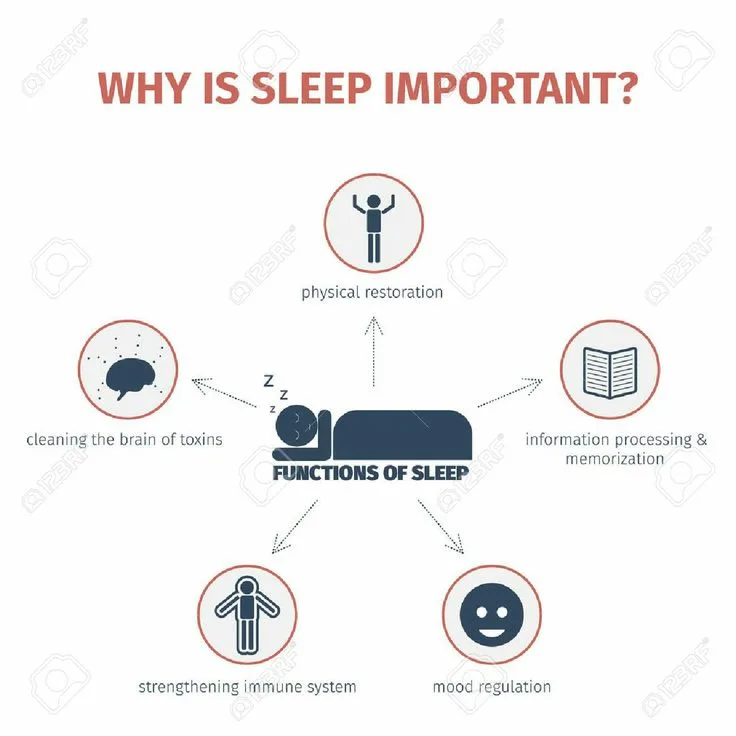
Why sleep is critical is that sleep is an active biological process supporting memory consolidation, immune activity, hormones, waste clearance, emotion, and judgment. NREM and REM stages serve different functions, while circadian rhythm and sleep homeostasis regulate when sleep occurs and how strongly it is needed. Chronic short sleep degrades risk assessment and other cognitive capacities, with effects that accumulate across health and daily decisions.
In April 1986, the operators of Reactor Number Four at the Chernobyl Nuclear Power Plant had been awake for thirteen or more hours when a routine safety test went catastrophically wrong.
According to the official Soviet investigation and subsequent analyses by sleep researchers, operator fatigue contributed directly to the sequence of decisions that led to the explosion.
About three months earlier, in January 1986, the night shift engineers who approved the Challenger space shuttle launch - over the explicit objections of engineers at Morton Thiokol who feared the O-ring behavior in cold temperatures - had also been awake since the early hours.
The Rogers Commission later identified sleep deprivation as a contributing factor in NASA management's flawed judgment. These are not coincidences. Sleep deprivation degrades the specific cognitive capacities - risk assessment, probabilistic reasoning, impulse control - that are most critical precisely when the stakes are highest.
Most of us will never make decisions with the consequences of Chernobyl or Challenger. But we make thousands of smaller judgments daily, in offices, on roads, in relationships, about our health, about our children, that are shaped by whether our brains have been adequately restored by sleep.
Matthew Walker, a neuroscientist and sleep researcher at UC Berkeley, has called sleep "the greatest legal performance enhancing drug that most people are probably neglecting." The research he and dozens of other scientists have accumulated over the past three decades makes that claim not hyperbole but straightforward summary of evidence.[1]
Sleep is not the absence of wakefulness. It is an active, highly organized biological process during which the brain consolidates memories, the immune system mounts defenses, the endocrine system secretes critical hormones, and the glymphatic system flushes toxic waste from neural tissue.
When we systematically shorten that process - as modern industrial and digital society has done for most of the population - the consequences accumulate quietly before they become catastrophic.
The scale of the problem is not small. The Centers for Disease Control and Prevention have declared insufficient sleep a public health epidemic. In the United States, surveys consistently find that more than one-third of adults report regularly sleeping fewer than seven hours per night.
In South Korea and Japan, where cultural norms around work and productivity actively stigmatize sleep, average sleep duration has dropped to below six and a half hours.
The economic costs are staggering: a 2016 analysis by the RAND Corporation estimated that the United States loses approximately 411 billion dollars per year in economic output due to sleep-related productivity losses and health costs, with similar proportional losses in other developed nations.
But these numbers, large as they are, do not capture what happens inside a human body and brain that is chronically deprived of the biological maintenance process it was designed to depend on.
"The shorter your sleep, the shorter your life. The leading causes of disease and death in developed nations - diseases that are crippling health-care systems, such as heart disease, obesity, dementia, diabetes, and cancer - all have recognized causal links to a lack of sleep." - Matthew Walker, Why We Sleep (2017)
Key Definitions
NREM sleep (Non-Rapid Eye Movement sleep) - The deeper, slower phases of sleep, comprising approximately 75 to 80 percent of total sleep time in adults. NREM sleep is divided into three stages (N1, N2, and N3), with N3 - slow-wave sleep or deep sleep - being the most physiologically restorative.
It is during slow-wave NREM sleep that the glymphatic system performs its waste-clearance function and that declarative memory consolidation is most active.
REM sleep (Rapid Eye Movement sleep) - The phase of sleep associated with vivid dreaming, characterized by paradoxically high brain activity (similar to wakefulness), complete muscle atonia (paralysis of voluntary muscles), and rapid conjugate eye movements.
REM sleep comprises approximately 20 to 25 percent of total sleep time and is critical for emotional memory processing, creative problem-solving, procedural skill consolidation, and the integration of new memories with existing knowledge frameworks.
Glymphatic system - A waste-clearance network in the brain, first described by Maiken Nedergaard and colleagues in 2013, that uses cerebrospinal fluid to flush metabolic byproducts from brain tissue.[2]
The system is named for its dependence on glial cells (particularly astrocytes) and its functional analogy to the peripheral lymphatic system.
It is most active during slow-wave NREM sleep, when the brain's interstitial space expands by approximately 60 percent.
Circadian rhythm - The approximately 24-hour biological clock that regulates the timing of nearly every physiological process in the body, including the sleep-wake cycle, core body temperature, hormone secretion, immune activity, and metabolism.
The master circadian pacemaker is located in the suprachiasmatic nucleus (SCN) of the hypothalamus and is entrained primarily by light exposure. Research by Russell Foster at Oxford has demonstrated the remarkable pervasiveness of circadian regulation across all organ systems.[9]
Sleep homeostasis - The accumulation of sleep pressure across waking hours, driven primarily by the buildup of adenosine - a sleep-promoting metabolite - in the brain. The longer you are awake, the more adenosine accumulates and the stronger the drive to sleep.
Caffeine works by blocking adenosine receptors, temporarily masking sleep pressure without eliminating the underlying adenosine buildup.
What Each Sleep Stage Does: Functions and Consequences of Loss
| Sleep stage | Share of night | Primary function | What you lose when sleep is cut | Key research |
|---|---|---|---|---|
| N1 (light NREM) | ~5% | Transition; sleep onset | Minimal; easily recovered | - |
| N2 (intermediate NREM) | ~45-55% | Motor skill consolidation; sleep spindles transfer memories hippocampus?cortex | Motor learning impaired | Stickgold; Walker |
| N3 (slow-wave, deep NREM) | ~15-20% | Physical restoration; glymphatic waste clearance; growth hormone; declarative memory | Amyloid buildup; reduced immune function; physical recovery impaired | Nedergaard 2013; Shokri-Kojori 2018 |
| REM | ~20-25% | Emotional memory processing; creative integration; dreaming | Emotional dysregulation; impaired creativity; anxiety; more of REM lost when sleep is cut short | Walker; Cartwright |
Note: REM sleep is front-loaded into the second half of the night. Cutting from 8 to 6 hours removes proportionally more REM than NREM.
The Architecture of a Night's Sleep
Sleep is not a uniform state. Over the course of a night, the brain cycles through a predictable architecture of NREM and REM stages, with each complete cycle lasting approximately 90 minutes.
The composition of these cycles shifts across the night in a predictable pattern that has profound implications for what is actually accomplished by different amounts of sleep.
In the first half of the night, cycles are dominated by slow-wave NREM sleep (N3), the deepest and most physically restorative stage. During slow-wave sleep, the brain generates synchronized, high-amplitude electrical oscillations called slow waves or delta waves.
Simultaneously, sleep spindles - bursts of rapid, rhythmic brain activity - coordinate the transfer of information from the hippocampus (which acts as a short-term buffer for new memories) to the neocortex (which provides long-term storage).
This is the phase during which the glymphatic system is most active, cardiac stress hormones are at their lowest, and human growth hormone secretion peaks.
In the second half of the night, cycles shift toward REM-dominant sleep. This is when dreaming is most vivid and most memorable.
REM sleep has been described by Walker as a form of "overnight therapy" for emotional memories: the brain reprocesses emotionally charged experiences from waking life in a neurochemical environment stripped of noradrenaline (norepinephrine), a stress-related neurotransmitter.
This allows emotional memories to be integrated and their distressing charge reduced.
Research by Rosalind Cartwright at Rush University found that depressed patients who showed more REM sleep activity, specifically in processing negative emotional experiences, were more likely to recover from depression, pointing to a genuinely therapeutic function of dreaming.
The critical implication of this architecture is that the first and second halves of the night are not interchangeable. Cutting sleep from eight to six hours removes proportionally more REM sleep than NREM sleep, because REM sleep is front-loaded into the second half of the cycle.
Someone consistently sleeping six hours is losing approximately 60 to 90 minutes of REM sleep per night compared to someone sleeping eight hours.
The cumulative deficit across a week represents potentially six to ten hours of lost REM - with all the emotional processing, memory integration, and creative consolidation that would have occurred in that time.
The Glymphatic System: Your Brain's Overnight Cleaning Service
Among the most consequential discoveries in sleep neuroscience in the past decade is the identification of the glymphatic system.
In 2013, Maiken Nedergaard and colleagues at the University of Rochester published a paper in Science that described, for the first time, a previously unknown waste-clearance network in the mouse brain that showed dramatically increased activity during sleep.
The mechanism works as follows: during slow-wave NREM sleep, aquaporin-4 water channels on astrocytes (a type of glial cell) open, and cerebrospinal fluid is actively pumped through the spaces surrounding blood vessels (called perivascular spaces or the Virchow-Robin space).
This cerebrospinal fluid carries metabolic waste products away from brain tissue and toward the venous system, where they can be cleared by the peripheral lymphatic system and liver.
Nedergaard's team found that the brain's interstitial space - the gaps between cells - expanded by approximately 60 percent during sleep compared to wakefulness, creating dramatically increased channels for this fluid movement.
The metabolic waste products cleared by the glymphatic system include amyloid beta and tau protein - the proteins whose accumulation in plaques and tangles is the defining pathology of Alzheimer's disease.
Subsequent human studies using PET imaging have confirmed that a single night of sleep deprivation significantly increases amyloid beta accumulation in the human brain, particularly in the thalamus and hippocampus.
A landmark 2017 study by Ehsan Shokri-Kojori and colleagues at the NIH found that after one night of sleep deprivation, amyloid beta burden in the brain increased by approximately 5 percent on average - a meaningful single-night accumulation in a process that typically unfolds over decades.[5]
This finding reframes the relationship between sleep and Alzheimer's disease. For decades, poor sleep was assumed to be a symptom of the early stages of neurodegeneration.
The glymphatic research suggests it is also a cause: people who chronically sleep insufficiently accumulate more amyloid beta, increasing their risk of developing Alzheimer's pathology.
Large epidemiological studies support this. A 2021 study published in Nature Communications, following nearly 8,000 individuals over 25 years, found that people who reported regularly sleeping six hours or fewer at age 50, 60, and 70 were 30 percent more likely to develop dementia than those sleeping seven hours, even after adjusting for health behaviors and mental health status.[6]
Sleep, Memory, and the Consolidation Process
Robert Stickgold at Harvard Medical School has described sleep as the period when the brain acts as its own editor, deciding what to keep, what to strengthen, and what to discard. His decades of research have illuminated the mechanisms by which sleep transforms initial, fragile memory traces into durable long-term representations.
The process begins with encoding: when you experience or learn something, the hippocampus creates a rapid-binding representation that associates the various components of the experience - visual details, auditory information, spatial context, emotional significance.
This hippocampal representation is initially fragile. It can be disrupted by interference from new information, and it will fade without subsequent consolidation.
During NREM sleep, particularly slow-wave sleep, memory consolidation occurs through a process that involves coordinated dialogue between the hippocampus and the neocortex.
Sleep spindles (bursts of sigma-band activity generated by the thalamus) and slow oscillations (generated by the prefrontal cortex) are temporally coordinated with hippocampal sharp-wave ripples - brief bursts of activity during which the hippocampus "replays" waking experiences at a compressed time scale.
This hippocampal replay appears to signal to the neocortex to update its long-term representations, effectively transferring the memory from temporary hippocampal storage to distributed cortical storage.
Stickgold's 2005 review in Science synthesized evidence from dozens of studies demonstrating that this consolidation is not passive but highly selective.[4]
The sleeping brain preferentially consolidates emotionally significant memories (with amygdala input signaling importance), recently learned skills, and information that the hippocampus has "tagged" as important during waking.
Emotional memories receive additional enhancement: Stickgold and Walker found that emotional memories showed approximately 40 percent better consolidation after sleep than after an equivalent period of wakefulness, with the enhancement driven specifically by REM sleep.
Procedural memories - motor skills like learning a piano piece or a new surgical technique - are also strongly sleep-dependent. Studies by Stickgold, Walker, and Avi Karni found that performance on procedural tasks improved significantly after a night of sleep, with the improvement occurring during sleep rather than continuing practice.
Critically, the improvement was lost if participants were deprived of sleep in the first 24 hours after learning, but not if deprived later - pointing to a specific early window during which sleep consolidation of motor memories occurs.
Sleep Deprivation and the Immune System
The relationship between sleep and immune function has been demonstrated with striking directness by a series of studies led by Sheldon Cohen at Carnegie Mellon University.
In the most compelling experiment, published in the Archives of Internal Medicine in 2009, Cohen's team exposed 153 healthy volunteers to rhinovirus (the common cold virus) through nasal drops after carefully monitoring their sleep duration over two weeks.[3]
Participants who slept less than seven hours per night were 2.94 times more likely to develop a cold than those sleeping eight hours or more.
Those sleeping less than six hours were 4.24 times more likely to become infected - more than four times the susceptibility, from a single behavioral variable.[7]
The immunological mechanisms are well characterized. During sleep, the immune system increases the production of pro-inflammatory cytokines including interleukin-1 beta, interleukin-6, and tumor necrosis factor alpha - signaling molecules that coordinate immune activity.
Natural killer cells, which are the immune system's primary mechanism for killing virally infected cells and cancer cells, show markedly reduced activity after sleep deprivation.
A 2019 study by Aric Prather and colleagues found that sleeping six hours versus eight hours reduced natural killer cell activity by approximately 70 percent.
Vaccine response is also significantly impaired by pre-vaccination sleep deprivation: Prather's group found that people sleeping six or fewer hours in the week before hepatitis B vaccination produced less than half the antibody response of those sleeping seven or more hours - in some cases falling below the threshold considered protective.
Thomas Roth at the Henry Ford Hospital Sleep Center has spent decades documenting the "short sleeper myth" - the widespread but largely unfounded belief that sleeping less is either neutral or a sign of productive dedication.
Roth's research using wrist actigraphy (objective rather than self-reported sleep measurement) finds that people dramatically overestimate how much they sleep. Self-reported sleep duration exceeds actigraphy-measured sleep by an average of about one hour.
The cultural narrative around needing less sleep - reinforced by figures like Margaret Thatcher and Donald Trump boasting of four-hour nights, and by Silicon Valley "hustle culture" glorifying sleep deprivation - is therefore not only scientifically unfounded but based in part on inaccurate self-knowledge.
Drowsy Driving: The Overlooked Catastrophe
One of Matthew Walker's most cited statistics concerns a direct comparison between drowsy driving and drunk driving. Driving after being awake for 20 consecutive hours produces cognitive impairment equivalent to a blood alcohol level of 0.08 percent - the legal limit in most jurisdictions.
After 24 hours awake, impairment is equivalent to a blood alcohol level of 0.10 percent. Yet drowsy driving carries none of the social stigma or legal consequences of drunk driving, despite similar impairment profiles.
The National Highway Traffic Safety Administration attributes approximately 100,000 police-reported crashes, 1,550 deaths, and 71,000 injuries annually to drowsy driving in the United States. Independent researchers, accounting for under-reporting, estimate the true toll is substantially higher.
Crucially, there is no subjective warning equivalent to feeling drunk: severely sleep-deprived drivers consistently underestimate their impairment and overestimate their driving ability, precisely because the metacognitive capacity to accurately assess one's own impairment is itself one of the functions most degraded by sleep deprivation.
Circadian Biology and the Light Environment
The master circadian clock in the suprachiasmatic nucleus (SCN) of the hypothalamus operates on a roughly 24-hour cycle, but requires daily entrainment from light signals to remain synchronized with the external environment.[11]
Light detected by intrinsically photosensitive retinal ganglion cells - which contain a photopigment called melanopsin that is particularly sensitive to short-wavelength (blue, 480nm) light - is relayed directly to the SCN, which then coordinates the timing of melatonin secretion from the pineal gland.
Melatonin is not a sleeping pill; it is a darkness signal that announces the biological night to the body's tissues and organs. The pineal gland begins secreting melatonin approximately two hours before habitual sleep onset, coordinating the physiological preparation for sleep.
Research from Harvard's Division of Sleep Medicine, including work by Charles Czeisler and colleagues, has demonstrated that exposure to bright light in the evening - particularly the short-wavelength light emitted by LED screens, smartphones, and tablets - suppresses melatonin secretion significantly.
A 2014 Harvard study found that use of an iPad for four hours before bed suppressed melatonin by approximately 55 percent and delayed its onset by 1.5 hours, compared to reading a printed book.[8]
Russell Foster at Oxford's Sleep and Circadian Neuroscience Institute has extended circadian research into clinical implications, documenting how disrupted circadian rhythms - through shift work, social jetlag (the misalignment between social schedules and biological timing), and irregular light exposure - are associated with elevated risks of cancer, metabolic syndrome, cardiovascular disease, depression, and cognitive impairment.
Foster's 2022 book synthesizes evidence that the circadian clock is not a peripheral quirk of biology but a fundamental organizer of physiological timing, the disruption of which carries systemic health consequences.
Arianna Huffington and the Cultural Shift
In 2007, Arianna Huffington collapsed from exhaustion in her office, broke her cheekbone, and found herself lying in a pool of her own blood on the floor.[12] The incident prompted a decade-long investigation into sleep science and the cultural norms around sleep deprivation that culminated in her 2016 book, The Sleep Revolution.
Huffington's public advocacy - from the TED Talk heard by millions to the Thrive Global platform she subsequently founded - has played a meaningful role in shifting cultural narratives around sleep, particularly within the corporate world where sleep deprivation had long been worn as a badge of professional commitment.
The science she encountered and began disseminating was unambiguous: sleep deprivation does not make you more productive.
A 2011 study by Christopher Barnes and colleagues, published in the Academy of Management Journal, found that sleep-deprived leaders displayed significantly less inspirational and considerate leadership behavior and more abusive supervision.[10]
Employees who worked for these sleep-deprived leaders showed lower engagement and organizational commitment.
The irony embedded in overwork culture is that the very behaviors intended to demonstrate commitment - working long hours at the expense of sleep - systematically degrade the cognitive and interpersonal capacities that make the work valuable.
Practical Takeaways
Protect the first and last two hours of your intended sleep window. These map approximately to your most critical slow-wave NREM and most critical REM phases respectively. Truncating sleep at either end has outsized effects on specific biological functions.
Set your wake time first and work backward. The most powerful regulator of sleep timing and quality is consistent wake time, not consistent bedtime. Anchor your wake time and the sleep pressure accumulated across the day will ensure appropriate sleep onset.
Manage your light environment deliberately. Dim indoor lighting and avoid blue-spectrum screens in the two hours before bed. Consider blue-light-blocking glasses or app-based screen dimming (f.lux, Night Shift) as practical tools.
Treat caffeine as a drug with a six-hour half-life. A standard coffee consumed at 2 PM still has roughly half its caffeine active at 8 PM. Caffeine consumed after midday measurably reduces total sleep time and slow-wave NREM sleep, even when you feel you fall asleep normally.
Understand that alcohol destroys sleep quality even as it helps sleep onset. Alcohol is a sedative, not a sleep aid. It causes fragmented sleep, suppresses REM sleep, and leads to more awakening in the second half of the night, when the most REM-rich cycles would otherwise occur.
Keep the bedroom cool. Core body temperature must fall approximately one degree Celsius for sleep to initiate. The optimal ambient temperature for sleep onset and maintenance is 65 to 68 degrees Fahrenheit (18 to 20 Celsius) for most adults.
If you cannot sleep, get out of bed. Lying awake in bed trains the brain to associate the bed with wakefulness and frustration, worsening insomnia.
Stimulus control therapy - rising after 20 minutes of wakefulness, going to another room until sleepy, returning to bed - is among the most evidence-supported components of Cognitive Behavioral Therapy for Insomnia (CBT-I), which outperforms sleep medication in randomized trials for long-term outcomes.
Cross-Links
- How Stress Damages the Body
- Why Diets Fail and What Actually Works
- How the Brain Changes with Age
- How to Fix Your Sleep
- Why Sleep Deprivation Feels Fine (But Isn't)
Sources & Further Reading
- Walker, M. P. (2017). Why We Sleep: Unlocking the Power of Sleep and Dreams. Scribner.
- Nedergaard, M., et al. (2013). Sleep drives metabolite clearance from the adult brain. Science, 342(6156), 373-377.
- Cohen, S., Doyle, W. J., Alper, C. M., Janicki-Deverts, D., & Turner, R. B. (2009). Sleep habits and susceptibility to the common cold. Archives of Internal Medicine, 169(1), 62-67.
- Stickgold, R. (2005). Sleep-dependent memory consolidation. Nature, 437(7063), 1272-1278.
- Shokri-Kojori, E., et al. (2018). Beta-amyloid accumulation in the human brain after one night of sleep deprivation. Proceedings of the National Academy of Sciences, 115(17), 4483-4488.
- Sabia, S., et al. (2021). Association of sleep duration in middle and old age with incidence of dementia. Nature Communications, 12, 2289.
- Prather, A. A., et al. (2015). Behaviorally assessed sleep and susceptibility to the common cold. Sleep, 38(9), 1353-1359.
- Chang, A. M., Aeschbach, D., Duffy, J. F., & Czeisler, C. A. (2015). Evening use of light-emitting eReaders negatively affects sleep, circadian timing, and next-morning alertness. Proceedings of the National Academy of Sciences, 112(4), 1232-1237.
- Foster, R. G. (2022). Life Time: Your Body Clock and Its Essential Roles in Good Health and Sleep. Penguin Life.
- Barnes, C. M., Lucianetti, L., Bhave, D. P., & Christian, M. S. (2015). You wouldn't like me when I'm sleepy: Leaders' sleep, daily abusive supervision, and work unit engagement. Academy of Management Journal, 58(5), 1419-1437.
- Wright, K. P., et al. (2013). Entrainment of the human circadian clock to the natural light-dark cycle. Current Biology, 23(16), 1554-1558.
- Huffington, A. (2016). The Sleep Revolution: Transforming Your Life, One Night at a Time. Harmony Books.
Health note: This article is general educational information about how a topic works, not medical, psychological, or mental-health advice, diagnosis, or treatment. Everyone's situation is different, and research findings describe groups, not individuals.
If you are struggling or have concerns about your health, please talk to a qualified professional such as a doctor or licensed therapist.
If you are in crisis or thinking about harming yourself, contact your local emergency services or a crisis line right away, in the US you can call or text 988 (Suicide & Crisis Lifeline); elsewhere, find local lines at findahelpline.com.