
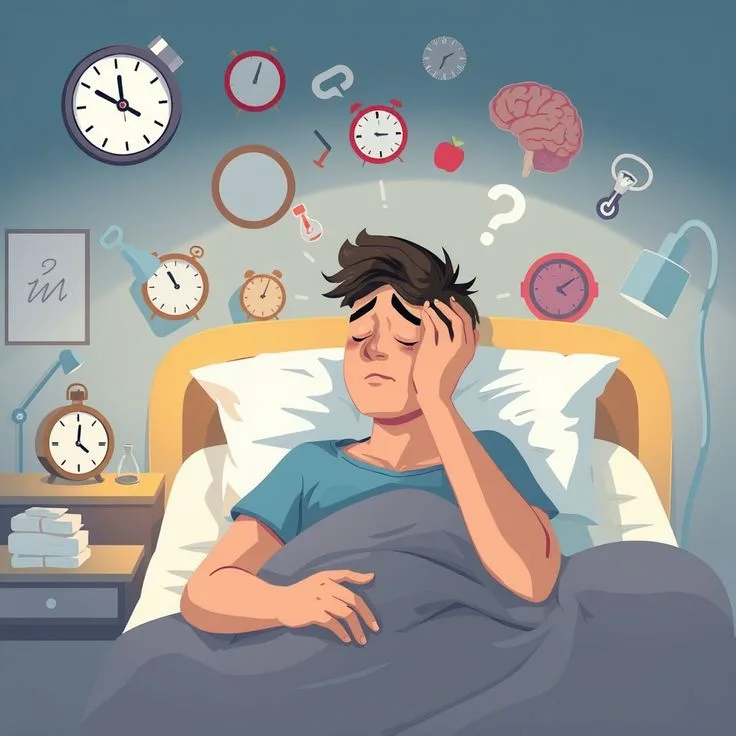
Sleep: In 1965, Randy Gardner, a 17-year-old high school student in San Diego, stayed awake for 11 days and 25 minutes under supervised conditions as a science fair project. By the fourth day, he had become irritable and uncooperative. By day six he was having hallucinations.
By day nine, Gardner's speech was slurred and his memory so impaired he could not complete simple cognitive tests. Stanford sleep researcher William Dement, who monitored Gardner throughout the experiment, later described the final days as equivalent to acute psychosis.
Gardner recovered after sleeping 14 hours on the first recovery night. He later reported suffering chronic sleep problems for decades afterward.
The Gardner case is famous because of its extremity. But the science of sleep deprivation reveals something more immediately relevant to the lives of the hundreds of millions of people who regularly sleep six hours or fewer on worknight schedules: you cannot feel how impaired you are.
The mechanism that would alert you to your own cognitive deterioration is itself one of the first casualties of sleep loss. Sleep deprivation creates a self-concealing impairment. The less you sleep, the less accurate your assessment of your own functioning becomes.
This is not a metaphor. It is among the most robustly replicated findings in all of sleep science.
Key Definitions
Sleep homeostasis: The biological mechanism by which sleep debt accumulates during wakefulness and is discharged during sleep. The longer one has been awake, the stronger the pressure to sleep.
Process S: Alexander Borbely's 1982 term for the homeostatic sleep drive. Process S represents the buildup of sleep pressure during wakefulness and its dissipation during sleep.
Process C: Borbely's term for the circadian component of sleep regulation. Process C is the approximately 24-hour biological clock that modulates alertness and sleep propensity independently of sleep debt.
Adenosine: A neuromodulator that accumulates in the brain during wakefulness. Adenosine binds to adenosine receptors in the basal forebrain and other regions, inhibiting wakefulness-promoting circuits. Adenosine buildup is the biochemical substrate of Process S.
Glymphatic system: The brain's waste-clearance system, described by Maiken Nedergaard in 2013. Cerebrospinal fluid flows through perivascular channels (the "glymphatic" pathway) during slow-wave sleep, flushing metabolic waste products including amyloid-beta from the brain's interstitial space.
Microsleep: An involuntary episode of sleep lasting 0.5 to 15 seconds that occurs during apparent wakefulness in sleep-deprived individuals. The brain is in a sleep state while the person continues performing activities.
Sleep inertia: The grogginess and cognitive impairment experienced immediately after waking, typically lasting 15-60 minutes. More severe after being awakened from deep sleep and in sleep-deprived individuals.
Fatal familial insomnia (FFI): A rare prion disease caused by mutation in the PRNP gene, characterized by progressive inability to sleep, autonomic dysfunction, hallucinations, and dementia. Uniformly fatal within 6-30 months. Demonstrates the non-negotiable biological necessity of sleep.
The Penn Sleep Restriction Study: Six Hours Is Not Enough
The most important study in the scientific literature on the subjective experience of sleep deprivation was published in 2003 by Hans Van Dongen, Greg Maislin, Janet Mullington, and David Dinges at the University of Pennsylvania.[1] It is commonly called the Penn sleep restriction study.
The researchers randomly assigned 48 healthy adults to one of four groups. One group was allowed to sleep 8 hours per night. One was restricted to 6 hours per night. One was restricted to 4 hours per night. A fourth group stayed awake for 72 consecutive hours.
Over 14 days of the restriction protocol, subjects underwent daily testing on the Psychomotor Vigilance Task (PVT), a 10-minute reaction time test that is among the most sensitive and reliable measures of sustained attention. Subjects also rated their own sleepiness each day.
The results produced a striking dissociation.
Performance on the PVT in the 6-hour group deteriorated continuously across the 14 days. By the end of the study, the 6-hour group's performance on the PVT was equivalent to the group that had been awake for 72 consecutive hours - the equivalent of two full all-nighters.
The subjective sleepiness ratings in the 6-hour group told a different story. Sleepiness ratings increased sharply in the first few days of restriction, then plateaued. By the end of the study, 6-hour subjects rated themselves as only slightly sleepy - roughly equivalent to their baseline.
The subjects' self-assessments had become completely decoupled from their objective cognitive performance. They felt fine. They were not fine.
"People do not know how sleep-deprived they are when they are sleep-deprived." - David Dinges, University of Pennsylvania, 2005
The practical implications of this finding are difficult to overstate. If a person cannot accurately assess their own cognitive impairment, they cannot make compensatory adjustments. A person who knows they are impaired may avoid driving, avoid important decisions, or ask for help.
A person who does not know they are impaired does none of these things. The subjective normalcy of chronic sleep restriction is precisely what makes it dangerous.
The Two-Process Model: Why You Cannot Simply Will Yourself Awake
Alexander Borbely, a sleep researcher at the University of Zurich, published a landmark paper in 1982 in Human Neurobiology describing a two-process model of sleep regulation.[2]
This model remains the foundational framework for understanding why sleep and wakefulness occur when they do, and why insufficient sleep produces the specific patterns of impairment it does.
Process S is the homeostatic pressure. During every hour of wakefulness, adenosine - a byproduct of cellular metabolism - accumulates in the brain, particularly in the basal forebrain. The longer you have been awake, the more adenosine has accumulated.
Adenosine binds to adenosine A1 and A2A receptors that suppress the activity of wakefulness-promoting circuits in the hypothalamus and basal forebrain. As adenosine accumulates, the brain is progressively biased toward sleep.
Process C is the circadian rhythm. The suprachiasmatic nucleus (SCN) of the hypothalamus, the brain's master clock, generates approximately 24-hour rhythms in physiology and behavior through a molecular oscillator based on interlocking feedback loops of transcription factors (CLOCK, BMAL1, PER, CRY, and others).
The circadian system promotes wakefulness during the biological day and sleep during the biological night, independently of how long the person has been awake.
Normally, these two processes work in coordination. As sleep pressure accumulates during the waking day, the circadian system provides increasing wakefulness drive to counteract it, maintaining alertness until the appropriate sleep time.
At night, circadian wakefulness drive falls, and combined with accumulated sleep pressure, allows sleep to occur.
Sleep deprivation destabilizes this coordination. When sleep is restricted to 6 hours per night, Process S does not fully discharge - adenosine is not completely cleared. Each successive night leaves a residual adenosine debt.
Over days and weeks, this debt accumulates, producing the kind of progressive deterioration Van Dongen documented.
Crucially, the circadian system continues operating on its normal schedule, which is why sleep-deprived people feel relatively alert at certain times of day (typically mid-morning and early afternoon) and profoundly impaired at others (particularly the circadian nadir between 2 and 6 AM).
Caffeine: Blocking the Signal, Not Clearing the Debt
Caffeine is the world's most widely consumed psychoactive substance. Its mechanism is now precisely understood: it is an adenosine receptor antagonist. Caffeine binds to adenosine receptors in the brain without activating them, competitively blocking adenosine from binding.
Because adenosine cannot signal, the wakefulness-suppressing effect is blocked. The person feels alert.
The adenosine is still there. Caffeine does not clear it. It masks the signal. When caffeine is eventually metabolized (its half-life is approximately 5-7 hours), the adenosine that had accumulated during the period of caffeine consumption is available to bind all at once.
This is the mechanism of the post-caffeine "crash" - and a partial explanation for why regular high-dose caffeine users often feel worse when they stop.
More importantly, caffeine does not restore the cognitive functions impaired by sleep deprivation.
Research by John Groeger and colleagues at the University of Surrey found that while caffeine partially restores subjective alertness in sleep-deprived subjects, it does not restore objective performance on the full range of cognitive tasks impaired by sleep loss.
The sense of functional restoration that caffeine produces is partly real and partly another form of the dissociation that makes sleep deprivation self-concealing.
What Sleep Deprivation Actually Damages
The Prefrontal Cortex
The prefrontal cortex - the anterior portion of the frontal lobe, supporting working memory, attention, decision-making, inhibitory control, and creative problem-solving - is among the brain regions most sensitive to sleep deprivation.
This sensitivity has a neurochemical basis: prefrontal circuits depend on optimal levels of dopamine and norepinephrine signaling, and sleep deprivation disrupts these neurotransmitter systems preferentially.
The consequence is that sleep deprivation produces disproportionate impairment in the highest-level cognitive functions. Basic sensorimotor functions - walking, simple motor responses, familiar social interactions - are relatively preserved.
The cognitively demanding functions - sustained attention, novel problem-solving, working memory, judgment under uncertainty - deteriorate fastest.
This creates a particular trap in professional contexts. A sleep-deprived surgeon retains the ability to make the incision. They may have substantially impaired judgment about whether the incision should be made. A sleep-deprived executive can conduct a meeting.
They may be making strategic decisions at the equivalent of legal intoxication.
Emotional Regulation
Matthew Walker and colleagues at UC Berkeley published a study in 2007 using functional MRI to examine emotional reactivity in sleep-deprived subjects.[4] Participants were shown a series of images ranging from neutral to emotionally negative while their brain activity was measured.
Sleep-deprived subjects showed 60% greater amygdala reactivity to negative images compared to well-rested controls.
More informative was the connectivity analysis. In rested controls, the amygdala showed strong functional connectivity with the medial prefrontal cortex - the regulatory circuit that allows emotional responses to be modulated and contextualized.
In sleep-deprived subjects, this prefrontal-amygdala connectivity was substantially reduced. The emotional brakes were failing.
The practical effect of this disconnection is the emotional dysregulation that sleep-deprived people and their families recognize: irritability, impulsive responses to frustration, reduced capacity to read social cues, reduced empathy, and difficulty maintaining perspective on minor setbacks.
Microsleeps: Unconsciousness During Apparent Wakefulness
Among the most dangerous consequences of sleep deprivation is the microsleep - a brief episode of unconsciousness, lasting between 0.5 and 15 seconds, that occurs during apparent wakefulness. The EEG signature during a microsleep is indistinguishable from stage 1 sleep.
The person has entered the sleep state. Their eyes may remain partially open. Their body continues performing automatic behaviors.
A microsleep at the wheel of a car traveling at 70 miles per hour covers approximately 100 yards in 3 seconds with no one in control of the vehicle. The driver is not distracted. They are asleep.
Microsleeps are particularly dangerous because they cannot be predicted, controlled, or reliably detected by the person experiencing them. They occur most frequently during monotonous tasks, between the hours of 2 and 6 AM (the circadian nadir), and in individuals with sleep debt.
These are precisely the conditions common in long-distance driving, overnight shift work, and any monotonous task following an insufficient night of sleep.
The Glymphatic System: Sleep as Brain Cleaning
In 2013, Maiken Nedergaard and colleagues at the University of Rochester published a study in Science that identified a previously unrecognized function of sleep.[3]
Using two-photon microscopy to image awake and sleeping mice, they demonstrated that during slow-wave sleep, glial cells in the brain (particularly astrocytes) shrink by approximately 60%, dramatically increasing the volume of interstitial space between neurons.
This expansion allows cerebrospinal fluid to flow through perivascular channels - the glymphatic pathway - at ten times the rate observed during wakefulness.
The glymphatic flow functions as a brain-cleaning system, clearing metabolic waste products that accumulate during neural activity. Among the most significant of these waste products is amyloid-beta, the peptide that aggregates into the plaques characteristic of Alzheimer's disease.
Yo-El Ju and colleagues at Washington University Medical School demonstrated in 2017 that even a single night of sleep deprivation increased amyloid-beta burden in the human brain, measured by PET scan.[5] Participants who slept normally showed no increase.
Participants who remained awake through a single night showed significantly elevated amyloid-beta deposition in prefrontal cortex and hippocampus - two regions among the first affected in Alzheimer's disease progression.
The implication is that chronic sleep restriction is not merely a performance problem. It may be a cumulative neurological risk factor. Each insufficient night may leave behind a slightly elevated amyloid burden that, over years and decades, contributes to pathological aggregation.
"I believe it is true that if you expose yourself to a week of restricted sleep... you can incur a degree of brain impairment that is irreversible." - Matthew Walker, Why We Sleep, 2017
Fatal Familial Insomnia: When Sleep Is Completely Impossible
Fatal familial insomnia is the most extreme natural experiment in sleep science, and its outcome settles any question about whether sleep is optional.
First documented in the medical literature in a Venetian family in 1765, FFI is a prion disease caused by a mutation in the PRNP gene (codon 178, accompanied by the Met129 polymorphism).
The prion misfolding destroys the thalamus, a brain structure critical for generating the neural oscillations of sleep.[8] As the thalamus deteriorates, the patient progressively loses the ability to sleep.
The disease follows a characteristic four-stage progression:
| Stage | Duration | Features |
|---|---|---|
| 1 | ~4 months | Increasing insomnia, panic attacks, phobias |
| 2 | ~5 months | Hallucinations, panic attacks, profuse sweating |
| 3 | ~3 months | Complete insomnia, rapid weight loss, dementia onset |
| 4 | ~6 months | Dementia, unresponsiveness, death |
Total duration: approximately 6 to 30 months from onset to death. No patient has survived. No treatment restores sleep or halts progression.
FFI has been documented in approximately 40 families worldwide, all carrying the same mutation. Its existence demonstrates with finality what sleep science argues from less extreme evidence: sleep is not a behavior that can be indefinitely traded against other activities. It is a biological necessity as non-negotiable as breathing.
Drowsy Driving: The Impairment Equivalent of Alcohol
The comparison between sleep deprivation and alcohol intoxication is not rhetorical. It is quantitative.
A 1997 study by Drew Dawson and Kathryn Reid published in Nature measured cognitive performance in subjects at varying levels of sleep deprivation and compared these measurements to performance at varying blood alcohol concentrations (BAC).[6] The results established a dose-response equivalence:
- 17 hours of continuous wakefulness = approximately 0.05% BAC
- 24 hours of continuous wakefulness = approximately 0.10% BAC (above the 0.08% legal limit in most US states)
A 2018 study by the AAA Foundation for Traffic Safety, analyzing police-reported crash data, estimated that drowsy driving was a factor in approximately 9.5% of all crashes and 10.8% of crashes involving significant property damage or injury.[9]
The American Academy of Sleep Medicine estimates that drowsy driving causes approximately 6,000 fatal crashes annually in the United States.
The problem is compounded by the Van Dongen dissociation effect. A legally drunk driver typically knows they are impaired. A drowsy driver often does not. The subjective feeling of being "a little tired" does not correspond to the objective impairment level.
A driver who has been awake for 20 hours and feels "mostly fine" is performing at a level that would result in a DUI arrest if the same impairment were caused by alcohol.
How Much Sleep Is Actually Required
The National Sleep Foundation and the American Academy of Sleep Medicine, following systematic evidence reviews, recommend:
| Age group | Recommended sleep |
|---|---|
| School-age children (6-13) | 9-11 hours |
| Teenagers (14-17) | 8-10 hours |
| Adults (18-64) | 7-9 hours |
| Older adults (65+) | 7-8 hours |
Matthew Walker's analysis of the literature notes that the individual who genuinely functions optimally on fewer than 7 hours without caffeine compensation is vanishingly rare.[7]
Research by Ying-Hui Fu and colleagues at UC San Francisco has identified a small number of individuals carrying mutations in the DEC2 gene who appear to function on 6 hours, but these individuals represent less than 3% of short sleepers and a tiny fraction of the general population.
Most people who report functioning well on 6 hours are in the Van Dongen dissociation condition: their subjective assessment has adapted to chronic impairment and no longer accurately reflects their objective state.
Conclusion
Sleep deprivation is unusual among significant health risks in that it actively impairs the capacity to recognize itself. The subjective normalcy of being chronically underslept is a feature of the impairment, not evidence that the impairment is absent.
The mechanisms are now well understood. Adenosine accumulates during wakefulness and drives homeostatic sleep pressure. Chronic restriction prevents full adenosine clearance, accumulating sleep debt that compounds across days.
The prefrontal cortex - the seat of sustained attention, working memory, and judgment - is among the most sensitive brain regions to this debt.
Emotional regulation degrades as amygdala hyperreactivity increases and prefrontal regulatory connectivity decreases. Microsleeps intrude on apparent wakefulness, producing moments of literal unconsciousness during ongoing activity.
The glymphatic findings add a long-term dimension to the immediate performance costs. Each insufficient night may represent a small additional amyloid burden. The cumulative neurological implications of years of chronic restriction are not yet fully established, but the trajectory of the evidence is concerning.
Fatal familial insomnia provides the definitive answer to the question of whether sleep is non-negotiable. It is. The only known animal species for which voluntary sleep restriction has been studied - from fruit flies to rats to humans - dies from sustained complete sleep deprivation. The duration varies; the outcome does not.
The cultural glorification of sleep deprivation as productivity - the executive who sleeps five hours, the student who pulls all-nighters, the shift worker who banks on weekends - is a collective delusion, and an expensive one.
The people most proud of their ability to function on little sleep are often the people least capable of accurately assessing how poorly they are functioning.
Sleep is not a competitor with productivity. It is its biological prerequisite.
Sources & Further Reading
- Van Dongen, H. P. A., Maislin, G., Mullington, J. M., & Dinges, D. F. (2003). The cumulative cost of additional wakefulness: Dose-response effects on neurobehavioral functions and sleep physiology from chronic sleep restriction and total sleep deprivation. Sleep, 26(2), 117-126. DOI: 10.1093/sleep/26.2.117
- Borbely, A. A. (1982). A two process model of sleep regulation. Human Neurobiology, 1(3), 195-204.
- Nedergaard, M., Bhatt, D. L., Goldman, S. A., Deane, R., & Bhatt, D. (2013). Sleep drives metabolite clearance from the adult brain. Science, 342(6156), 373-377. DOI: 10.1126/science.1241224
- Walker, M. P., Liston, C., Hobson, J. A., & Stickgold, R. (2007). Sleep deprivation impairs emotional brain function. Current Biology, 17(1), R77-R78. DOI: 10.1016/j.cub.2006.11.050
- Ju, Y. E., Ooms, S. J., Sutphen, C., Macauley, S. L., Zangrilli, M. A., Jerome, G., Fagan, A. M., Mignot, E., Zempel, J. M., Claassen, J. A. H. R., & Holtzman, D. M. (2017). Slow wave sleep disruption increases cerebrospinal fluid amyloid-beta levels. Brain, 140(8), 2104-2111. DOI: 10.1093/brain/awx148
- Dawson, D., & Reid, K. (1997). Fatigue, alcohol and performance impairment. Nature, 388(6639), 235. DOI: 10.1038/40775
- Walker, M. (2017). Why we sleep: Unlocking the power of sleep and dreams. Scribner.
- Lugaresi, E., Medori, R., Montagna, P., Baruzzi, A., Cortelli, P., Lugaresi, A., Tinuper, P., Zucconi, M., & Gambetti, P. (1986). Fatal familial insomnia and dysautonomia with selective degeneration of thalamic nuclei. New England Journal of Medicine, 315(16), 997-1003. DOI: 10.1056/NEJM198610163151601
- AAA Foundation for Traffic Safety. (2018). Predicting crash risk and perceived risk among drowsy drivers.
Health note: This article is general educational information about how a topic works, not medical, psychological, or mental-health advice, diagnosis, or treatment. Everyone's situation is different, and research findings describe groups, not individuals.
If you are struggling or have concerns about your health, please talk to a qualified professional such as a doctor or licensed therapist.
If you are in crisis or thinking about harming yourself, contact your local emergency services or a crisis line right away, in the US you can call or text 988 (Suicide & Crisis Lifeline); elsewhere, find local lines at findahelpline.com.