
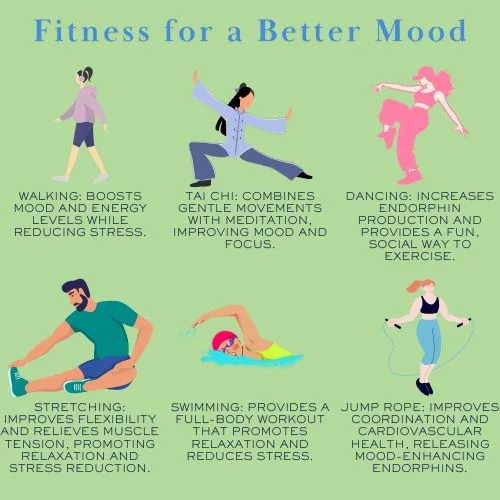
Why exercise feels good involves several neurochemical systems rather than endorphins alone. Moderate aerobic activity raises endocannabinoid signaling that can reduce anxiety and pain sensitivity, while dopamine contributes to reward, motivation, and focus. Exercise also affects BDNF and longer-term brain adaptation. The resulting benefits are real, though the biological reward after activity does not necessarily make the effort of starting feel easy.
Exercise feels good because it triggers a cascade of neurochemical changes - including endocannabinoid release, dopamine signaling, endorphin activity, and BDNF production - that collectively elevate mood, reduce anxiety, sharpen focus, and restructure the brain over time.
The popular explanation that "endorphins cause the runner's high" turns out to be largely incomplete: the primary driver is the endocannabinoid system, the brain's own cannabis-like signaling network, which researchers identified as the key mechanism only in the last decade.
For thirty years, the standard explanation was endorphins. You would go for a long run, your brain would flood with endogenous opioids - the body's own morphine - and you would drift into the euphoric, pain-free state that runners have described since the 1970s as the runner's high.
It was a satisfying explanation. It was also largely wrong.
The problem was identified quietly in the neuroscience literature for years before anyone did the decisive experiment. Endorphins are large peptide molecules. The blood-brain barrier - the tightly regulated membrane that separates the central nervous system from the bloodstream - does not allow large molecules to pass.
Measuring elevated beta-endorphin levels in blood after exercise tells you something is happening in the peripheral nervous system. It tells you nothing about what is happening in the brain.
"The endocannabinoid system is the molecular mechanism behind the pleasurable feeling of exercise, the desire to engage in physical activity, and its anti-anxiety effects." - Johannes Fuss, University of Hamburg
The Experiment That Changed the Story
In 2015, Johannes Fuss and colleagues at the University of Hamburg designed the study that the endorphin hypothesis required. They gave mice either naloxone (a drug that blocks opioid receptors in the brain), rimonabant (a drug that blocks endocannabinoid receptors), or a placebo, then allowed them to run on wheels.
The result upended decades of assumption: the runner's high behaviors - reduced anxiety and pain sensitivity after running - were significantly blocked by rimonabant but only partially affected by naloxone.
The endocannabinoid system. The brain's cannabis-like molecules. The system that THC hijacks when you get high. This, it turned out, was the primary driver of the runner's high.
The finding was published in the Proceedings of the National Academy of Sciences and confirmed in subsequent human imaging studies.
A 2021 study by Hilke Brellenthin and colleagues at Iowa State University used PET scans to show that aerobic exercise increased endocannabinoid binding in brain regions associated with reward, emotion regulation, and pain processing.
The discovery opened a new window onto why exercise is, neurobiologically, one of the most powerful mental health interventions available - and why it is so difficult to start.
What Anandamide Does in the Brain
Anandamide (named from the Sanskrit "ananda" meaning bliss) was first identified in 1992 by Raphael Mechoulam's lab at Hebrew University in Jerusalem - the same team that had synthesized THC decades earlier.
It was the first endogenous ligand identified for the cannabinoid receptor, and its existence confirmed that the brain had an entire internal cannabinoid signaling system.
Anandamide's effects when it activates CB1 receptors include:
- Euphoria and mood elevation
- Anxiolysis (anxiety reduction)
- Altered pain perception (analgesia)
- Increased sensory pleasure
- Reduced fear response via amygdala CB1 activation
THC produces its effects by binding the same CB1 receptors - essentially impersonating anandamide, but more persistently and more potently. The "high" of cannabis is, at its neurobiological core, an artificial version of what anandamide naturally produces.
The critical difference is that exercise-induced anandamide operates within physiological ranges and clears rapidly, while exogenous THC overwhelms the system and produces tolerance.
Exercise as the Trigger
Anandamide is elevated in blood after moderate aerobic exercise - this was documented in studies by Arne Dietrich and William McDaniel at Georgia College in 2004, and replicated by multiple labs in the decade that followed.
Because anandamide is lipid-soluble (fat-soluble), it crosses the blood-brain barrier readily - unlike the large peptide endorphins.
This means blood anandamide levels after exercise directly reflect brain anandamide activity, in a way that blood endorphin levels do not.
The threshold appears to be roughly 20 to 30 minutes of moderate-intensity aerobic exercise - the kind where conversation is possible but effortful. Higher intensity and longer duration amplify the response.
A 2003 study published in NeuroReport found that blood anandamide levels increased by approximately 80% after 30 minutes of moderate treadmill running.
Dopamine: The Motivation Architecture
Beyond the immediate euphoria of the runner's high, exercise's effects on the dopamine system explain both its mood benefits and the paradox of why it is hard to start.
Acute Dopamine Release
Exercise increases dopamine synthesis and release in the striatum (the brain's primary reward structure) and prefrontal cortex. The striatal dopamine release contributes to the reward signal that follows completing a workout - the sense of satisfaction and accomplishment that reinforces the behavior.
A 2000 study by Romain Meeusen and colleagues using microdialysis in animal models showed that exercise-induced dopamine release in the striatum was comparable in magnitude to that produced by moderate doses of stimulant drugs, though operating through entirely different and non-addictive mechanisms.
The dopaminergic state during exercise also contributes to what athletes describe as being "in the zone" - elevated focus, reduced distractibility, and a sense of effortless concentration that resembles the flow state described by psychologist Mihaly Csikszentmihalyi (1990).
Long-Term Receptor Upregulation
More consequentially, regular aerobic exercise increases dopamine receptor density and sensitivity in the striatum. This is the opposite of what happens with addictive substances - which decrease receptor sensitivity through overactivation (tolerance). Exercise upregulates the system, increasing its capacity to respond to reward signals.
Research by Wendy Lynch at the University of Virginia (2010) demonstrated that exercise reduced vulnerability to substance addiction in animal models, likely through this dopaminergic upregulation effect.
A 2013 review by Mark Smith at Davidson College analyzed 22 studies and concluded that voluntary exercise consistently reduced drug self-administration across multiple substance classes.
The clinical implication is significant: people with low baseline dopamine function - those with depression, ADHD, or chronic stress - often show the most dramatic mood and focus improvements from exercise, possibly because upregulation of a downregulated system produces larger relative effects.
The Initiation Paradox
Dopamine motivates action toward anticipated rewards - but the anticipation must be sufficiently strong to overcome activation inertia.
For someone who has never experienced the pleasurable aspects of exercise (because they have never gotten through the uncomfortable initial phase), exercise has weak anticipated reward and high anticipated cost.
The brain's hyperbolic discounting system overvalues the immediate discomfort relative to the delayed benefit.
The practical solution is well-supported by behavioral research: the first few weeks of exercise are the hardest precisely because the reward systems have not yet learned the reward.
Implementation intentions (specifying exactly when and where exercise will occur), temptation bundling (pairing exercise with enjoyable podcasts or music), and gradual progression each address different barriers.
Katy Milkman at the Wharton School demonstrated in a 2014 study published in Management Science that temptation bundling increased gym attendance by 51% compared to controls.
BDNF and the Structural Brain Benefits
Beyond mood and motivation, exercise produces structural changes in the brain that may be its most consequential long-term effect. The key molecule is Brain-Derived Neurotrophic Factor (BDNF) - often called "Miracle-Gro for the brain" by Harvard psychiatrist John Ratey in his influential 2008 book Spark.
Hippocampal Neurogenesis
Kirk Erickson's landmark 2011 randomized controlled trial, published in PNAS, demonstrated that one year of aerobic exercise (walking) increased hippocampal volume by 2% in older adults - reversing the approximately 1-2% annual atrophy typical in that age group.
Stretching controls showed continued expected decline. Spatial memory performance improved in the exercise group and correlated with hippocampal volume change.
The study enrolled 120 adults aged 55 to 80 and was the first large-scale RCT to demonstrate that exercise could literally grow a brain structure in humans. The mechanism: aerobic exercise dramatically increases BDNF in the hippocampus, particularly in the dentate gyrus.
BDNF promotes the survival of new neurons generated through adult neurogenesis - neurons that contribute to pattern separation (distinguishing similar memories from each other) and emotional regulation.
In animal models, exercise-induced hippocampal neurogenesis has been demonstrated to be the most potent known stimulator of new neuron production - more powerful than environmental enrichment, cognitive training, or any known pharmaceutical agent.
A 2010 study by Henriette van Praag at the National Institute on Aging showed that running mice produced approximately 2.5 times more new hippocampal neurons than sedentary controls.
Prefrontal Cortex Effects
The prefrontal cortex - critical for executive function, working memory, attention, and emotional regulation - also benefits structurally from exercise.
Stanley Colcombe and Arthur Kramer's influential 2003 meta-analysis, published in Psychological Science, analyzed 18 studies and found that aerobic fitness training preferentially improved executive function more than other cognitive domains, with an effect size of 0.68 - a moderately large effect.
A 2006 study by Colcombe and colleagues using MRI scans found that six months of aerobic exercise increased prefrontal and temporal cortex volume in older adults, while stretching controls showed continued volume decline.
The mechanisms likely include BDNF-driven synaptic plasticity, improved cerebral blood flow (the PFC is particularly sensitive to blood flow changes), and HPA axis normalization (chronic cortisol exposure preferentially damages PFC, and exercise reduces cortisol exposure).
Exercise and Anxiety: Three Converging Mechanisms
The anxiolytic (anxiety-reducing) effects of exercise are among its best-supported mental health effects.
A 2017 meta-analysis by Brendon Stubbs and colleagues, analyzing 12 RCTs with over 800 participants, found that exercise significantly reduced anxiety in people with diagnosed anxiety disorders, with effects comparable to pharmacotherapy.
Endocannabinoid Anxiolysis
Anandamide activation of CB1 receptors in the amygdala and prefrontal cortex produces anxiolytic effects through multiple mechanisms: reducing amygdala reactivity to threat stimuli, increasing GABAergic tone (inhibitory neurotransmission), and reducing the cortical-amygdala coupling that drives rumination and worry.
The anxiolytic effect of a single 30-minute aerobic session is detectable in validated anxiety measures within 30 minutes and lasts 4-6 hours.
HPA Axis Normalization
Regular aerobic exercise normalizes the hypothalamic-pituitary-adrenal (HPA) axis in chronically stressed individuals.
Over weeks of training, baseline cortisol levels decrease, the diurnal cortisol rhythm (high morning, low evening) sharpens, and cortisol responses to psychological stressors become more proportionate and terminate more cleanly.
A 2014 study by Eli Puterman at the University of British Columbia found that even moderate exercise (three sessions per week) reduced cortisol reactivity to laboratory stressors by approximately 20% after eight weeks.
Interoceptive Exposure
People with anxiety disorders - particularly panic disorder - typically have elevated fear of internal physiological arousal states: elevated heart rate, rapid breathing, sweating, and muscle tension are perceived as threatening rather than normal. Exercise produces all of these states in a safe, voluntary, controllable context.
With repeated exercise sessions, the person learns - not cognitively but through direct experience - that elevated heart rate does not lead to catastrophe. This is interoceptive exposure by another name: the same mechanism that cognitive behavioral therapy uses deliberately to treat panic disorder.
A 2015 study by Jasper Smits at Southern Methodist University found that exercise augmented exposure therapy outcomes for anxiety disorders, consistent with the interoceptive exposure mechanism.
Exercise as Antidepressant: The Clinical Evidence
The evidence for exercise as a depression treatment is strong enough that the World Health Organization, NICE (UK), and multiple national clinical guidelines now recommend it as a first-line intervention for mild-to-moderate depression.
James Blumenthal's SMILE trial (1999) remains the landmark RCT. 156 adults with major depressive disorder were randomized to:
- Sertraline (an SSRI antidepressant)
- Aerobic exercise (45 min/day, 3x/week, 16 weeks)
- Combination of both
At 16 weeks, all three groups showed equivalent remission rates - roughly 60-65%. At 10-month follow-up, the exercise group had substantially lower relapse rates (8%) than the sertraline group (38%).
The combination group fell between, suggesting that adding medication to exercise may even have reduced exercise's specific benefits, possibly by diminishing the sense of personal agency ("I am getting better because of my own efforts").
A 2023 BMJ umbrella meta-analysis by Ben Singh and colleagues at the University of South Australia, covering 97 systematic reviews and 1,039 trials with 128,119 participants, found that exercise had effect sizes 1.5 times larger than antidepressants or cognitive behavioral therapy in direct comparisons.
Walking, jogging, yoga, and strength training all showed significant effects, with higher intensity producing larger benefits.
| Exercise Dose | Mood Effect | Anxiety Effect | Brain Structure | Evidence Quality |
|---|---|---|---|---|
| Single 20-30 min aerobic | Immediate improvement (4-6 hrs) | Immediate reduction (4-6 hrs) | None acutely | Strong (multiple RCTs) |
| 8 weeks consistent training | Moderate trait improvement | Moderate trait reduction | Early hippocampal benefit | Strong (RCTs) |
| 12 weeks consistent training | Significant trait improvement | Clinical-grade reduction | Hippocampal + PFC changes | Strong (multiple RCTs) |
| Years of consistent training | Sustained protection | Sustained protection | Structural neuroprotection | Longitudinal cohort studies |
The Dose Question: How Much Is Enough?
One of the most practically important questions is the dose-response relationship between exercise and mental health benefits.
For immediate mood benefit: 20-30 minutes of moderate aerobic exercise (brisk walking, cycling, jogging at a conversational pace) produces measurable endocannabinoid elevation and mood benefit.
A 2018 Lancet Psychiatry study by Sammi Chekroud and colleagues, analyzing data from 1.2 million US adults, found that 45-minute sessions, three to five times per week, were associated with the greatest mental health benefit.
For trait-level mood and anxiety improvement: 3-5 sessions per week, 30-60 minutes per session, at moderate-to-vigorous intensity, over 8-12 weeks. This is the dose that most clinical trial protocols showing significant mental health benefits have used.
For structural brain changes: 8-12 weeks of consistent training produces measurable BDNF elevation and hippocampal volume effects. These changes require consistency over time - occasional intense exercise does not produce the same structural benefits as regular moderate exercise.
The plateau and overtraining: Very high exercise volumes can reverse mood benefits and increase cortisol. Athletes in heavy training phases and people with compulsive exercise patterns often show elevated anxiety and depressed mood - the overtraining syndrome.
A 2019 study published in Sports Medicine found that more than 23 hours of exercise per week was associated with worse mental health outcomes than moderate volumes. The optimal dose for mental health is not maximum dose.
Exercise Type Matters Less Than You Think
The evidence for mental health benefit extends well beyond running:
- Resistance training: A 2018 meta-analysis by Brett Gordon and colleagues at the University of Limerick, published in JAMA Psychiatry, analyzed 33 RCTs and found that resistance training significantly reduced depressive symptoms regardless of health status, with a moderate effect size of 0.66.
- Yoga: Multiple systematic reviews find yoga effective for both anxiety and depression, likely through combined mechanisms of physical exertion, breathing regulation, and mindfulness.
- Team sports: A 2019 study by Chekroud found that team sports were associated with the largest mental health benefits of any exercise type, likely due to the additive effect of social connection.
- Walking: Erickson's hippocampal study used walking as the exercise intervention, demonstrating that even moderate-intensity aerobic activity produces structural brain changes.
Why Starting Is the Hardest Part
Understanding the neuroscience creates a practical paradox. Exercise feels good because of neurochemical changes that require exercise to experience. The person who has never exercised consistently has never experienced the endocannabinoid high, the dopamine reward, or the cumulative BDNF effects.
Their only reference for exercise is the uncomfortable first few minutes before the neurochemistry shifts.
The behavioral science offers specific strategies that address this:
Implementation intentions: Research by Peter Gollwitzer (1999) shows that specifying exact time, place, and action ("I will walk for 30 minutes at 7 AM on the path near my house") approximately doubles follow-through compared to vague intentions ("I will exercise more").
The 10-minute rule: Committing to just 10 minutes, with permission to stop, leverages the fact that the neurochemical reward typically begins within 10-20 minutes. Most people who start for 10 minutes continue for 30.
Social accountability: Exercising with others adds the social reinforcement that Robert Cialdini's commitment and consistency research (2001) predicts will increase adherence.
For related concepts, see why exercise is good for the brain, how stress damages the body, what causes depression, and how to manage anxiety.
Sources & Further Reading
- Fuss, J., et al. (2015). A Runner's High Depends on Cannabinoid Receptors in Mice. Proceedings of the National Academy of Sciences, 112(42), 13105-13108. DOI: 10.1073/pnas.1514996112
- Blumenthal, J. A., et al. (1999). Effects of Exercise Training on Older Patients with Major Depression. Archives of Internal Medicine, 159(19), 2349-2356. DOI: 10.1001/archinte.159.19.2349
- Erickson, K. I., et al. (2011). Exercise Training Increases Size of Hippocampus and Improves Memory. Proceedings of the National Academy of Sciences, 108(7), 3017-3022. DOI: 10.1073/pnas.1015950108
- Singh, B., et al. (2023). Effectiveness of Physical Activity Interventions for Improving Depression, Anxiety, and Distress: An Overview of Systematic Reviews. British Journal of Sports Medicine, 57(18), 1203-1209. DOI: 10.1136/bjsports-2022-106195
- Stubbs, B., et al. (2017). An Examination of the Anxiolytic Effects of Exercise for People with Anxiety and Stress-Related Disorders. Psychiatry Research, 249, 102-108. DOI: 10.1016/j.psychres.2016.12.020
- Gordon, B. R., et al. (2018). Association of Efficacy of Resistance Exercise Training with Depressive Symptoms. JAMA Psychiatry, 75(6), 566-576. DOI: 10.1001/jamapsychiatry.2018.0572
- Chekroud, S. R., et al. (2018). Association Between Physical Exercise and Mental Health in 1.2 Million Individuals in the USA. Lancet Psychiatry, 5(9), 739-746. DOI: 10.1016/S2215-0366(18)30227-X
- Ratey, J. J., & Hagerman, E. (2008). Spark: The Revolutionary New Science of Exercise and the Brain. Little, Brown and Company.
- Colcombe, S., & Kramer, A. F. (2003). Fitness Effects on the Cognitive Function of Older Adults: A Meta-Analytic Study. Psychological Science, 14(2), 125-130. DOI: 10.1111/1467-9280.t01-1-01430
- Milkman, K. L., Minson, J. A., & Volpp, K. G. M. (2014). Holding the Hunger Games Hostage at the Gym. Management Science, 60(2), 283-299. DOI: 10.1287/mnsc.2013.1784
- Dietrich, A., & McDaniel, W. F. (2004). Endocannabinoids and Exercise. British Journal of Sports Medicine, 38(5), 536-541. DOI: 10.1136/bjsm.2004.011718