
From philosophy to science, psychology emerged through physiology, quantitative measurement, and the claim that mental phenomena could be studied rigorously. Its history is marked by competing schools, from structuralism and functionalism to psychoanalysis, behaviorism, humanism, and cognitive science. The field has delivered important findings about mind and behavior, but replication failures and narrow research samples expose continuing limits on what its evidence can establish.
For most of recorded history, questions about the mind belonged to philosophers and theologians. Why do we feel fear? What is the relationship between thought and action? Can sensation be measured? These questions were answered through argument, scripture, and casual self-reflection.
The transformation of those ancient questions into a scientific research program is one of the most consequential intellectual shifts of the modern era.
It happened not in a single dramatic moment but through a convergence of developments in the mid-nineteenth century: advances in sensory physiology, the invention of systematic quantitative measurement of mental phenomena, and eventually the audacious claim by a generation of German researchers that the mind could be studied with the same rigor applied to chemical reactions or nerve tissue.
That claim was controversial when it was made and remains contested in important ways today. The history of psychology is not a simple story of progressive enlightenment.[1] It is a story of competing schools of thought, ideological overreach, methodological crises, and persistent debates about the limits of any science that studies itself.
The discipline has produced insights of genuine depth - about memory, perception, learning, judgment, and emotional regulation - alongside fads, frauds, and claims that have not survived contact with replication. Understanding where psychology came from is essential to understanding what it can and cannot tell us.
What follows traces that history from its nineteenth-century origins in the physiology laboratory, through the dominance and eventual collapse of behaviorism, the mid-century cognitive revolution, and into the contemporary reckoning with reproducibility and the problem of generalizing findings from a narrow slice of humanity to the species as a whole.
"The first lecture in Harvard University's new psychology course, in 1875, was given by William James. James later confessed that the first psychology lecture he had ever attended was his own." - Quoted in Robert Richardson, William James: In the Maelstrom of American Modernism (2006)[16]
Key Definitions
Psychology: The scientific study of mind, behavior, and the processes that underlie both. The word derives from the Greek psyche (soul or mind) and logos (study or reason). The precise boundaries of psychology's subject matter have been contested throughout its history.
Introspection: The method of systematic self-observation, used by Wilhelm Wundt and Edward Titchener, in which trained observers report on the contents of their own conscious experience under controlled conditions.
| Era / School | Period | Key Figures | Core Focus |
|---|---|---|---|
| Structuralism | 1870s-1900s | Wundt, Titchener | Break down conscious experience into elemental structures |
| Functionalism | 1890s-1920s | James, Dewey | How mental processes function to help organisms adapt |
| Psychoanalysis | 1890s-present | Freud, Jung, Adler | Unconscious motivation; childhood development |
| Behaviorism | 1910s-1960s | Watson, Pavlov, Skinner | Observable behavior; learning through conditioning |
| Humanism | 1950s-1970s | Maslow, Rogers | Human potential, self-actualization, subjective experience |
| Cognitive revolution | 1960s-present | Miller, Neisser, Kahneman | Mental processes - memory, attention, problem-solving |
| Neuroscience integration | 1990s-present | Damasio, LeDoux, many | Neural substrates of psychological processes |
Behaviorism: A school of psychology dominant from approximately 1913 to the 1950s that restricted scientific psychology to observable behavior and rejected mental states as legitimate objects of scientific inquiry.
Cognitive revolution: The paradigm shift occurring from roughly 1956 onward, in which the study of internal mental representations - memory, attention, language, problem-solving - returned to scientific legitimacy, often using the digital computer as an explanatory model.
Structuralism: The first systematic school of experimental psychology, associated with Wundt and Titchener, which sought to identify the elementary components of conscious experience through trained introspection.
Functionalism: The American alternative to structuralism, associated with William James, which asked how mental processes function to help organisms adapt, drawing on Darwinian evolutionary theory.
Replication crisis: The widespread failure, documented systematically from 2011 onward, of published findings in psychology and related sciences to reproduce when independent researchers attempt to repeat the original experiments.
WEIRD: Acronym for Western, Educated, Industrialized, Rich, Democratic - the unrepresentative demographic profile of the overwhelming majority of psychology research subjects.
The Physiological Precursors: Helmholtz, Fechner, and Galton
The story of psychology's emergence as a science begins not with a psychologist but with physiologists working in Germany in the 1840s and 1850s.
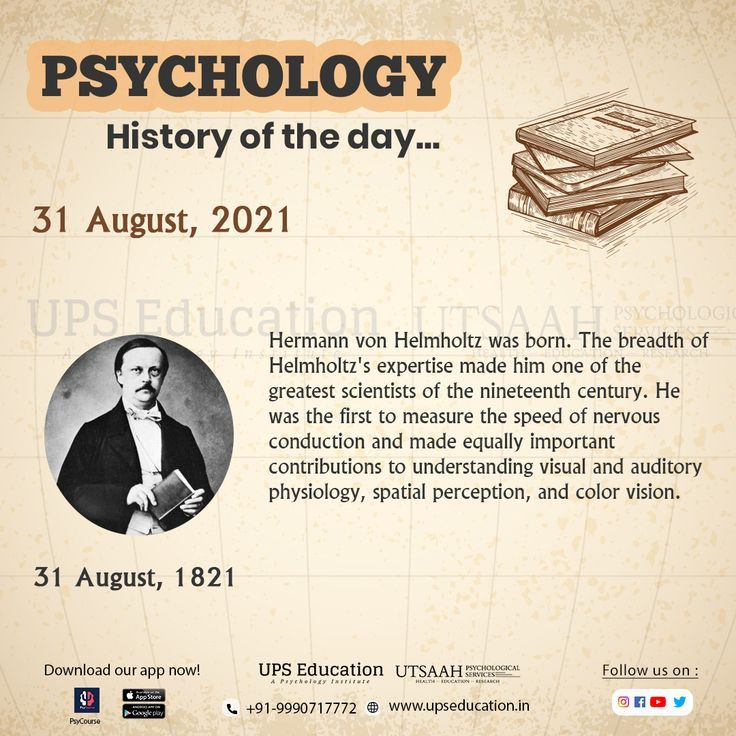
Hermann von Helmholtz, working on the velocity of nerve conduction, demonstrated in the early 1850s that the transmission of a nerve impulse was not instantaneous but measurable - occurring at approximately 27 meters per second in frogs.
This was a philosophically unsettling result: it meant that thought had a speed, and that speed could be quantified. Mind was not exempt from the laws governing the physical world.
Helmholtz went on to produce foundational work on the physiology of perception, including his three-volume Handbook of Physiological Optics (1856-1867) and his work on the perception of tone.[7]
His broader project - the reduction of psychological phenomena to physiological processes governed by natural law - established the framework within which experimental psychology would develop.
Ernst Heinrich Weber and Gustav Theodor Fechner opened a second front: the quantitative study of the relationship between physical stimuli and psychological sensations.
Weber's law, articulated in 1834, proposed that the just-noticeable difference between two stimuli is a constant proportion of the original stimulus rather than an absolute quantity.
Fechner, a physicist-turned-philosopher who combined quantitative rigor with philosophical idealism, elaborated Weber's findings into a full program in Elemente der Psychophysik (1860).[3]
Fechner's logarithmic law, relating stimulus intensity to perceived magnitude, gave psychology its first genuine mathematical relationship - and his methods for measuring thresholds, reaction times, and just-noticeable differences became foundational tools of the new science.
Francis Galton, working in England from the 1860s onward, opened yet another front: the systematic measurement of individual differences. Galton was motivated in part by eugenic concerns that now render much of his legacy morally troubling, but his methodological contributions were substantial.
He invented the concept of the percentile, developed early versions of the correlation coefficient (which Karl Pearson would formalize mathematically), and opened an anthropometric laboratory in 1884 at which thousands of visitors paid to have their sensory and physical capacities measured.
Galton's fundamental claim - that individual variation in mental capacity was measurable and heritable - launched the entire tradition of differential psychology and psychometric testing.[4]
Wilhelm Wundt and the First Psychological Laboratory
The canonical date for the founding of scientific psychology is 1879, when Wilhelm Wundt established his laboratory at the University of Leipzig.
The choice of 1879 is somewhat arbitrary - Wundt had been teaching experimental psychology since the early 1870s - but the Leipzig laboratory institutionalized something genuinely new: a dedicated space in which trained observers studied mental phenomena through controlled experiments with measured outcomes and published results.
Wundt's method was trained introspection, but not casual self-reflection. Observers sat in the laboratory and reported systematically on their immediate conscious experience under specific conditions, attempting to decompose perception and sensation into their supposed elementary components.
His research produced detailed accounts of reaction times, attention, and the structure of sensations. His Grundzuge der Physiologischen Psychologie (1874) established psychology's early empirical agenda.[22]
Wundt's laboratory attracted students from across Europe and North America. Edward Bradford Titchener, trained under Wundt and installed at Cornell University, developed the program into what he called structuralism - the attempt to identify the elementary contents of consciousness.
But the structuralist program proved fragile. Different laboratories using introspective methods reached contradictory conclusions about the same phenomena.
The imageless thought controversy - whether thinking could occur without mental images - produced irreconcilable disagreements between trained introspectors at different institutions. If introspection produced non-reproducible reports, it could not serve as the foundation of a cumulative science.
The American Psychological Association was founded in 1892 under the leadership of G. Stanley Hall - the first American to earn a doctorate under Wundt and later the founding editor of the American Journal of Psychology.
Hall's own research interests ran toward developmental psychology and adolescence, a phase of life he effectively named as a distinct developmental period in his 1904 two-volume work of that title.[6]
The APA's founding marked the institutional maturation of psychology in the United States, which would become the discipline's dominant geographic center within a generation.
William James and American Functionalism
William James, working simultaneously at Harvard, represented a different sensibility from Wundt's. His The Principles of Psychology (1890), composed over twelve years, remains the most elegant work of psychological writing ever produced.[9]
James rejected structuralism's project of decomposing consciousness into elements. Consciousness is not a static structure but a stream - flowing, continuous, personal, selective, always changing. Trying to stop it and analyze its contents is like trying to catch water in your hands.
James's functionalism asked not what the mind contains but what it does. Drawing on Darwin, he argued that mental processes are biological adaptations that exist because they help organisms survive and flourish.
Memory helps us use the past; emotion motivates action; habit allows skilled behavior to become automatic and frees attention for new challenges.
The school associated with James, John Dewey, and James Rowland Angell became known as functionalism - the view that psychology should study mental processes in terms of adaptive function rather than elementary composition. It would prove more durable in American psychology than Wundtian structuralism.
Psychoanalysis: Freud and Its Contested Legacy
Alongside the laboratory tradition, a radically different approach to the mind was being developed in Vienna.
Sigmund Freud's psychoanalytic theory, elaborated from the 1890s through the 1930s, proposed that the decisive determinants of behavior were unconscious: repressed wishes, unresolved conflicts from early childhood, and the dynamic interplay between ego, id, and superego.
Psychoanalysis was not developed through controlled experiment but through clinical observation and theoretical elaboration.
The philosopher Karl Popper used psychoanalysis as his primary illustration of an unfalsifiable theory - one that could accommodate any observation within its framework.
The philosopher Adolf Grunbaum mounted a more technically rigorous critique in The Foundations of Psychoanalysis (1984), arguing that Freud's own attempt to validate his theory - through the "tally argument" that only psychoanalytic treatment produces lasting cures - had failed on its own terms, since the therapeutic efficacy of psychoanalysis had not been established and its claimed mechanisms remained unverified.[5]
Contemporary reviews find some evidence for the effectiveness of psychodynamic therapy, but the specific Freudian constructs - the Oedipus complex, infantile sexuality, hydraulic repression - have not been validated through controlled research.
Freud's historical importance is nonetheless immense. He introduced the concept of the unconscious to widespread cultural awareness, established the significance of childhood experience in adult psychology, and created the modern tradition of talking therapies.
His ideas permeated literary criticism, anthropology, and social theory far more deeply than those of any figure from the laboratory tradition.
Behaviorism: The Science of Observable Behavior, 1913-1950s
By the early twentieth century, the method of introspection was in serious difficulty. Different laboratories using Wundtian methods arrived at incompatible results with no means of adjudication. The situation was ripe for a methodological revolution, and it arrived in 1913 with John B.
Watson's manifesto "Psychology as the Behaviorist Views It," delivered at Columbia University and published in the Psychological Review.[21]
Watson's argument was stark. If psychology was to be a genuine natural science, it had to confine itself to what could be publicly observed and verified - behavior, not mental states. Consciousness, images, and introspective reports were not legitimate scientific data.
The only valid subject matter was the relationship between stimuli and observable responses.
Watson drew on Ivan Pavlov's work on classical conditioning - the demonstration that a neutral stimulus could be made to elicit a reflexive response if repeatedly paired with an unconditioned stimulus - and argued that all human behavior was built from chains of conditioned reflexes.[15]
He famously claimed that he could take any infant and, given full control over the child's environment, shape it into any kind of specialist, regardless of talent or ancestry.
B.F. Skinner extended Watson's program over the following decades, developing the framework of operant conditioning and arguing that all voluntary behavior was shaped by its consequences: behaviors that were reinforced increased in frequency, those that were punished or unreinforced diminished.
Skinner applied this framework with systematic ambition. His novel Walden Two (1948) imagined a community designed on behaviorist principles.[18]
Beyond Freedom and Dignity (1971) argued that concepts of autonomous agency and personal responsibility were prescientific illusions, and that a science of behavior control was both possible and necessary for human welfare.[19]
Behaviorism dominated American psychology from Watson's manifesto through the 1950s and produced genuine scientific achievements: the careful mapping of reinforcement schedules, the development of behavior modification techniques, and the insistence on operationally defined variables and publicly verifiable measurements.
But its failures were also critical. Chomsky's 1959 review of Skinner's Verbal Behavior - one of the most consequential critical reviews in the history of science - demonstrated that language acquisition could not be explained by operant conditioning.[2]
Children acquire grammatical rules they have never heard, generalize them correctly to novel sentences, and resist correction of grammatical errors in ways that no reinforcement model predicts.
Wolfgang Kohler's studies of insight learning in chimpanzees showed that problem-solving could occur through sudden restructuring that bypassed incremental conditioning entirely.[10]
Edward Tolman's work on cognitive maps in rats demonstrated that animals formed internal representations of spatial environments, not merely chains of stimulus-response associations.[20]
The Cognitive Revolution: 1956
The year 1956 is sometimes cited as the birth year of cognitive science, and the density of important work produced that year is remarkable.
George Miller published "The Magical Number Seven, Plus or Minus Two" in the Psychological Review, arguing that short-term memory capacity was limited to approximately seven items - a finding that implicated the concept of a capacity-limited mental workspace and treated memory as a cognitive system with measurable properties.[12]
Allen Newell and Herbert Simon demonstrated their General Problem Solver program at the Symposium on Information Theory at MIT, establishing that symbolic computation could model human reasoning.
Noam Chomsky presented the work that became Syntactic Structures (1957), arguing that a finite grammar could generate an infinite number of grammatical sentences and that the deep structure of language was universal across humans.
Jerome Bruner, Jacqueline Goodnow, and George Austin published A Study of Thinking, a systematic experimental investigation of concept formation.
Underlying all of these contributions was the framework provided by Claude Shannon's information theory, developed at Bell Laboratories and published in 1948, and the digital computer, which provided a working model of how information could be stored, processed, and transformed.
The computer did not merely inspire the cognitive revolution as metaphor; it demonstrated that a physical system could exhibit apparently intelligent behavior, making it both scientifically respectable and practically tractable to study mental processes in information-processing terms.[17]
The re-introduction of internal mental representations as legitimate explanatory constructs gradually transformed the discipline.[13] By the 1980s, cognitive psychology was the dominant experimental paradigm, and the study of attention, memory, language, and reasoning had been placed on a rigorous empirical footing.
Gestalt Psychology and Humanistic Psychology
Two other major traditions deserve attention alongside the main historical narrative. Gestalt psychology, developed in early twentieth-century Germany by Max Wertheimer, Wolfgang Kohler, and Kurt Koffka, argued that experience is organized into wholes that cannot be decomposed into elements without losing essential properties.
The famous principle - "the whole is greater than the sum of its parts" - captures the central claim.
Wertheimer's phi phenomenon (the perception of movement from two stationary flashing lights), documented in 1912, illustrated the point: no amount of analysis of the individual lights would yield the perception of motion, which arose from the relationship between them.
Kohler's studies of insight learning in chimpanzees directly challenged behaviorist accounts of learning as gradual trial-and-error conditioning.
Humanistic psychology emerged in the 1950s and 1960s as an explicit reaction against what Abraham Maslow called the "psychology of the sick." Maslow's hierarchy of needs, sketched in a 1943 paper in the Psychological Review, proposed that human motivation is organized hierarchically - physiological needs before safety, safety before love, love before esteem, esteem before self-actualization.[11]
Carl Rogers developed person-centered therapy, emphasizing unconditional positive regard and the client's inherent capacity for self-direction.
The humanistic tradition's empirical contributions have been limited - the hierarchy of needs has received little consistent support from cross-cultural research - but it shaped the therapeutic landscape substantially.
Martin Seligman, delivering his presidential address to the APA in 1998, formally launched positive psychology as a research program, calling for systematic scientific study of what makes life worth living: character strengths, positive emotions, meaning, and well-being.
The program has produced substantial research, though some flagship claims - notably power posing and several replication-era social psychological findings - have not survived scrutiny.
The Replication Crisis
The most significant methodological crisis in contemporary psychology was documented systematically in 2015 when the Open Science Collaboration published a paper in Science titled "Estimating the Reproducibility of Psychological Science." The project involved 270 researchers who attempted to replicate 100 published experiments from three major psychology journals.[14]
Only 36% of replications produced statistically significant results in the same direction as the original.
Average effect sizes in the replications were roughly half those in the original studies. The paper prompted what became known, in academic and increasingly in popular discourse, as the replication crisis.
The causes were multiple and interacting. P-hacking - analyzing data in multiple ways and reporting only the analysis that produced a statistically significant result - was shown to be widespread.
HARKing (Hypothesizing After Results are Known), in which researchers present post-hoc hypotheses as if they were pre-specified predictions, inflated the apparent confirmatory power of studies.
Publication bias - journals were far more likely to publish significant than null results - ensured that the published literature overrepresented findings that were likely statistical flukes.
Small sample sizes compounded the problem: studies with twenty or thirty participants frequently lacked the statistical power to detect real effects reliably.
The pattern of replication failure was not uniform. Social psychology - which had produced some of the field's most famous and culturally impactful findings, including many priming effects, ego depletion, and contested stereotype threat results - showed substantially lower replication rates than cognitive psychology.
Laboratory studies of memory and perception, using reliable paradigms with clear measurement, replicated considerably better.
The response has been substantial. Pre-registration - specifying hypotheses, methods, and analysis plans before collecting data - has grown dramatically.
Registered Reports, in which journals commit to publishing a study based on the quality of the methods rather than the outcome, have been adopted by hundreds of journals. Open data requirements and larger, multi-laboratory replication projects have become more common.
The WEIRD Problem
A separate but related challenge was identified in a landmark 2010 paper by Joseph Henrich, Steven Heine, and Ara Norenzayan in Behavioral and Brain Sciences.[8] The acronym WEIRD stood for Western, Educated, Industrialized, Rich, and Democratic.
The authors documented that approximately 96% of subjects in published psychology experiments came from Western societies, with roughly 70% being American, and that American subjects were often the most atypical members of the global population on dimensions relevant to psychological research.
The evidence was striking. Susceptibility to the Muller-Lyer illusion - the classic demonstration that a line with inward-facing arrowheads appears shorter than one with outward-facing arrowheads of the same length - was much weaker or effectively absent among San foragers of the Kalahari, suggesting that the illusion was shaped by experience in carpentered, rectangular environments rather than being a fixed feature of human perceptual architecture.
Ultimatum game results - in which Western subjects typically reject offers below 30% of a stake, apparently treating fairness as more important than any positive gain - varied substantially across populations, with some small-scale societies accepting very low offers and others rejecting very high ones.
Results from moral psychology, including trolley problem intuitions central to debates about universal utilitarian versus deontological reasoning, also varied systematically with cultural background.
The WEIRD critique does not invalidate all findings from Western psychology. Many low-level perceptual and cognitive processes do appear to be universal or near-universal.
But it substantially complicates any claim to have discovered facts about human nature from samples that exclude the majority of humanity, and has prompted a gradual shift toward cross-cultural and more representative research designs.
Psychology's Contested Present
Psychology today is a genuinely plural science. Neuroscientific approaches, using functional MRI, EEG, and lesion studies, attempt to ground psychological constructs in neural mechanisms. Evolutionary psychology seeks to explain behavior in terms of adaptations to ancestral environments.
Clinical psychology has produced a substantial evidence base for cognitive-behavioral therapies. Developmental, social, and cognitive science each proceed with their own methods, findings, and ongoing disputes.
The field that Wundt institutionalized in Leipzig in 1879 would be both recognizable and foreign to him today.
Recognizable in its commitment to empirical method, quantitative measurement, and controlled experimentation; foreign in its scale, methodological sophistication, and ongoing reckoning with the limits of what any science of mind can claim to know.
That reckoning - uncomfortable as it is - may be the sign of a discipline genuinely maturing into scientific self-awareness.
For related reading, see What Is Cognitive Science?, How the Mind Actually Works, and What Is Behavioral Economics?.
Sources & Further Reading
- Boring, E. G. (1950). A History of Experimental Psychology (2nd ed.). Appleton-Century-Crofts.
- Chomsky, N. (1959). A review of B. F. Skinner's Verbal Behavior. Language, 35(1), 26-58.
- Fechner, G. T. (1860). Elemente der Psychophysik. Breitkopf und Hartel.
- Galton, F. (1883). Inquiries Into Human Faculty and Its Development. Macmillan.
- Grunbaum, A. (1984). The Foundations of Psychoanalysis: A Philosophical Critique. University of California Press.
- Hall, G. S. (1904). Adolescence: Its Psychology and Its Relations to Physiology, Anthropology, Sociology, Sex, Crime, Religion, and Education (2 vols.). Appleton.
- Helmholtz, H. von (1867). Handbook of Physiological Optics (J. P. C. Southall, Trans., 1924). Optical Society of America.
- Henrich, J., Heine, S. J., & Norenzayan, A. (2010). The weirdest people in the world? Behavioral and Brain Sciences, 33(2-3), 61-83. doi:10.1017/S0140525X0999152X
- James, W. (1890). The Principles of Psychology (2 vols.). Henry Holt.
- Kohler, W. (1925). The Mentality of Apes. Harcourt, Brace.
- Maslow, A. H. (1943). A theory of human motivation. Psychological Review, 50(4), 370-396.
- Miller, G. A. (1956). The magical number seven, plus or minus two. Psychological Review, 63(2), 81-97.
- Neisser, U. (1967). Cognitive Psychology. Appleton-Century-Crofts.
- Open Science Collaboration. (2015). Estimating the reproducibility of psychological science. Science, 349(6251), aac4716. doi:10.1126/science.aac4716
- Pavlov, I. P. (1927). Conditioned Reflexes (G. V. Anrep, Trans.). Oxford University Press.
- Richardson, R. D. (2006). William James: In the Maelstrom of American Modernism. Houghton Mifflin.
- Shannon, C. E., & Weaver, W. (1949). The Mathematical Theory of Communication. University of Illinois Press.
- Skinner, B. F. (1948). Walden Two. Macmillan.
- Skinner, B. F. (1971). Beyond Freedom and Dignity. Knopf.
- Tolman, E. C. (1948). Cognitive maps in rats and men. Psychological Review, 55(4), 189-208.
- Watson, J. B. (1913). Psychology as the behaviorist views it. Psychological Review, 20(2), 158-177.
- Wundt, W. (1874). Grundzuge der physiologischen Psychologie. Engelmann.