
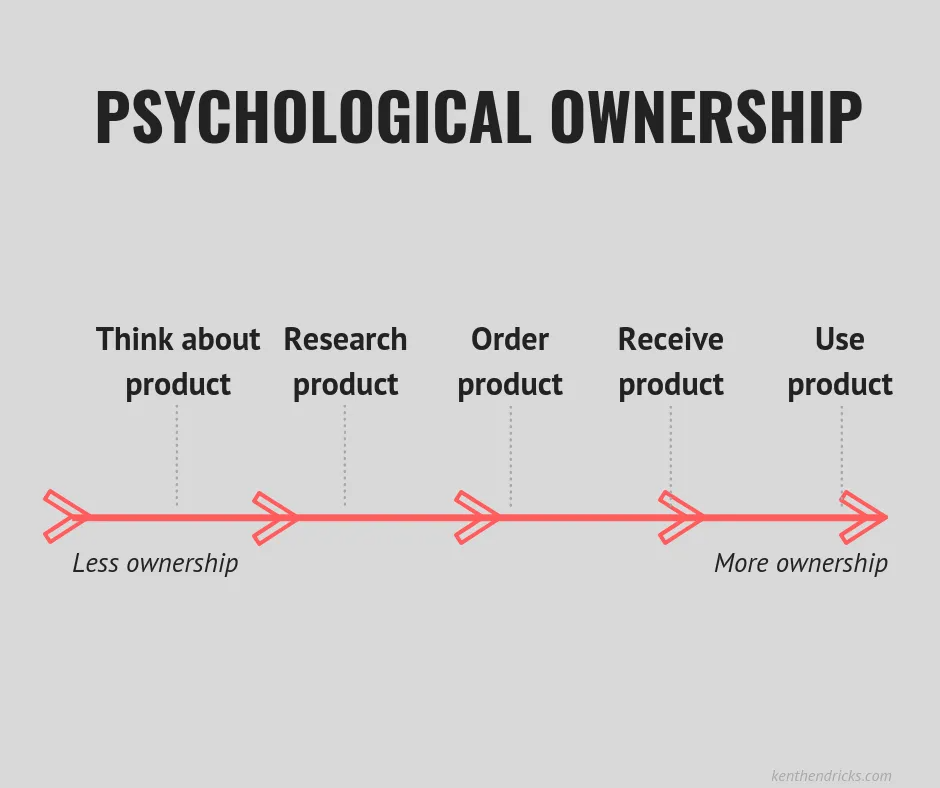
Ownership can make the same object seem more valuable than it did before a person possessed it. The endowment effect describes this shift in valuation, which can make buyers and sellers place sharply different prices on an identical item in a market.
In the autumn of 1990, a series of experiments unfolded in the economics department at Cornell University that would, in retrospect, mark one of the cleanest demonstrations of irrational valuation ever recorded in a controlled setting.
Half the students in each session were randomly handed a coffee mug - the kind sold in the university bookstore for a few dollars.
The other half received nothing. Markets were then run. The students holding mugs were asked the minimum price at which they would sell.
The students without mugs were asked the maximum they would pay to acquire one. A third group, designated Choosers, were offered their pick of either a mug or its cash equivalent.
The results were striking in their bluntness. Sellers demanded a median price of $7.12 to relinquish their mug. Buyers offered a median of $2.87 to obtain the identical object.
The Choosers - who faced the same decision but had not received the mug first - valued it at $3.12, almost exactly in line with buyers and less than half of what sellers demanded.
Same mug. Same campus. Same afternoon. A gap of 2.5 times, created entirely by the accident of who had been handed an object twenty minutes earlier.
The economists who designed the study - Daniel Kahneman, Jack Knetsch, and Richard Thaler - published the results in the Journal of Political Economy in 1990. The paper formalized what Thaler had named a decade earlier: the endowment effect.
The finding was not merely that people haggle or that markets are imperfect. It was something more fundamental. The act of ownership changes the subjective value of an object.
Possession converts a potential transaction into a potential loss, and losses, as Kahneman and Amos Tversky had shown, are weighted roughly twice as heavily as equivalent gains.[6] The mug was the same mug. What changed was its position in the value function.
"People often demand much more to give up an object than they would be willing to pay to acquire it." - Richard Thaler, 1980
Intellectual Lineage
The endowment effect did not arrive fully formed. It emerged from a long, tangled intellectual history that runs through classical economics, the collapse of expected utility theory, and the patient experimental program of two psychologists who spent a decade challenging the foundations of how economists modeled human choice.
The canonical starting point is the expected utility theory formalized by John von Neumann and Oskar Morgenstern in Theory of Games and Economic Behavior (1944).
Their framework assumed that rational agents evaluate outcomes based on final states of wealth, that preferences are stable and complete, and - critically - that the value assigned to a good is independent of whether the agent currently possesses it.
Ownership was irrelevant to value. A mug was worth what it was worth, regardless of whether it was in your hand or on a shelf.
The first serious crack in this edifice appeared in 1952, when Maurice Allais demonstrated that human choices systematically violate the independence axiom at the core of expected utility theory.
But the Allais Paradox, though technically devastating, remained largely an abstract puzzle within mathematical economics. It did not generate a competing empirical program.
That program came from Daniel Kahneman and Amos Tversky, working at Hebrew University through the 1970s. Their 1979 paper, "Prospect Theory: An Analysis of Decision under Risk," published in Econometrica, presented an alternative descriptive model of how people actually make decisions.
The centerpiece was a value function with three properties: it was defined over changes from a reference point rather than final states of wealth; it was concave in the domain of gains and convex in the domain of losses; and it was steeper for losses than for gains - the asymmetry that generates loss aversion.
The estimated ratio of the loss slope to the gain slope was approximately 2 to 2.5. Losses hurt roughly twice as much as equivalent gains felt good.
Richard Thaler, then at the University of Rochester, recognized immediately that prospect theory had implications far beyond the probability puzzles Kahneman and Tversky had used to develop it. In 1980, Thaler published "Toward a Positive Theory of Consumer Choice" in the Journal of Economic Behavior and Organization.[13]
This paper introduced the endowment effect by name, alongside the concepts of mental accounting and transaction utility.
Thaler's argument was direct: if losses are weighted more heavily than gains, then the moment of acquiring ownership transforms the future sale of an object into a loss rather than a foregone gain. The seller is not choosing between having the mug and having money.
The seller is choosing between keeping what is already theirs and giving it up - a psychologically distinct, and far more costly, transaction.
The 1990 Cornell mug experiment was the formal empirical test. Kahneman, Knetsch, and Thaler designed it to control for every obvious confound.[5] The mugs were randomly distributed, eliminating selection effects. The markets were designed to be incentive-compatible - participants had strong reasons to report their true valuations.
Multiple replications within the paper varied the traded good, the elicitation mechanism, and the subject pool. The endowment effect was robust across all variations.
The paper also tested the Coase theorem's prediction that voluntary exchange will bring assets to their highest-valued user regardless of initial allocation.
The prediction was falsified: trading volume was consistently and significantly below the level that should have obtained if buyers and sellers valued the mugs similarly. Initial allocation mattered. Ownership created value.
Kahneman received the Nobel Memorial Prize in Economic Sciences in 2002 - the first awarded to a psychologist - with the committee citing the integration of psychological research into economics. Tversky had died of melanoma in June 1996 at 59; the prize cannot be awarded posthumously.
Thaler received the Nobel in 2017, with the committee noting his role in building behavioral economics into a practical discipline with applications in policy design. The mug experiment sat at the center of both citations.
The Cognitive Science of Ownership and Loss
Prospect Theory and the Value Function
The endowment effect is not an isolated phenomenon. It is a direct prediction of the value function described in prospect theory. Once ownership is established, the reference point shifts to include the owned object as part of the status quo.
Selling the object is no longer a choice between two neutral options - it is a departure from the current state, which registers as a loss.
And because the value function is significantly steeper on the loss side than on the gain side, the minimum price the seller will accept is substantially higher than the maximum price a buyer - who frames the transaction as a straightforward expenditure - will offer.
Tversky and Kahneman refined their original model in a 1992 paper, "Advances in Prospect Theory: Cumulative Representation of Uncertainty," published in the Journal of Risk and Uncertainty, estimating the loss aversion coefficient at approximately 2.25 and integrating probability weighting into a cumulative framework.[15]
The endowment effect emerged naturally from this formalism: sellers and buyers are not evaluating the same thing. They are evaluating mirror-image versions of the same transaction, one framed as loss and one framed as cost, and the asymmetric value function produces systematically divergent valuations.
What Sellers and Buyers Focus On
Ziv Carmon and Dan Ariely, in a 2000 paper published in the Journal of Consumer Research, examined the psychological mechanism at a finer grain. Their hypothesis was that sellers and buyers attend to fundamentally different aspects of a transaction.
Sellers focus on what they are giving up - the subjective experience of ownership, the anticipated loss of the object, the felt value of possession. Buyers focus on what they are spending - the sacrifice required, the opportunity cost, what the money could otherwise purchase.
These two frames are asymmetric in intensity because the seller's loss is vivid and concrete while the buyer's calculation is comparative and abstract.
Carmon and Ariely used lottery tickets as their traded good - an object with clear market value but rich with associations of potential outcome - and showed that the gap between willingness to accept and willingness to pay was driven in substantial part by the divergent psychological focus of the two roles.[1]
Sellers were thinking about winning; buyers were thinking about cost. The endowment effect, on this account, is not simply the product of loss aversion applied to the ownership frame.
It is also driven by asymmetries in what features of the transaction the two parties mentally represent. These two explanations - loss aversion and attentional focus - are not mutually exclusive, and the evidence supports both operating simultaneously.
Neurological Foundations
The neural basis of the endowment effect has been investigated directly using neuroimaging.
Brian Knutson and colleagues published a series of fMRI studies examining the neural correlates of pricing decisions, finding that selling prices were associated with activity in regions implicated in loss processing, including the anterior insula - a region whose activation has been consistently linked to aversive bodily states, physical pain, and the anticipation of social rejection.[7]
The insula activates more strongly during potential losses than during equivalent potential gains, and its activation at the point of pricing a sale predicts how high the seller's willingness to accept will be. The brain, in other words, encodes the prospect of parting with a possession in the same circuits that encode pain.
Complementary work by De Martino, Camerer, and Adolphs, published in the Proceedings of the National Academy of Sciences in 2010, studied patients with bilateral amygdala lesions.
The amygdala is the brain's primary threat-detection system, and amygdala damage substantially reduced loss aversion in standard monetary gamble tasks while leaving sensitivity to expected value intact.[2]
These patients did not lose their capacity for rational economic reasoning; they lost the asymmetric amplification of losses relative to gains.
The implication for the endowment effect is direct: the emotional signal that makes giving up a possession feel worse than acquiring one is generated at least partly by subcortical threat-response circuits that fire before deliberate reasoning can intervene.
Carey Morewedge and Colleen Giblin, in a comprehensive 2015 review in Trends in Cognitive Sciences titled "Explanations of the Endowment Effect: An Integrative Review," catalogued the competing theoretical accounts - loss aversion, ownership association, psychological ownership, mere ownership effects, and attention-based accounts - and argued that the phenomenon is genuinely multiply determined.[10]
No single mechanism explains all the data.
Loss aversion provides the core architecture, but the activation of ownership-associated memories, the shift in attentional focus that the seller role induces, and the more diffuse sense of psychological self-extension that ownership creates all contribute to the final valuation gap.
The implication is that the endowment effect is not a narrow lab artifact but a convergence of several cognitive tendencies that all point in the same direction.
Cross-Species Evidence
One of the most striking pieces of evidence for the endowment effect as a deeply rooted feature of valuation - rather than a quirk of human cultural norms around property - comes from non-human primate research.
Friederike Range and colleagues, working with chimpanzees, and Keith Chen and Laurie Santos, working with capuchin monkeys, both found evidence of endowment effect-like behavior in non-human primates.
Chen and Santos, in a series of experiments conducted at Yale and published between 2006 and 2010, trained capuchin monkeys to use tokens as currency and then examined their exchange behavior.
Monkeys given food items to trade away were markedly reluctant to exchange, relative to monkeys offered an identical trade framed as an acquisition. The animals showed a systematic preference for keeping what they had over receiving something of equivalent value.
They had no exposure to human concepts of property rights, legal ownership, or cultural norms around possessions.
The finding suggests that the asymmetric valuation of owned versus non-owned objects has evolutionary roots that predate the emergence of markets, contracts, or language - and that the endowment effect is wired into the primate cognitive architecture that humans share.
What the Research Shows
The research record on the endowment effect is now extensive enough to support several conclusions with considerable confidence, alongside a number of important qualifications.
The basic phenomenon is robustly replicable. The Kahneman, Knetsch, and Thaler (1990) mug experiments - sellers at $7.12, buyers at $2.87 - have been replicated dozens of times across different goods, cultures, and subject populations, consistently finding willingness-to-accept/willingness-to-pay ratios of 2 to 5 for ordinary consumer goods.
The ratio is not fixed; it varies with the nature of the good, the duration of ownership before testing, and the subject population, but its direction is consistent.
Experience attenuates the effect under specific conditions. John List, in a 2003 paper published in the Quarterly Journal of Economics and extended in a 2004 paper in the Journal of Political Economy, conducted field experiments at sports card trading shows.[9]
Amateur collectors displayed clear endowment effects - sellers demanded substantially more than buyers would pay for equivalent cards. Professional traders showed markedly reduced or absent endowment effects.
List's interpretation was that market experience, repeated exposure to buy-and-sell decisions, and professional norms around treating goods as items for exchange rather than possessions all dampen the bias.
Repeated feedback about market prices, he argued, allows traders to learn - through direct experience rather than explicit instruction - that their initial valuations are out of line.
This finding has important implications: the endowment effect is not fully hard-wired. It is sensitive to context, experience, and learned market behavior, at least in domains where those apply.
The effect is modulated by the type of good. Kahneman, Knetsch, and Thaler noted in their original paper that the endowment effect is stronger for goods held for use rather than goods held purely for exchange. Tokens or money, which are medium-of-exchange objects, show weaker endowment effects than mugs or other use-objects.
This is consistent with the psychological ownership mechanism: tokens are not "mine" in the same way that a possession is.
The self-extension that underpins the elevated valuation requires some functional relationship between the object and the self, not merely nominal possession.
Morewedge, Shu, Gilbert, and Wilson (2009), published in the Journal of Experimental Social Psychology, examined whether the endowment effect was driven by the actual experience of ownership or by the mere anticipation of loss.
They found that people who were told they would receive a mug and then had it taken away showed the endowment effect, but people who were told they might receive a mug and did not showed a weaker version of it.
The transition from anticipated possession to actual possession - with the reference point shift that entails - appears to be necessary for the full effect, supporting the prospect theory account.
Four Case Studies
Case Study 1: Real Estate and the Purchase Price Anchor
The real estate market is among the most consequential settings in which the endowment effect operates. When homeowners sell, they do not evaluate their property's current market value from a neutral baseline. They evaluate it relative to what they paid - the purchase price that anchors their reference point.
Selling for less than the purchase price registers not as a bad market outcome but as a loss, in the full prospect-theory sense, and losses demand substantially more compensation to accept than equivalent gains provide.
David Genesove and Christopher Mayer documented this with unusual precision in a 2001 study published in the Quarterly Journal of Economics, examining condominium sales in downtown Boston from 1982 to 1997 - a period spanning a boom of more than 150 percent and a subsequent bust of approximately 40 percent.[3]
Sellers facing nominal losses - whose current expected market value had fallen below their purchase price - set asking prices 25 to 35 percent above their expected market value, as a proportion of the loss they faced.
They achieved selling prices 3 to 18 percent above market, suggesting the inflated asking prices extracted some real concession from buyers. But the cost was severe: dramatically longer time on market and substantially reduced probability of sale.
Owner-occupants showed effects roughly twice as large as investors, implicating personal attachment and psychological ownership as amplifying factors.
The pattern is structurally identical to the Cornell mug experiment. The seller's reference point is the purchase price. Current market value below that reference point is experienced as a loss. The loss aversion coefficient drives asking prices to a level that the market, on average, will not support.
The real estate market is simply a high-stakes version of the same experiment, conducted with the participants' actual savings.
Case Study 2: Stock Market Investors and the Disposition Effect
The disposition effect - the tendency for investors to sell winning positions too quickly and hold losing positions too long - is the financial market's most robust demonstration of the endowment effect interacting with loss aversion. The mechanism is transparent.
An investor holds a stock. If the stock rises, selling crystallizes a gain, which is pleasant. If the stock falls, selling crystallizes a loss, which is painful - and which requires, according to the value function, roughly twice the discomfort of an equivalent gain's pleasure.
The asymmetry creates a systematic bias: winners are sold to realize the pleasant sensation of a realized gain; losers are held to avoid the painful sensation of a realized loss, with the investor reclassifying the position as a long-term investment and waiting for a recovery to the purchase price reference point.
Hersh Shefrin and Meir Statman named and documented the disposition effect in a 1985 paper in the Journal of Finance.[12] Terrance Odean, using brokerage account data from tens of thousands of actual investors at a major US discount brokerage, confirmed it in a 1998 paper in the same journal.[11]
Odean found that investors were 50 percent more likely to realize a gain than a loss on any given day they chose to trade. More consequentially, the stocks they sold subsequently outperformed the stocks they held by an average of 3.4 percentage points annually.
Investors were systematically holding the wrong stocks, not randomly, but in the direction precisely predicted by the endowment effect and loss aversion applied to the purchase price as reference point.
The aggregate cost of this behavior is substantial. Holding losing positions consumes portfolio capital, generates adverse tax treatment, and deprives investors of the opportunity to reinvest in better-performing assets.
The disposition effect is not merely a behavioral curiosity; it measurably reduces investor returns relative to the simple strategy of doing the opposite - cutting losers and letting winners run.
Case Study 3: Subscription Trials and the Ownership Transition
The subscription economy - software-as-a-service, media streaming, fitness applications, news - has built an entire acquisition model around the endowment effect. Free trials convert to paid subscriptions at rates that, from a purely rational perspective, appear anomalous.
A customer who would not pay $12.99 per month for a streaming service without having tried it often continues paying once a trial period ends, even when the product has not significantly exceeded their prior expectations.
The mechanism is the reference point shift. During the trial period, the user develops a sense of psychological ownership over the service - its features, its content library, its convenience - that converts the end-of-trial cancellation from a neutral decision into an active loss.
The monthly fee, when it begins, is not evaluated as a fresh purchase decision; it is evaluated as the cost of retaining what the user has already come to think of as theirs.
The endowment effect predicts that the willingness to pay for the service after a trial period will substantially exceed the willingness to pay before it, for the same service, and the subscription industry's conversion rates confirm this at scale.
Research by Chris Janiszewski and Stijn Van Osselaer documented the process through which trial experience builds psychological ownership in a 2000 paper in the Journal of Consumer Research, showing that even brief periods of custodial experience - handling, configuring, personalizing - elevated the value users assigned to products relative to untried equivalents.
Modern subscription interfaces amplify this deliberately: onboarding sequences that personalize the service, prompts to set preferences, curated content feeds that encode the user's choices. Each act of customization deepens psychological ownership and raises the subjective cost of cancellation.
Case Study 4: Organ Donation and Default Rules
Perhaps the most consequential large-scale demonstration of the endowment effect in public policy is the dramatic variation in organ donor registration rates between countries with opt-in and opt-out registration systems.
In opt-in countries - where citizens must affirmatively register to become donors - registration rates tend to cluster between 10 and 30 percent.
In opt-out countries - where citizens are presumptively registered as donors and must take action to be removed from the registry - rates routinely exceed 85 percent and in some cases approach 99 percent.
The rational-choice explanation is implausible. If people's underlying preferences about organ donation were stable and clearly defined, the administrative cost of registration or opt-out (a few minutes of effort) would not produce 50-percentage-point swings in behavior.
The endowment effect provides a better account. In an opt-in system, donor status is not the default; citizens must acquire it. In an opt-out system, donor status is the default; it is already part of the individual's status quo.
Removing oneself from the registry feels like giving up something one already possesses - a loss, in the prospect-theory sense. And losses, weighted approximately twice as heavily as equivalent gains, generate much stronger resistance.
Eric Johnson and Daniel Goldstein documented this systematically in a 2003 paper published in Science, "Do Defaults Save Lives?", which compared registration rates across European countries and used hypothetical choice experiments to isolate the default effect.[4]
Their data showed that the pattern held even when controlling for differences in health systems, religiosity, and expressed attitudes toward donation. The default was doing essentially all of the work.
Richard Thaler and Cass Sunstein used this finding as a centerpiece of their 2008 book Nudge, arguing that if loss aversion creates powerful inertia around defaults, then policymakers have both an opportunity and a responsibility to set defaults that serve the public interest.[14]
Related Concepts and How They Differ
The endowment effect sits within a dense neighborhood of related phenomena in behavioral economics and psychology. Understanding its precise boundaries requires distinguishing it from closely related biases that share some features but differ in mechanism or implication.
| Concept | Core Definition | Psychological Mechanism | Relationship to Endowment Effect |
|---|---|---|---|
| Loss Aversion | Losses are weighted approximately twice as heavily as equivalent gains | Asymmetric steepness of the value function around the reference point in prospect theory | The foundational mechanism from which the endowment effect derives; the endowment effect is loss aversion applied to the ownership frame |
| Status Quo Bias | Systematic preference for the current state over any change, even beneficial change | Losses from departing the status quo outweigh gains from an alternative, due to loss aversion | Broader than the endowment effect; applies to any departure from a current arrangement, not only exchange of owned objects |
| Sunk Cost Fallacy | Continued investment in a failing project because of prior unrecoverable expenditure | Reluctance to crystallize a realized loss; motivated reasoning to justify past spending | Shares the loss-aversion foundation but is primarily about prior spending, not present ownership; more strongly involves self-justification |
| Mere Ownership Effect | Positive evaluation of objects increases when ownership is established, even without use | Cognitive consistency; self-association with owned objects inflates their perceived quality | Partially overlaps with the endowment effect but concerns perceived quality, not exchange value; does not require a loss frame |
| Status Quo Bias in Policy | Institutional and regulatory arrangements resist change even when alternatives are superior | Aggregate of individual status-quo preferences plus organizational inertia and risk-aversion | The collective expression of individual endowment effects and loss aversion applied to institutional settings |
| Psychological Ownership | Subjective sense of possessing something regardless of legal title | Self-extension; association of the object with one's identity and experience | Mediates the endowment effect; the depth of psychological ownership predicts the magnitude of the valuation gap |
| Disposition Effect | Investors sell winning positions too early and hold losing positions too long | Endowment effect applied to financial assets; purchase price as reference point makes realized losses aversive | A specific, high-stakes domain application of the endowment effect in financial markets |
When the Endowment Effect Makes Sense
The research literature on the endowment effect has spent most of its energy documenting the phenomenon and its costs. Less attention has been paid to the boundary conditions under which the asymmetric valuation of owned objects is not a bias at all - where it reflects genuine information or rational strategy.
The most important boundary is the case of irreversibility. Standard economic models assume that goods can be returned to the market at market prices, making the endowment irrelevant to the final allocation.
But many real-world assets cannot be re-acquired once sold, or can be re-acquired only at significant transaction cost, delay, or uncertainty.
A homeowner who sells in a hot market and then wants to re-enter the market faces search costs, transaction costs, and the uncertainty that the same or equivalent property will be available.
The elevated valuation that the endowment effect produces may, in these cases, be a reasonable proxy for the true option value of continued possession. Holding out is not always irrational; it is sometimes the correct response to market incompleteness.
A related argument applies to goods whose value to the current holder is genuinely idiosyncratic and private. The standard economic critique of the endowment effect assumes that goods have objective market values and that seller valuations above market represent pure distortion.
But for a home that has been adapted, personalized, and lived in for twenty years, or for a business that a founder has built, the seller's elevated valuation may reflect real information about the good's value to them specifically - information the buyer does not have and that the market price does not capture.
Some gap between willingness to accept and willingness to pay reflects genuine heterogeneity in valuations, not psychological error.
List's 2003 and 2004 studies of professional sports card traders, already noted, demonstrated that market experience can substantially reduce the endowment effect in specific domains.[8] This matters theoretically: if the effect were a hardwired and universal feature of human valuation, experience should not attenuate it.
The fact that it does suggests it contains a learned component - a default heuristic that works well enough in everyday life but that can be overridden through the kind of calibrated feedback that active market participation provides.
Professional traders, dealing in assets whose market values are well-established and frequently updated, have learned through experience to separate their role as sellers from their attachment to the goods. This is a cognitive skill, and like most cognitive skills, it is domain-specific.
The card dealer who shows no endowment effect for baseball cards almost certainly shows one for his own home.
The deepest defense of loss aversion - and by extension, a partial defense of the endowment effect - comes from considering the environment in which these tendencies evolved.
Organisms that weighted potential losses more heavily than equivalent gains survived better in an environment characterized by catastrophic and irreversible downside risk. The asymmetry was adaptive when losing a crucial resource meant death, serious injury, or long-term deprivation.
The endowment effect is the ownership-specific expression of this tendency. In an environment where re-acquiring a surrendered resource was genuinely difficult, holding on to what you had was the rational default.
The problem is not the tendency itself but the mismatch between the environment that produced it and the liquid, reversible, well-priced markets to which modern economic life applies it.
The Key Insight
The Cornell mug experiment was elegant precisely because it required nothing exotic. No high-stakes gambles, no complex probabilities, no unusual goods. Twenty minutes of possession of an unremarkable coffee mug, and the subjective value of that mug doubled.
Sellers who had paid nothing for their mug demanded $7.12. Buyers willing to spend $2.87 for the identical object stood in the same room, conducting a market that classical economic theory predicted would clear easily and that instead failed repeatedly to produce trades.
What Kahneman, Knetsch, and Thaler showed was not merely that people are reluctant to trade. It was that the act of ownership restructures the psychology of the transaction. Giving something up is not the same as failing to acquire it, even when the financial outcome is identical.
The loss frame activates a different part of the value function, weighted more heavily and felt more urgently, than the equivalent gain frame.
And because this restructuring happens automatically - before deliberate reasoning, in the subcortical circuits that process threat and loss - awareness of the endowment effect does not reliably neutralize it.
The mug experiment has been replicated hundreds of times with subjects who understand behavioral economics, and the effect persists.
This is why the endowment effect matters beyond laboratory curiosity. It is active in every negotiation where one party is selling something they have held for a period of time. It is active in every stock portfolio where a losing position is retained because selling would make the loss real.
It is active in every subscription that continues because cancellation requires an act that feels like giving something up. It is active in every public policy debate where existing arrangements generate resistance not because they are demonstrably good but because they are existing arrangements.
The reference point, wherever it falls, turns departures from the status quo into losses, and losses are not processed symmetrically.
Understanding the endowment effect does not make it disappear. But it provides a precise vocabulary for what is happening when negotiations stall, when investors hold losers, when policy reforms fail despite clear evidence of superior alternatives.
The mug is not worth $7.12. The stock is not worth more because you own it. The subscription is not worth more this month than it was before the trial. What has changed is not the object. What has changed is its position in the value function - and the value function, for losses, runs steep.
Sources & Further Reading
- Carmon, Z., & Ariely, D. (2000). Focusing on the forgone: How value can appear so different to buyers and sellers. Journal of Consumer Research, 27(3), 360-370.
- De Martino, B., Camerer, C. F., & Adolphs, R. (2010). Amygdala damage eliminates monetary loss aversion. Proceedings of the National Academy of Sciences, 107(8), 3788-3792.
- Genesove, D., & Mayer, C. (2001). Loss aversion and seller behavior: Evidence from the housing market. Quarterly Journal of Economics, 116(4), 1233-1260.
- Johnson, E. J., & Goldstein, D. (2003). Do defaults save lives? Science, 302(5649), 1338-1339.
- Kahneman, D., Knetsch, J. L., & Thaler, R. H. (1990). Experimental tests of the endowment effect and the Coase theorem. Journal of Political Economy, 98(6), 1325-1348.
- Kahneman, D., & Tversky, A. (1979). Prospect theory: An analysis of decision under risk. Econometrica, 47(2), 263-291.
- Knutson, B., Rick, S., Wimmer, G. E., Prelec, D., & Loewenstein, G. (2007). Neural predictors of purchases. Neuron, 53(1), 147-156.
- List, J. A. (2003). Does market experience eliminate market anomalies? Quarterly Journal of Economics, 118(1), 41-71.
- List, J. A. (2004). Neoclassical theory versus prospect theory: Evidence from the marketplace. Econometrica, 72(2), 615-625.
- Morewedge, C. K., & Giblin, C. E. (2015). Explanations of the endowment effect: An integrative review. Trends in Cognitive Sciences, 19(6), 339-348.
- Odean, T. (1998). Are investors reluctant to realize their losses? Journal of Finance, 53(5), 1775-1798.
- Shefrin, H., & Statman, M. (1985). The disposition to sell winners too early and ride losers too long: Theory and evidence. Journal of Finance, 40(3), 777-790.
- Thaler, R. H. (1980). Toward a positive theory of consumer choice. Journal of Economic Behavior and Organization, 1(1), 39-60.
- Thaler, R. H., & Sunstein, C. R. (2008). Nudge: Improving decisions about health, wealth, and happiness. Yale University Press.
- Tversky, A., & Kahneman, D. (1992). Advances in prospect theory: Cumulative representation of uncertainty. Journal of Risk and Uncertainty, 5(4), 297-323.