
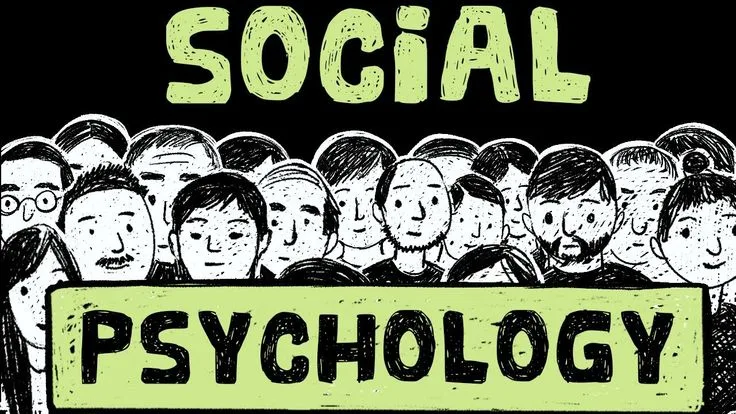
Situations often exert more influence on thought and conduct than people expect from personality or stated values alone. The answer to what is social psychology is the scientific study of how actual, imagined, or implied others shape thoughts, feelings, and behavior. Its central topics include conformity, obedience, bystander effects, attribution, cognitive dissonance, and social identity, with experiments showing how group norms and authority alter judgment and action.
You are standing in a line at a government office. It is long, the air is stale, and everyone around you looks as though they would rather be anywhere else. A man in a neat suit walks directly to the front of the line, says something briefly to the clerk, and is seen to immediately.
Nobody says a word. Later, thinking back on this, you feel certain that you would have objected if the situation had been slightly different: if he had been less well dressed, perhaps, or more obviously cutting rather than being apparently exempted.
This mundane scenario contains most of what social psychology studies. Whether you speak up is not simply a function of your personality or values.
It depends on the signals you receive from other bystanders, your interpretation of the suited man's authority, your desire to avoid conflict or seem rude, and the ease with which your mind attributes his behavior to personal importance rather than simple queue-jumping.
The same person behaves quite differently in different social situations, and social psychology is the science of why.
"The most important lesson from social psychology is that situations and context matter far more than we intuitively believe. We should be more humble about predicting our own behavior."
- Philip Zimbardo, The Lucifer Effect, 2007
Key Definitions
Social psychology is the scientific study of how people's thoughts, feelings, and behaviors are influenced by the actual, imagined, or implied presence of others.
Conformity is the tendency to adjust one's behavior or beliefs to match a perceived group norm, either because the group's judgment is believed to be correct (informational influence) or to gain social acceptance (normative influence).
| Social Psychology Topic | Key Finding | Classic Study |
|---|---|---|
| Conformity | People conform to group judgment even when clearly wrong | Asch line studies (1951) |
| Obedience to authority | Most people will obey authority figures in harmful ways | Milgram shock experiments (1963) |
| Bystander effect | Responsibility diffuses in crowds; less help when more witnesses | Darley & Latane (1968) |
| Cognitive dissonance | Behavior changes beliefs more than beliefs change behavior | Festinger & Carlsmith (1959) |
| Social identity | Group membership shapes self-concept and discrimination | Tajfel & Turner (1979) |
Attribution is the process by which people explain the causes of behavior, either to situational factors (the context) or dispositional factors (the actor's character).
Cognitive dissonance is the psychological discomfort arising from holding simultaneously two or more inconsistent cognitions, motivating attitude change or behavioral rationalization to reduce the inconsistency.[4]
The Asch Conformity Experiments
Solomon Asch was a Gestalt psychologist at Swarthmore College who had studied with Max Wertheimer and believed deeply in human rationality and independence.
His conformity experiments, conducted between 1951 and 1956, were designed partly to refute what he considered the overly pessimistic view of human suggestibility advanced by the earlier studies of Muzafer Sherif, who had used a more ambiguous perceptual task (the autokinetic effect) to demonstrate that people adopt others' judgments as anchors.
Asch's innovation was to make the task unambiguous.[1] The line-length judgment required no inference, no expertise, and no guesswork. The correct answer was plain. Could group pressure cause intelligent adults to deny what their eyes told them? Asch expected the answer to be no.
The results gave him a different answer. When the confederates unanimously gave a wrong response, naive participants conformed on roughly 37 percent of all critical trials. About three-quarters conformed at least once across the series of trials.
Subsequent variations showed that the effect was sensitive to group size up to three or four people, that unanimity was crucial, that a single dissenter drastically reduced conformity even if that dissenter gave a different wrong answer, and that public response increased conformity while written private response reduced it.
Two Roads to Conformity
Post-experiment interviews revealed two psychologically distinct processes underlying the apparent compliance. Some participants said they had genuinely become uncertain about their own perception when the entire group disagreed; the group's consistent alternative response caused them to doubt their vision or interpretation.
This is informational social influence: the group is used as a source of information about ambiguous or difficult judgments.
Others said they had been quite confident in their answer but had gone along to avoid standing out, seeming uncooperative, or disrupting the group dynamic. They knew their answer was right but performed the wrong answer publicly.
This is normative social influence: changing behavior without changing belief, driven by the desire for social acceptance and the discomfort of conspicuous deviance.
Both mechanisms operate in everyday life, often together. Most social conformity involves some informational uncertainty (perhaps others know something you do not) combined with some normative pressure (deviance is uncomfortable and has social costs).
Milgram's Obedience Studies
Stanley Milgram began designing his obedience studies at Yale in 1961, the year Adolf Eichmann's trial began in Jerusalem. Hannah Arendt's phrase "the banality of evil" captured the puzzle that motivated Milgram: how had ordinary men and women participated in systematic atrocities?
Was it that they were uniquely brutal, or was there something in the structure of authority and obedience that could produce harmful behavior from normal people?
Milgram's procedure placed participants in the role of teacher in an apparent learning experiment.[2] The learner (a 47-year-old accountant who was a confederate) was seated in an adjacent room and attached to a fake shock generator with electrodes.
For each wrong answer, the teacher was instructed to deliver an increasing shock, from 15 to 450 volts in 15-volt increments, reading aloud the label at each level: Slight Shock, Moderate Shock, Strong Shock, Very Strong Shock, Intense Shock, Extreme Intensity Shock, Danger: Severe Shock, and XXX.
The learner's responses were pre-recorded. At 75 volts he grunted. At 120 volts he shouted that the shocks were painful. At 150 volts he demanded to be released. At 285 volts he gave only an agonized scream. After 315 volts there was silence.
When participants expressed reluctance to continue, the experimenter used four verbal prods in sequence: Please continue; The experiment requires that you continue; It is absolutely essential that you continue; You have no other choice, you must go on.
In the baseline condition at Yale, 65 percent of participants delivered what they believed to be the maximum 450-volt shock, continuing beyond the silence that might indicate a cardiac emergency. Milgram was appalled. He expected perhaps one or two percent of participants would reach the maximum level.
The agency of the harm rested with the experimenter, not the participant; Milgram called the state of subordinating one's own moral agency to an authority an agentic state.
Situational Variations and Their Implications
Milgram's systematic variations revealed the architecture of obedience.[3] Proximity was the most powerful variable: obedience dropped from 65 percent in the baseline to 40 percent when the teacher could see the learner, to 30 percent when the teacher had to hold the learner's hand on a shock plate.
Institutional authority mattered: moving the experiment from Yale to a commercial building in Bridgeport reduced obedience to 48 percent. The presence of two rebel confederates who refused to continue at 150 volts reduced obedience to 10 percent.
These variations supported Milgram's situationist interpretation: obedience was not a function of individual character but of the structure of the situation. Normal people, in normal situations, behave normally.
The same people in an authority structure with diffused responsibility and gradual commitment escalation will perform acts they would never have contemplated without that structure.
The studies have been criticized on ethical grounds, for subjecting participants to severe distress, and on interpretive grounds.
David Mandel and others have questioned whether the World War II analogy holds; perpetrators of organized mass violence typically had ideological commitment and social permission, not merely authority compliance.
More recently, historian Christopher Browning's study of Reserve Police Battalion 101 found that men who did not want to participate in shootings were excused by their commander, suggesting that obedience was more ideological than Milgram's model implies.
The Stanford Prison Experiment and Its Contested Legacy
Philip Zimbardo's Stanford Prison Experiment (1971) assigned 24 male college students randomly to prisoner or guard roles in a simulated prison in the basement of Stanford's psychology building. The study was scheduled to run two weeks.
Zimbardo stopped it after six days, citing the guards' escalating cruelty and the prisoners' deteriorating psychological condition.
The experiment was presented as evidence that situational forces, the roles assigned by the prison structure, were sufficient to produce abusive behavior in normal, carefully screened students.
It became one of the most cited studies in psychology, appearing in virtually every introductory textbook as a demonstration of the power of situations over character.
The experiment's reputation has deteriorated significantly. Investigative journalist Thibault Le Texier's 2019 book "Histoire d'un mensonge" (History of a Lie), drawing on previously unexamined archival material, documented that guards had been coached by Zimbardo to behave harshly, that the simulated situation had many ecologically invalid features, and that participants in the prisoner role were largely performing distress rather than experiencing it authentically.
Le Texier's analysis suggested that the experiment was far closer to an improvised theatrical production than a controlled scientific study.[10]
This does not eliminate the broader situationist point that roles and institutional structures shape behavior; that point is supported by many better-designed studies. But it substantially undermines the SPE as a piece of scientific evidence.
Attribution Theory: How We Explain Behavior
Attribution theory was developed by Fritz Heider in his 1958 book 'The Psychology of Interpersonal Relations.' Heider proposed that people function as naive scientists, seeking to understand the causes of behavior in order to predict and control their social environment.[11]
He distinguished between internal causes (personality, ability, intentions) and external causes (the situation, luck, social pressure).
Edward Jones and Keith Davis formalized the correspondent inference theory in 1965: observers attribute behavior to underlying dispositions when the behavior is freely chosen, violates social norms, is low in social desirability, and has distinctive effects.
Harold Kelley's covariation model (1967) proposed that attributions are made by assessing consistency (does the person always behave this way?), distinctiveness (do they only behave this way in this situation?), and consensus (does everyone behave this way?).
The Fundamental Attribution Error
Lee Ross coined the term "fundamental attribution error" in 1977 to describe the systematic tendency to over-attribute behavior to dispositional factors and underweight situational factors.[8] Jones and Harris (1967) demonstrated this in a paradigm where participants read essays advocating for or against Fidel Castro.
When told the essay position had been randomly assigned (a clear situational constraint), participants still rated the essay writer's true attitude as corresponding to the essay position. Even knowing that the situation fully determined the behavior, they inferred disposition.
The fundamental attribution error has implications for moral judgment, hiring decisions, legal verdicts, and social policy. When we see poverty, we tend to attribute it to the character of the poor rather than to structural conditions. When a student fails, teachers may attribute it to lack of effort rather than inadequate instruction.
The actor-observer asymmetry is the related finding that people explain their own behavior situationally ("I was late because the traffic was terrible") while explaining others' behavior dispositionally ("he is always late because he is disorganized").
Social Identity Theory
Henri Tajfel's experience as a Polish Jewish man who survived the Holocaust partly by passing as French shaped his lifelong research agenda. How did group membership generate prejudice and discrimination?
Was it simply a matter of conflicting interests, as realistic conflict theory (Sherif) proposed, or was there something more fundamental in the psychology of group identity itself?
The minimal group paradigm experiments answered this question in a way that surprised even Tajfel.[5]
Participants divided into groups on the basis of expressed preference for Klee versus Kandinsky paintings, or even by coin flip, immediately allocated resources so as to favor their own group over the out-group, even at the cost of maximizing absolute in-group gain.
No history of conflict, no shared interests, no face-to-face interaction: mere categorical distinction was sufficient to generate in-group favoritism.
Social identity theory, developed with John Turner, proposed that the self-concept has two components: personal identity (individual traits and characteristics) and social identity (derived from group memberships).
People seek to maintain positive social identity through positive distinctiveness of their in-groups. This motivation drives comparisons with out-groups and favoring of in-group members.
Self-categorization theory (Turner et al., 1987) extended this by showing that the level of self-categorization that is psychologically salient shifts with context. A person can categorize themselves as an individual, as a member of a particular group, or as a member of the broader human category.
Intergroup behavior (stereotyping, discrimination) becomes more pronounced when group-level categorization is salient.
Cialdini's Principles of Persuasion
Robert Cialdini spent years studying professional influence practitioners, people whose livelihood depended on changing behavior: car salespeople, direct marketers, compliance professionals, fundraisers.[7]
He synthesized his observations into six principles, published in 'Influence: The Psychology of Persuasion' (1984), which has sold over five million copies and is required reading in marketing, sales, and behavioral economics.
Reciprocity: people feel obligated to return favors, gifts, and concessions. Free samples, uninvited favors, and prior concessions in negotiation all trigger this norm.
Commitment and consistency: once a position is publicly committed to, people feel internal and external pressure to remain consistent with it, even if the original conditions change.
This underlies the foot-in-the-door technique. Social proof: in uncertain situations, people look to others' behavior as evidence of the correct course of action, explaining why reviews, testimonials, and crowd size affect choices.
Authority: people defer to legitimate experts, and symbols of authority (titles, uniforms, credentials) trigger this deference even when the actual expertise is uncertain. Liking: people are more easily influenced by those they find attractive, similar to themselves, familiar, or who have paid them compliments.
Scarcity: perceived limited availability increases desirability, explaining limited-time offers and artificially restricted supply.
A seventh principle, unity (shared identity), was added in Cialdini's later work 'Pre-Suasion' (2016). Influence is more effective when the influencer and the target share a perceived common identity.
The Bystander Effect
John Darley and Bibb Latane developed their theory of bystander intervention in response to the 1964 murder of Kitty Genovese in Queens, New York, which had been reported as observed passively by 38 neighbors. The story proved substantially inaccurate, but it motivated important research.
Darley and Latane (1968) conducted the seizure experiment: a participant overheard what sounded like a fellow participant having a medical emergency.[6] When the participant believed they were the only person who could help, 85 percent intervened.
When they believed five others also had access to the intercom, only 31 percent intervened, and responses were slower. Two mechanisms explain the effect.
Diffusion of responsibility: in a group, each member feels less personally responsible to act because others share the obligation. Pluralistic ignorance: in ambiguous situations, each person looks to others' reactions to interpret the event.
If everyone else appears calm, each person infers the situation is probably not an emergency, not knowing that everyone else is engaged in the same inference from their calm appearance.
Subsequent research refined the conditions. Group members who know each other, who have relevant expertise, who feel personal responsibility, or whose attention is explicitly called to the victim are substantially more likely to intervene. The effect is real but context-dependent.
The Replication Crisis
The Reproducibility Project (Open Science Collaboration, 2015) attempted to replicate 100 studies from three top psychology journals.[9] Only 39 percent replicated with statistically significant results in the same direction. Average effect sizes in replications were roughly half those in originals.
This finding crystallized years of growing concern about the reliability of published findings.
Several factors contributed. Publication bias means null results are rarely published, so the literature systematically overstates effect sizes.
Questionable research practices including collecting data until significance is reached, testing multiple dependent variables and reporting only significant ones, and failing to pre-specify hypotheses inflate false positive rates substantially above the nominal five percent.
Small sample sizes mean individual studies are underpowered to detect true effects and highly sensitive to random sampling variation.
Some canonical social psychology findings have held up well under replication, including the Asch conformity effect, the fundamental attribution error paradigm, and many priming effects. Others, including many ego depletion findings and the facial feedback hypothesis in its strong form, have replicated poorly.
Reform has followed. Pre-registration is increasingly required or encouraged by top journals. Registered reports, where peer review and publication commitment happen before data collection, eliminate publication bias for those studies. Sample sizes have increased.
Open data and materials requirements improve scrutiny. The field is arguably stronger for the crisis, though the process of revision has been painful.
Cross-References
- For how cognitive biases interact with social influence in economic decisions, see Understanding Keynesian Economics: Demand and Stabilization
- For how social development and identity formation unfold across childhood and adolescence, see What Is Developmental Psychology?
- For the anchoring bias and its relationship to social proof, see Anchoring Bias: The First Number Shapes Your Mind
- For systems-level thinking about social norms as emergent phenomena, see Emergence Explained with Examples
Sources & Further Reading
- Asch, S.E. (1956). Studies of independence and conformity: I. A minority of one against a unanimous majority. Psychological Monographs, 70(9), 1-70.
- Milgram, S. (1963). Behavioral study of obedience. Journal of Abnormal and Social Psychology, 67(4), 371-378.
- Milgram, S. (1974). Obedience to Authority: An Experimental View. Harper and Row, New York.
- Festinger, L. (1957). A Theory of Cognitive Dissonance. Stanford University Press, Stanford.
- Tajfel, H. and Turner, J.C. (1979). An integrative theory of intergroup conflict. In W.G. Austin and S. Worchel (Eds.), The Social Psychology of Intergroup Relations. Brooks/Cole, Monterey.
- Darley, J.M. and Latane, B. (1968). Bystander intervention in emergencies: diffusion of responsibility. Journal of Personality and Social Psychology, 8(4), 377-383.
- Cialdini, R.B. (1984). Influence: The Psychology of Persuasion. William Morrow, New York.
- Ross, L. (1977). The intuitive psychologist and his shortcomings: distortions in the attribution process. Advances in Experimental Social Psychology, 10, 173-220.
- Open Science Collaboration (2015). Estimating the reproducibility of psychological science. Science, 349(6251), aac4716.
- Le Texier, T. (2019). Debunking the Stanford Prison Experiment. American Psychologist, 74(7), 823-839.
- Heider, F. (1958). The Psychology of Interpersonal Relations. Wiley, New York.
Further Reading
- Festinger, L. and Carlsmith, J.M. (1959). Cognitive consequences of forced compliance. Journal of Abnormal and Social Psychology, 58(2), 203-210.