
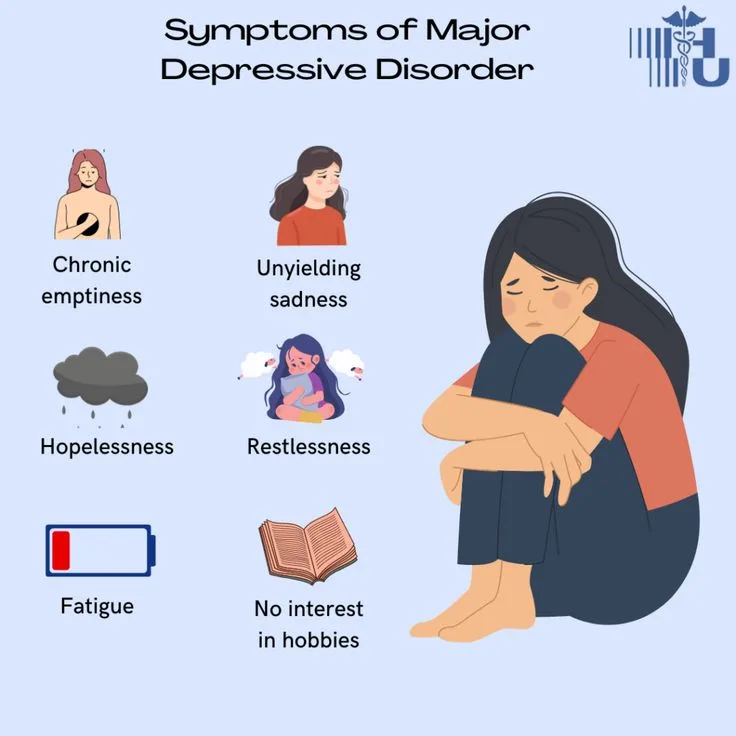
Understanding major depressive disorder takes more than a single symptom or a simple chemical-imbalance story. Diagnosis requires a pattern of at least five symptoms over two weeks, including depressed mood or loss of interest, plus significant impairment. Depression is heterogeneous. It involves interacting systems such as stress regulation, neuroinflammation, neuroplasticity, glutamate, and serotonin, so treatment and research must account for varied symptom profiles.
Depression is the leading cause of disability worldwide. The World Health Organization estimated in 2023 that approximately 280 million people globally live with depression, roughly 3.8% of the world's population. That includes 5% of adults and 5.7% of adults over 60.
In the United States, the 2021 National Survey on Drug Use and Health found that 8.3% of adults, about 21 million people, had experienced at least one major depressive episode in the past year.
These numbers were already large before the COVID-19 pandemic. They grew substantially during and after it: a 2021 Lancet analysis by Santomauro and colleagues estimated the pandemic added an additional 53 million cases of major depression worldwide.
Yet despite how common it is, depression remains misunderstood, stigmatized, and often poorly treated. The gap between available treatments and the people who receive them is enormous. The biology remains contested. And the popular "chemical imbalance" explanation has been significantly revised by recent research.
Understanding what depression actually is, at the level of diagnosis, neurobiology, psychology, and culture, matters for anyone affected by it. Over a lifetime, that means most people.
DSM-5 Diagnostic Criteria: What Depression Actually Is
The DSM-5 definition of major depressive disorder (MDD) requires at least five of nine specified symptoms during the same two-week period. These symptoms must represent a change from how the person functioned before.
Crucially, at least one of the five symptoms must be either depressed mood or loss of interest or pleasure in activities (anhedonia).
The nine symptoms are:
- Depressed mood most of the day, nearly every day (subjective or observed)
- Markedly diminished interest or pleasure in all or almost all activities
- Significant weight loss or gain, or decrease or increase in appetite
- Insomnia or hypersomnia
- Psychomotor agitation or retardation observable by others
- Fatigue or loss of energy
- Feelings of worthlessness or excessive or inappropriate guilt
- Diminished ability to think, concentrate, or make decisions
- Recurrent thoughts of death, suicidal ideation, or a suicide attempt
Beyond symptom count, the criteria require clinically significant distress or impairment in social, occupational, or other important areas of life. The episode also must not be explained by substances, another medical condition, or manic episodes (which would point toward a bipolar spectrum diagnosis instead).
The five-of-nine threshold reflects how varied depression can look. Two people can both meet diagnostic criteria while sharing only a single symptom. One person might have hypersomnia, increased appetite, and psychomotor retardation. Another might have insomnia, weight loss, and agitation.
This symptom-level heterogeneity matters a great deal. It helps explain why average treatment effect sizes across populations can look modest even when a treatment works very well for a specific symptom profile.
Critics of categorical diagnosis, including those who favor Research Domain Criteria (RDoC) approaches, argue that the five-of-nine threshold creates mixed groups that hide biologically meaningful subgroups.
Is the Serotonin Hypothesis Still Valid?
The popular version of the serotonin hypothesis says depression is caused by a "chemical imbalance" involving low serotonin. The scientific evidence no longer supports this, and most researchers now see it as an oversimplification.
This version entered public consciousness partly through pharmaceutical marketing of selective serotonin reuptake inhibitors (SSRIs) in the 1990s. It was never the consensus among neuroscientists, though.
A landmark 2022 umbrella review by Joanna Moncrieff and colleagues, published in Molecular Psychiatry, systematically examined evidence across several areas: serotonin metabolite levels, serotonin receptor studies, serotonin transporter studies, tryptophan depletion studies, and genome-wide association studies.
The review found no consistent evidence that depression is linked to lower serotonin activity or concentrations. It generated significant controversy. Critics noted that umbrella reviews are only as good as the studies they include, and that the serotonin transporter literature is genuinely complex.
The broader point still stands: depression is not explained by a single neurotransmitter deficit. Current scientific understanding points to multiple interacting systems:
| Neurobiological System | Relevance to Depression |
|---|---|
| HPA axis and cortisol | Chronic stress causes sustained cortisol elevation, hippocampal damage, and self-sustaining dysregulation |
| Neuroinflammation | Inflammatory cytokines (IL-6, TNF-alpha, IL-1beta) produce sickness behavior overlapping with depression |
| BDNF and neuroplasticity | Stress reduces BDNF expression; antidepressants, exercise, and ketamine all increase BDNF signaling |
| Glutamate system | NMDA receptor dysfunction implicated; explains ketamine's rapid antidepressant effect |
| Default mode network | Hyperactivity of self-referential brain networks associated with rumination |
| Serotonin system | Involved but not as a simple deficit; complex regulatory role |
Joanna Moncrieff's drug-centered model proposes something different: antidepressants create altered mental states that happen to help some people, rather than correcting a defined chemical deficiency. She compares this to how alcohol reduces social anxiety without addressing any "alcohol deficit."
This framing remains controversial, but it has driven important debate about informed consent and how patients are told about their medications.
The Neurobiology Beyond Serotonin
The hypothalamic-pituitary-adrenal (HPA) axis plays a central role in depression biology. Chronic psychological stress activates the HPA axis, which leads to sustained cortisol elevation.
This hypercortisolemia can damage hippocampal neurons, impair hippocampal neurogenesis, and disrupt glucocorticoid receptor signaling. Together, these effects create a self-sustaining feedback loop.
Elevated CRH (corticotropin-releasing hormone) has been found in the cerebrospinal fluid of depressed people and in postmortem studies of suicide victims.
The neuroinflammatory hypothesis, developed significantly by Andrew Miller and Charles Raison at Emory University, proposes that inflammatory cytokines trigger sickness behavior that overlaps substantially with depression symptoms: fatigue, social withdrawal, anhedonia, and cognitive slowing.
This hypothesis helps explain why medical conditions involving chronic inflammation (autoimmune disorders, cardiovascular disease, obesity) carry elevated depression risk. It also helps explain why some forms of depression respond to anti-inflammatory approaches.
The BDNF hypothesis, championed by Ronald Duman at Yale, argues that stress reduces brain-derived neurotrophic factor expression in the hippocampus and prefrontal cortex. This leads to synaptic atrophy and reduced neuroplasticity.
Importantly, antidepressants, exercise, and ketamine all increase BDNF signaling, though through different mechanisms. This suggests that restoring neuroplasticity may be a common downstream mechanism across effective treatments.
Structural neuroimaging studies consistently find reduced hippocampal and prefrontal cortex volumes in depression, though questions remain about whether this is a cause or a predisposition. Default mode network hyperactivity, particularly the medial prefrontal cortex component involved in self-referential rumination, is a robust fMRI finding.
Functional connectivity between the subgenual anterior cingulate cortex (often called Area 25) and other regions has been identified as a potential biomarker for how well a patient will respond to deep brain stimulation.
Psychological Models: How Depression Develops and Persists
Several influential psychological frameworks explain different parts of how depression develops and continues.
Aaron Beck's cognitive model, developed in the 1960s and continuously refined since, proposes that depression is maintained by a cognitive triad: negative views about the self, the world, and the future.
These negative automatic thoughts are driven by underlying dysfunctional schemas. These are deep-seated beliefs, typically formed in childhood, that function as cognitive vulnerabilities.
When stressful life events activate these schemas, they generate automatic thoughts biased toward catastrophizing, overgeneralizing, personalizing, and filtering out positive information.
Beck's model led to cognitive behavioral therapy (CBT), which targets these distorted thinking patterns through techniques like thought records, behavioral activation, and behavioral experiments.
Martin Seligman's learned helplessness model grew out of animal experiments in 1975. Abramson and Teasdale later refined it into the attributional reformulation, which proposes that depression follows from learning that one's actions have no effect on outcomes.
The attribution dimension says that people who blame negative events on internal (self-blame), stable (permanent), and global (widespread) causes are most vulnerable to depression. This model connects clearly to the neurobiology of uncontrollable stress and HPA axis dysregulation.
Susan Nolen-Hoeksema's response styles theory treats rumination as a critical maintenance factor: the tendency to repetitively and passively focus on one's symptoms and their possible causes and consequences.
Ruminative response styles predict the onset, severity, and duration of depressive episodes across longitudinal studies.
Rumination keeps attention fixed on negative self-relevant material and undermines effective problem solving. Rumination-focused CBT, developed by Watkins and colleagues, targets this process directly, with promising results.
Behavioral activation (BA) comes from Lewinsohn's work on operant conditioning and was developed as a standalone treatment by Martell, Addis, and Jacobson. It argues that depression results from too little positive reinforcement from the environment, often following loss or withdrawal. This creates a vicious cycle: inactivity leads to even less reinforcement.
Jacobson and colleagues' 1996 component analysis of CBT found that behavioral activation alone was as effective as full CBT. That makes it a simpler, more easily disseminated treatment option.
How Effective Are Antidepressants?
The evidence on antidepressants is more nuanced than either enthusiastic proponents or skeptical critics tend to admit. The most comprehensive meta-analysis to date, by Andrea Cipriani and colleagues, was published in The Lancet in 2018. It analyzed 522 trials covering 116,477 participants and 21 different antidepressants.
The headline finding: all antidepressants outperformed placebo for acute treatment of major depression. Odds ratios for response ranged from 1.37 for reboxetine to 2.13 for amitriptyline.
Several important qualifications apply:
- Effect sizes, expressed as standardized mean differences, are modest for the average patient (typically 0.3 to 0.5). This figure hides substantial variation between patients
- The placebo response rate is high (often 30-40%), which complicates interpretation
- Irving Kirsch's analyses, using unpublished FDA trial data, argued that clinical significance was minimal for all but the most severely depressed patients. This conclusion remains contested in methodological debates about clinical significance thresholds
- SSRIs and SNRIs have better tolerability profiles than tricyclics and MAOIs, despite sometimes lower absolute efficacy
- For mild to moderate depression, CBT and antidepressants show roughly comparable efficacy in direct comparisons
- For severe depression, pharmacotherapy is generally superior. Combining medication and psychotherapy outperforms either one alone
"The effect sizes were relatively modest for the antidepressants on average, but that average conceals enormous variation. Some patients show dramatic responses.
Averaging across all patients, including those who respond minimally, produces modest pooled effects that do not capture the real benefit to those for whom the treatment works well." - Andrea Cipriani, interview comments on the 2018 Lancet meta-analysis
For treatment-resistant depression (failing to respond adequately after two or more antidepressant trials at an adequate dose and duration), options include augmentation strategies (adding lithium, atypical antipsychotics, or thyroid hormone), switching antidepressants, and the emerging treatments discussed below.
Emerging Treatments: Ketamine, Psilocybin, and Brain Stimulation
Treatment-resistant depression affects approximately 30% of people diagnosed with MDD. This represents a major unmet clinical need, and several emerging approaches have shown significant promise.
Ketamine and its S-enantiomer esketamine (FDA-approved as Spravato nasal spray since 2019) produce rapid antidepressant effects within hours, compared to weeks for conventional antidepressants. This rapid onset matters a great deal given the suicide risk in severe depression.
Ketamine acts primarily as an NMDA glutamate receptor antagonist. Its antidepressant effects appear to involve AMPA receptor activation, BDNF release, and downstream mTOR pathway signaling, a fundamentally different mechanism from monoamine-based antidepressants.
Effects after a single infusion typically last one to two weeks, so repeated dosing is needed, and the long-term treatment protocol remains under active investigation. Dissociative side effects during infusion are manageable in clinical settings.
Psilocybin-assisted therapy has shown remarkable results in Phase II trials for treatment-resistant depression. A 2021 NEJM trial by Carhart-Harris and colleagues compared psilocybin to escitalopram and found that psilocybin produced numerically superior outcomes on several secondary measures.
A key feature of psilocybin treatment is intensive psychological support before, during, and after dosing sessions. This makes it as much a psychological intervention as a pharmacological one.
The mechanism likely involves 5-HT2A receptor agonism, which increases neural plasticity, and default mode network disruption that allows rigid depressive thought patterns to reorganize. Phase III trials are currently underway.
Electroconvulsive therapy (ECT), despite its stigma and history of misuse, remains the most effective treatment for severe treatment-resistant depression, with high-quality evidence showing response rates of 60-80%.
Modern ECT is performed under general anesthesia with muscle relaxants and is a safe medical procedure. Its primary side effect is temporary anterograde memory impairment. It is significantly underused relative to its evidence base.
| Treatment | Mechanism | Evidence Level | Notes |
|---|---|---|---|
| SSRIs/SNRIs | Monoamine reuptake inhibition | Strong | First-line; slow onset (4-8 weeks) |
| CBT | Cognitive restructuring, behavioral activation | Strong | Comparable to medication for mild-moderate |
| Ketamine/esketamine | NMDA antagonism, BDNF, mTOR | Moderate-strong | Rapid onset; treatment-resistant indication |
| ECT | Unknown; likely neuroplasticity | Strong | Most effective for severe/resistant cases |
| Psilocybin-assisted therapy | 5-HT2A agonism, DMN disruption | Emerging (Phase II) | Promising; Phase III ongoing |
| Transcranial magnetic stimulation | Non-invasive brain stimulation | Moderate | Modest but meaningful effect sizes |
| Behavioral activation | Reinforcement, activity scheduling | Strong | Simpler to deliver than full CBT |
Cultural and Demographic Variation
Depression is a cross-cultural phenomenon. It has been documented in every society systematically studied, but how it presents, how it is understood, and how well it is recognized vary substantially.
The WHO's global burden estimate of 280 million likely understates the true prevalence in settings where depression is not recognized as a medical category, or where seeking help is strongly stigmatized.
A robust finding in cross-cultural psychiatry is that somatic presentations of depression are more common outside Western contexts.
In Chinese, South Asian, and many African cultural settings, depression more often shows up as bodily complaints: fatigue, pain, palpitations, gastrointestinal distress, rather than as clearly emotional or psychological suffering.
Western psychiatric training has historically treated somatic presentation as masking the "real" emotional experience. This view is increasingly being questioned, though: the underlying neurobiology may not differ, but the way distress is expressed reflects cultural norms about what kinds of suffering are acceptable to show.
The 2:1 female-to-male prevalence ratio for depression, observed in Western epidemiology after puberty, reflects a genuine biological contribution: hormonal fluctuations across the menstrual cycle and the postpartum period. But it also reflects underdiagnosis of depression in men.
Men's depression more often shows up as irritability, aggression, substance use, and externalizing behavior rather than the classic internalized sad mood.
Instruments calibrated for typical female presentation systematically miss male depression. Broader masculine norms also discourage emotional disclosure, so men are less likely to seek help.
Depression rates vary substantially by socioeconomic status, employment status, and chronic illness burden. Unemployment carries elevated depression risk even after controlling for prior mental health status.
Social isolation, particularly in elderly populations, is one of the strongest independent risk factors for a new depressive episode.
The link between depression and physical health runs both ways. Depression predicts worse outcomes across virtually every major medical condition, including cardiovascular disease, diabetes, and cancer. This happens both through behavioral pathways (reduced adherence, poor self-care) and direct biological ones (inflammatory and neuroendocrine effects).
The Treatment Gap
Effective treatments exist, yet the treatment gap is enormous. The WHO estimates that in low- and middle-income countries, more than 75% of people with depression receive no treatment at all.
Even in high-income countries, treatment is often inadequate. Prescribed medications are stopped too early, evidence-based psychotherapies are hard to access, and the combination of medication plus psychotherapy that research supports is rarely delivered.
Barriers to treatment include stigma (still substantial even in societies with high mental health literacy) and cost and access (psychotherapy is expensive, and mental health professionals are scarce relative to need).
Another barrier is diagnostic inaccuracy: depression is frequently missed in primary care settings, particularly when it presents with somatic symptoms or alongside physical illness.
A further barrier is treatment quality: antidepressants are often prescribed without adequate follow-up, and psychotherapy is often delivered by practitioners without adequate training in evidence-based methods.
Digital health interventions, including internet-delivered CBT and app-based treatments, have shown effect sizes in controlled trials roughly comparable to face-to-face CBT for mild-to-moderate depression. This offers a way to address the treatment gap at scale.
Engagement and completion rates for self-directed digital programs remain significantly lower than for therapist-delivered treatment. But guided digital CBT with asynchronous therapist support shows better outcomes than purely self-directed programs.
Conclusion
Depression is not a character flaw, a weakness of will, or something everyone would face given the same hard circumstances. It is a genuine clinical condition with identifiable neurobiological correlates, well-understood psychological maintaining mechanisms, and effective treatments across multiple modalities.
The popular "chemical imbalance" explanation is misleading as a complete account, but it captured something real: depression involves biology, not just attitude.
The more accurate picture is more complex: HPA axis dysregulation, neuroinflammation, reduced neuroplasticity, disrupted default mode network function, and a range of psychological maintaining factors. It is also more tractable, because it opens up multiple points where treatment can intervene.
The primary failure in depression care is not scientific, it is social and structural. We have treatments that work. The challenge is making sure they reach the hundreds of millions of people who need them, in forms that are accessible, affordable, and fit how people actually experience and understand their own suffering.
Health note: This article is general educational information about how a topic works, not medical, psychological, or mental-health advice, diagnosis, or treatment. Everyone's situation is different, and research findings describe groups, not individuals.
If you are struggling or have concerns about your health, please talk to a qualified professional such as a doctor or licensed therapist.
If you are in crisis or thinking about harming yourself, contact your local emergency services or a crisis line right away: in the US you can call or text 988 (Suicide & Crisis Lifeline); elsewhere, find local lines at findahelpline.com.