
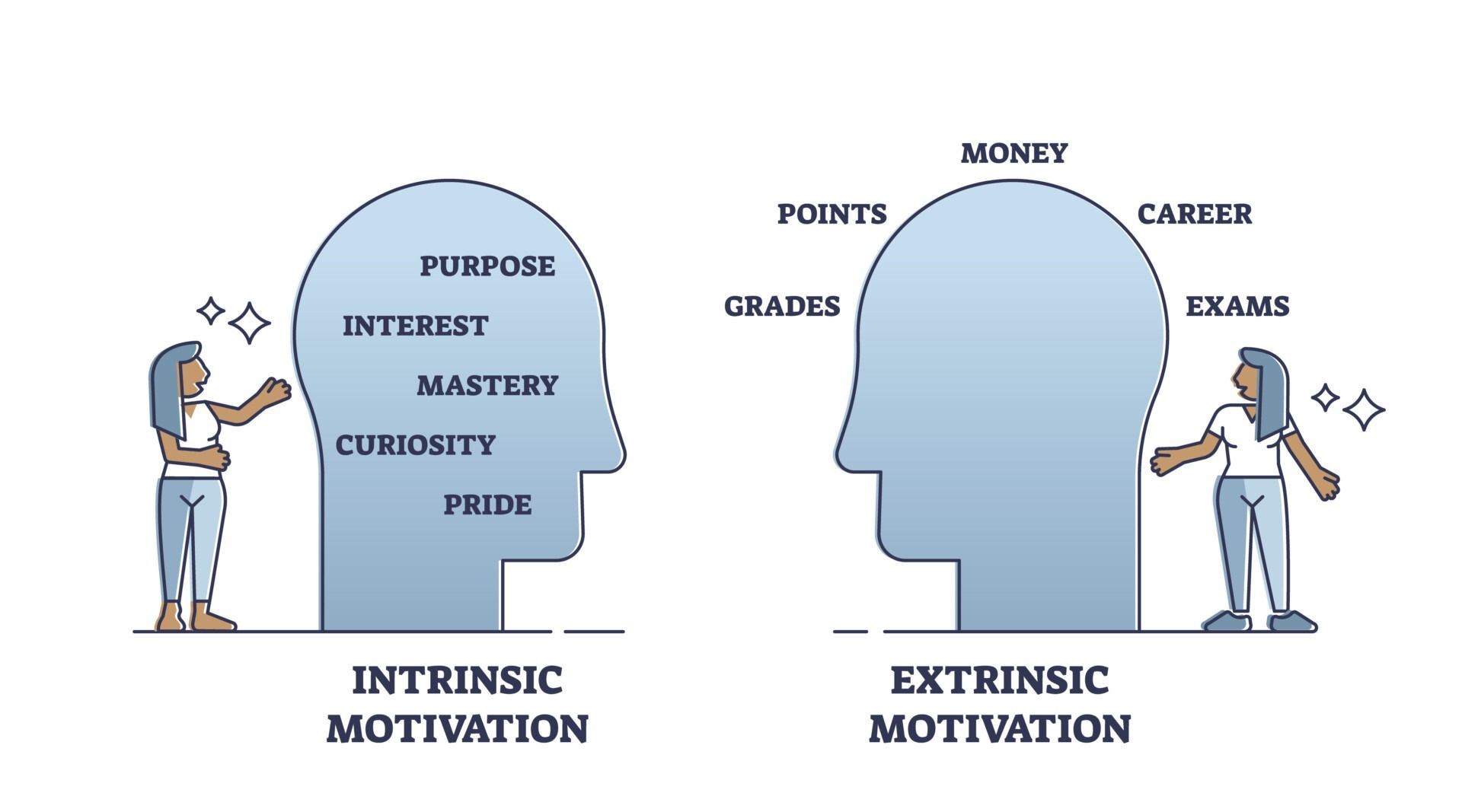
Intrinsic vs extrinsic motivation distinguishes doing an activity because it is satisfying from doing it for a separable outcome such as pay, approval, or avoidance of punishment. Rewards can undermine interest when they feel controlling, but not all external motives have the same effects. Autonomy, competence, and relatedness help people internalize goals and support more persistent, creative, and healthy engagement.
In the early 1970s, a social psychologist named Edward Deci ran a deceptively simple experiment. He brought college students into a lab and asked them to solve a set of Soma puzzles, interlocking plastic pieces that can be assembled into hundreds of different configurations.
The puzzles were genuinely interesting, the kind of problem people fiddle with voluntarily when they encounter them. In the first session, all students worked on the puzzles without payment.
In the second session, one group was paid a dollar per puzzle solved; the other group continued without payment. In the third session, the experimenter left the room mid-session, ostensibly to enter data, leaving the participant alone with both the puzzles and a collection of magazines.
The key measure was how many minutes subjects spent on the puzzles voluntarily, with no one watching and no payment forthcoming.
The result was counterintuitive enough that Deci published it in the Journal of Personality and Social Psychology in 1971 and spent the next five decades building a theory around it.
Students who had been paid in session two spent significantly less time on the puzzles in session three than students who had never been paid at all. The reward had not amplified their interest. It had quietly drained it.
"When money is used as an external reward for some activity, the subjects lose intrinsic interest for the activity." (Edward Deci, 1971)
This finding, eventually named the overjustification effect, became one of the most replicated and contested findings in all of motivational psychology.
Understanding why it happens, when it happens, and what it means for how we design schools, workplaces, and lives requires engaging seriously with the distinction between intrinsic and extrinsic motivation.
Defining the Terms
Intrinsic motivation refers to engaging in an activity because the activity itself is inherently satisfying. The reward is in the doing. A child who reads for hours not because a teacher assigned it but because the story is gripping is intrinsically motivated.
A programmer who loses track of time debugging an elegant solution is intrinsically motivated. The activity is its own end.
Extrinsic motivation refers to engaging in an activity to obtain an outcome separable from the activity itself. The work is instrumental to something else: a paycheck, a grade, approval, the avoidance of punishment.
A student who studies to avoid a parent's disappointment, or an employee who arrives on time to avoid a written warning, is extrinsically motivated.
The distinction seems obvious in the extreme cases, but in practice human motivation is rarely pure. Most real-world behavior involves a mixture of the two, and the same activity can be intrinsically motivating for one person and purely extrinsic for another.
What makes Deci and Richard Ryan's self-determination theory (SDT) valuable is not just the intrinsic/extrinsic distinction: it is the much more nuanced taxonomy they built around it over several decades of research.
Self-Determination Theory: A Map of Human Motivation
Deci and Ryan's self-determination theory, developed through the 1980s and comprehensively presented in their 2000 Psychological Review paper and the 2017 book Self-Determination and Human Motivation, proposes that motivation exists along a continuum from fully external to fully internal, and that the health consequences of different positions on that continuum are systematic and predictable.
The Motivation Continuum
| Motivation Type | Regulatory Style | Perceived Locus | Example |
|---|---|---|---|
| Amotivation | None | Impersonal | "I don't know why I bother" |
| External regulation | Extrinsic | External | Working only to get paid |
| Introjected regulation | Extrinsic | Somewhat external | Working to avoid guilt or shame |
| Identified regulation | Extrinsic | Somewhat internal | Working because the goal matters personally |
| Integrated regulation | Extrinsic | Internal | Working because the goal is part of who I am |
| Intrinsic regulation | Intrinsic | Internal | Working because the work itself is engaging |
The key insight of this framework is that not all extrinsic motivation is equal.
A student who studies because they genuinely value learning (identified regulation) and one who studies purely to avoid parental punishment (external regulation) are both technically extrinsically motivated: neither is engaged primarily for the pleasure of studying itself.
But their psychological experience, well-being, and likely long-term outcomes differ dramatically.
SDT research consistently finds that internalized forms of motivation (identified and integrated) produce outcomes nearly as positive as intrinsic motivation: persistence, creativity, well-being, and performance quality.
Controlled forms (external and introjected) produce poorer outcomes: anxiety, superficial learning, burnout, and performance only when monitored.
The Three Universal Psychological Needs
SDT's most important contribution beyond the motivation continuum is the identification of three universal psychological needs whose satisfaction or frustration predicts motivational outcomes:
Autonomy
Autonomy is the need to experience one's actions as self-chosen and self-endorsed, to feel that one is the author of one's own behavior rather than a pawn of external forces or internal compulsions.
It does not mean independence or the absence of social influence; it means that the influence has been internalized and genuinely accepted rather than merely complied with.
Research across dozens of cultures finds that autonomy support (environments where people's perspectives are acknowledged, rationales are provided, and pressure is minimized) consistently predicts higher intrinsic motivation, greater internalization of values, and better psychological health.
Conversely, environments experienced as controlling predict worse outcomes on every motivational dimension.
Competence
Competence is the need to feel effective and capable, to experience mastery and to see that one's actions have meaningful impact. This is not about ego or self-esteem (though competence-satisfaction can contribute to them); it is about the fundamental human need to function well in one's environment.
Competence satisfaction is one reason that challenges calibrated to the edge of current ability are more motivating than tasks that are too easy or too hard. When you are operating near the boundary of your skill, growth is happening and the feedback is informative.
Below that boundary, boredom; above it, anxiety. Csikszentmihalyi's concept of flow maps onto this: the optimal experience of complete absorption in an activity occurs precisely when challenge and skill are in dynamic balance.
Relatedness
Relatedness is the need to feel connected to others, to care and be cared for, to belong to groups and communities in which one matters. Relatedness is sometimes underemphasized in discussions of intrinsic motivation, which tend to focus on the individual working in isolation.
But Deci and Ryan's research shows that relatedness is a necessary ingredient for motivation, particularly for the internalization of values. We are more likely to adopt and genuinely care about the goals of groups and institutions to which we feel genuinely connected.
The three needs, autonomy, competence, and relatedness, are not motivators in the traditional sense. They are more like soil conditions. When all three are present, intrinsic motivation and healthy internalization of values grow naturally. When any one is chronically frustrated, motivational problems follow.
The Overjustification Effect: When Rewards Backfire
The most practically important implication of SDT for institutions, schools, workplaces, families, is that externally imposed rewards can undermine intrinsic motivation for activities that people already find inherently interesting.
This is the overjustification effect, and it has been replicated in hundreds of studies since Deci's original 1971 experiment.
The mechanism, as described in Deci and Ryan's cognitive evaluation theory (a sub-theory of SDT), is this: when people observe their own behavior, they construct attributions for why they are doing it.
If I am solving puzzles and someone pays me to do so, I now have an external explanation readily available: I am doing it for the money.
This external attribution crowds out the internal one (I am doing it because I enjoy it), shifting my perceived locus of causality from internal to external.
After the reward is removed, the behavior is still associated with external regulation, but the external regulator is gone, and so motivation drops.
What the Meta-Analyses Show
The definitive meta-analysis of the overjustification effect literature was conducted by Deci, Koestner, and Ryan and published in Psychological Bulletin in 1999. Analyzing 128 studies, they found that:
- Tangible, expected rewards contingent on engaging in an activity (e.g., "you will get a gold star for working on this puzzle") consistently undermined both intrinsic motivation and interest
- Verbal rewards (praise, positive feedback) that conveyed genuine information about competence typically enhanced intrinsic motivation
- Unexpected rewards given after completion generally did not undermine intrinsic motivation, because they could not be anticipated and therefore did not shift perceived causality before the activity
- Completion-contingent rewards (you get the reward for finishing, regardless of quality) had more negative effects than engagement-contingent rewards
This meta-analysis was controversial. Cameron and Pierce (1994) had conducted an earlier meta-analysis claiming no reliable overjustification effect, which became politically significant in educational policy debates about gold stars and behavior charts.
Deci, Koestner, and Ryan's reanalysis showed that Cameron and Pierce had combined conceptually distinct categories of rewards in ways that masked the effect.
When Rewards Are Fine, or Even Helpful
The research does not say that all external rewards are harmful. Rewards are appropriate and often necessary for:
- Activities that are not intrinsically motivating and where intrinsic motivation is not a goal (paying someone to do data entry)
- Bootstrapping engagement with activities that might become intrinsically motivating over time, as long as the rewards are competence-informative rather than controlling
- Establishing behavioral baselines in populations where intrinsic motivation is absent or where other barriers exist
What the research warns against is using controlling rewards for activities where intrinsic motivation already exists and is educationally or organizationally valuable.
In classrooms, this means that extrinsic reward systems (token economies, public rankings, prize systems) for reading, creative writing, or mathematics can erode exactly the curiosity and engagement that educators most want to cultivate.
Applications in Education
The implications of SDT for education have been extensively studied. Johnmarshall Reeve, a leading SDT researcher, has spent decades examining what autonomy-supportive teaching looks like in practice and what it produces.
What Autonomy-Supportive Teaching Looks Like
Autonomy-supportive teachers tend to:
- Provide meaningful rationales for tasks, especially those that are not inherently interesting
- Acknowledge students' feelings and perspectives, including negative ones ("I know this seems boring, and here is why it still matters")
- Offer choices within structured activities rather than mandating a single approach
- Use informational language ("Here is what you might try") rather than controlling language ("You must do this")
- Minimize surveillance, evaluation anxiety, and competitive comparisons
Research consistently finds that students in autonomy-supportive classrooms show higher conceptual learning, greater creativity, stronger persistence, and better psychological well-being than students in controlling classrooms, even when controlling for teacher quality and student ability.
The Problem With Grades
Grades are among the most consequential extrinsic rewards in modern life, and the SDT research on them is sobering. Controlled studies find that when students are graded on creative tasks, they produce less creative work than when graded on process or not graded at all.
The anticipation of evaluation activates a performance orientation (focus on external judgment) rather than a learning orientation (focus on mastery and understanding).
This does not mean grades should be abolished (the practical functions they serve are real). But it does mean that grading practices matter: frequent high-stakes summative grading without formative feedback creates more controlling environments than regular competence-informative feedback with infrequent summative assessment.
Applications in the Workplace
SDT has been applied extensively to organizational behavior by researchers including Marylene Gagne, Jacques Forest, and Avi Assor.
The consistent finding is that autonomous work motivation, whether through intrinsic engagement or genuine internalization of work values, predicts better performance on complex, creative tasks; lower turnover; and higher psychological well-being.
Management Style Matters Enormously
An important natural experiment in motivation research was conducted by Richard Hackman and Greg Oldham, whose job characteristics model identified five core job dimensions that predict intrinsic motivation: skill variety, task identity (doing a whole piece of work), task significance, autonomy, and feedback from the job itself.
Jobs high on these dimensions consistently produced higher motivation and satisfaction, regardless of pay level.
More recent SDT-based research extends this: it is not just job design but management style that determines whether the potential for intrinsic motivation in a job is realized. A job high in autonomy potential can still produce controlled motivation if the manager is surveillance-oriented, directive, and evaluatively threatening.
Performance Pay and Its Limits
The widespread use of performance-contingent pay in organizations is challenged by SDT research. For algorithmic tasks (routine, clearly specified, measurable), performance pay typically works as expected: more pay, more output. But for heuristic tasks (creative, complex, requiring judgment), the picture is more complicated.
Dan Pink's popular synthesis of this research in Drive (2009) overstates the case for a simple division, but the underlying SDT research is clear: controlling performance incentives in knowledge-work contexts can reduce the quality (though not always the quantity) of output.
| Task Type | Pay-for-Performance Effect | Why |
|---|---|---|
| Algorithmic (assembly, data entry) | Generally positive | Output is countable; effort maps linearly to result |
| Heuristic (writing, design, strategy) | Mixed to negative on quality | Controlling orientation narrows focus; reduces exploratory thinking |
| Creative (art, research, innovation) | Often negative on quality | Evaluation apprehension impairs divergent thinking |
The Relatedness Factor Often Gets Overlooked
Most practical discussions of motivation focus on autonomy and competence. Relatedness, the need to feel genuinely connected to others, receives less attention but is equally important, particularly for motivation in institutional settings.
SDT research shows that students who feel their teachers genuinely care about them as people, not just as learners, show significantly higher intrinsic motivation and deeper engagement even when controlling for teacher competence and task characteristics.
Workers who feel their manager genuinely cares about their development show higher autonomous motivation than those with objectively better pay in lower-relatedness environments.
The mechanism involves internalization: we are more likely to genuinely adopt the values and goals of people and institutions we feel connected to. A student who feels cared for by their teacher is more likely to come to genuinely value learning, not merely perform it for external evaluation.
What SDT Predicts That Other Theories Miss
Compared to older motivational theories (Maslow's hierarchy, Herzberg's two-factor theory, simple expectancy-value models), SDT makes several distinctive predictions that have been empirically validated:
- Not all rewards are equal. The motivational effect of a reward depends on whether it is experienced as controlling or informational, not merely on its size.
- Pressure can harm intrinsic motivation even without rewards. Surveillance, deadlines experienced as controlling, and competitive contexts can undermine intrinsic motivation without any tangible reward being present.
- Internalization is a process, not a state. Values and motivations can move along the continuum from external to internal through experiences of autonomy, competence, and relatedness. This means that extrinsic motivation is not necessarily permanent.
- Need satisfaction predicts well-being across cultures. Studies in dozens of countries find that autonomy, competence, and relatedness satisfaction consistently predict psychological well-being, even in cultures where autonomy is not explicitly valued as a cultural ideal.
Putting It Together: Practical Principles
The intrinsic/extrinsic distinction is not a license to remove all external structure, pay, or evaluation. It is a framework for thinking about when and how external conditions support or undermine the motivational health that makes sustained engagement, creativity, and well-being possible.
A few principles follow directly from the research:
Provide rationales, not just directives. When people understand why a task matters, they can internalize its purpose. When they are simply told what to do, they remain externally regulated.
Make feedback informational, not controlling. "Here is what you did well and what to work on" supports competence. "Here is your ranking relative to others" activates social comparison and performance anxiety.
Preserve autonomy within structure. Choice does not require the absence of structure. Offering meaningful options within a bounded task supports autonomy; micro-managing every step destroys it.
Use unexpected rewards, not anticipated ones, for intrinsically interesting tasks. If you want to acknowledge good work on a project someone is genuinely engaged with, do it spontaneously after the fact, not as a pre-announced contingency.
Build genuine connection. The social dimension of motivation is not soft or secondary. It is a fundamental need whose satisfaction or frustration shapes every other motivational variable.
The evidence accumulated over five decades of SDT research points in a consistent direction: human beings are naturally curious, growth-oriented, and capable of finding meaning in work, but those tendencies require the right conditions to flourish.
Understanding the difference between intrinsic and extrinsic motivation is not just an academic exercise. It is a practical guide to building environments in which people can do their best work and live well while doing it.