
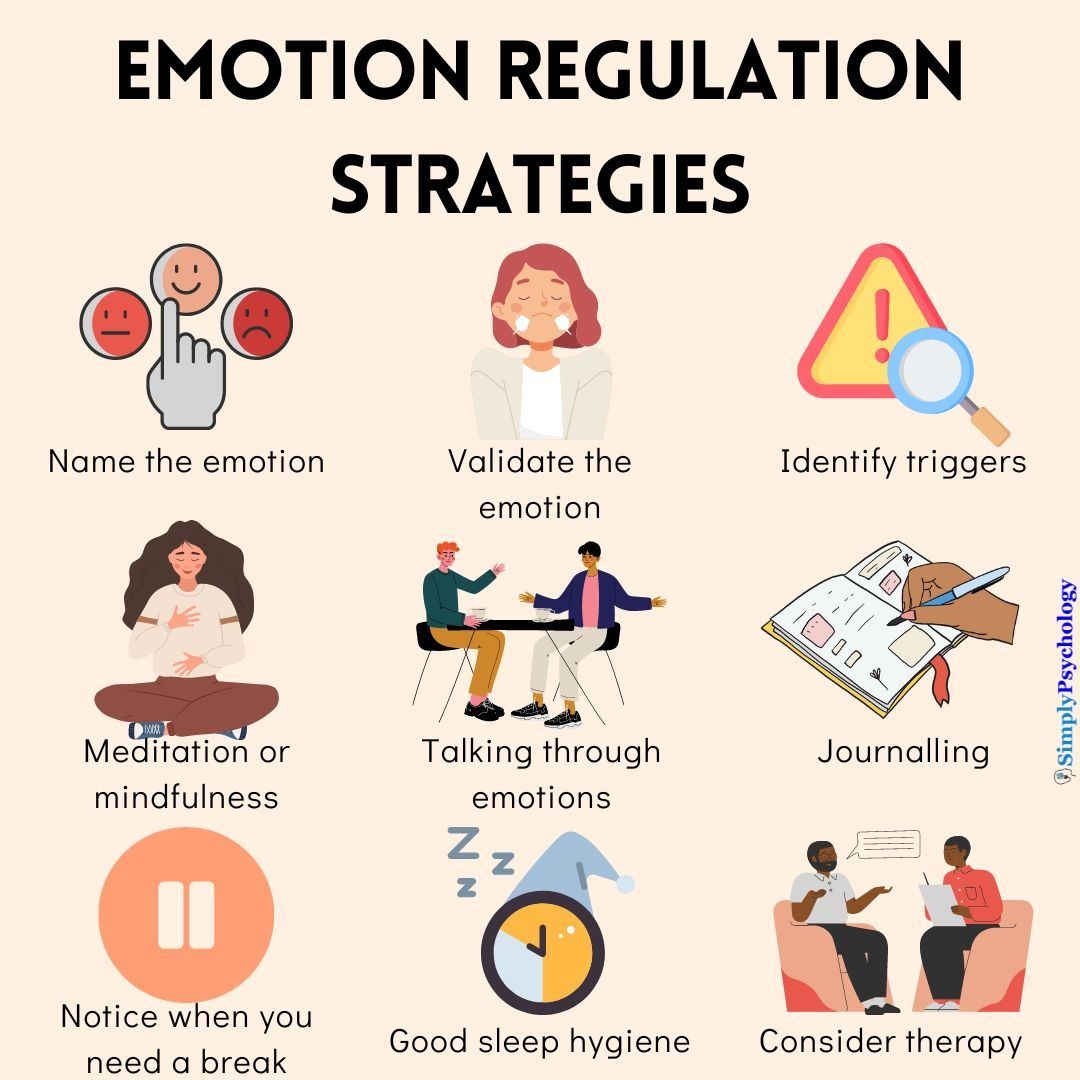
Emotional: Everyone knows what it feels like to lose control of an emotion: the flash of anger that makes you say something you immediately regret, the anxiety spiral that hijacks a presentation, the low-grade dread that makes it impossible to focus. These experiences are universal.
What is less universally understood is that emotional regulation, the capacity to manage what you feel and how you respond to it, is not a fixed trait. It is a learnable skill with a significant body of research behind it.
The science of emotional regulation has advanced substantially since the 1990s. James Gross at Stanford developed the most influential theoretical model, which identified distinct points in the emotional process where intervention is possible.
Marsha Linehan created a practical therapeutic framework, Dialectical Behavior Therapy, that teaches specific regulation skills. Kristin Neff's research on self-compassion offered a counterintuitive finding: that treating yourself more kindly under pressure may actually improve regulation, not undermine it.
This article explains what emotional regulation is, how it works, what strategies are most effective, and why it matters in daily life and work.
What Emotional Regulation Is
Emotional regulation refers to the processes, both automatic and deliberate, by which people influence which emotions they experience, when they experience them, and how they experience and express those emotions. This definition, drawn from James Gross's foundational work, is important because it is broader than most people expect.
Regulation is not just about suppressing or calming negative emotions. It includes:
- Generating emotions you want to feel (e.g., working up courage before a difficult conversation)
- Maintaining emotional states that support goals (e.g., sustaining motivation across a long project)
- Modifying emotions when they are unhelpful (e.g., reducing anxiety before a presentation)
- Expressing emotions appropriately to context (e.g., calibrating how much frustration to show in a professional setting)
Emotional dysregulation, the failure of these processes, does not always look like visible emotional outbursts. It also includes emotional numbness, chronic avoidance, rumination that extends normal sadness into prolonged depression, and the inability to access or express emotions at all.
"Emotions are not problems to be solved. They are signals to be understood. Regulation is not elimination: it is management." James Gross, Stanford Psychophysiology Laboratory
Why Emotional Regulation Matters
The capacity to regulate emotions predicts outcomes across a wide range of domains. This makes emotional regulation not merely a topic of academic interest but one of the most practically consequential skills a person can develop.
Mental health: Emotional dysregulation is a transdiagnostic feature of many psychological disorders.
It is central to borderline personality disorder (Linehan, 1993), major depression (where difficulty regulating sadness leads to rumination and withdrawal), anxiety disorders (where difficulty regulating fear leads to avoidance), and post-traumatic stress disorder.
The ability to regulate effectively functions as a buffer against psychopathology rather than merely a skill for people with clinical diagnoses.
Physical health: Emotional dysregulation is associated with poorer physical health outcomes through multiple pathways. Chronic emotional suppression elevates cortisol and sympathetic nervous system activation.
Research by Pennebaker and colleagues has demonstrated that emotional inhibition carries a physiological cost measurable in immune function and health service utilization.
A 2013 study by Kiecolt-Glaser and colleagues found that habitual use of poor regulation strategies predicted inflammatory markers associated with cardiovascular risk.
Relationships: The ability to regulate emotions during interpersonal conflict is one of the strongest predictors of relationship stability and satisfaction.
Gottman and Levenson's research on couples, tracking physiological arousal during conflict discussions, found that physiological flooding (the state in which high arousal overwhelms regulation capacity) predicted divorce with remarkable accuracy.
Couples who could regulate well during conflict discussions remained together; those who flooded, withdrew, or escalated emotionally were significantly more likely to separate.
Academic and occupational performance: Emotional regulation capacity predicts academic achievement independently of intelligence.
A meta-analysis by Moffitt and colleagues (2011) tracking thousands of children across thirty years found that childhood self-control, which includes emotional regulation as a core component, predicted adult health, wealth, and criminal behavior more robustly than socioeconomic status or intelligence.
James Gross's Process Model
The most influential framework in the scientific study of emotional regulation is the process model developed by James Gross at Stanford University, first published in 1998 in Psychological Review and elaborated in numerous subsequent studies.
Gross proposed that emotional regulation strategies can be classified by where in the emotion-generating process they intervene.
Emotions unfold in a sequence: a situation is attended to, it is appraised for personal relevance and meaning, and the appraisal generates an emotional response, physiological, experiential, and behavioral. Each point in this sequence offers a point of potential regulation.
The Five Families of Regulation Strategies
| Strategy Family | Timing | Description | Example |
|---|---|---|---|
| Situation selection | Before the emotion begins | Choosing situations that are likely to produce desired emotions | Avoiding a colleague who reliably makes you anxious |
| Situation modification | In the situation | Changing the situation to alter its emotional impact | Bringing a supporter to a difficult meeting |
| Attentional deployment | During the situation | Directing attention toward or away from emotional stimuli | Focusing on the mechanics of a task rather than the stakes |
| Cognitive change (reappraisal) | During appraisal | Changing how the situation is mentally construed | Interpreting critical feedback as useful information |
| Response modulation (suppression) | After the emotion arises | Changing emotional expression or behavior after the emotion is present | Keeping a neutral facial expression when feeling angry |
The process model predicts, and research has confirmed, that strategies that intervene earlier in the emotional process are generally more effective than those that intervene later.
Cognitive reappraisal, which intervenes at the appraisal stage, consistently outperforms expressive suppression, which intervenes after the emotion has already fully formed.
An important practical implication: once an emotion has fully formed, once the physiological cascade is underway, the heart is pounding, the thoughts are racing, the available strategies are different and generally less effective than those available earlier in the sequence.
This argues for learning to recognize emotional escalation early, before full arousal is reached, when more powerful intervention strategies are still available.
Cognitive Reappraisal vs. Suppression
The comparison between reappraisal and suppression is one of the most replicated findings in the emotional regulation literature, and it has important practical implications.
Cognitive Reappraisal
Cognitive reappraisal means changing how you mentally frame a situation to alter its emotional impact. You are not denying reality; you are identifying a different genuine interpretation. Common forms include:
- Reframing: Viewing a difficult experience as a growth opportunity rather than a threat
- Distancing: Adopting a third-person perspective ("What would I tell a friend in this situation?")
- Temporal perspective: Asking how much this will matter in a year or five years
- Benign attribution: Considering alternative explanations for others' behavior that are less personally threatening
Research by Gross and Olivier John (2003, Journal of Personality and Social Psychology) found that habitual use of reappraisal was associated with:
- Less negative emotion and more positive emotion
- Better interpersonal functioning and social support
- Higher wellbeing measures
- No increase in physiological arousal during emotional episodes
Crucially, reappraisal works by changing the emotional trajectory before full arousal occurs. Because it operates at the appraisal stage, the downstream physiological response is genuinely different, not just externally masked.
A useful extension of distancing reappraisal, studied extensively by Ethan Kross at the University of Michigan, is self-distancing: referring to yourself in the third person or by name when thinking through a difficult situation. A study by Kross et al.
(2014) found that self-distancing reduced emotional reactivity during reflection on negative experiences and improved self-insight.
Participants who thought about a difficult event using "he" or "she" or their own name showed less rumination and more wise reasoning than participants who used "I", a small shift in linguistic framing with measurable emotional consequences.
Expressive Suppression
Expressive suppression means inhibiting the behavioral or expressive component of an emotion after it has already arisen, keeping a neutral face when angry, laughing when sad. Most people use suppression regularly and reasonably assume it is effective emotional management. Research suggests the picture is more complicated.
Gross's studies found that while suppression successfully reduces emotional expression, it does not reduce the underlying subjective experience or physiological arousal.
In some studies it actually increases physiological arousal, measured as elevated heart rate and skin conductance, suggesting that the effort of inhibition generates its own stress response.
Habitual suppressors show worse memory for emotional events, are perceived by others as less warm and authentic, and report lower wellbeing.
An important finding from Gross and Levenson (1997) involved the social cost of suppression: when participants suppressed emotional expression during conversations, their conversation partners showed elevated cardiovascular responses.
The effort of tracking and responding to an emotionally suppressed partner generated stress in that partner, even without the partner having any explicit knowledge that suppression was occurring. Suppression is not interpersonally neutral.
Suppression is not always problematic, context matters. There are situations where controlling emotional expression is socially necessary and appropriate, and brief suppression in a specific context does not carry the costs of chronic habitual suppression.
But as a general-purpose strategy for emotional management, it is less effective than reappraisal.
DBT: A Practical Skill Set
Dialectical Behavior Therapy (DBT), developed by psychologist Marsha Linehan in the late 1980s originally for borderline personality disorder, includes one of the most comprehensive and empirically tested curricula of emotional regulation skills available.
DBT's emotional regulation module has since been validated across a much broader range of populations and is taught independently of the full therapy.
DBT was born from Linehan's attempt to apply standard behavior therapy to a population, chronically suicidal women with borderline personality disorder, for whom standard approaches were consistently failing.
The key insight was that emotional dysregulation in this population was extreme and required targeted skills training rather than simply therapeutic support.
The skills curriculum Linehan developed has since proven useful well beyond the original clinical population, showing benefits for adolescents with self-harm, eating disorder patients, substance use disorder populations, and general adults managing workplace and relationship stress.
DBT identifies several core skills:
Identify and Label Emotions
The first step in regulating an emotion is accurately identifying what the emotion is. This sounds simple but is genuinely difficult for many people.
DBT teaches a detailed model of primary emotions, fear, sadness, anger, shame, disgust, joy, love, and their characteristic prompting events, physical sensations, action urges, and expressions.
The ability to accurately label emotions (what psychologists call emotional granularity) is itself associated with better regulation outcomes.
Research by Lisa Feldman Barrett and others finds that people who distinguish fine-grained emotional states ("I feel anxious about the outcome but also curious about the process") regulate those emotions more effectively than people with coarser emotional vocabulary.
Barrett's research challenges the classical view of emotion as a set of universal basic states, proposing instead that emotions are constructed by the brain through a process that depends heavily on conceptual knowledge, including emotional vocabulary.
A 2016 study by Torre and Lieberman reviewing twenty-five years of research on affect labeling found that putting feelings into words (whether spoken or written) consistently reduced subjective emotional intensity and physiological arousal.
The mechanism appears to involve activation of prefrontal regulatory regions and reduced amygdala reactivity, the naming process is neurologically regulatory, not merely descriptive.
Reduce Emotional Vulnerability: PLEASE Skills
DBT's PLEASE skills address the physical baseline from which emotional responses occur:
- PL: Treat PhysicaL illness, being sick lowers the threshold for emotional reactivity
- E: balanced Eating, blood sugar fluctuations increase irritability and emotional reactivity
- A: Avoid mood-altering drugs unless prescribed
- S: balanced Sleep, sleep deprivation dramatically impairs emotional regulation capacity
- E: get Exercise, regular exercise is among the most robust interventions for mood regulation
These are unglamorous but important. Emotional regulation is not just a cognitive skill; it depends on physiological baseline. A chronically sleep-deprived person will find all cognitive regulation strategies harder to apply.
The sleep point deserves specific emphasis. Research by Matthew Walker at UC Berkeley has documented the relationship between sleep deprivation and emotional reactivity in detail.
A single night of sleep deprivation produces a 60% increase in amygdala reactivity to negative stimuli (Yoo et al., 2007), effectively removing the prefrontal "brake" on emotional responses.
The connection between sleep and the prefrontal cortex, the brain region most responsible for deliberate emotional regulation, makes adequate sleep one of the most important foundations of regulation capacity, more important than any technique applied on top of insufficient sleep.
Opposite Action
When an emotion arises and the action urge it generates is not effective, anxiety says "avoid," shame says "hide," anger says "attack", opposite action involves deliberately acting opposite to the urge. For anxiety that arises without a realistic threat, this means approaching rather than avoiding.
For shame, this means disclosing rather than hiding. For unjustified anger, this means acting gently rather than aggressively.
Opposite action works through behavioral activation logic: the action and its consequences provide feedback that changes the emotional state. Approaching something feared, and not being harmed, weakens the fear response over time. It is exposure therapy in everyday form.
The empirical basis for opposite action comes from extensive research on exposure as a mechanism. Rachman's (1980) early work on emotional processing established that confronting feared stimuli (rather than avoiding them) is necessary for fear reduction.
The same mechanism operates across emotion types: sadness that persists because of withdrawal resolves more readily when social engagement is maintained; shame that persists because of secrecy reduces when disclosure does not produce the feared rejection.
Build Positive Experiences
Long-term emotional regulation depends partly on the ratio of positive to negative emotional experiences over time. DBT's accumulate positive emotions skills involve deliberately building more positive experiences: pursuing short-term pleasurable activities and long-term values-aligned goals.
This is not naive positive thinking; it is recognition that a person operating from a deficit of positive emotion has less regulatory capacity when negative events occur.
Barbara Fredrickson's broaden-and-build theory provides the theoretical grounding: positive emotions broaden the momentary thought-action repertoire (expanding the cognitive flexibility and behavioral options available) and build lasting personal resources (social connections, cognitive skills, resilience).
A person with an adequate reserve of positive emotional experience has more resources to draw on when difficult events occur.
Mindfulness as a Regulatory Foundation
DBT's skills are grounded in mindfulness, the capacity to observe one's experience with awareness, without judgment or automatic reaction.
Linehan drew on Zen Buddhist practices as well as Western behavioral science in developing DBT's mindfulness component, arguing that non-judgmental awareness is the prerequisite for all other regulation skills.
The empirical case for mindfulness and emotional regulation is strong. A meta-analysis by Chambers, Gullone, and Allen (2009) reviewed mindfulness-based studies and found consistent evidence that mindfulness training improved cognitive and emotional regulation across populations.
The mechanism appears to involve enhanced prefrontal control over subcortical emotional responses, as demonstrated in neuroimaging studies showing that experienced meditators show different amygdala-prefrontal connectivity patterns during emotional processing than novices.
Self-Compassion and Emotional Regulation
One of the more counterintuitive findings in recent emotional regulation research concerns self-compassion. Many people assume that being harder on themselves when they fail or feel bad is a form of motivation and discipline, that self-criticism is how you improve.
Research by Kristin Neff at the University of Texas and others finds the opposite.
Self-compassion has three components as defined in Neff's research:
- Self-kindness: treating oneself warmly rather than critically in moments of difficulty
- Common humanity: recognizing that difficulty and failure are universal, not personal failures
- Mindfulness: holding negative feelings in awareness without over-identification or suppression
Studies find that higher self-compassion is associated with lower anxiety and depression, more adaptive coping after failure, greater emotional resilience, and, contrary to the intuition that self-kindness implies complacency, higher motivation to improve after setbacks.
The mechanism appears to involve shame reduction: self-criticism amplifies shame, which is a particularly difficult emotion to regulate and is associated with avoidance, rumination, and further dysregulation. Self-compassion reduces shame without reducing accountability.
A meta-analysis by MacBeth and Gumley (2012) across 20 studies found robust negative correlations between self-compassion and both anxiety and depression.
A study by Neff, Hseih, and Dejitterat (2005) found that self-compassionate students were more likely to attribute academic failure to lack of effort (controllable) rather than lack of ability (fixed), and more likely to pursue mastery goals after setbacks.
Neff's work has direct practical implications for emotional regulation training. If the goal is to regulate difficult emotions effectively over time, developing self-compassion addresses one of the most reliable amplifiers of those emotions: the secondary suffering produced by self-criticism for having the emotion in the first place.
A person who is anxious and criticizes themselves for being anxious has two problems rather than one. A person who is anxious and acknowledges that anxiety with warmth has one problem, and a greater capacity to address it.
The Neuroscience of Emotional Regulation
Understanding what is happening in the brain during emotional regulation clarifies both why certain strategies work and why developing regulation capacity requires practice over time.
The core neural circuit in emotional regulation involves a regulatory relationship between the prefrontal cortex (PFC), the brain's executive control center, and the amygdala, the brain's threat-detection and emotional reactivity center.
During emotional experiences, the amygdala generates rapid responses to emotional stimuli. The prefrontal cortex, when functioning well, modulates these responses through inhibitory connections, enabling deliberate regulation.
Research by Kevin Ochsner and colleagues at Columbia using functional MRI has documented what happens in the brain during cognitive reappraisal.
When participants reappraise negative images, deliberately generating alternative interpretations, they show increased activity in lateral and medial prefrontal regions and decreased activity in the amygdala and medial orbitofrontal cortex.
The brain evidence directly parallels the behavioral evidence: reappraisal works by activating prefrontal regulation of amygdala-driven emotional responses.
Crucially, this circuit is trainable. A 2018 neuroimaging study by Kral and colleagues found that eight weeks of mindfulness meditation training produced measurable changes in amygdala-PFC connectivity, with participants showing reduced amygdala reactivity to emotional stimuli and enhanced prefrontal regulation signals.
The brain evidence for the trainability of emotional regulation is now well-established across multiple labs and methodologies.
The practical implication: emotional regulation improves with deliberate practice, but improvement is structural. The changes are not merely behavioral, they involve the development of more robust and efficient neural regulatory circuits that become available more easily and under greater stress than in untrained individuals.
Emotional Regulation at Work
Workplace contexts create particular emotional regulation demands. Research on this topic has grown substantially, partly under the rubric of emotional labor, the management of emotional expression as part of work performance.
Why It Matters
The ability to regulate emotions at work affects multiple outcomes:
- Performance: Emotional flooding under pressure, the state in which high arousal narrows attention and impairs working memory, directly impairs performance on complex cognitive tasks.
- Decision quality: Strong emotions, particularly fear and anger, bias decisions in predictable and often poor directions. Emotion regulation capacity buffers this effect.
- Leadership: Leaders who regulate well are more likely to be perceived as trustworthy and competent. Leaders who regulate poorly, displaying reactive anger, unpredictable emotional shifts, or emotional withdrawal, generate anxiety in teams that impairs collective performance.
- Burnout: Chronic suppression of workplace emotions is a significant predictor of burnout, particularly in care professions and high-emotion work environments.
A comprehensive study by Johnson and Spector (2007) found that the regulation strategy used at work predicted outcomes independently of the emotional demands of the work itself.
Workers using surface acting showed greater emotional exhaustion and depersonalization even when their jobs had no greater inherent emotional load than those using deep acting. How emotions are managed, not just how intense the emotional demands are, determines burnout risk.
Surface Acting vs. Deep Acting
Building on Arlie Hochschild's foundational work in The Managed Heart (1983), researchers distinguish two types of emotional labor:
Surface acting involves displaying required emotions without genuinely feeling them, the flight attendant's smile that does not reflect genuine warmth. This is essentially suppression in service roles, and research consistently associates it with burnout, emotional exhaustion, and reduced job satisfaction.
Deep acting involves genuinely shifting the underlying emotional state to align with role requirements, actually trying to feel empathetic, genuinely cultivating enthusiasm for the work. Deep acting is associated with better outcomes for both workers and recipients.
It is essentially the application of reappraisal in a professional context.
A critical distinction: deep acting is not simply suppression with extra effort. It involves changing the actual emotional state, which means working at the appraisal level (finding genuine reasons to feel the appropriate emotion) rather than at the response level (performing an emotion that is not felt).
The difference is cognitively demanding, but the psychological cost is fundamentally different, and much lower over time.
Practical Strategies for Improving Emotional Regulation
Building emotional regulation capacity is a long-term project, but specific practices have evidence behind them:
Practice labeling emotions precisely. When you notice an emotional state, spend thirty seconds naming it as specifically as you can.
Not just "bad" but "disappointed," "frustrated," "ashamed," "anxious about a specific outcome." Precision in labeling is associated with better regulation and appears to activate prefrontal regulation circuits.
Use the name-it-to-tame-it technique. Research by Matthew Lieberman and colleagues at UCLA found that labeling an emotion in words reduces amygdala activation. Putting feelings into language, in journaling, therapy, or even briefly mentally, appears to reduce their intensity through a top-down mechanism.
Practice cognitive reappraisal deliberately. When facing a difficult situation, explicitly generate alternative interpretations. Do not just accept the first framing. Ask: what else could this mean? What would a trusted advisor say about this situation? What will this look like in five years?
Manage physiological state. Slow diaphragmatic breathing reliably reduces physiological arousal.
Techniques from the cardiac coherence literature, typically five-second inhales and five-second exhales at a rate of six breaths per minute, activate the parasympathetic nervous system and reduce the physiological intensity of emotional states.
This is not a mystical practice; it is straightforward respiratory physiology. Research by McCraty and colleagues has documented that controlled breathing at approximately 0.1 Hz (six breaths per minute) produces measurable heart rate variability improvements associated with parasympathetic activation and emotional stability.
Prioritize sleep. As noted above, sleep quality is among the most powerful determinants of emotional regulation capacity. Consistently adequate sleep (7-9 hours for most adults) maintains the prefrontal cortex function that makes all other regulation strategies available.
Build a values-based behavioral baseline. Long-term regulation capacity is stronger when daily behavior is aligned with personal values.
The research on acceptance and commitment therapy (ACT) suggests that psychological flexibility, the ability to act according to values even in the presence of difficult emotions, is one of the strongest predictors of wellbeing and functional capacity.
A meta-analysis by A-Tjak and colleagues (2015) of 39 randomized trials found ACT consistently superior to waitlist controls across a range of conditions.
Use self-distancing during rumination. When you find yourself replaying a difficult event, shifting to a third-person perspective ("why did she feel that way about what happened?") rather than a first-person immersive one ("why do I feel this way?") reduces the rumination's emotional intensity and increases its usefulness as genuine reflection.
Kross and colleagues (2011) demonstrated this effect using both experimental induction and naturalistic experience sampling.
Developing Emotional Regulation in Children and Adolescents
The developmental context of emotional regulation deserves attention because the capacity is most plastic in childhood and adolescence, and its development has lifelong consequences.
Emotional regulation develops through a combination of neurobiological maturation (the prefrontal cortex continues developing into the mid-twenties), social learning (caregivers who model and scaffold regulation provide the building blocks for self-regulation), and explicit skill acquisition.
Parental emotion coaching (the practice of acknowledging children's emotions, labeling them, and helping children navigate them) has been consistently linked to better regulation outcomes in children (Gottman, Katz, and Hooven, 1997).
Conversely, parenting practices that dismiss or punish emotional expression, particularly anger, sadness, or fear, produce children with impaired regulation capacity. The association is robust and has been replicated across cultural contexts.
The implication for parents is straightforward: the most important thing you can do for your child's emotional development is not to manage their emotions for them but to teach them to manage emotions themselves, which begins with acknowledging and naming what they feel.
Key Takeaways
Emotional regulation is a set of learnable skills, not a fixed personality trait. James Gross's process model identifies multiple intervention points in the emotional process, with early interventions (especially cognitive reappraisal) consistently outperforming later ones (especially suppression).
DBT provides practical, evidence-based skills: labeling, opposite action, reducing vulnerability, that work across clinical and non-clinical populations.
Self-compassion reduces the shame-driven amplification of negative emotions without reducing motivation. At work, the distinction between surface acting and deep acting predicts whether emotional management is sustainable.
The neuroscience confirms what the behavioral research suggests: regulation capacity is trainable, and with practice, the neural circuits supporting regulation become stronger, more available, and more effective under stress.
Sleep, physical health, and a positive emotional baseline are the foundations on which all deliberate regulation strategies rest.
The goal is not to feel less. It is to have a more flexible, deliberate relationship with what you feel, so emotions inform action rather than hijack it.