
Understanding: In the autumn of 1968, a young Stanford psychologist named Walter Mischel began placing four-year-olds in a small room at the Bing Nursery School. The room held a table. On the table sat a marshmallow - or sometimes an Oreo, or a pretzel stick, the child's preferred treat.
The experimenter offered the child a choice that was almost cruel in its simplicity: eat the treat now, or wait alone until the researcher returned (roughly fifteen minutes), at which point the child could have two treats.
Then the experimenter left. What happened in that room - the squirming, the covering of eyes, the elaborate self-distraction strategies of some children, the immediate consumption by others - captured on grainy video footage, would eventually become one of the most analyzed behavioral records in the history of developmental psychology.
What Mischel and his colleagues Yuichi Shoda and Philip Peake documented over the following decades was the beginning of a longitudinal story with striking implications.[2]
Children who waited longer - who showed greater capacity to delay gratification at age four - scored significantly higher on SAT tests as adolescents, showed better social competence, and displayed greater academic achievement.
The 1989 paper by Mischel, Shoda, and Rodriguez in Science, documenting this delay-to-SAT correlation, entered popular culture as a demonstration of the predictive power of willpower. The marshmallow test became shorthand for the idea that self-regulation is destiny.
But the marshmallow test was not simply a measure of willpower in any folk-psychological sense.
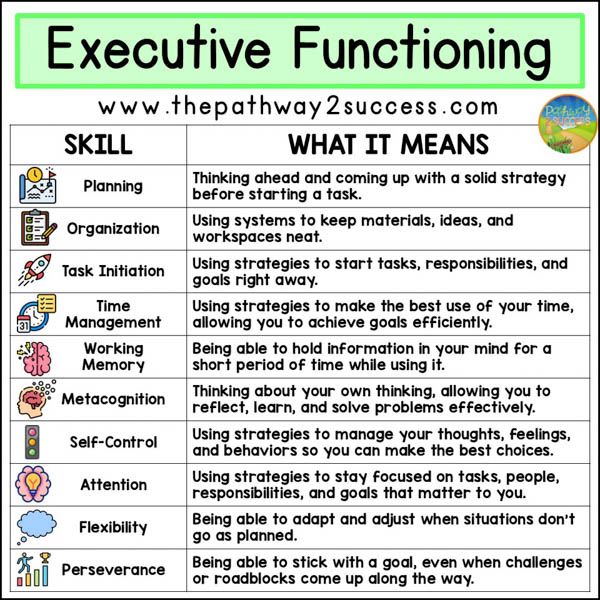
It was, more precisely, a measure of executive function - a cluster of cognitive control processes that enable the mind to regulate its own activity, override dominant responses, maintain goals across time, and adapt flexibly to new information.
The neuroscience behind what those four-year-olds were doing is neither simple nor settled. The longitudinal story itself has since been complicated, revised, and partially contested.
But as a window into one of the most consequential questions in cognitive science - how the mind governs itself - the marshmallow test opened a door that researchers have been walking through for more than fifty years.
"Executive function is to the brain what a conductor is to an orchestra - coordinating disparate elements toward a coherent goal." - Adele Diamond, 2013
The Three Core Executive Functions
The field reached a milestone in 2000 when Akira Miyake and Naomi Friedman at the University of Colorado, along with colleagues Michael Emerson, Alexander Witzki, Amy Howerter, and Tor Wager, published what became the landmark structural study of executive function in Cognitive Psychology.
"The Unity and Diversity of Executive Functions and Their Contributions to Complex 'Frontal Lobe' Tasks" used confirmatory factor analysis to ask whether executive functions were one thing or many things.
The answer was both: a single latent factor explained substantial common variance (the "unity"), but three separable components also emerged (the "diversity").
Those three components - inhibition, updating, and shifting - are now the dominant framework in the field:
| Executive Function | Neural Basis | Developmental Trajectory | Primary Measurement Tools | Real-World Correlates |
|---|---|---|---|---|
| Inhibitory Control | Lateral prefrontal cortex (PFC), anterior cingulate cortex, basal ganglia | Rapid gains ages 3-7; continued refinement through adolescence | Stroop task, Stop-Signal Task, Go/No-Go, Antisaccade | Resistance to distraction, impulse control, delay of gratification |
| Updating / Working Memory | Dorsolateral PFC, parietal cortex (especially left hemisphere), hippocampus | Linear improvement from early childhood through late adolescence; peaks ~25 | N-back tasks, Digit Span, Reading Span, Operation Span | Academic learning, reading comprehension, math fluency, fluid intelligence |
| Cognitive Flexibility / Shifting | Lateral PFC, posterior parietal cortex, striatum, anterior cingulate | Marked improvement ages 3-5 (rule-switching); gradual refinement through adolescence | Wisconsin Card Sorting Task, Trail Making Test Part B, Dimensional Change Card Sort | Adaptability, perspective-taking, creative problem-solving, error recovery |
These three functions are not independent modules. They share neural circuitry, co-develop together, and jointly depend on the structural and functional integrity of the prefrontal cortex.
But they are dissociable: patients with frontal lobe lesions may show selective impairment in one while leaving others largely intact, and individual differences in children and adults show meaningful differentiation across the three domains.
The Neuropsychological Foundation: Luria and the Frontal Lobes
Before the cognitive science era framed executive function in information-processing terms, the Soviet neuropsychologist Alexander Romanovich Luria spent decades documenting what happens when the frontal lobes are damaged.
Working with patients who had suffered frontal gunshot wounds during World War II, and later with victims of strokes and tumors, Luria observed a distinctive syndrome: preserved general intelligence, intact language and memory in basic senses, but catastrophic impairment in the capacity to plan, regulate, and verify goal-directed behavior.
Luria described these patients as unable to form "preliminary schemata" for action - they could understand a request, repeat it back accurately, and yet immediately respond with an action that bore no relationship to the stated goal.
A patient asked to draw a circle would draw a triangle, not because of motor impairment or failure to comprehend the word "circle," but because the instruction could not be held in an active governing role against the competing pull of habitual responses.
He called this the failure of the "regulative function of speech" - the frontal lobes, in his account, were where verbal instructions acquired the power to organize and control motor behavior, a capacity he traced through normal development from the external speech of caregivers to the internalized verbal self-regulation of mature adults.
Luria's 1966 monograph Higher Cortical Functions in Man and his 1973 The Working Brain became foundational texts in neuropsychology.[10]
His influence on the executive function literature is pervasive but often unacknowledged - the very terms "regulative function," "goal-directed behavior," and "inhibition of competing responses" that populate contemporary papers trace directly to his clinical observations.
Luria himself drew on Vygotsky's developmental work on the social origins of self-regulation, creating an intellectual lineage that runs from Vygotsky through Luria to the contemporary developmental science of Adele Diamond.
The Working Memory Model: Baddeley and Hitch
If Luria provided the clinical and anatomical scaffolding, Alan Baddeley and Graham Hitch provided the cognitive architecture.[6]
Their 1974 chapter "Working Memory," published in Bower's The Psychology of Learning and Motivation, dismantled the dominant view of short-term memory as a simple, unitary buffer and replaced it with a multicomponent system featuring a central executive - an attentional controller - that supervises two subsidiary slave systems: the phonological loop (for verbal material) and the visuospatial sketchpad (for visual and spatial information).
The central executive in Baddeley and Hitch's model is not a homunculus so much as a set of attentional control functions: focusing attention on relevant information, dividing attention across tasks, switching attention between tasks, and coordinating information from the subsidiary systems with long-term memory.
Later revisions added a fourth component, the episodic buffer, which integrates information across modalities and time.
What made this model influential beyond its conceptual elegance was its empirical tractability: each component could be separately loaded and separately disrupted, producing testable predictions that researchers have been testing for half a century.
Baddeley's working memory model maps closely onto the Miyake et al. framework. The updating component - holding information in mind and revising it as new information arrives - is essentially the core operation of working memory. The central executive's attentional functions correspond to inhibition and shifting.
Baddeley himself was explicit about the overlap. The two frameworks approach the same neural and cognitive territory from different directions: Baddeley from a cognitive architecture perspective, Miyake from a psychometric individual-differences perspective.
The Frontal Lobe Measure: Wisconsin Card Sorting Task
The Wisconsin Card Sorting Task (WCST) was developed by Esta Berg in 1948, published in the Journal of General Psychology, and became for decades the closest thing clinical neuropsychology had to a frontal lobe litmus test.[12]
In the task, participants sort cards according to a rule - sort by color, shape, or number of symbols - that they must infer from examiner feedback.
After ten consecutive correct sorts, the rule changes without warning, and the participant must detect the change and shift to the new rule, suppressing the now-incorrect sorting strategy.
Patients with prefrontal cortex lesions show a characteristic pattern: they can learn the initial rule, but after the rule changes, they perseverate - continuing to sort according to the old rule despite repeated "wrong" feedback.
They are not unaware of the feedback; they can sometimes verbalize that they are getting the answer wrong. But they cannot use that knowledge to change their behavior. This perseveration - the failure to disengage from a no-longer-valid rule - is one of the clearest behavioral signatures of frontal lobe dysfunction ever documented.
The WCST has since been recognized as a complex, multidetermined task that loads on all three Miyake factors simultaneously - it requires inhibiting a learned response, flexibly shifting to a new rule, and updating one's representation of what the current rule is.
Its specificity to frontal function has been questioned, with neuroimaging studies implicating not just dorsolateral PFC but also parietal cortex, anterior cingulate, and striatum.
But its clinical utility has remained, and its use in thousands of studies makes it one of the most widely administered neuropsychological instruments in existence.
The Cognitive Science Section: Researchers, Findings, and Contributions
Adele Diamond: Development and Malleability
If one researcher has done more than any other to translate executive function research into developmental science and educational application, it is Adele Diamond of the University of British Columbia.
Diamond's 1989 Experimental Brain Research paper with Patricia Goldman-Rakic established that the same task that reveals frontal lobe function in adult primates - the delayed non-match to sample, a form of object permanence task - shows the same performance trajectory in human infants from 7.5 to 12 months as frontal maturation proceeds.
Her subsequent decades of work have systematically mapped the developmental trajectory of executive functions, their sensitivity to environmental stress, and their potential for intervention.
Diamond's 2013 review in Annual Review of Psychology, "Executive Functions," is the most comprehensive single synthesis of the field and has been cited over 10,000 times.[5]
She argues that executive functions are among the most important capacities for human flourishing, are disproportionately damaged by poverty, stress, and adversity, and are also disproportionately trainable through specific interventions - most notably physical exercise, certain forms of play, and mindfulness-based practices.
Her work on the Tools of the Mind curriculum, developed with Elena Bodrova and Deborah Leong following Vygotskian principles, found that preschoolers in Tools classrooms showed significantly greater executive function gains than controls.
Philip Zelazo: The DCCS and Reflective Cognition
Philip Zelazo and colleagues at the University of Minnesota (and later the University of Toronto) developed the Dimensional Change Card Sort (DCCS), now the most widely used measure of cognitive flexibility in young children.[8] In the task, children first sort cards by one dimension - color - then are asked to switch and sort by shape.
Most three-year-olds fail: they continue sorting by the original dimension even when told the new rule, even when they can verbalize the new rule. By age five, most succeed.
Zelazo's cognitive complexity and control (CCC) theory, and its successor the Levels of Consciousness (LoC) model, propose that the DCCS captures not just flexibility per se but the child's capacity to use a higher-order rule system to govern lower-order responses.
The developmental improvement from three to five reflects the ability to hold two rule systems simultaneously in mind and select between them - an operation that requires the kind of reflective, hierarchical cognition that emerges with prefrontal maturation.
Zelazo's 2006 paper in Current Directions in Psychological Science on the DCCS has become a standard reference for developmental assessments in educational and clinical settings.
Chris Blair and Raver: Executive Function as School Readiness
Chris Blair of New York University and Clancy Raver of the University of Chicago have investigated how executive function mediates the relationship between socioeconomic disadvantage and educational outcomes.
Blair and Razza's 2007 paper in Child Development, "Relating Effortful Control, Executive Function, and False Belief Understanding to Emerging Math and Literacy Ability in Kindergarten," found that measures of effortful control and executive function - specifically inhibitory control and attention shifting - were among the strongest predictors of early literacy and mathematics, outperforming IQ in some analyses.[7]
This finding reframed school readiness as not primarily a knowledge question (how many letters does the child know?) but a self-regulation question (can the child hold an instruction in mind, suppress a competing impulse, and sustain attention long enough to learn?).
Blair's subsequent NICHD-funded longitudinal work has found that executive function mediates a substantial portion of the pathway from poverty to poor school outcomes - a finding with obvious implications for early childhood intervention priorities.
Four Case Studies in the Research Record
Case Study 1: The Marshmallow Test Revisited - Watts, Duncan, and Quan (2018)
The marshmallow test's longitudinal findings looked clean in Mischel's original Stanford sample.
But that sample had a specific limitation: it was drawn from children attending the Bing Nursery School at Stanford, meaning it was disproportionately white, disproportionately affluent, and disproportionately the children of university faculty.
Tyler Watts of New York University and colleagues Greg Duncan and Haonan Quan published a 2018 replication and extension in Psychological Science using a large, nationally representative sample of over 900 children, including a substantial proportion from low-income families.[3]
Their finding fundamentally complicated the marshmallow test narrative: when socioeconomic and family background factors were controlled, the relationship between delay of gratification at age four and outcomes at age fifteen shrank dramatically - by more than half - and was no longer statistically significant in some analyses.
Children from disadvantaged backgrounds waited less, but this appeared to be at least partly rational: in environments of material scarcity, where promises of future reward are historically unreliable, immediate consumption is a more adaptive strategy.
The marshmallow test was not measuring a pure executive function capacity independent of context; it was measuring a combination of executive function and rational responsiveness to environmental contingencies.
This does not eliminate the importance of executive function - but it does mean the test is a considerably messier measure of it than originally supposed.
Case Study 2: The Moffitt et al. Dunedin Study (2011)
While the marshmallow test replication was complicating one longitudinal story, a different one arrived with unusual statistical force.
Terrie Moffitt of Duke University, along with Richie Poulton, Avshalom Caspi, and a large team of collaborators, published a study in the Proceedings of the National Academy of Sciences in 2011 that followed a complete birth cohort of 1,037 children in Dunedin, New Zealand, from birth to age 32, assessing self-control through multiple methods across childhood.[4]
The paper, "A Gradient of Childhood Self-Control Predicts Health, Wealth, and Public Safety," found that childhood self-control - assessed by observer ratings, parent reports, and behavioral tasks across ages 3 to 11 - predicted adult health outcomes, financial outcomes, and criminal record at age 32.
Crucially, these relationships held after controlling for IQ and socioeconomic status.
Children with higher self-control were less likely to be convicted of crimes, more likely to have no cardiovascular, respiratory, or sexually transmitted diseases, more likely to have savings and less likely to be dependent on welfare - and the relationship was graded, not categorical.
It was not just that high versus low self-control children differed; every unit improvement in childhood self-control predicted incrementally better outcomes.
This "gradient" finding suggested that self-control is not a threshold capability but a continuous resource whose quantity matters across the entire distribution.
Case Study 3: Miyake et al. 2000 - Unity and Diversity
The 2000 Miyake et al. paper itself constitutes one of the most consequential methodological interventions in executive function research. Before it, the field was mired in a measurement problem: executive function tasks showed, at best, modest correlations with each other.
If executive function was a unitary construct, why did performance on the WCST correlate so weakly with performance on the Stroop, and the Stroop with Tower of Hanoi? Researchers had been using these tasks as if they measured the same thing, but the correlation data suggested otherwise.
Miyake and colleagues administered nine established executive function tasks to 137 young adults and subjected the data to structural equation modeling.[1] The three-factor solution fit well.
More importantly, the specific tasks then loaded differentially onto these factors in predictable ways: the Wisconsin Card Sorting Task loaded primarily on shifting, the N-back and keep-track task on updating, the antisaccade and stop-signal on inhibition.
This was not a purely confirmatory exercise - the latent factors themselves could then be used to decompose performance on complex frontal tasks like the Tower of Hanoi into contributions from each component.
The paper gave the field a principled basis for making precise predictions, designing targeted interventions, and interpreting neuroimaging findings.
Case Study 4: Melby-Lervag et al. (2016) - The Limits of Working Memory Training
The logical extension of executive function research was intervention: if working memory is trainable, and if working memory is foundational to academic and occupational success, then working memory training programs should produce broad, lasting benefits.
This was the premise behind commercial programs like Cogmed, widely adopted by schools and clinics in the 2000s. Monica Melby-Lervag of the University of Oslo and Charles Hulme published a 2013 meta-analysis in Developmental Psychology examining 23 studies of working memory training.
Their finding was sobering: training produced significant gains on the trained tasks themselves (near-transfer), but little to no transfer to non-trained cognitive tasks (far-transfer), and no transfer to academic outcomes. A 2016 follow-up meta-analysis expanded the sample and reached the same conclusion.[9]
The near versus far transfer distinction has since become central to evaluating executive function interventions. Near transfer - getting better at the specific trained task - is robust and easily demonstrated.
Far transfer - improving in academic performance, fluid intelligence, or daily functioning - is elusive and, for working memory training specifically, appears not to occur reliably.
Melby-Lervag and Hulme proposed a "task impurity" account: working memory training improves task-specific strategies and motivation rather than the underlying cognitive capacity, which is why the gains do not generalize. This critique has broad implications for how the field thinks about the malleability of executive functions.
The Intellectual Lineage
The intellectual genealogy of executive function research runs through several distinct traditions that eventually converged.
Lev Vygotsky argued in the 1930s that self-regulation develops through the internalization of social speech - children first regulate themselves by narrating their own actions aloud, then gradually internalize this narration into silent inner speech.
Vygotsky's student Alexander Luria operationalized this in neuropsychological terms: frontal lobe patients had lost the capacity to use internalized verbal plans to regulate behavior.
Luria's observations in turn shaped the developmental work of Adele Diamond, who traced the Vygotsky-Luria verbal self-regulation hypothesis into specific predictions about infant frontal maturation and tested them experimentally.
A parallel tradition runs from Sigmund Freud's concept of the ego as an executive moderator of id and superego impulses - an unfashionable pedigree in contemporary cognitive science, but one that kept the problem of self-regulation central to psychology across the early twentieth century - through to ego psychology and eventually to Baumeister and Vohs's "ego depletion" hypothesis of the 1990s and 2000s.
That hypothesis (that self-control draws on a limited, depletable resource) was itself later challenged by failed replications and by Carol Dweck's finding that the depletion effect is moderated by participants' beliefs about whether willpower is limited - an irony that suggests executive function research has not fully escaped the folk-psychological frameworks it sought to replace.
The information-processing tradition, running from Miller, Galanter, and Pribram's 1960 Plans and the Structure of Behavior through Baddeley and Hitch's working memory model, gave executive function researchers a vocabulary of buffers, processes, and cognitive architecture that made computational modeling and experimental manipulation tractable.
And the neuroimaging revolution of the 1990s - following the development of fMRI - gave researchers for the first time the ability to watch the prefrontal cortex at work in real time in healthy participants performing executive function tasks, confirming and elaborating the patient-lesion evidence accumulated over decades.
Empirical Evidence: What the Research Shows
The empirical case for executive function as a consequential set of real, measurable capacities is substantial. Inhibitory control measured in preschool predicts reading and math achievement in school-age children across multiple independent longitudinal studies (Blair & Razza, 2007; Duncan et al., 2007).
Childhood self-control measured by multiple methods predicts adult outcomes in large, nationally representative cohorts (Moffitt et al., 2011).
The three-factor structure of Miyake et al. replicates reliably in adult and child samples and in multiple countries.
Neuroimaging confirms that executive function tasks reliably activate lateral prefrontal cortex, anterior cingulate, and associated networks, and that these activations are modulated by individual differences in executive capacity.
Duncan et al.'s 2007 paper in Developmental Psychology, a collaborative analysis pooling six longitudinal data sets from the United States, Canada, and the United Kingdom with a combined sample of over 35,000 children, found that school-entry executive function skills - specifically attention and impulse control - were among the most robust predictors of later school achievement, more predictive than early behavioral problems or social-emotional skills.[11]
This is a finding with direct policy implications: investments in executive function development in the preschool years may yield academic returns that persist through school.
The neuroimaging literature provides convergent evidence. Studies of children performing the DCCS and inhibition tasks show that activation in lateral PFC increases with age and with performance - younger, lower-performing children show less prefrontal activation and greater reliance on more posterior cortical regions.
Diffusion tensor imaging studies find that the maturation of white matter tracts connecting PFC with parietal and striatal regions tracks developmental improvements in executive function tasks, consistent with Luria's original premise that frontal function requires intact connectivity rather than isolated gray matter activity.
Limits, Critiques, and Nuances
The Construct Validity Problem
The "task impurity problem" in executive function research is not incidental - it is structural. Every task used to measure executive function requires, in addition to the executive capacity it targets, other cognitive processes: perceptual processing, response selection, task comprehension, motivation, and so on.
When participants differ in performance, it is often impossible to determine whether the difference reflects the executive capacity being measured or one of the other processes the task recruits.
Miyake et al.'s factor-analytic approach addresses this partly, by treating latent factors (not task scores) as the measures of interest, but the problem does not disappear. The latent factors themselves are identified from a limited battery of tasks and may shift when different tasks are used.
More broadly, there is ongoing debate about whether "executive function" names a natural kind or a convenient label for a heterogeneous collection of processes that happen to be disrupted by frontal damage.
Zach Hambrick and others have argued that the predictive validity of executive function measures derives largely from their overlap with general fluid intelligence (g), and that once this overlap is controlled, the incremental predictive validity of specific executive function components shrinks substantially.
This does not make executive function meaningless - fluid intelligence is itself a construct with contested boundaries - but it should prompt caution about claims of unique predictive power.
Near vs. Far Transfer and the Training Problem
The Melby-Lervag findings on working memory training - that near-transfer is robust but far-transfer is negligible - pose a significant challenge to the translational agenda of executive function research. If training does not generalize, the clinical and educational applications are severely limited.
Proponents of executive function interventions respond that the right interventions - physical exercise, certain playful learning curricula, mindfulness training - show broader transfer than narrow computer-based working memory training, and cite Diamond's work on the Tools of the Mind curriculum as evidence.
But the overall literature on far-transfer from executive function interventions remains contested, and the effect sizes for educationally meaningful transfer are modest.
The Socioeconomic Confound
As Watts, Duncan, and Quan's marshmallow test replication demonstrated, executive function measures are deeply entangled with socioeconomic context.
Children in poverty perform worse on executive function tasks, but the direction of causation is genuinely unclear: poverty may impair executive function development through stress, insufficient stimulation, poor nutrition, and chaotic environments - or lower executive function may run in families partly for genetic reasons that also affect socioeconomic mobility - or both.
The "stress impairs executive function" hypothesis is supported by a substantial literature on glucocorticoid effects on prefrontal cortex, but the policy implications depend critically on whether the executive function differences are causes of socioeconomic outcomes, consequences of them, or both.
Developmental Instability
A further complication comes from longitudinal studies of executive function stability within individuals. Executive function task performance in early childhood shows only moderate stability to later childhood, and stability from early childhood to adolescence or adulthood is modest.
This means that a snapshot of executive function at age four - the marshmallow test vintage - is a considerably less stable predictor of outcomes than it initially appeared.
The Moffitt et al. finding, based on aggregated multi-method assessments across a decade of childhood rather than a single task at one age, is methodologically more robust than single-task studies precisely because aggregation attenuates measurement error and instability.
Conclusion
Executive function is one of the most studied, most practically consequential, and most contested constructs in contemporary cognitive science.
From Luria's frontal lobe patients who could not follow their own stated intentions, to four-year-olds staring at a marshmallow, to adults performing version after version of a card sorting task in a scanner, the field has built a richly detailed portrait of what it means for a mind to govern itself.
That portrait is not finished. The three-factor structure of Miyake et al. is probably a reasonable approximation of a more complicated truth. The relationship between working memory and intelligence is not yet resolved. The conditions under which executive function training generalizes remain actively debated.
The marshmallow test was both a genuine insight into self-regulation and a measure entangled with social and economic context in ways that required thirty years to untangle.
What is not in serious doubt is that the capacity to inhibit prepotent responses, to update mental representations as circumstances change, and to shift flexibly between cognitive sets - the three capacities Miyake, Diamond, Zelazo, Baddeley, and Luria all circled from different directions - are among the most important cognitive capacities that humans develop.
They are the difference between a mind that is governed by its immediate environment and one that can be governed by its own intentions.
The science of how that capacity develops, varies, and can be supported is among the most important work in contemporary psychology.
Sources & Further Reading
Miyake, A., Friedman, N. P., Emerson, M. J., Witzki, A. H., Howerter, A., & Wager, T. D. (2000). The unity and diversity of executive functions and their contributions to complex "frontal lobe" tasks: A latent variable analysis. Cognitive Psychology, 41(1), 49-100. DOI: 10.1006/cogp.1999.0734
Mischel, W., Shoda, Y., & Rodriguez, M. I. (1989). Delay of gratification in children. Science, 244(4907), 933-938. DOI: 10.1126/science.2658056
Watts, T. W., Duncan, G. J., & Quan, H. (2018). Revisiting the marshmallow test: A conceptual replication investigating links between early delay of gratification and later outcomes. Psychological Science, 29(7), 1159-1177. DOI: 10.1177/0956797618761661
Moffitt, T. E., Arseneault, L., Belsky, D., Dickson, N., Hancox, R. J., Harrington, H., ... & Caspi, A. (2011). A gradient of childhood self-control predicts health, wealth, and public safety. Proceedings of the National Academy of Sciences, 108(7), 2693-2698. DOI: 10.1073/pnas.1010076108
Diamond, A. (2013). Executive functions. Annual Review of Psychology, 64, 135-168. DOI: 10.1146/annurev-psych-113011-143750
Baddeley, A. D., & Hitch, G. (1974). Working memory. In G. H. Bower (Ed.), The Psychology of Learning and Motivation (Vol. 8, pp. 47-89). Academic Press. DOI: 10.1016/S0079-7421(08)60452-1
Blair, C., & Razza, R. P. (2007). Relating effortful control, executive function, and false belief understanding to emerging math and literacy ability in kindergarten. Child Development, 78(2), 647-663. DOI: 10.1111/j.1467-8624.2007.01019.x
Zelazo, P. D. (2006). The dimensional change card sort (DCCS): A method of assessing executive function in children. Nature Protocols, 1(1), 297-301. DOI: 10.1038/nprot.2006.46
Melby-Lervag, M., Redick, T. S., & Hulme, C. (2016). Working memory training does not improve performance on measures of intelligence or other measures of "far transfer." Perspectives on Psychological Science, 11(4), 512-534. DOI: 10.1177/1745691616635612
Luria, A. R. (1966). Higher Cortical Functions in Man. Basic Books.
Duncan, G. J., Dowsett, C. J., Claessens, A., Magnuson, K., Huston, A. C., Klebanov, P., ... & Japel, C. (2007). School readiness and later achievement. Developmental Psychology, 43(6), 1428-1446. DOI: 10.1037/0012-1649.43.6.1428
Berg, E. A. (1948). A simple objective technique for measuring flexibility in thinking. Journal of General Psychology, 39(1), 15-22. DOI: 10.1080/00221309.1948.9918159