
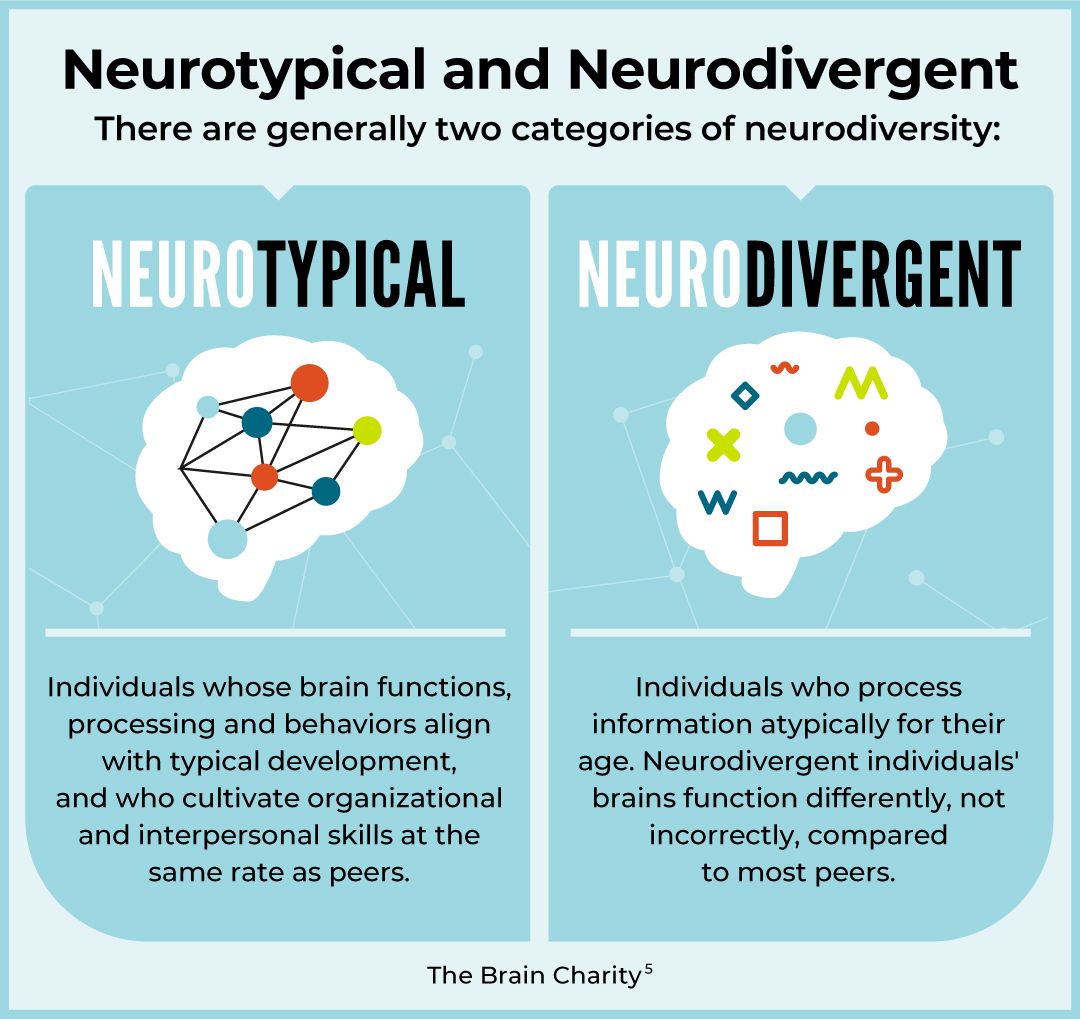
The human brain does not come in one model. Across the global population, there is substantial natural variation in how brains process information, regulate attention, interpret social cues, and organize thoughts.
For most of history, this variation was framed almost entirely in clinical terms - as disorders, deficits, and pathologies requiring correction or management.
The concept of neurodiversity proposes a different frame: that neurological variation is a natural feature of human populations, comparable to biodiversity in ecosystems, and that conditions like ADHD, autism, and dyslexia represent cognitive styles with distinct strengths and challenges rather than simply broken versions of a neurotypical norm.
This shift in framing has significant practical implications for workplaces, schools, and individuals navigating a world designed by and largely for one type of brain.
What Is Neurodiversity?
The term neurodiversity was coined by sociologist Judy Singer, who has ADHD and is autistic, in her 1998 honours thesis at the University of Technology Sydney.
Singer proposed that just as biodiversity is valuable to ecosystems, neurocognitive diversity is a natural and valuable feature of human populations - not a collection of pathologies to be eliminated.
The neurodiversity paradigm, developed and popularized by researchers including psychologist Thomas Armstrong (author of Neurodiversity in the Classroom, 2012), holds several core propositions:
- Human brains vary naturally in how they are organized and function
- This variation is not inherently better or worse - it interacts with environments that may or may not accommodate it
- Conditions currently classified as disorders are better understood as different cognitive profiles with different strengths and challenges
- Many of the disabilities associated with neurodevelopmental conditions are at least partly socially constructed - they result from environments that do not accommodate cognitive variation
The neurodiversity framework does not claim that neurodevelopmental conditions involve no challenges.
It claims that the framing shapes outcomes: whether individuals develop understanding of their own cognitive profiles, whether they receive accommodation or just stigma, and whether organizations learn to benefit from different cognitive styles.
The Medical Model vs. the Neurodiversity Model
It is useful to understand how the neurodiversity framework stands in contrast to the medical model of disability, which has dominated clinical and educational approaches to neurodevelopmental conditions for most of the 20th century.
The medical model treats ADHD, autism, and dyslexia as disorders - deviations from a normal standard that require diagnosis, treatment, and correction. Within this model, the goal is to reduce symptoms until the individual approximates neurotypical functioning as closely as possible.
The neurodiversity model, by contrast, draws on the social model of disability developed by disability rights scholars including Mike Oliver (1990).
The social model distinguishes between impairment (the individual's physical or cognitive difference) and disability (the disadvantage created by environments that fail to accommodate the impairment).
Under this model, a dyslexic person is not disabled by their difficulty with phonological processing; they are disabled by a world that evaluates competence primarily through written text.
This distinction has practical force. It shifts the intervention target from "fix the person" to "fix the environment" - a shift with profound implications for education, employment, and organizational design.
Prevalence: How Common Is Neurodivergence?
Neurodivergent conditions are far more common than most people realize. Conservative estimates suggest that 15-20% of the global population is neurodivergent in some way.
| Condition | Estimated global prevalence | Key features |
|---|---|---|
| Dyslexia | 10-15% of population | Difficulty with reading, phonological processing; often strong verbal reasoning |
| ADHD | 5-7% of children, 2.5-4% of adults | Attention regulation, impulsivity, working memory differences |
| Autism spectrum | 1-2% of population | Social communication differences, sensory sensitivities, intense interests |
| Dyspraxia (DCD) | 5-6% of children | Motor coordination differences, spatial processing |
| Dyscalculia | 3-6% of population | Difficulty with number processing and arithmetic |
| Tourette syndrome | 0.3-0.8% of population | Motor and vocal tics, often co-occurring with ADHD |
These conditions frequently co-occur. Research suggests approximately 50-70% of people with ADHD also meet criteria for another neurodevelopmental condition, and autism and ADHD co-occur at rates far higher than chance would predict.
A landmark 2021 study in Nature Genetics by Grove and colleagues identified substantial genetic overlap between autism, ADHD, and other psychiatric conditions, suggesting shared neurobiological underpinnings rather than distinct categorical entities.
The high rates of co-occurrence have led some researchers - including Thomas Brown (2013) - to propose that traditional diagnostic categories may be less biologically meaningful than the underlying dimensional traits (attention regulation, sensory processing, social cognition) that cut across them.
ADHD: The Attention Regulation Condition
ADHD (Attention Deficit Hyperactivity Disorder) is characterized by differences in attention regulation, impulse control, and executive function. The DSM-5 recognizes three presentations: predominantly inattentive, predominantly hyperactive-impulsive, and combined.
The framing of ADHD as an "attention deficit" is itself contested by researchers including Russell Barkley, who argues ADHD is better understood as a deficit in self-regulation - particularly the ability to regulate attention, emotion, and behavior in ways that serve future goals rather than immediate impulses.
In Barkley's framework, the core deficit is in the inhibition of prepotent responses: the ability to pause, delay, and plan before acting.
This reframing has clinical implications. An attention-deficit model suggests the person needs help focusing; a self-regulation model suggests they need help building internal control systems and structuring external environments to compensate for weaker internal ones.
The Neuroscience of ADHD
Neuroimaging studies have consistently found structural and functional differences in ADHD brains compared to neurotypical controls.
Shaw and colleagues (2007), publishing in the Proceedings of the National Academy of Sciences, found that the cortex of children with ADHD matures approximately 3 years later than that of neurotypical children, with the biggest delays in the prefrontal regions responsible for executive function and attention control.
Importantly, the developmental trajectory was broadly normal - just delayed. This suggests that for many children, ADHD symptoms will partially remit as brain development catches up.
Dopamine system differences are well-documented in ADHD. The mesolimbic dopamine system, which drives motivation, reward processing, and working memory, functions differently in ADHD, producing a higher threshold for activation - meaning more stimulation is required to sustain interest and effort.
This neurobiological finding explains both the core symptoms (difficulty sustaining attention on low-stimulation tasks) and the counterintuitive patterns (sudden intense focus on high-interest or high-stakes activities).
The neurodiversity perspective on ADHD strengths
Research and practitioner experience identify cognitive profiles commonly associated with ADHD that can be valuable:
Hyperfocus - the ability to become deeply absorbed in activities of high interest, producing sustained, intense concentration that neurotypical individuals rarely access. This is not inconsistent with inattention to uninteresting tasks; both reflect difficulty regulating attentional deployment voluntarily.
Divergent thinking - multiple studies have found elevated creative and divergent thinking in ADHD samples. A 2011 study by Holly White and Priti Shah found that adults with ADHD outperformed controls on measures of real-world creative achievement and creative cognition tasks.
The authors proposed that the same difficulty inhibiting irrelevant associations that creates attention problems may also produce more unusual idea combinations.
Crisis performance - many people with ADHD report performing best under time pressure and in novel, high-stakes situations, when the stakes are high enough to generate sufficient dopamine to sustain focus.
Risk tolerance and entrepreneurship - research by Johan Wiklund and colleagues (2019) has found ADHD traits are overrepresented among entrepreneurs. The risk tolerance, novelty-seeking, and action orientation associated with ADHD may be adaptive in entrepreneurial contexts, even when they create difficulties in conventional employment.
ADHD diagnosis and the gender gap
ADHD has historically been diagnosed predominantly in boys, based on research conducted predominantly in boys. Research now suggests that ADHD in girls and women presents differently - often with more internalizing features (anxiety, depression, intense self-criticism) and less visible hyperactivity - leading to chronic under-diagnosis.
A 2019 systematic review by Guldberg-Kjar and colleagues confirmed that women receive ADHD diagnoses significantly later than men - often in their 30s or 40s, compared to childhood for many males.
The consequences of late diagnosis include accumulated educational and career setbacks, compounding mental health impacts, and years of blaming personal failings for neurological features.
"Girls with ADHD often develop sophisticated masking strategies from a young age, working twice as hard to appear 'normal,' burning enormous cognitive resources in the process - resources that are then unavailable for learning and work." - Dr. Ellen Littman, clinical psychologist and ADHD researcher
Autism Spectrum Conditions: The Social Communication Difference
Autism spectrum conditions (ASC, also called autism spectrum disorder or ASD) involve differences in social communication and interaction, restricted or repetitive patterns of behavior and interests, and sensory sensitivities.
The "spectrum" reflects enormous diversity in presentation, from individuals who require substantial daily support to highly independent individuals whose autism is primarily evident in social contexts.
The neurodiversity framing of autism has been particularly influential - and particularly contested.
Advocacy organizations founded by autistic people (notably the Autistic Self Advocacy Network, founded by Ari Ne'eman in 2006) have adopted the neurodiversity framework as central to their philosophy, emphasizing that autism is a different way of experiencing the world rather than a disease to be cured.
Other organizations, particularly those founded by parents of autistic people with high support needs, resist this framing as minimizing the genuine challenges severe autism presents.
The Double Empathy Problem
A significant theoretical development in autism research in the 2010s was Damian Milton's (2012) proposal of the double empathy problem. Traditional accounts of autism emphasized autistic people's difficulty with theory of mind - the ability to understand others' mental states.
Milton argued that this framing was one-sided: if autistic and non-autistic people have difficulty understanding each other, the problem is one of mutual communication difference, not unilateral autistic deficit.
Research by Crompton and colleagues (2020), published in Autism, tested this directly. Autistic participants passed information through chains of autistic communicators just as successfully as neurotypical participants passed information through neurotypical chains - but mixed chains (some autistic, some not) showed information loss.
This supports the idea that autistic people communicate well with each other; the deficit emerges specifically in cross-neurotype interaction.
Cognitive profiles associated with autism
Systemizing - psychologist Simon Baron-Cohen's research identified strong systemizing cognition as characteristic of many autistic people: the drive to analyze and construct rule-based systems.
This manifests in deep domain expertise, pattern recognition, attention to detail, and interest in predictable, rule-governed domains. It correlates with advantages in fields including mathematics, programming, engineering, and music.
Hyper-focused interest areas - intense, detailed expertise in specific domains can produce genuine excellence. The same neural profile that makes casual social navigation difficult may enable the deep knowledge accumulation that characterizes expertise.
Honesty and directness - many autistic people have a strong preference for directness and literal communication. In workplaces where political circumspection is valued, this can create friction; in contexts where precision matters, it can be an asset.
Sensory processing differences - heightened sensory sensitivity means that environments many neurotypical people do not notice - open-plan offices, fluorescent lighting, ambient noise - can be actively uncomfortable to the point of impairing performance.
Marco and colleagues (2011) reviewed neuroimaging and electrophysiology research confirming that sensory processing differences in autism are neurologically real, not merely behavioral preferences.
Dyslexia: The Reading Difference
Dyslexia is a specific learning difficulty primarily affecting reading and spelling accuracy. It is characterized by difficulties with phonological processing - the ability to recognize and manipulate sound units in language. Dyslexia occurs across the range of intelligence and is not associated with low IQ.
At 10-15% prevalence, dyslexia is one of the most common neurodevelopmental differences. It is also one of the most stigmatized, given that literacy is the fundamental scaffolding of formal education and most professional work.
The phonological deficit hypothesis - developed by Frank Vellutino (1979) and later refined by Maggie Snowling and colleagues - is the most empirically supported account of dyslexia's core mechanism.
Neuroimaging studies using fMRI have consistently found reduced activation in left hemisphere reading networks (particularly the occipito-temporal "word form area") in dyslexic readers, alongside compensatory activation in frontal and right hemisphere regions.
The strengths associated with dyslexia
The cognitive profile of dyslexia does not simply represent deficient reading - it appears to be associated with real strengths in other domains:
Spatial and three-dimensional reasoning - multiple studies have found advantages in mental rotation and three-dimensional spatial reasoning in dyslexic samples.
Attree and colleagues (2009) found that dyslexic architecture students performed significantly better than non-dyslexic peers on spatial visualization tasks, suggesting genuine advantage in the domain.
Holistic and big-picture thinking - research by cognitive neuroscientist Matthew Schneps (2012) found evidence that dyslexic individuals more readily perceive peripheral visual information and integrate it into holistic impressions, rather than focusing on central details.
In Schneps's astronomy study, dyslexic participants were better at identifying faint objects in complex visual fields - a direct application of the same perceptual style that makes sequential text processing difficult.
Verbal reasoning and storytelling - many prominent dyslexic individuals describe strong verbal and narrative intelligence that contrasts with their written language difficulties.
Richard Branson, who has dyslexia, has described his difficulty with writing as coexisting with strong abilities to understand and communicate ideas verbally and to build relationships and organizations around shared vision.
Neurodiversity at Work: Accommodations and Inclusion
Why disclosure is a personal decision
Disclosing a neurodevelopmental condition to an employer is a decision with genuine trade-offs.
In jurisdictions with disability discrimination law (including the UK's Equality Act 2010 and the Americans with Disabilities Act 1990), disclosure can trigger legal obligations on employers to provide reasonable adjustments. Without disclosure, access to formal accommodations is limited.
The case for disclosure is strongest when:
- The challenges are significantly affecting performance and would be addressable through accommodation
- There is evidence the organization responds constructively to disclosure
- The specific manager has demonstrated psychological safety and discretion
- The individual has a clear account of what would help and why
The case for caution is real because research continues to document workplace discrimination based on neurodivergent conditions. A 2020 survey by the Chartered Management Institute found that 27% of managers said they would be less likely to hire someone who disclosed ADHD in an interview.
Stigma is not evenly distributed across organizations, roles, or managers.
Hastwell and colleagues (2021), reviewing UK workplace data, found that autistic employees were significantly more likely to be subject to performance management processes than neurotypical employees doing equivalent work - suggesting that performance assessment systems are systematically less able to capture the contributions of autistic workers.
Effective accommodations by condition
Effective accommodations address the specific cognitive challenge, not a generic "neurodiversity" category:
For ADHD:
- Flexible work hours that allow working in peak attention windows
- Written summaries after verbal meetings and calls
- Task management software and external accountability structures
- Permission to use noise-canceling headphones in open-plan environments
- Breaking large projects into smaller milestones with check-ins
- Shorter, more frequent feedback cycles rather than annual reviews
For autism:
- Explicit written documentation of expectations and role requirements
- Advance notice of schedule changes, meetings, and process changes
- Reduced exposure to open-plan noise and sensory overload (private workspace, remote work)
- Direct, literal communication rather than implied expectations
- Structured onboarding that makes the implicit rules of a new environment explicit
For dyslexia:
- Speech-to-text software for written work
- Extended time for written assessments and applications
- Audio versions of documents where available
- Collaborative tools that allow verbal communication to substitute for written where appropriate
- Removal of written tests from selection processes where writing ability is not a job requirement
"Neurodiversity may be every bit as crucial for the human race as biodiversity is for life in general. Who can say what form of mind might prove best at navigating the challenges of the future?" - Harvey Blume, The Atlantic (1998), one of the earliest published uses of the term neurodiversity
The Business Case for Neurodiversity
Several major employers have moved from viewing neurodiversity as a compliance obligation to treating it as a competitive asset.
SAP launched its Autism at Work program in 2013 with a goal of having autistic employees represent 1% of its workforce, reflecting the global prevalence of autism.
SAP has reported that neurodiverse employees in software testing roles found significantly more bugs than neurotypical colleagues and demonstrated distinctive attention to detail and pattern recognition.
JPMorgan Chase launched its Autism at Work program in 2015 and reported in 2018 that program participants were performing at 90-140% of the productivity of their non-autistic peers in roles involving data analysis, software engineering, and document management.
Microsoft, EY, Ford, and Dell have all developed formal neurodiversity hiring and inclusion programs, motivated by both values commitments and talent acquisition challenges in tight labor markets for technical skills.
The business case rests on several claims: neurodiverse teams include cognitive styles that are genuinely complementary to neurotypical styles, reducing blind spots; specific neurodivergent profiles have measurable advantages in specific task types; and the effort required to create accessible, well-structured workplaces benefits all employees, not just neurodivergent ones.
Austin and Pisano (2017), writing in the Harvard Business Review, argued that companies pursuing neurodiversity hiring are discovering a "competitive edge" from workers who bring distinctive capabilities - and that the organizational changes required to accommodate neurodivergent employees (clearer communication, more structured roles, reduced reliance on social intuition as a hiring criterion) improve processes for everyone.
Neurodiversity and Education: Getting It Right Earlier
The evidence for neurodiversity-informed educational practice is growing, though implementation remains highly uneven. Key findings include:
Early identification matters dramatically. A 2018 longitudinal study by Maughan and colleagues found that dyslexic children identified and given specialist support before age 8 showed substantially better long-term literacy outcomes than those identified later.
The window for the most effective phonological interventions is early - and missing it has compounding consequences throughout the educational journey.
Universal Design for Learning (UDL) - a framework developed by David Rose and colleagues at CAST in the 1990s - proposes that educational environments designed for the widest range of learners from the outset produce better outcomes for all learners, not just those with identified differences.
The principle is to build flexibility in from the start rather than retrofitting accommodations. When UDL principles are implemented (multiple means of representation, engagement, and expression), the achievement gap between neurodivergent and neurotypical students narrows significantly.
Peer tutoring and collaborative learning structures have been shown to benefit ADHD students specifically. DuPaul and Stoner (2014) reviewed evidence showing that structured peer-tutoring programs improved academic engagement and achievement in ADHD students more than traditional classroom instruction alone.
The Limits of the Neurodiversity Frame
The neurodiversity paradigm has been criticized from several directions, and honest engagement with those criticisms is part of understanding the concept well.
It may flatten real variation within categories. The "strengths-based" framing of autism, for example, fits more naturally for people with strong cognitive abilities and relatively modest support needs.
For individuals with autism and significant intellectual disability, or those who require substantial daily support, the frame of "different not less" can feel like it minimizes real suffering.
Strengths associated with conditions are probabilistic, not universal. Not every dyslexic person has strong spatial reasoning. Not every ADHD person is highly creative. These are statistical tendencies across populations, and applying them as individual expectations can create a different kind of pressure.
As Armstrong (2012) notes, celebrating "ADHD entrepreneurs" can inadvertently add another impossible standard for ADHD individuals who are not entrepreneurial.
Structural barriers require structural solutions. Individual-level accommodation matters, but changing architectural standards (open-plan offices), assessment practices (timed written tests as standard hiring gates), and educational norms (prioritizing written over oral performance) requires organizational and policy change, not just individual disclosure and adjustment.
The diagnosis question. Some critics argue that the neurodiversity framework undermines the case for diagnosis by de-medicalizing conditions. But for many individuals, diagnosis is the gateway to both self-understanding and legal protection.
The answer may be that diagnosis is a useful clinical tool that does not require the condition to be conceptualized as a disorder rather than a difference.
Conclusion
Neurodiversity is both a descriptive fact - human brains vary - and a normative framework - that variation merits accommodation rather than suppression. The research supporting distinctive cognitive profiles associated with ADHD, autism, and dyslexia is real and growing.
The workplace evidence that appropriate accommodations improve performance is substantial.
Understanding neurodiversity does not require believing all cognitive profiles are equally adaptive in all contexts.
It requires recognizing that the standard environments, communication norms, and assessment methods of most workplaces were designed with one cognitive profile in mind - and that designing more flexibly benefits not just the 15-20% who are neurodivergent, but the productivity and innovation of the organizations that employ them.
The shift from "how do we fix these people?" to "how do we design environments that work for these people?" is not merely philosophical. It is, increasingly, a practical competitive question. Organizations that answer it well gain access to cognitive diversity they would otherwise systematically exclude.